Eating and drinking may be one of travel’s greatest pleasures.
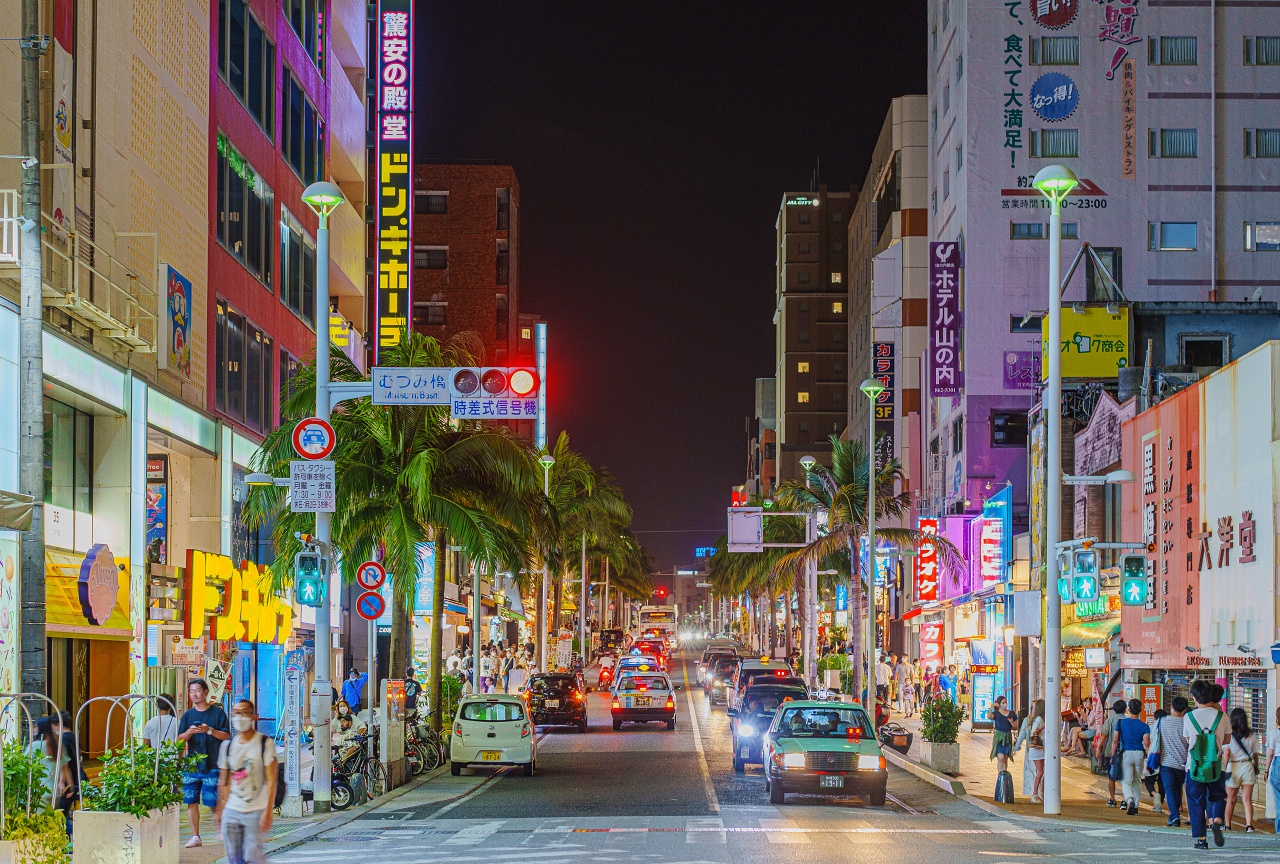
Kokusai Dori is familiar to visitors from elsewhere in Japan and overseas alike.
For anyone who likes the retro atmosphere of its side-street markets, the area can feel like paradise.
We visit a complex reinterpreting nostalgic Showa-style imagery with a contemporary touch. The source associates it with the 1980s and 1990s, though Showa itself ended in 1989.
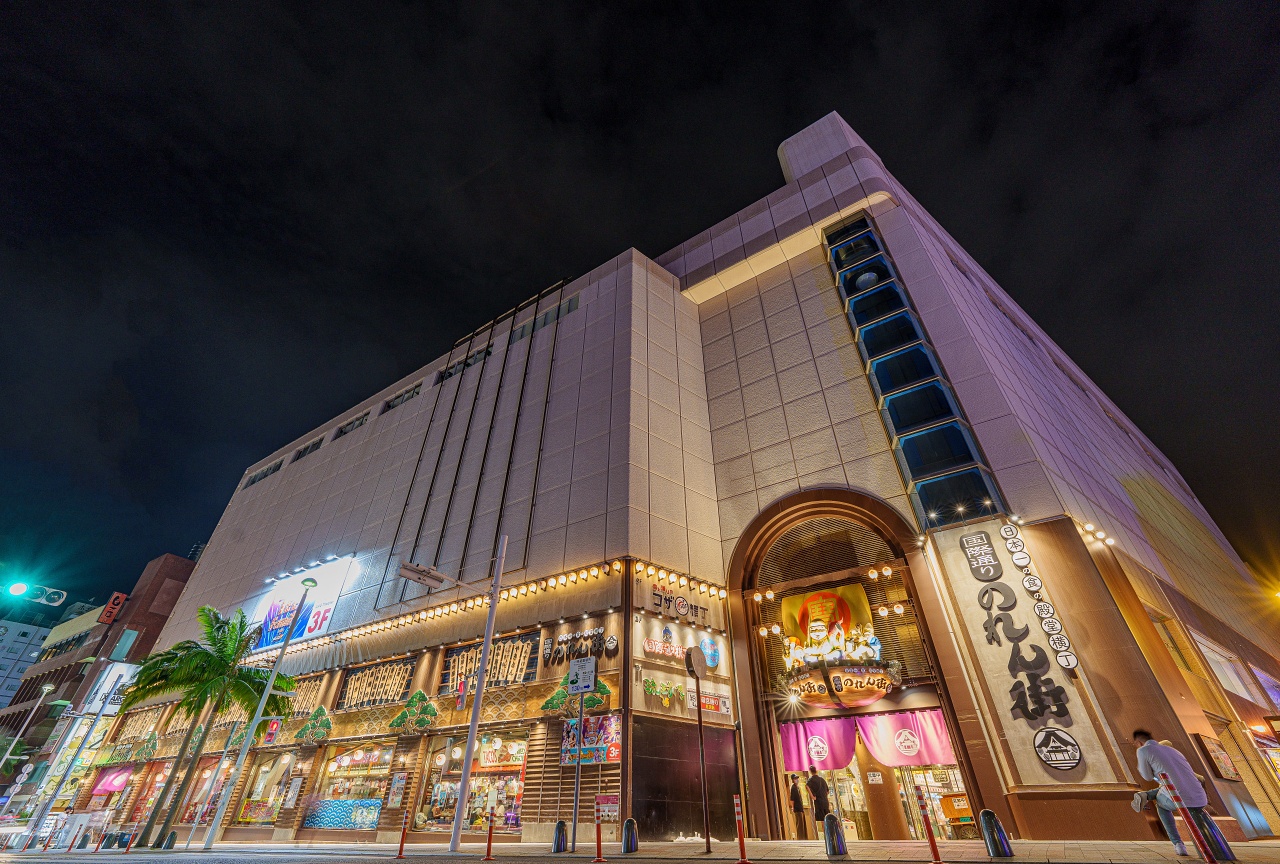
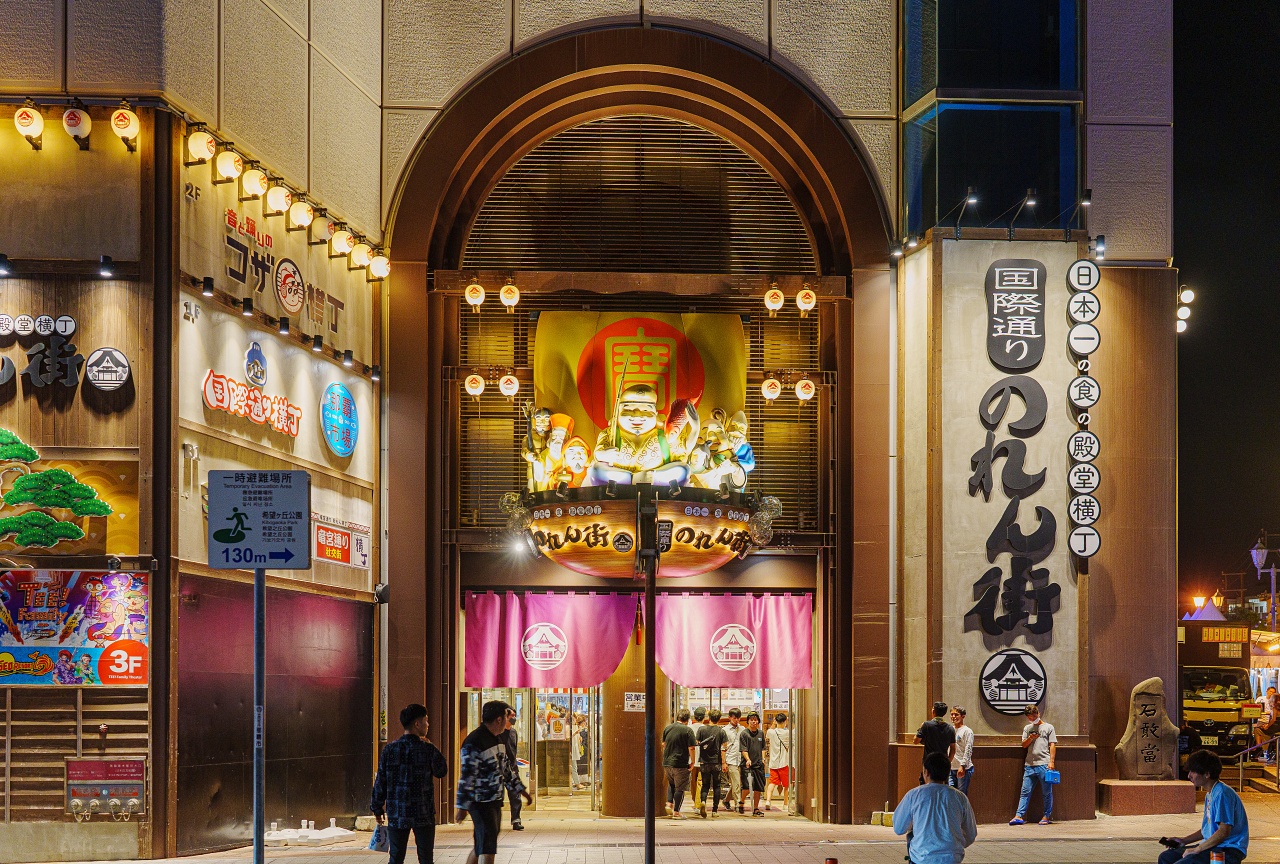
Kokusai Dori Norengai stands beside the Starbucks building around the middle of Kokusai Dori.
The site formerly housed Mitsukoshi, then changed through names including Hapina Naha and Ryukyu Kingdom Market before reopening as Norengai in 2020, during the pandemic.
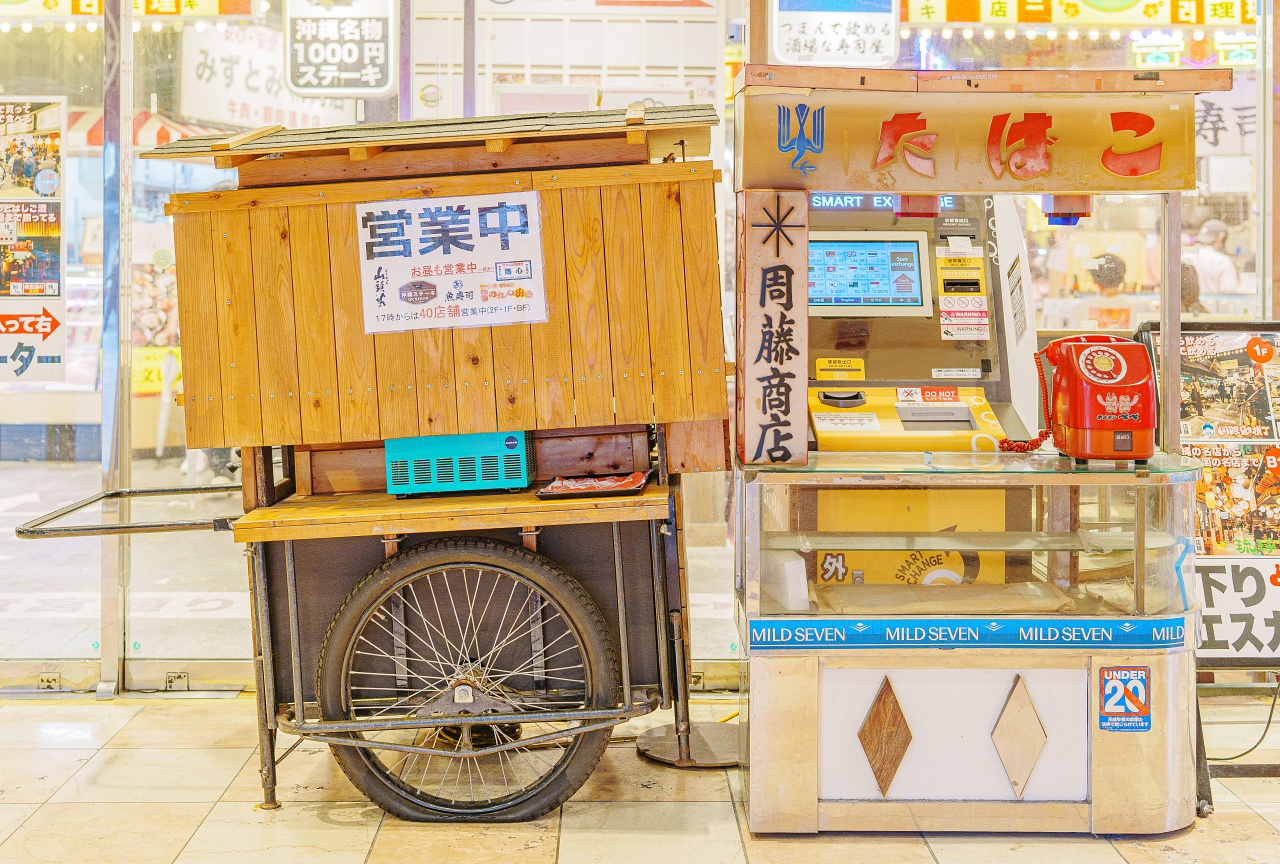
Inside the entrance are a ramen pushcart and a tobacco shop evoking earlier decades.
They are sights you rarely encounter now.
The tobacco-shop façade now houses currency exchange, a convenient detail if you need yen while out for the evening.
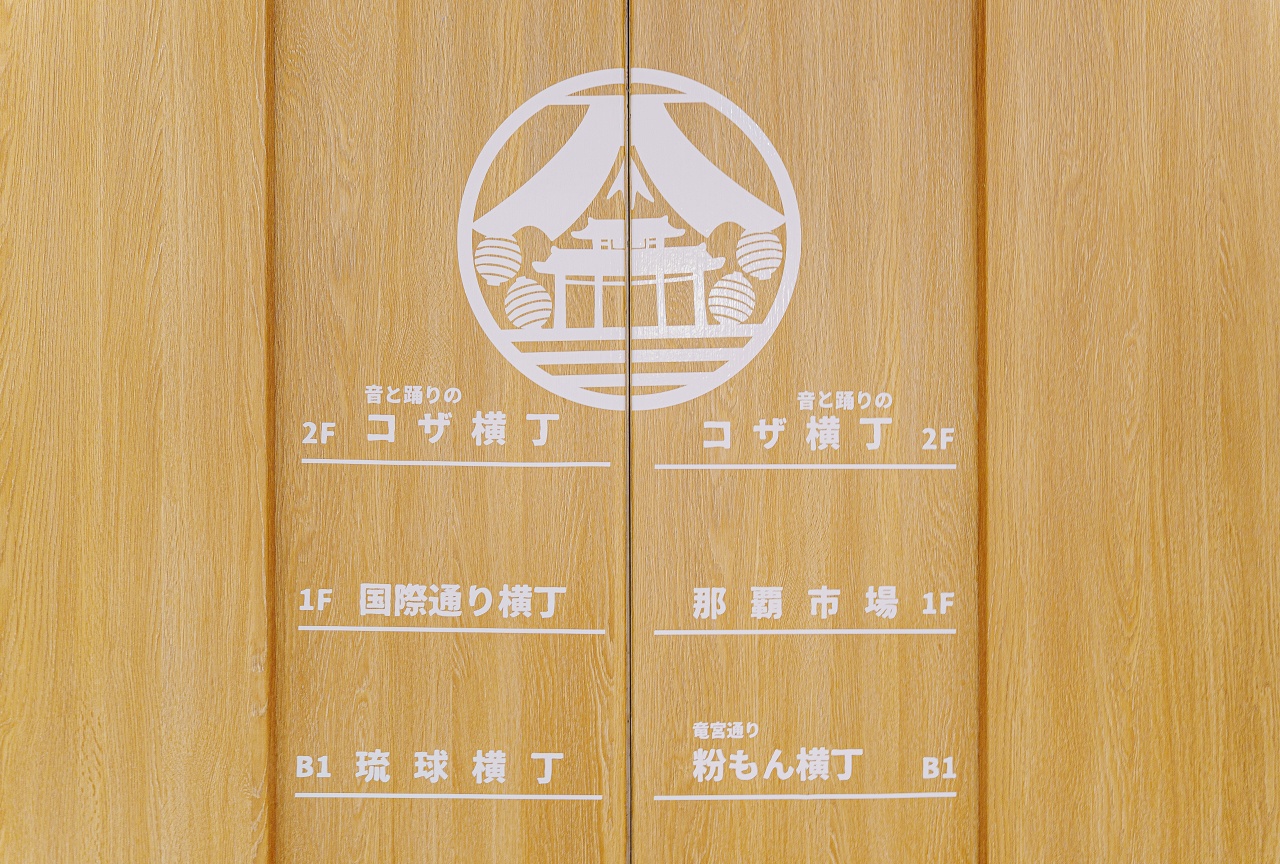
During this visit, 38 food businesses occupied levels B1 through 2F.
B1 contained Ryukyu Yokocho and Ryugu-dori Konamon Yokocho; 1F had Kokusai Dori Yokocho and Naha Ichiba; 2F housed Koza Yokocho.
Each level had its own character.
Konamon Yokocho in B1 focused on noodles and other flour-based food.
Naha Ichiba on 1F evoked drinking in Kokusai Dori’s traditional market.
The expanded area that opened in April 2022
was Koza Yokocho on the second floor, combining drinks and entertainment.
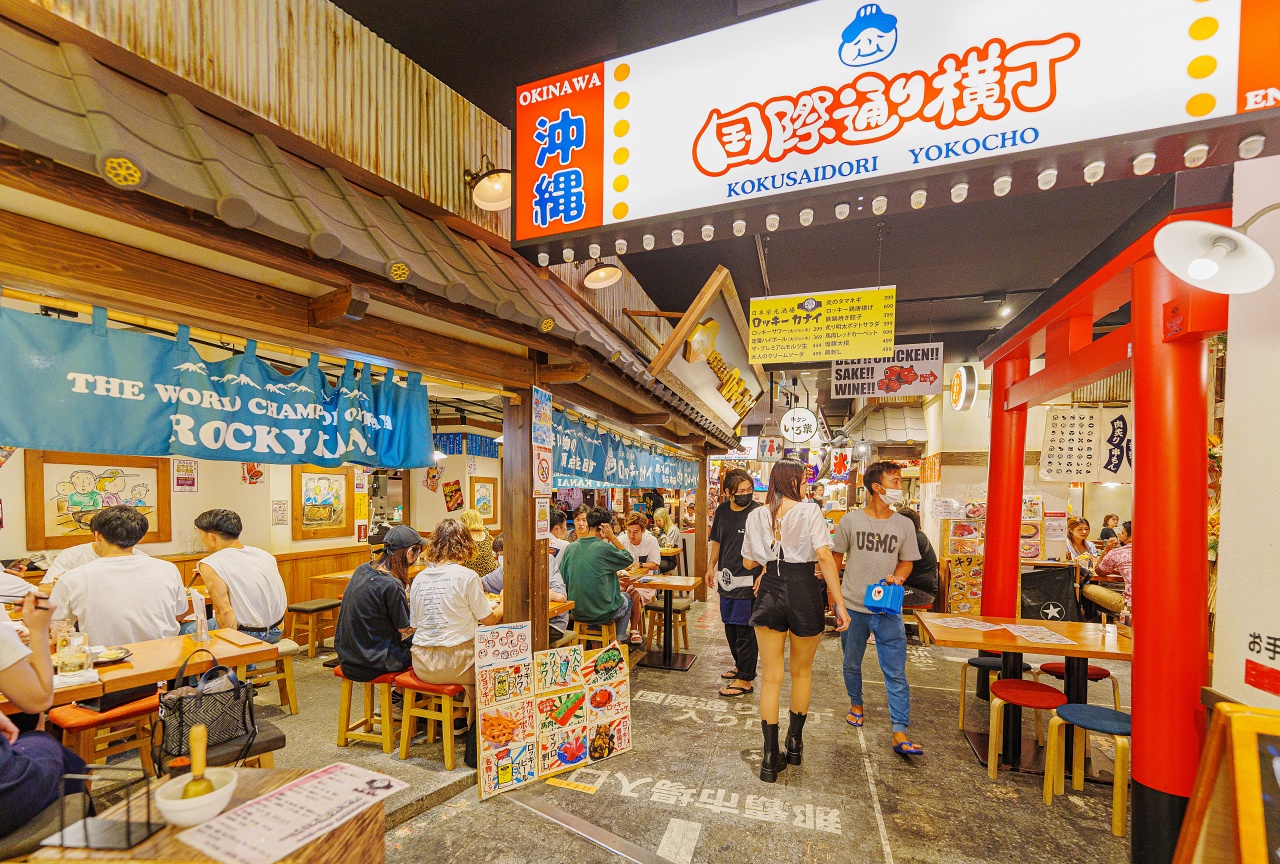
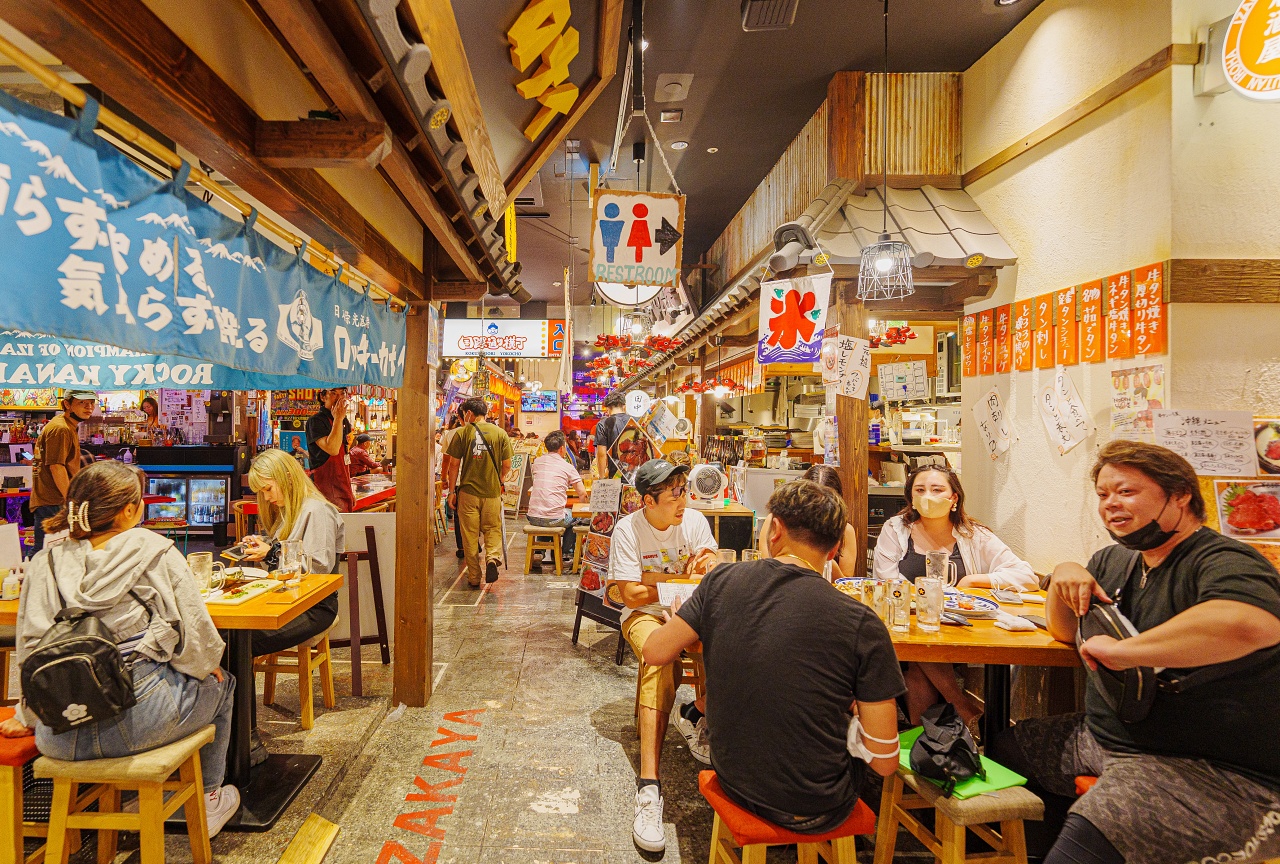
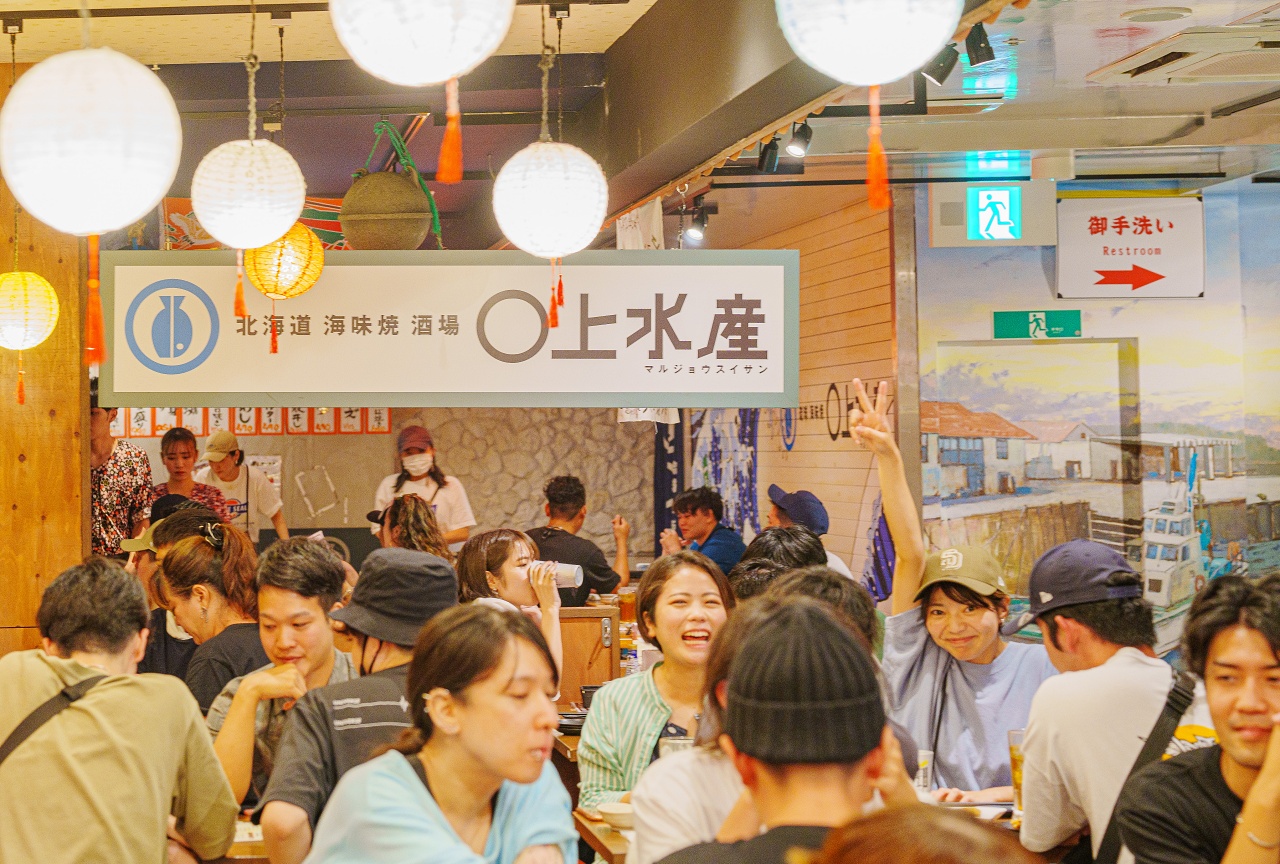
Kokusai Dori Yokocho on the first floor.
A little after 8 p.m., it was filling up, with seats becoming scarce.
A lane full of nostalgic atmosphere.
Tables are close together, making it easy to strike up conversation over drinks.
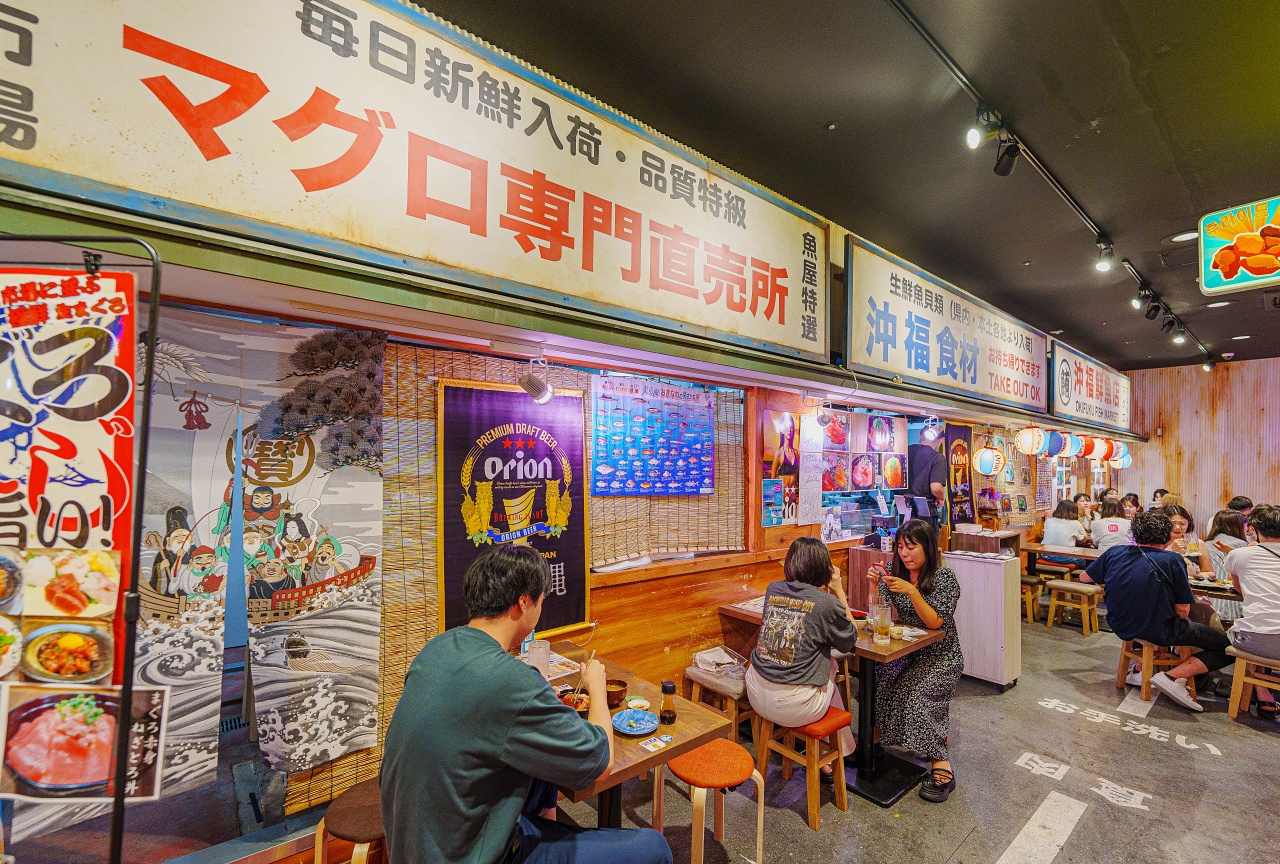
In a corner are businesses that look as though they belong in Kokusai Dori’s traditional market.
The menus, seats and style of drinking feel similar. The difference is the cool air-conditioning and clean interior.
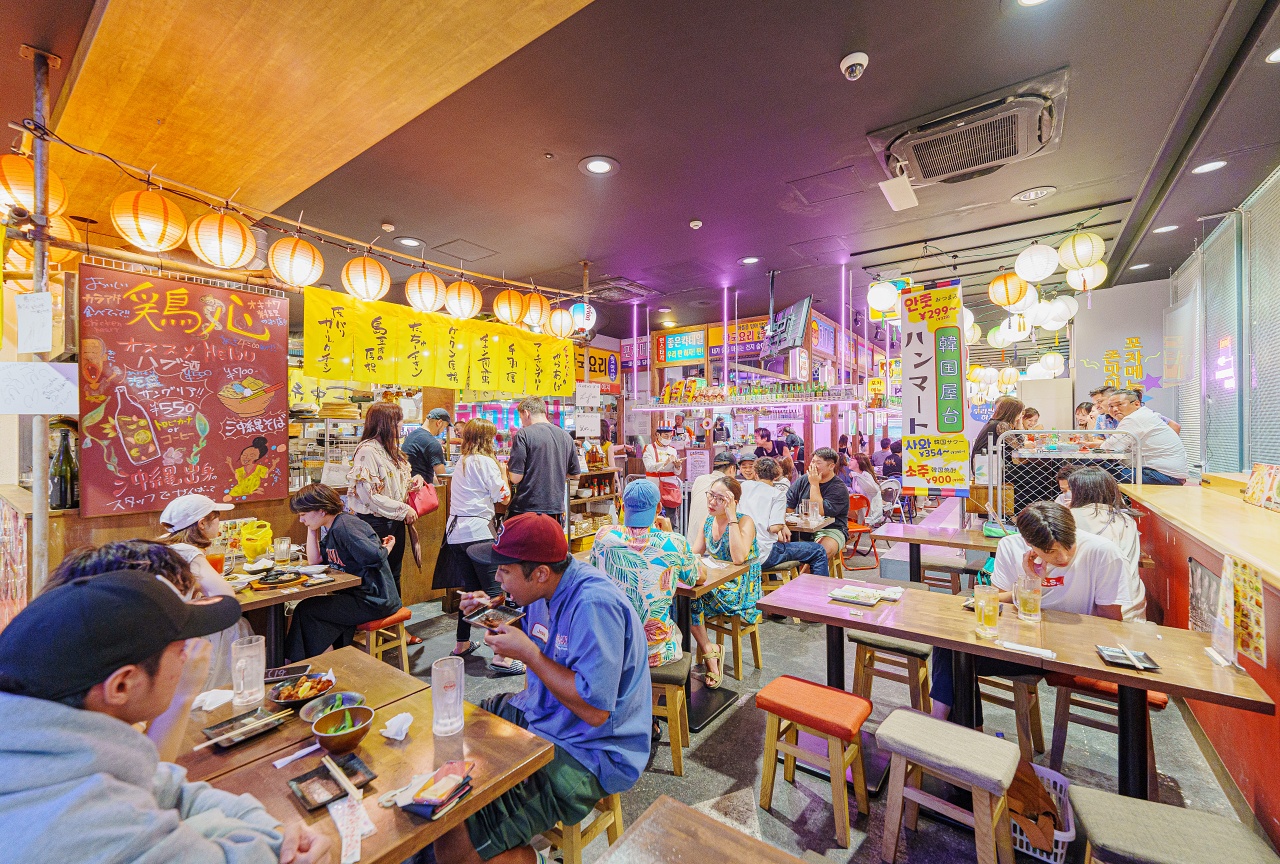
A large Korean restaurant occupies another corner.
The source notes the Korean-culture boom and increasing numbers of Korean restaurants in busy Japanese districts.
As a Korean visitor, the author feels a small swell of pride.
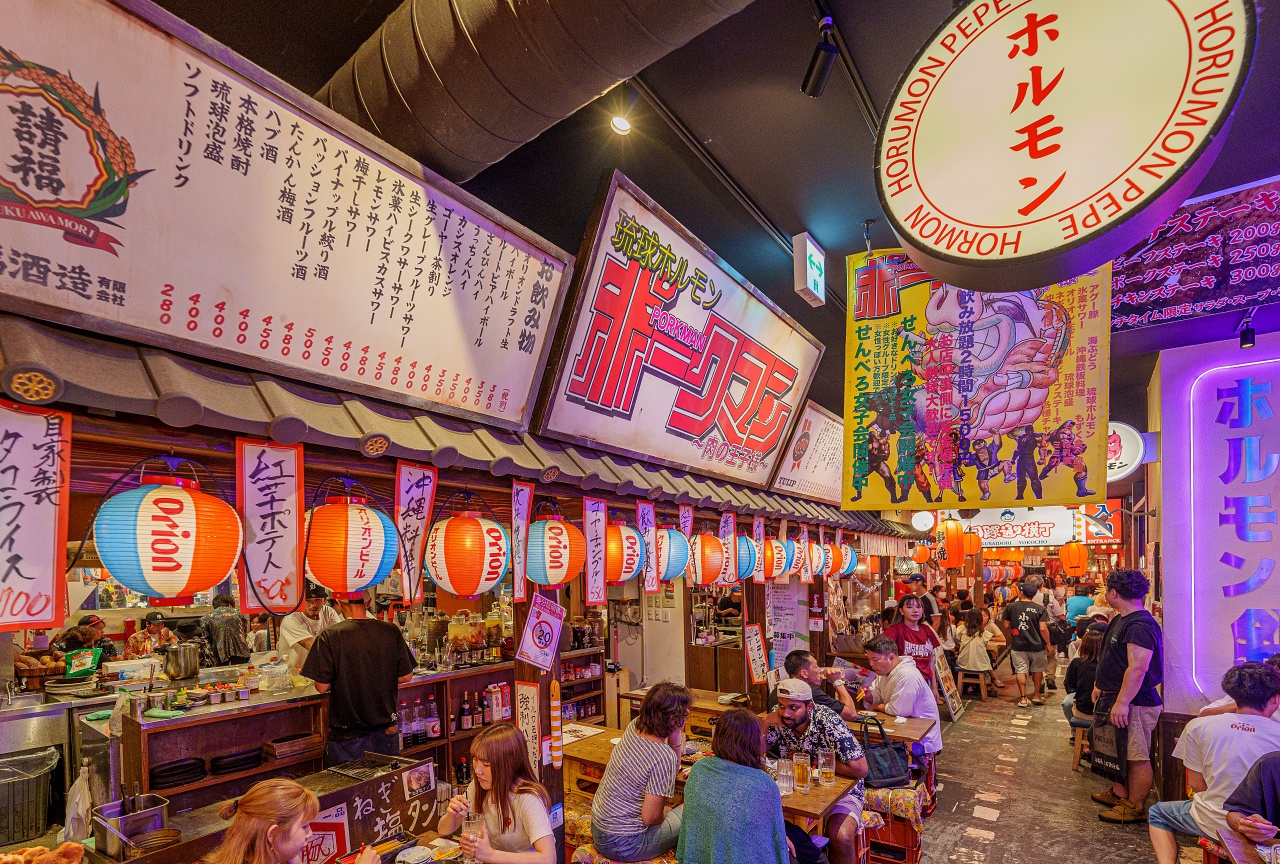
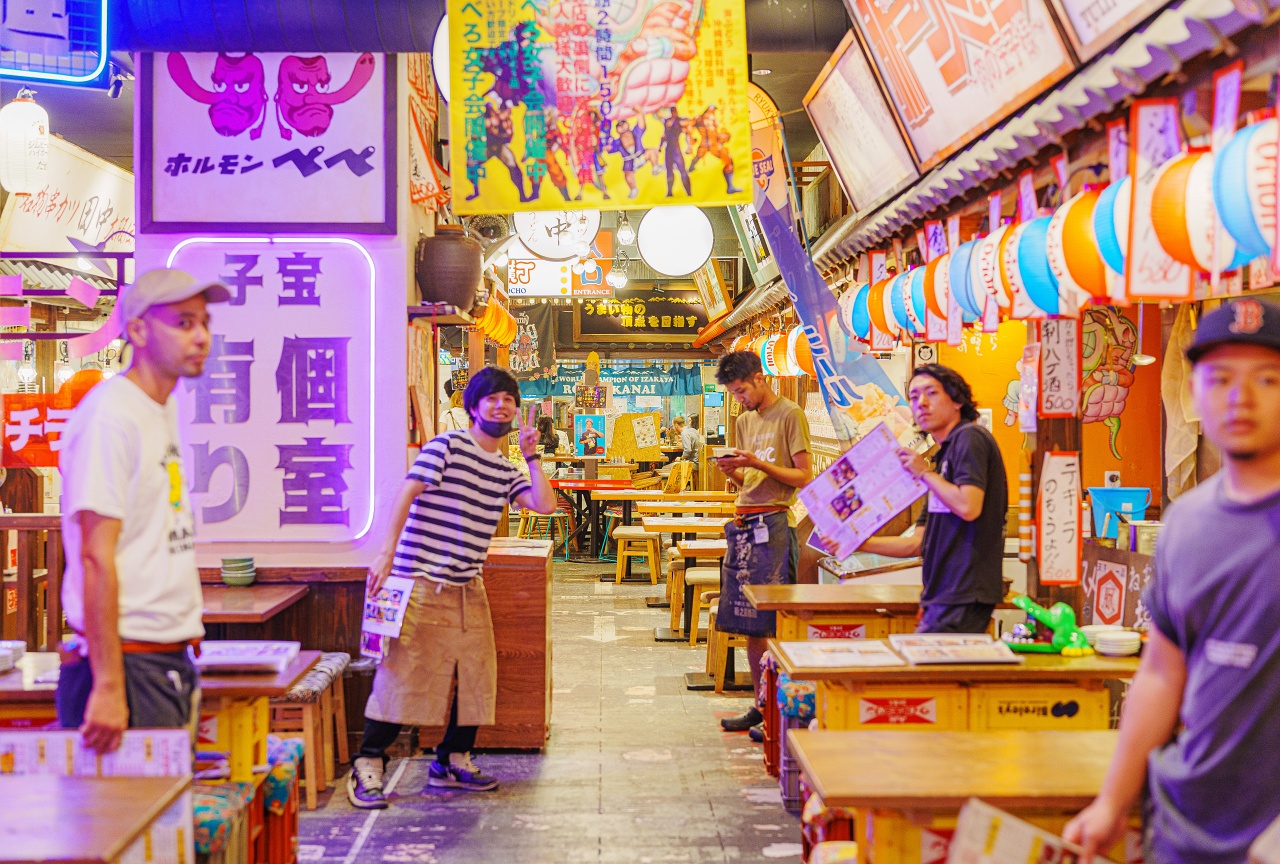
Staff in Kokusai Dori Yokocho invite passing customers into their shops.
It is another familiar feature of Kokusai Dori recreated inside.
On this visit, they did it gently, showing menus and introducing the restaurants rather than pressuring us.
They were even happy to direct us elsewhere if we said we wanted a different kind of food.
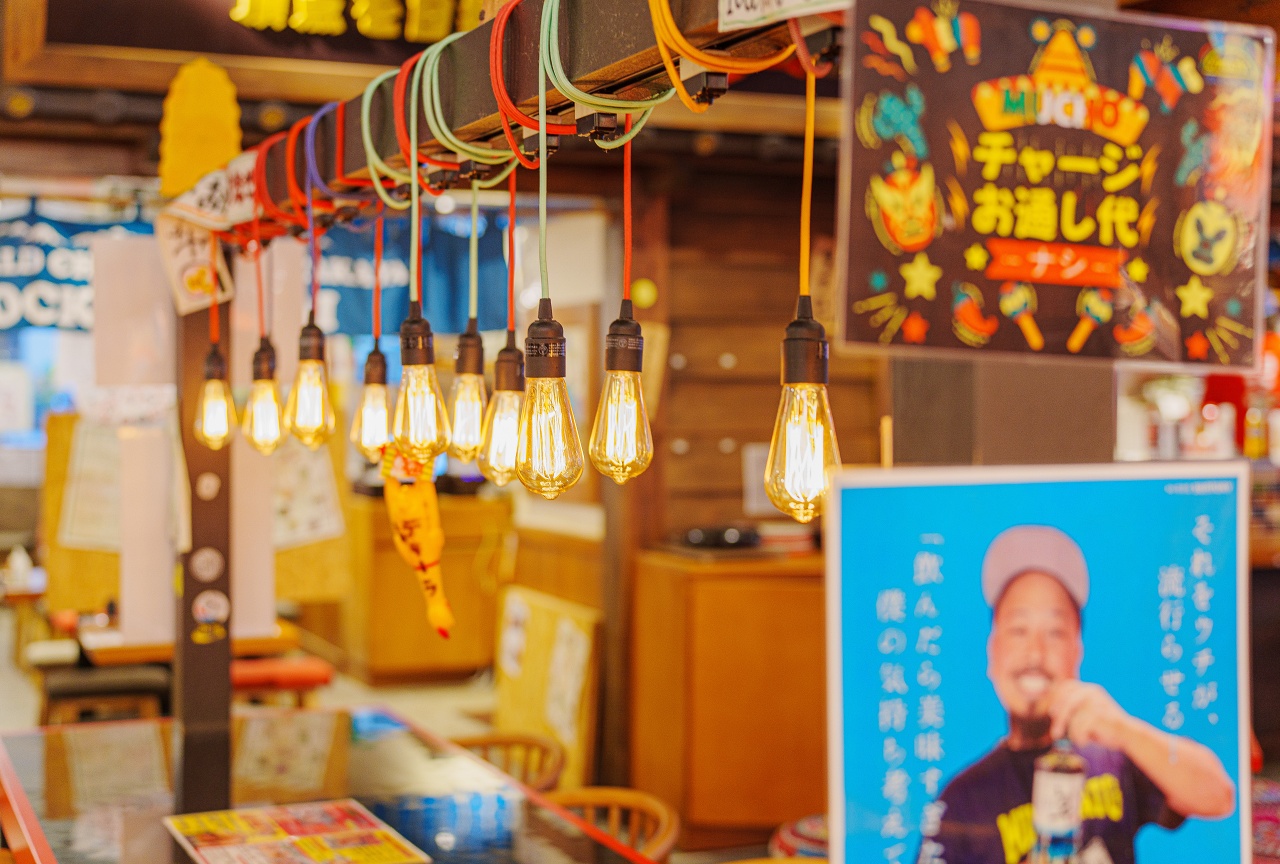
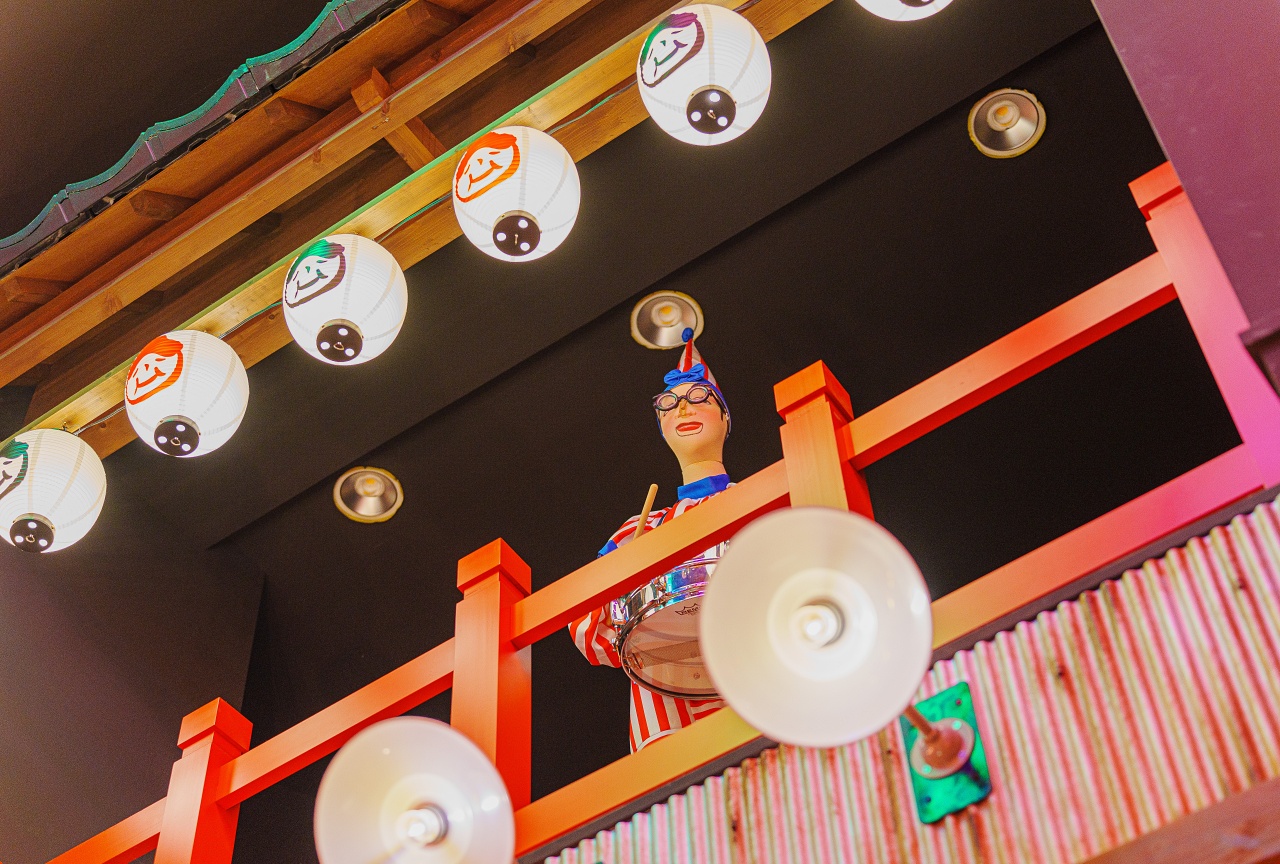
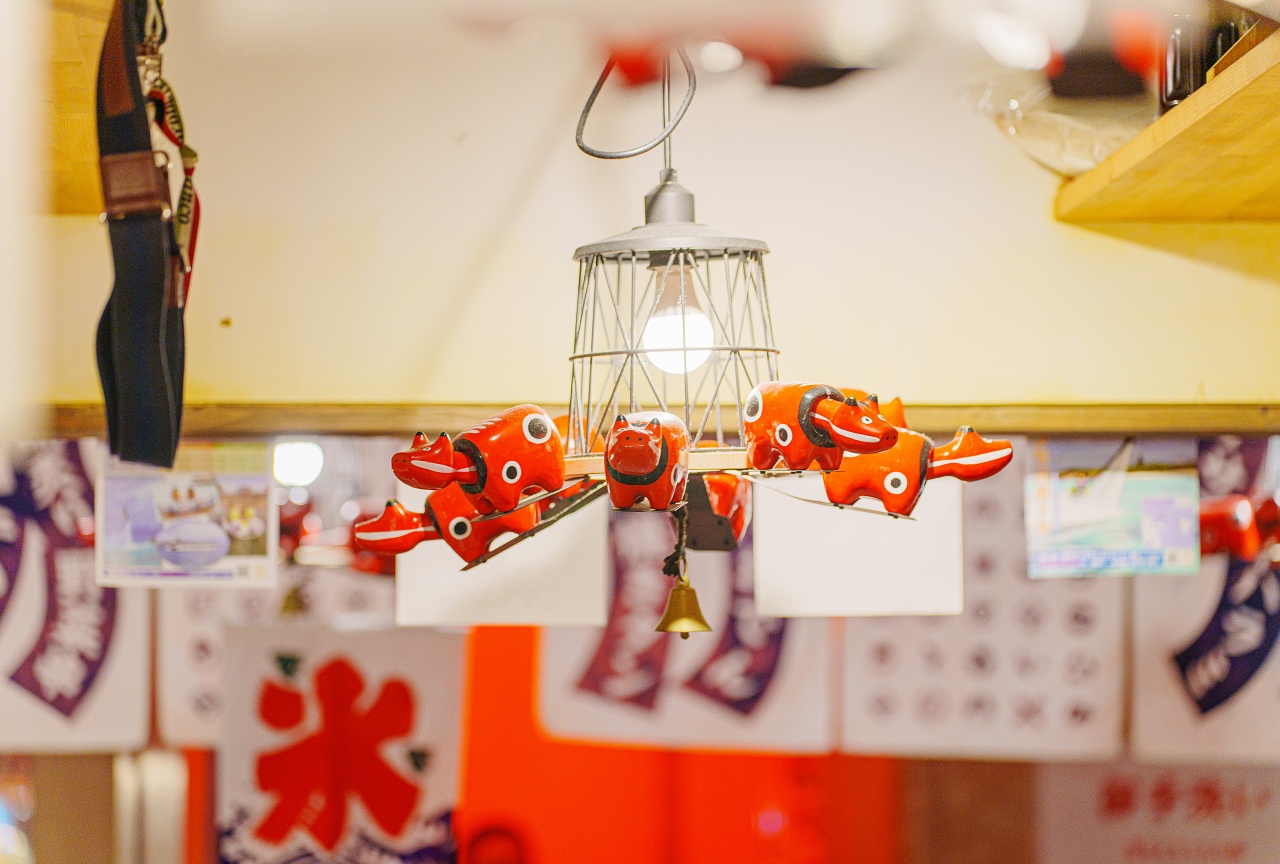

The atmosphere is retro, but the interior feels polished.
Norengai gives nostalgic imagery a modern interpretation.
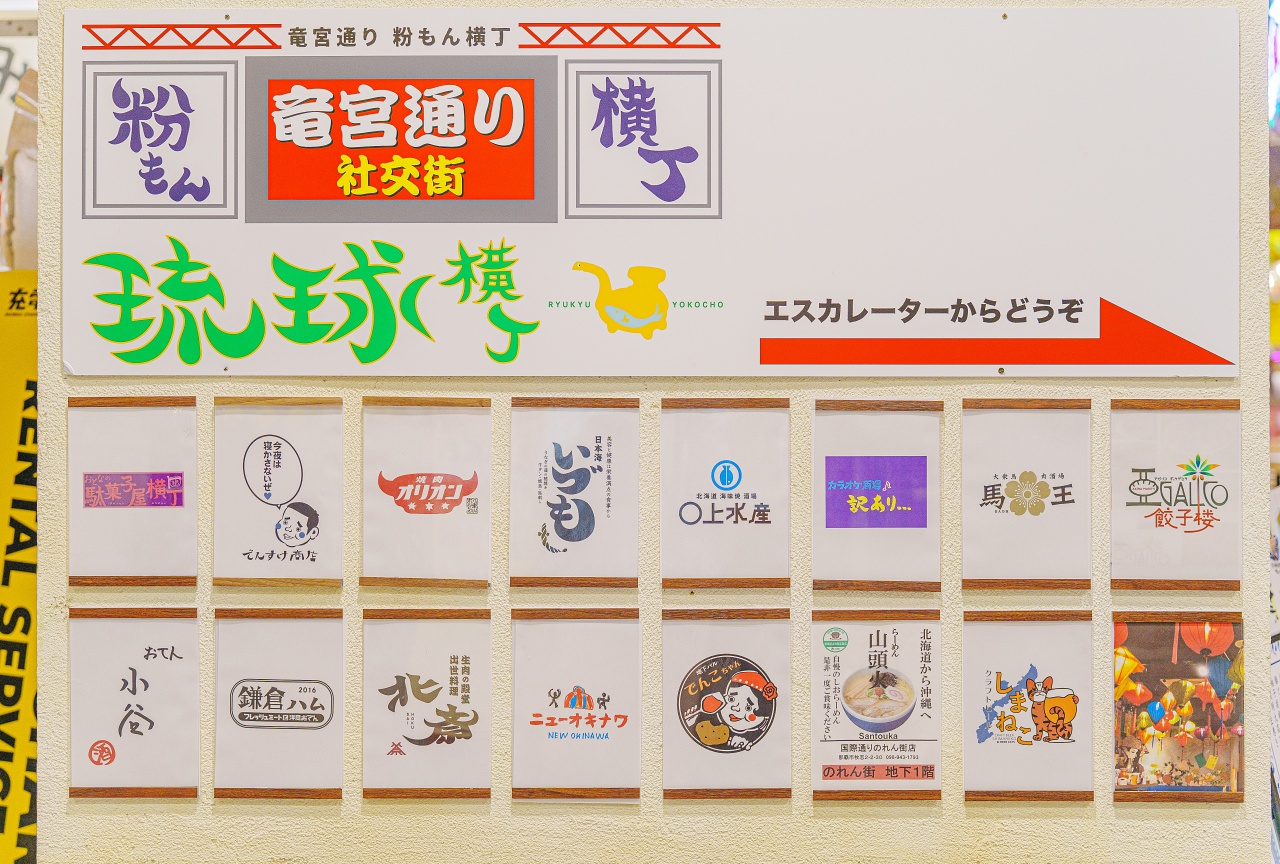
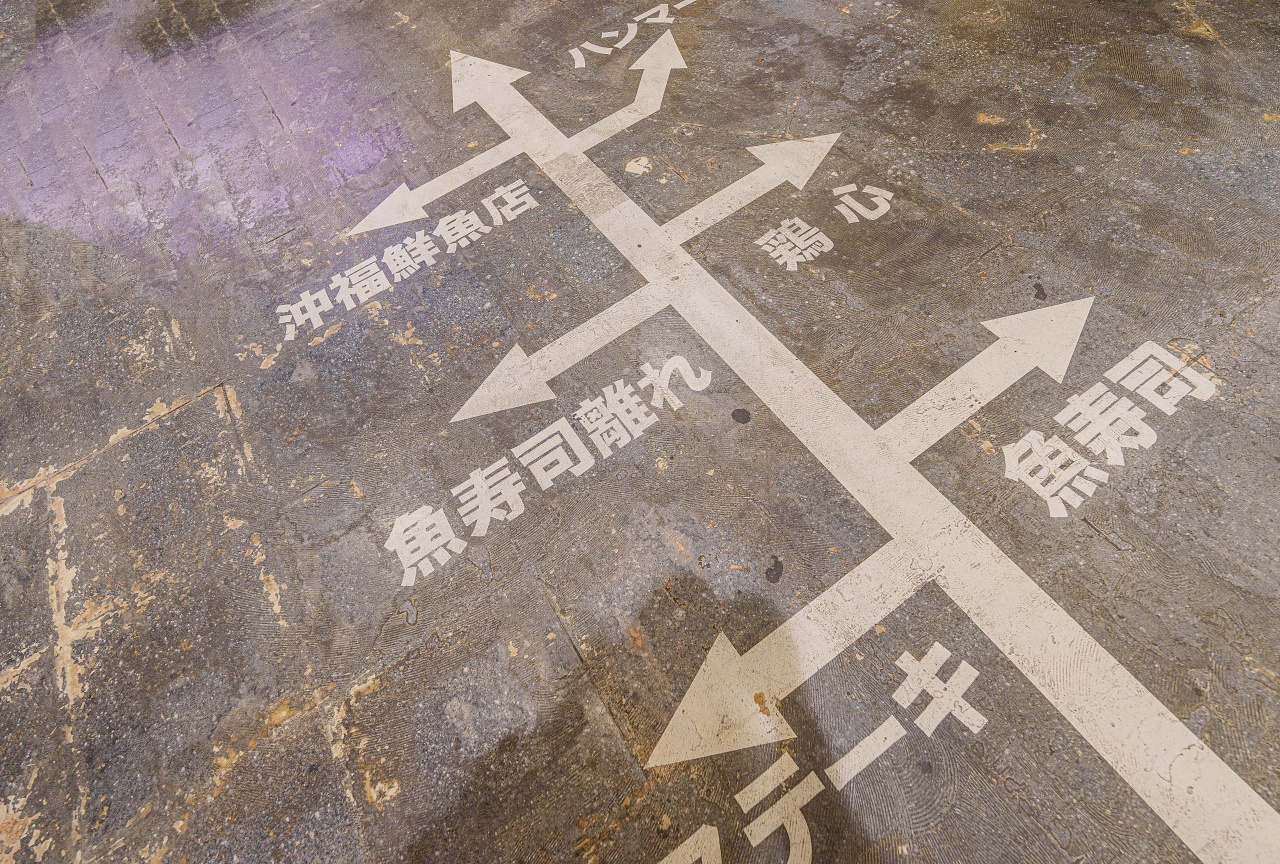
We go downstairs to Ryukyu Yokocho.
The route is by escalator.

Here is an unusual ‘omikuji escalator.’
Omikuji (おみくじ) are fortune slips drawn at Japanese shrines and temples, predicting good or bad luck.
The source gives a simplified ranking: daikichi, great blessing; chukichi, middle blessing; shokichi, small blessing; kyo, misfortune; and daikyo, great misfortune. Treat an unfavorable result lightly as part of the amusement.
A ‘misfortune’ follows immediately after ‘great blessing.’ Choose your step carefully—that is the joke.
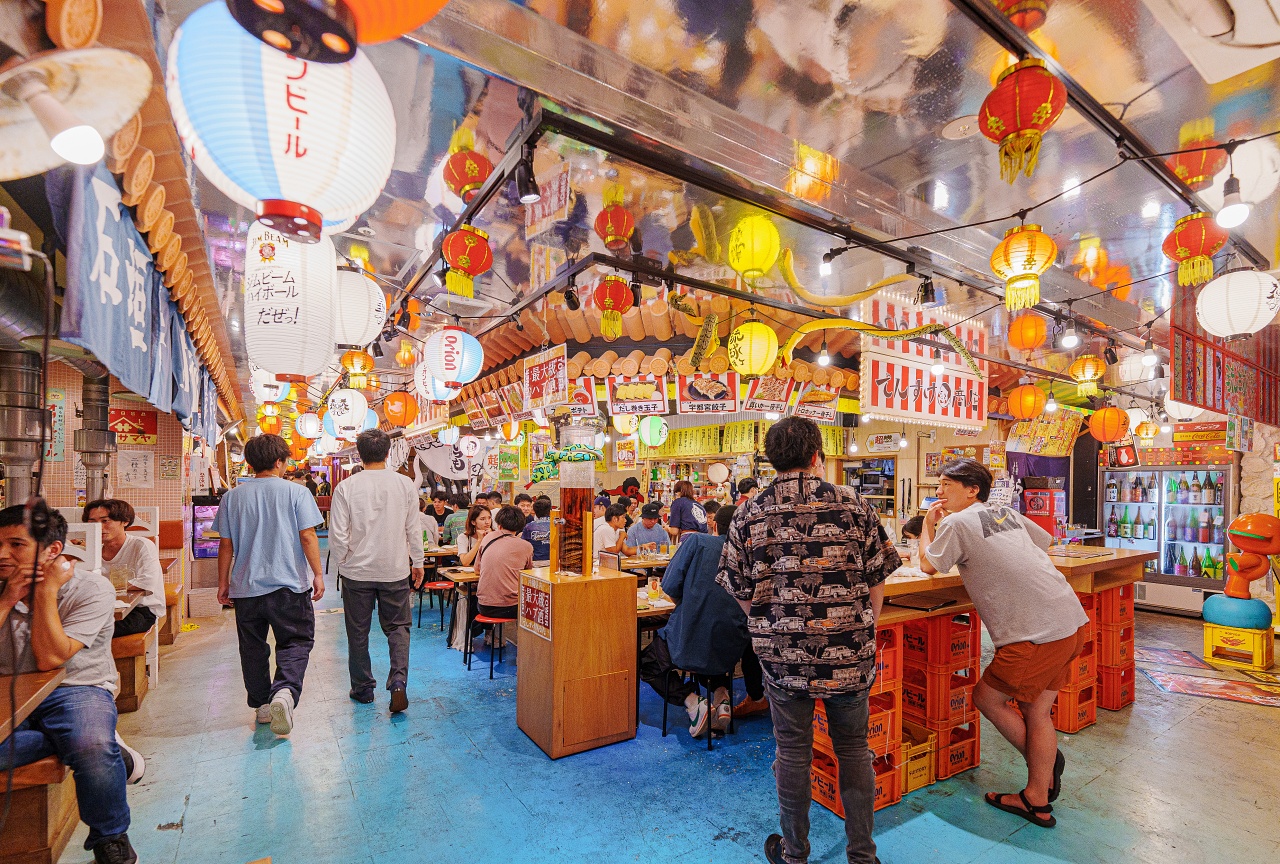
Ryukyu Yokocho is full of shops reminiscent of the public-market area.
Yakiniku, seafood and standing izakaya make it lively.

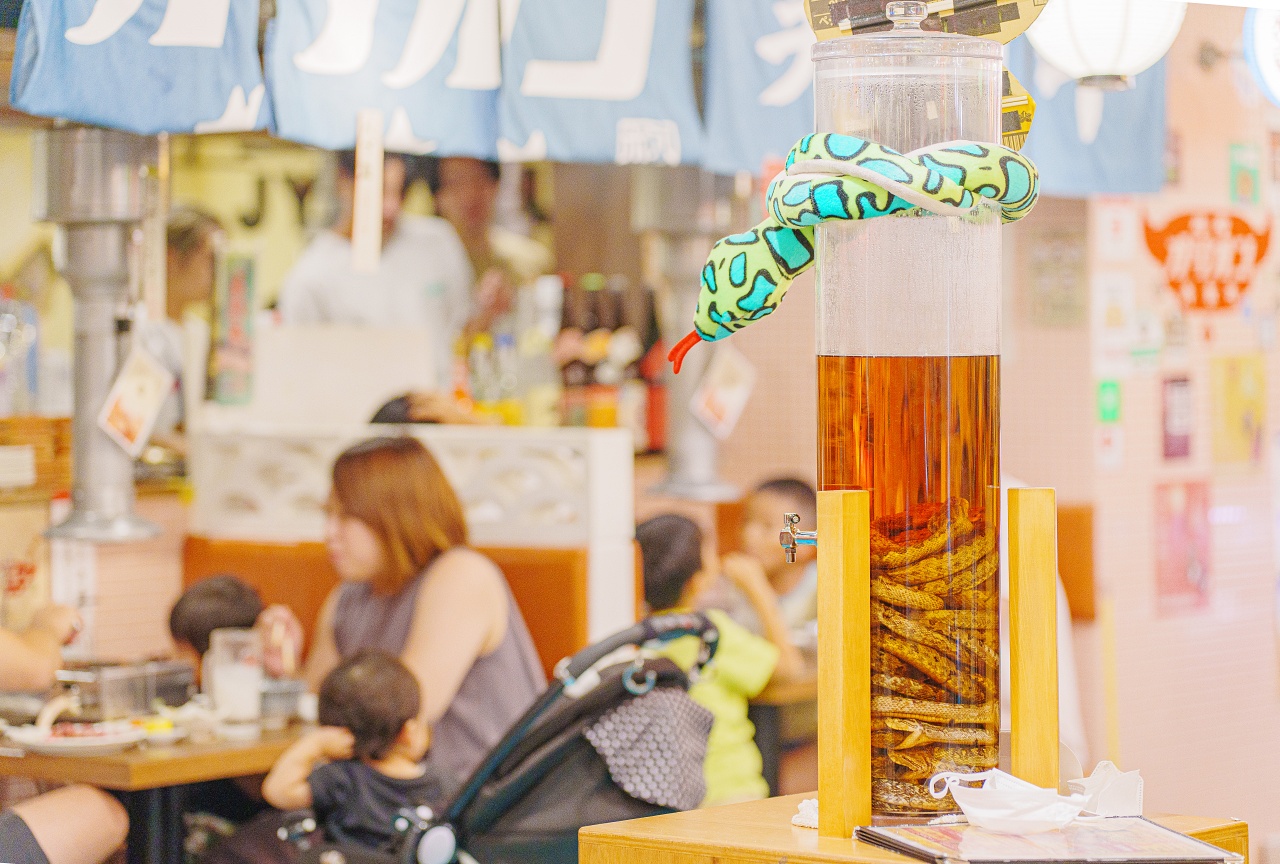
Okinawa is also associated with the venomous habu snake and the liquor made with it.
The source repeats a claim that it is especially ‘good for men’ and expresses curiosity about trying it. That is a promotional belief, not a verified health benefit.
It is another distinctive Okinawan product.
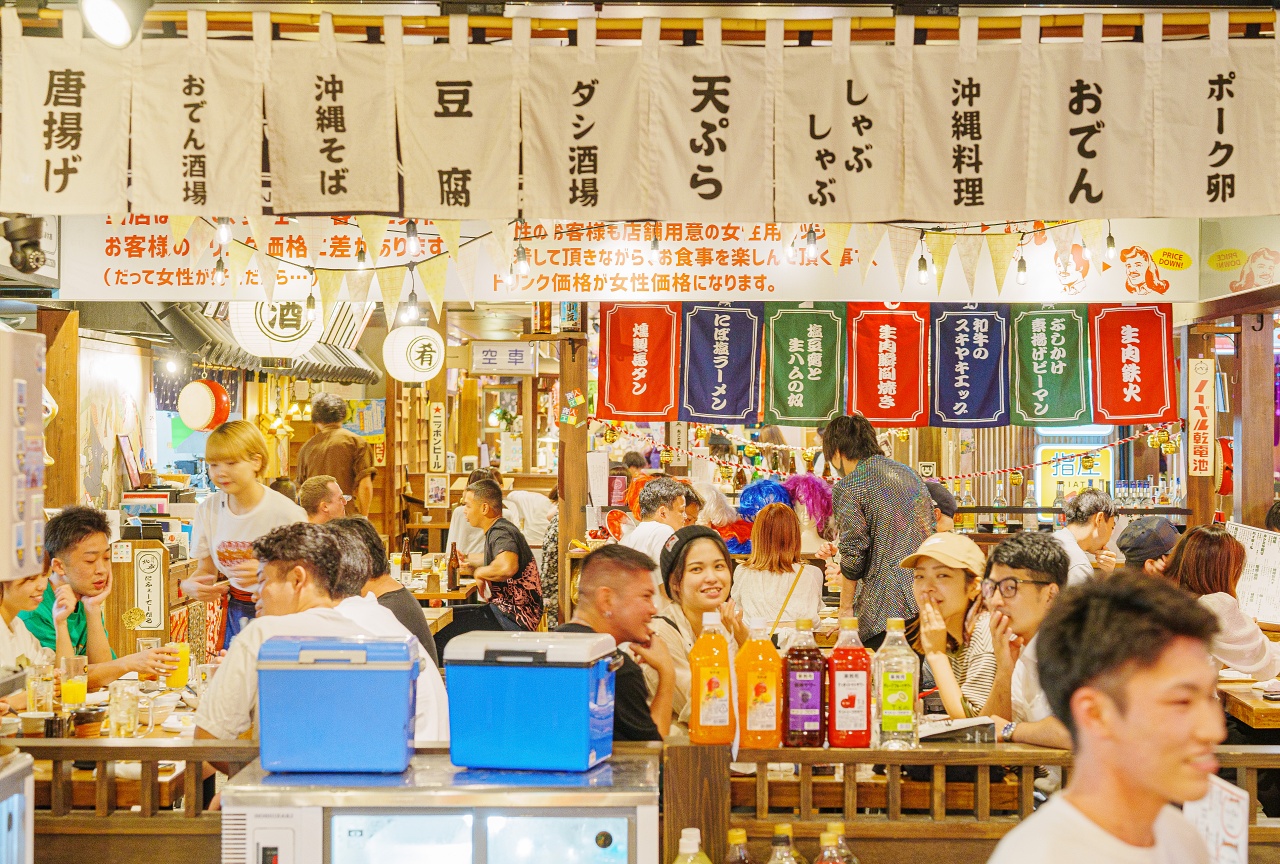
Norengai has a cheerful atmosphere.
Its many younger customers add to that feeling.
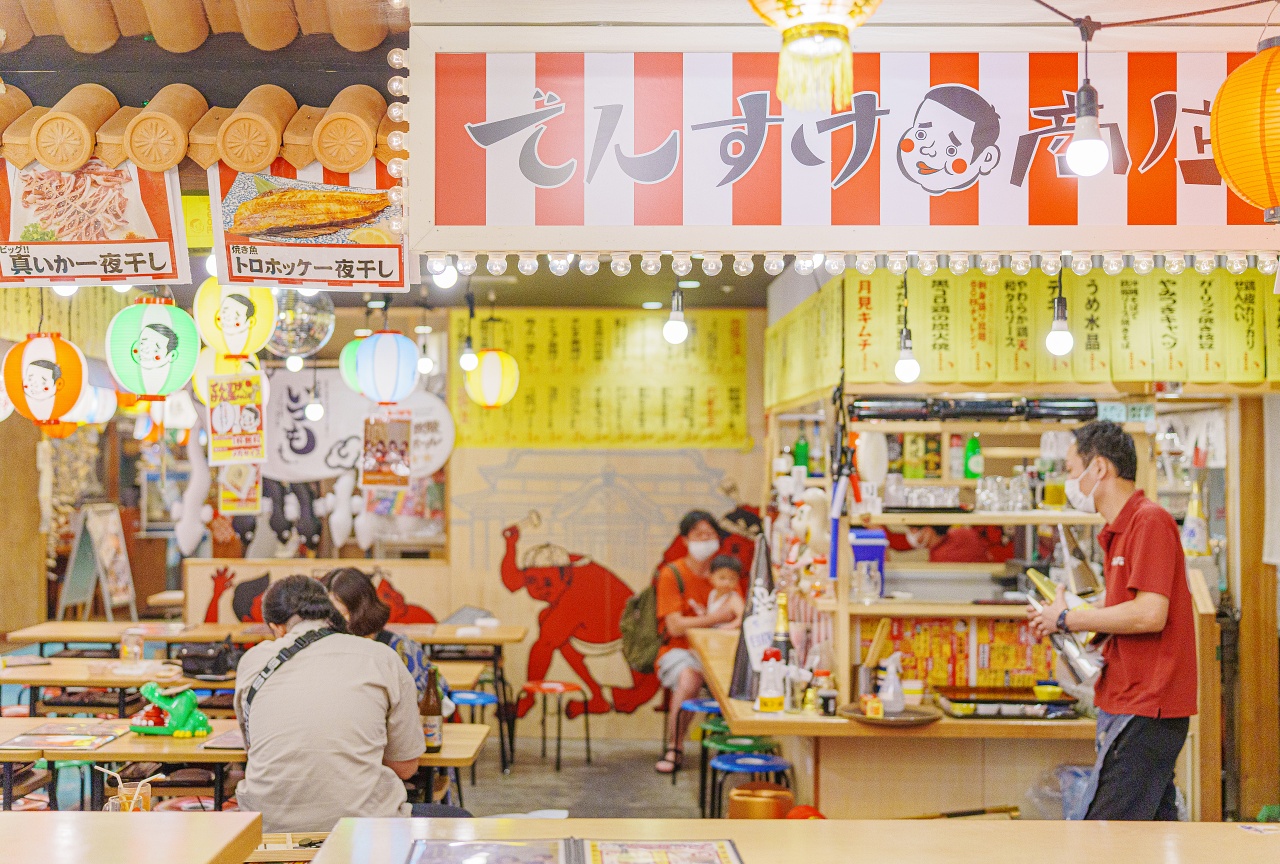
Several businesses familiar from Kokusai Dori are represented.
Densuke Shoten (でんすけ商店), known for nihonshu.
Sake is often excluded from inexpensive nomihodai, or all-you-can-drink plans, because of its cost. The account describes this shop as known for including it.

Otani, known as an oden izakaya.
Affordable prices and easygoing oden made it look like a good stop after work.
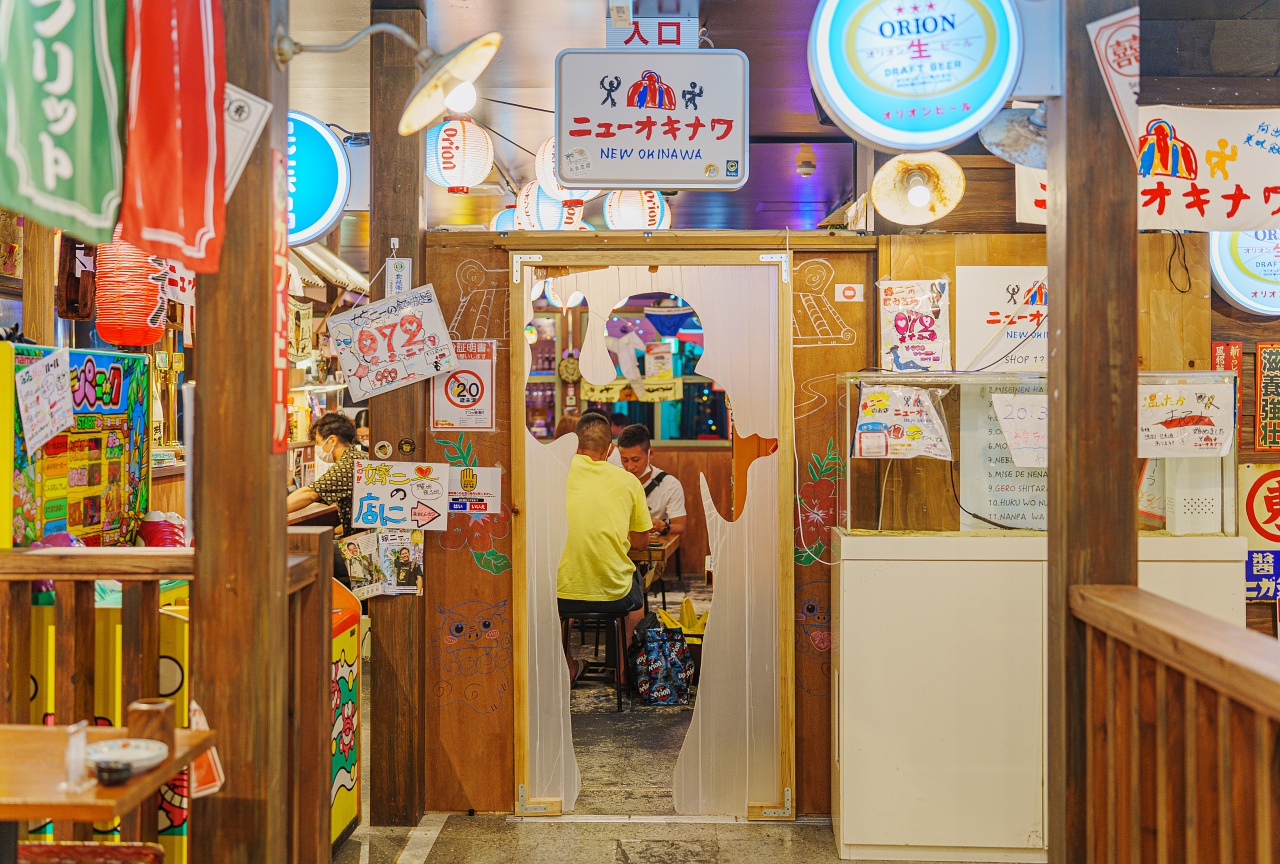
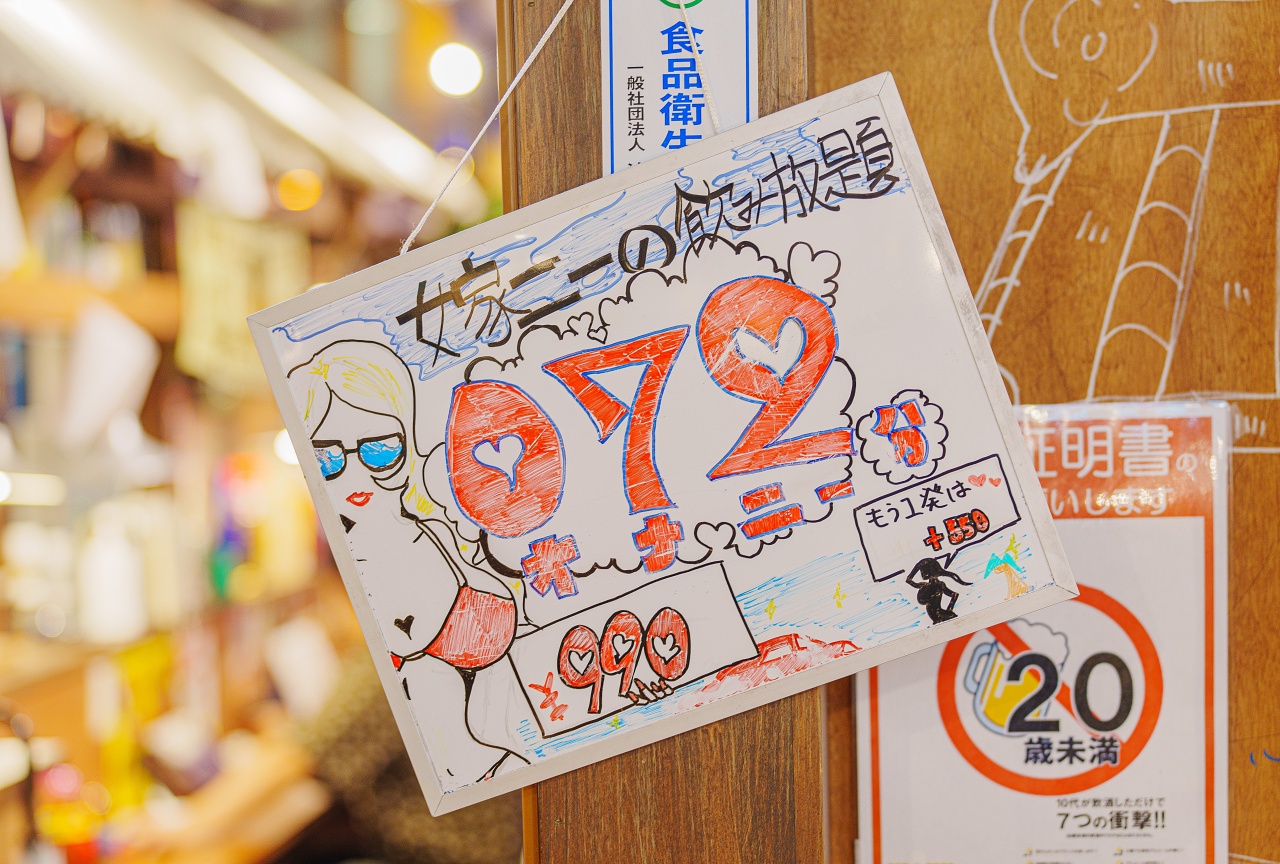
The somewhat unusual New Okinawa.
Its historical offer was JPY 990 for 72 minutes of unlimited drinks. The signage played with the Japanese reading of ‘72’ to make a masturbation joke.
The author is amused by how openly the shop makes the joke.

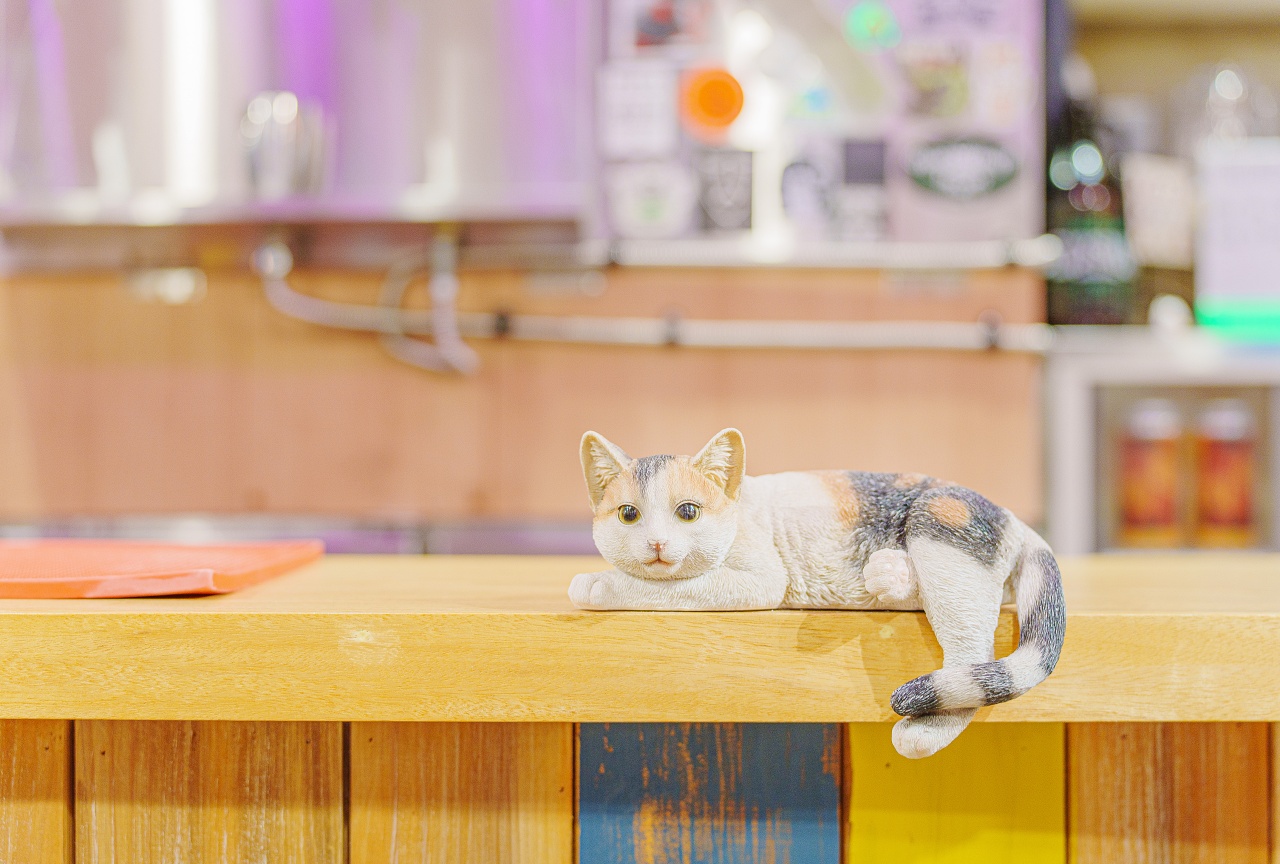
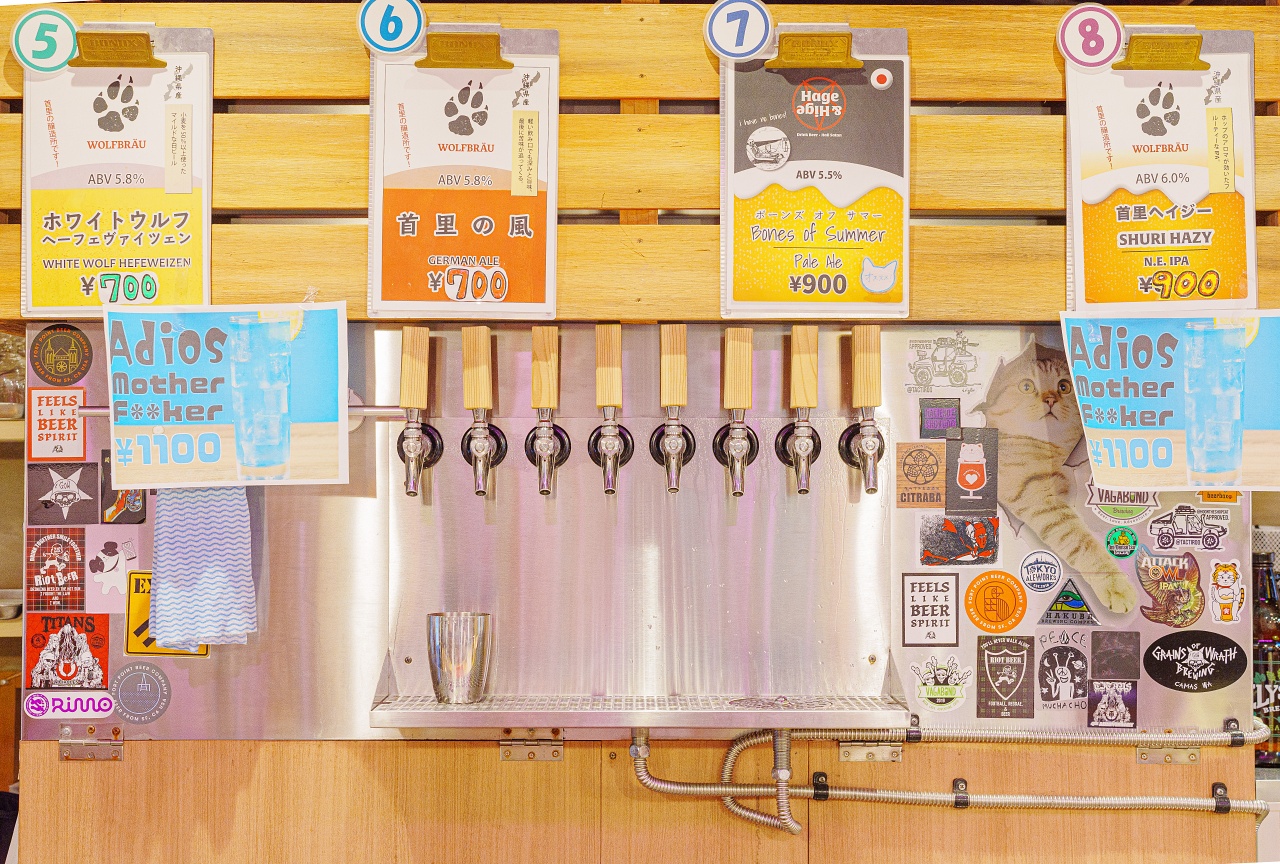
Shimaneko, serving craft beer.
Its wide-eyed cat decoration is charming.
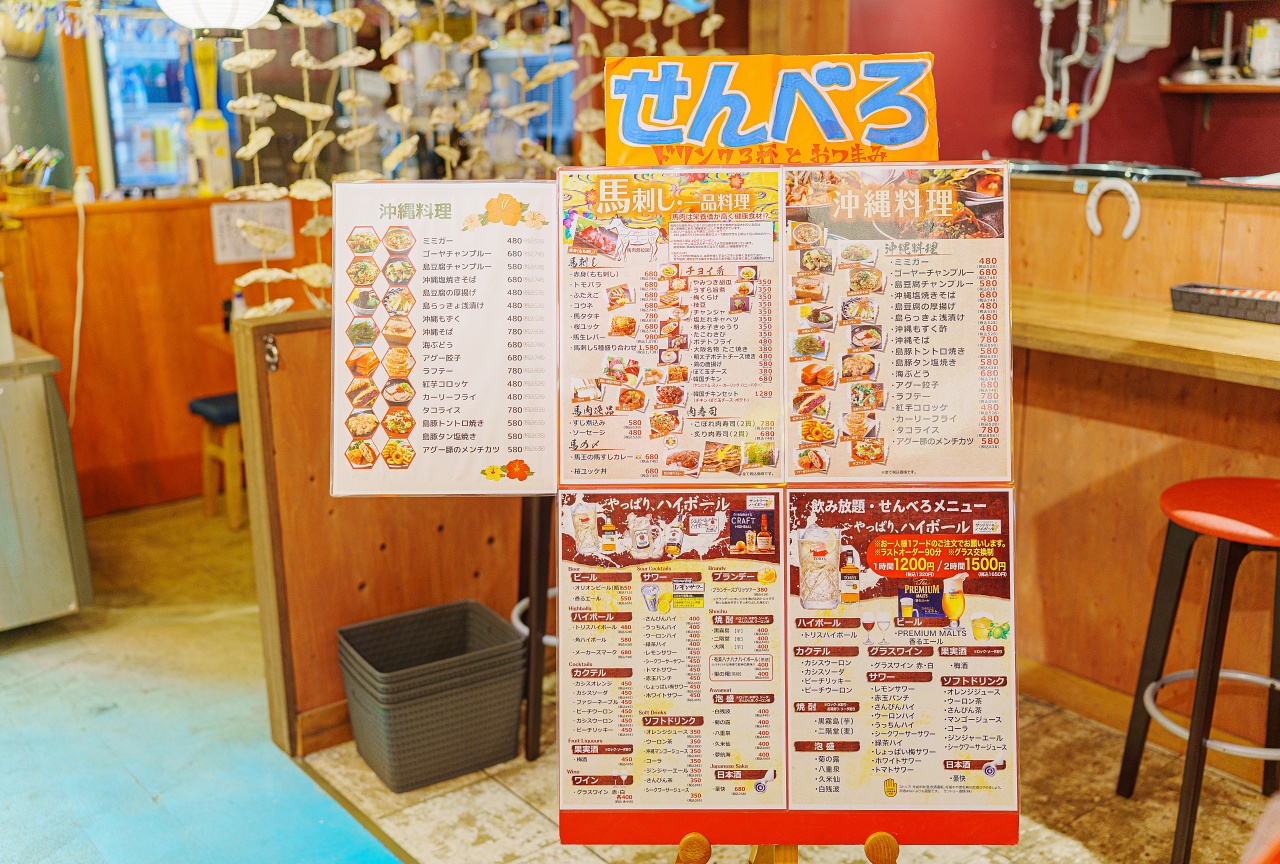
Senbero signs appear at many B1 shops.
Senbero (せんべろ) combines sen, ‘one thousand,’ with bero, suggesting tipsiness. The Okinawan offers described here provided three drinks and one snack for JPY 1,000, though the exact contents depend on the shop.
Many visitors come to Kokusai Dori for senbero, and it seemed available at most shops we saw.
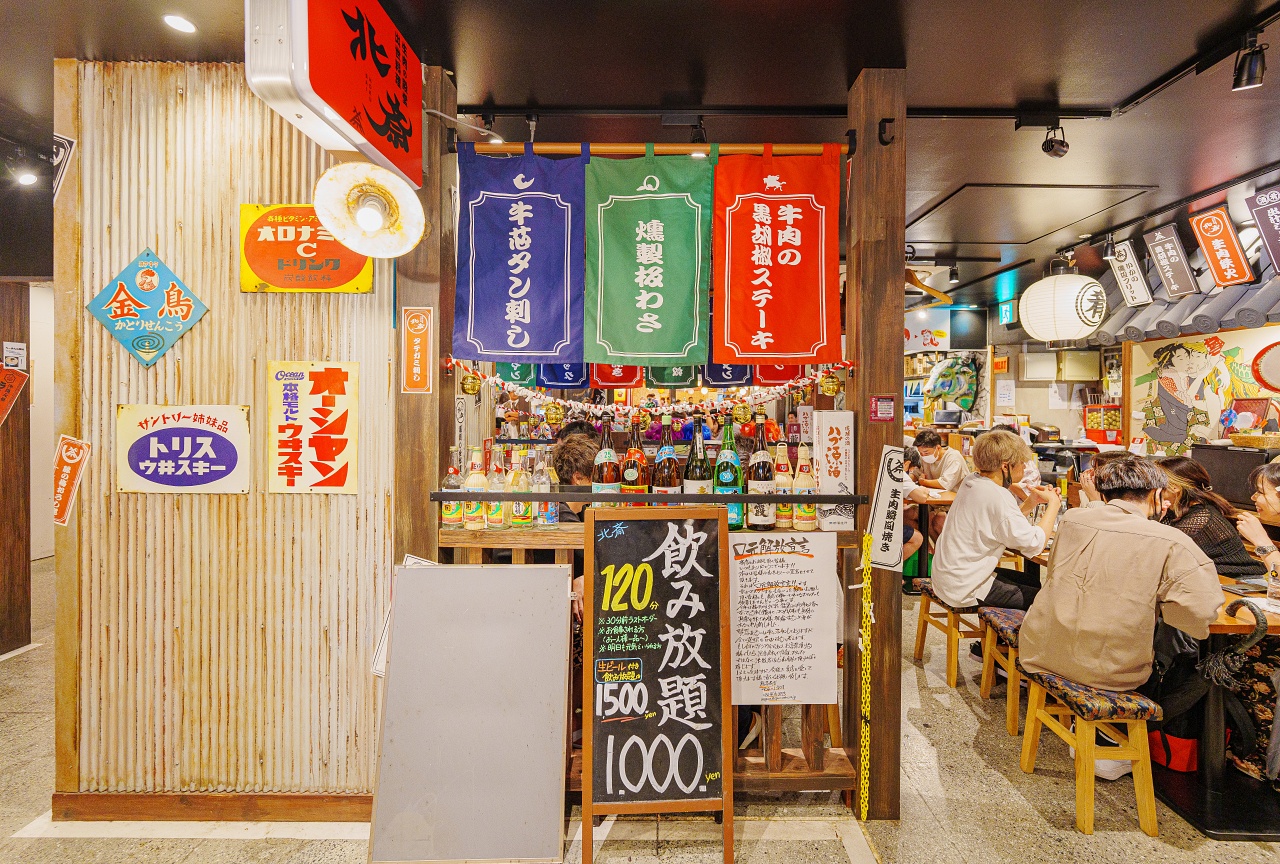
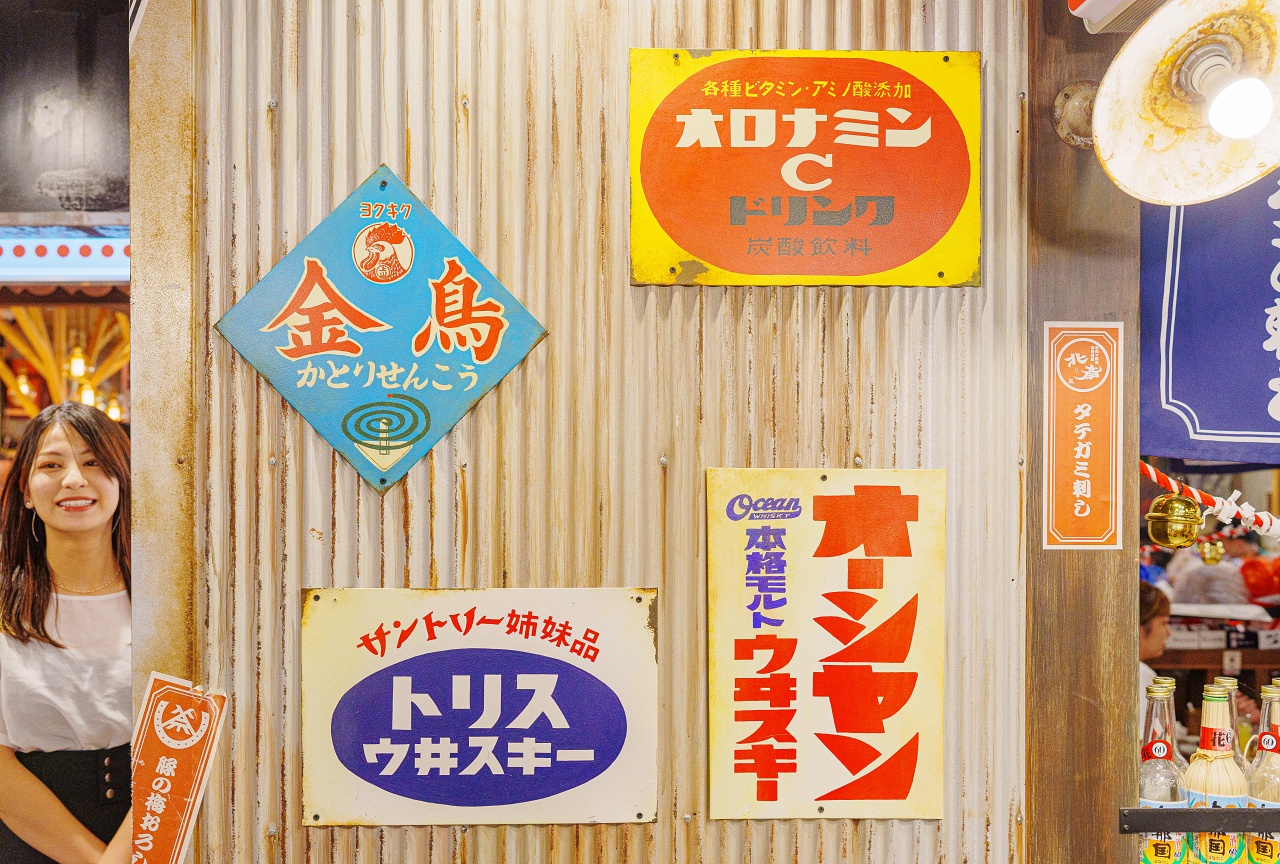
Nostalgic details fill every corner.
It is enjoyable simply to look around.
The atmosphere lifts everyone’s spirits.
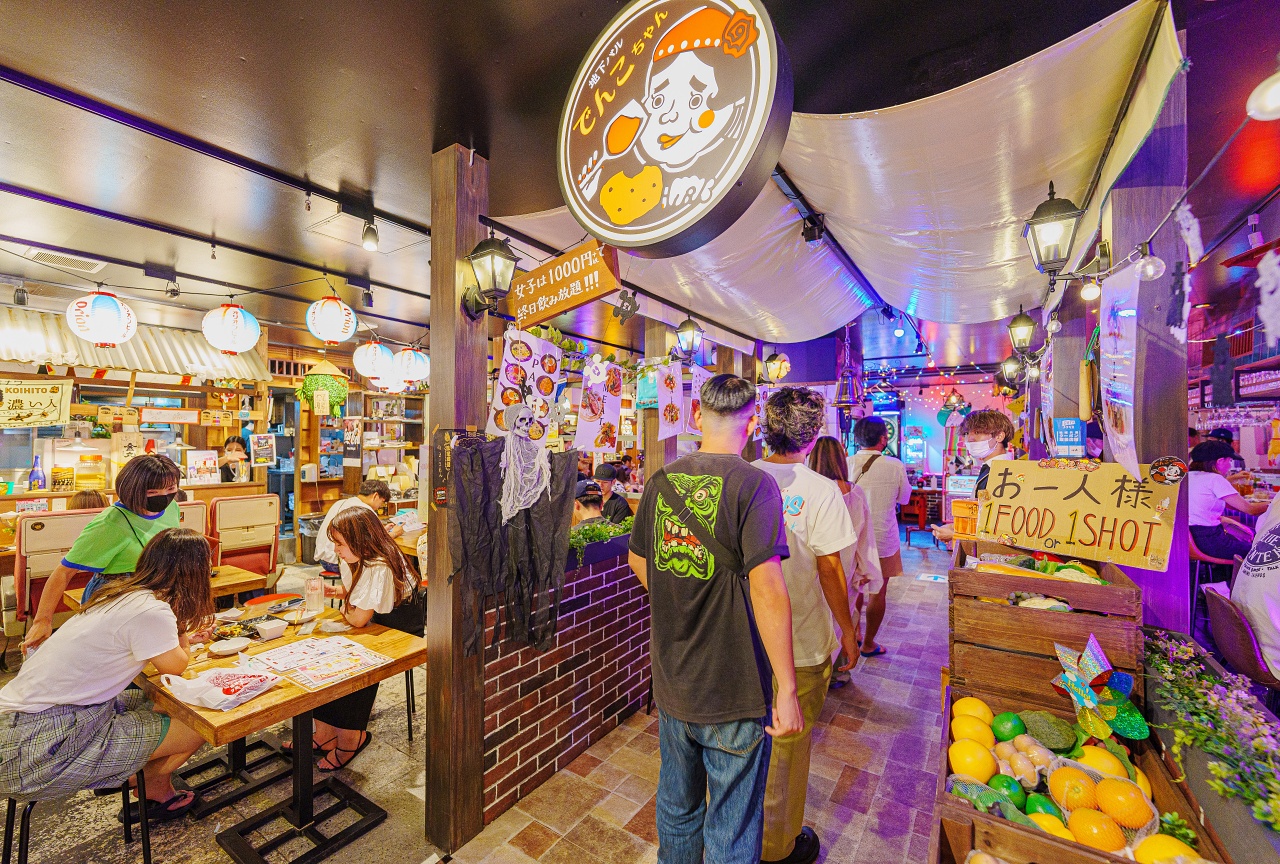
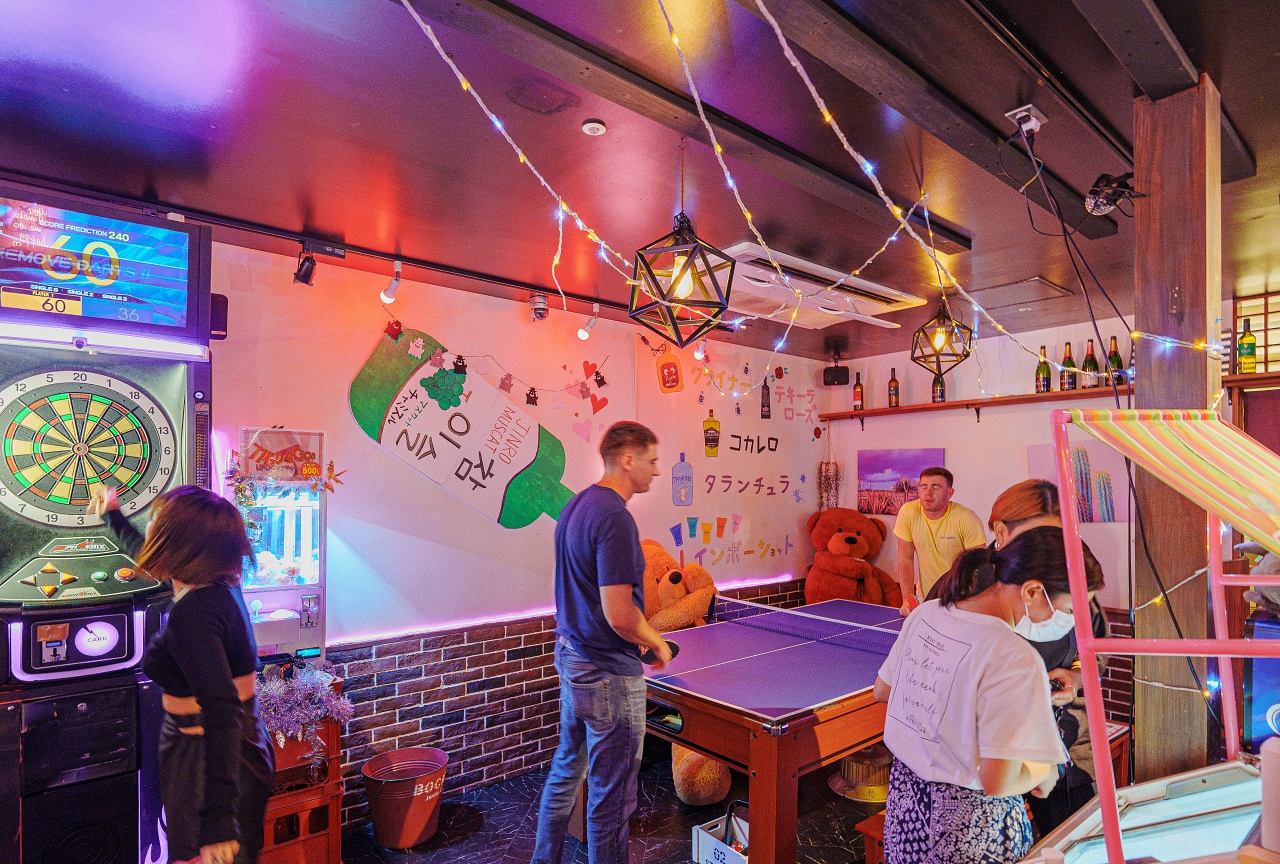
Denko-chan (でんこちゃん) has an unusual pricing system.
At the source date, women paid JPY 1,000 for unlimited drinks without a time limit, while men paid JPY 1,000 per hour. This records the historical offer without asserting current terms.
It drew many young women and had a queue to enter.
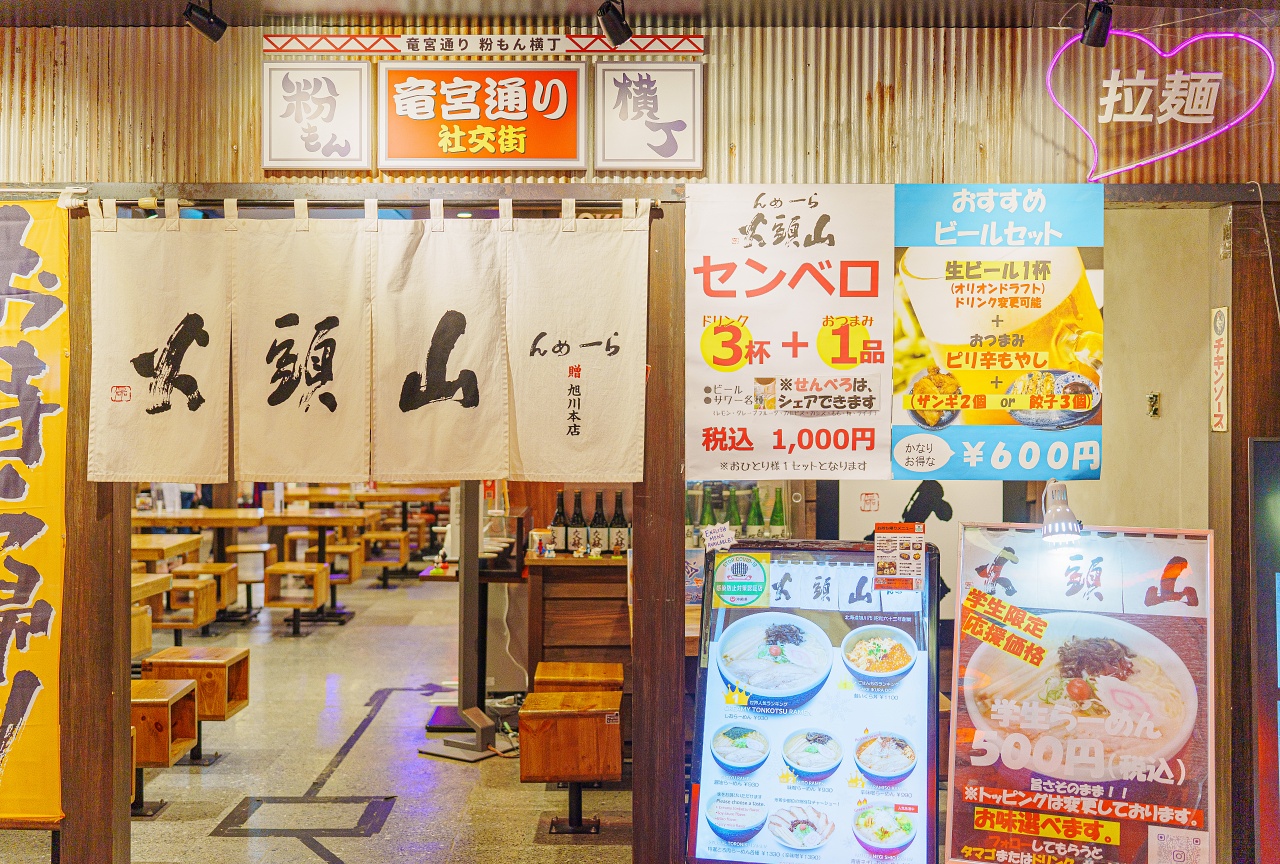
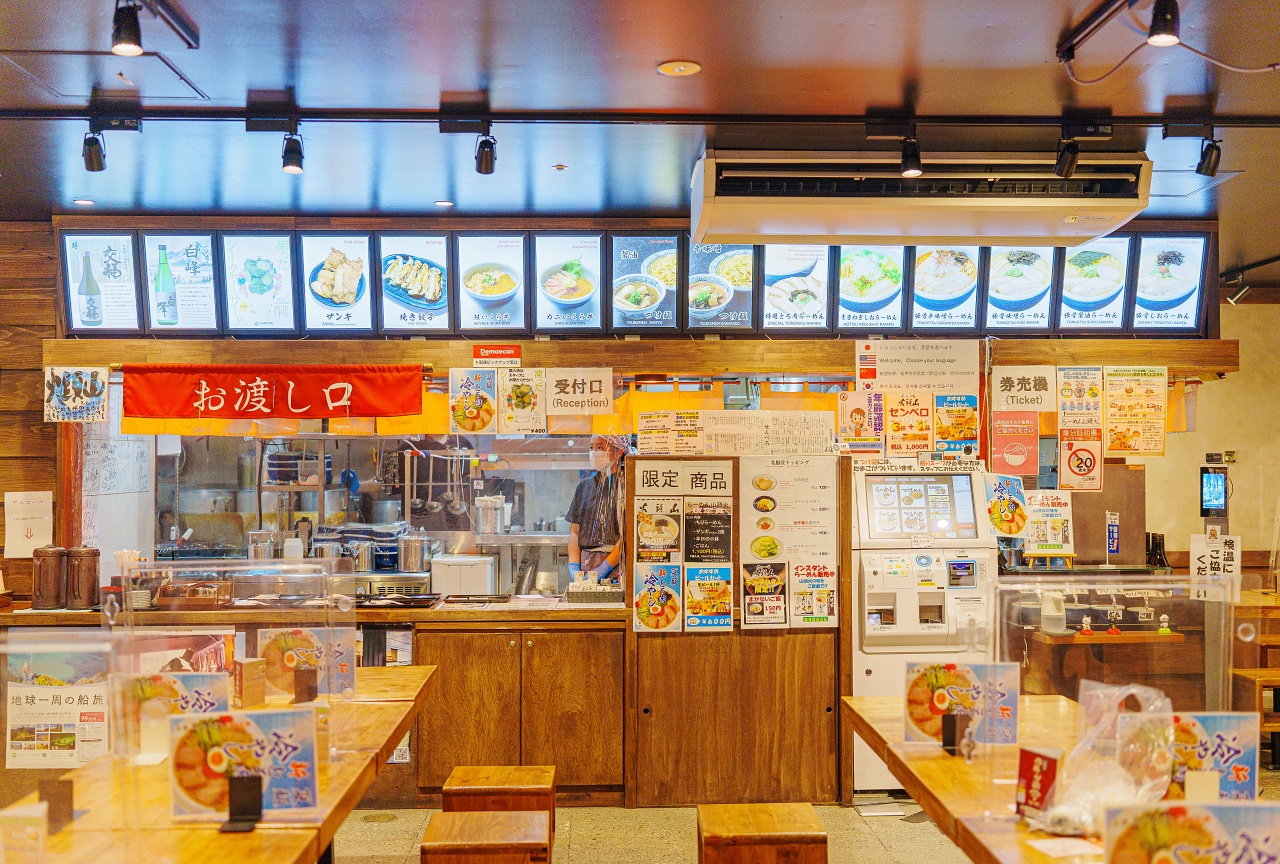
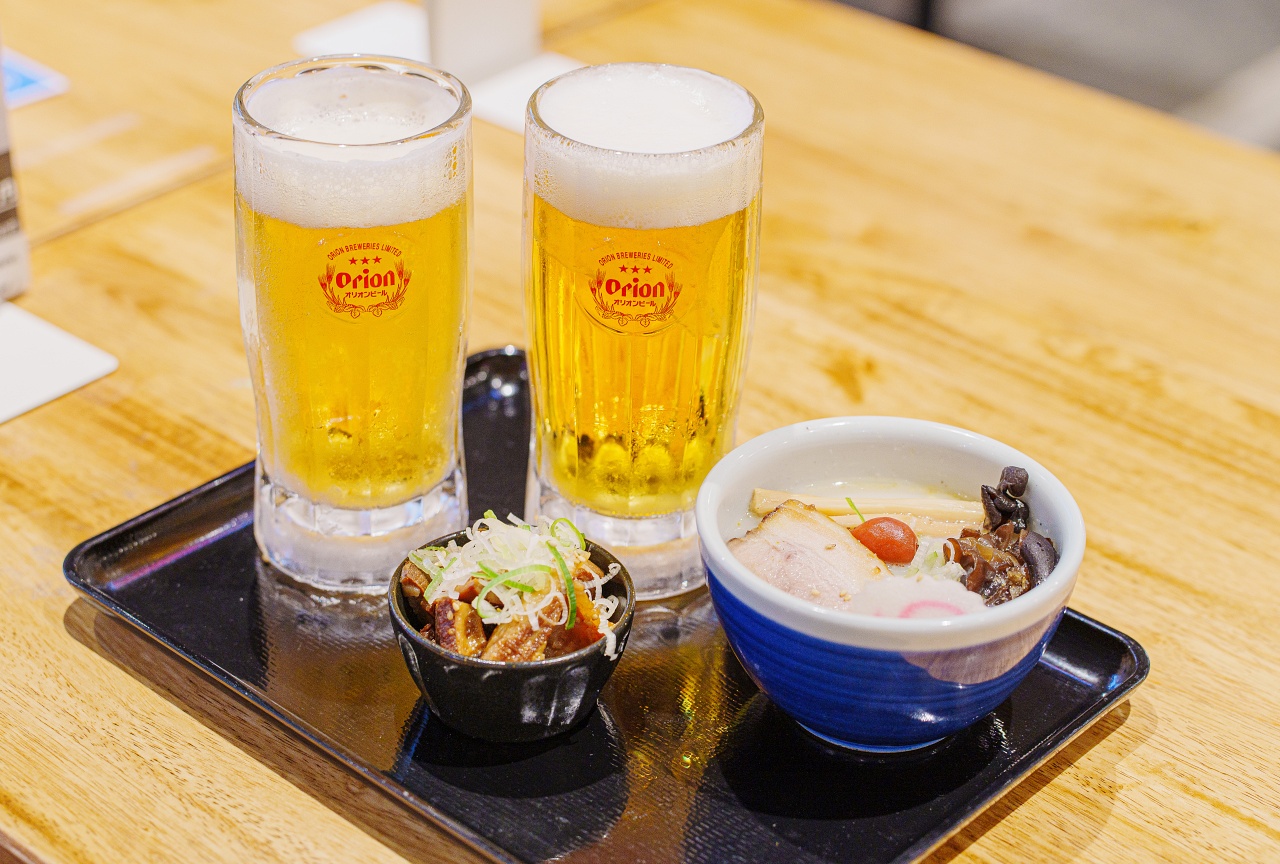
On Ryugu-dori is Santouka (山頭火), the ramen shop from Asahikawa, Hokkaido.
Its carefully cooked pork-bone broth is central, with shio ramen particularly well known.
A 2022 Visit to Kokusai Dori Norengai: The Pleasure of JPY 1,000
Previously, we introduced Kokusai Dori Norengai (国際通りのれん街), a 2022 Okinawa destination full of retro atmosphere. Eating and drinking are part of travel’s pleasure… [The original related-article excerpt ends here.]
errdaytrip.com
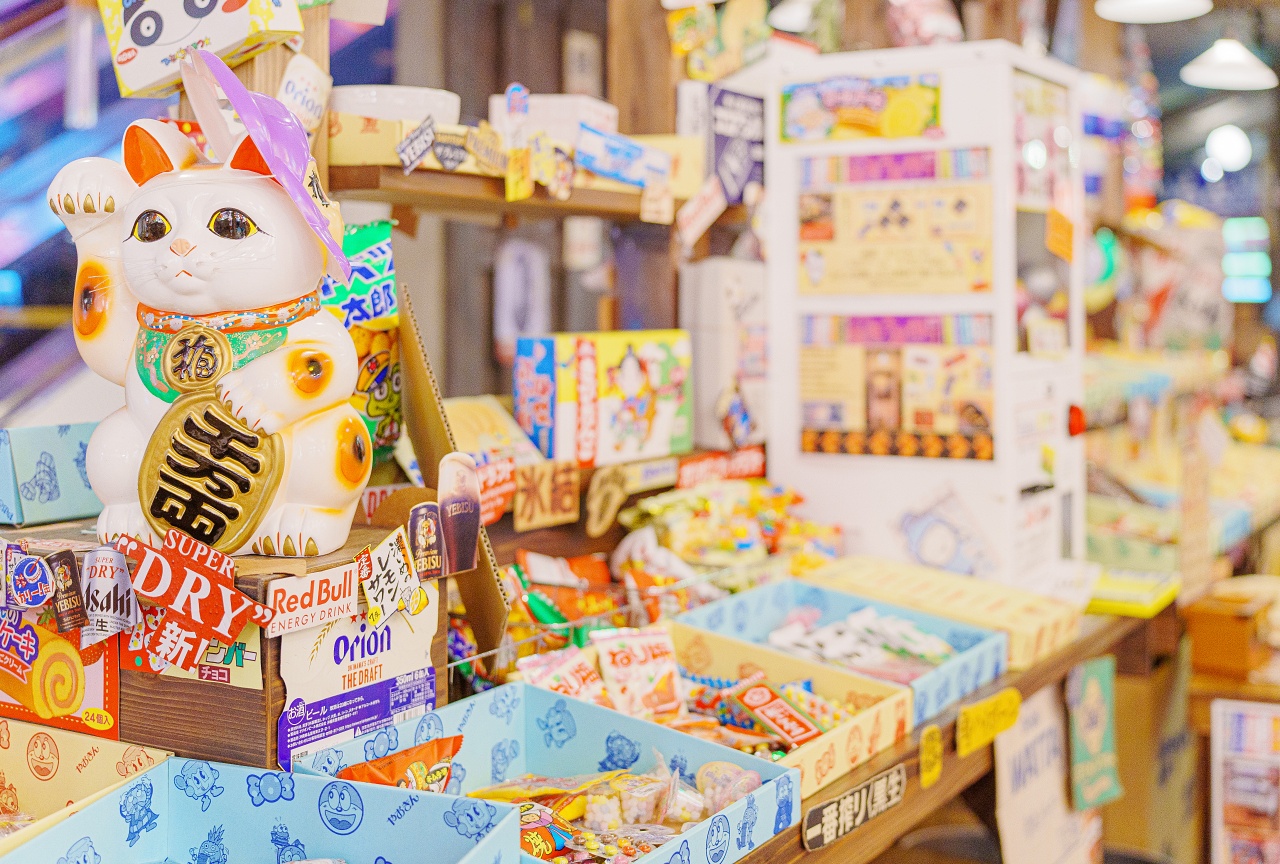
Near the entrance is Otona no Okashiya Yokocho (大人のお菓子屋横丁), another entertaining corner.
JPY 1,000 bought eight tokens to exchange for nostalgic sweets or drinks.
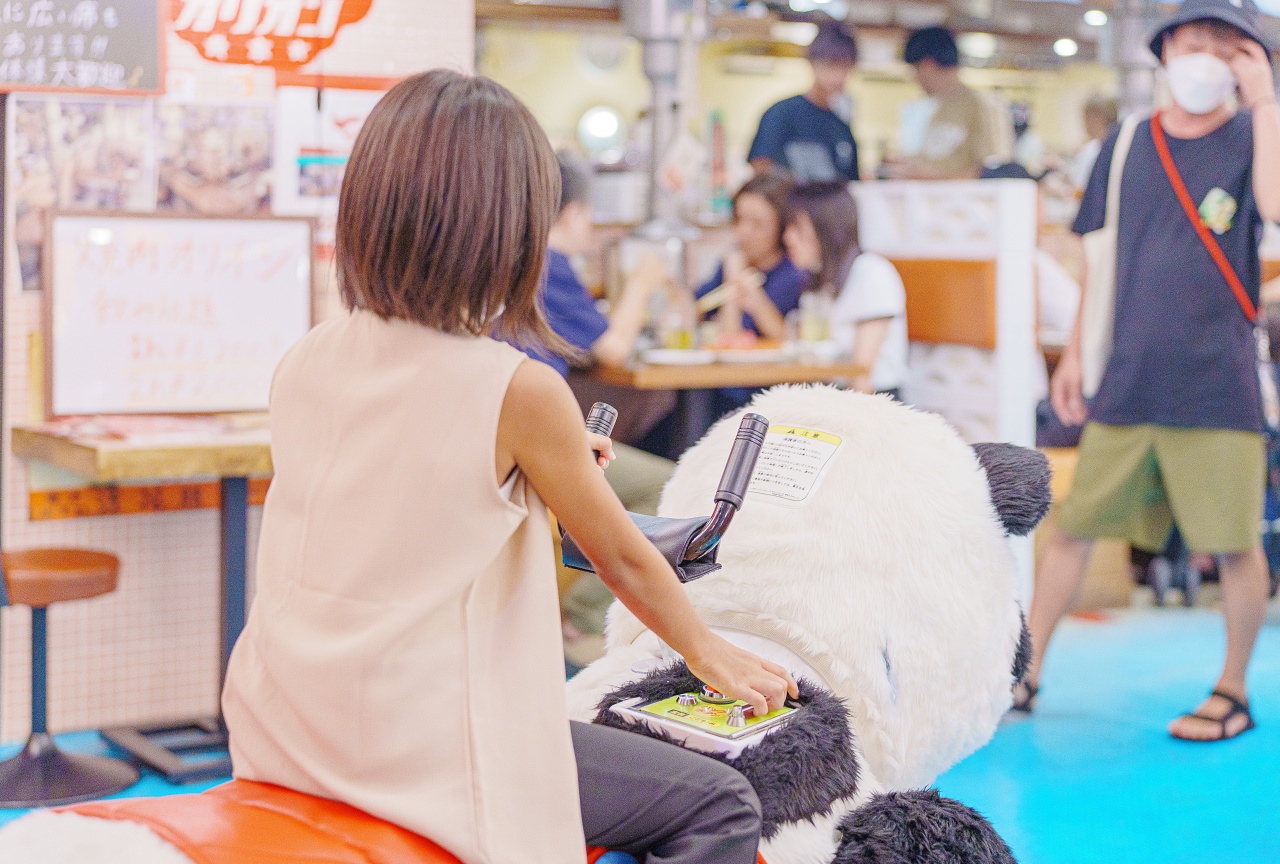
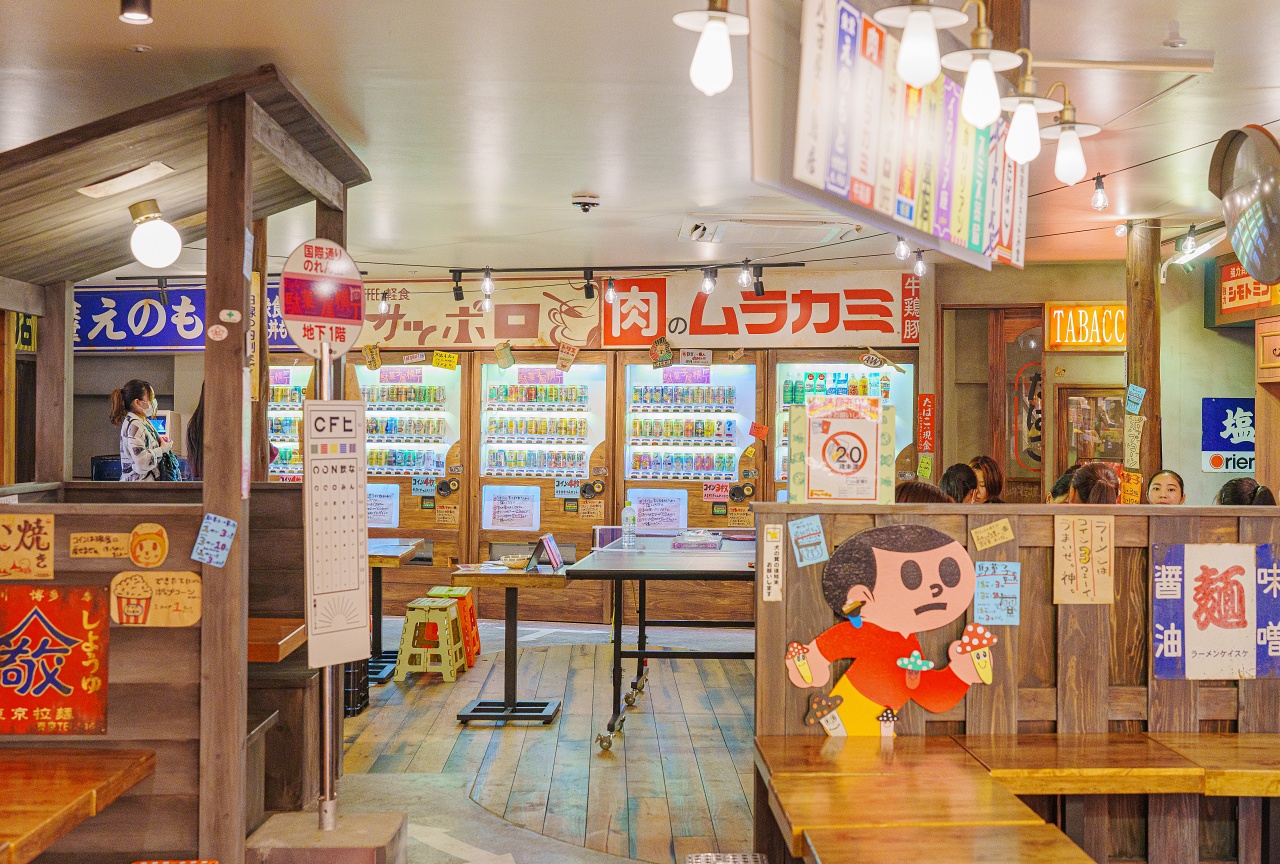
There is an arcade-like area children can enjoy,
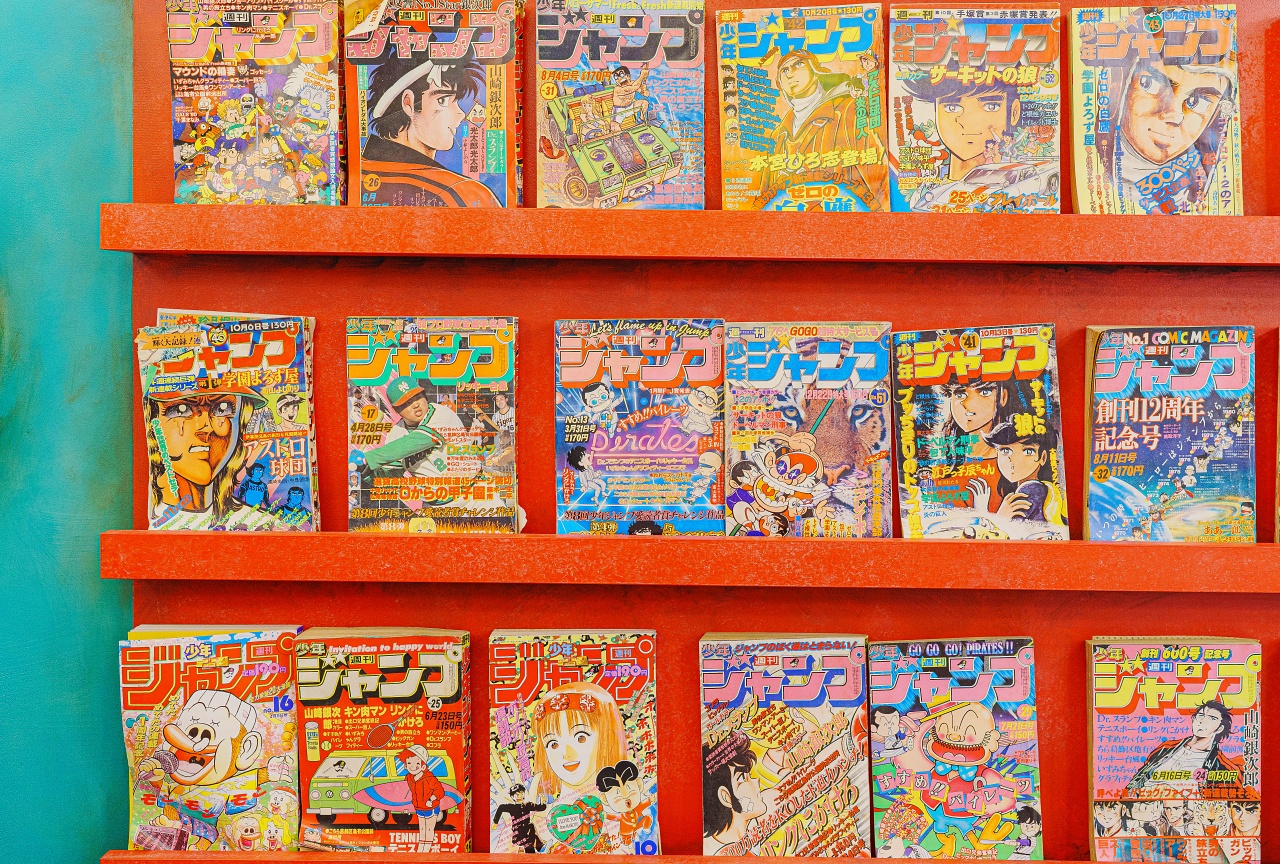
and old manga volumes on display.
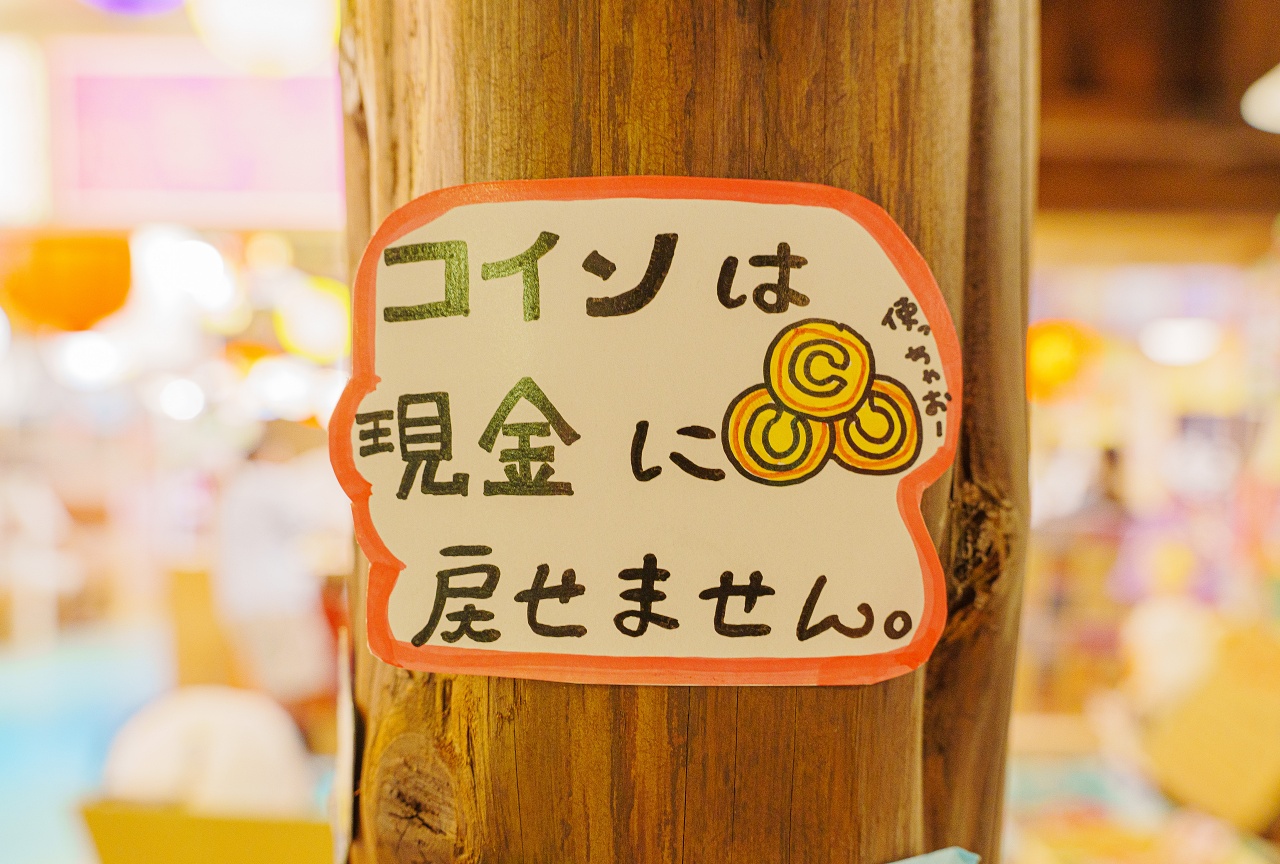
The tokens could not be exchanged back into cash.
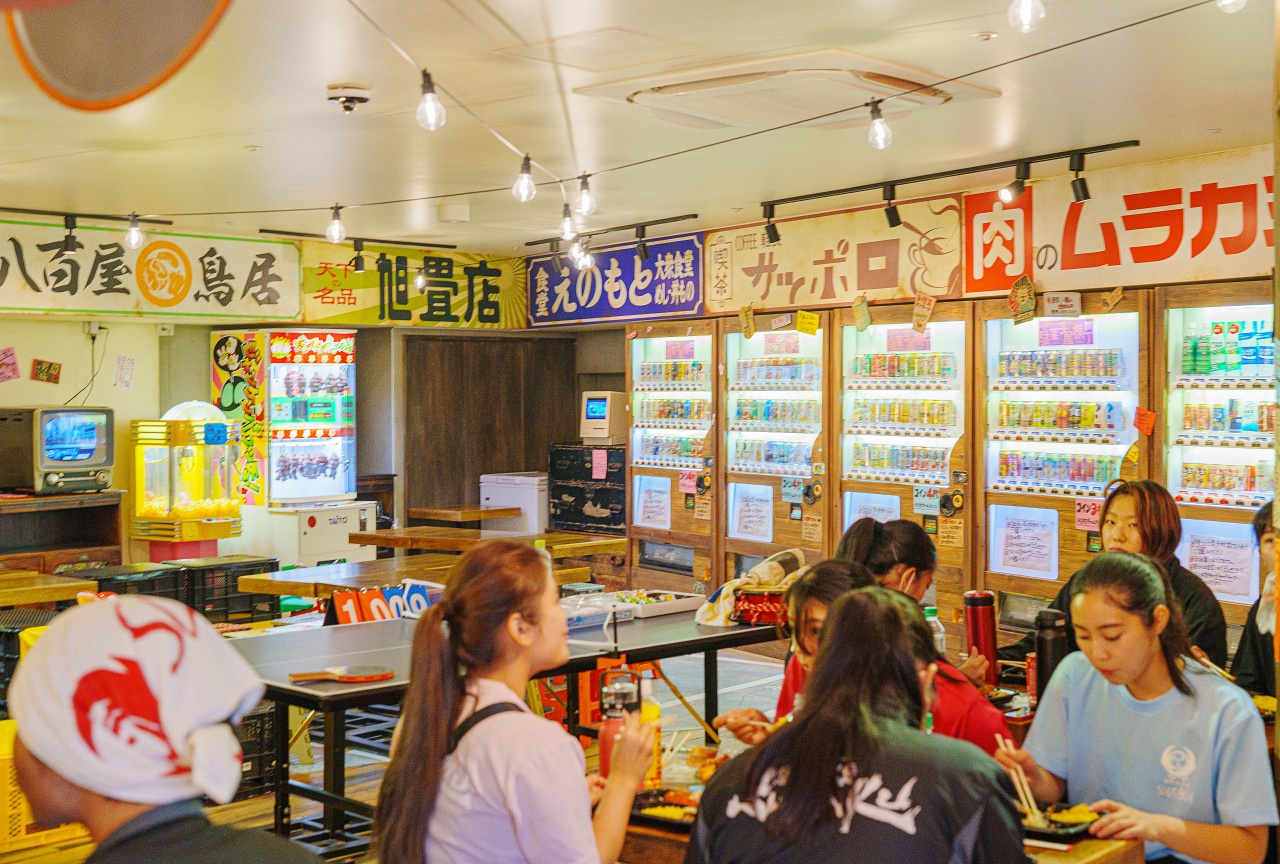
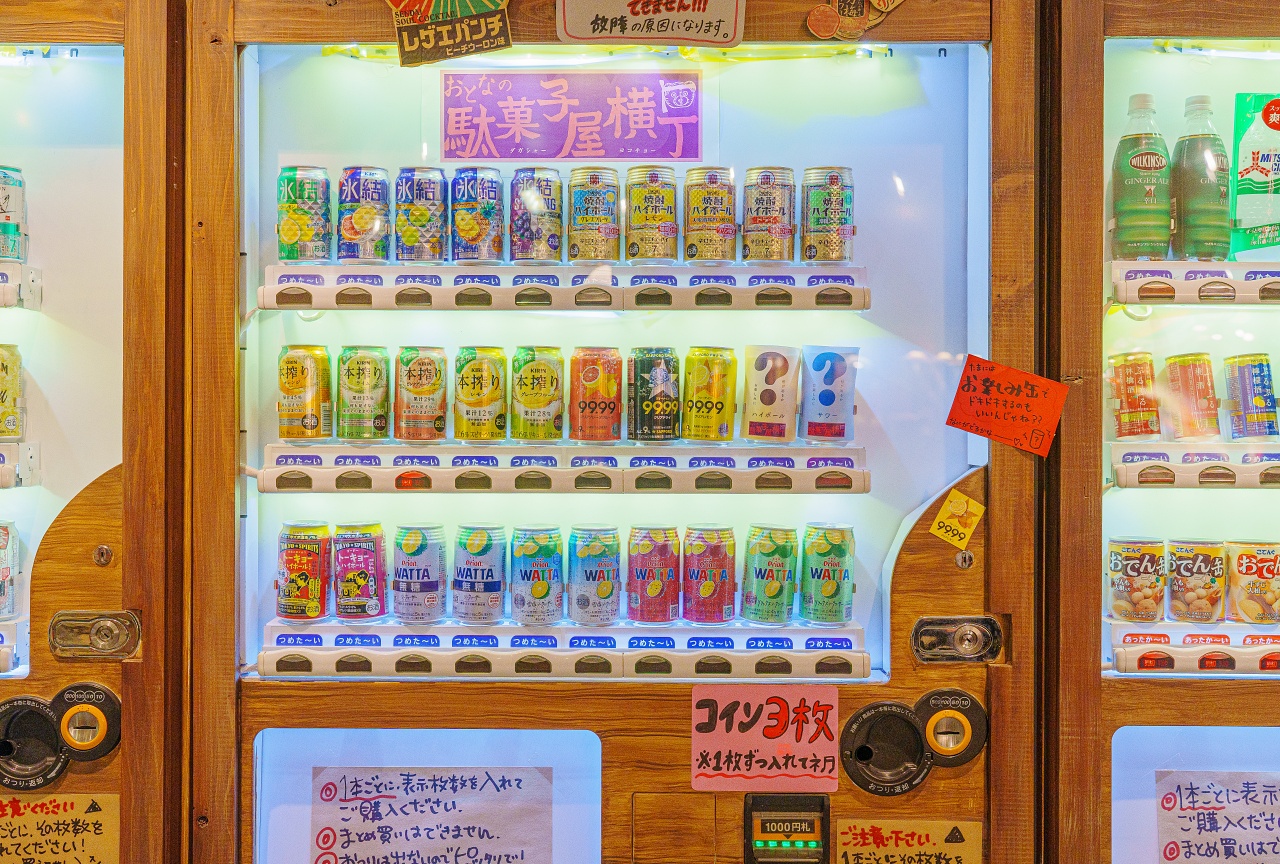
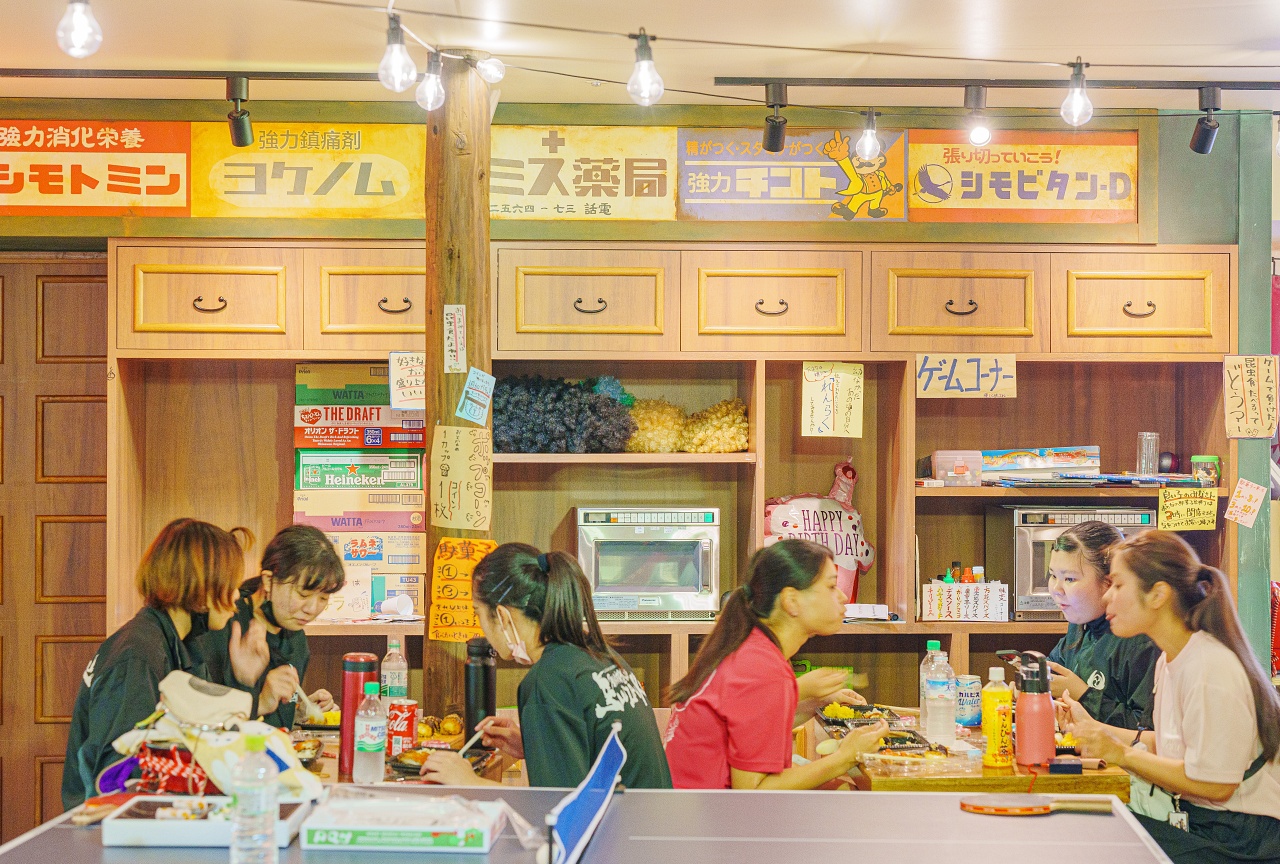
The source describes it as an area where minors could have fun when visiting with their families; alcohol remains for adults only.
Parents had somewhere to enjoy a drink while children had games to play.
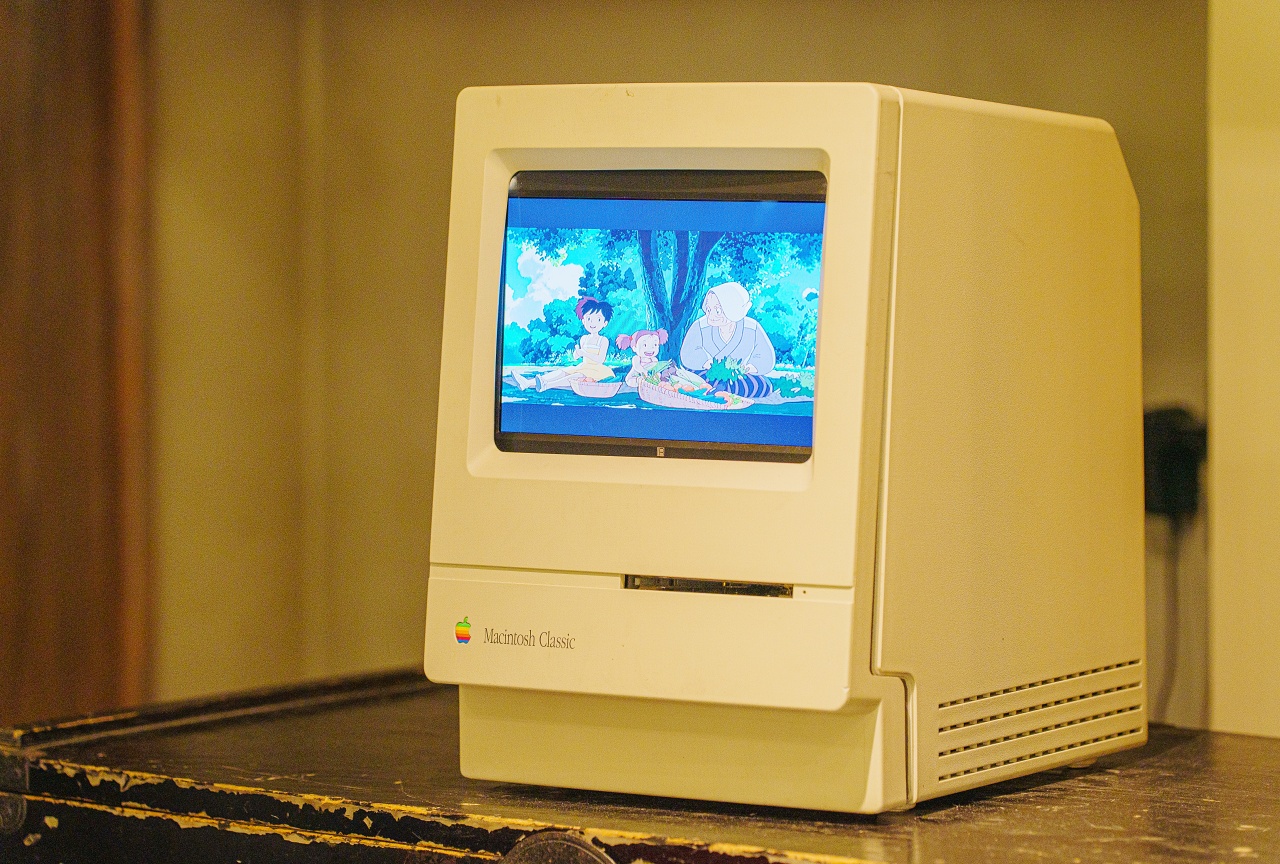
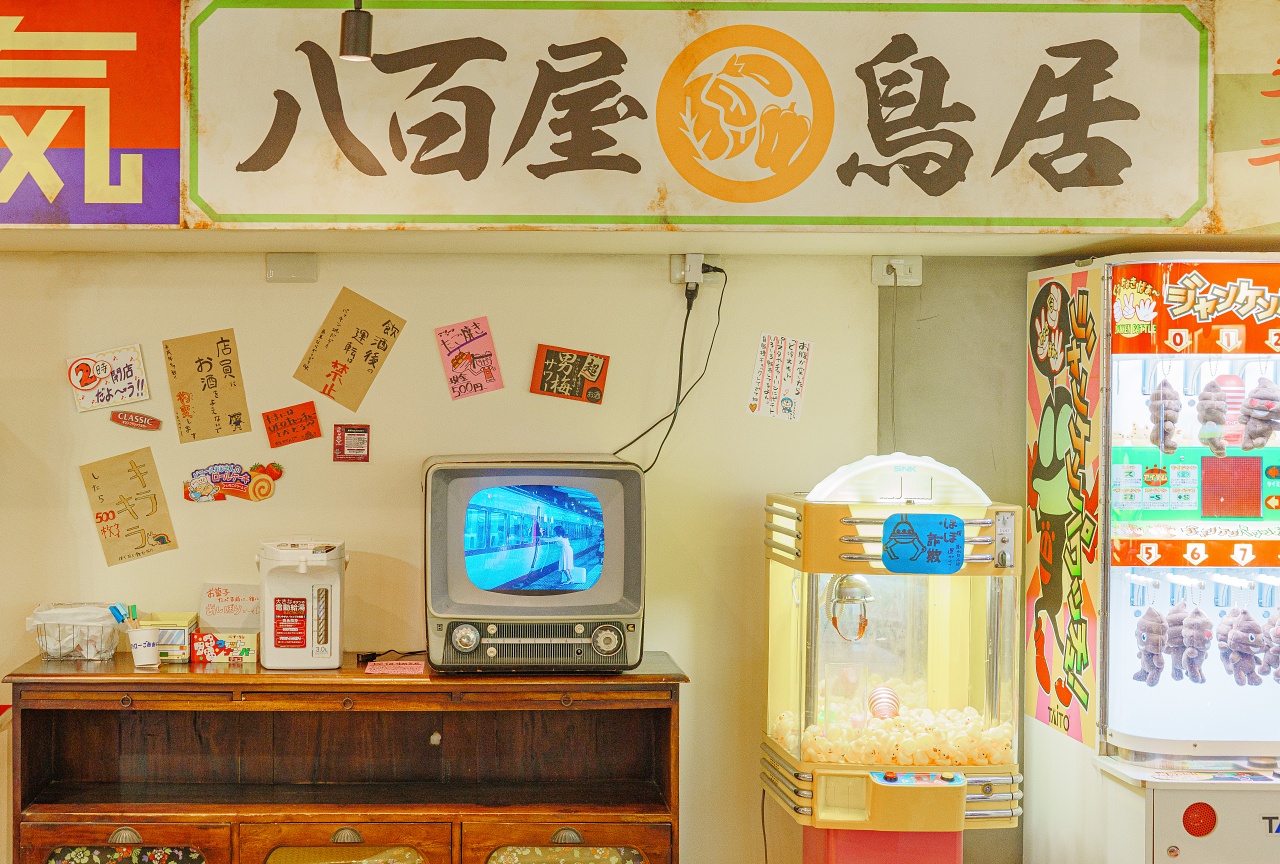
An old Macintosh, television and prize machines recreate individual details from the past.
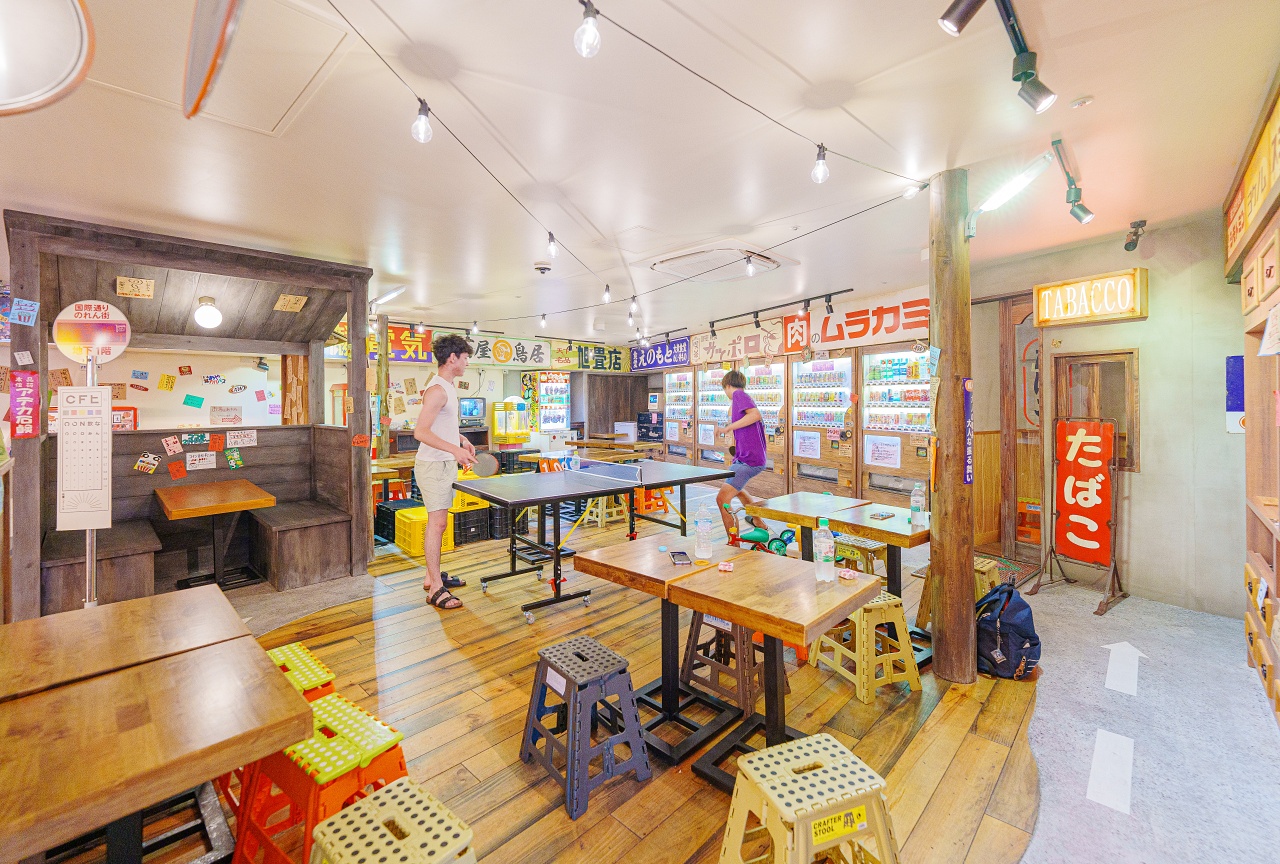
There is plenty to do.
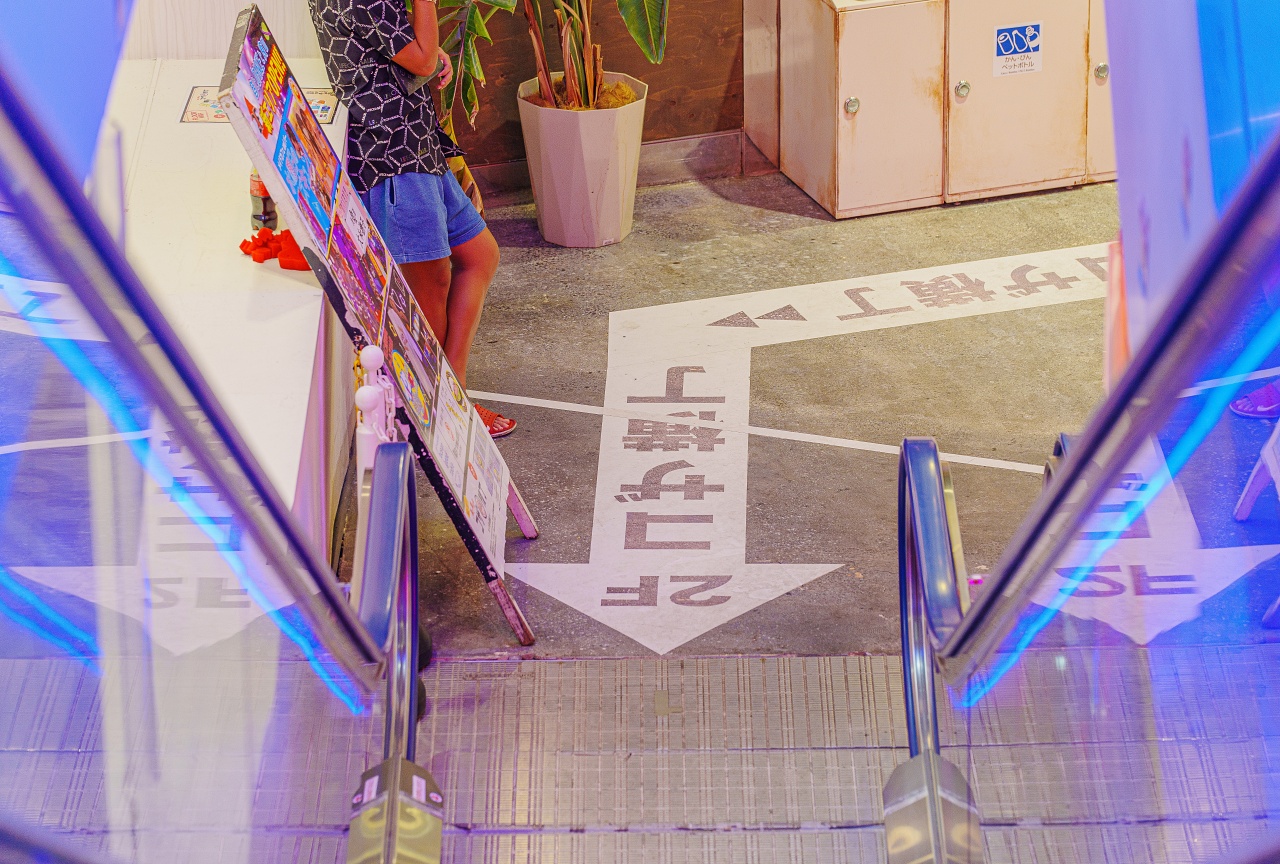
Now we go up to Koza Yokocho, the drinking-focused area opened in April 2022.

The second floor seems designed for people moving on to a second venue.
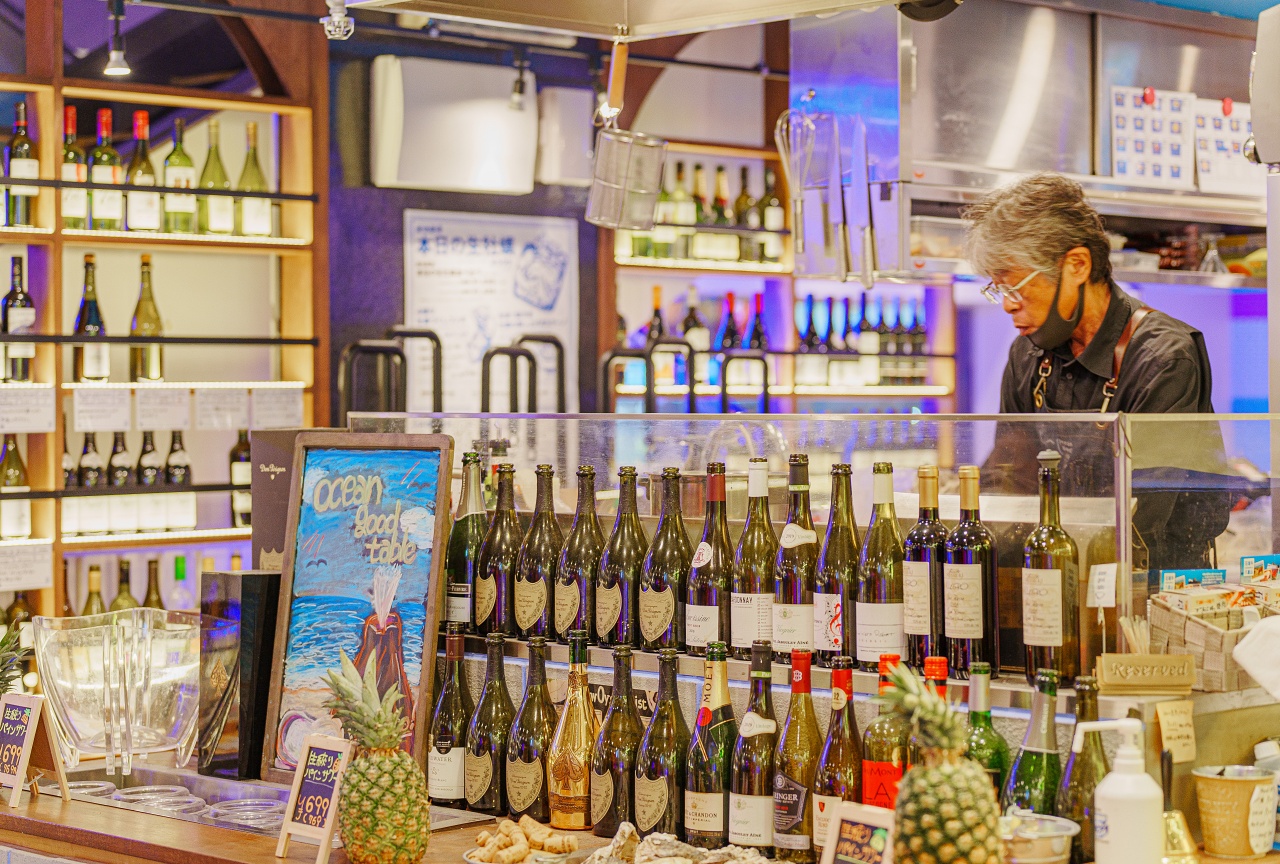
Ocean Good Table, a polished-looking place for wine and raw oysters.
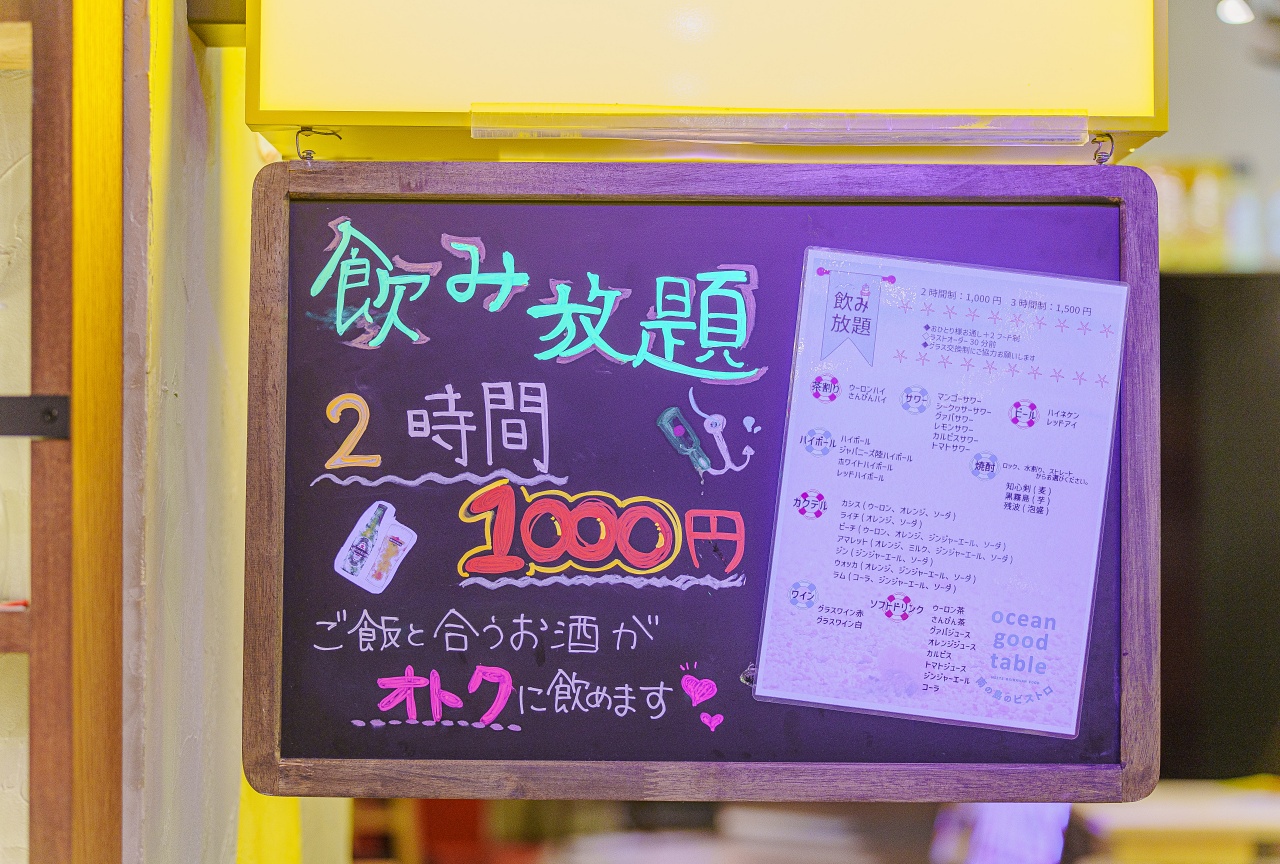
Though the atmosphere looks expensive, the quoted offer was two hours of unlimited drinks for JPY 1,000.
The setting surprises me, then the price surprises me again.
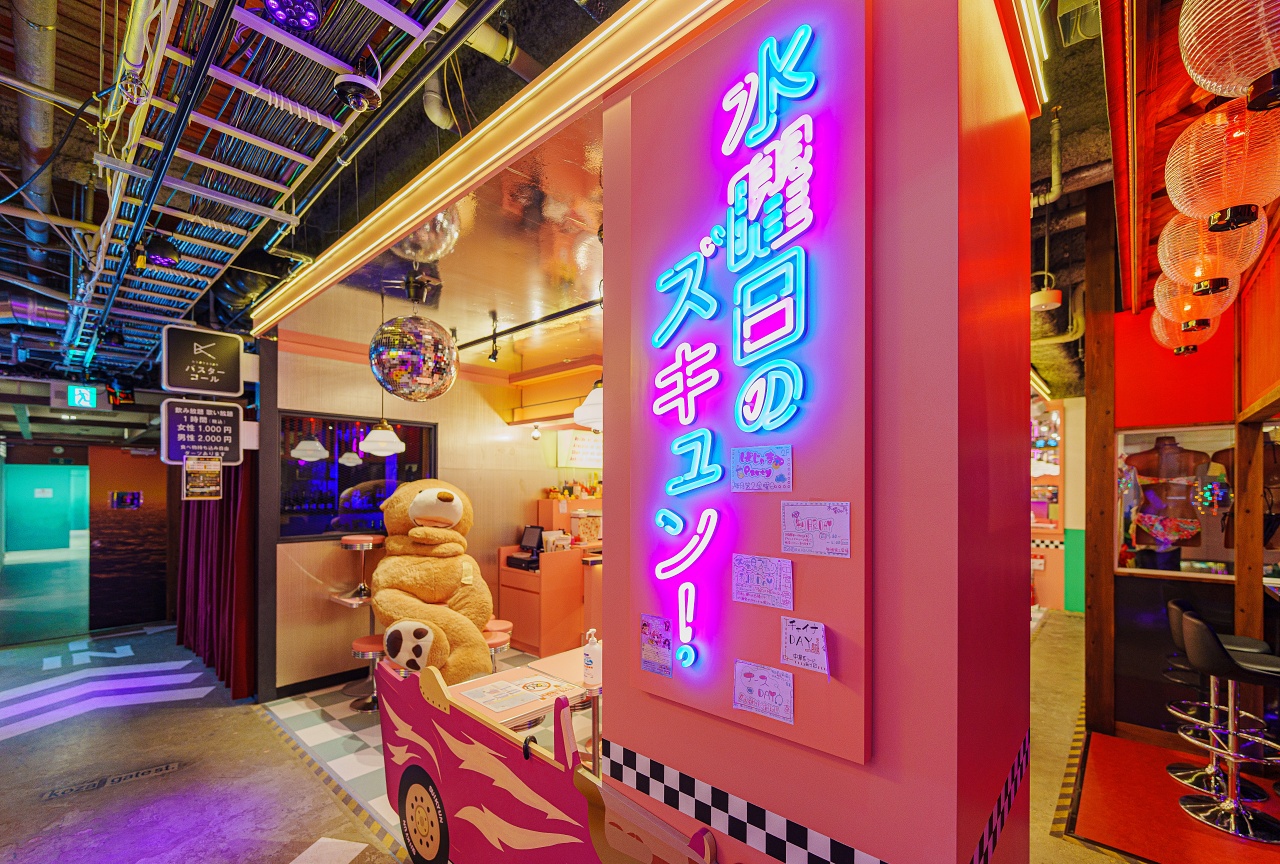
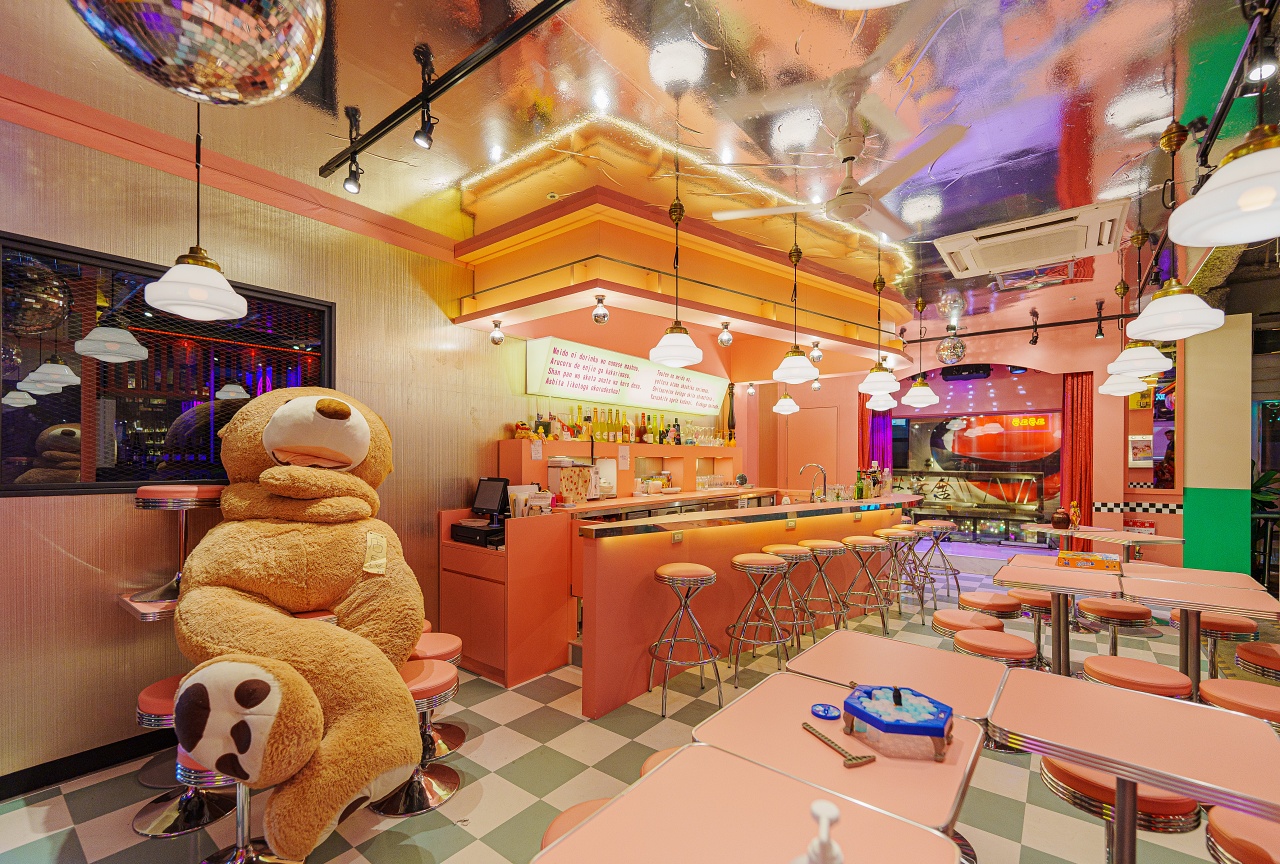
Pink-filled Suiyobi no Zukyun.
A maid café is an unusual find in Okinawa.
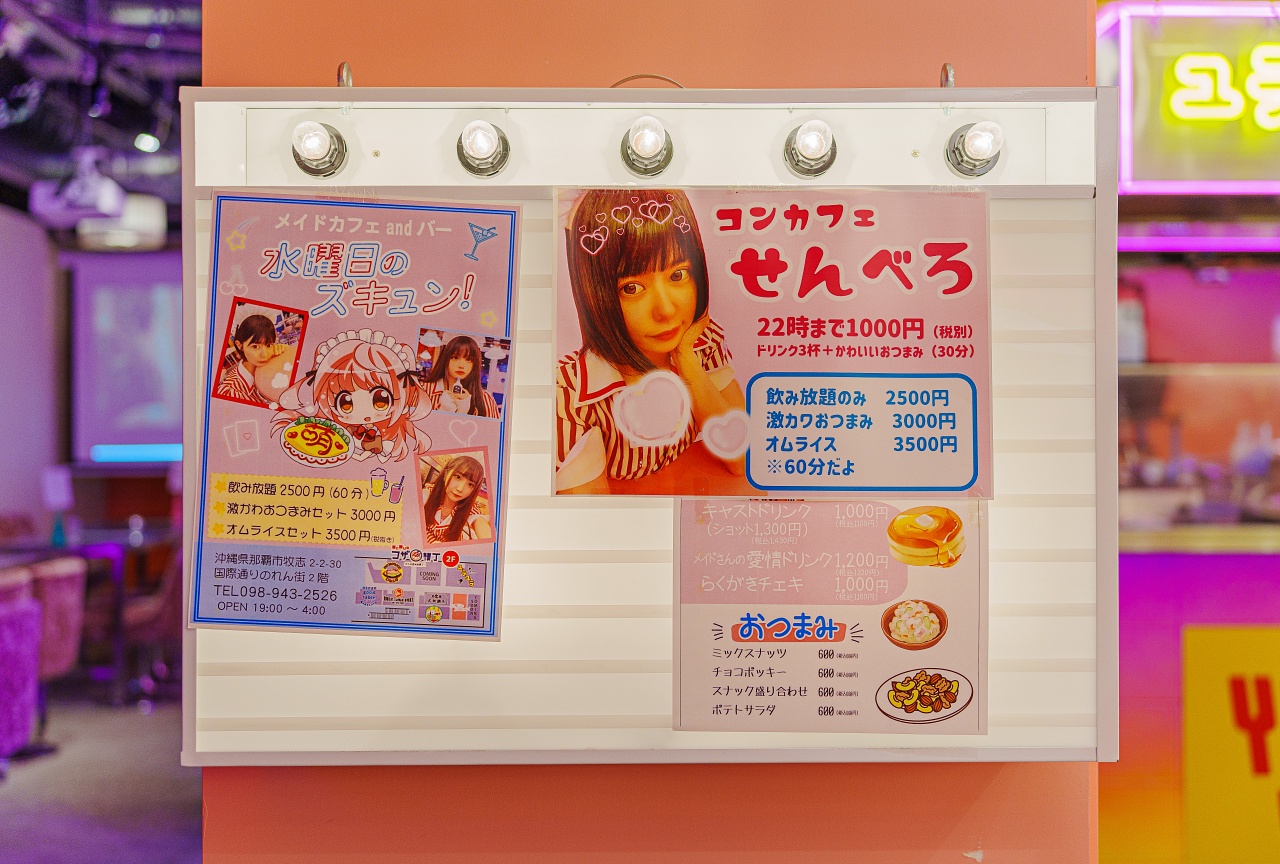
It is also my first encounter with senbero at a maid café.
Until 10 p.m., the historical offer was JPY 1,000 for 30 minutes, including three drinks and one simple snack.
It seemed an approachable option for someone curious about a maid café.
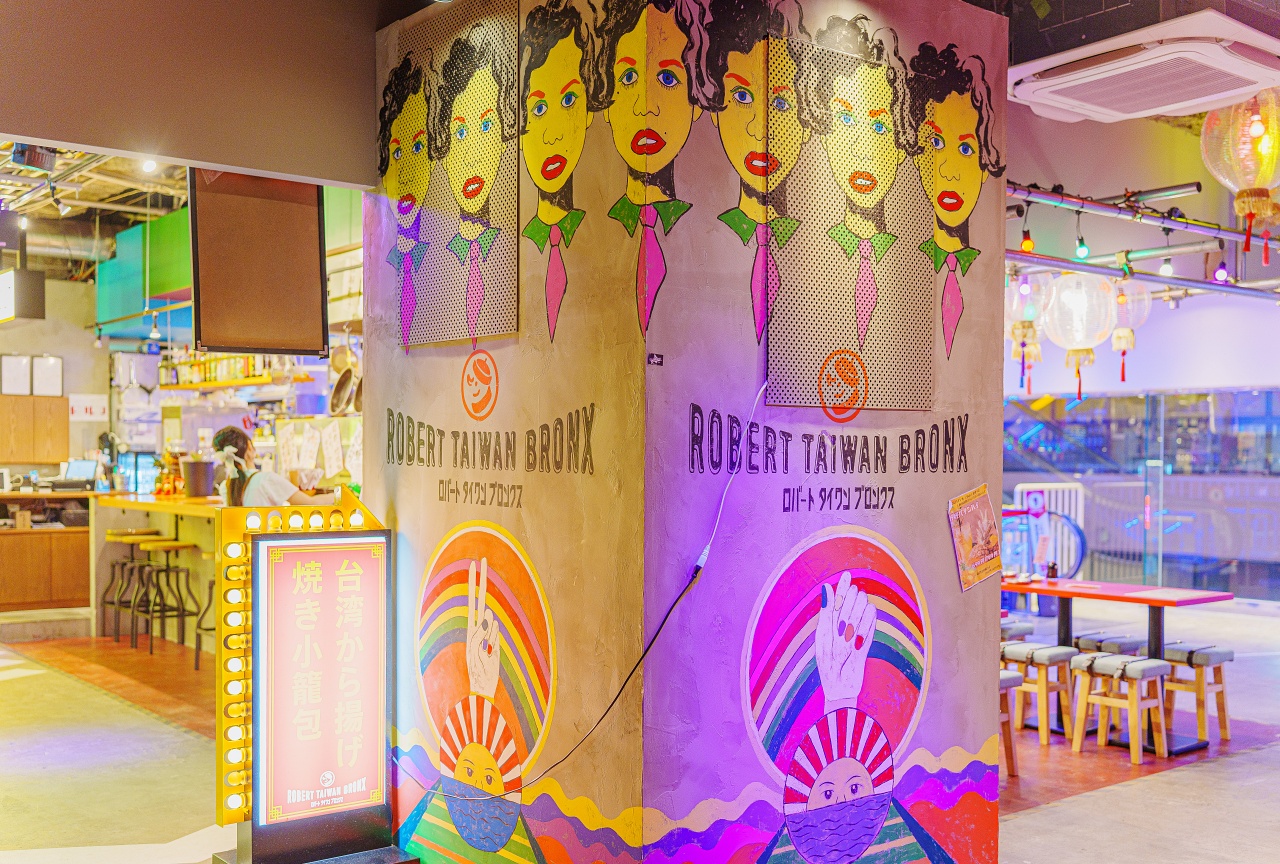
There are many other distinctive shops, enough to make repeat visits interesting.

From time to time, a shishimai (獅子舞) lion-dance figure, familiar from Okinawan festivals, moves through the complex.
Tradition says that someone playfully ‘bitten’ by the lion will have a happy year.
Norengai offers this sort of event as well as food and izakaya.
It is easy to see why people gather here.
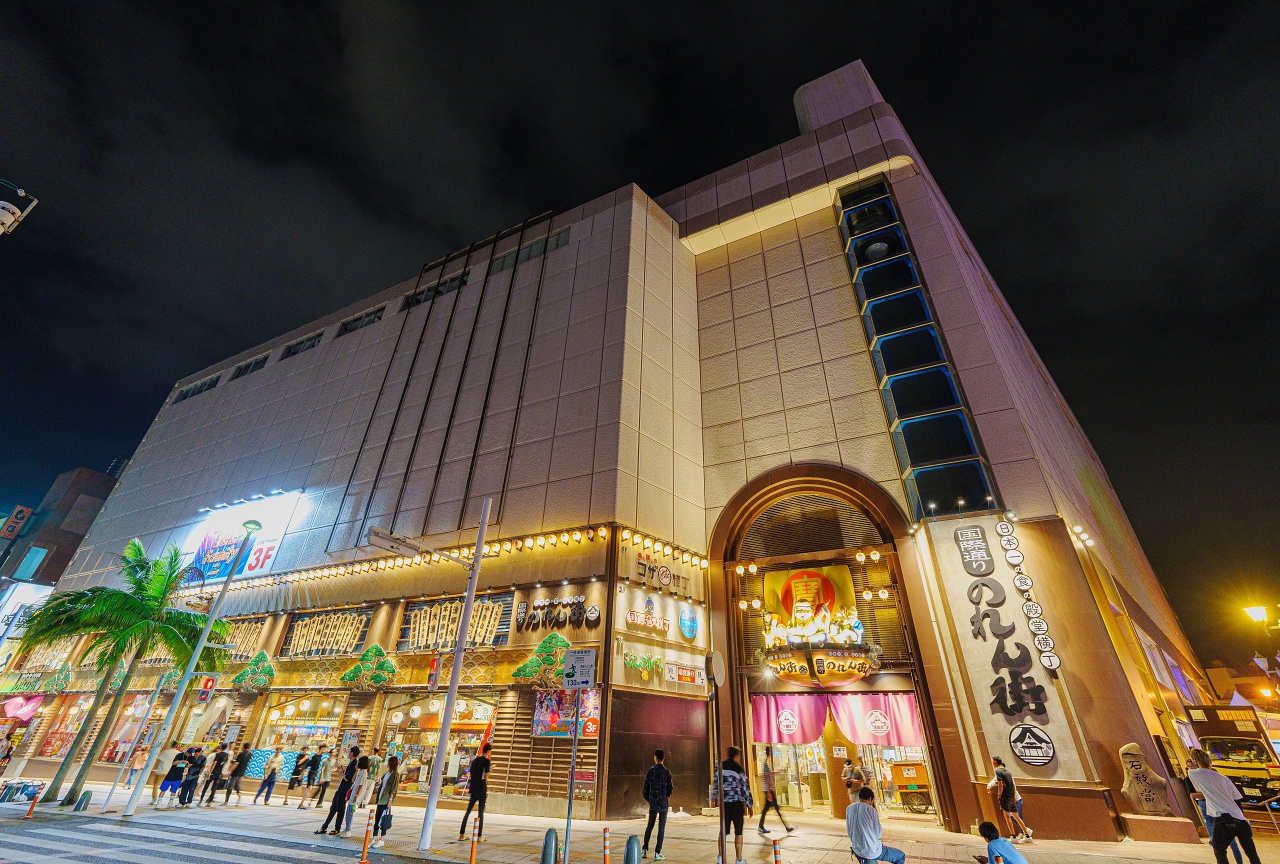
Opened in 2020 and continuing to add areas at the time of the account, Norengai kept evolving.
It combines nostalgia with local tastes and culture, rather than feeling like a collection of the same chains found everywhere.
The clean, well-organized facilities also avoid some of the inconveniences visitors may expect in older drinking lanes. Perhaps that helps explain its appeal to younger customers.
If you enjoy good food and drinks, I would recommend considering Kokusai Dori Norengai on an Okinawa trip.
Kokusai Dori Norengai (国際通りのれん街)
Address: Ryubo Shoji Headquarters Building, 2-2-30 Makishi, Naha, Okinawa 900-0013 (the source prints ‘chrome’ for chome)
Menu website: kokusaidori-norengai.com