This guide brings together 3 Minute Travel’s Fukuoka restaurant and café visit records and official-source introductions. Browse by area or food, then use the shared Google Maps list and each venue’s map to plan your route.
Start with the areas already on your itinerary, such as Hakata Station, Tenjin, or Nakasu, then narrow the list by ramen, hot pot, sushi, yakiniku, or whatever you want to eat. Alongside restaurants, this guide includes cafés, lounges, and nearby destinations. It also covers dining and cafés in Mojiko, Kitakyushu, and a standing sushi bar at Kokura Station; these are outside Fukuoka City.
Browse the dining guide below. Historical prices, operating details, and closure labels remain tied to the original record; they have not all been reconfirmed for today. Destinations outside Fukuoka City, including Kitakyushu, Yufuin and Furuyu Onsen, remain clearly identified in their records.
Visit records and official information: The guide draws on existing dining reviews and photographed shop records. Newly added introductions also incorporate checked official information.
Accommodation and travel routes: Compare the neighborhoods already on your itinerary—Hakata, Tenjin, Nakasu, and others—with the dishes you want to eat.
Scope: This is a collection of 171 records, combining 146 existing entries and 25 new introductions. It includes restaurants, cafés, lounges, nearby destinations, and historical records. Repeated venues and return visits mean the number is not a count of unique restaurants, and the numbering is not a ranking.
Before visiting: Prices, menus, hours, and closure days can change. Check the restaurant’s official information and its individual map before you go.
Guide update: October 15, 2026. Introductions and individual maps were added for 24 Fukuoka City restaurants and cafés and one standing sushi bar at Kokura Station in Kitakyushu, with their public operator information checked. This date does not mean that prices and operating information for every older record were rechecked.
English adaptation: October 28, 2026. Source capture: October 28, 2026, Japan time. Names without a supplied Latin spelling use editorial transliteration; original Japanese names are retained where present. This does not claim a verified official English brand name.
Short on time? Start here
These are 10 Fukuoka editor’s picks. Choose the neighborhood and food that fit your plans, then follow the name to the detailed record and map. The numbers and display order are not a restaurant ranking.
How was this Fukuoka restaurant list put together?
It combines existing meal reviews, photographed shop records, and official information. Choose by food type or neighborhood, then compare the older reviews with the new introductions. Cafés, lounges, nearby destinations, and entries marked closed are also included.
Where can I find the Fukuoka restaurant Google Maps list?
Open 3 Minute Travel’s shared Fukuoka restaurant list. Its coverage may differ from this page, so use the individual Google Maps links in each detailed record for the place you want.
For a meal before or after JR travel, start with Hakata Station and its Chikushi Exit. For dining alongside shopping, look at Tenjin and Daimyo. Other neighborhood groups cover Nakasu and Haruyoshi; Yakuin, Shirokane, and Takasago; Ropponmatsu; and Ohashi. If taking the Shinkansen at Kokura Station in nearby Kitakyushu, consider Heishiro’s standing sushi branch inside the gates.
How do I choose what to eat in Fukuoka?
Use the food categories to compare ramen, udon and soba; hot pots; sushi, seafood and eel; or yakiniku and other meat dishes. Read the menu details and descriptions in each record alongside the existing photos and reviews.
Are the prices and operating details current?
Some information records menus and prices at the time of a visit, and some historical entries are marked closed. Before traveling, check the restaurant’s official information and individual map for hours, closure days, and reservation terms.
Related travel guides
English destinations are linked where already prepared. Other source guides open the Korean original.
Record 001 · Original dining, photographed-shop or historical record
Chibo no Tantanmen
ちー坊のタンタン麺
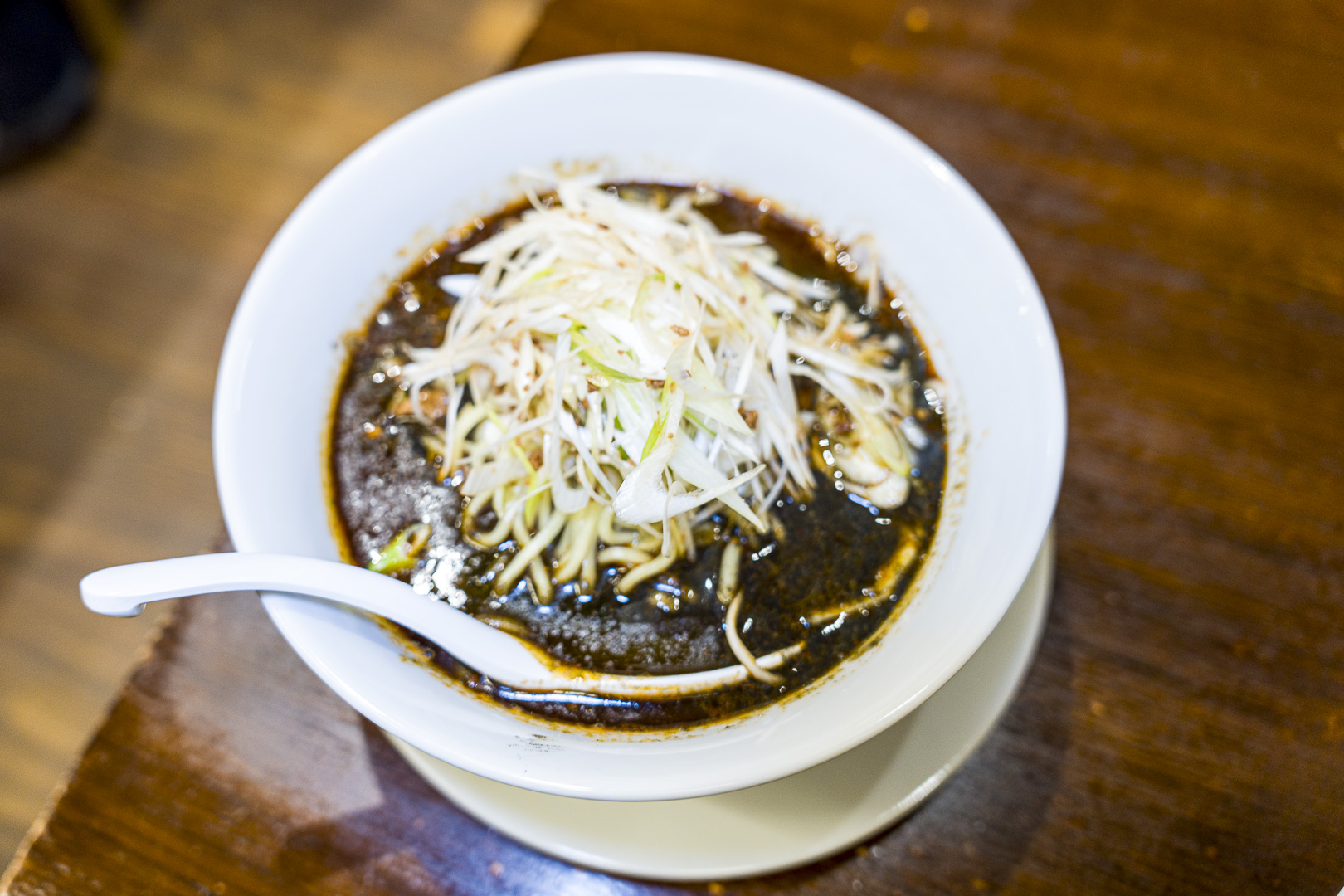
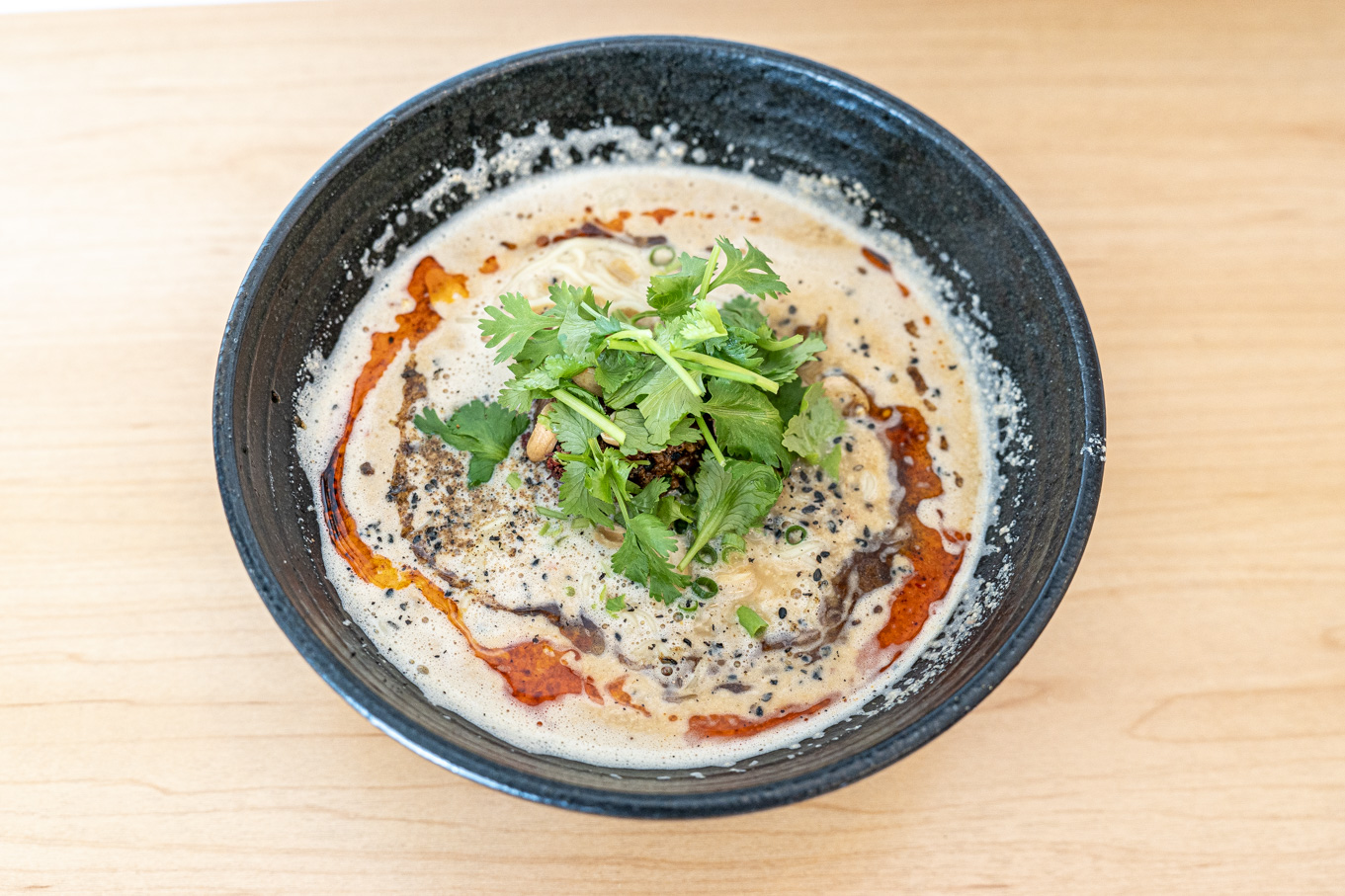
We visited this tantanmen specialist on the strong recommendation of someone who works in Fukuoka. We tried black-sesame tantanmen, with its striking dark broth, and golden-brown pan-fried gyoza. Lift the noodles and a dense coating of black sesame comes with them, bringing a rich, nutty flavor to every bite. Shredded scallions add texture and keep the bowl interesting. A little of the red seasoning changes the flavor, while dipping the gyoza in sauce and alternating them with the noodles makes a satisfying combination. Keep it in mind if you want a different kind of meal in Fukuoka with an especially deep black-sesame flavor.
Record 002 · Original dining, photographed-shop or historical record
WAGYU PINFU
和牛ピンフ
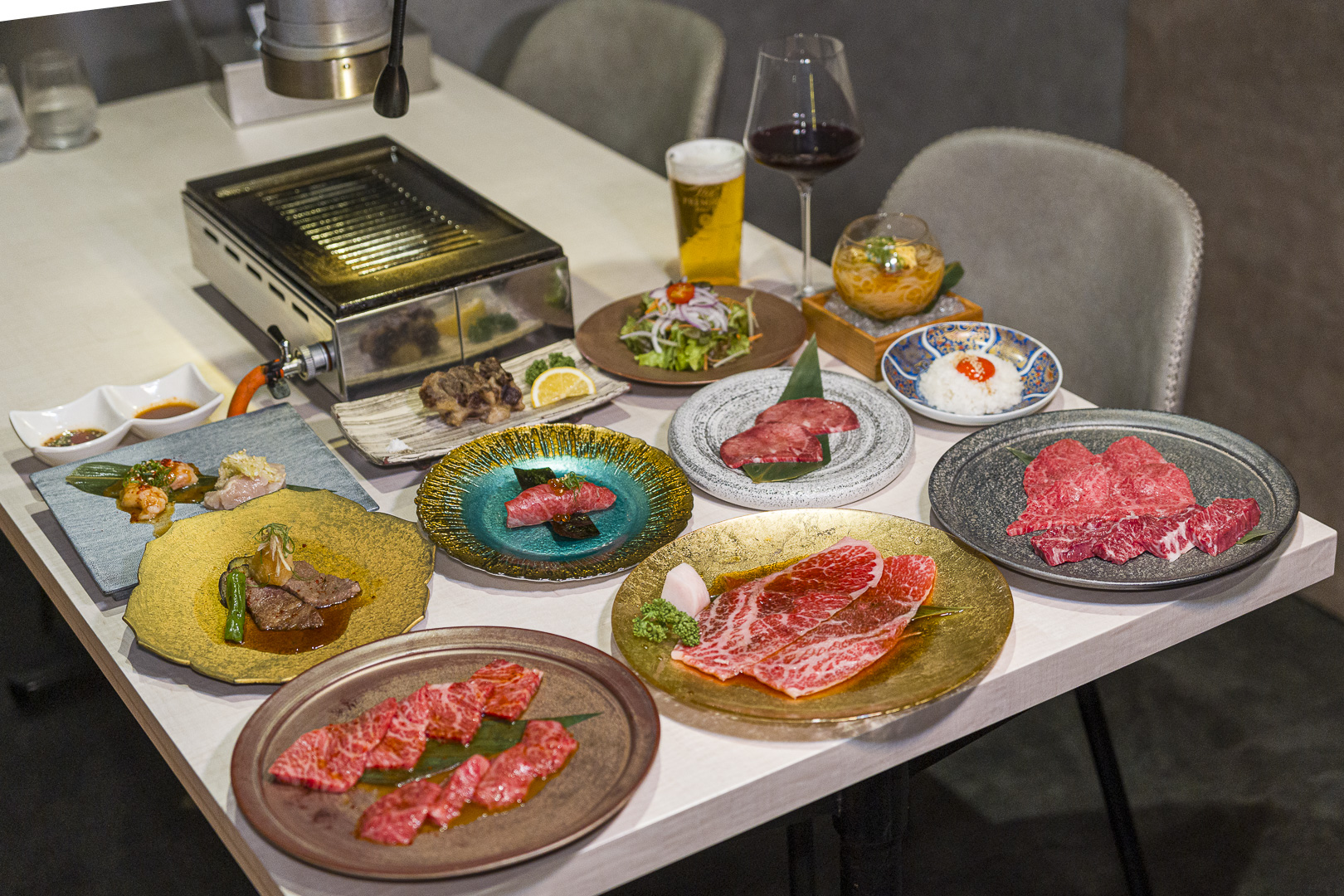
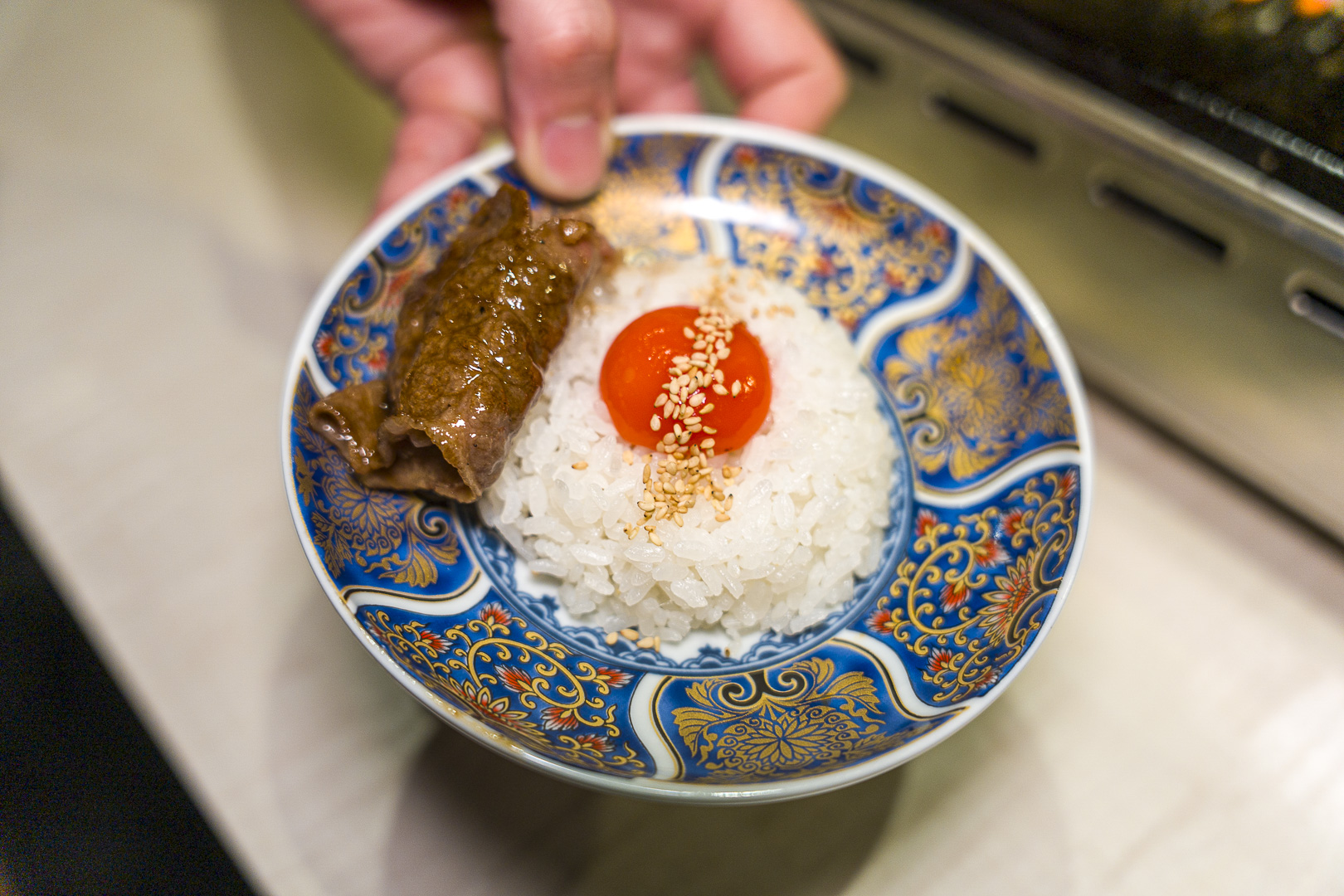
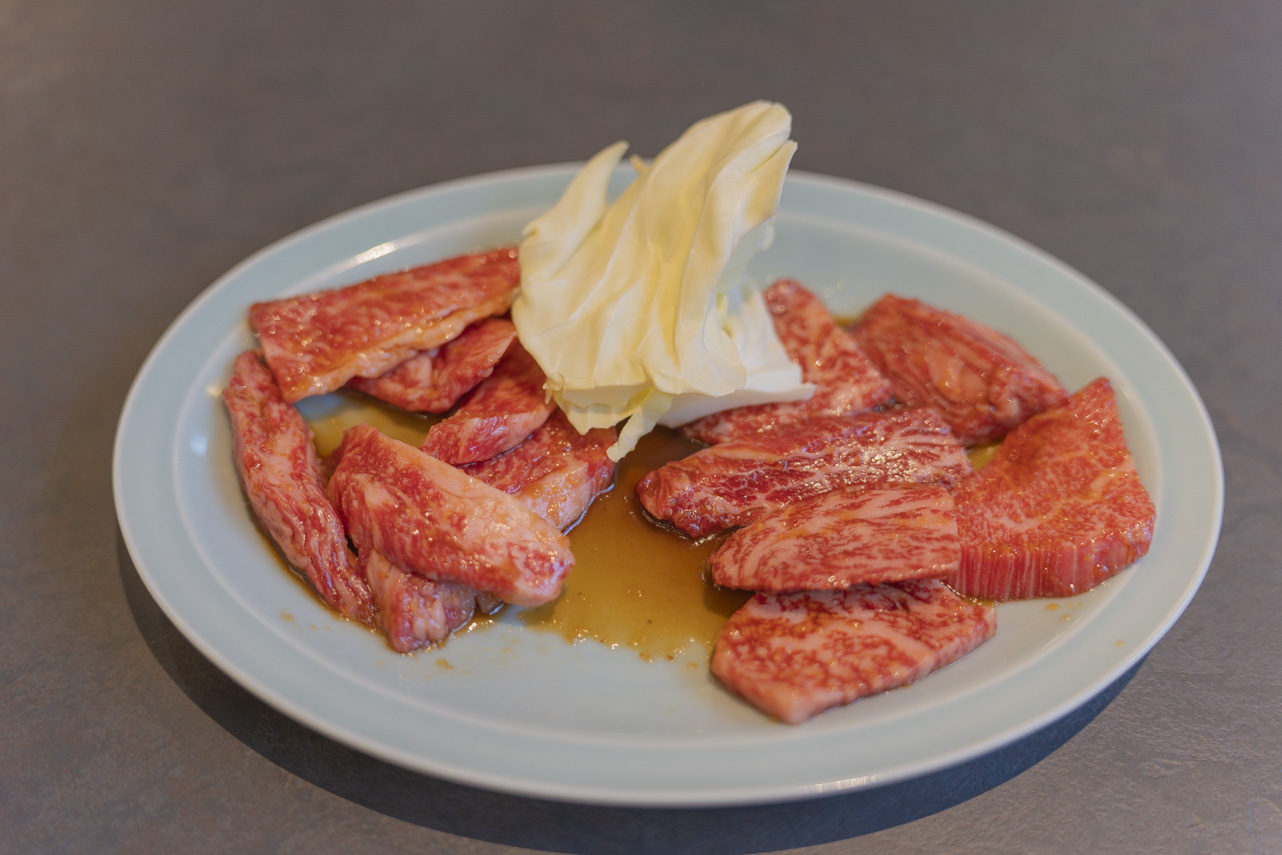
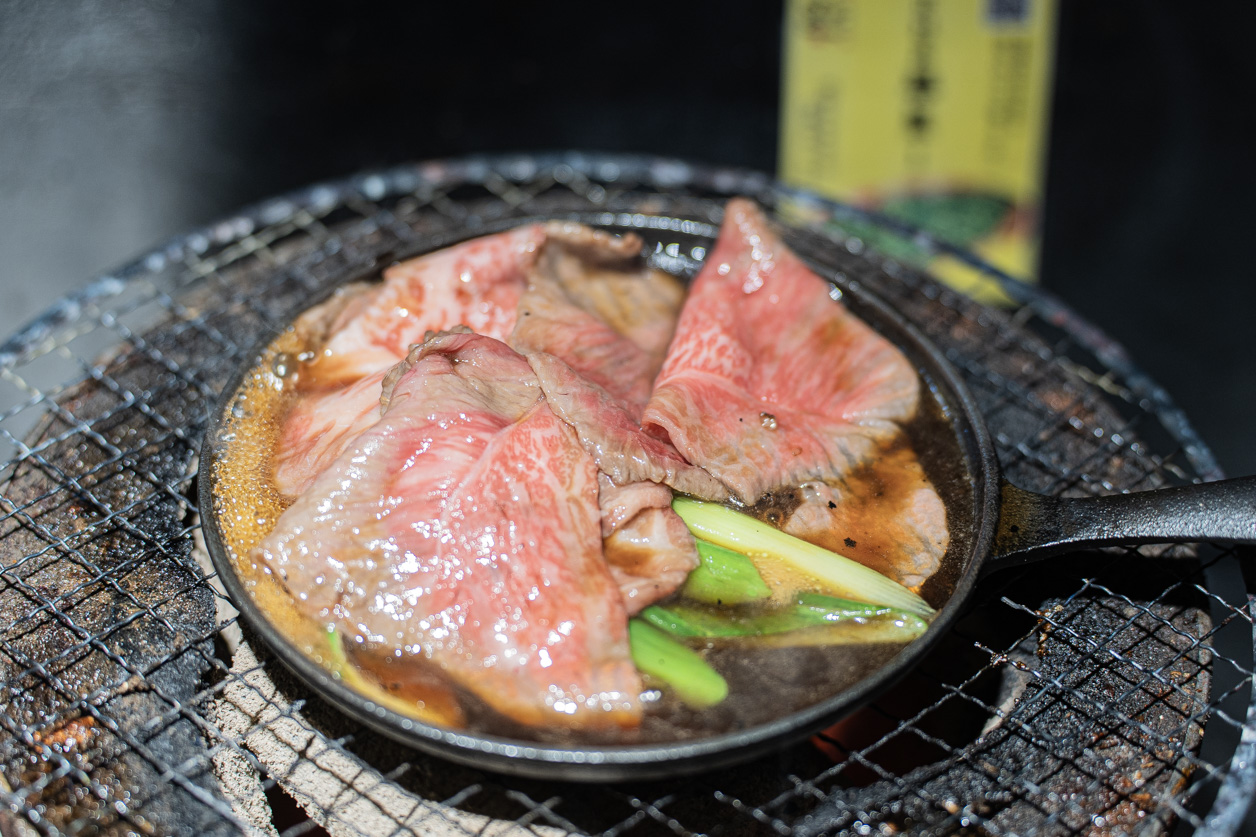
A three-minute walk from Ohori-koen Station, WAGYU PINFU is an upscale yakiniku restaurant where walk-in diners can enjoy wagyu courses from lunchtime. Courses start at JPY 6,600; the course documented in this record cost JPY 8,800. It moves through yukhoe-style raw beef, tongue, appetizers, yakisuki, grilled rare cuts, offal, chilled noodles, and dessert, showing the different textures and flavors of A5- and A4-grade Japanese Black wagyu. Lunch specials start at 11:29 a.m., and there is a substantial à la carte selection too. Wagyu hitsumabushi, JPY 3,280, can be enjoyed in three different stages, while the sirloin sukiyaki set, JPY 3,630, pairs wagyu with fresh egg. The salads and side dishes also make the lighter lunch options feel complete. If a full course is too much, a lunch special is a good alternative. The original review praises a level of quality that can be hard to find in central Fukuoka and notes that celebrities have visited.
See the lunch specials in photos and writing: https://errdaytrip.com/173
Record 003 · Original dining, photographed-shop or historical record
Nishinippon City Building
西日本シティビル
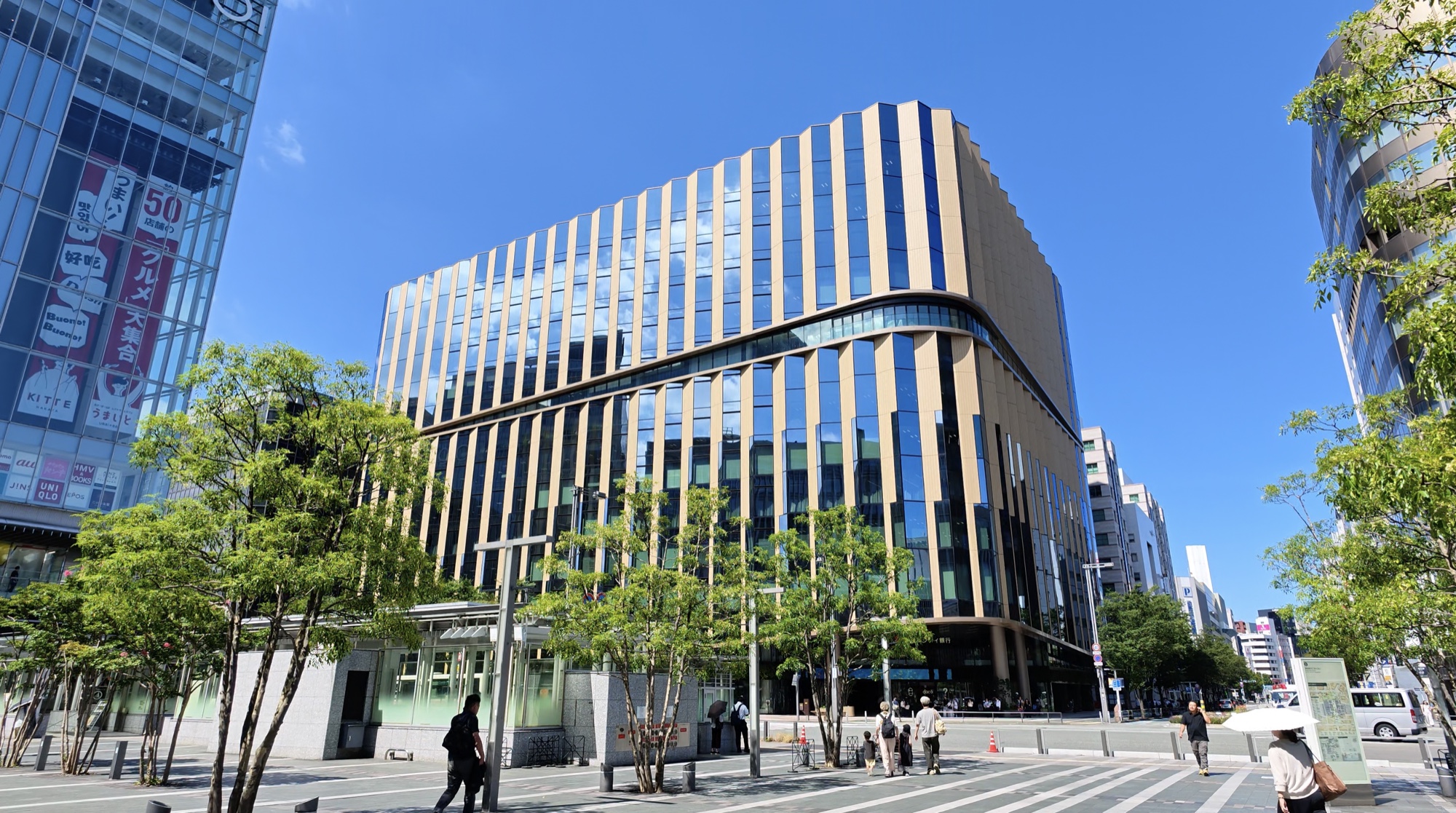
Exterior of the Nishinippon City Building in front of Hakata Station, photographed by 3 Minute Travel.
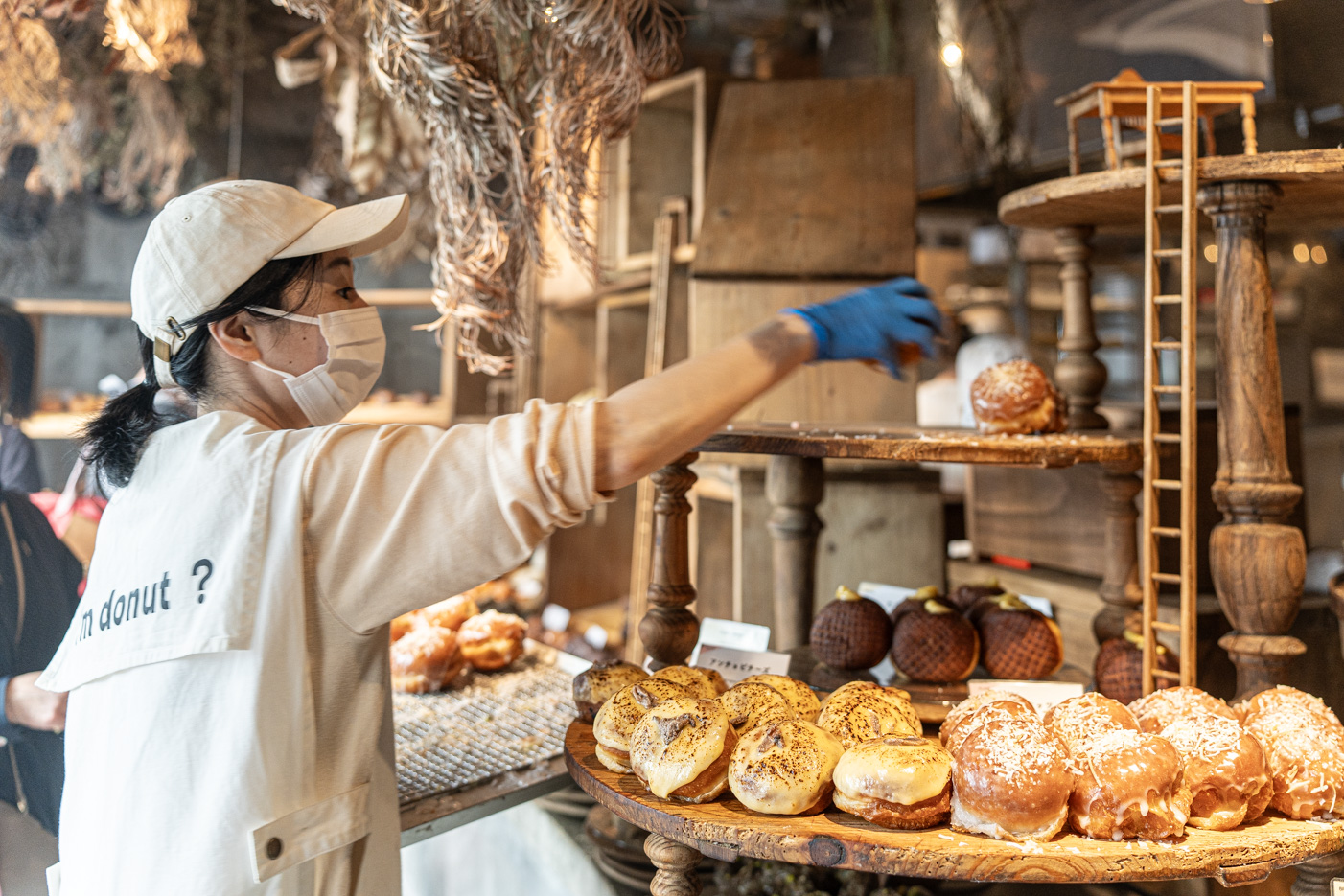
This newly opened complex directly in front of Hakata Station brings together popular Fukuoka bakeries and cafés. I’m donut?, known for its long lines, and the bakery dacō are both here, so you can pick up doughnuts and bread in one stop. It is about a one-minute walk from Hakata Station, making it an easy snack or café stop during a trip. Underground access is helpful in the rain, including when you are traveling with a suitcase. Shake Shack, Blue Bottle Coffee, and other shops add more reasons to explore this new stop around the station.
Record 004 · Original dining, photographed-shop or historical record
Odashi to Watashi
オダシとワタシ
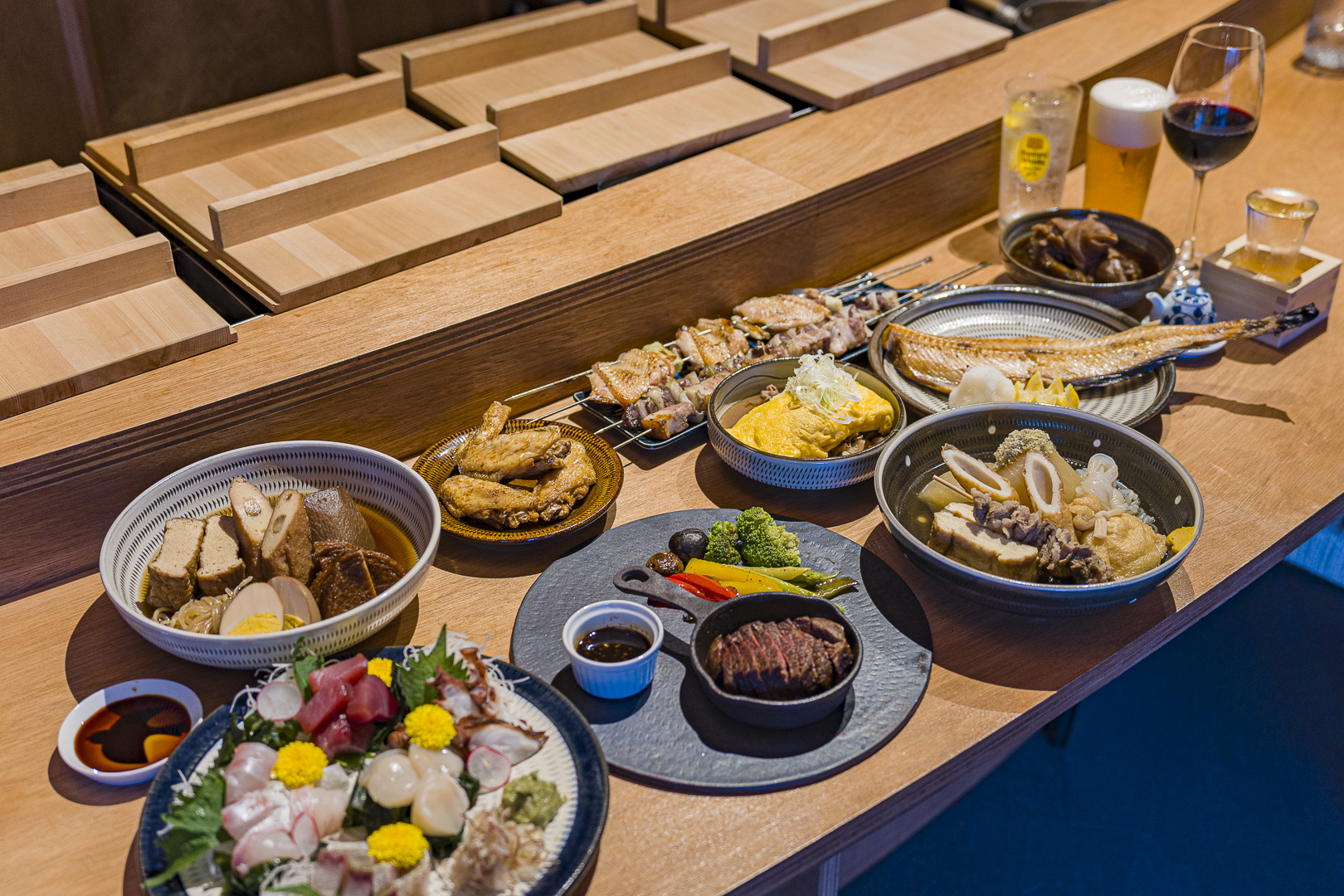
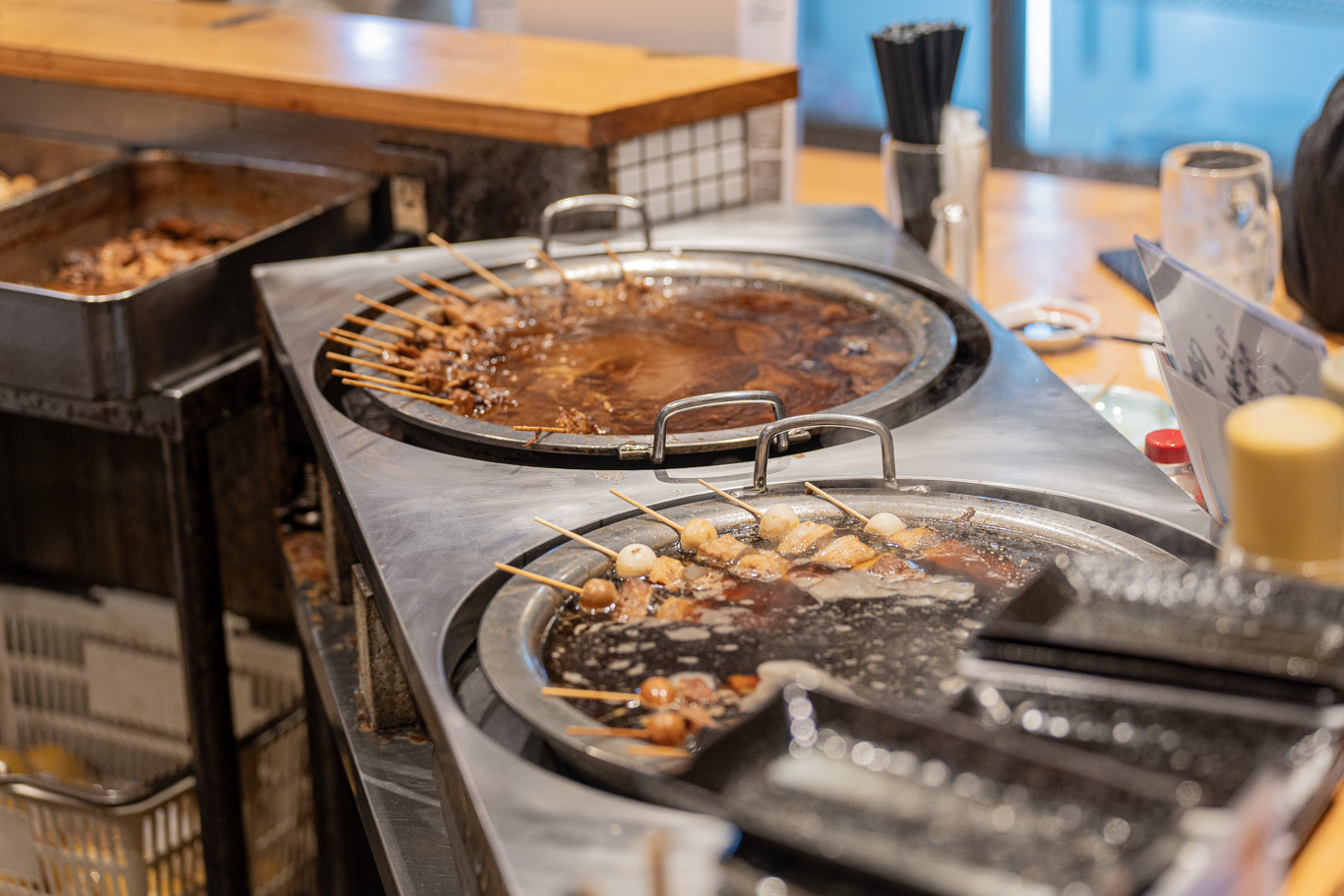
Odashi to Watashi in Fukuoka’s Shirokane neighborhood is a local oden izakaya where you can compare black and white oden in the same meal. The dark broth penetrates the daikon and eggs, while the white oden has a clearer, gentler broth and a lighter finish. The fried-tofu pouches filled with mochi are particularly worth adding. Beyond oden, the menu includes thick-cut sashimi, grilled skewers, grilled fish, chicken wings, and wagyu roast beef. It is a good place to share several dishes over beer, highballs, sake, or wine. Keep it in mind if you have visited Fukuoka before and want an evening somewhere more local than the main tourist dining areas.
Record 005 · Original dining, photographed-shop or historical record
Hakata Mabushi Misora
博多まぶし 味素楽
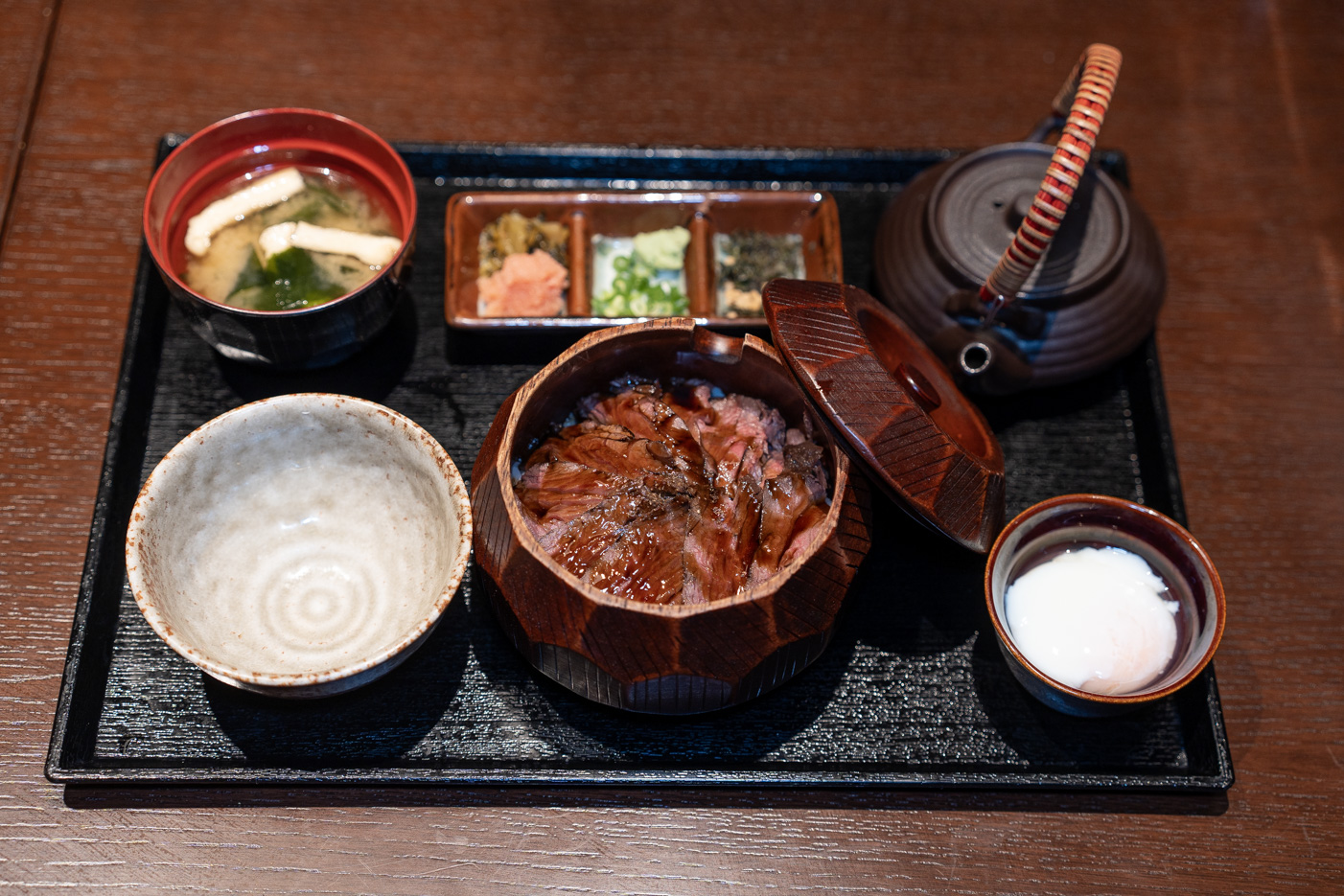
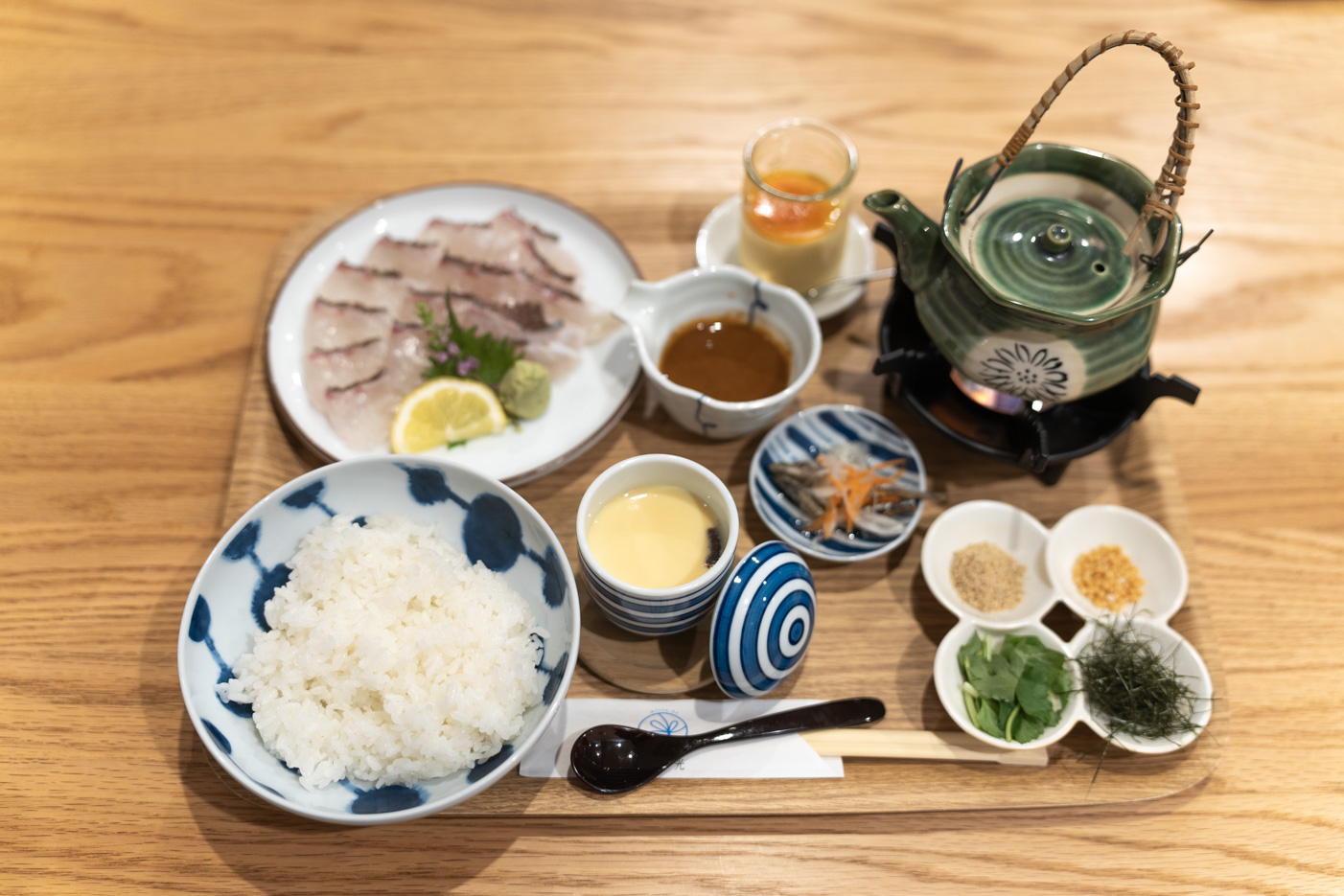
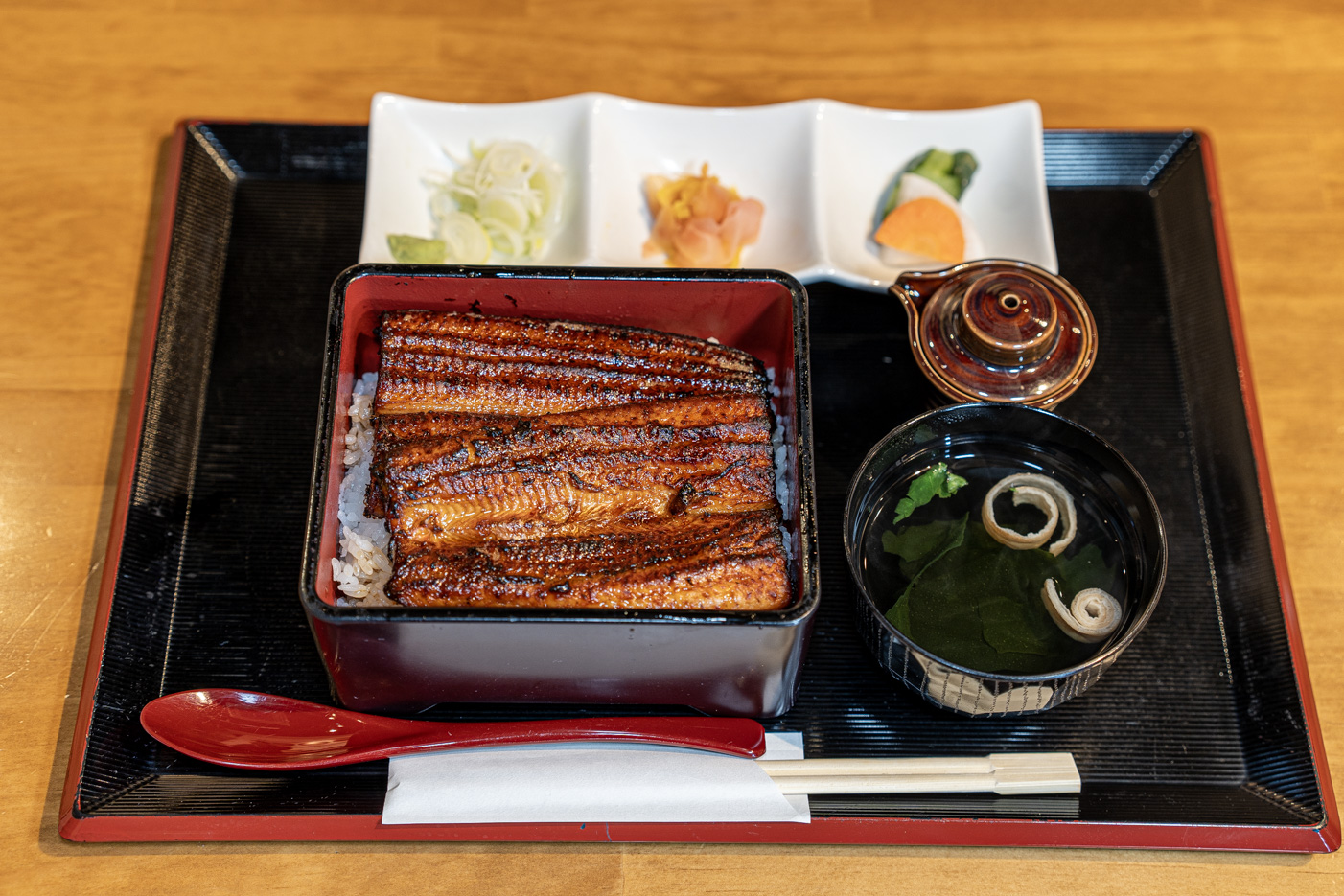
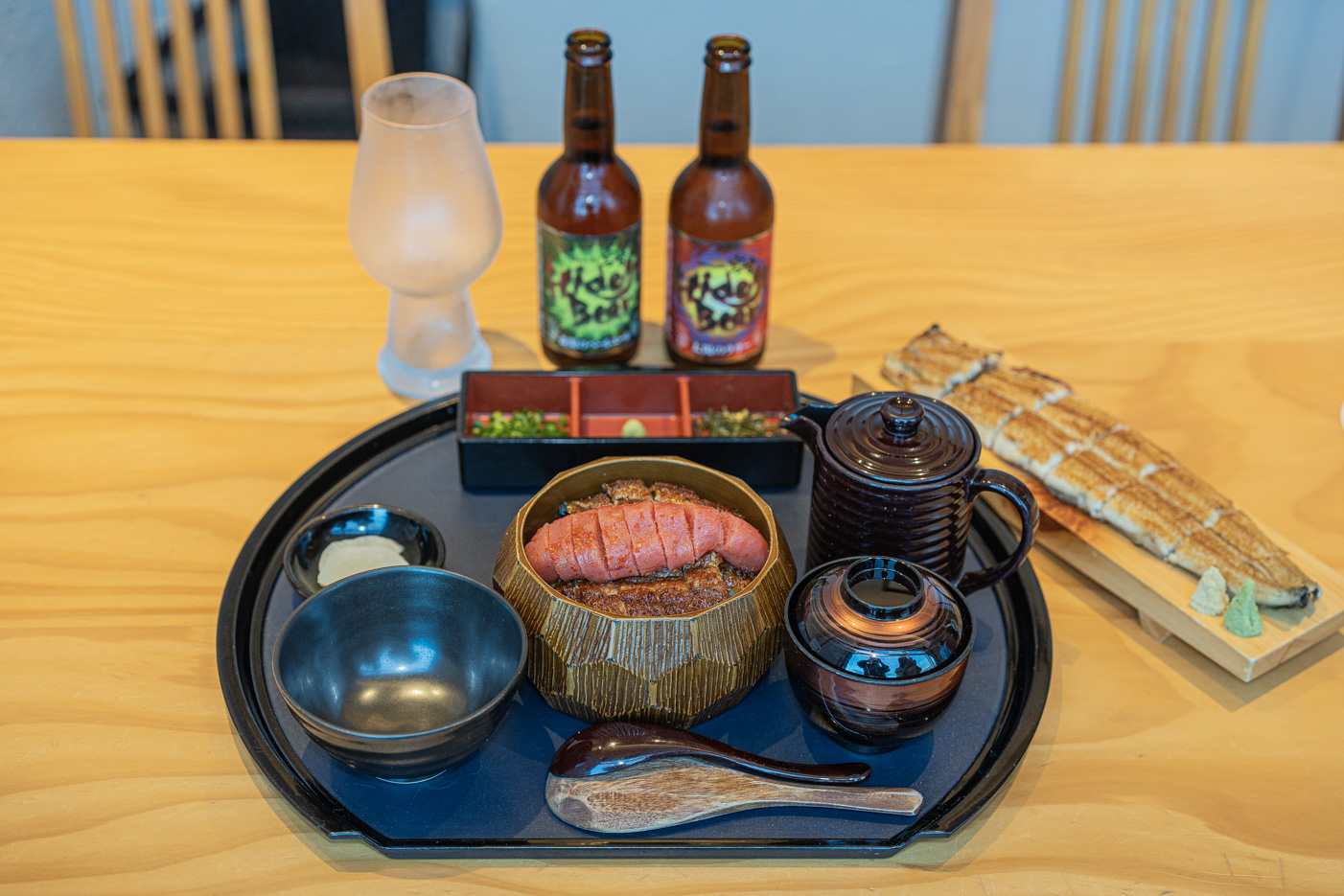
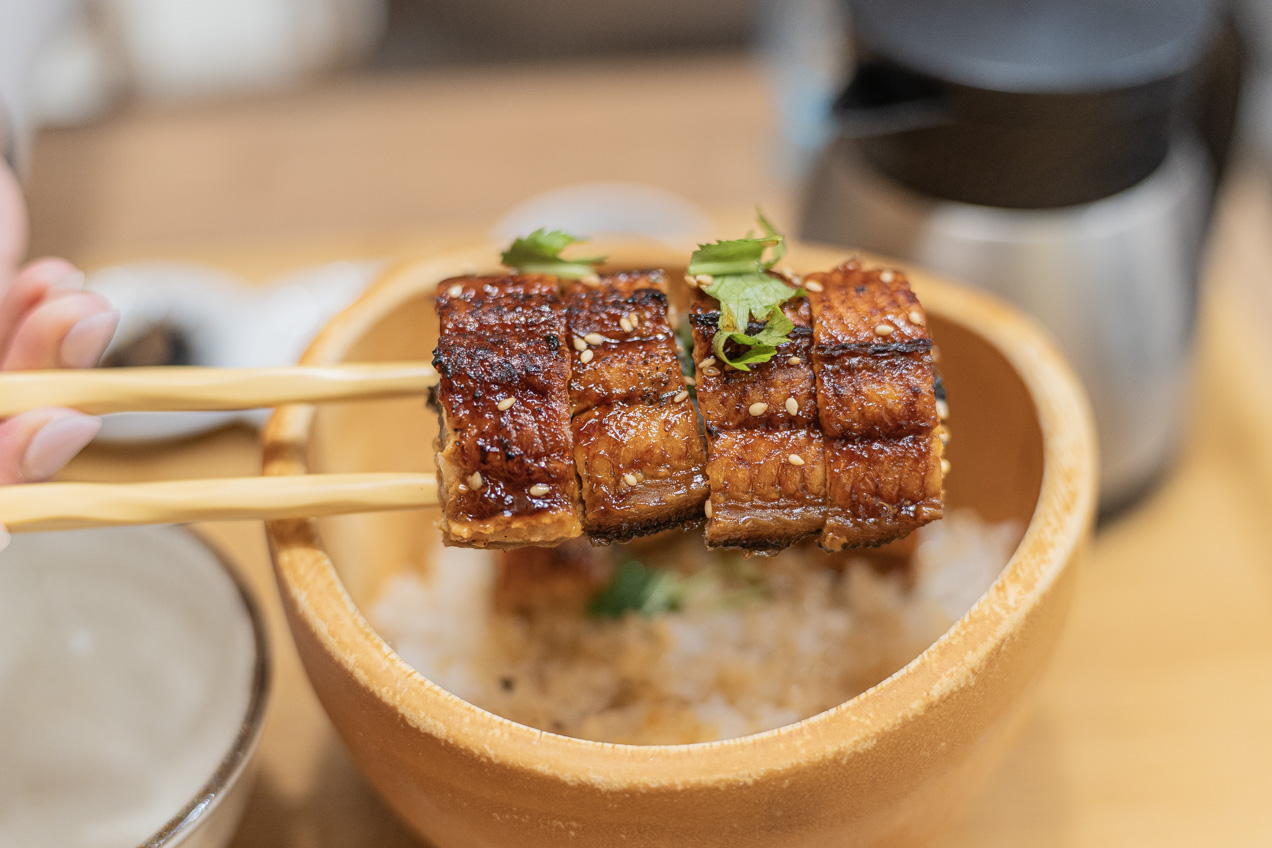
This eel specialist in a Tenjin department-store restaurant area may begin as a convenient shopping break, but it is the rice that stays in the memory. Rice is cooked after you order, so the meal takes a little time; the distinct, lively grains make the difference worthwhile. The signature eel mabushi, JPY 2,860, features crisp-grilled eel enjoyed in three stages: as served, with condiments, and with broth poured over it. The format sounds simple, but the flavors develop naturally as you eat. With its department-store convenience and unexpectedly accomplished eel and rice, it is an easy option for a satisfying meal.
Located on the seventh floor of the Iwataya department store’s newer building. The source warns that a Google Maps description listing basement level 2 is incorrect.
Record 006 · Original dining, photographed-shop or historical record
Uokichi
博多海鮮食堂 魚吉
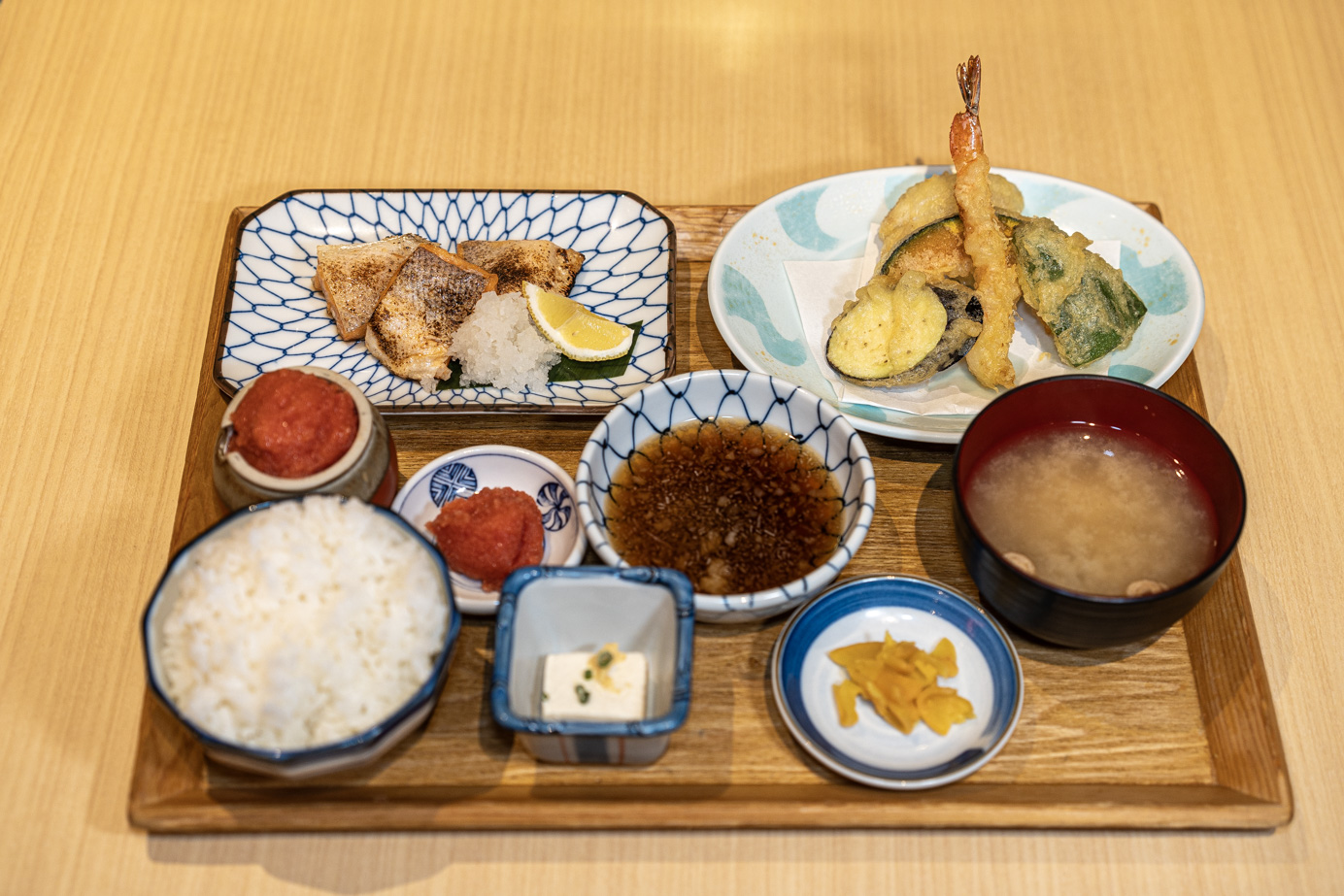
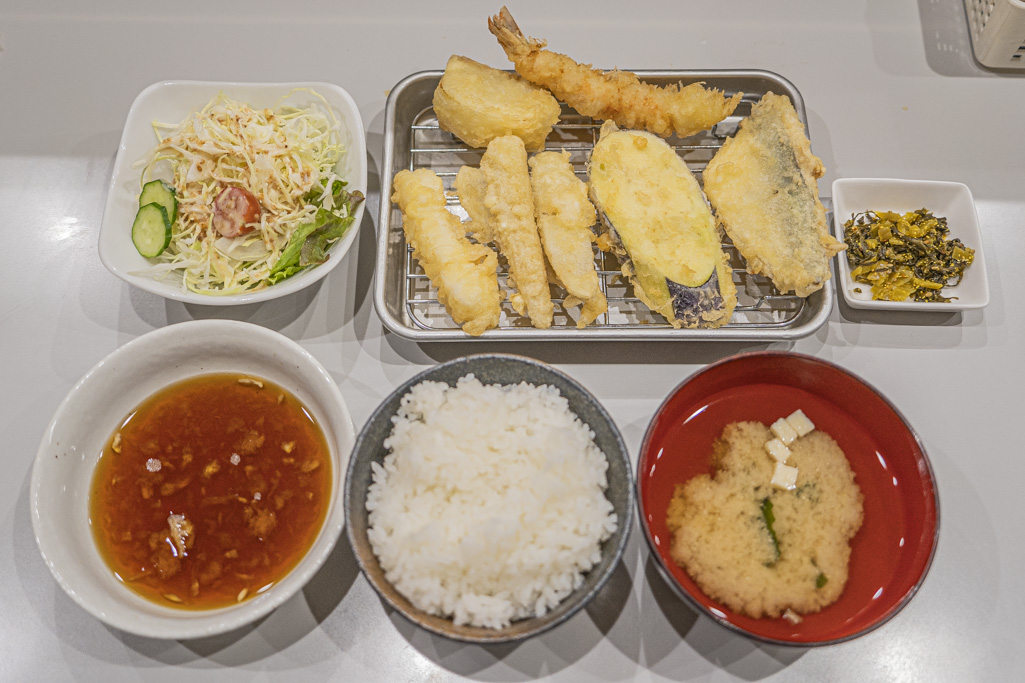
At this Fukuoka set-meal restaurant, you build your meal rather than simply choose a fixed combination. The basic two-side-dish set, JPY 2,080, lets you combine grilled, fried, or other dishes as you prefer. The real attraction is unlimited refills of mentaiko and rice. Your sides may vary, but the meal ultimately revolves around the rice and spicy pollock roe. It is the kind of place that makes you want to return and try a different combination, rather than treat it as a one-time destination. Think of it as a comfortable, dependable set-meal option in Tenjin.
Record 007 · Original dining, photographed-shop or historical record
Katsushin
博多とんかつ処 かつ心
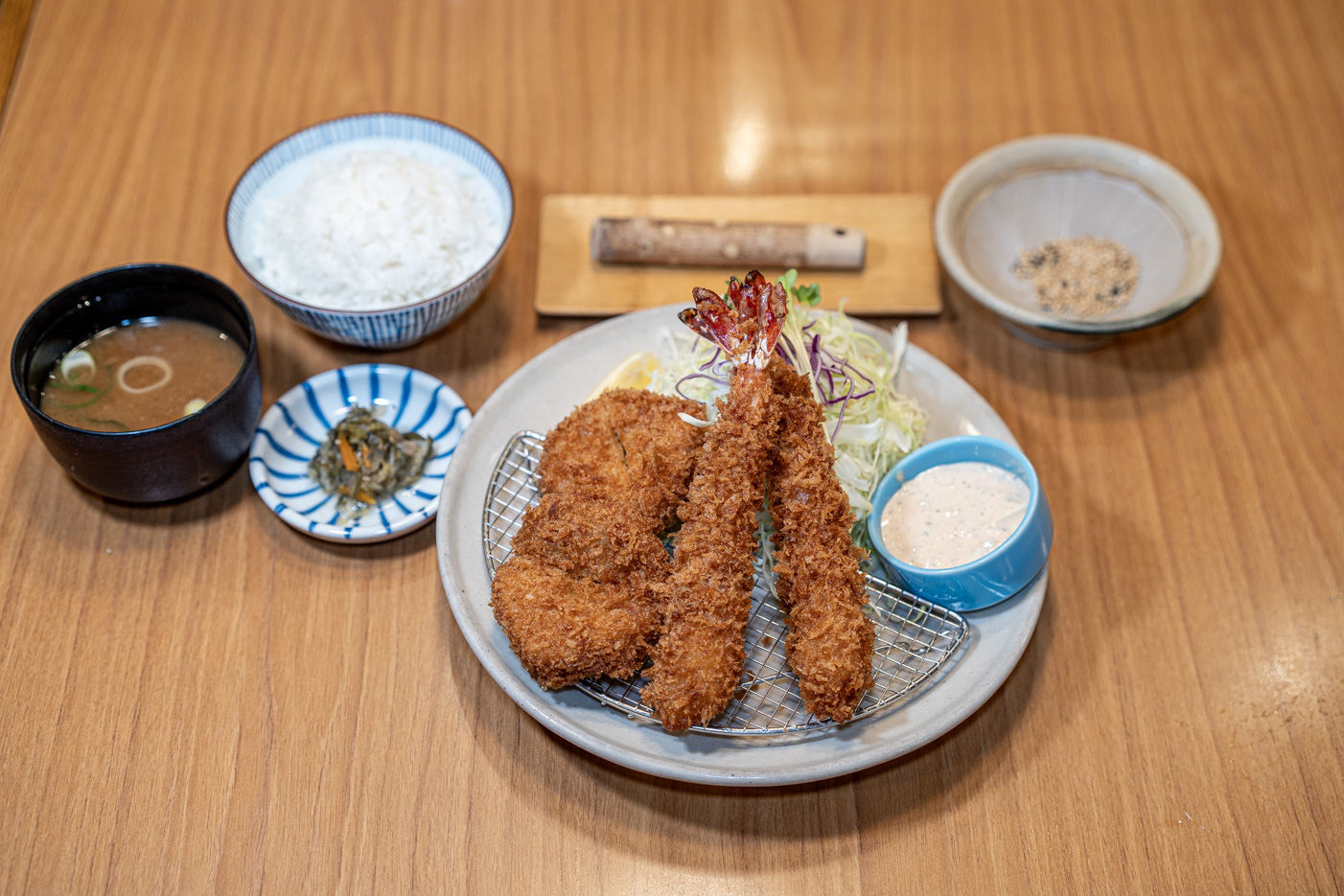
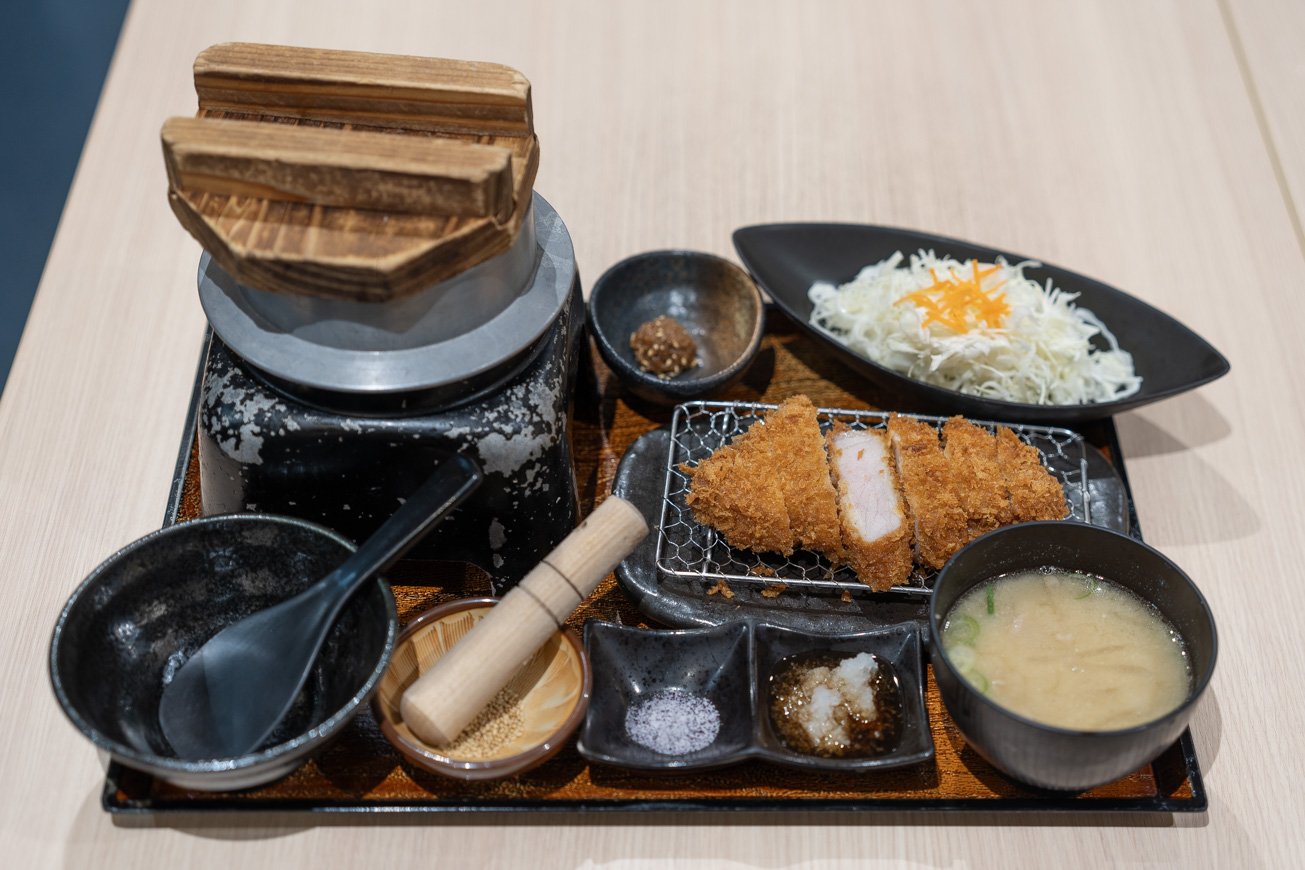
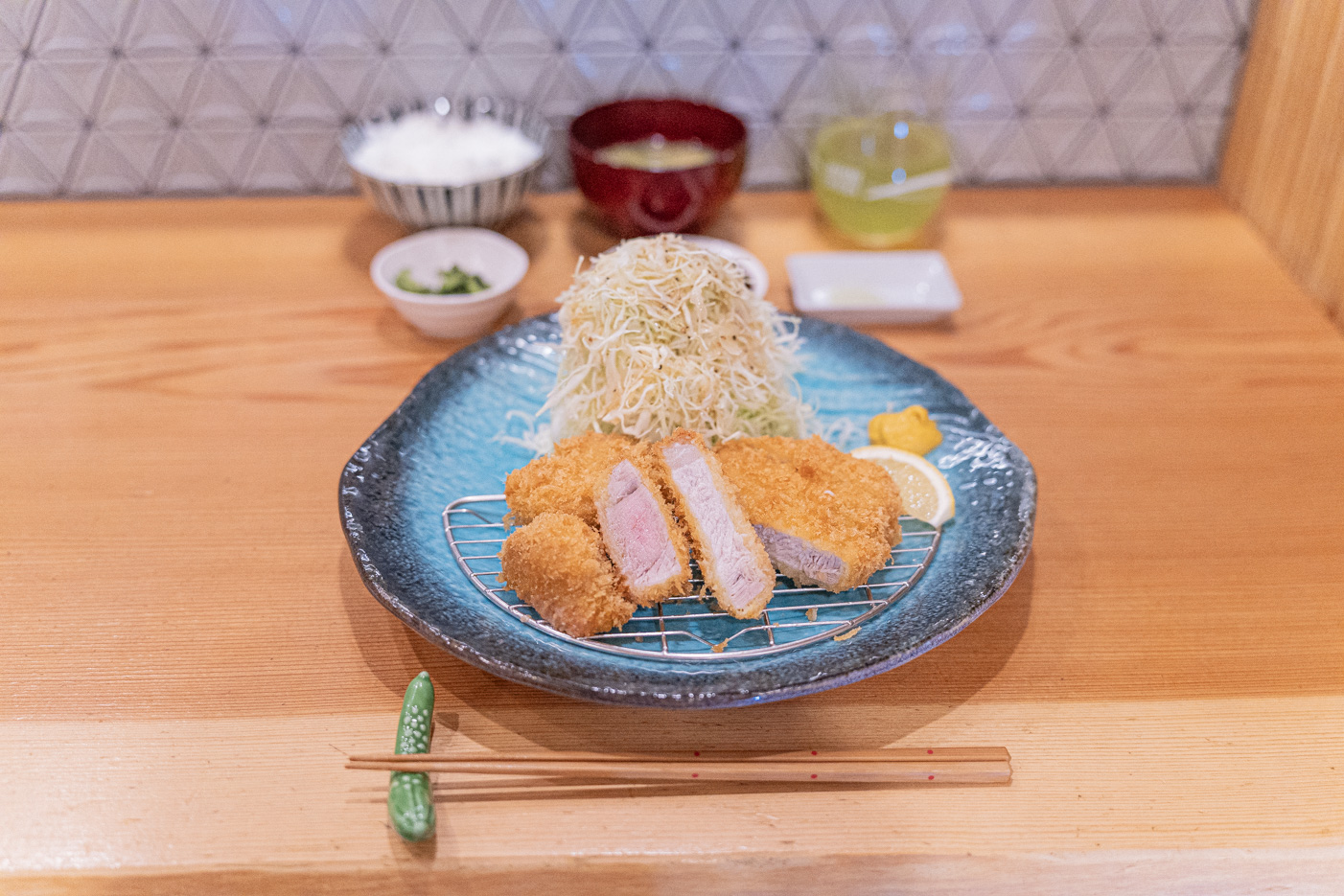
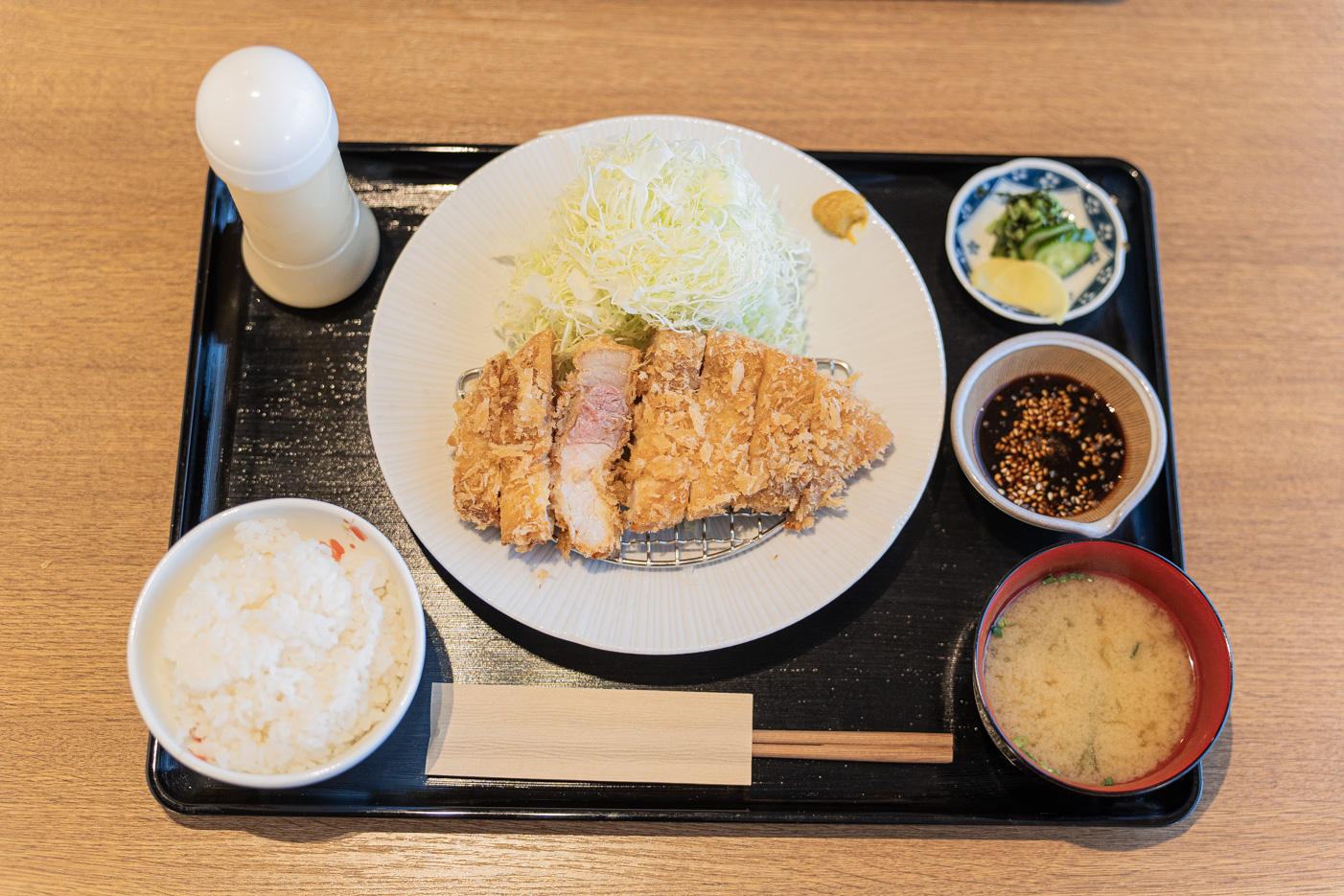
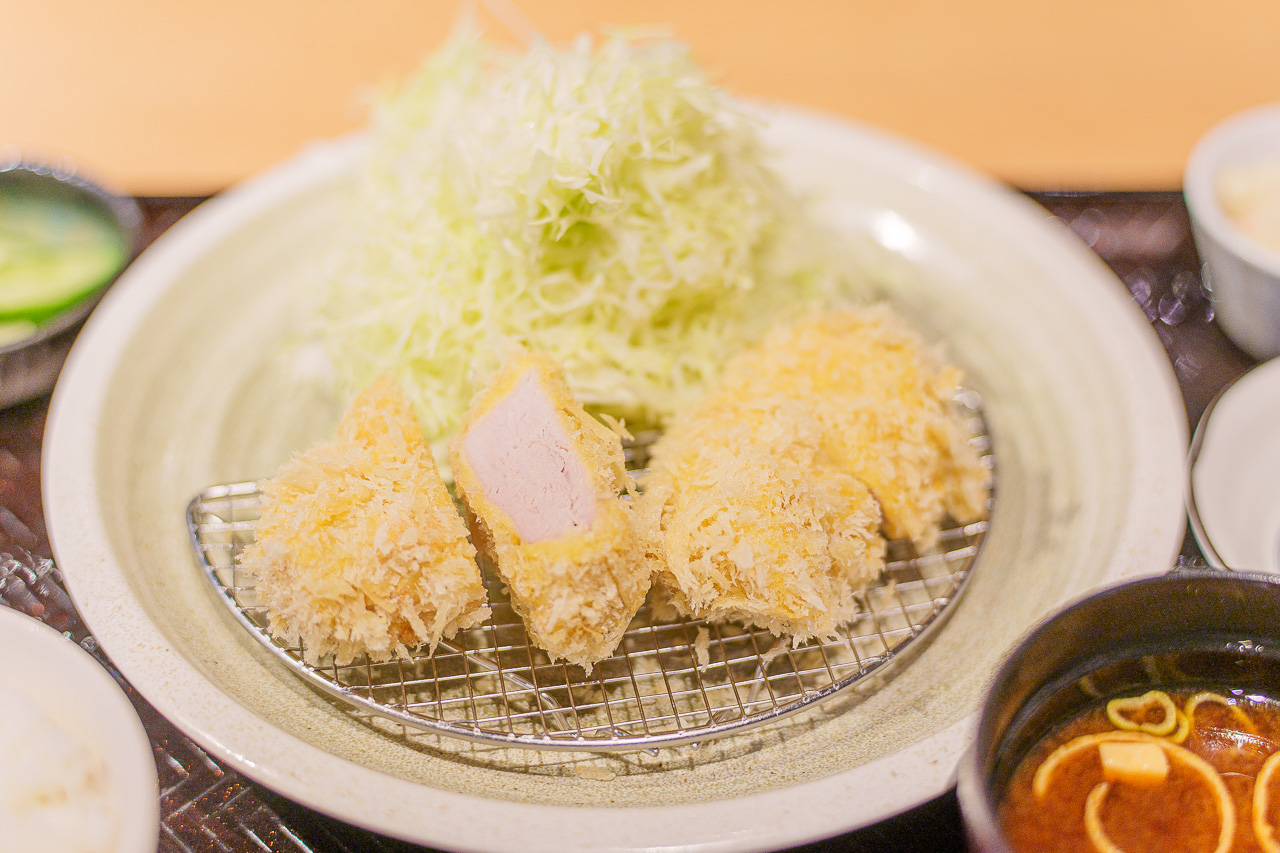
Katsushin in Tenjin’s Solaria Plaza is a tonkatsu specialist whose set meals let you enjoy fried shrimp and pork tenderloin cutlets together. The shrimp-and-hire-katsu set, JPY 2,080, includes two crisp fried shrimp and tender pork cutlets, removing the need to choose between them. Alternate between tartar sauce and sweet tonkatsu sauce to bring out their different qualities. Rice and cabbage can be refilled. It is a filling Tenjin meal to fit between shopping stops.
Record 008 · Original dining, photographed-shop or historical record
Tajimaya — Tenjin Solaria branch
但馬屋ソラリアプラザ店
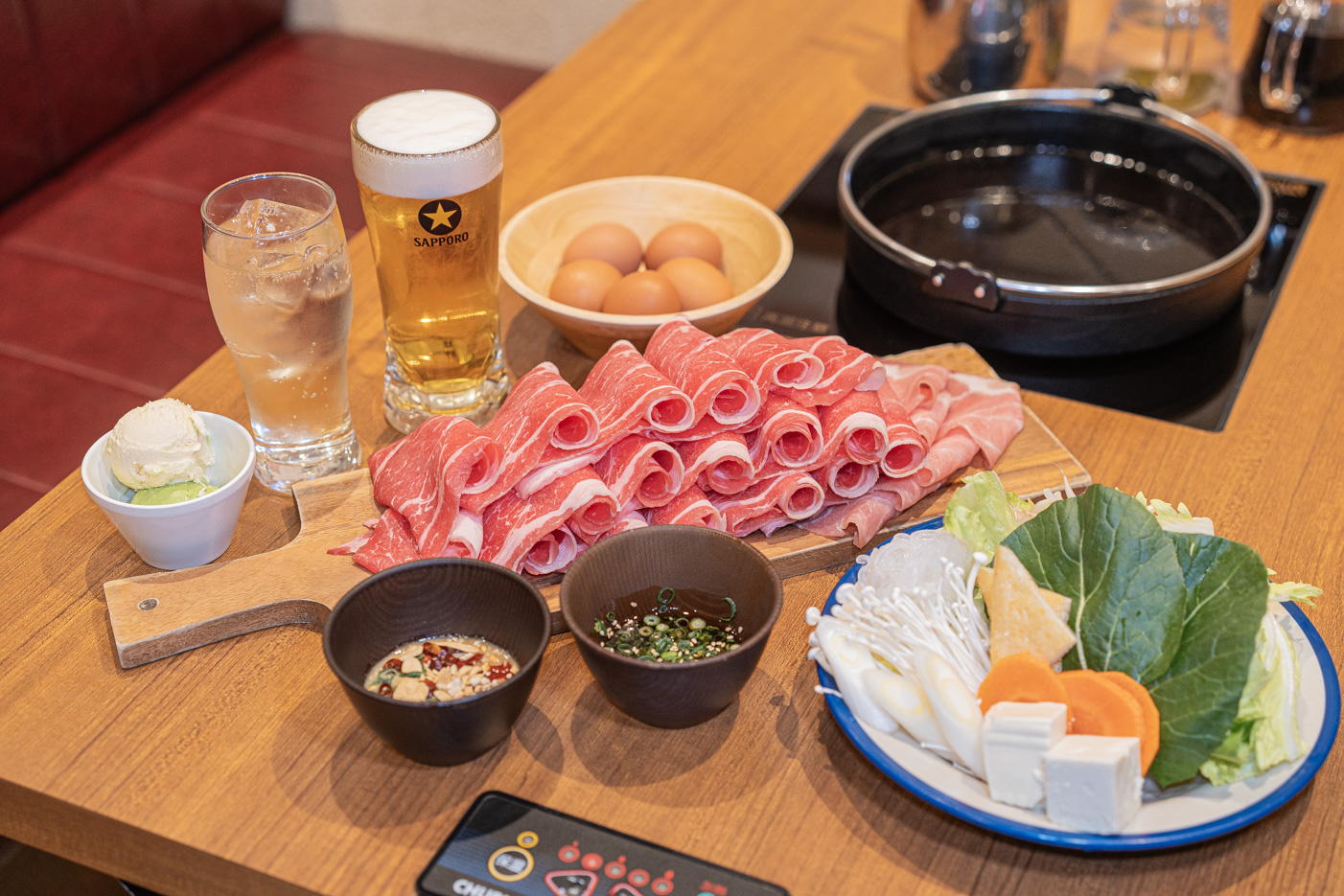
Tajimaya’s Tenjin Solaria branch in Solaria Plaza offers an affordable all-you-can-eat meal covering sukiyaki, drinks, and dessert. The 90-minute sukiyaki option was around JPY 3,900 in the source record, with large, tender pieces of meat to dip in egg or sesame sauce. A self-service beer and highball option costs an additional JPY 1,500. Vegetables, curry, and other sides provide variety, and Häagen-Dazs ice cream is also unlimited at the end. This is a value-focused option for getting comfortably full with friends or family, rather than a formal luxury course.
Record 009 · Original dining, photographed-shop or historical record
Yakiniku HACHI HACHI — Tenjin Solaria branch
焼肉 HACHI HACHI 天神ソラリア店
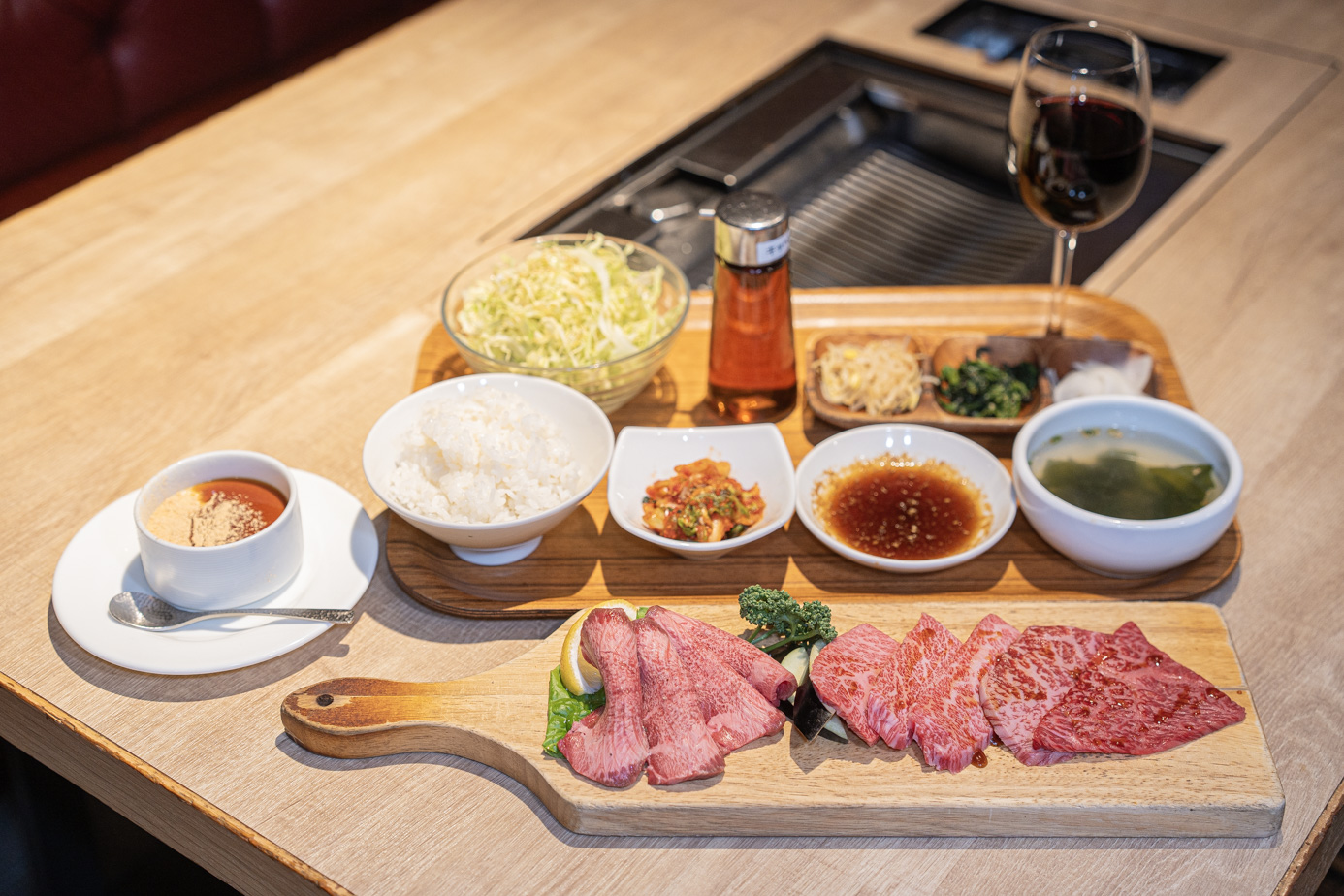
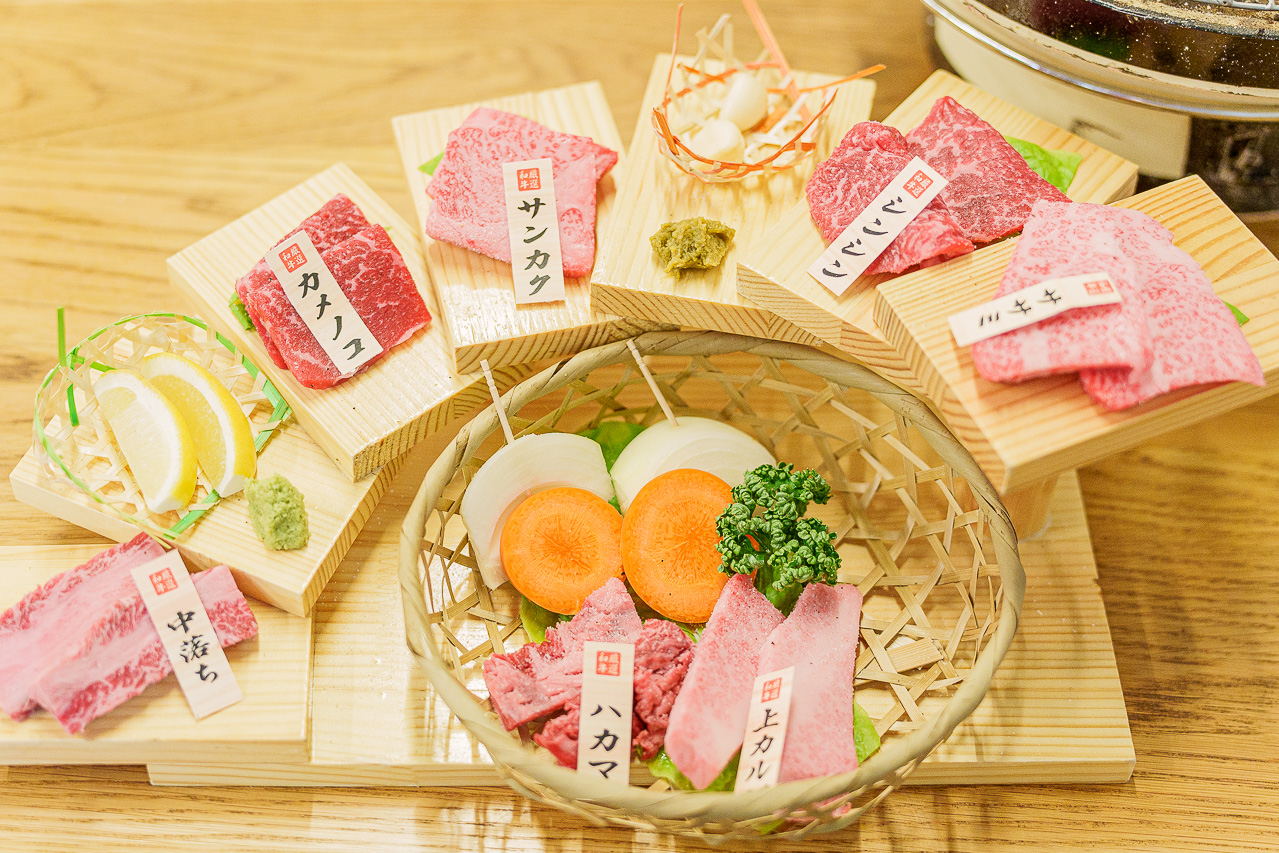
Yakiniku HACHI HACHI in Tenjin’s Solaria Plaza specializes in Japanese Black wagyu and is easy to fit into a shopping day. There is very little smoke or lingering smell, so the setting feels comfortable, much like an ordinary restaurant. The premium lunch, JPY 3,828, starts with beef tongue and serves individual pieces of cuts such as sankaku, kainomi, shinshin, and zabuton so you can compare them. Salad, seasoned vegetables, and soup are included, making it a straightforward way to try several kinds of wagyu in Tenjin.
Record 010 · Original dining, photographed-shop or historical record
YAMAYA BASE DAZAIFU
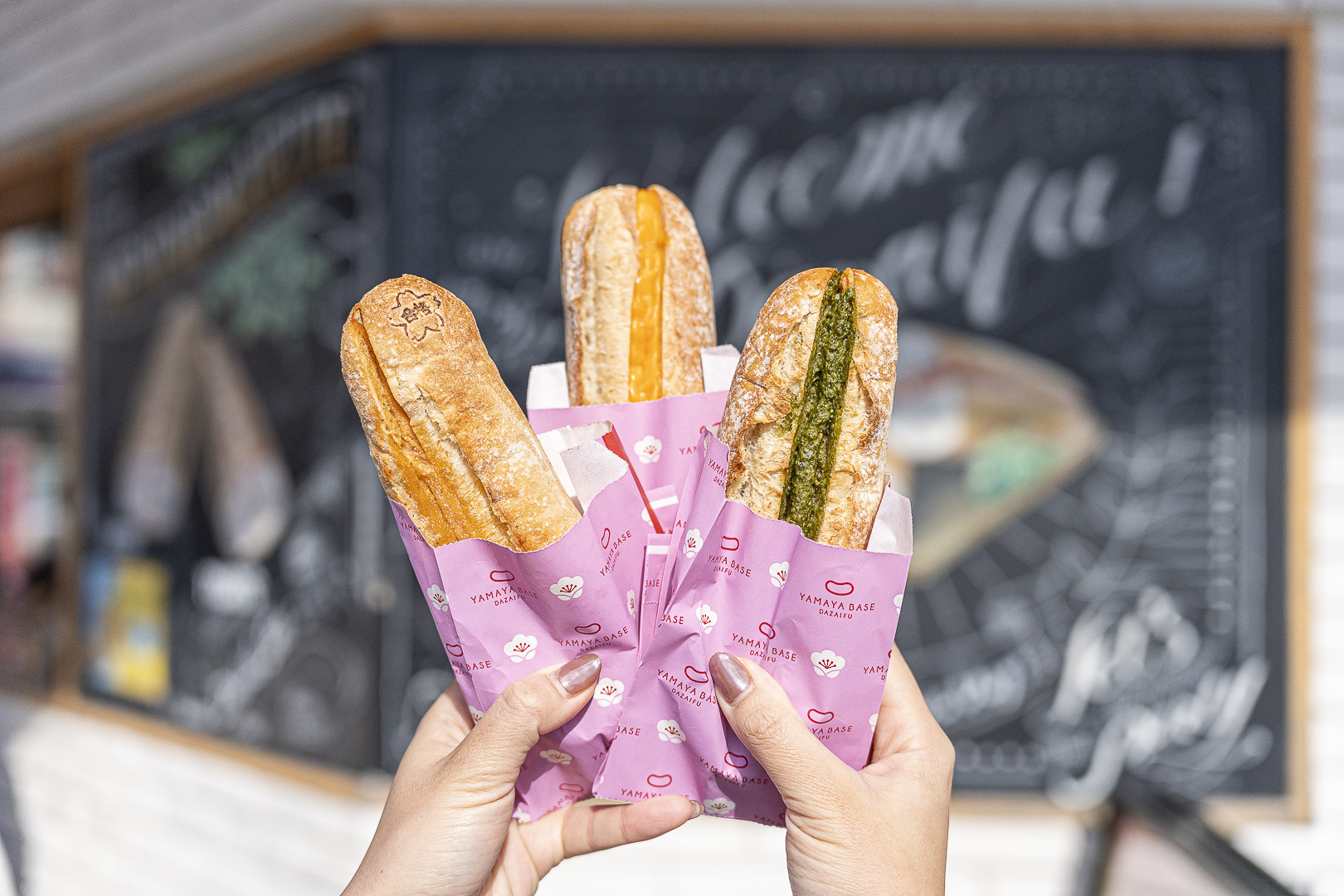
YAMAYA BASE near the entrance to Dazaifu’s shrine approach specializes in mentaiko baguettes and is especially popular during the exam-success season. Its limited ‘exam-success mentaiko baguette,’ sold from November 1 through February 28 in the source record, is reheated in the oven after ordering for a crisp outside and chewy center. The original version was JPY 500, the cheese and basil-mentaiko versions JPY 600 each, and a coffee set JPY 700. Complimentary samples and umadashi broth add to the appeal. It can cover both a snack and a food gift while sightseeing in Dazaifu.
Record 011 · Original dining, photographed-shop or historical record
Monja Monji — Tenjin Daimyo branch
両国だしもんじゃ もんじ 天神大名店
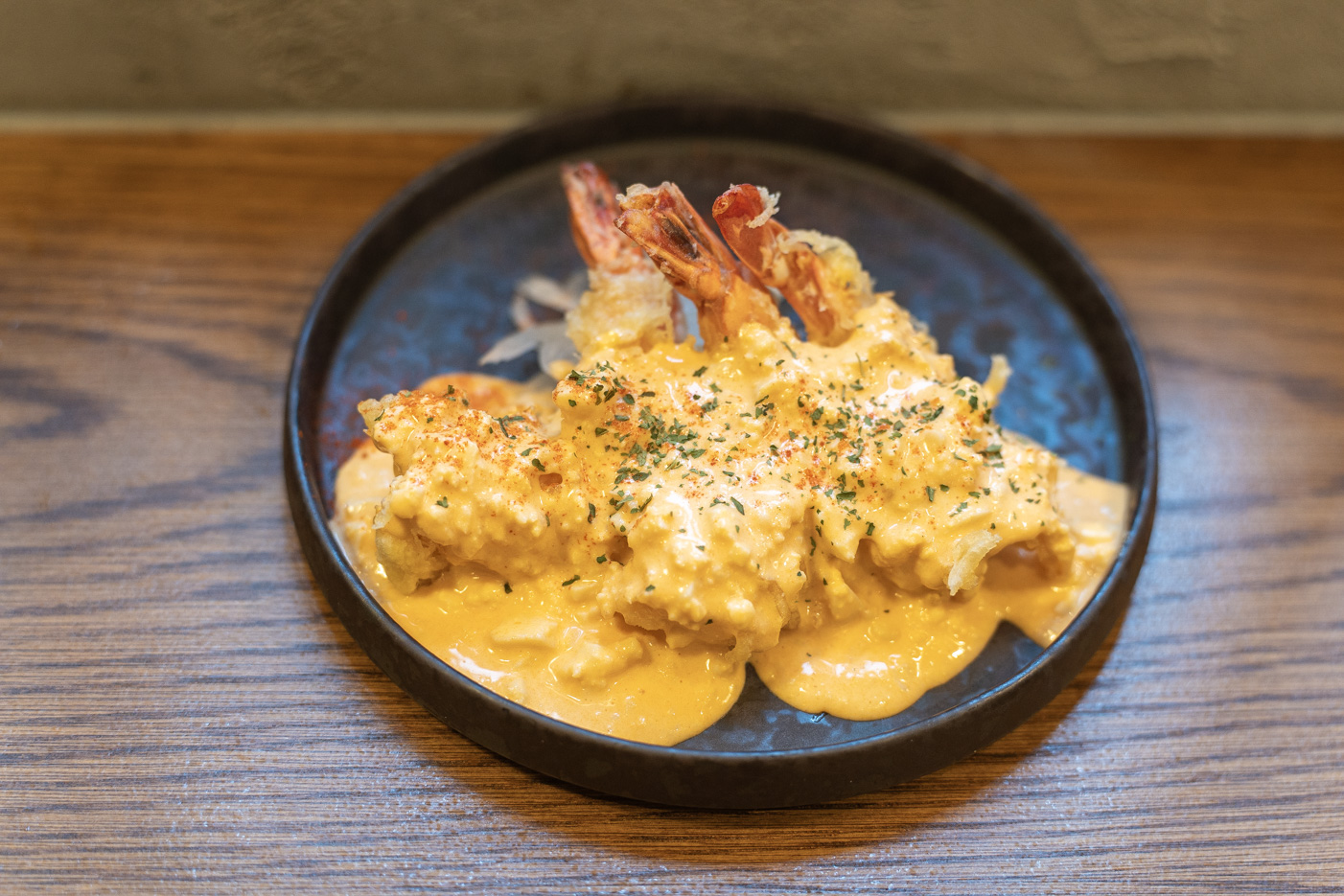
The first impression at this monjayaki specialist is the aroma of bonito flakes. It uses three seafood broths made with Ninben bonito flakes, a brand with a 300-year history. The dashi fragrance rises as the griddle heats up, and staff cook the food for you, making it approachable for first-time monjayaki diners. The mentaiko, mochi, and cheese dish, JPY 1,590, and the monja with unlimited mentaiko topping, JPY 1,790, balance griddle flavor and savory depth. Shrimp-and-ink griddle ramen and matcha-cream monja offer more unusual ways to finish. It is a good choice if you want to explore griddle cooking over a highball.
Record 012 · Original dining, photographed-shop or historical record
Buta Mania Don Inadaya
豚マニア丼 稲田
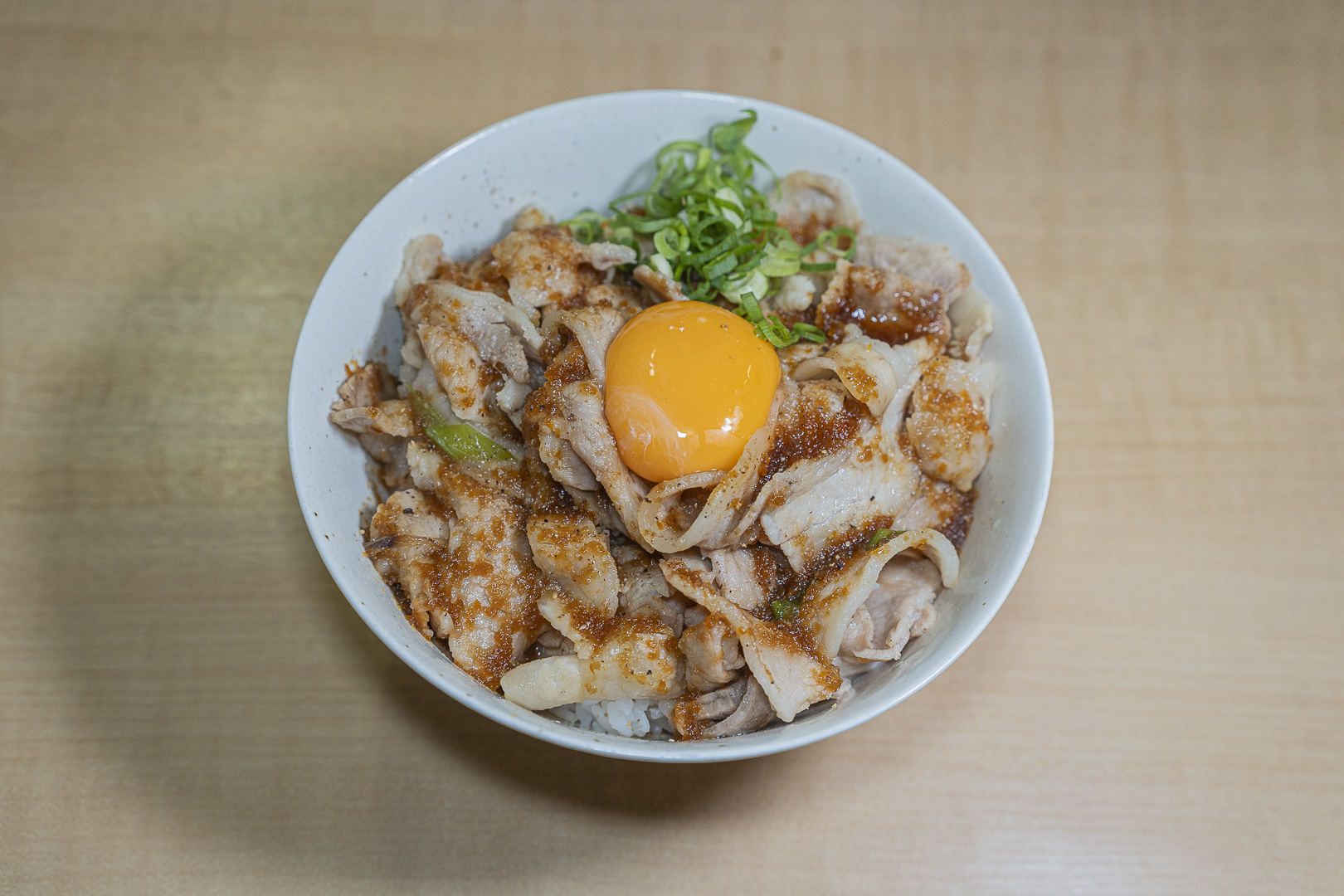
Buta Mania Inadaya, inside Fukuoka’s older Sun Selco shopping center, is a pork-rice-bowl specialist memorable above all for the smell of charcoal. It is a lunch-only restaurant with about 20 counter seats, and waiting is routine. The signature Buta Mania bowl, JPY 1,100, combines thick charcoal-grilled pork and tender pork belly with a sweet house sauce. Work through the bowl as served, then with egg, pepper, chili miso, and finally ago-dashi ochazuke for a succession of flavors that keeps it interesting. Watanabe-dori Station and the Yanagibashi bus stop are convenient access points.
Record 013 · Original dining, photographed-shop or historical record
Nakasu-Kawabata Kirin
中洲川端 きりん
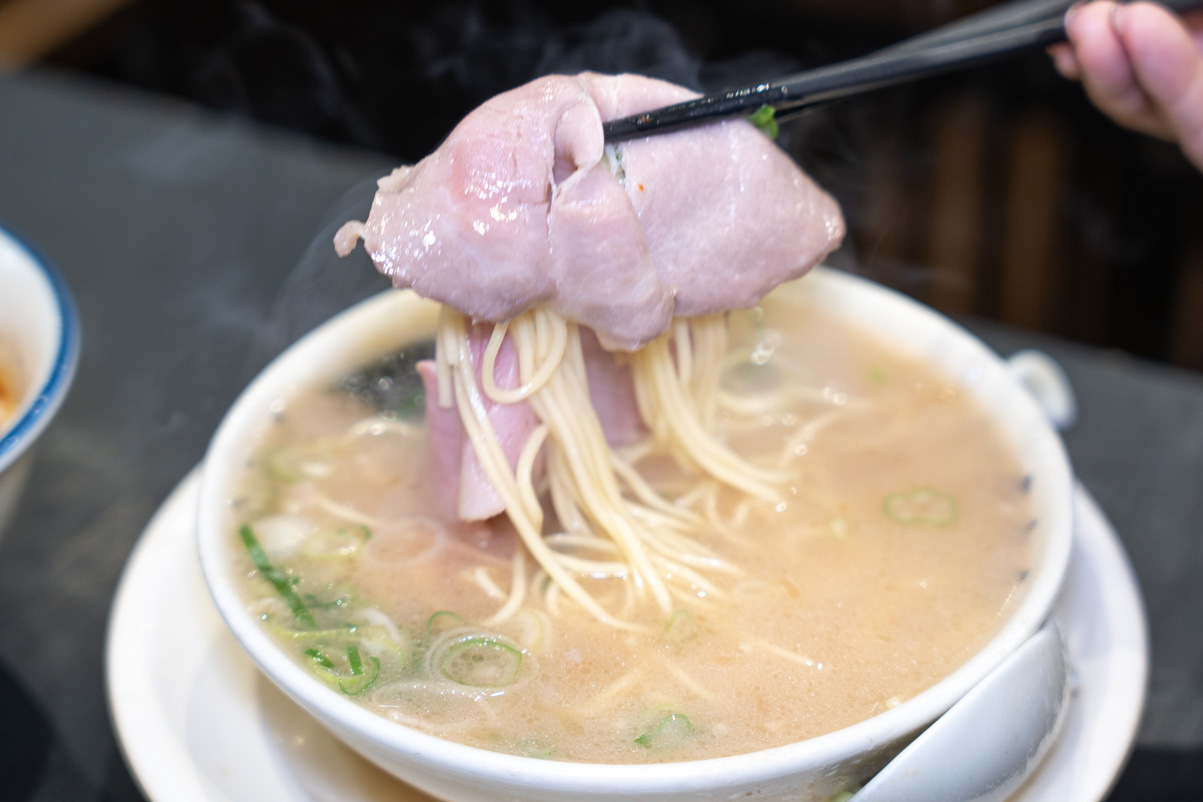
Nakasu Kirin is a local ramen shop in Nakasu known for rich tonkotsu broth. Its basic style is straight noodles in a bowl filled almost to overflowing with soup. Garlic, kimchi-style seasoned bean sprouts, and other accompaniments are available on the table to adjust the flavor. Many diners order a chashu pork rice bowl alongside their ramen. It is a substantial, convenient Nakasu meal during a trip.
Record 014 · Original dining, photographed-shop or historical record
New Kakuchi Hakata Home Run Shokudo
ニュー角打ち 博多ホームラン食堂
New Kakuchi Hakata Home Run Shokudo opened in April 2025 on the first floor of Yodobashi Hakata, one to two minutes on foot from Hakata Station’s Chikushi Exit. It is a new-style kakuchi standing bar using a medal system: the source quotes one medal per dish at JPY 330 and three medals at JPY 1,100. Check the current purchase terms, as both figures are retained from the original record. QR ordering makes the process quick. Dishes include fried burdock, sesame-dressed amberjack, Hakata-style simmered offal, and award-winning karaage. The recorded hours, 11 a.m. to 5 a.m., make it useful for a quick drink or short meal around a journey or business trip.
Record 015 · Original dining, photographed-shop or historical record
Hakata Kushiage Kushisho — Hakata Station Chikushiguchi branch
博多串揚げ 串匠 博多駅筑紫口店
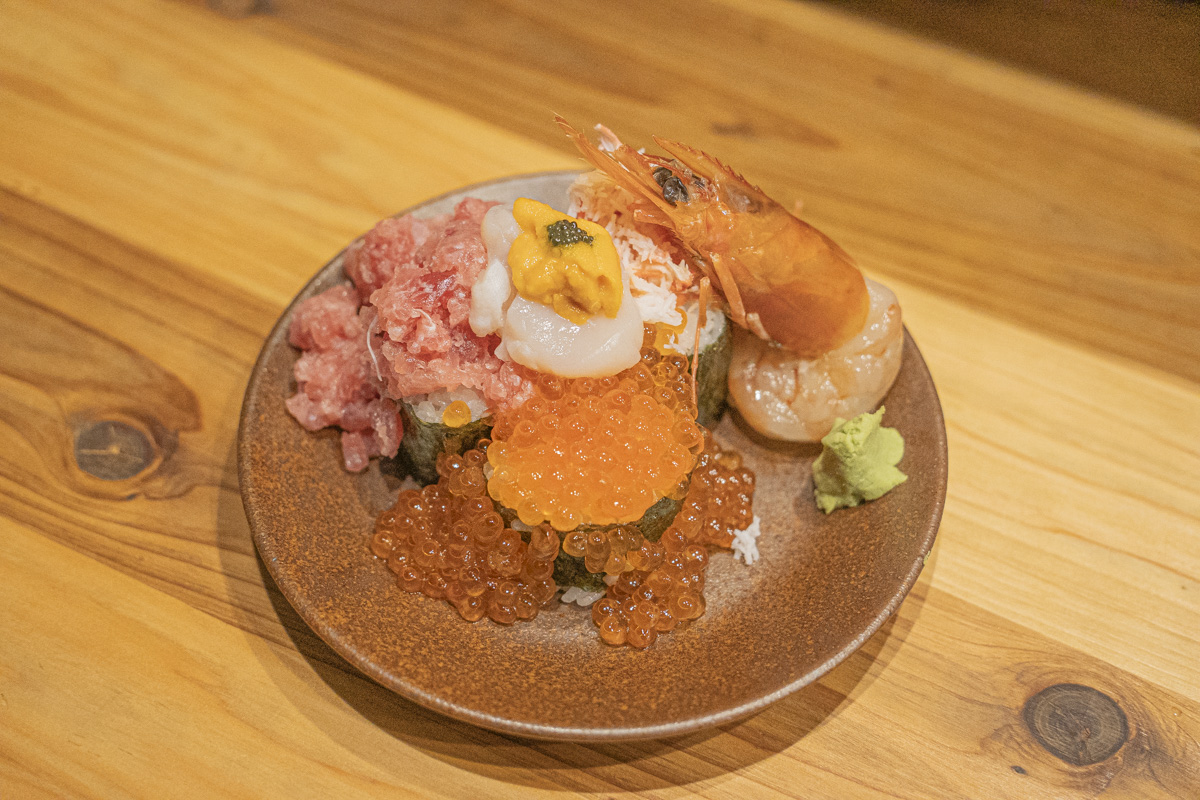
Kushisho’s Hakata Chikushiguchi branch is a two-minute walk from the Chikushi Exit, near the entrance to the dining lanes. It is known for omakase fried skewers. After a basic setup charge of JPY 1,500 and a check of ingredients you cannot eat, the skewers keep coming until you say ‘stop.’ Each bite-size skewer arrives freshly fried, and three sauces on the table let you vary the flavor. Completing the whole sequence means around 30 skewers and a total of approximately JPY 10,500 in the original record. It is an option for a full fried-skewer omakase experience in Hakata.
Record 016 · Original dining, photographed-shop or historical record
Hatsuyuki — Haruyoshi branch
初雪 春吉店
Hatsuyuki is an oden specialist that opened in September 2025, two minutes on foot from Exit 6 of Tenjin-minami Station. Its stylish oden bar makes a good setting for a date or a meal with friends. The menu includes eggs, fish cakes, konnyaku, beef offal, and other oden ingredients, with oden potato salad as a signature. The atmosphere suits a relaxed glass of sake. The source presents it as a newer dining stop to consider in Tenjin.
Record 017 · Original dining, photographed-shop or historical record
Menya Saigo no Itteki
麺屋 最後の一滴
Fukuoka is the birthplace of tonkotsu ramen, but its pork aroma can make a whole bowl difficult for some visitors. This non-tonkotsu shop offers a welcome alternative. Its soy-sauce-and-chicken broth is full of savory flavor, and the whole-grain noodles have a satisfying chew. If rich pork broth is not for you but you still want a bowl of ramen in Fukuoka, this is worth considering.
Record 018 · Original dining, photographed-shop or historical record
Tonkatsu Wakaba
とんかつ わか葉
This low-temperature-cooked tonkatsu has a pale crust and moist interior, and the original reviewer returned to it often enough to feature it a third time. Lunch specials let you choose between the richer flavor of Kagoshima pork and the lighter taste of US pork. Try the cutlet first with salt, then sauce, then grated-daikon ponzu; the salad with corn dressing is a highlight of its own. The Tenjin main shop is good, though the reviewer wondered whether the Chikushiguchi branch, とんかつわか葉筑紫口店, might be even better.
Record 019 · Original dining, photographed-shop or historical record
Stand Maruni
串天ぷら×煮込み スタンド◎まるに
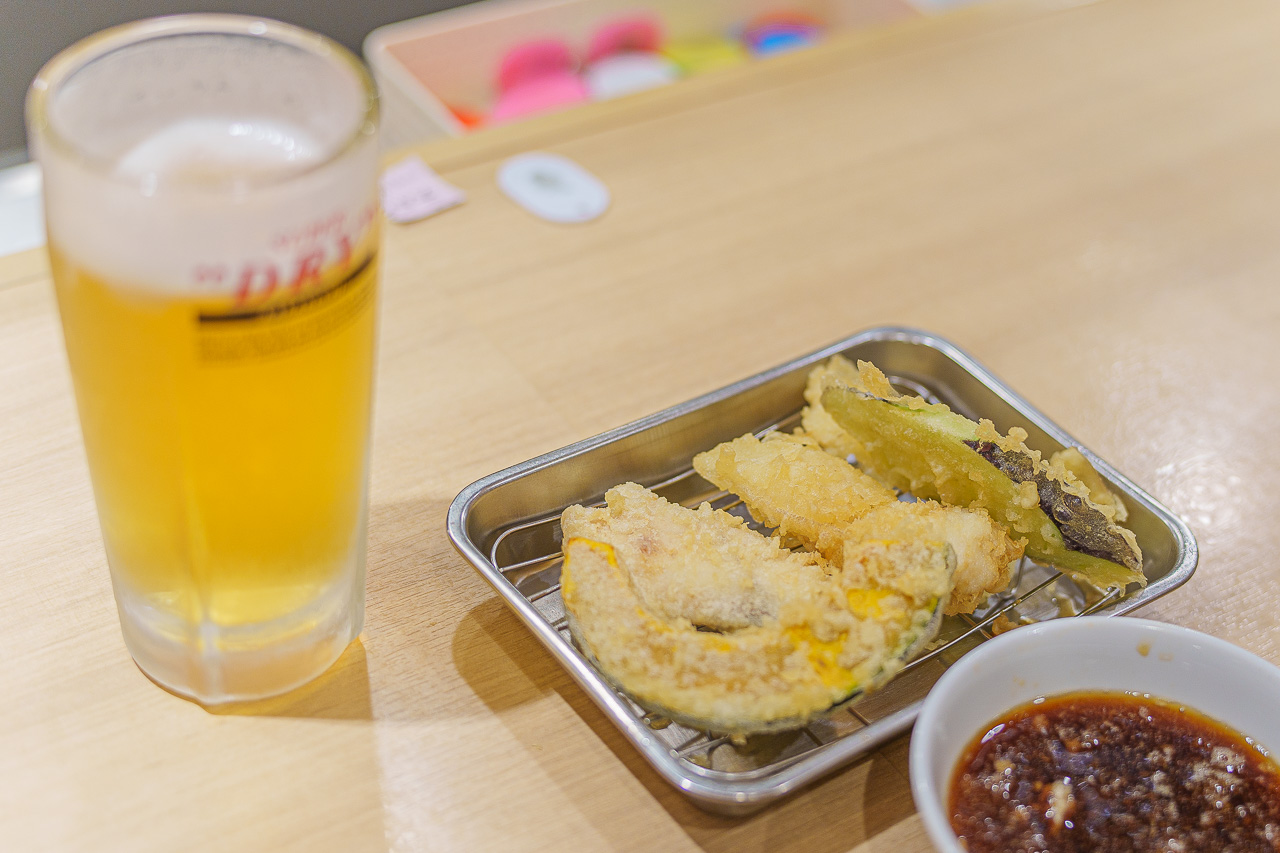
Right by Tenjin Station’s west Exit 12C, this bright, casual izakaya has standing places as well as seats, making it comfortable for a solo drink. The source lists highballs at JPY 500 and recommends combinations including assorted tempura, mentaiko, wagyu stew, and pineapple sours. Shrimp with mayonnaise, yukhoe-style raw meat, and potato salad are among the dishes that make another drink tempting. It is an option for an easy evening out in Fukuoka.
Record 020 · Original dining, photographed-shop or historical record
Kaisenya Hajime no Ippo
海鮮屋 はじめの一歩
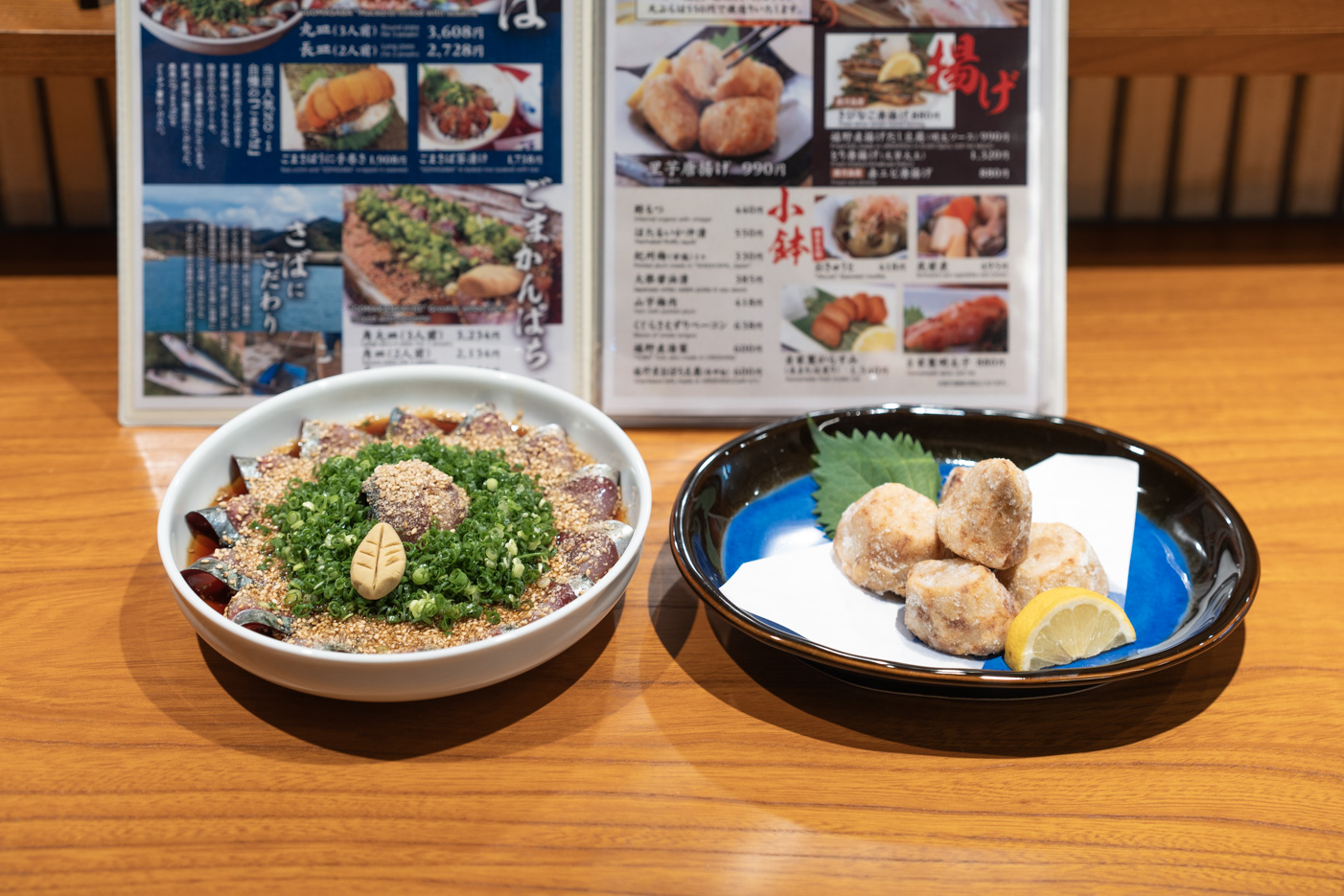
Kaisenya Hajime no Ippo, at GB19 on Canal City Fukuoka’s first basement level, offers rice bowls featuring raw mackerel delivered daily from Tsushima. Carefully prepared fish comes with sesame, scallions, wasabi, and its own sauce. You can eat it like sashimi or on the rice, but pouring over the rich flying-fish broth as ochazuke is where the dish comes into its own. Fried taro, crisp outside and soft within, also works well with a solo drink. The setting suits an unhurried seafood meal, including when dining alone.
Record 021 · Original dining, photographed-shop or historical record
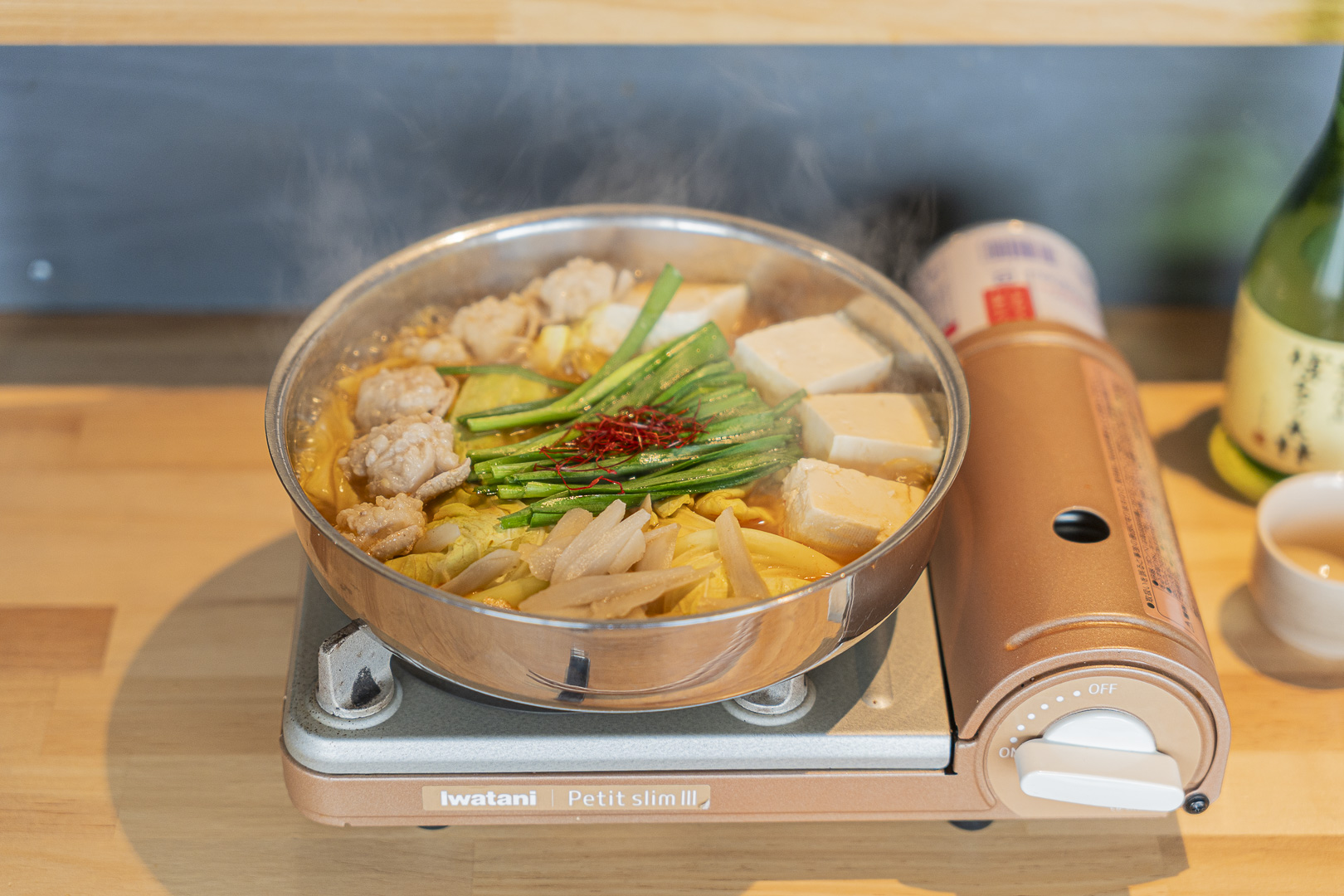
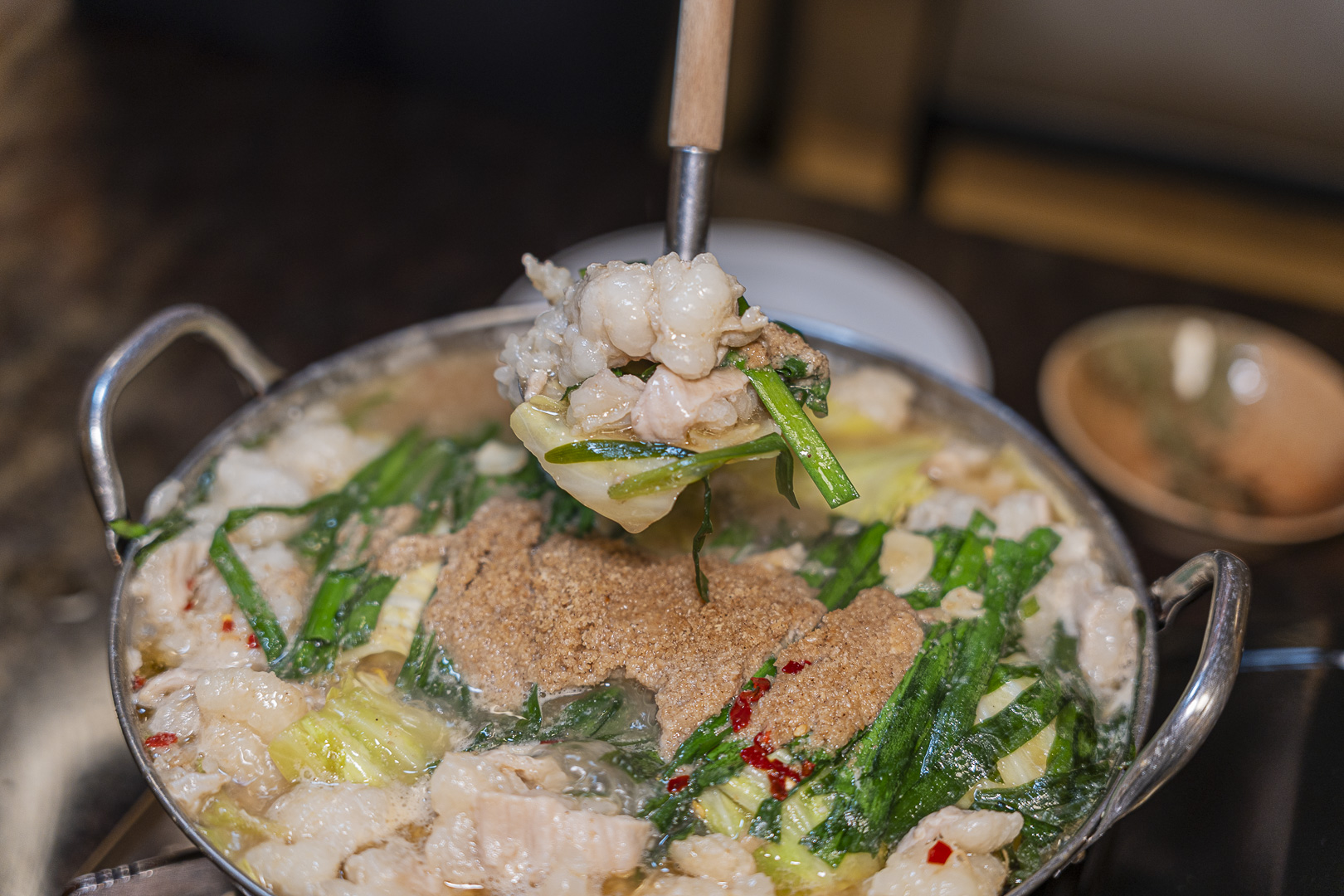
Hakata Motsunabe Ikkei
博多もつ鍋 一慶
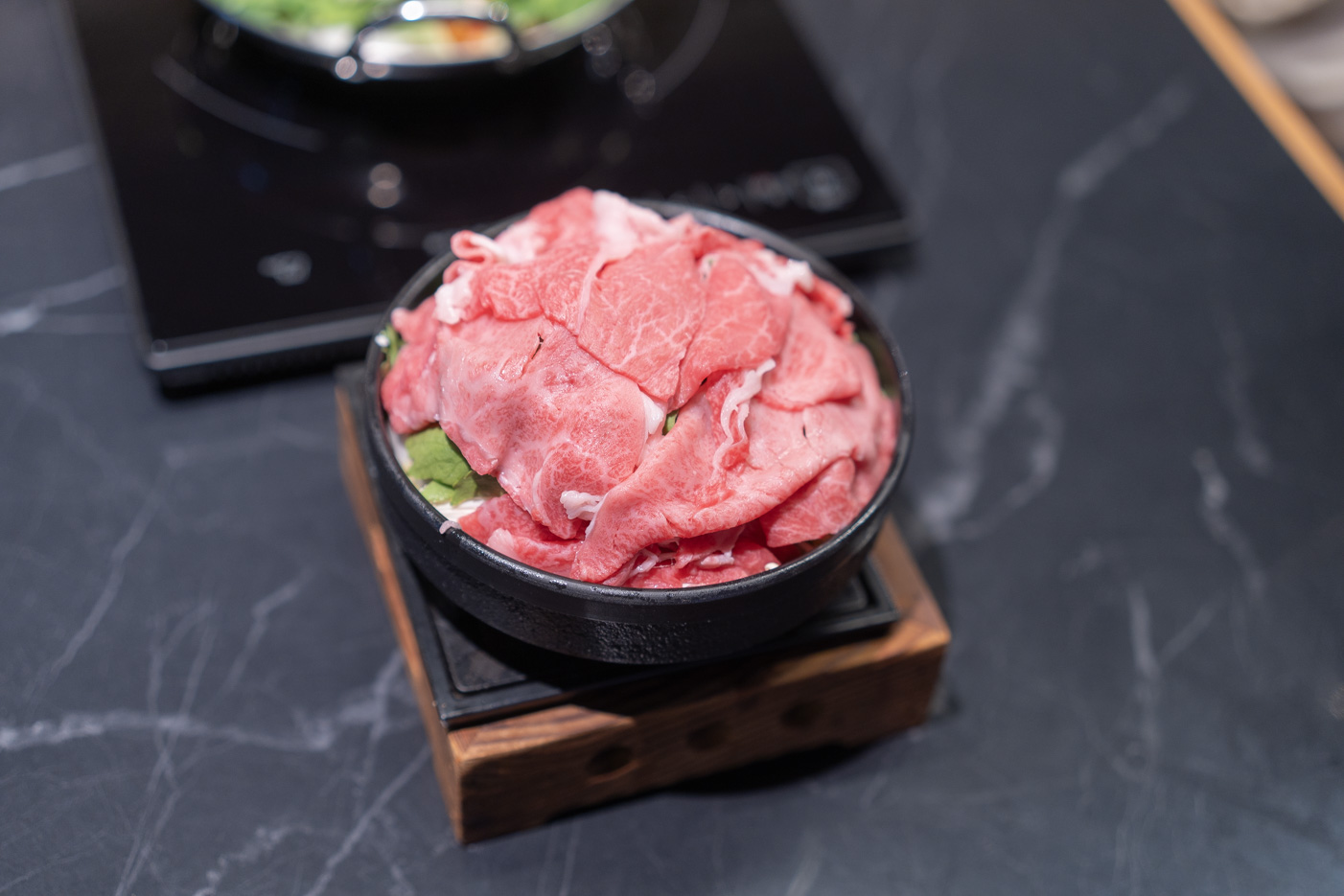
Hakata Motsunabe Ikkei, at GB15 on Canal City Fukuoka’s first basement level, makes motsunabe and sukiyaki approachable for solo diners. Its signature offal hot pot uses a soy-sauce base with garlic and chili for a clean but deep flavor. Wagyu misuji sukiyaki offers another manageable meal option, pairing tender beef with plenty of vegetables. Dip the meat in egg and eat it with rice. The generous vegetables and cozy setting make for a satisfying meal on your own.
Record 022 · Original dining, photographed-shop or historical record
Japanese Soba Chojuro
日本そば 澄十朗
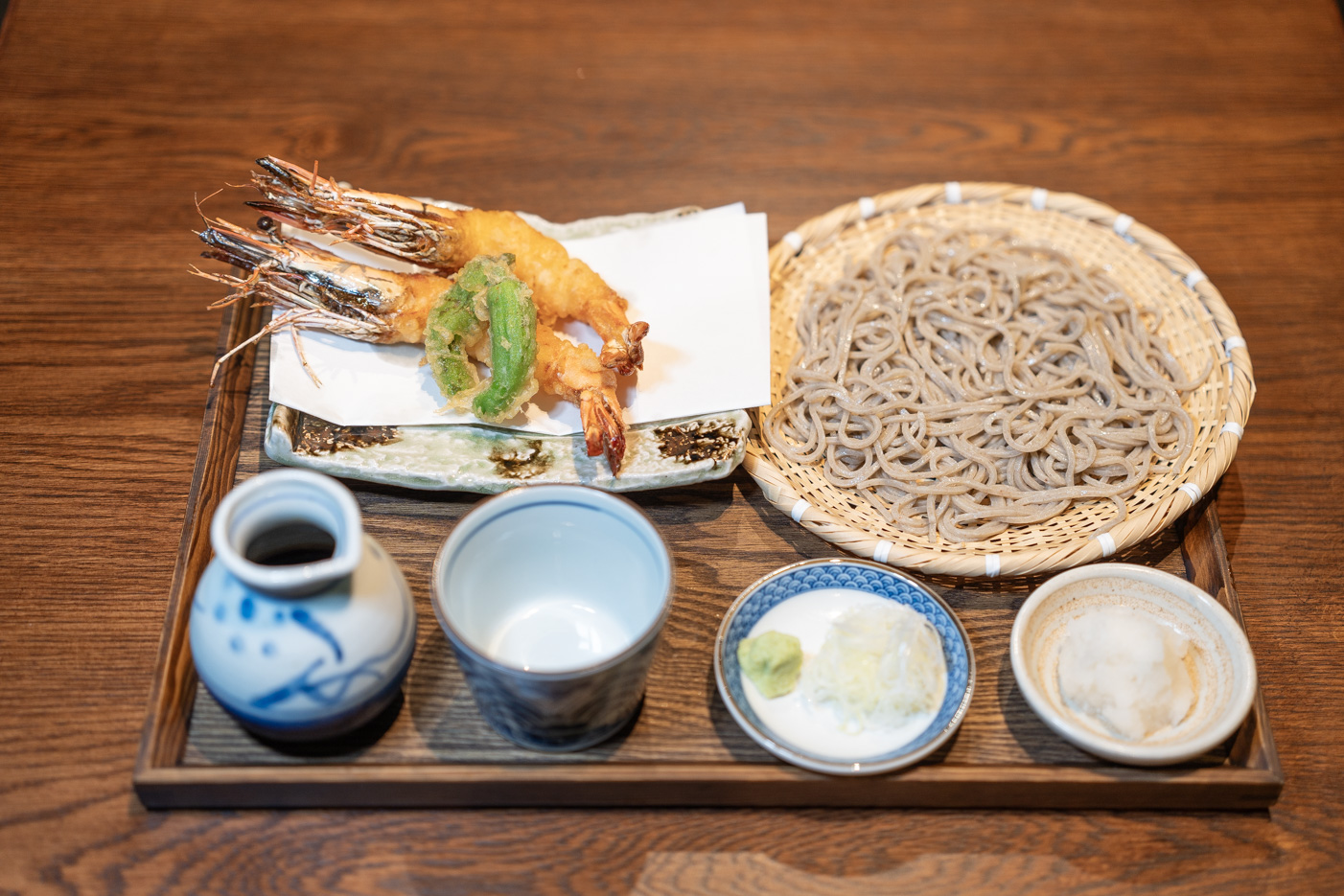
Japanese soba specialist Chojuro, at GB20 on Canal City Fukuoka’s first basement level, serves juwari soba made entirely from buckwheat, stone-ground in front of you. The signature Oebi no Tokujo Ten Seiro arrives with two enormous shrimp tempura. Eat the mild, flavorful noodles with grated daikon and dipping sauce to appreciate the ingredients themselves. An additional walnut sauce offers another flavor, and sobayu, the warm noodle-cooking liquid, lets you finish the remaining sauce as a broth. It is a simple meal with depth and a lingering finish.
Record 023 · Original dining, photographed-shop or historical record
Kimura Hanten
キムラハンテン
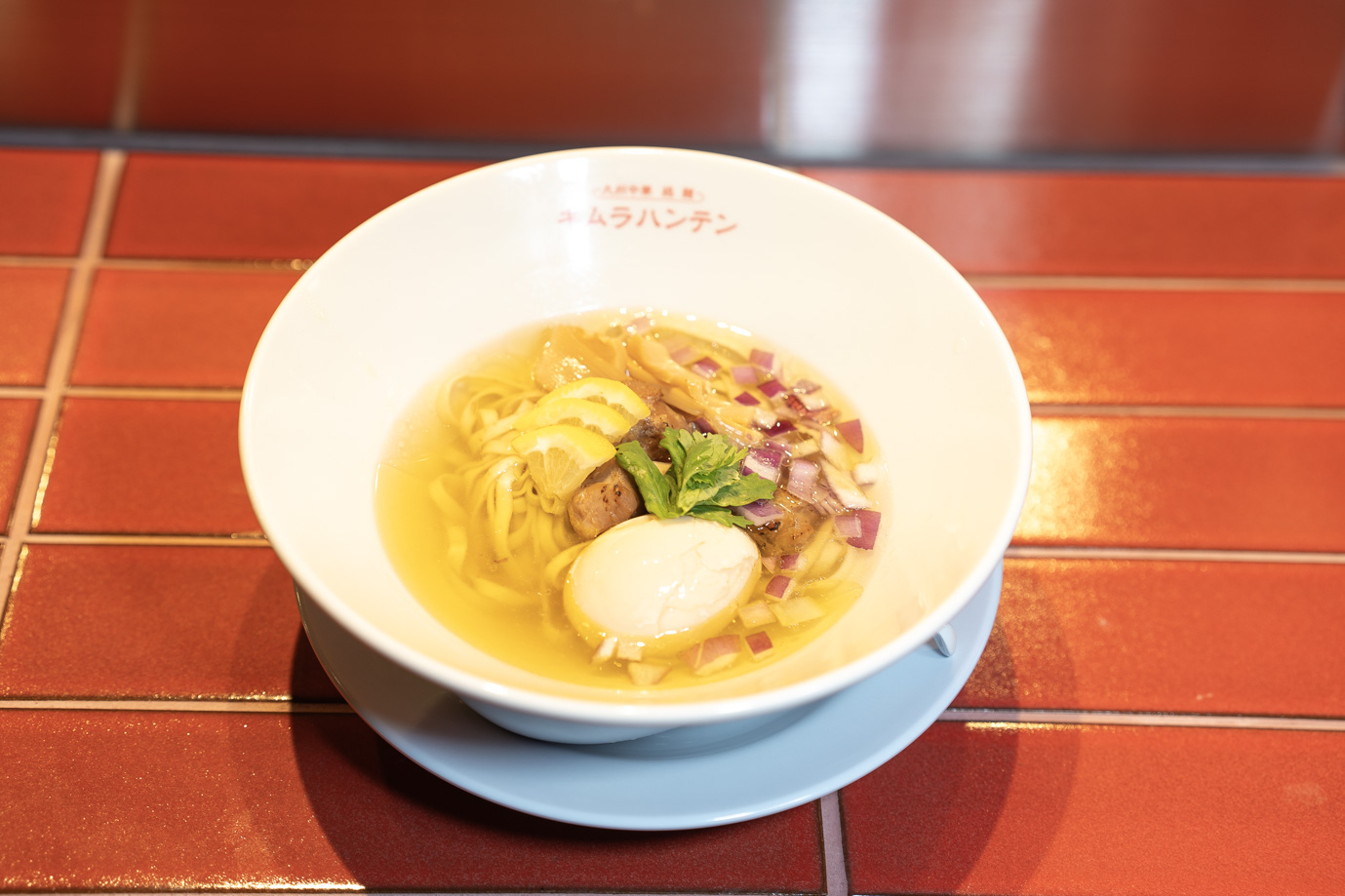
Kimura Hanten at GB14 on Canal City Fukuoka’s first basement level serves ramen made with Hakata chicken. The savory broth is paired with broad whole-grain noodles, chicken chashu, and a soft-boiled egg. Onion and lemon give the soup its distinctive character. The original record attributes the bowl to a Michelin Bib Gourmand chef. The crisp Peking duck ordered separately came with sweet tianmian sauce and apple slices for an additional twist.
Record 024 · Original dining, photographed-shop or historical record
Sumiyakiniku Steak irori
炭焼肉 ステーキ irori
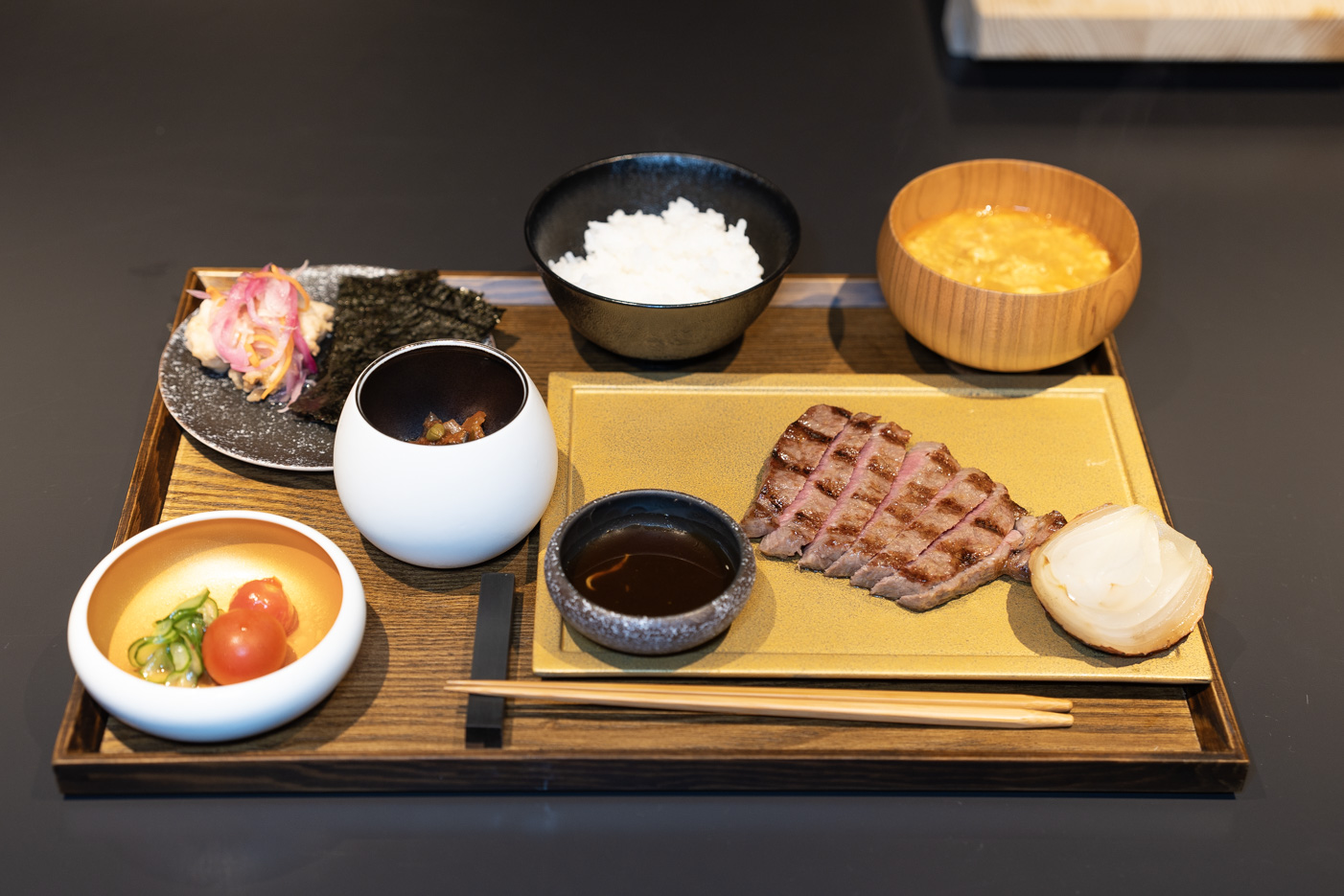
Sumiyakiniku Steak irori, at GB05 on Canal City Fukuoka’s first basement level, specializes in wagyu steak sets supervised by a chef whom the source describes as having seven consecutive years of Michelin recognition in Tokyo. The signature NIPPON Gozen uses Saga wagyu striploin cooked in a Josper charcoal oven, crisp outside and juicy within. The complete set includes steak, rice, ratatouille, vegetables, soup, and nori for wrapping. A special soy sauce and fried onions change the flavor, while wrapping the beef in nori offers a distinctive way to eat it. Consider it for a more polished meal in Fukuoka.
Record 025 · Original dining, photographed-shop or historical record
Yamaya Sohonten Zen
和食レストラン やまや総本店 膳
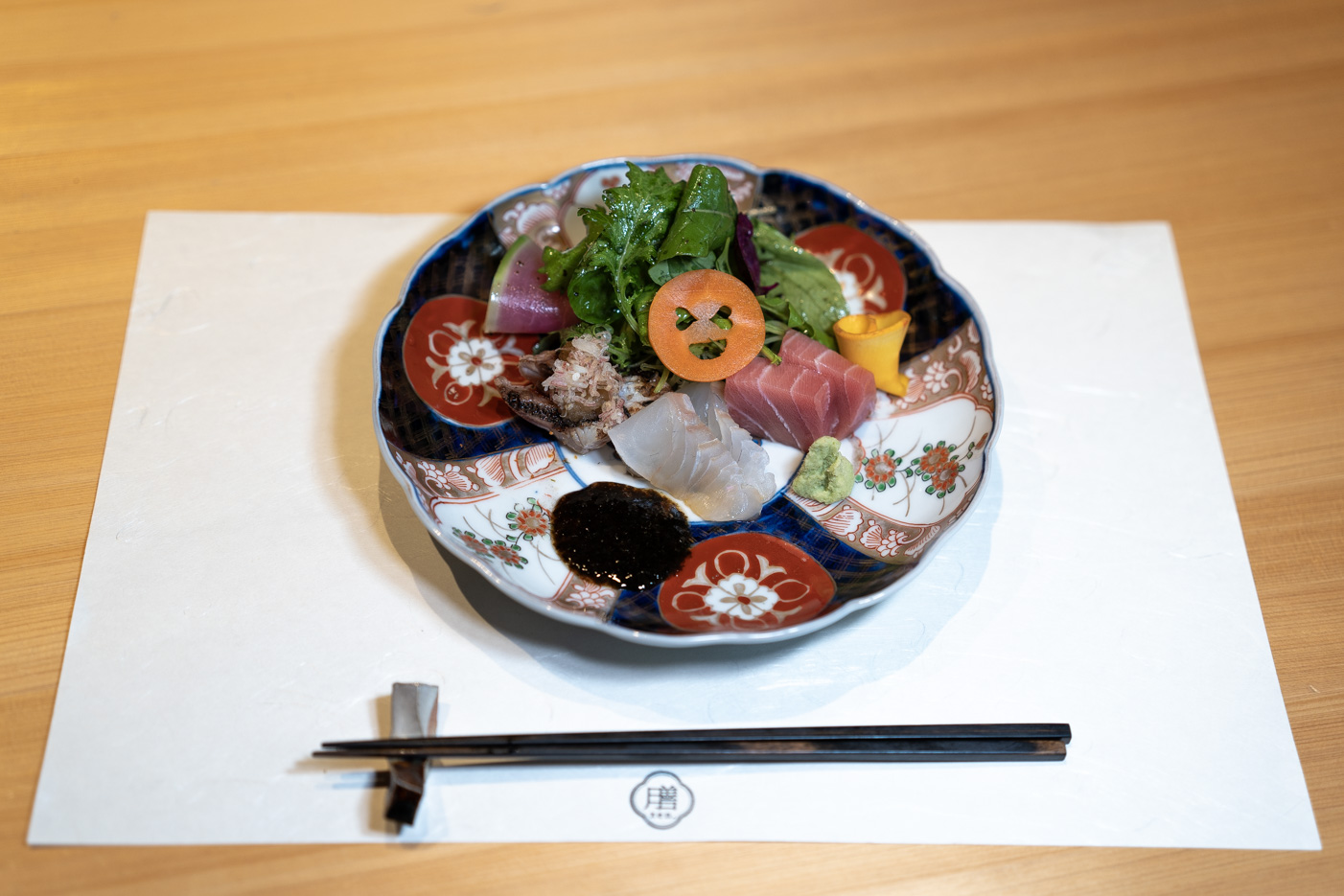
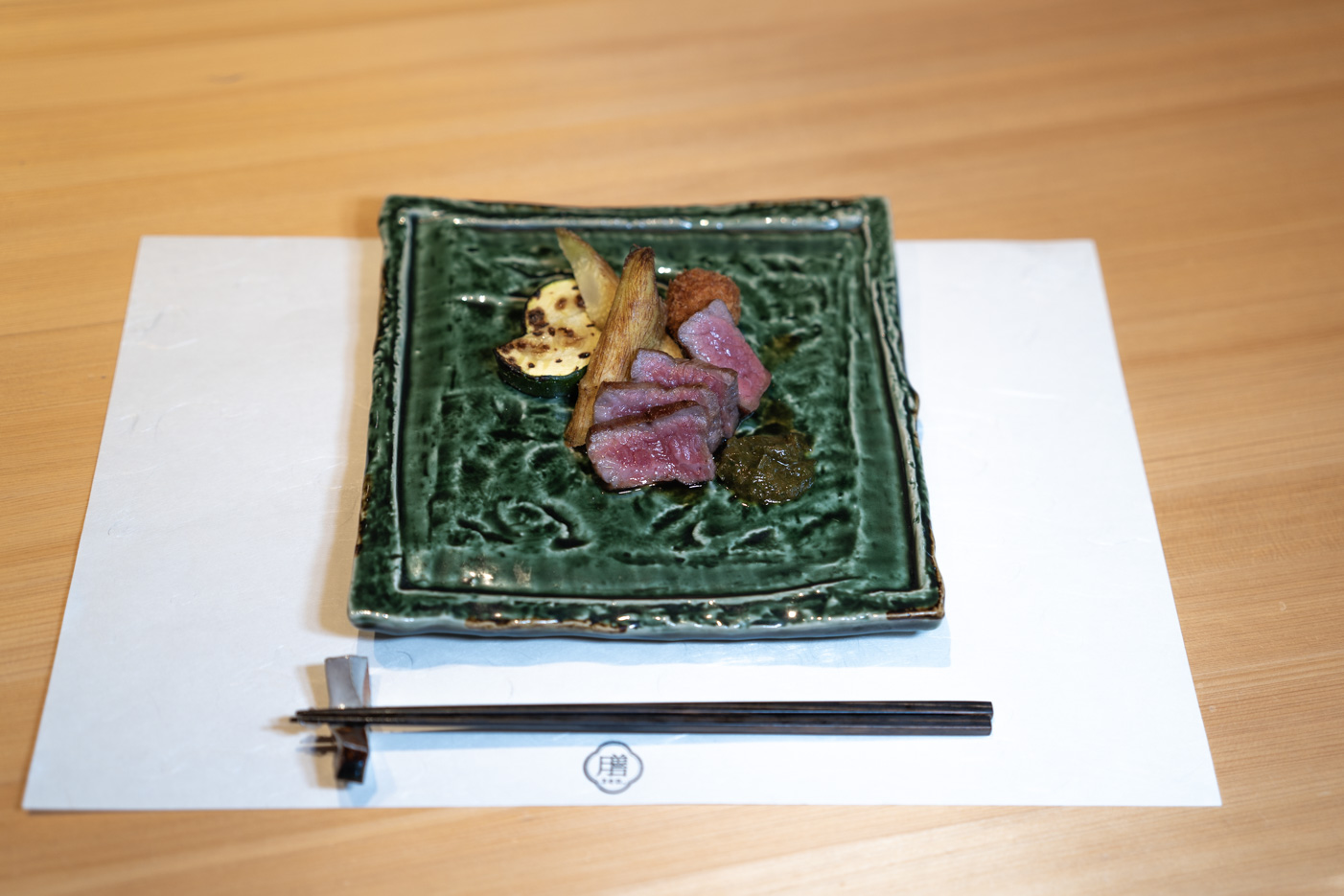
Yamaya Sohonten Zen offers an omakase meal in the JPY 10,000 range. A quiet, refined setting accompanies a carefully arranged full course, beginning with conger-pike cutlet and continuing through sashimi, wagyu, soup dishes, and clay-pot rice. The sequence flows naturally and feels thoughtfully composed. A refined dessert brings the meal to a satisfying close.
Record 026 · Original dining, photographed-shop or historical record
Wagyu Nishihosha
和牛 西豊舎
Wagyu Nishihosha is a mabushi specialist on the tenth floor of JR Hakata City at Hakata Station. Its beef-harami hitsumabushi set uses Australian skirt steak and comes with additions including mentaiko, a soft-cooked egg, and broth. You can choose your own order and try the ingredients in different combinations. The assorted tempura ordered on the side was as accomplished as the main dish.
Record 027 · Original dining, photographed-shop or historical record
Kagoshima Kurokatsutei
鹿児島 黒かつ亭
Kurokatsutei, a black-pork tonkatsu specialist, is on the ninth floor of Amu Plaza at Hakata Station. Its set meals include rice cooked in a traditional pot. Lunch specials provide a lower-cost way to eat here. Putting the cutlet on rice with the sweet meat miso is a popular combination. Tenderloin is lean and tender, while loin is richer and fattier, so choose according to your preference.
Record 028 · Original dining, photographed-shop or historical record
Kokonoe Coffee — Yakuin branch
九重珈琲 薬院店
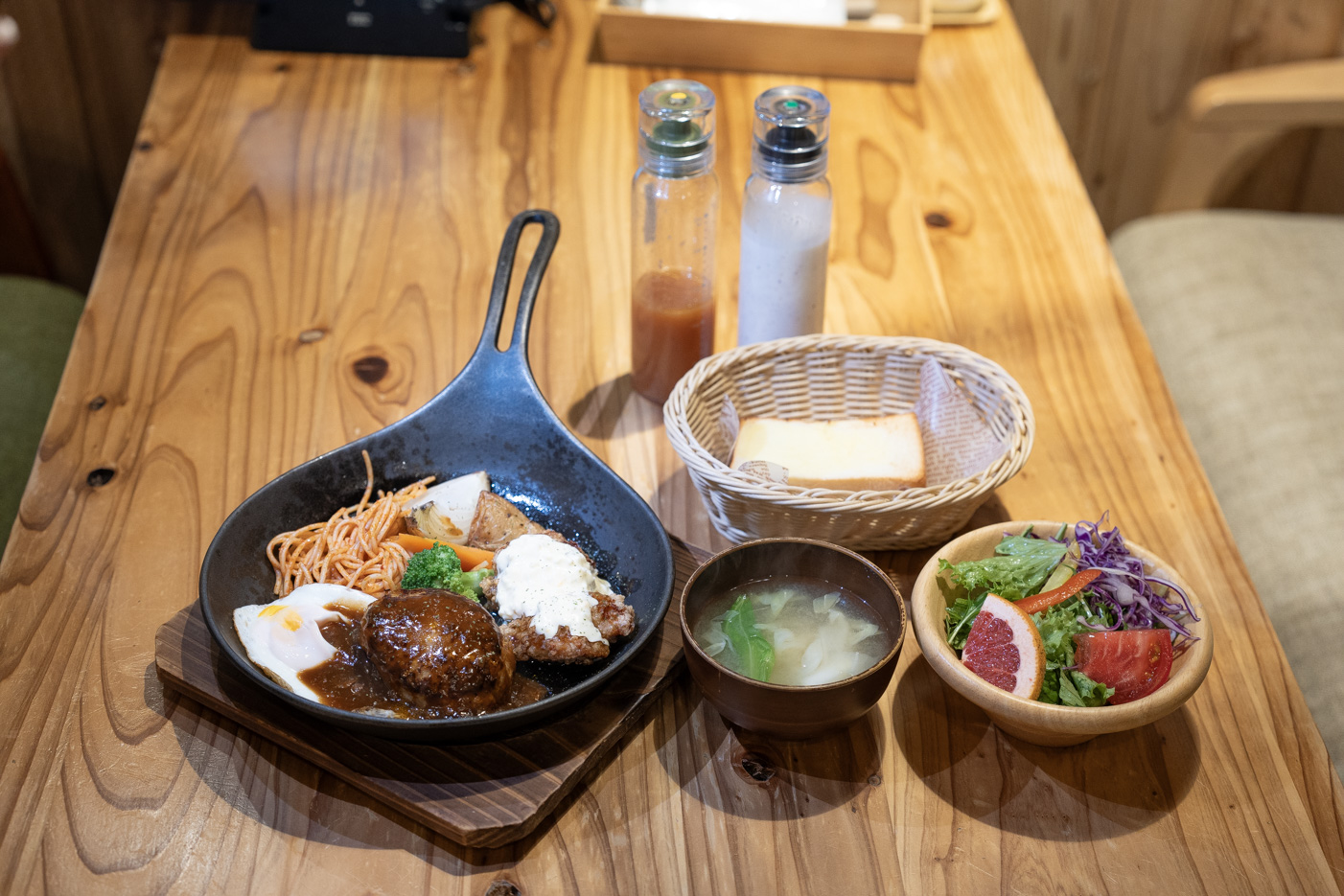
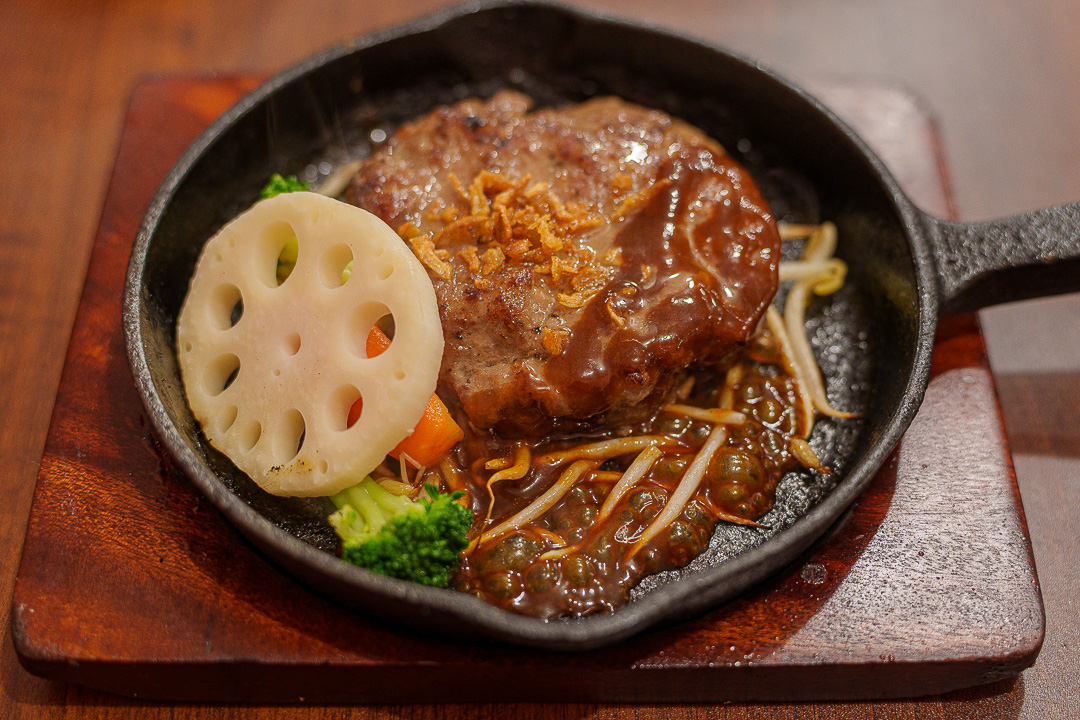
Kokonoe Coffee is a nine-minute walk from Yakuin Station. This café-style restaurant is particularly known for its hamburger-steak set, listed at JPY 1,749 in the original record. You can choose rice or sliced bread. Chicken nanban, chiffon cake, and other options broaden the selection beyond hamburger steak. Both the atmosphere and the meal combinations made this local favorite satisfying.
Record 029 · Original dining, photographed-shop or historical record
Hyakusai Shun
百菜 旬
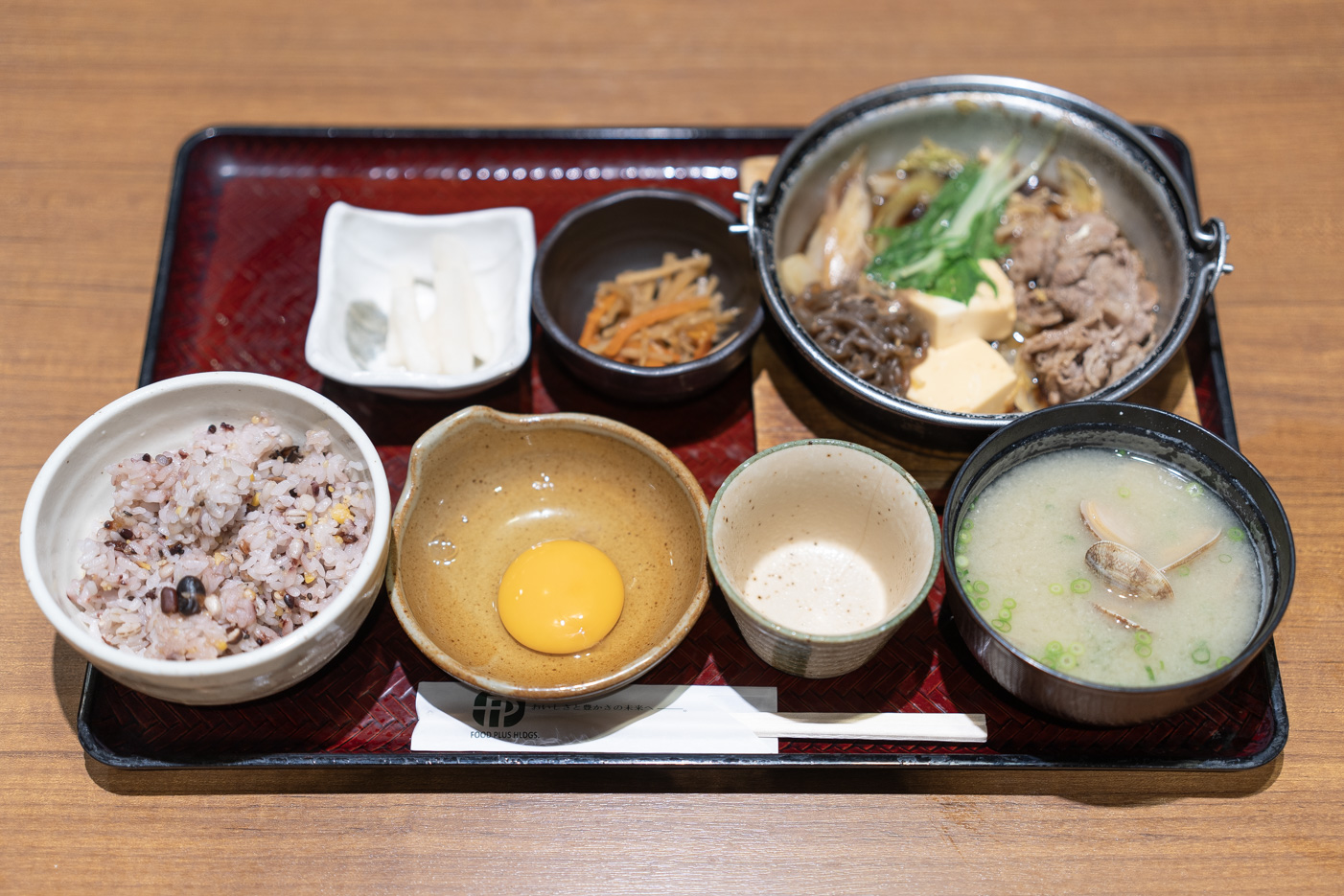
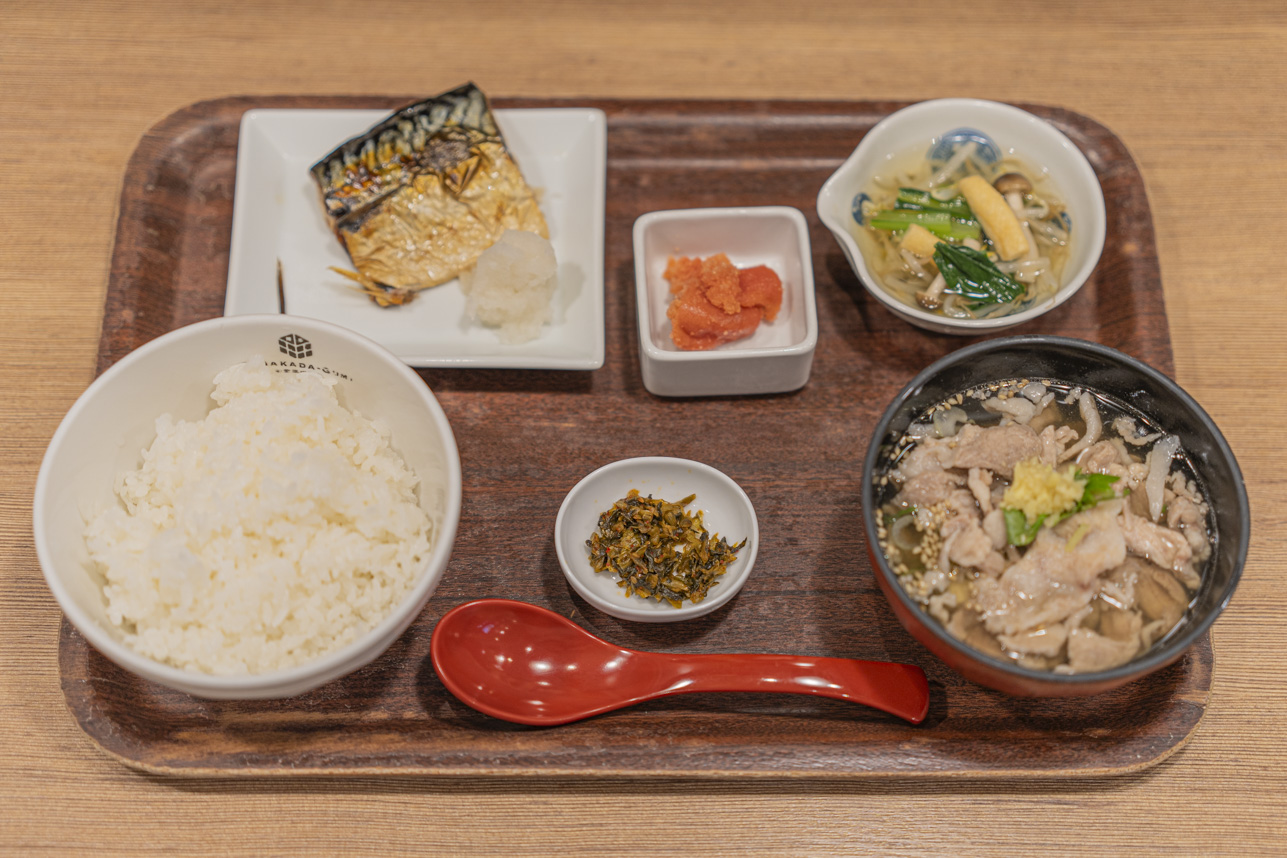
Hyakusai Shun, below Hakata Station, serves set meals from 7 a.m. to 11 p.m. The restaurant draws commuters with filling meals around JPY 1,000. Choose white or mixed-grain rice, and add JPY 150 to upgrade to clam miso soup. It is not showy, but the substantial combinations and warm atmosphere work well for travelers too. Direct access from Hakata Station is another advantage.
Record 030 · Original dining, photographed-shop or historical record
Shokudo Mitsu
食堂 光
Shokudo Mitsu is a small set-meal restaurant in Yanagibashi Market, about five minutes on foot from Watanabe-dori Station. Its sea-bream ochazuke set pairs red-sea-bream sashimi with sesame sauce and bonito dashi in a simple, neatly composed meal appreciated by locals and travelers. The custard pudding, recorded at JPY 100, was a surprisingly satisfying extra. Its market location makes it easy to include in a day’s route.
Record 031 · Original dining, photographed-shop or historical record
Denkosekka — Canal City Hakata branch
電光石火 キャナルシティ博多店
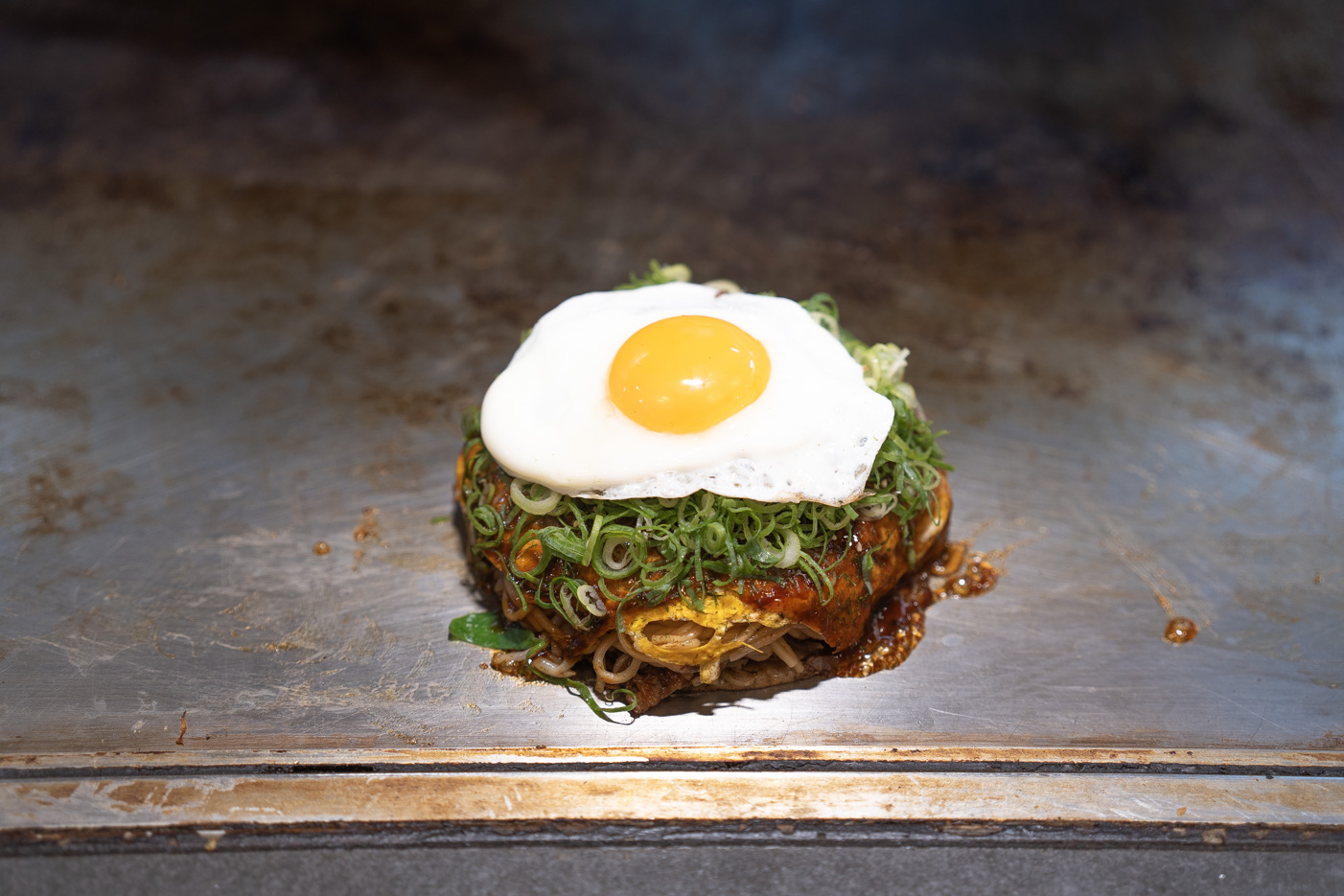
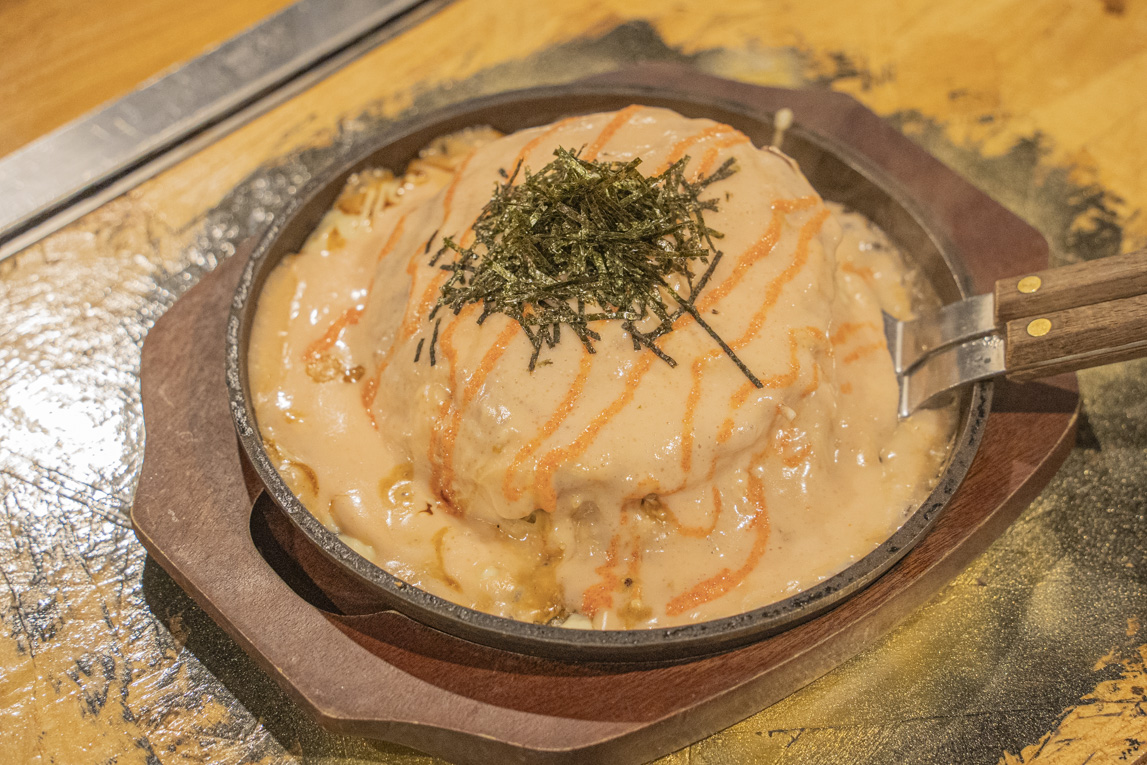
Canal City Fukuoka has an okonomiyaki shop described in the original review as the first of its kind to receive Michelin recognition. It specializes in Hiroshima-style okonomiyaki. Vegetables, bean sprouts, seafood, and soba noodles are layered over thin batter. A thinly cooked egg forms the base, with the other ingredients placed on top. Watching the cooking unfold directly in front of you is part of the enjoyment.
Record 032 · Original dining, photographed-shop or historical record
Ichiran — Canal City Hakata branch
一蘭 キャナルシティ博多店
Ichiran at Canal City Hakata offers a branch-exclusive menu. Here you can try a special tonkotsu ramen incorporating Japanese dashi. The noodles use wheat grown specifically for the restaurant in Fukuoka’s Itoshima area. Buy a meal ticket from the machine, then eat quietly at an individual seat. Its location works well for a shopping break, and ramen enthusiasts may find the branch worth a visit.
Record 033 · Original dining, photographed-shop or historical record
Steakhouse Medium Rare at WITH THE STYLE FUKUOKA
ステーキハウス ミディアムレア
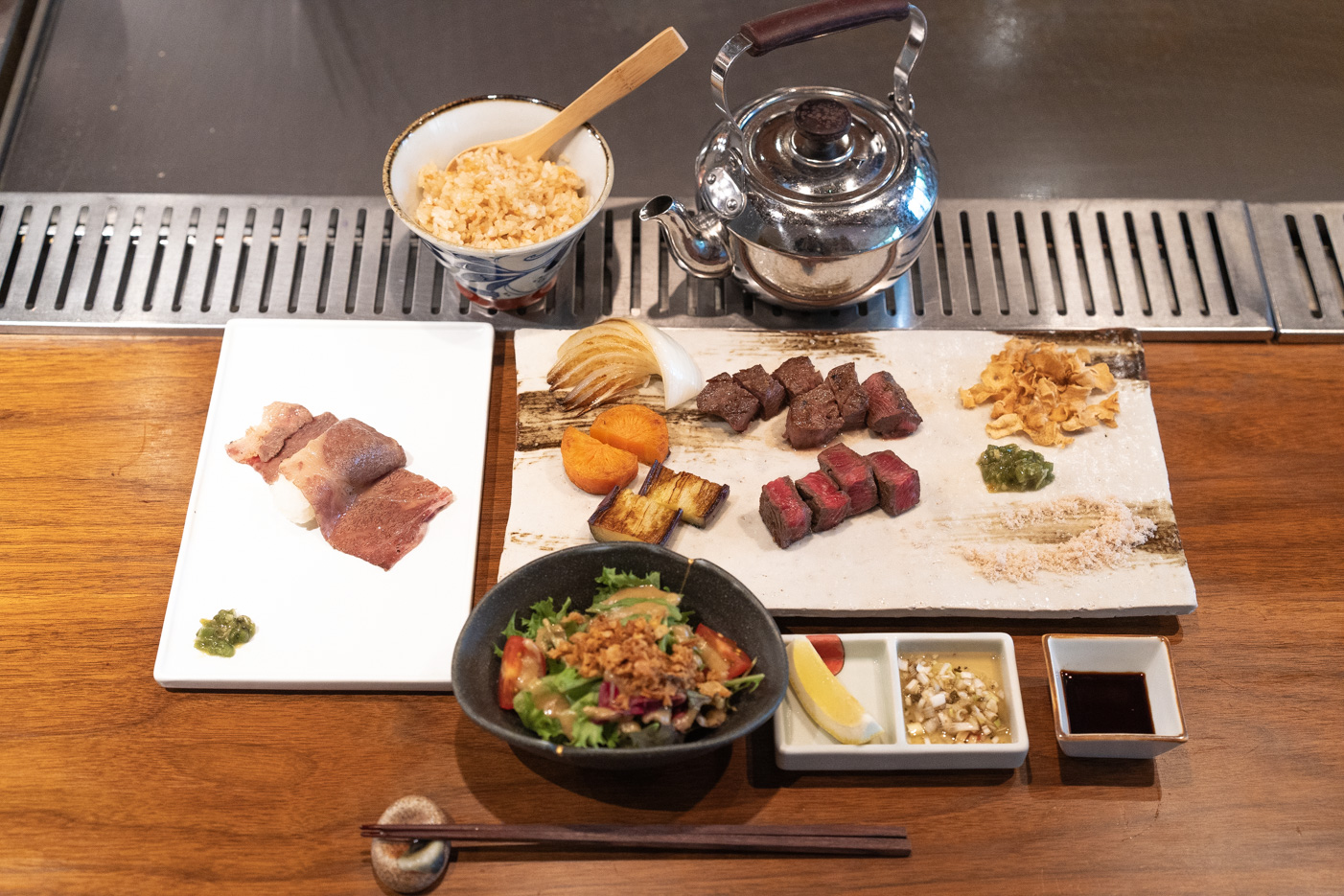
Steakhouse Medium Rare at WITH THE STYLE FUKUOKA offers a lunch special in a polished setting. The JPY 3,800 course includes Japanese Black wagyu sushi, teppan-grilled steak, and seasonal vegetables. Char-grilled aromas from the meat and vegetables sizzling on the griddle add to the experience. Finish with either garlic rice or freshly cooked white rice. It is about a five-minute walk from Hakata Station.
Record 034 · Original dining, photographed-shop or historical record
Kisuimaru — Hakata Ichibangai branch
博多の海鮮料理 喜水丸 博多一番街店
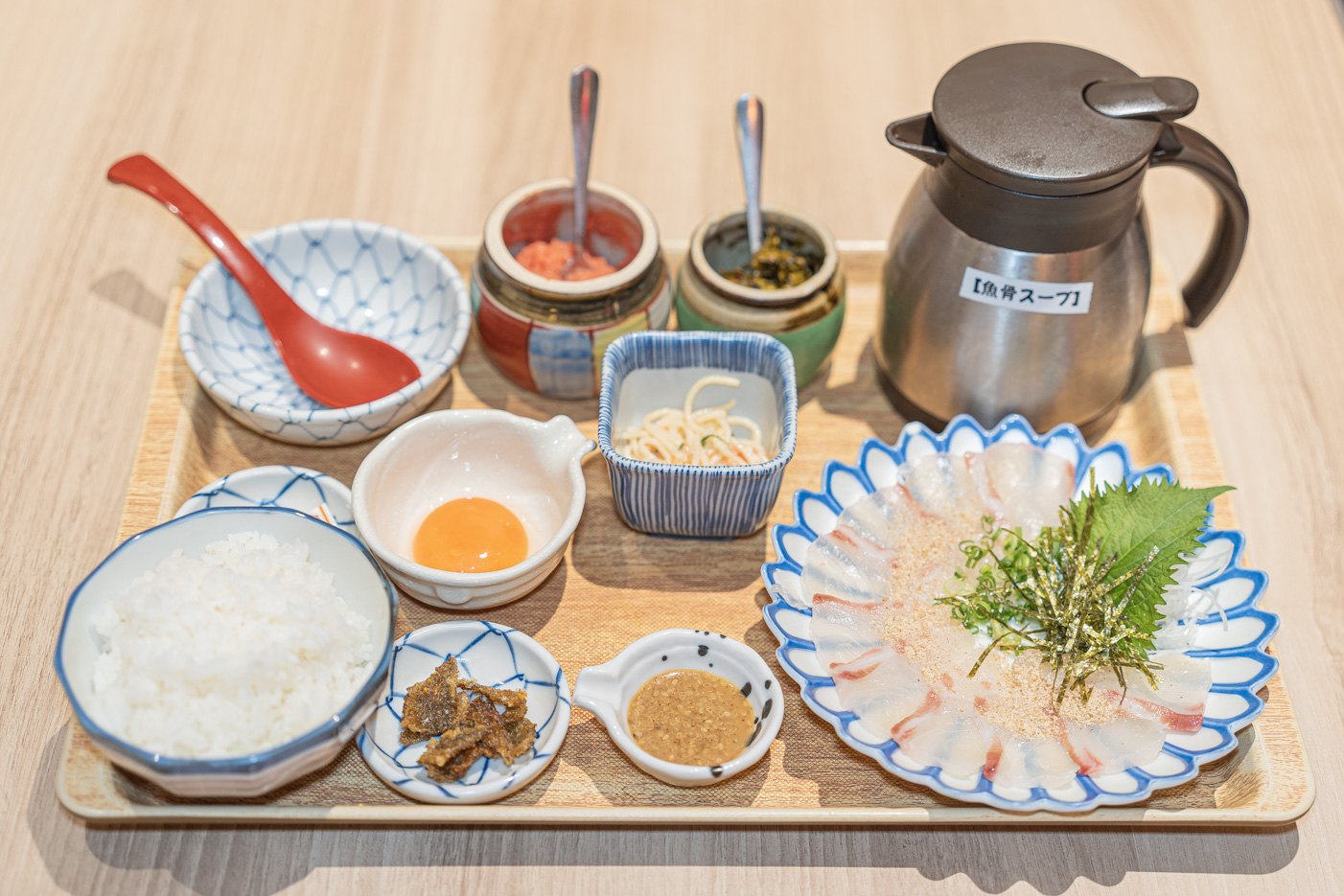
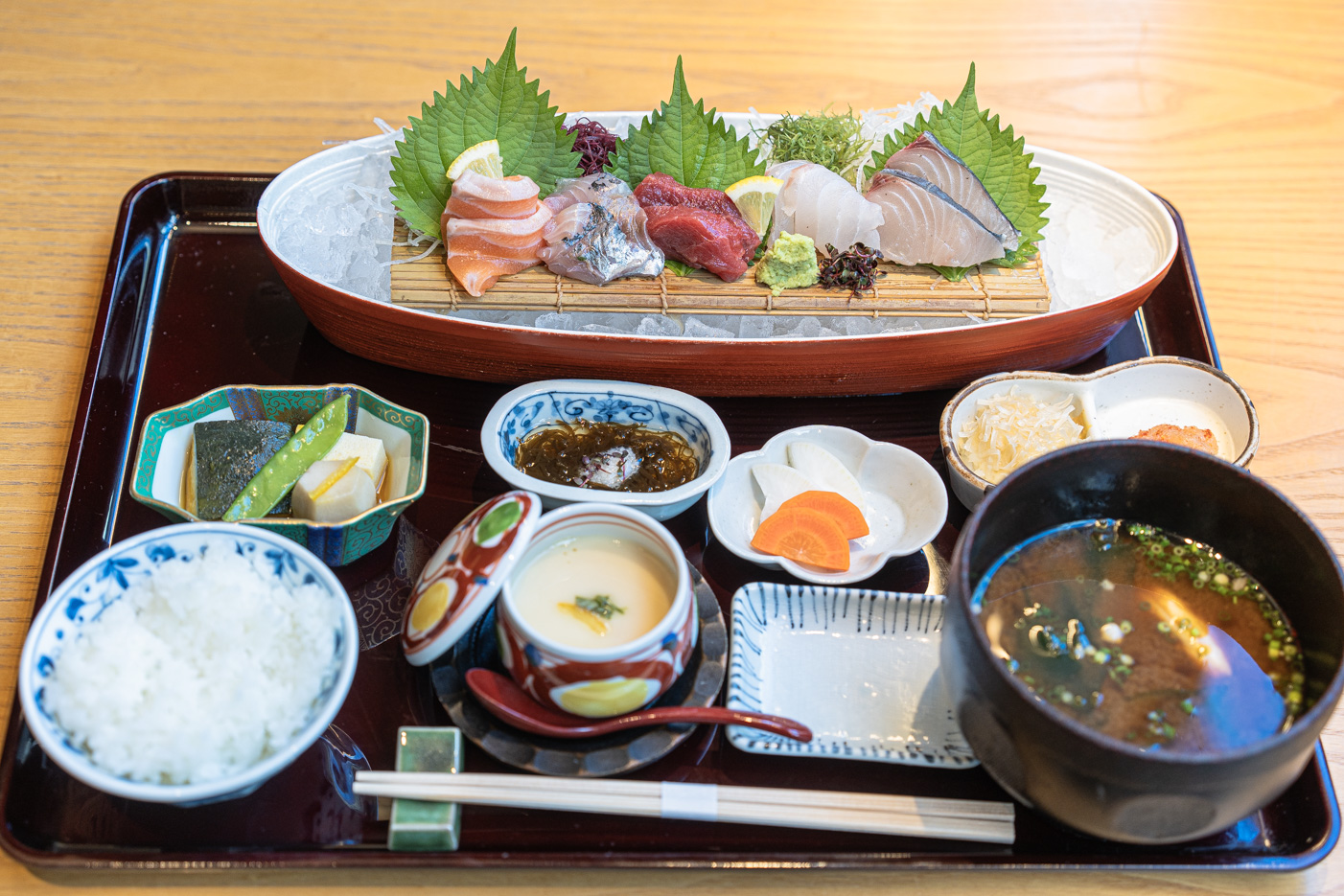
Put a slice of sea bream on the rice, add wasabi and the special sesame sauce, then pour over fish-bone soup to complete the bowl. Enjoy the sashimi with soy sauce or sesame sauce first, followed by warm ochazuke as the second stage. Mentaiko refills are unlimited. Save a little rice to finish with the roe and pickled mustard greens. At JPY 1,990 in the source record, this carefully prepared sea-bream ochazuke set was a meal the reviewer would happily seek out straight after arriving at Hakata Station.
Record 035 · Original dining, photographed-shop or historical record
Unagi no Naruse — Fukuoka Watanabe-dori branch
鰻の成瀬 福岡渡辺通店
Unagi no Naruse is about five minutes on foot from Watanabe-dori Station. The original visit recorded charcoal-scented grilled eel arriving just five minutes after ordering, making it an appealing meal before departure, although that timing is an observation rather than a service guarantee. Options range from a three-eel comparison set at JPY 2,900 to a generous premium serving, and an ochazuke option provides another way to enjoy it. Solo dining is comfortable. The source recorded Kakao Pay as an alternative to card payment; travelers should not assume their own payment method is supported without checking.
Record 036 · Original dining, photographed-shop or historical record
Hakata Ebi Tonkotsu Ramen Yusakura
博多海老豚骨 維櫻
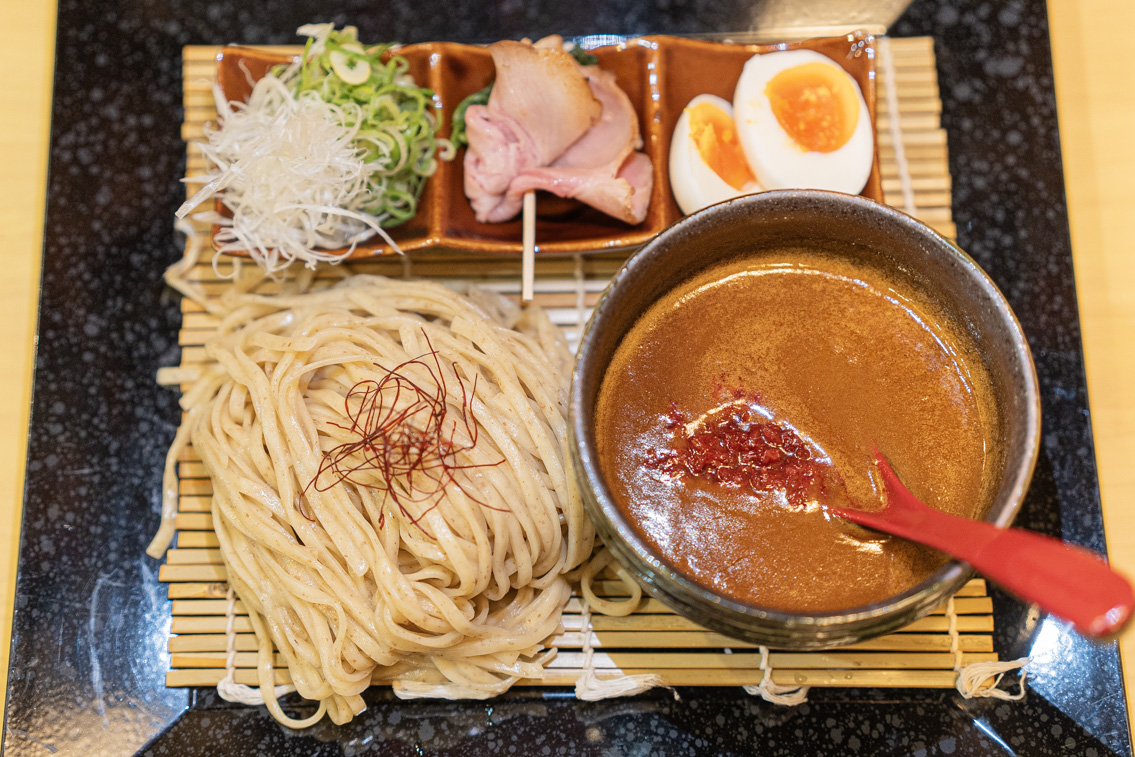
In the basement of the Don Quijote building connected directly to Nakasu-Kawabata subway station, this restaurant serves ramen and tsukemen with a rich shrimp-and-tonkotsu broth. The intensely concentrated shrimp flavor is particularly appealing to shrimp lovers. In a city dominated by tonkotsu, it is a chance to try a less common shrimp broth in both regular noodle soup and dipping-noodle form. Recommended for ramen enthusiasts looking beyond the standard pork-bone bowl.
Record 037 · Original dining, photographed-shop or historical record
Solaria Stage / Solaria Plaza
ソラリアステージ・ソラリアプラザ
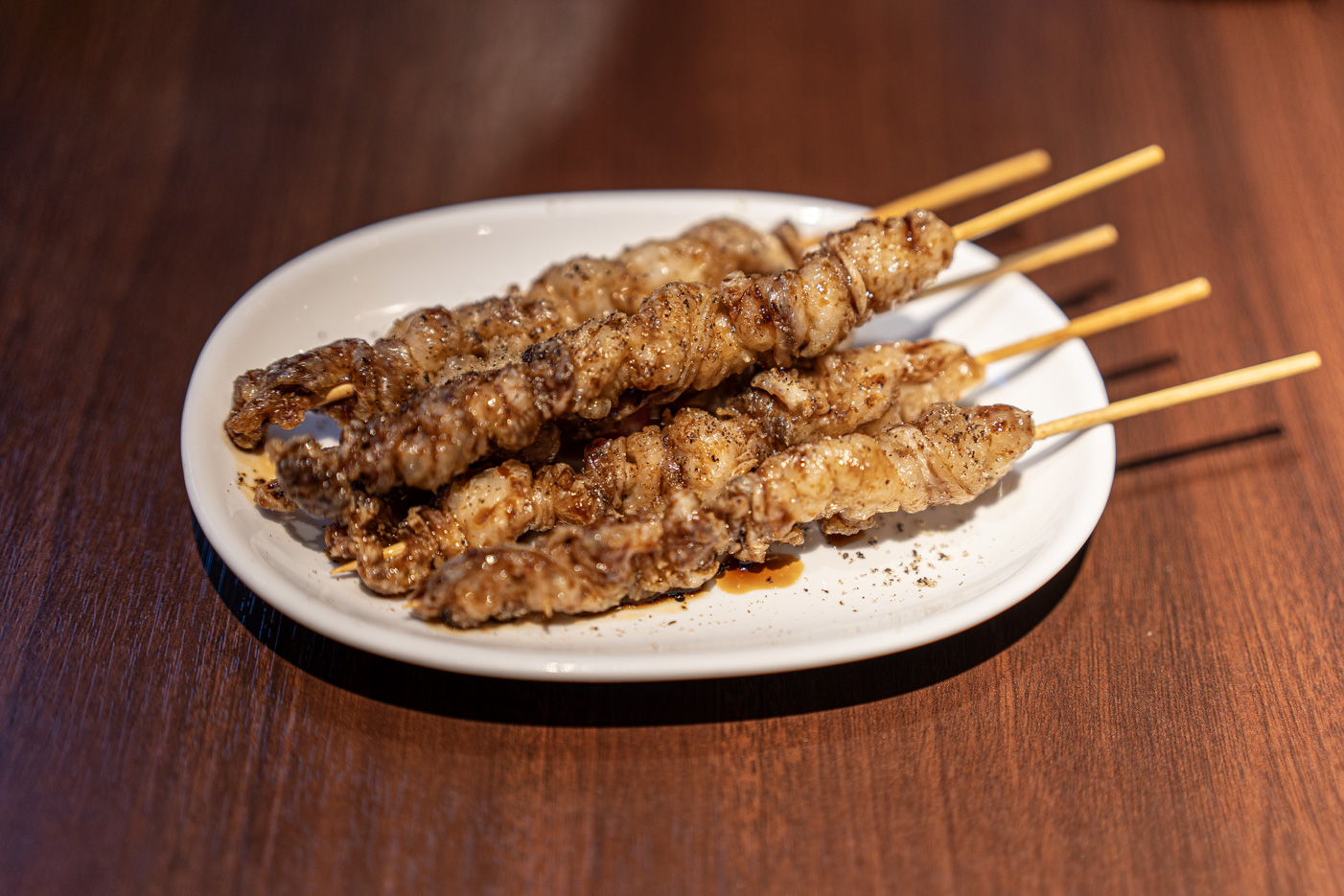
Solaria Plaza and Solaria Stage are central Fukuoka shopping destinations popular with younger visitors and travelers, with abundant food options as well as shops. Japanese, Western, Chinese, and Korean restaurants and cafés offer enough variety for several visits during one trip. You can find wagyu yakiniku, tonkatsu, seafood rice bowls, bakery items, Fukuoka’s mentaiko, chicken-skin skewers, the city’s soft udon, and fresh Kyushu seafood—more than you could cover in a single day. Since everything is indoors, they also work for a food-focused outing with children regardless of the weather.
Record 038 · Original dining, photographed-shop or historical record
European-style Curry Ken’s
欧風ライスカレーケンズ
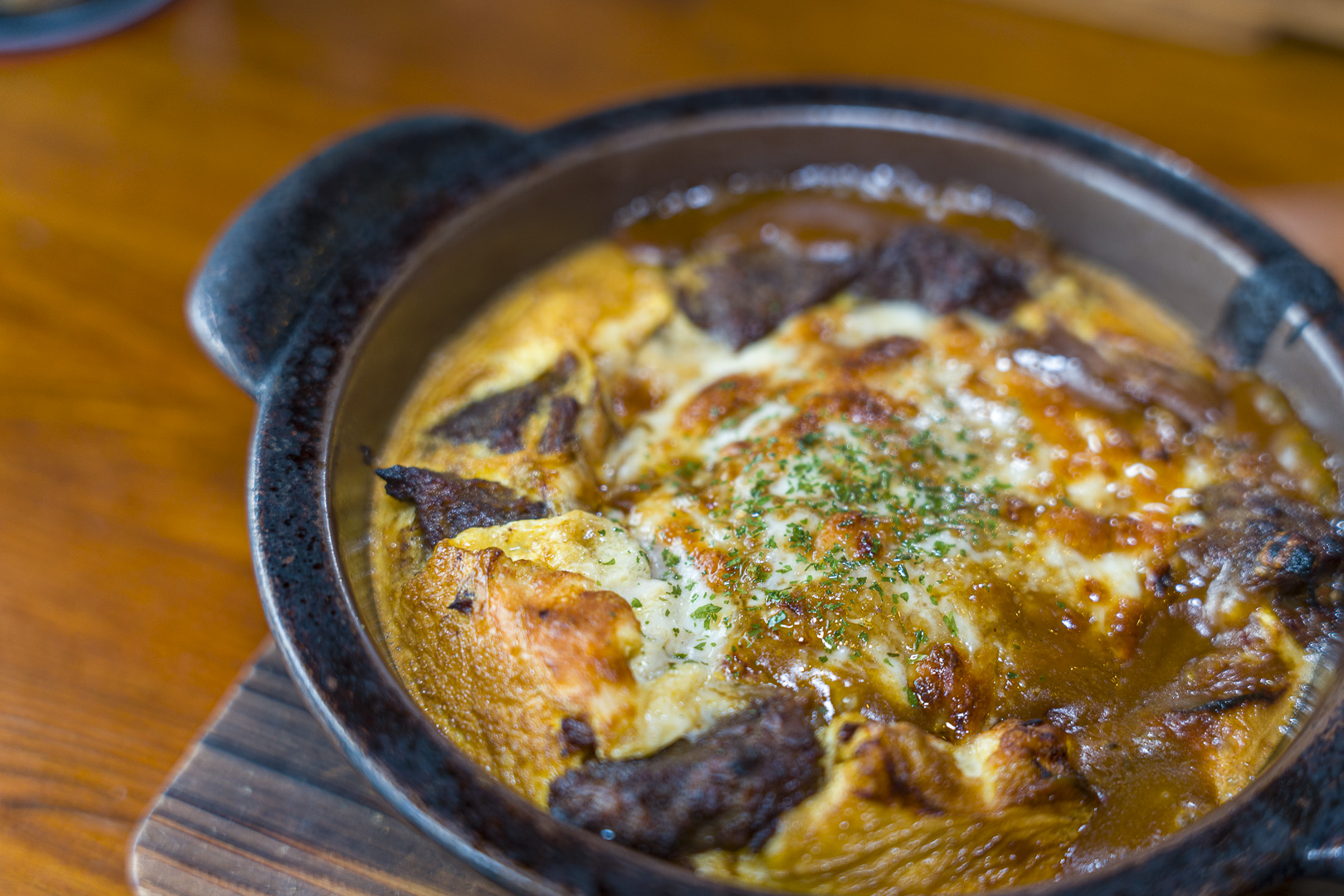
Ken’s is an established Western-style curry restaurant tucked into a residential neighborhood near Hakata Station and appreciated by local diners. Its curry combines a carefully selected spice blend with the gentle richness of Saga wagyu and Imari beef. The house-blended roux is memorable for the initial aroma of spices and the mellow savory flavor that follows. There is sweetness and depth beneath the heat, making it the kind of curry you want to return to.
Record 039 · Original dining, photographed-shop or historical record
Motsunabe Anmei — Fukuoka Hakata main branch
もつ鍋 安明 福岡博多本店
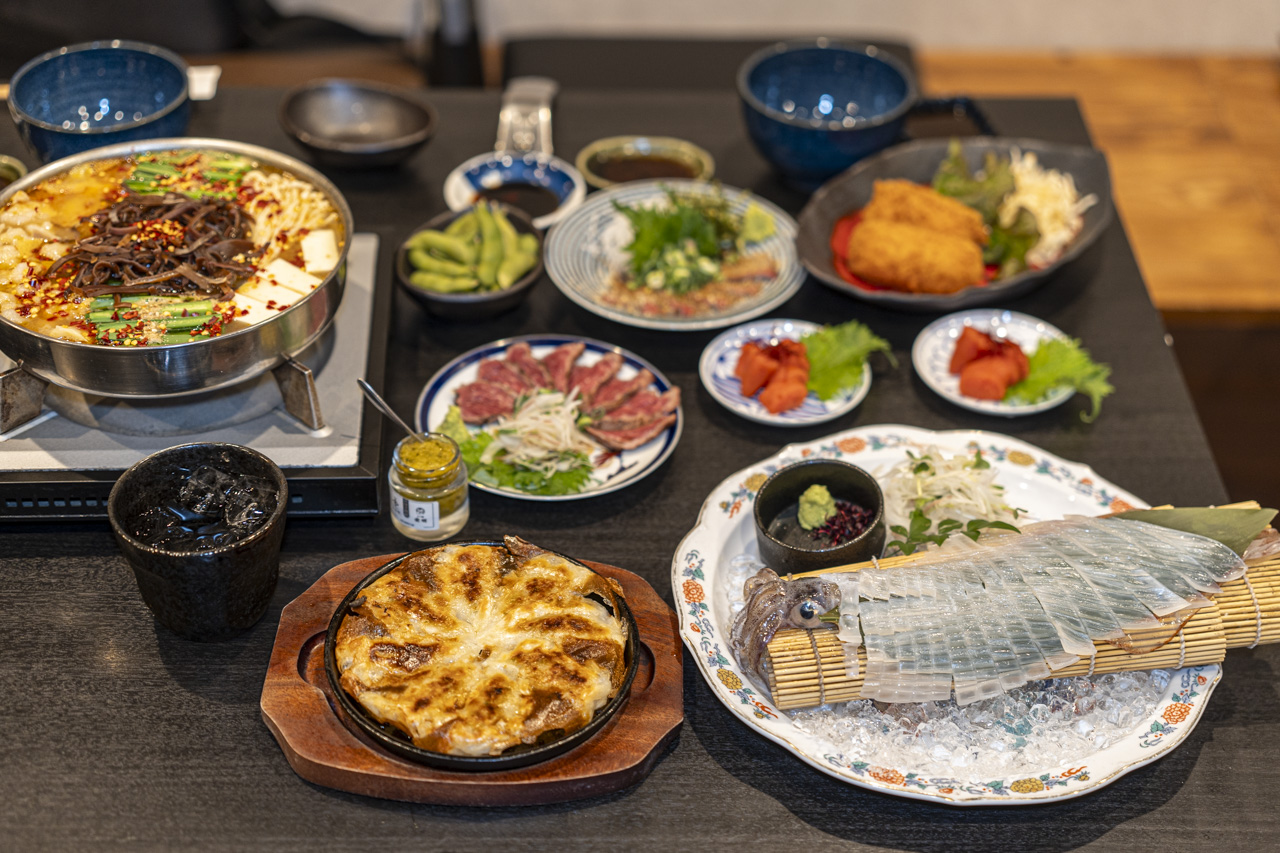
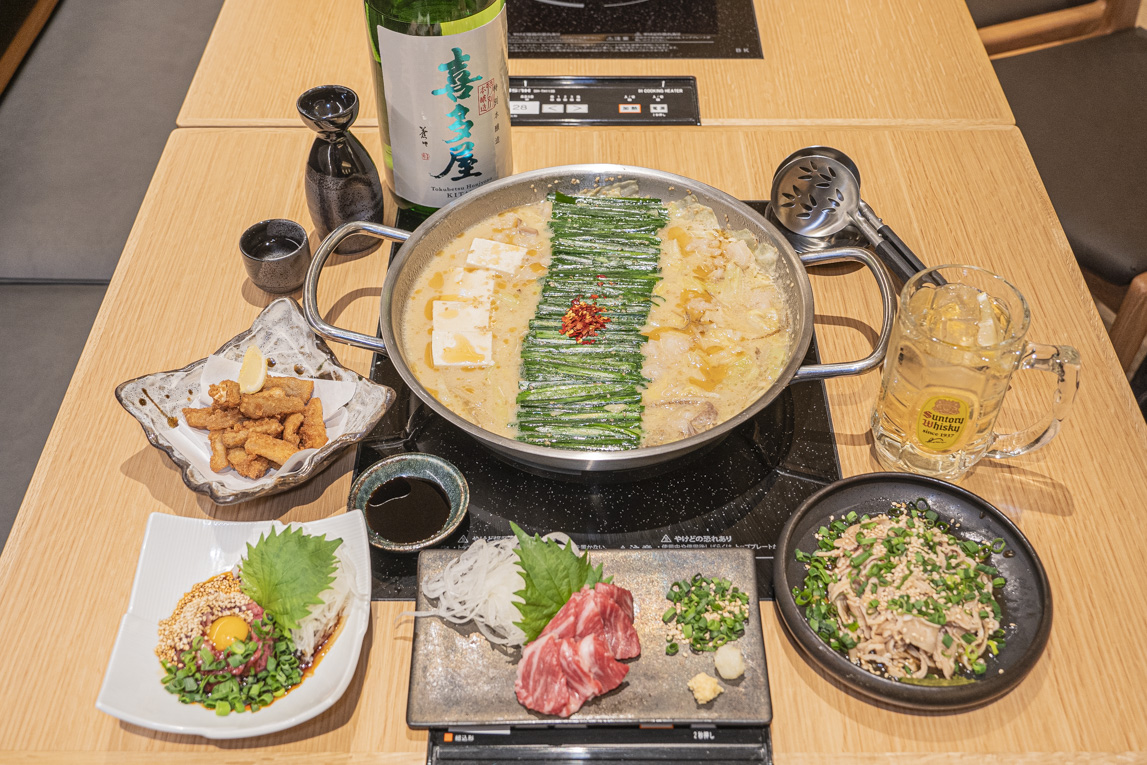
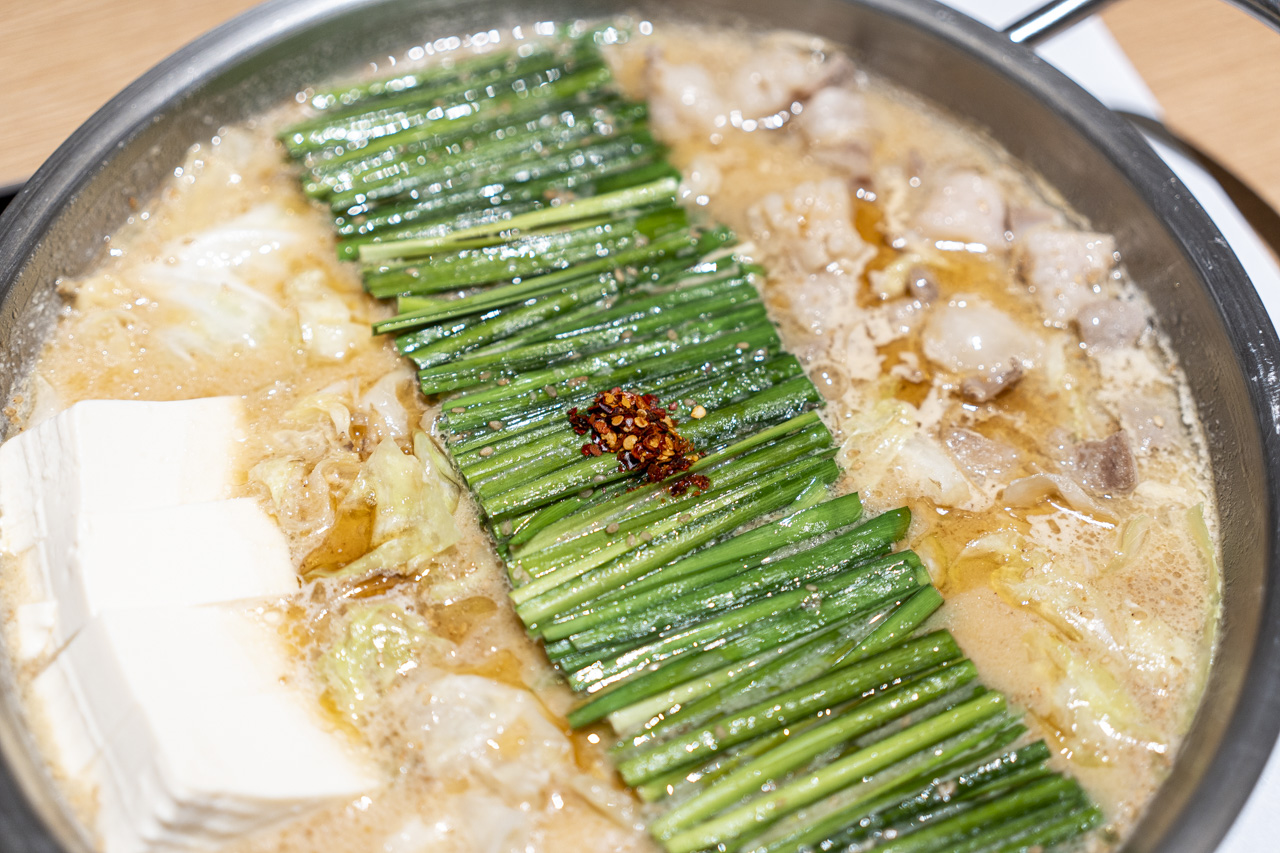
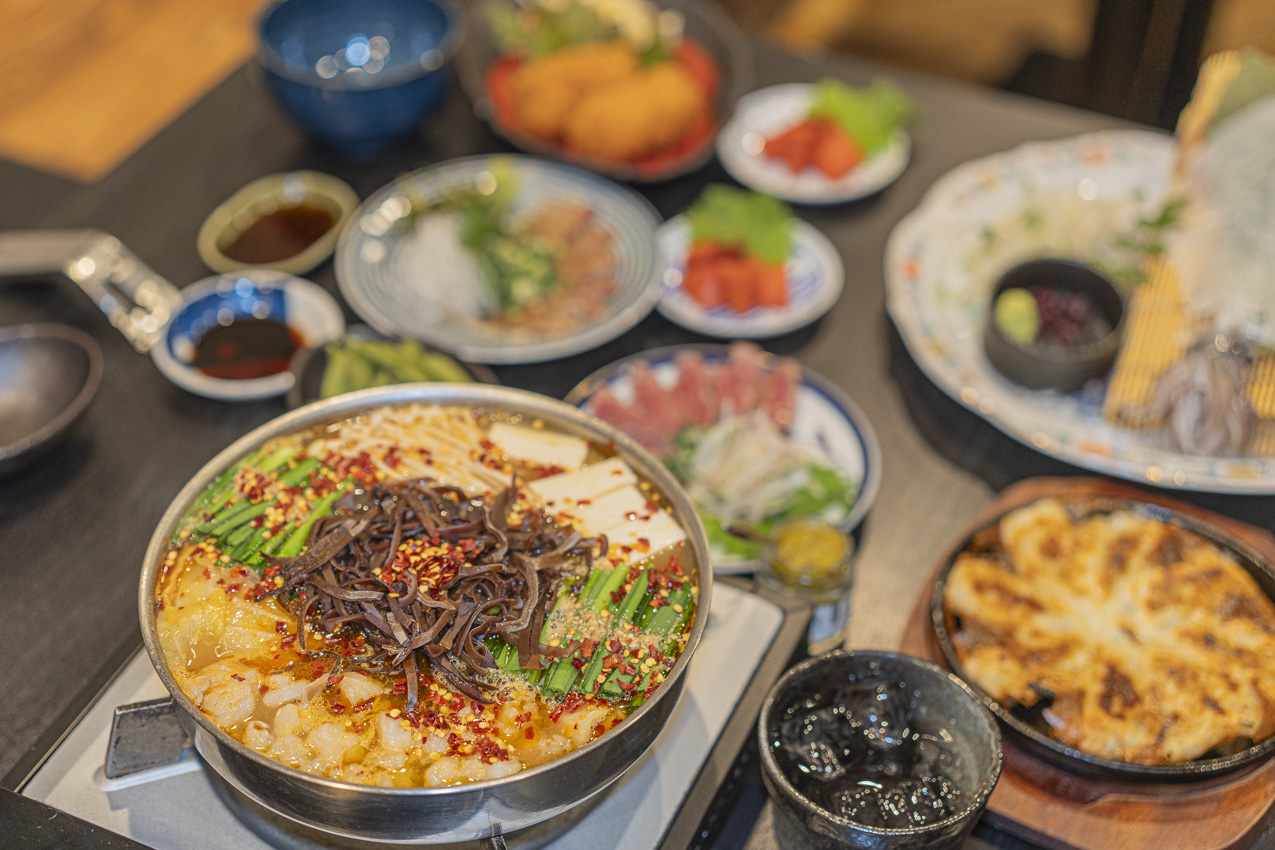
Motsunabe Anmei is about three minutes on foot from Canal City. The original review describes it as a popular restaurant visited by celebrities and prominent athletes, but with relatively shorter lines than some other motsunabe shops. Its Hakata-style offal hot pot uses a house blend of Kyushu soy sauce or miso and only the small intestine of premium Japanese Black wagyu. Generous wood-ear mushrooms add a texture the reviewer particularly enjoyed. Another specialty is live squid from Yobuko, taken from the tank and prepared immediately as sashimi. The quality comes at a slightly higher price than comparable restaurants.
Record 040 · Original dining, photographed-shop or historical record
Sanmi (333) — Tenjin Daimyo main branch
三味(333
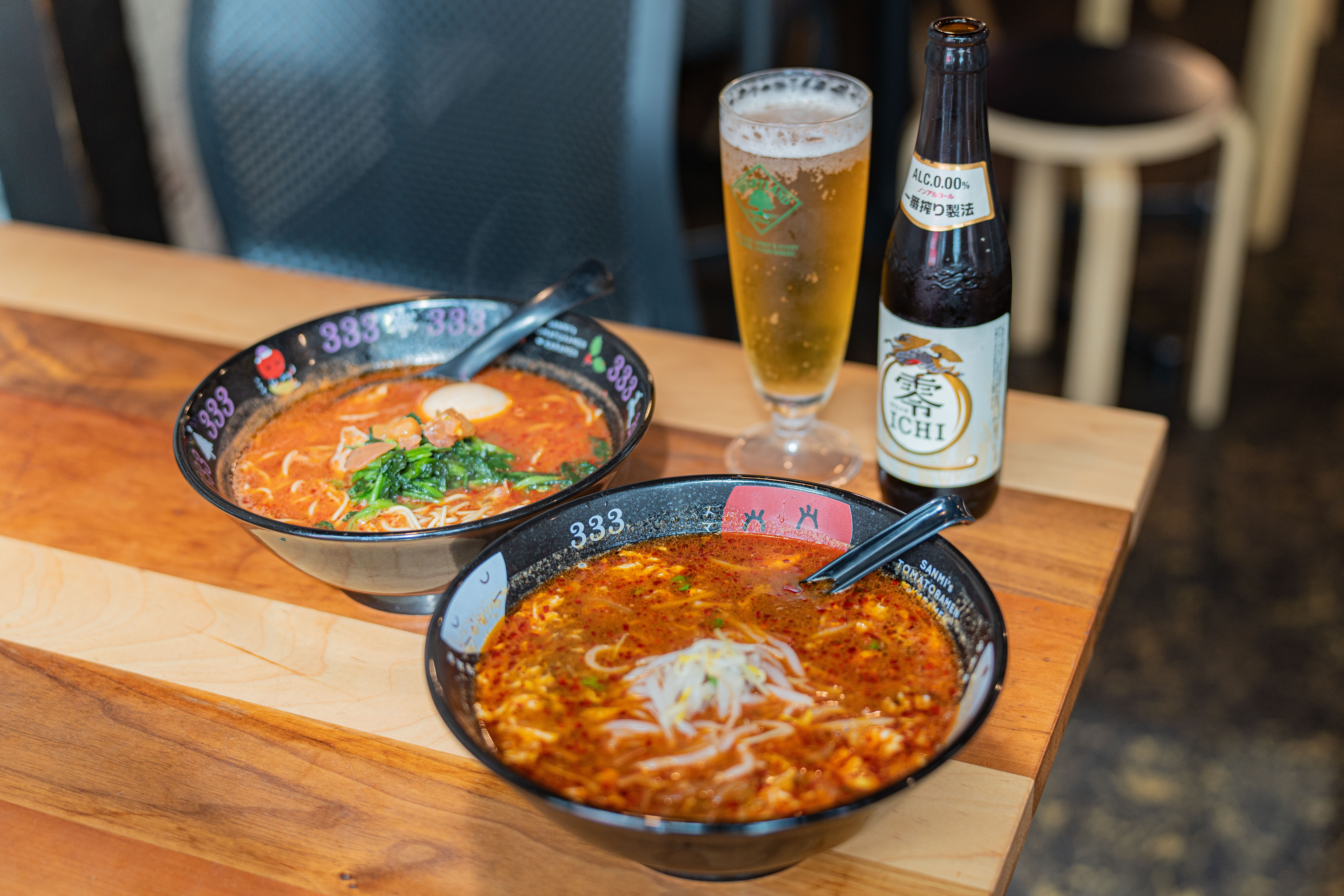
This may be a restaurant that divides opinion. The acidity of its tomato-based broth worked especially well with the richness of the wagyu offal. If motsunabe has disappointed you before, the reviewer recommends giving it another try here. The fat is soft and flavorful, while the tomatoes keep it from feeling heavy. Adding cheese makes it gentler and creamier; chili powder is an option if you want more heat. Although ramen is the main specialty, the reviewer especially recommends the motsunabe. There is also karamen reminiscent of Korean yukgaejang, and substituting konnyaku noodles gives it an enjoyable chew. The egg-and-rice finish after the hot pot is another highlight.
Record 041 · Original dining, photographed-shop or historical record
Oreno Yakiniku Hakata
俺の焼肉博多
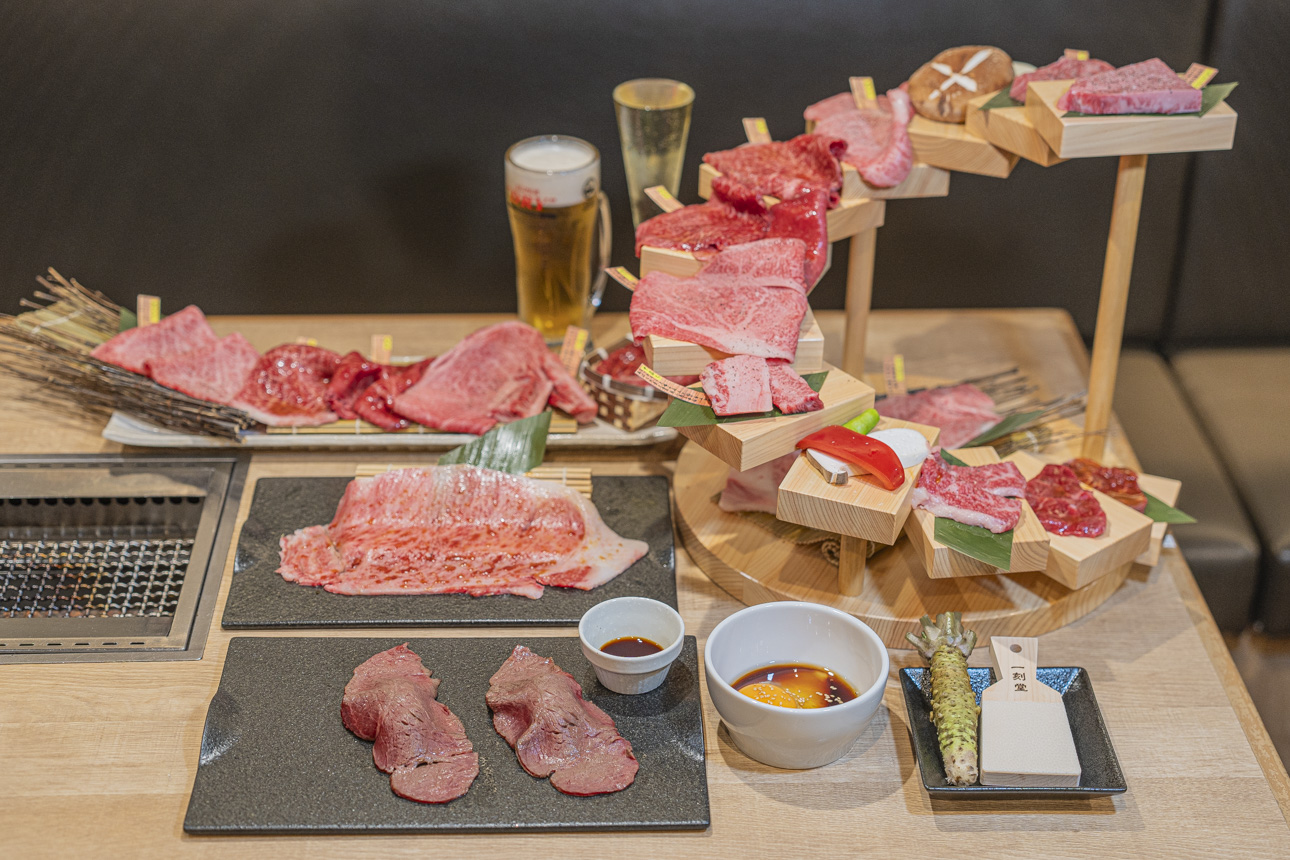
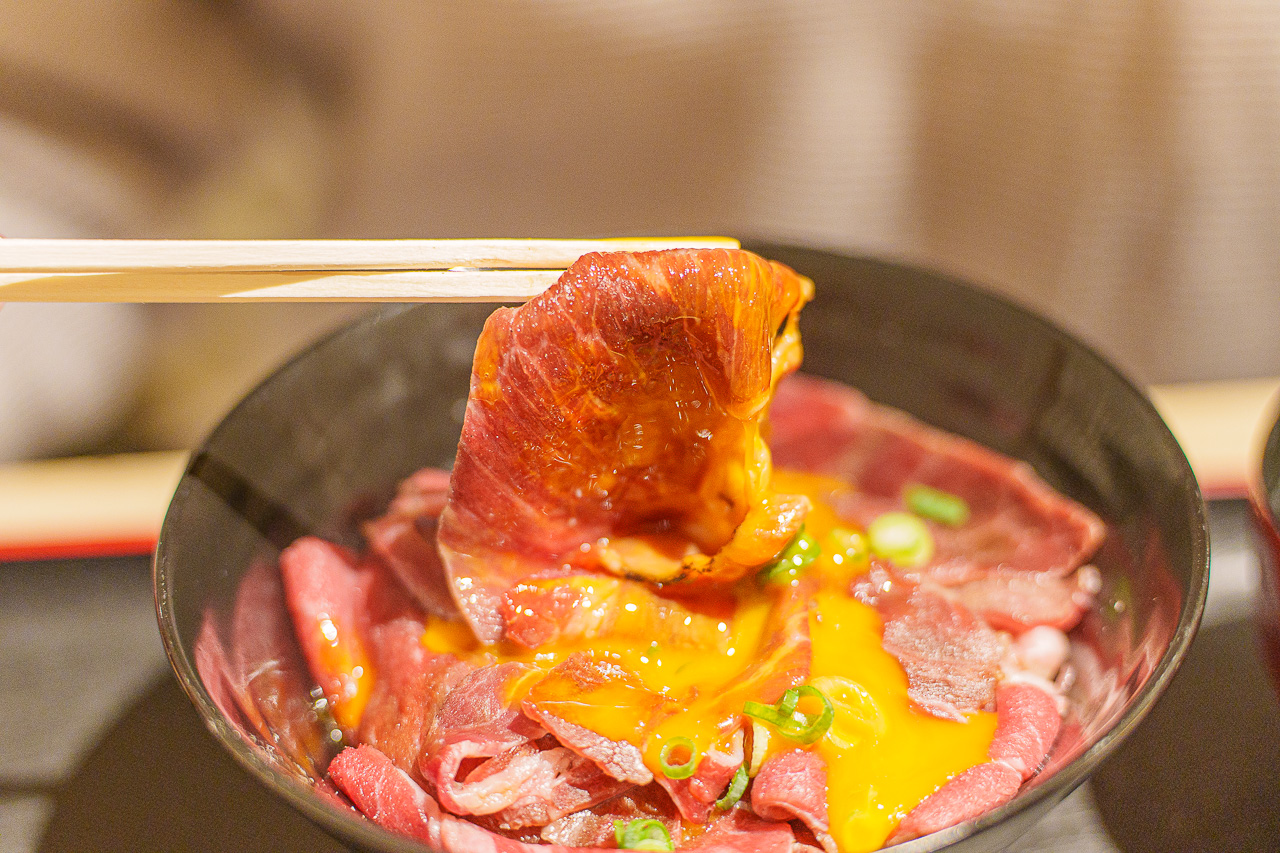
Oreno Yakiniku Hakata opened on March 15, 2025, as the brand’s first Fukuoka restaurant. The source notes that its two Tokyo Ginza branches attracted 150,000 Japanese Black wagyu fans a year. Buying entire A5 Japanese Black cattle supports its emphasis on both quality and quantity. The original review presents it as particularly affordable for this type of beef in Fukuoka. A seven-cut selection weighing 300 g was listed at JPY 3,980, with JPY 4,378 also shown in parentheses. The visually impressive half-size Ultimate 12-Tier selection, including Chateaubriand, weighs 650 g. The restaurant is on the fifth floor of a building about three minutes from Hakata Station, with counter and table seating.
Record 042 · Original dining, photographed-shop or historical record
Lounge Fukuoka
ラウンジ福岡
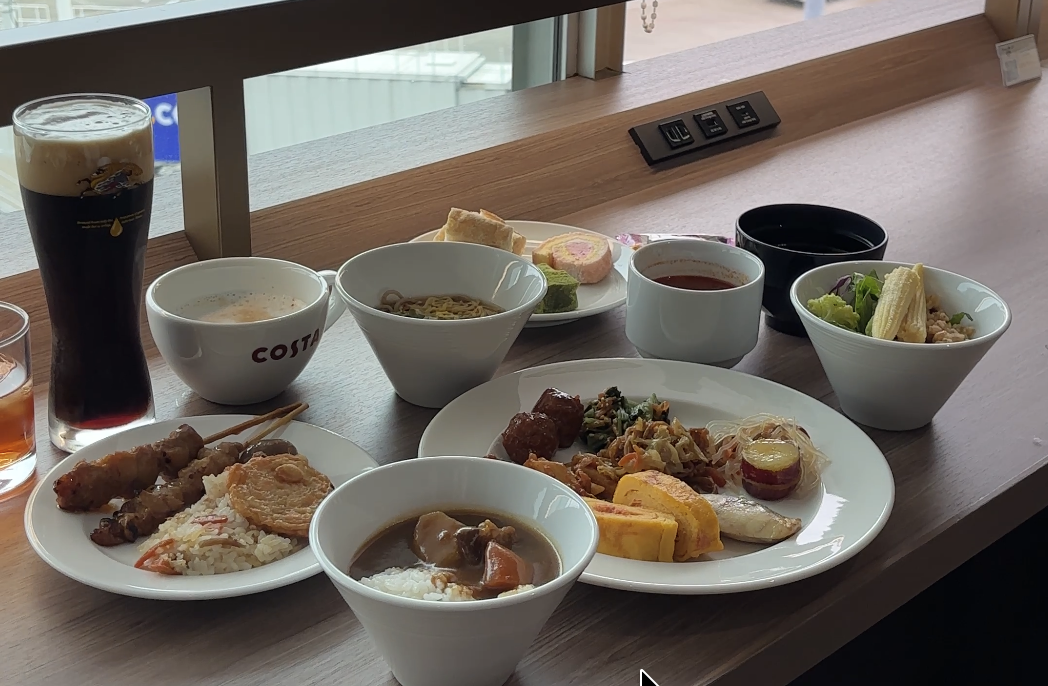
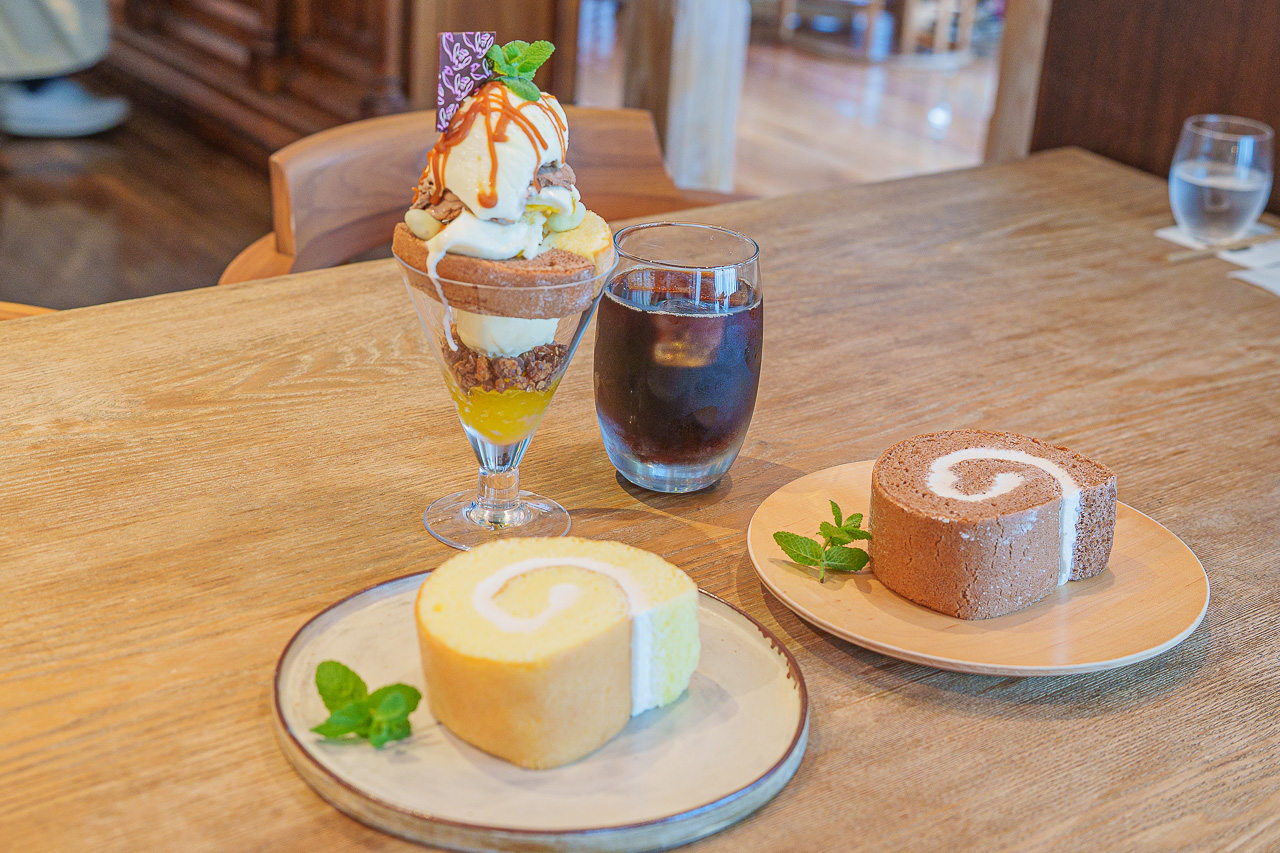
After international departure screening at Fukuoka Airport, this is a last opportunity to enjoy local specialties before boarding. The lounge opened in 2024 on the fourth floor. It is clean and spacious, with pleasant views of aircraft taking off and landing. The food selection includes enough Japanese and Western dishes for a meal, plus Fukuoka items such as mentaiko baguettes, yakitori, and a roll cake made with Amaou strawberries. Alcohol is also served, including fresh Kirin beer and dark beer.
Record 043 · Original dining, photographed-shop or historical record
Sansho Curry Udon Kikusuke
山椒カレーうどん菊すけ
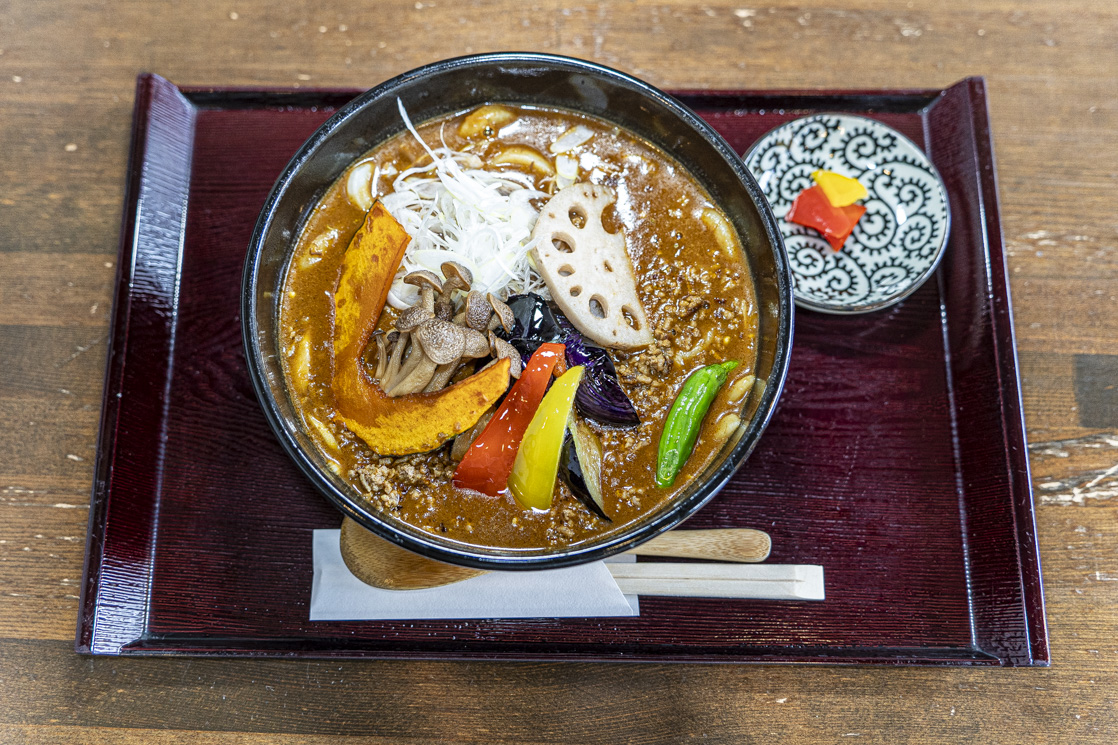
Near a forest at the foot of Mount Yufu, away from the busiest tourist streets of Yufuin, this restaurant is known for assertively flavored sansho curry udon. It attracts domestic travelers too, with a line forming around opening time. The signature curry udon combines the tongue-tingling heat of Japanese pepper with Japanese dashi for a memorable bowl. A soft-cooked egg mellows the flavor, and the chewy house-made noodles use Japanese wheat. A small serving of rice, fried garlic, and a post-meal smoothie round out the meal.
Record 044 · Original dining, photographed-shop or historical record
Kappa Shokudo
かっぱ食堂
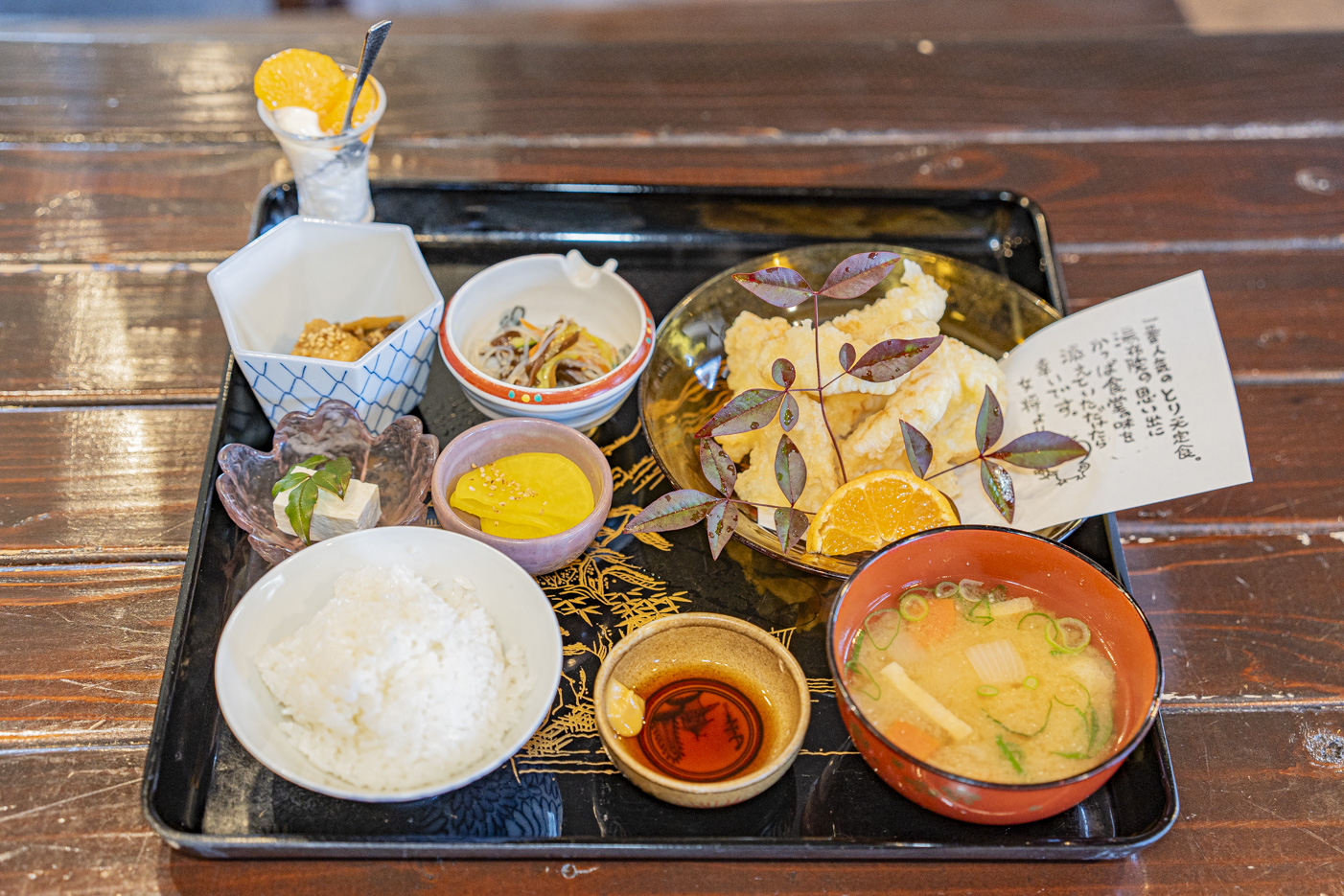
Finding lunch while sightseeing in Yufuin often means committing to a line. At Kappa Shokudo, the home-style food made that wait feel worthwhile. The signature Oita toriten set comes with freshly fried chicken that is moist and fluffy inside. Put it on rice with the special chive soy sauce for an especially satisfying bite. The set also lets you try Oita’s dangojiru, a miso soup with hand-formed dumplings, giving you a taste of the prefecture in one meal. Check before visiting: the source recorded cash-only payment.
Record 045 · Original dining, photographed-shop or historical record
Ramen Samurai
ラーメン侍
Ramen Samurai is a popular tonkotsu restaurant about three minutes on foot from JR Yufuin Station. Its signature bowl has a deeply cooked, rich broth; the creamy, savory soup pairs well with thin house-made noodles. Tsubaki ramen, loaded with chashu, and the chashu rice bowl are other highlights. Yufuin has many udon and soba specialists but comparatively few ramen restaurants of this kind. The convenient station location and substantial bowls make it a useful option even when there is a line.
Record 046 · Original dining, photographed-shop or historical record
Sanyo Shokudo — Hakataekichuogai branch
三陽食堂博多駅中央街店
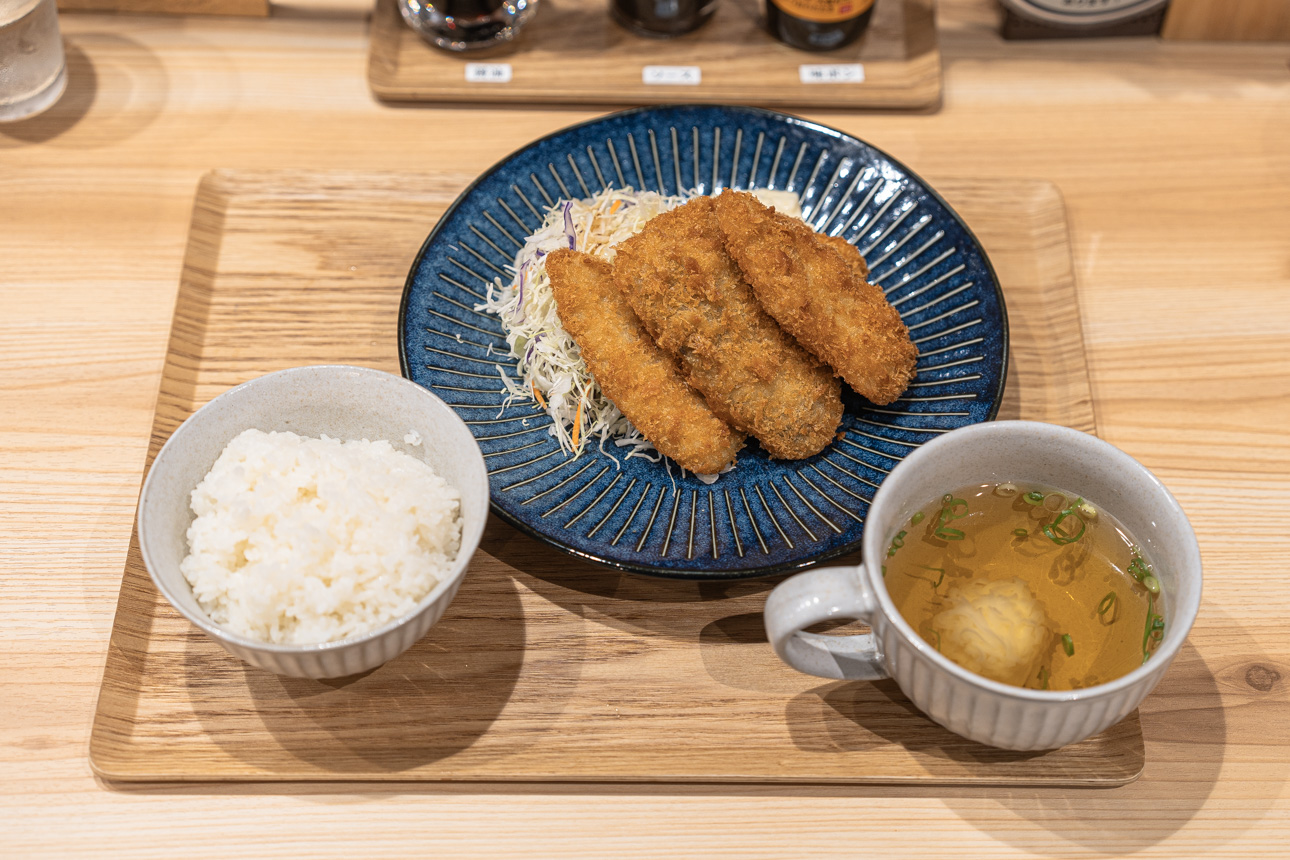
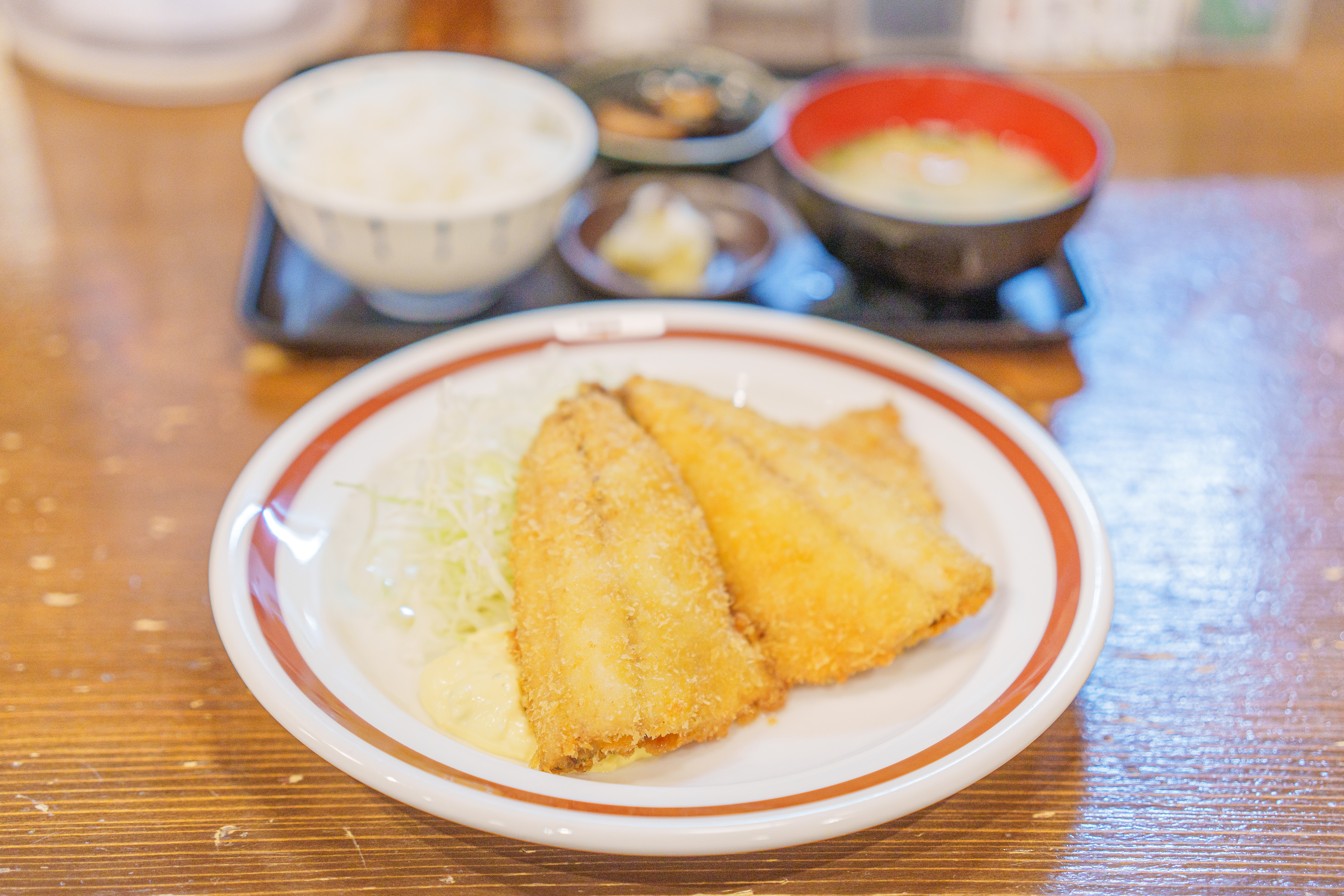
This restaurant around Hakata Station is popular with locals and travelers for freshly fried horse mackerel. Carefully selected fresh fish produces light, fluffy flesh beneath the crisp coating. You can order the fried fish on its own, and a set with unlimited refills of fried horse mackerel is available for an additional charge. Change the flavor with wasabi and soy sauce, salt, or sauce. The complimentary chopped horse-mackerel side dish is especially good with rice.
Record 047 · Original dining, photographed-shop or historical record
Barkley
バークレー
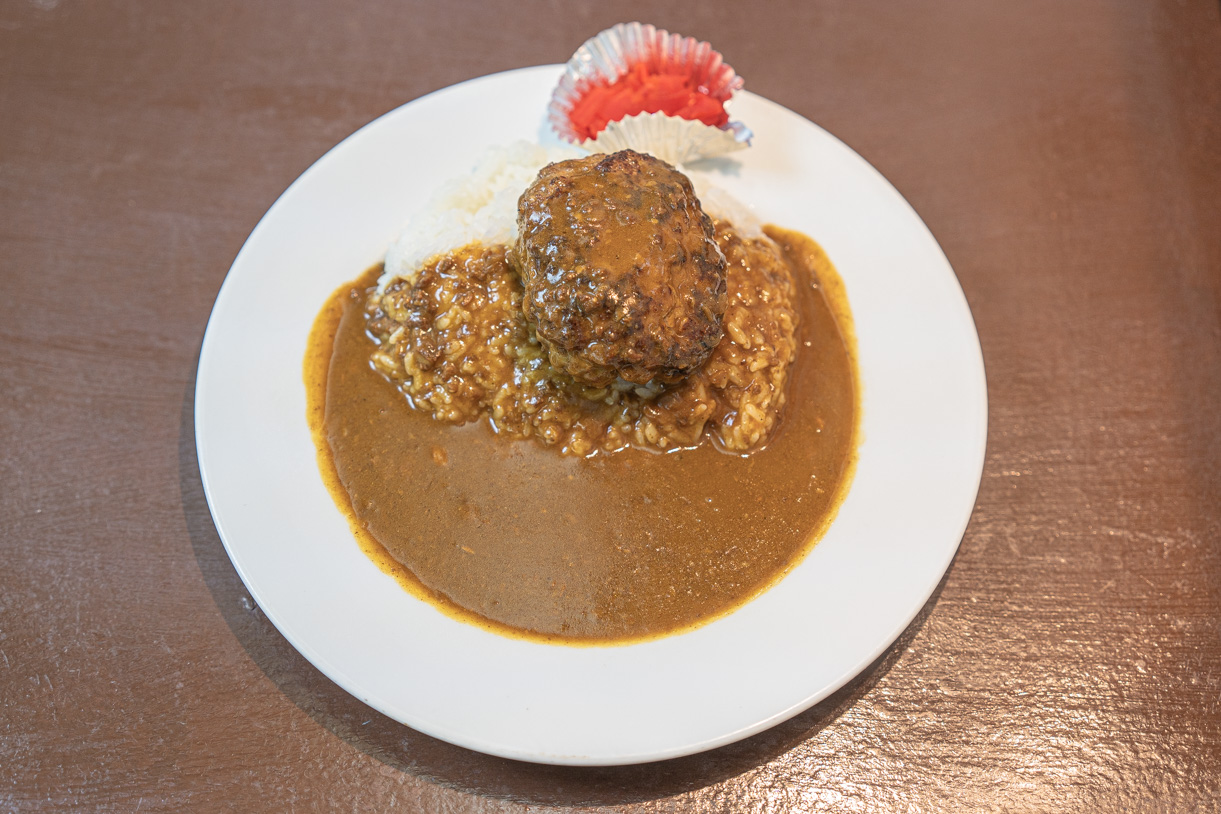
Barkley, in Fukuoka’s traditional Kawabata shopping arcade, is a curry-and-hamburger-steak favorite with the atmosphere of an old-fashioned café. Locals and international visitors come for long-established Western-style dishes: plain curry, curry topped with a plump handmade hamburger steak, or a hamburger-steak set. The curry has a fond-de-veau-style base made from beef bones, chicken carcasses, and plenty of vegetables, with careful attention to onions, garlic, and ginger. The hamburger steaks are made and grilled in-house for a deeply savory result.
Record 048 · Original dining, photographed-shop or historical record
Hakata Motsunabe Ooyama — Oriental Hotel branch
博多もつ鍋おおやまオリエンタルホテル店
This Hakata Station basement branch of the well-known Ooyama opened in December 2024. It connects directly to the Chikushi Exit and is about a one-minute walk away, convenient even in rain. The calm interior serves the same popular motsunabe found at other city branches. A dedicated counter also makes offal hot pot manageable for solo diners. Carefully selected young domestic beef offal is the centerpiece, alongside Kyushu specialties such as raw horse meat, horse-meat yukhoe, and mentaiko.
Record 049 · Original dining, photographed-shop or historical record
Shokudo Umeboshi
食堂うめぼし
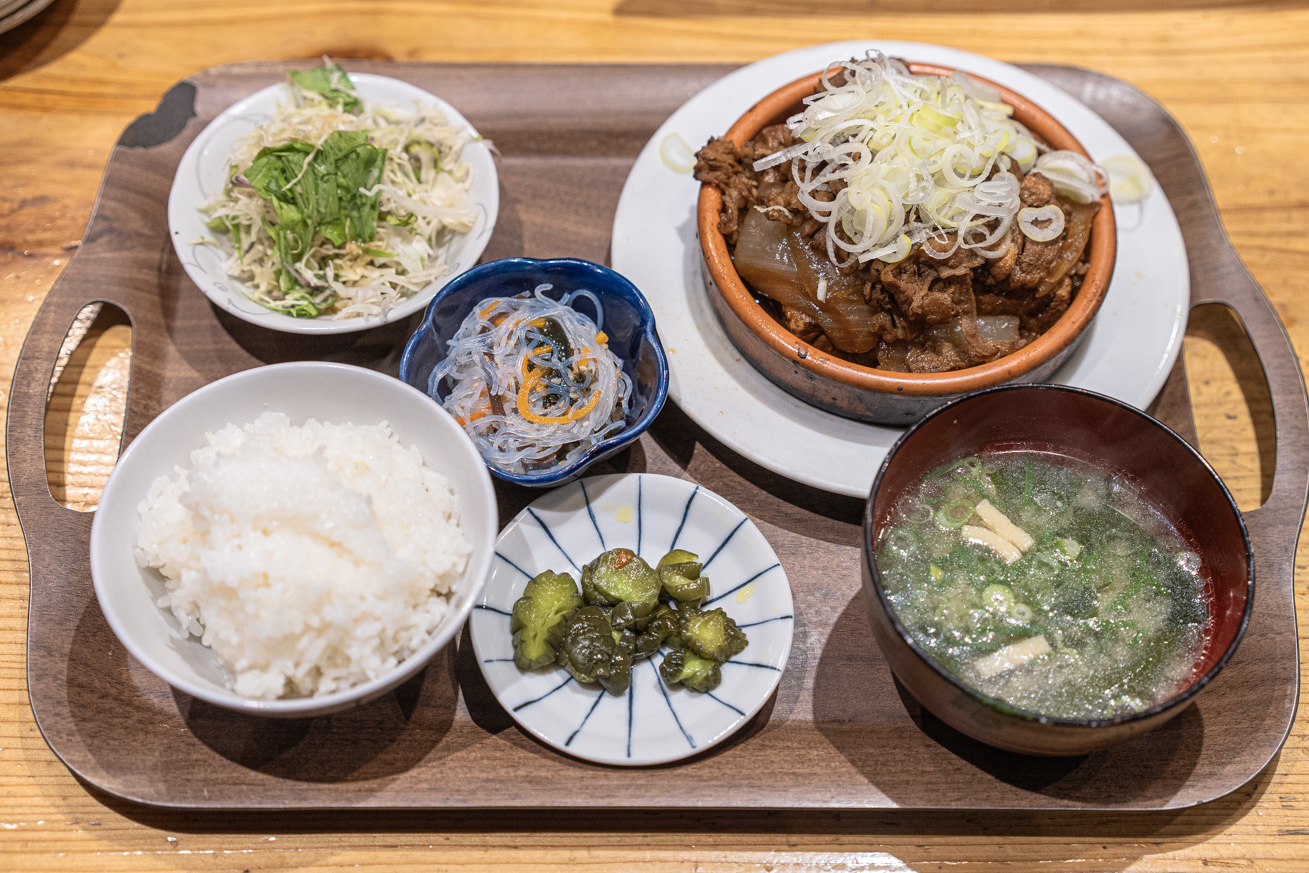
Shokudo Umeboshi in Daimyo, Chuo Ward, is a well-liked casual tavern that also works well for lunch. Its specialty, niku-dofu, is especially praised. Tofu and beef simmer together in a large pot until the sweet-and-savory broth permeates them. Ginger adds a distinctive note that keeps the dish enjoyable to the end.
Record 050 · Original dining, photographed-shop or historical record
Hakata Mata
九州の酒と魚博多又
We stepped into this Hakata restaurant while hungry and walking through the neighborhood, and finished a bowl feeling pleasantly surprised by how well it was prepared. Later, looking at Google Maps, the reviewer found numerous one-star reviews from Korean diners and was puzzled by the contrast. In our own experience, the lunch special offered reasonable value and a pleasant atmosphere. Lunch may be a better choice than the evening menu.
Record 051 · Original dining, photographed-shop or historical record
Onigiri Gorichan — Tenjin branch
おにぎりゴリちゃん天神店
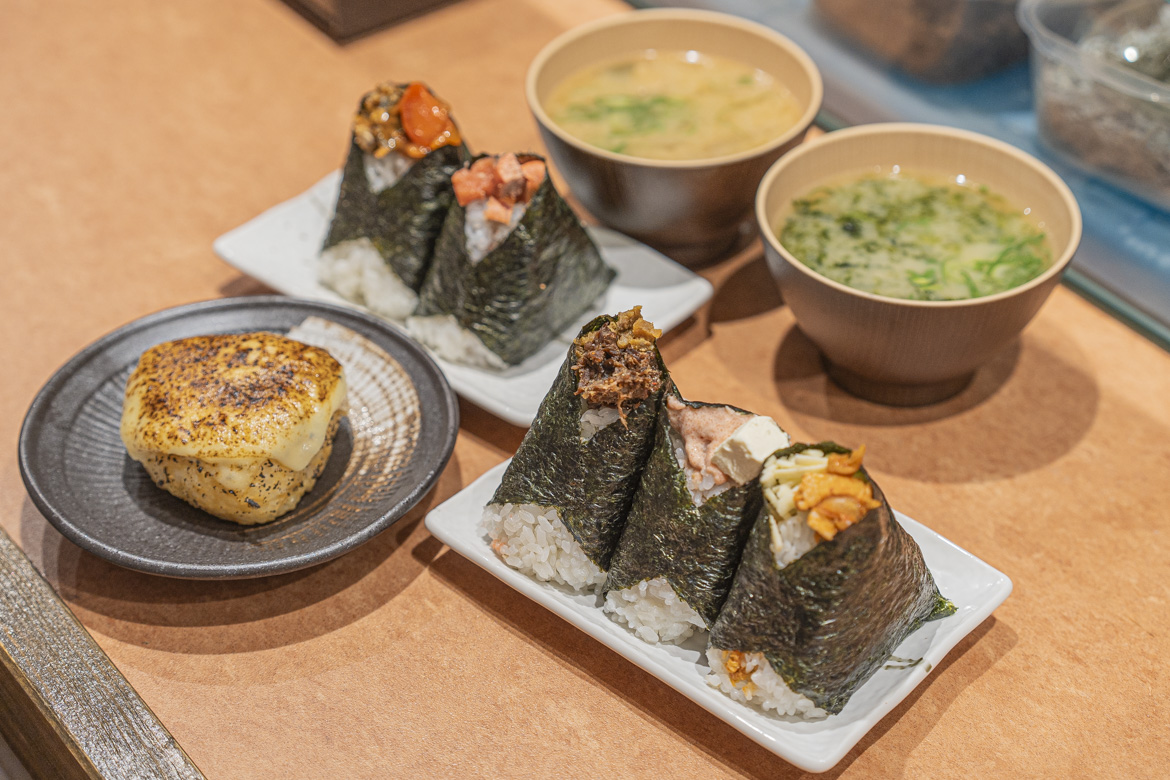
This onigiri specialist, already known for daily lines in Osaka, arrived in Fukuoka’s Tenjin area in 2024. It is on a side street about five minutes from Tenjin-minami Station on the Nanakuma Line and seven minutes from Watanabe-dori Station. Both eat-in and takeout are available. During our visit, the staff were exceptionally welcoming and helped with ordering even without Japanese, though this is not a promise of English-language service. Solo diners are welcome too. There are many fillings, and the large rice balls come generously packed. Eat-in customers were offered a complimentary finishing ochazuke with special broth made from premium Hokkaido kombu and bonito, plus wasabi and nori. It is a good way to experience an everyday local meal in Fukuoka.
Record 052 · Original dining, photographed-shop or historical record
Butani Muchu
豚煮夢中
Butani Muchu, a tonkotsu ramen restaurant and Okinawan izakaya, opened on April 17, 2024, about 13 minutes on foot from JR Hakata Station. The clean interior has counter and table seats and feels comfortable for a solo visit. Its broth is thick enough to cling to the lips but has less of the strong pork smell sometimes associated with rich tonkotsu. The owner explained that, unlike many local shops using pig heads, they make their broth only with leg and back bones. The signature special tonkotsu ramen, JPY 1,000, has a rich, creamy yet clean flavor that the reviewer recommends even to newcomers. Chashu, egg, nori, and wood-ear toppings complete the bowl.
Record 053 · Original dining, photographed-shop or historical record
Gyumaru — Daimyo branch
ハンバーグ&ステーキ ぎゅう丸 大名店
Gyumaru’s Daimyo branch is about three minutes from Akasaka Station and specializes in soft, juicy handmade hamburger steaks. The signature Gyumaru set includes the steak, salad, and a special soup under a pastry lid. A filling set centered on the handmade hamburger steak was around JPY 1,200–1,500 in the original record. Lunch and dinner prices were the same, making it a useful solo-dinner option as well as a lunch stop.
Record 054 · Original dining, photographed-shop or historical record
Sushi Shogun — Shintencho branch
すし将軍 新天町店
Sushi Shogun is a standing sushi bar about three minutes from Tenjin Station on the subway Airport Line. We tried a lunch special. The sushi did not match the quality of expensive restaurants, but the service and atmosphere were excellent. Nearby office workers were ordering a 30-minute unlimited-drink option and two rows of special sushi; it looked like a welcome break in a working day.
Record 055 · Original dining, photographed-shop or historical record
Motsunabe Yamaya — Nishinakasu branch
やまや別邸西中洲|博多もつ鍋やまや
Motsunabe Yamaya is an upscale option about seven minutes on foot from either Tenjin-minami or Nakasu-Kawabata Station, serving Fukuoka’s signature offal hot pot and other Kyushu specialties. Its carefully selected Japanese Black wagyu offal comes in a special soy-sauce broth or a Korean-style spicy version. There are counter and table seats, with the scenic counter overlooking Nakasu’s streets. It offers a more refined interpretation from Yamaya, the brand known for Hakata mentaiko.
Record 056 · Original dining, photographed-shop or historical record
Unagi Yondaime Kikukawa — Nakasu Haruyoshi branch
うなぎ四代目 菊川 中洲春吉店
Unagi Yondaime Kikukawa’s Haruyoshi branch is about six minutes from Nakasu-Kawabata Station. It was the first Kyushu location of an eel wholesaler with a 90-year history, specializing in selected Japanese eel grilled over charcoal. From the counter, the open kitchen lets you see a whole eel being prepared and watch traditional techniques at close range. Its fat sizzles over the charcoal before the eel is dipped in the sauce passed down since the business began and grilled again. Try the fragrant result with a craft beer.
Record 057 · Original dining, photographed-shop or historical record
39 Udon
39うどん
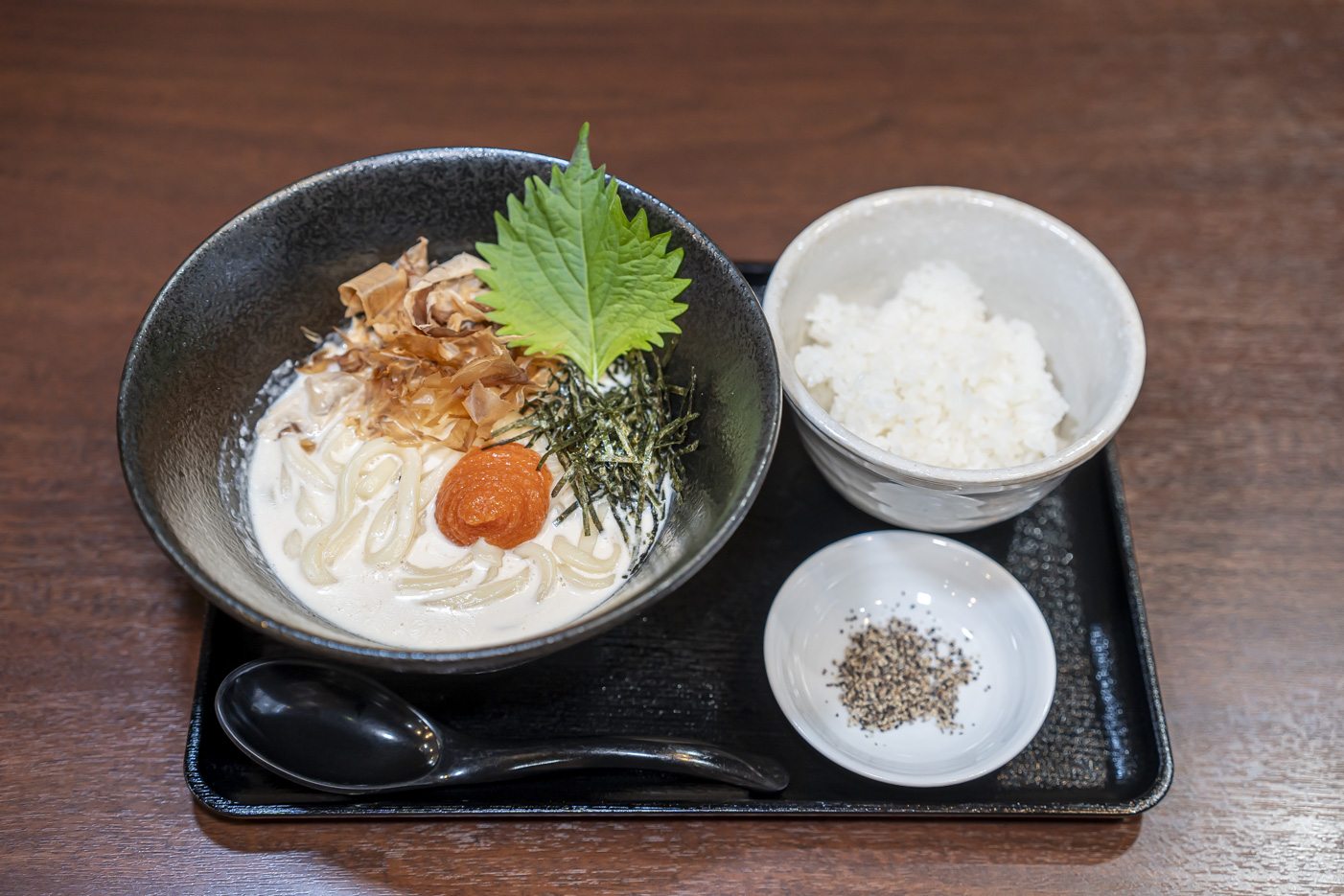
For an easy bowl of udon during a Fukuoka trip, consider the tucked-away 39 Udon, a cozy restaurant about five minutes on foot from Tenjin’s Don Quijote. It offers inventive dishes such as chewy noodles in a gentle cream soup. Mentaiko, bonito flakes, and nori provide different accents. Simple udon starts at JPY 390 in the source record, and the menu also includes chilled udon, other hot udon, beef udon, inari sushi, and a good range of tempura.
Record 058 · Original dining, photographed-shop or historical record
Tori Yakiniku Sakaba Toriya — Haruyoshi branch
とり焼肉酒場 鶏ん家 春吉店
This affordable chicken-yakiniku izakaya is about six minutes from Nakasu-Kawabata Station and five minutes from Tenjin-minami Station. Kyushu Hanamidori chicken is grilled right in front of you. Comparing young chicken with mature hen is recommended because their flavors are distinctly different. Staff help with the grilling so the meat can be enjoyed at its best. Seating arrangements range from two to six people, accommodating different group sizes.
Record 059 · Original dining, photographed-shop or historical record
Hakata Ironman — Hirao branch
スタミナ鉄板 博多アイアンマン 平尾店
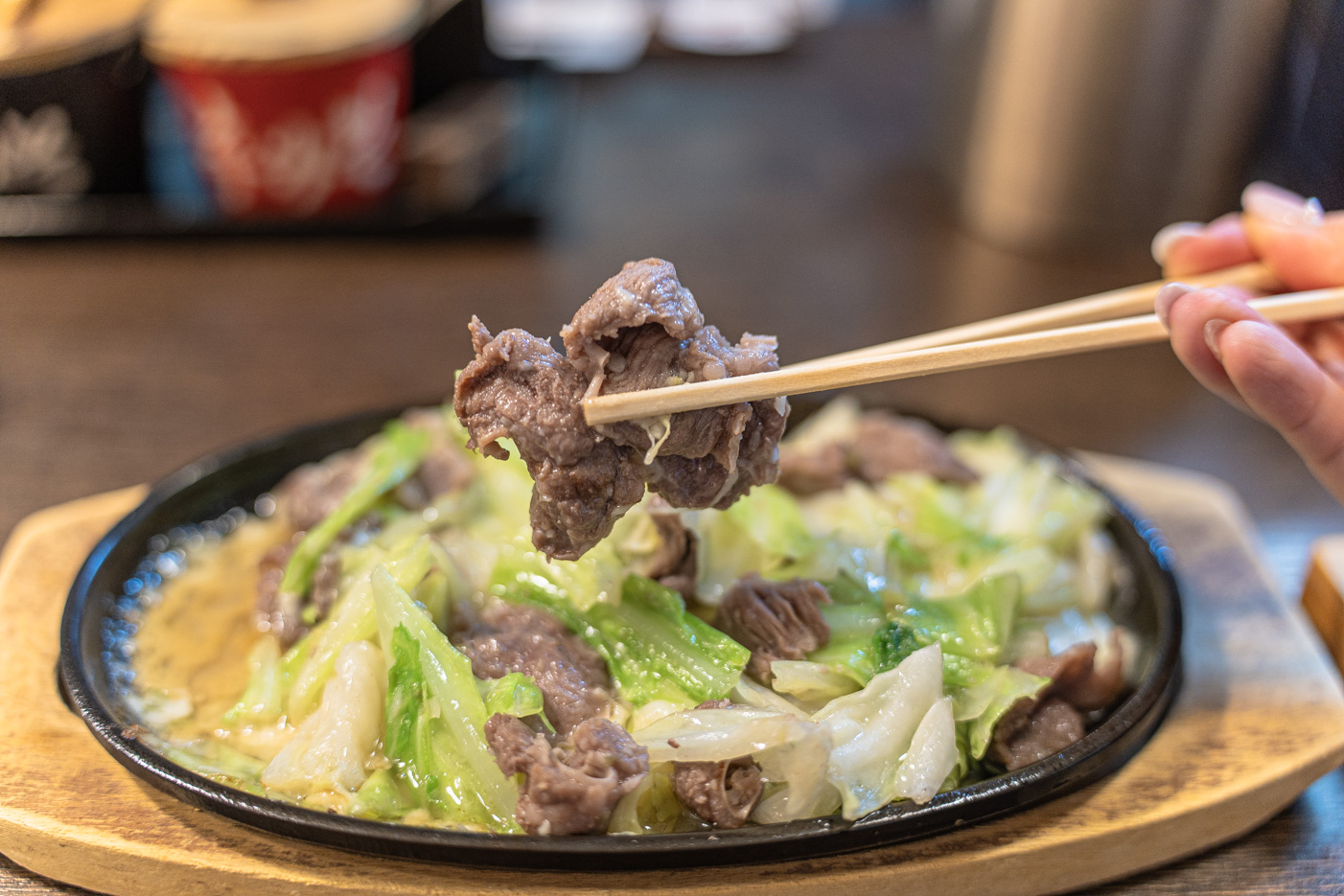
A two-minute walk from Nishitetsu Hirao Station, this local favorite serves generous sizzling meat-and-vegetable set meals that are comfortable to order alone. The simple combination is pork and cabbage on a very hot iron plate with rice. Crisp cabbage, meat, and plenty of the addictive secret miso make this a substantial example of Fukuoka’s everyday comfort food.
Record 060 · Original dining, photographed-shop or historical record
Nangoku Fruits Parlour
南国フルーツパーラー
This newer café comes from Nangoku Fruits, a fruit wholesaler and retailer with more than 90 years of history that also runs Fruit Village TOKIO and Campbell Early in Fukuoka Prefecture. It selects premium seasonal fruit also sold at its department-store fruit shops, then ripens it in dedicated display cases. Fully ripe fruit features generously in drinks and desserts. A cozy interior and well-spaced tables create a relaxed setting; balcony seating overlooking Kego Shrine is another attraction. The menu changes with the fruit seasons, rewarding repeat visits. The recorded closing time of 10 p.m. also made it useful as an evening dessert café.
Record 061 · Original dining, photographed-shop or historical record
Hakata Motsunabe Ooyama — Tenjin Bettei
博多もつ鍋おおやま 天神別邸
Motsunabe is one of Fukuoka’s defining dishes, and Ooyama—known for lines at Hakata Station and in Tenjin—created a different setting at its Tenjin Bettei branch. The entrance feels like a secluded villa, and every seating area is arranged for privacy. Its familiar motsunabe is excellent, while branch-specific dishes include rolled egg made with oxtail broth, wagyu meatballs, rare beef-tongue cutlet, and meat chirashi sushi. They are appealing visually as well as in flavor. Wine or sake pairings are also recommended.
Record 062 · Original dining, photographed-shop or historical record
Hakata Uogashi — Hakata Ichibangai branch
まわる寿司 博多魚がし 博多1番街店
Hakata Uogashi is in Ichibangai, directly connected to Hakata Station. It brings in fresh seafood from the market each morning for affordable sushi. The source explains that the former conveyor-belt format had changed to made-to-order service. There are many individual dishes and convenient sets if you would rather not order piece by piece. We chose the Kiwami set and the Maguro Zukushi tuna assortment to compare them. The toppings were impressively thick, especially the large tuna pieces in the latter—a good choice if you like plenty of fish relative to rice. Its popularity can mean a wait.
Record 063 · Original dining, photographed-shop or historical record
Danki
暖季
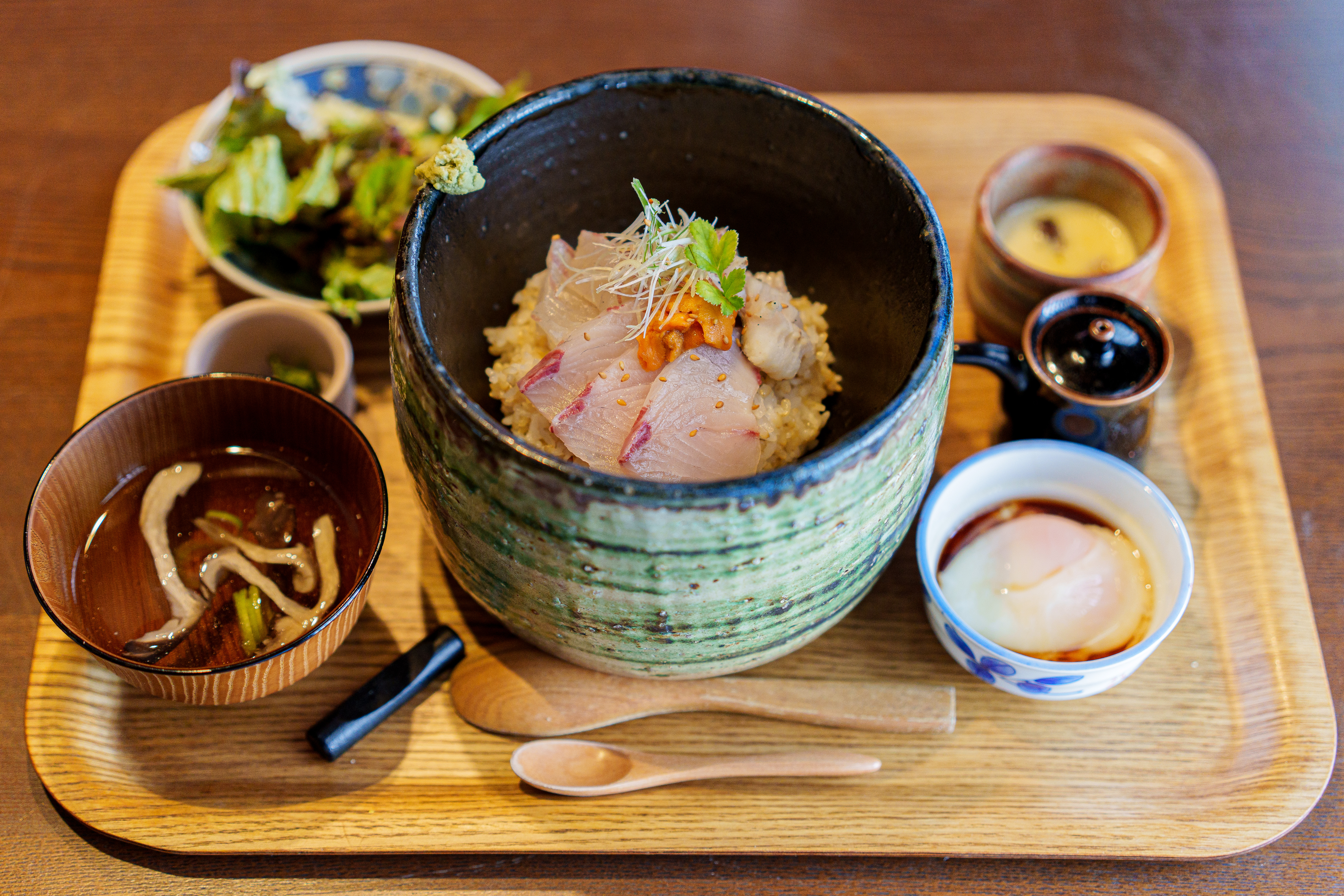
Danki is a small dining spot about three minutes from Yakuin Station, known for carefully prepared wild-caught fish. Fresh ingredients bought directly from farmers, brown rice, and seafood bowls and set meals with a distinctive charred aroma are its specialties. Weekday lunches were JPY 1,000–2,000 in the original record, an accessible way to try the chef’s work. A Kyoto-born chef has drawn on varied experience here since 2012. Portions felt quite small, though the reviewer could not decide whether that was because the ceramic bowls were large or because the food was so enjoyable.
Record 064 · Original dining, photographed-shop or historical record
Lounge Fukuoka — separate visit and eligibility record
This airline lounge is on the fourth floor of Fukuoka Airport’s international terminal. During 3 Minute Travel’s visit, draft beer, light meals, and local Fukuoka dishes were available, with a good view of the runway. The airport’s official information lists eligibility for business-class passengers of contracted airlines or passengers designated by those airlines, and also identifies Priority Pass as a partner. Admission may be restricted when busy and detailed conditions can change. Do not rely on the card’s name alone: check same-day eligibility with your airline or in the Priority Pass app.
Official eligibility information: Fukuoka Airport’s Lounge Fukuoka guide.
Record 065 · Original dining, photographed-shop or historical record
Torimabushi
とりまぶし
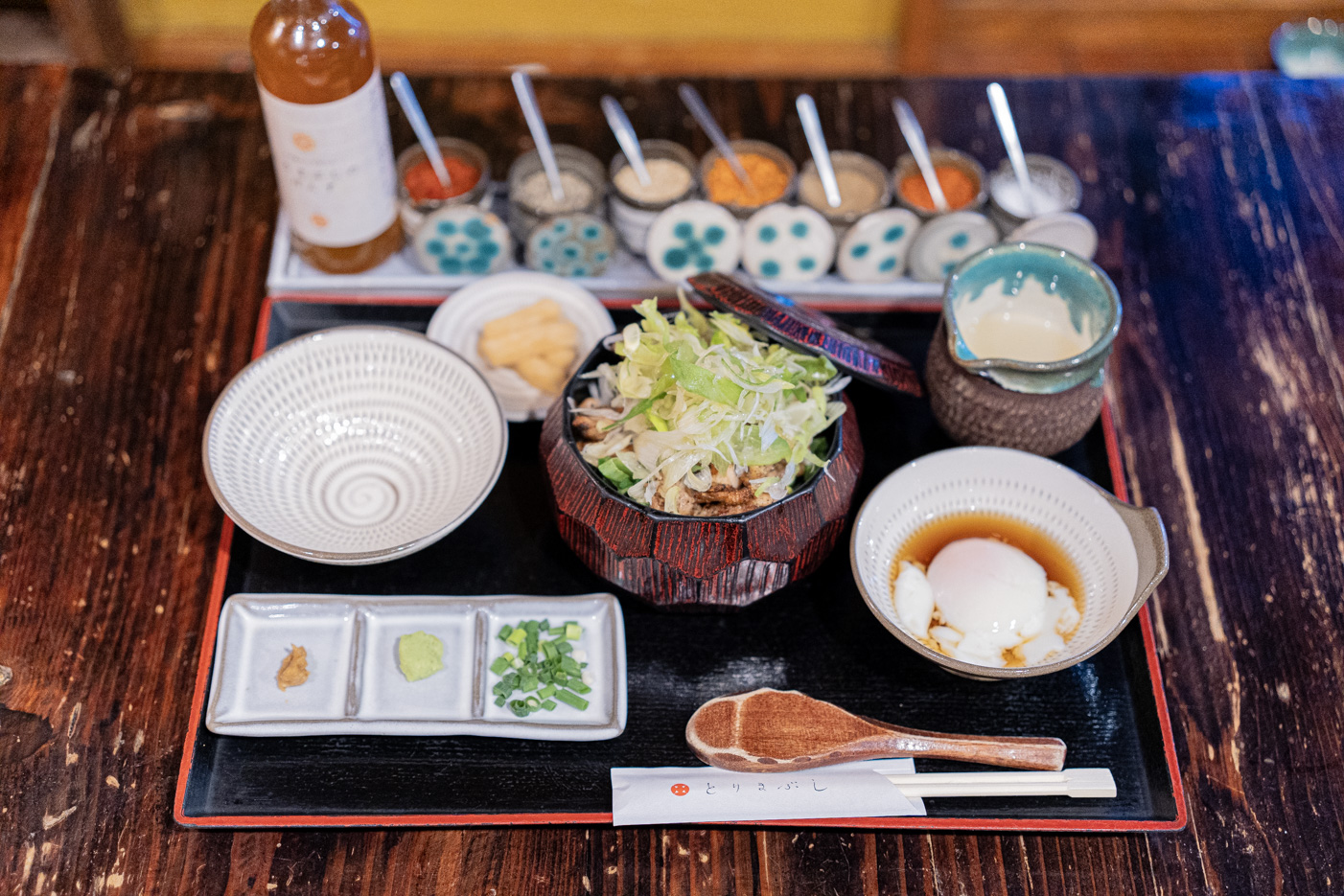
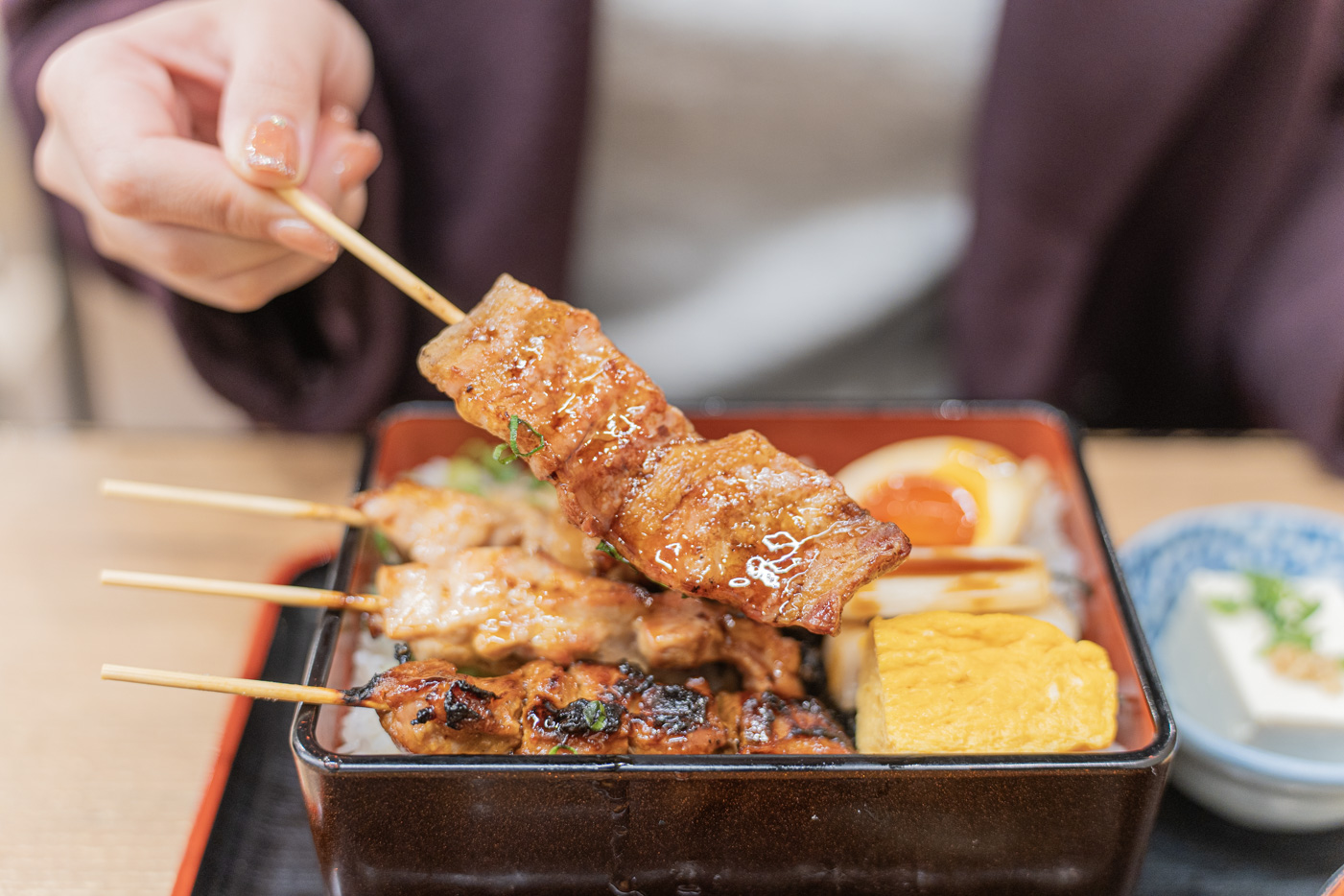
Torimabushi is a well-known Hakata restaurant whose signature Torimabushi Gozen Jo, recorded at JPY 1,980, combines crisp chicken skin with tender thigh meat. Grilled chicken over a generous serving of rice has plenty of savory flavor, with condiments such as the source’s listed hitomi seasoning, shichimi, and sesame to vary each bite. Special ponzu, miso, yuzu pepper, and broth add a refreshing finish. The Negimabushi Gozen Jo, JPY 2,100, uses Kyushu scallions and particularly suits scallion lovers. The chicken is Kyushu’s Hanamidori brand, paired with Saga rice and served in Koishiwara pottery. The carefully selected ingredients and preparation offer several ways to eat the dish, with a special chicken broth providing additional depth. It is a fresh interpretation of Fukuoka’s local chicken cooking.
Record 066 · Original dining, photographed-shop or historical record
Oreno French
俺のフレンチ
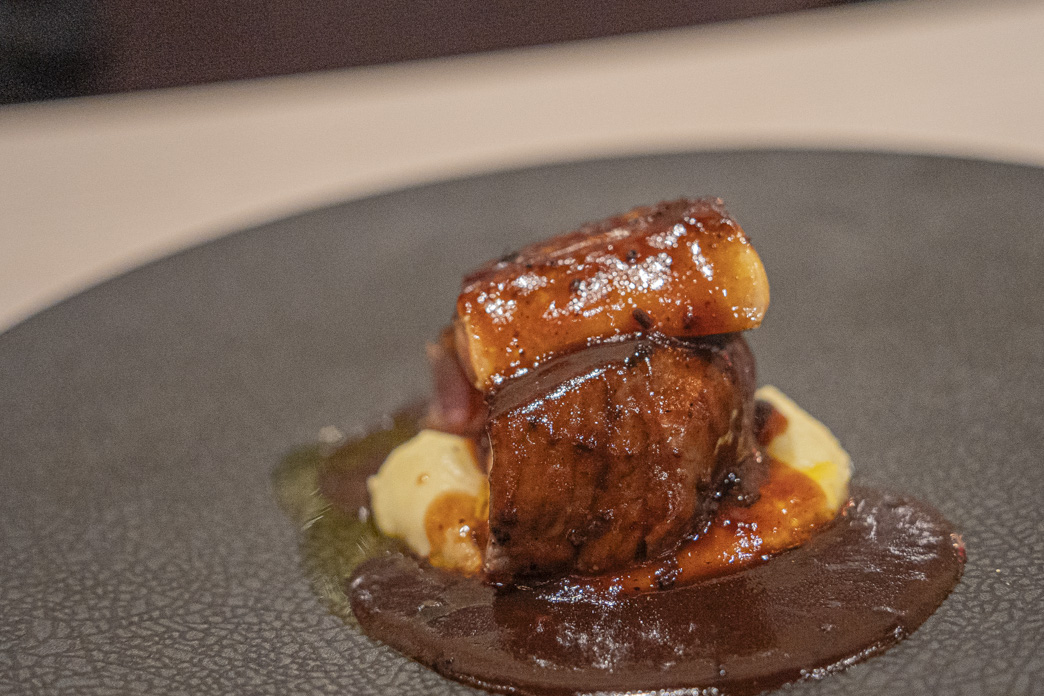
Oreno French Hakata, part of the Oreno group known in Tokyo, is an affordable casual French restaurant about three minutes on foot from Hakata Station. There is no dress code. The source lists a JPY 6,800 special course featuring beef fillet and foie gras Rossini, with walk-in use available for weekday dinner, weekends, and public holidays. It says the table charge is waived at weekday lunch and otherwise describes a one-drink requirement at JPY 660. Scheduled live music adds to the atmosphere. Confirm the current reservation and charging arrangements before visiting.
Record 067 · Original dining, photographed-shop or historical record
Aji Fry Center Omukosan
Aji Fry Center おむこさん
Aji Fry Center Omukosan is about seven minutes from Hakata Station. The source records daily operation from March 2024 and popularity with residents, office workers, and travelers, including long weekend lines. Fresh horse mackerel is fried until crisp. Listed sets were the live-horse-mackerel fry set at JPY 1,200, Omukosan set at JPY 1,500, and mixed-fry set at JPY 1,500, with free rice refills. Payment was cash only, and diners bought a meal ticket before waiting. Several sauces let you vary the flavor. The open kitchen and comforting home-style food appeal across age groups.
Record 068 · Original dining, photographed-shop or historical record
Tenjin Wappa Teishokudo
天神 わっぱ定食堂
In busy Tenjin, where bold flavors are easy to find, we went looking for a straightforward set meal and found this welcoming local restaurant. It is particularly popular with solo diners. A favorite set combines tender pork simmered in a sweet broth with fried tofu. Rice refills, pickles, nori, and furikake are complimentary, and the small side dishes go well with the rice. The restaurant’s message that rice refills are its pleasure is strangely heartening. Wappa Teishokudo has the feel of a late-night diner, but the source records closing at 9 p.m.
Record 069 · Original dining, photographed-shop or historical record
Komeraku — Hakata Deitos branch
こめらく 贅沢な、お茶漬け日和。 博多デイトス店
Komeraku’s Hakata Deitos branch specializes in creative dashi ochazuke in a clean, polished space popular with solo diners and office workers. Menu photos make choosing easier, with many dishes based on raw fish. Rice sets can be eaten first with soy sauce and then with broth, and refills are available. Popular choices included a seafood-bowl set with salmon, minced tuna and scallions, and tuna at JPY 1,485, and eel rice served in an ohitsu at JPY 1,815; the original text explicitly lists these prices as excluding tax. The tender eel and special sauce can be enjoyed in several combinations.
Record 070 · Original dining, photographed-shop or historical record
Big Tai wa Noboru
ビッグ鯛はのぼる
Food is not the only reason to visit this restaurant. The reviewer comes when feeling low and in need of the former hotel chef-owner’s bright smile. His cheerful welcome is entertaining and uplifting in itself. Omurice is the specialty, but the curry is also enjoyable: it lets you compare three rice textures—soft, regular, and undercooked. Nearby office workers often fill the restaurant at lunch, though quick turnover means little waiting. The owner said that after his wife, who once worked beside him, passed away, he made it his mission to keep cooking good food here for as long as he could. He has appeared regularly on Japanese television, and the reviewer sees him as a true romantic of his generation.
Record 071 · Original dining, photographed-shop or historical record
Yakitori Choja
焼鳥長者
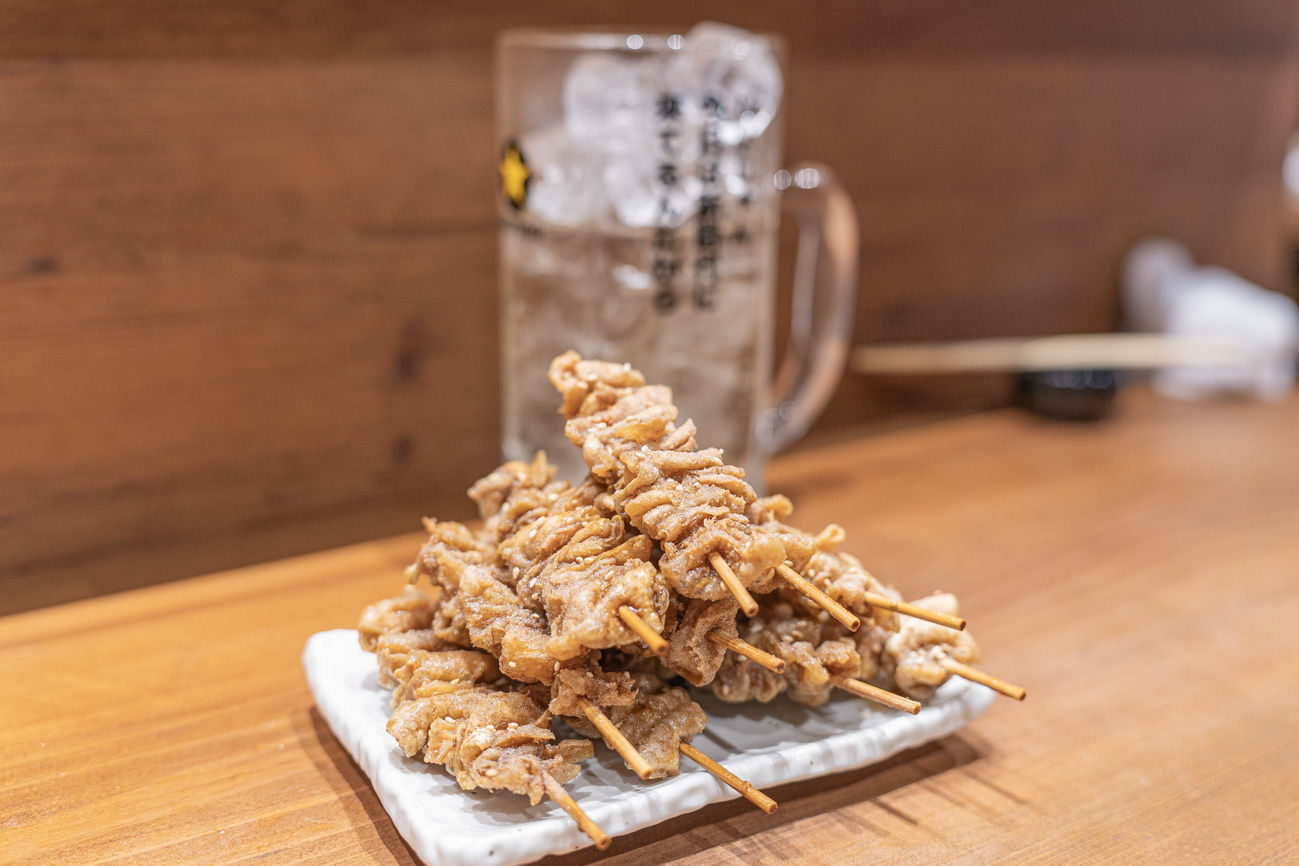
Yakitori Choja has been a neighborhood gathering place near Hirao Station since 1975. The source recorded an astonishing JPY 30 per chicken-skin skewer and speculated that it might be among Fukuoka’s lowest prices; that historical price should not be treated as a current quote. The worn, long-established shop is also known on Japanese social media. Entering feels like stepping back into the Showa era of the 1970s and 1980s. Beyond the counter are raised seats where shoes come off. The reviewer suggests a seat near the entrance, even if it means waiting, because the grill heat and lack of air-conditioning can make the interior very hot. The highball tasted flat, and beer emerging from below a table caused some unease. The yakitori, however, was surprisingly good. Recommended for people who enjoy old-school establishments; reconsider if hygiene and a modern setting are priorities.
Record 072 · Original dining, photographed-shop or historical record
Kanekatsu Shokudo
かねかつ食堂
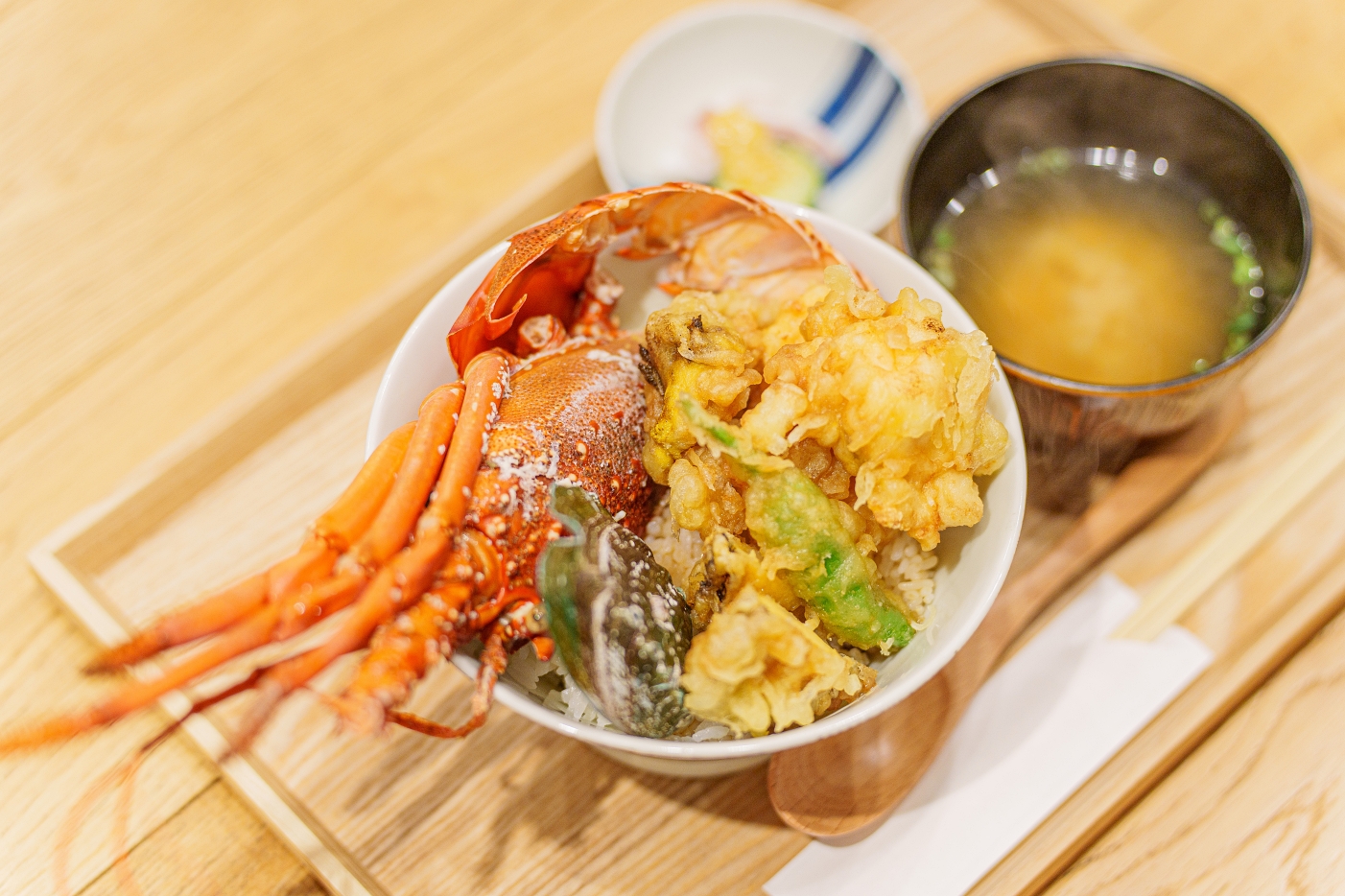
At historic Yanagibashi Market, this shop offers a Fukuoka take on the luxurious food then trending in Tokyo: Japanese spiny lobster and abalone, both fried and served over rice. The Ise-ebi to Awabi Tendon is striking from the moment it arrives. The price is on the higher side, but the combination is enjoyable for both its novelty and its flavor, especially with a whole large abalone included. The original reviewer also suggested visiting a tempura restaurant early in its life, appreciating the clean tableware and fresh setting of this newly opened shop.
Record 073 · Original dining, photographed-shop or historical record
Menya Gaga — Tenjin branch
麺屋我ガ 天神店
A rich tonkotsu aroma drew us into this tucked-away shop on a Tenjin side street. It can be difficult to find even with a map, yet a steady stream of diners kept arriving. The interior was very clean, and the Korean menu translations were unusually polished; this did not establish the presence of Korean- or English-speaking staff. A convenient popular set at JPY 2,240 included chashu ramen, a soft-boiled egg topping, pan-fried gyoza, and a medium draft beer. Noodles could be ordered in four firmness levels from soft to very firm, and heat could also be chosen; even level 1 felt spicy to the reviewer. We ordered the less common scallion ramen, filled with both large and small green onions for fresh flavor and a crisp texture. The tonkotsu broth was excellent.
Record 074 · Original dining, photographed-shop or historical record
WITH THE STYLE FUKUOKA
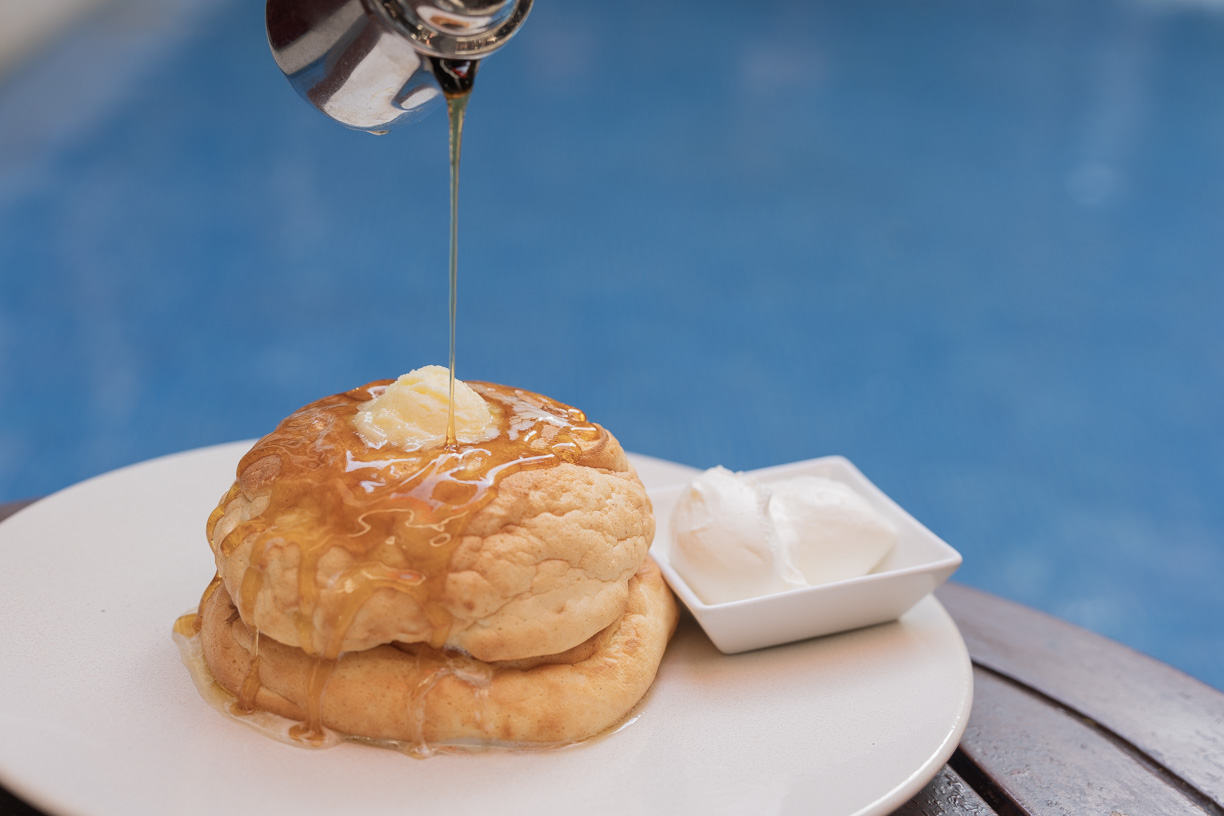
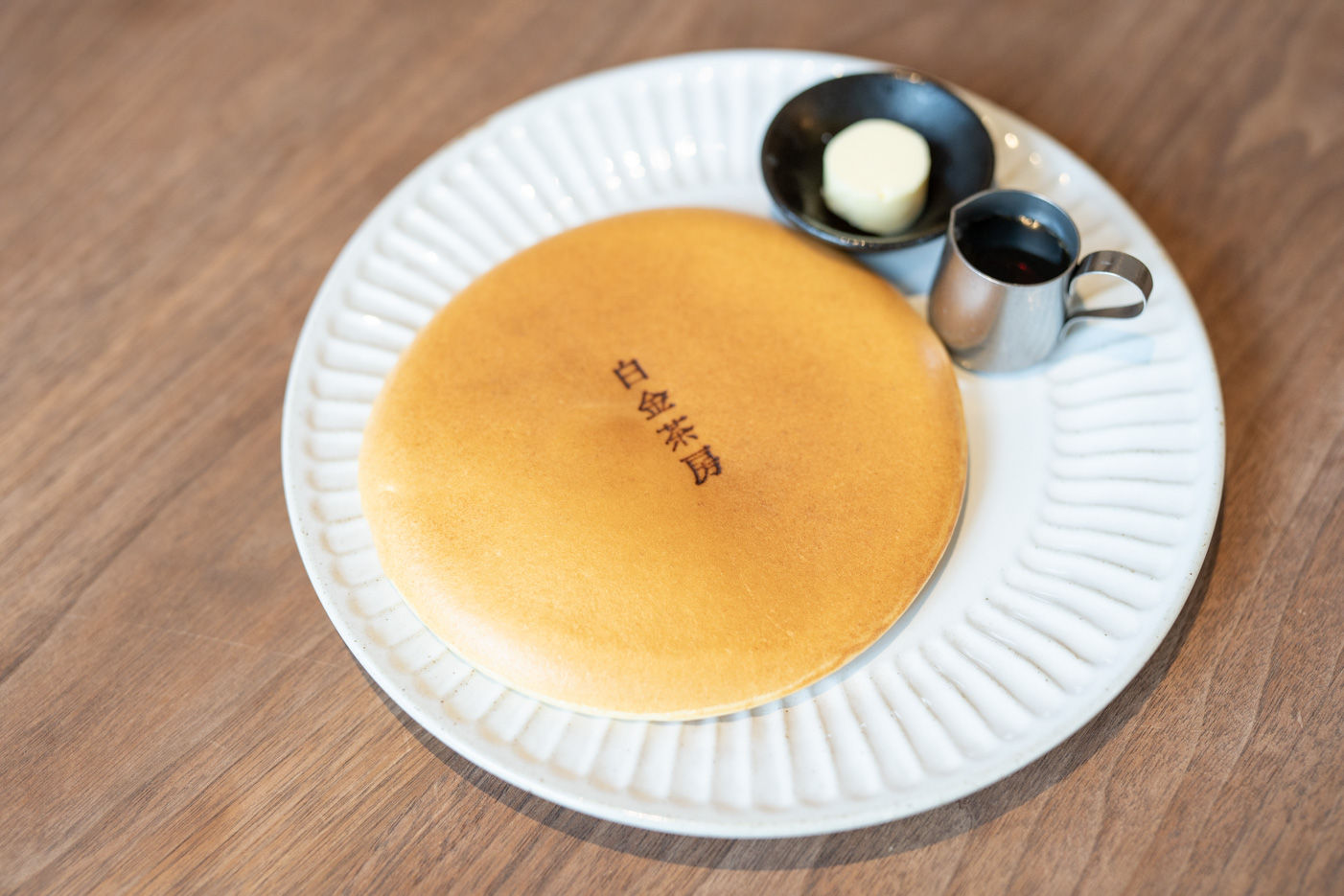
About five minutes from Hakata Station stands a building covered in greenery: the four-star WITH THE STYLE FUKUOKA hotel. The original review notes praise for its private pool, friendly service, and comfortable rooms, but simply visiting the café also lets you experience the setting. The modern interior, unhurried staff, and poolside tea break feel like an oasis in the middle of busy Hakata. Pancakes are the main attraction, listed at JPY 1,600 and around JPY 2,000 with toppings. They are relatively expensive, but the scenery and atmosphere make the experience. There are also conspicuous pool-edge seats for couples if you are comfortable taking center stage.
Record 075 · Original dining, photographed-shop or historical record
Sushiro — Oyafuko-dori branch
スシロー親不孝通り店
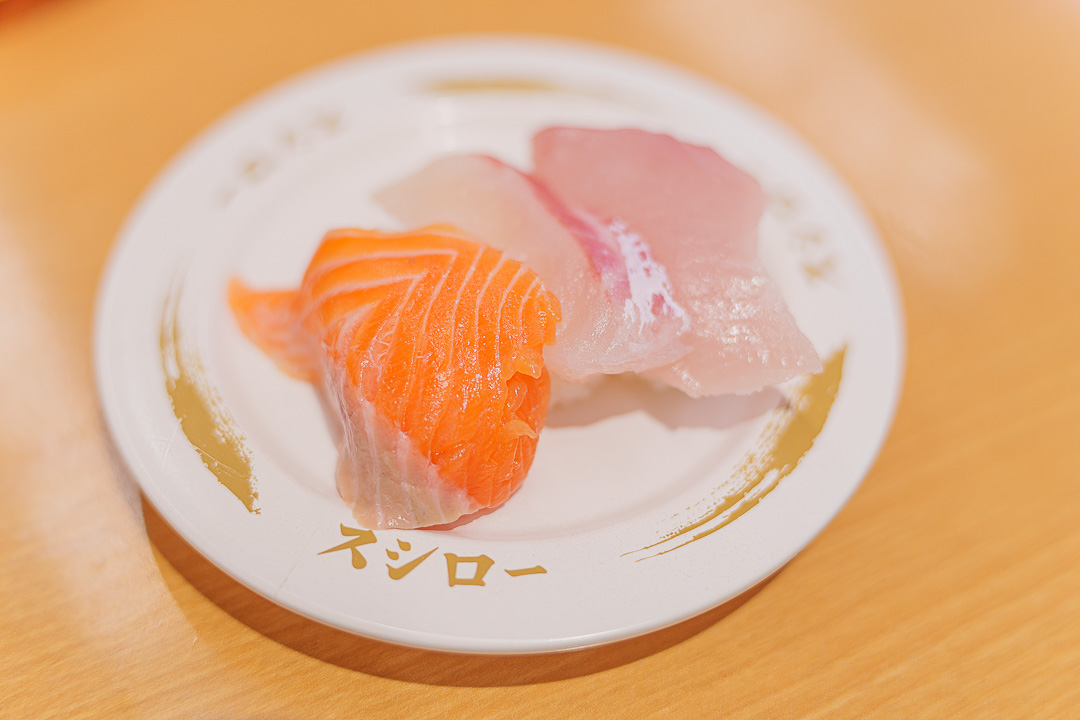
Sushiro is a sushi chain worth knowing for travel around Japan, not just Fukuoka. The original review places it among the chains known for JPY 100 sushi and calls it the reviewer’s favorite in that category; this is a historical characterization, not a guarantee that current dishes cost JPY 100. Overall affordability and particularly good raw shrimp were highlights. Freshly fried items also made each visit satisfying, and desserts such as crêpes and cream mille-feuille were better than expected. It was enjoyable both at the table and when the bill arrived.
Record 076 · Original dining, photographed-shop or historical record
Red Rock — Hakata Daimyo branch
レッドロック 博多大名店
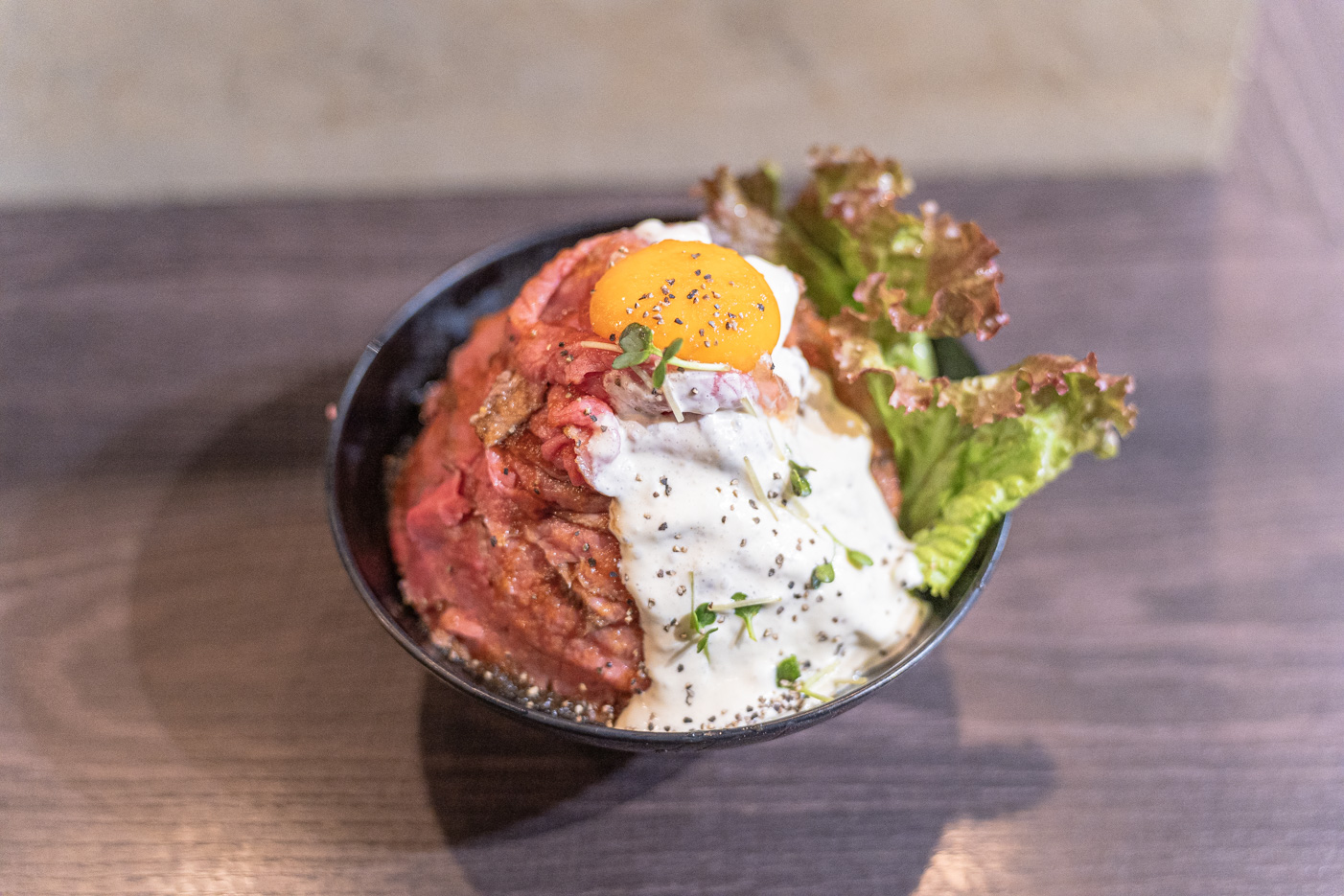
The reviewer remembers going to Akihabara with a friend for roast beef around 2018, when it was enjoying a major boom. Even after that trend faded, this Daimyo restaurant in central Tenjin remained a convenient place to revisit the flavor. The signature roast-beef bowl delivered that familiar taste. The basic size was JPY 1,000, but because it contained a lot of rice, the reviewer preferred the larger serving at JPY 1,950. Another good-value option was Japanese Black wagyu mabushi at JPY 1,900, whose quality impressed at that price. Either the roast beef or the wagyu mabushi makes a worthwhile choice.
Record 077 · Original dining, photographed-shop or historical record
Hakatamon
博多もん
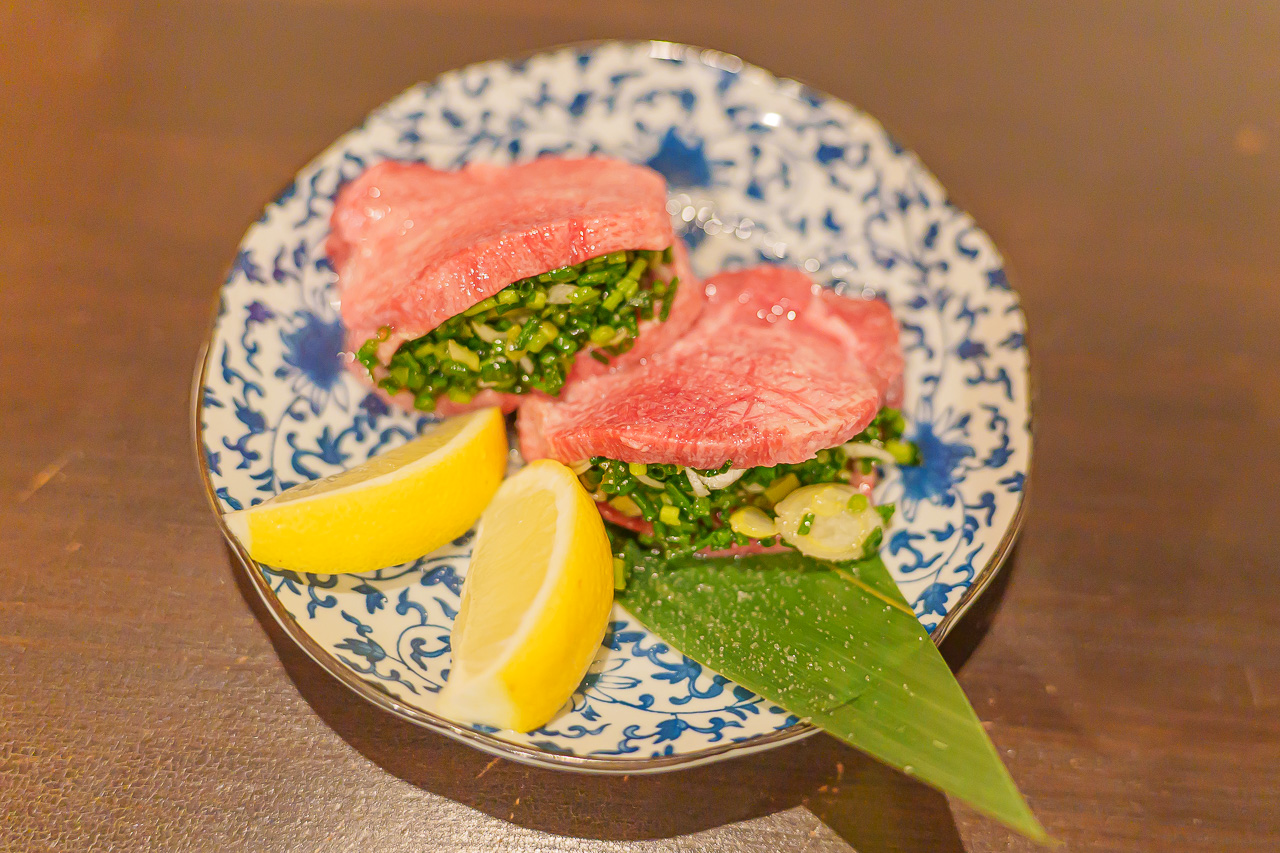
This izakaya in an office-worker dining area near Hakata Station is memorable for beef tongue stuffed with finely chopped scallions. That dish is worth trying, as are mackerel sushi seared with a charcoal rod and a five-tier assortment of yukhoe-style meat sushi. Prices are relatively high overall. Its station-area location draws many office workers, and there can be a wait.
Record 078 · Original dining, photographed-shop or historical record
Nikudon Hahaha
肉丼ははは
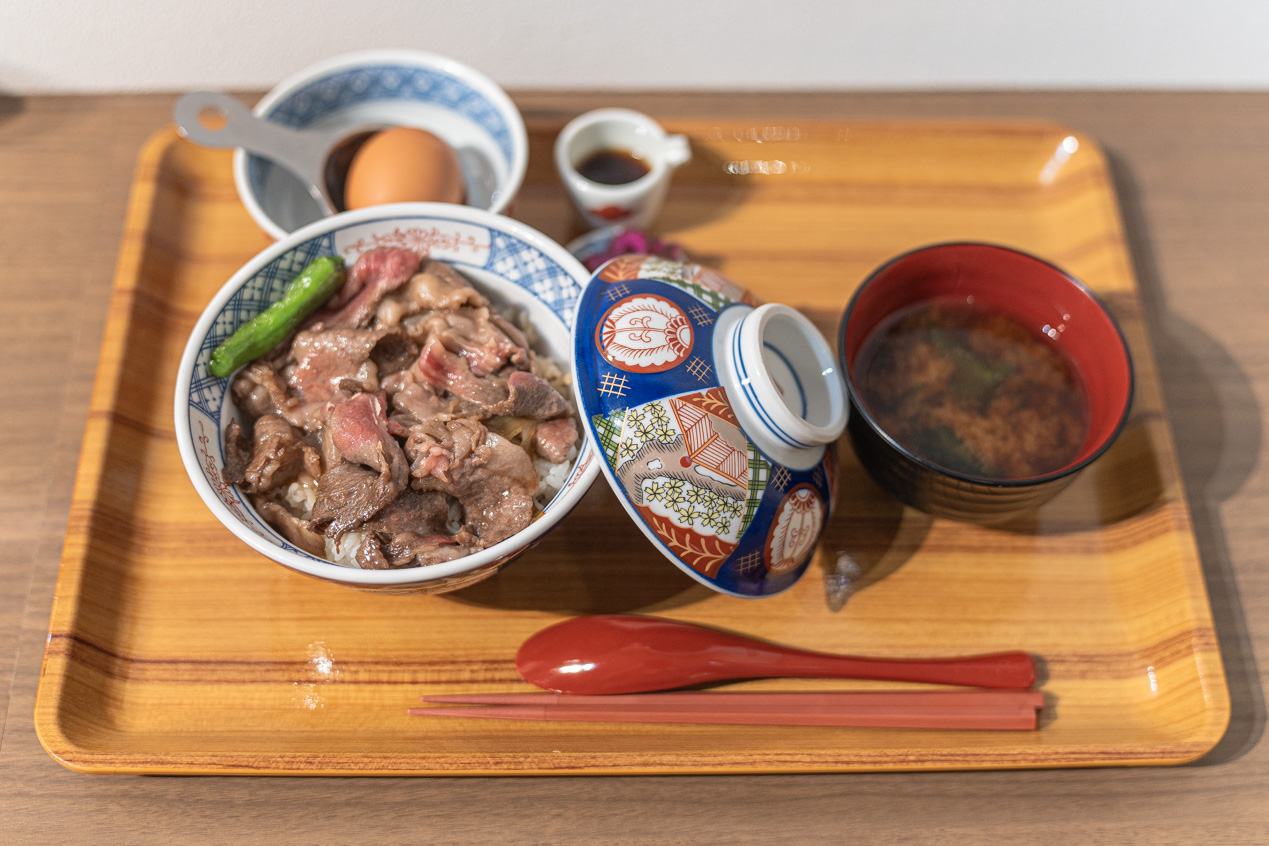
Although gyudon is everywhere in Japan, an upscale version can be harder to find. This Fukuoka restaurant uses tender wagyu for a bowl that melts in the mouth. Compared with the fast-food impression of chains such as Yoshinoya or Sukiya, the quality of the beef made a real difference to the reviewer, who would recommend choosing a bowl here instead. The sukiyaki-style beef bowl comes with a raw egg from a named egg brand; the freshness and resilient yolk paired particularly well with the wagyu. One drawback was the complimentary pork-mixed rice, which did not impress—though it was free.
Record 079 · Original dining, photographed-shop or historical record
Hakata Nomikuidokoro Tenkara
博多呑喰処 天から
After repeatedly failing to get in, we finally visited this tempura restaurant, where local regulars keep seats busy. The recorded system was to visit that day, book a place, and leave a contact number for a call when a seat opened; only Japanese telephone numbers were accepted. Even with empty seats, the owner would stop admitting diners once the number exceeded what could be served properly, explaining that tempura is best eaten hot. There was no automatic appetizer charge, and even at night you could order a set meal without alcohol. That said, the reviewer found a highball an excellent match for the tempura.
Record 080 · Original dining, photographed-shop or historical record
Yakiniku Stamina-tei
焼肉 スタミナ亭
This locally known yakiniku restaurant has operated since 1968 and has 128 seats and parking, though the interior still feels its age. It is known for buying whole Japanese Black cattle and preparing the meat by hand each day. Its emphasis is firmly on the natural flavor of the beef. Cattle traceability information is displayed prominently near the entrance, which inspired confidence. Choose the yakiniku cuts you like. The oxtail soup with rice, by contrast, felt short on flavor to the reviewer, though the generous quantity of meat earned approval.
Record 081 · Original dining, photographed-shop or historical record
Yakisakaba Kin DARUMA
焼き酒場 金DARUMA
This restaurant has an unusual ‘promotion highball’ system, starting with the department-manager rank and reaching company president with the fourth drink. The source says the four highballs together exceed five liters—an example of its playful pricing system, rather than a drinking recommendation. The main food is teppan cooking, especially Hiroshima-style okonomiyaki with noodles forming an important bottom layer. Adding Fukuoka’s mentaiko sauce was a particularly good combination. Meat-filled rice balls and teppan onigiri made with mountain yam were also enjoyable. The original text’s inaccurate regional classification of Hiroshima is not repeated here.
Record 082 · Original dining, photographed-shop or historical record
Ikeda Sengyo
池田鮮魚
This seafood restaurant about five minutes from Watanabe-dori Station on the Nanakuma Line impressed with both appearance and flavor. The glass-fronted space resembles an Italian restaurant, but omakase sushi is the centerpiece. Its fashionable presentation and good food had already attracted attention around Fukuoka. Selected drinks, including highballs and sours, followed a descending recorded price: JPY 500 for the first, JPY 400 for the second, JPY 300 for the third, and JPY 100 each from the fourth onward. Signature dishes such as Tenshi no Ebi yukhoe and medium-fatty tuna topped with sea urchin were striking as well as tasty. The major drawback was that smoking was allowed; sitting beside a heavy smoker could overwhelm the food’s appeal.
Record 083 · Original dining, photographed-shop or historical record
Kado no Uguisu — Haruyoshi main branch
角のうぐいす 春吉本店
This izakaya has a significant drawback for nonsmokers: smoking was allowed in the source visit. It was also one of the Fukuoka izakaya most often recommended by local friends. Its inexpensive, long-simmered beef tendon is a specialty, combining a springy texture, soft meat, and a well-judged miso flavor. Other signature dishes include the pork skewer called Kado no Butakushi and the fried chicken wings listed in the source as Ootema Jet.
Record 084 · Original dining, photographed-shop or historical record
Niku ga Ichiban
肉が一番
We found this restaurant while looking for good Japanese Black wagyu. The room was crowded almost entirely with local residents; the reviewer estimated more than 90 percent. The interior offers little atmosphere, but the beef quality was said to be good enough that the business supplied other Fukuoka meat restaurants. The sukiyaki lunch set was sold out on each visit, so we chose the hamburger-steak set instead. The dense, fully cooked meat worked well with the special demi-glace, wasabi, and onion sauces, and suits anyone who dislikes rare hamburger steak. Prices were low enough to make a visit worthwhile. A notice at the entrance was especially moving: the restaurant offered boxed meals to families struggling to get food, asking them to get in touch and promising meals for each family member. That generosity made the meal even more memorable.
Record 085 · Original dining, photographed-shop or historical record
Shichirin Yakiniku Baka to Aho — Yakuin branch
七輪焼肉ばかとあほ 薬院店
Baka to Aho has a playful name that sounds like ‘fool and idiot’ in Japanese, though the restaurant explains it by borrowing foreign words for meat and garlic. There was no seating charge even at dinner, which was welcome. Highballs, sake, and other drinks provided plenty of matches for the grilled meat. A Korean-translated menu made ordering easier for the original audience; English support is not established by that fact. Prices were generally low. The scallion-topped grilled pork tongue was better than expected, and the well-seasoned negi-shio karubi is another dish worth trying. Yakisuki with large pieces of scallion makes a good finish to the meal.
Record 086 · Original dining, photographed-shop or historical record
Motsunabe Anmei — repeat source record
もつ鍋 安明 福岡博多本店
About three minutes on foot from Canal City, Motsunabe Anmei is described in this separate source record as a popular stop for celebrities and athletes, with relatively shorter lines than some other offal-hot-pot restaurants. Its Hakata motsunabe combines a house blend of Kyushu soy sauce or miso with only the small intestine of premium Japanese Black wagyu. The reviewer particularly liked the texture of the generous wood-ear mushrooms. Live Yobuko squid, taken from a tank and prepared immediately as sashimi, is another specialty. Quality is high, and the price is a little higher than at other shops. This repeat record is retained rather than counted as a newly identified restaurant.
Record 087 · Original dining, photographed-shop or historical record
Hakata Kamosuki Kamoshabu Nakamoguro
博多 鴨すき 鴨しゃぶ なかもぐろ
On basement level 1 of the Starbucks building by Hakata Station’s Chikushi Exit—an area busy with bus tours to Yufuin and Beppu—this restaurant serves duck sukiyaki as a lunch special. The dish combines a special red-wine-based sauce with premium duck described in the source as suitable for rare preparation. Each place has an individual cooking pot, making it practical for solo travelers. Grill the duck, then add mushrooms, scallions, and garlic chives to its rendered fat and eat them with the sauce. The result was clean rather than heavy, yet juicy, with the duck fat adding depth to the other ingredients. Duck sukiyaki is less familiar than the beef or pork versions, but staff can explain how it is cooked and eaten; ask rather than guessing.
Record 088 · Original dining, photographed-shop or historical record
Sushiya Kotobuki — JRJP Hakata Building branch
すしやコトブキ JRJP博多ビル店
This restaurant promoted JPY 80 sushi on Instagram without showing other menu prices, which set an expectation of a cheap sushi meal that the original visit did not meet. Apart from rolled egg, tuna mayonnaise, and inari sushi, the other items were more expensive than expected. The reviewer felt it would have been more satisfying to arrive expecting a higher-quality restaurant instead. The JPY 80 rolled egg was good in both taste and quantity. Pickled ginger, often complimentary elsewhere, was JPY 50, and a table charge also applied. Think of it as a sushi izakaya rather than a budget sushi shop. Once those expectations were adjusted, the quality of the sushi and the pleasant atmosphere ultimately made the visit satisfying.
Record 089 · Original dining, photographed-shop or historical record
Irori-yaki Inakaya
いろり焼の店 田舎屋
Inakaya makes the traditional Japanese charcoal hearth, or irori, approachable despite its sometimes intimidating image. The setting feels like a welcoming home while keeping a classic Japanese atmosphere. Beef, chicken, offal, fish, and vegetables are all cooked around the hearth. The reviewer’s strongest recommendation is the 1 kg oyster serving, which cost less than at oyster specialists and let the ingredients speak for themselves. A game-meat assortment of wild boar, venison, and duck is another specialty. Gathering around the hearth to cook fish and meat goes naturally with a drink, and a broad selection of local sake is an advantage.
Record 090 · Original dining, photographed-shop or historical record
Unagi no Nakao
うなぎのなか尾
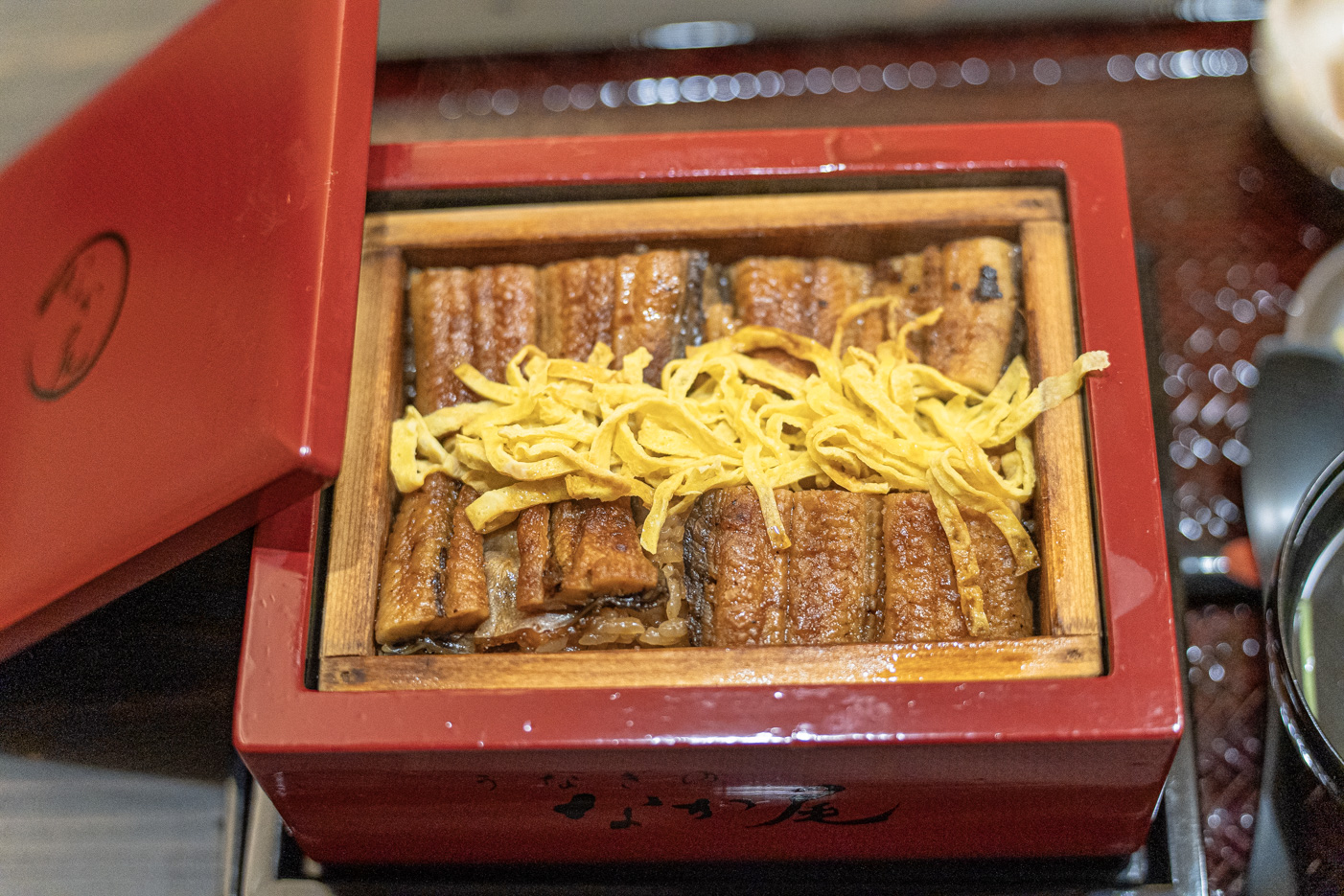
In March 2024, this was a newly opened eel restaurant with just 15 Google reviews. Its main dishes were unagi seiro-mushi, grilled eel finished in a bamboo steamer, and unaju, grilled eel over white rice in a box. We chose the steamed version. The fluffy rice was thoroughly seasoned, while the eel’s sauce was relatively light. The eel itself was softer and less fluffy than expected, with fine bones that may divide opinions. The Jo serving came with four pieces: try one plain, the next with powdered sansho, another with coarse-ground sansho, then the final piece with additional sauce. Both karakuchi, less sweet and saltier, and amakuchi, sweeter and less salty, sauces were provided for comparison; the reviewer preferred the sweet one. Ordering a drink triggered a JPY 350 appetizer charge, so avoid a drink if that extra is unwanted and confirm the current policy.
Record 091 · Original dining, photographed-shop or historical record
Yukihana — aged meat and seafood
熟成肉&海鮮料理 雪花
Yukihana specializes in aged wagyu and seafood. The owner personally selects fresh ingredients each day, and the addition of a dry-aging machine showed particular commitment to the beef. The recommended JPY 4,500 course required at least two diners and an advance reservation, with a separate JPY 550 appetizer charge. It included 100 g of Kagoshima Japanese Black wagyu sirloin dry-aged for 45 days, individually valued at JPY 2,838, a five-variety seasonal sashimi assortment listed at JPY 5,390, and motsunabe listed at JPY 3,300. The original reviewer felt the combined value effectively made the hot pot nearly free. The wagyu melted in the mouth; the portion was small but deeply enjoyable. Thick-cut sashimi showcased the fish, especially the mackerel. If your budget allows, the JPY 1,650 bluefin-tuna sashimi was also recommended.
Record 092 · Original dining, photographed-shop or historical record
Shokudo Maruni — Tenjin main branch
串天ぷらと焼小籠包 食堂◎まるに 天神本店
Shokudo Maruni is on Solaria Stage’s second basement level in central Tenjin, on the same floor as the well-known Hyotan Sushi. Fried skewers and pan-fried soup dumplings are its signature snacks, though the reviewer was less convinced by the dumplings’ thick wrappers. At lunch there were tempura sets and tendon rice bowls around JPY 1,080, suitable for a meal with a light drink. Seating for solo drinkers made it especially convenient. The frying was crisp and accomplished, making this an easy casual stop.
Record 093 · Original dining, photographed-shop or historical record
Hakata Hitokuchi Gyoza Taketora
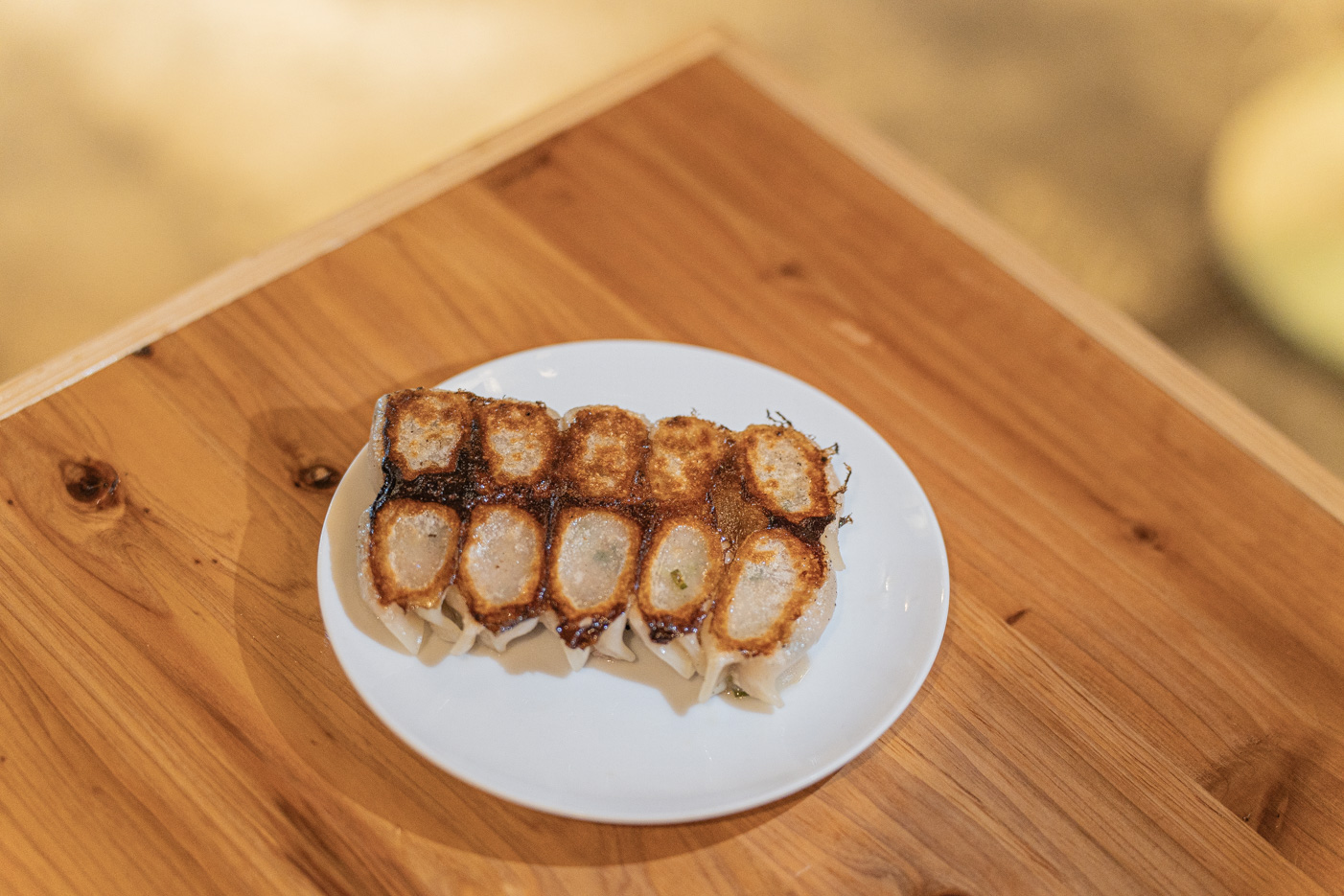
博多一口餃子 たけとら
Hakata Hitokuchi Gyoza Taketora often has a line on Tenjin’s Oyafuko-dori, historically associated with students retaking entrance exams. It otherwise looks like an ordinary izakaya, but young diners regularly queue. Its signature is Fukuoka’s bite-size gyoza. There is also a tiny hitokuchi motsunabe—literally only enough for a bite. The reviewer especially recommends boneless pork trotter: the meat is removed from the bone, compressed, and cooked for a crisp first bite that becomes increasingly sticky and chewy. It is distinctive and very rich, particularly appealing if you enjoy pork belly, mayonnaise, and cheese.
Record 094 · Original dining, photographed-shop or historical record
Hakata Ramen ShinShin — Tenjin main branch
博多らーめん ShinShin 天神本店
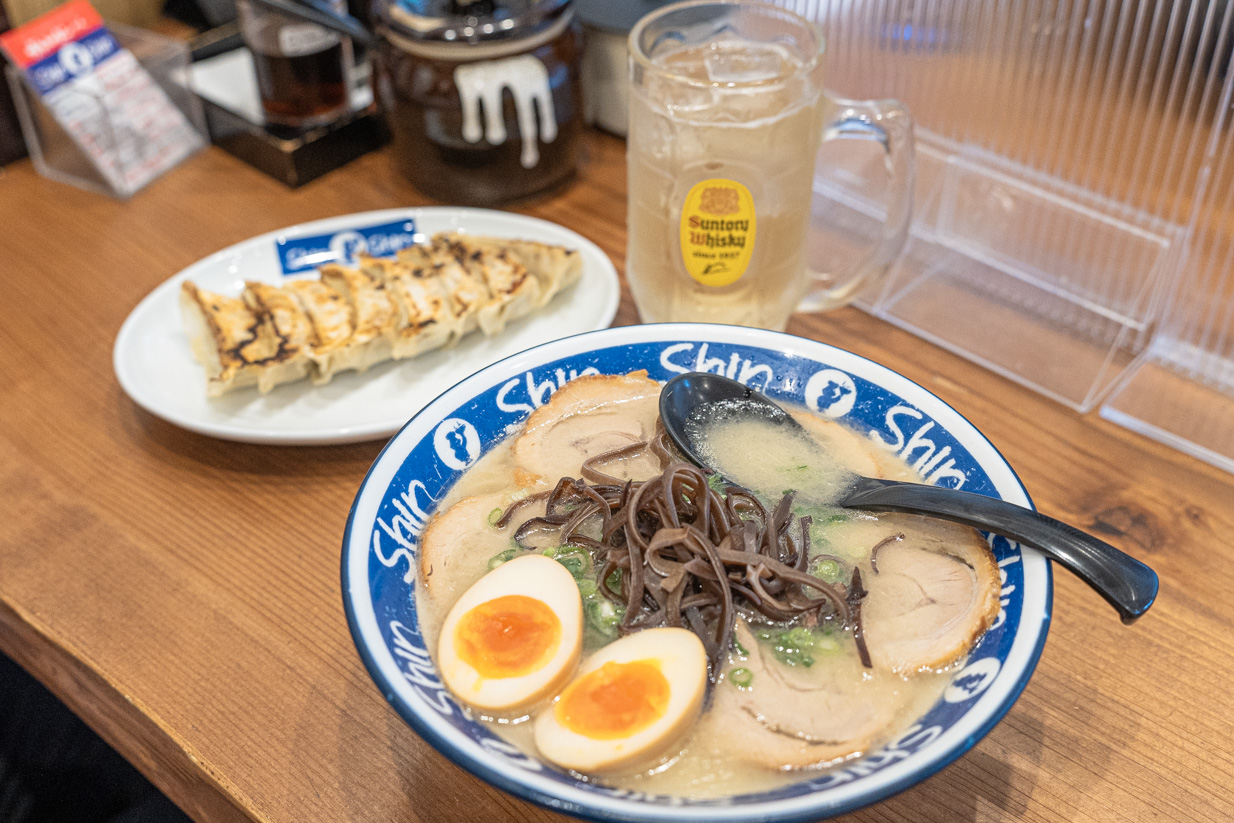
The original paragraph presents ShinShin as a Hakata ramen chain with a light tonkotsu broth, thin noodles, and tender chashu, popular with Japanese and international diners. Its signature order is Hakata ShinShin Ramen, with noodle firmness, broth seasoning, and toppings to choose from, and a Korean menu was available. The reviewer considered gyoza but had heard that the fried rice was the better accompaniment. Source figures need checking: the paragraph gives a 1974 start and both ‘around 30 branches nationwide’ and ‘six branches including the main shop.’ These inconsistent historical figures have not been independently reconfirmed for this guide.
Record 095 · Original dining, photographed-shop or historical record
Cosael
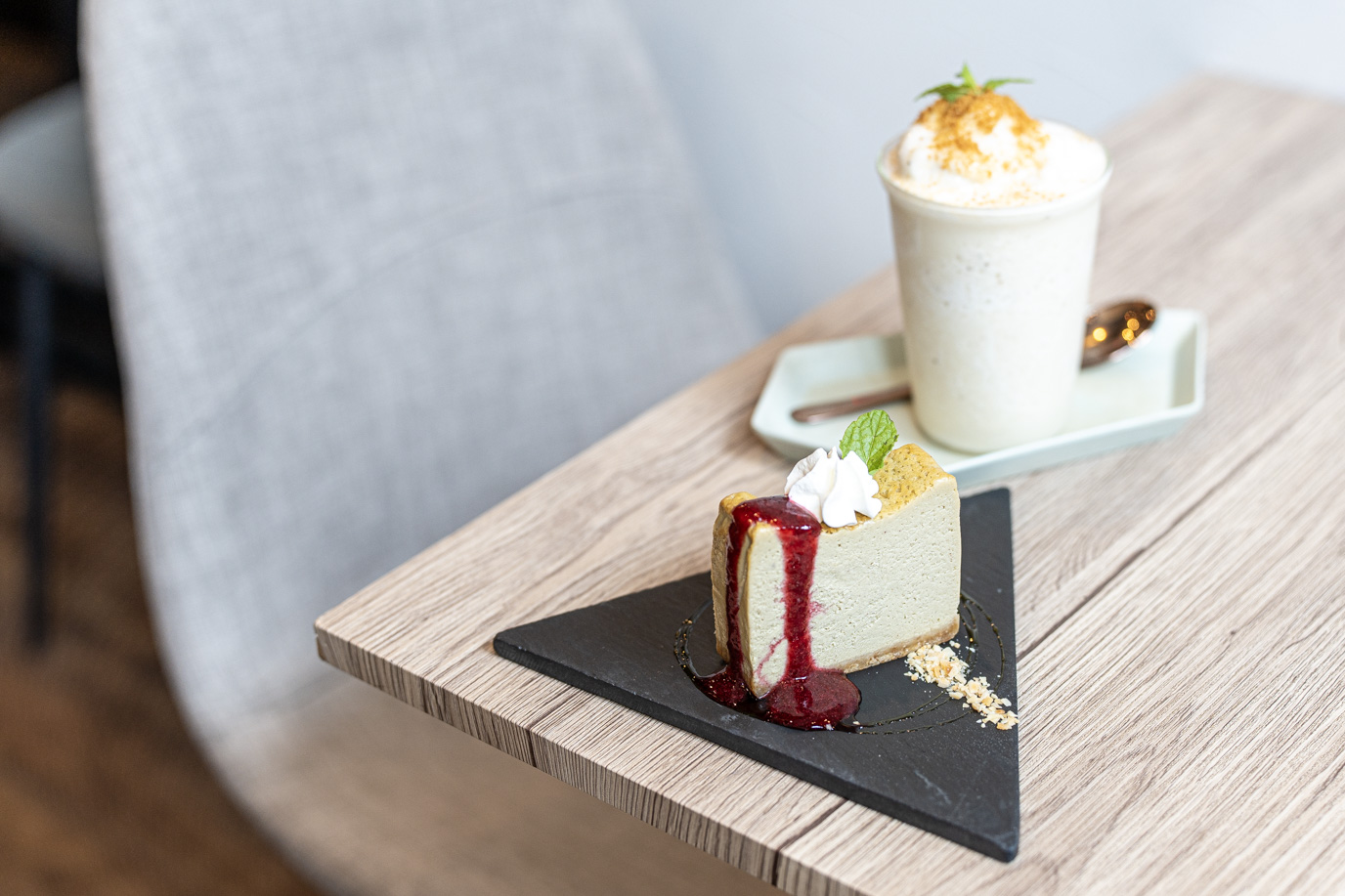
Kosaeru is a small neighborhood dessert café in Haruyoshi. Word of its cheesecake brings occasional lines despite a location that is not easy to find. It is not cheap, but the quality is very good, with enough cheesecake varieties to make choosing part of the fun. Seasonal desserts and drinks are another strength. The reviewer recommends trying a pistachio item if available and particularly enjoyed the fragrance of La France pears.
Record 096 · Original dining, photographed-shop or historical record
Umi no Shokudo
うみの食堂
On basement level 1 of PARCO’s main building is Umi no Shokudo, a restaurant specializing in Japanese set meals centered on seafood. Ingredients from waters around Fukuoka feature in fresh sashimi and rice bowls, alongside ramen, udon, curry, and tonkatsu at accessible prices. Options include a seafood bowl with toppings you choose, a luxurious five-variety sashimi set, and sets with two or three selected side dishes. A Korean-translated menu was available for the original audience; this does not establish an English menu.
Record 097 · Original dining, photographed-shop or historical record
Tonkatsu Tonton
とんかつ とんとん
Akasaka is close to Tenjin but lies in an office district that travelers may overlook. On a quiet side street, Tonkatsu Tonton serves neatly prepared cutlets. The fine yet rough-textured coating recalls an older style of tonkatsu, while the thick pork loin inside follows a more recent fashion, making each bite both nostalgic and satisfying. Sesame in the sauce adds nuttiness to its sweet-and-tart flavor. It was not an extraordinary revelation, but it felt like a properly satisfying meal.
Record 098 · Original dining, photographed-shop or historical record
Iihi Tonkatsu
いい日とん勝
This local tonkatsu restaurant in Hirao takes its name from the idea of a ‘good day’s tonkatsu,’ expressing the owner’s wish that the meal improve your day. A modern Japanese interior offers counter and table seats for an unhurried lunch. Rice and cabbage could each be refilled once. Eat the cutlet with tonkatsu sauce, mustard, or salt. The thick loin becomes sweeter and juicier as you chew; it is good simply salted, then generously sauced and placed over rice. Cabbage refreshes the palate. Tenderloin is lean, gentle, and tender, and particularly good with plenty of sauce. Use the rice refill to enjoy the full meal.
Record 099 · Original dining, photographed-shop or historical record
Hirao Hamburger Steak — marked closed in the source
平尾ハンバーグ
Marked closed in the Korean source. Retained as a historical record, not a current dining recommendation.
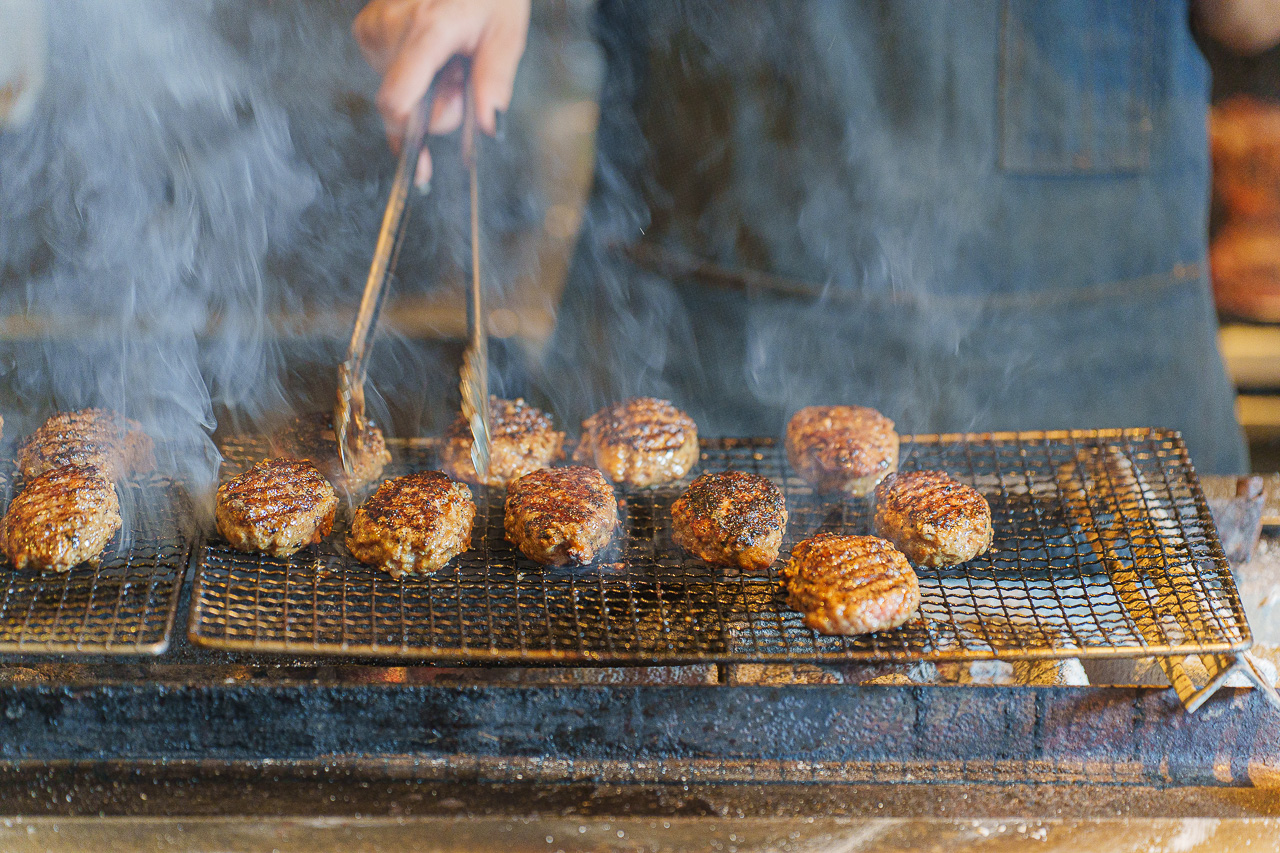
Hirao Hamburger Steak opened on September 7, 2021, about two minutes from Hirao Station. A yakitori restaurant in the evening, it serves hamburger steaks for only three hours at lunch. There are about nine counter seats, from which you can watch the patties grill over charcoal, and the atmosphere is comfortable for solo diners. The well-seasoned meat can be eaten with several sauces and condiments, with bonito flakes or cheese as finishing options. Freshly cooked pot rice and miso soup have unlimited refills. Since the patties have plenty of flavor already, start with only a little seasoning, then try refreshing ponzu, a sweet-and-spicy sauce, or green chili. Saving the third patty to eat over refilled rice with the reserved egg yolk and soy sauce was a particularly happy finish. Comparing it with other charcoal-grilled hamburger-steak restaurants can be enjoyable.
Record 100 · Original dining, photographed-shop or historical record
Hikiniku to Come — Imaizumi branch
挽肉と米 今泉
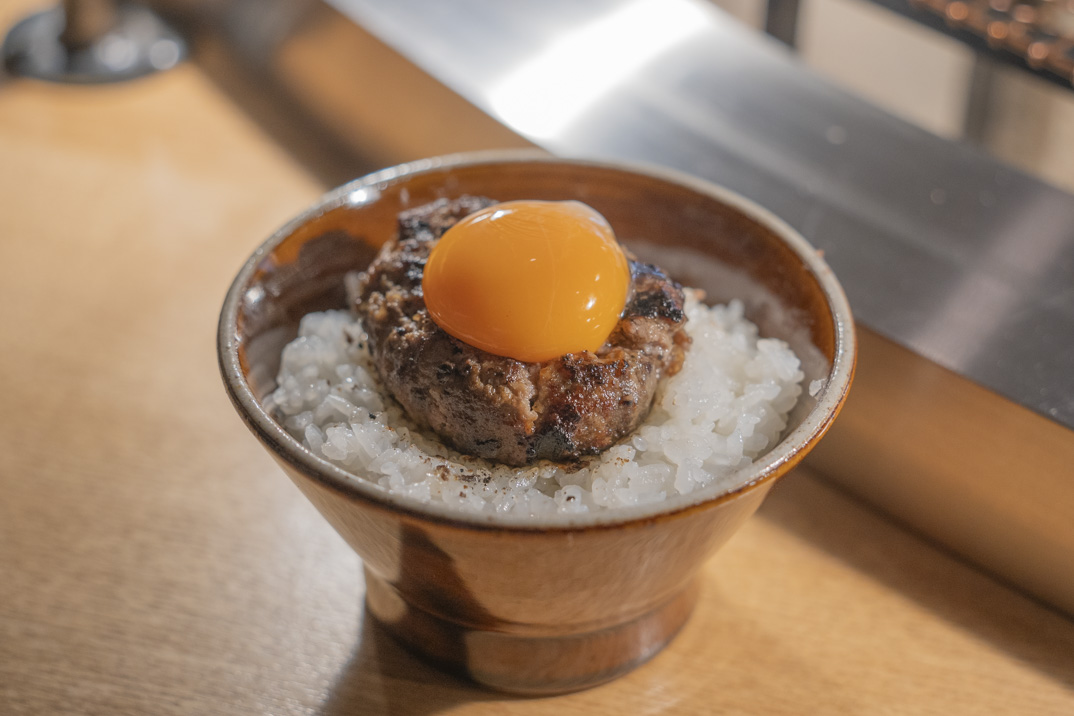
This famous Tokyo restaurant arrived in Fukuoka in summer 2023. The Imaizumi hamburger-steak specialist attracts local and international diners. While getting even a same-morning place on the Tokyo waiting list could be difficult, the Fukuoka location felt more accessible in the original visit. Order at the kiosk. Start by tasting the first freshly grilled patty without cutting it to appreciate its juices and charcoal aroma. Try the second with homemade ponzu, then use the sauces you prefer for the third. Tamago kake gohan, raw egg over rice, is another recommendation, with one complimentary raw egg per person. You can eat the egg over rice or coat the meat with the yolk.
Record 101 · Original dining, photographed-shop or historical record
Hakata Aozora
博多 昊
Tantanmen Aozora is in the restaurant-rich Watanabe-dori area. Every seat is at the counter, and many regulars come alone at lunch or dinner. It is also possible to enjoy a quiet whisky, and the owner’s trusting approach includes letting customers make their own highballs. Orders use meal tickets, so cash is essential. The main dish is rich tantanmen at JPY 980: a creamy pale broth topped with meat miso, peanuts, and sansho. The thin noodles are served in a slightly larger quantity than a typical ramen portion. Unlike the heavier orange, sesame-miso style often associated with tantanmen, this bowl feels comparatively light. Coriander, five-spice oil, sansho, and other seasonings let you adjust it. The mild broth also works well with rice and natto added at the end.
Record 102 · Original dining, photographed-shop or historical record
Hakata Motsunabeya — marked closed in the source
博多 もつ鍋屋
Marked closed in the Korean source. Retained as a historical record, not a current dining recommendation.
Hakata Motsunabeya combines four attractions: a Nakasu riverside view, mentaiko rice, offal hot pot, and good value. At night it is an upscale motsunabe restaurant with courses, but lunch offers a less expensive mentaiju special. The mentaiju ochazuke with scallop broth is particularly unusual and good value. A small tasting of motsunabe accompanies the rice box, so one meal covers two Fukuoka specialties. The reviewer felt the view alone made it worth considering.
Record 103 · Original dining, photographed-shop or historical record
Motsunabe Maedaya
もつ鍋前田屋
Maedaya belongs on a shortlist of well-known Fukuoka motsunabe restaurants. The source credits its Japanese wagyu offal quality with recognition from the Fukuoka prefectural governor. Broth choices include soy sauce, miso, and spicy versions; the reviewer recommends miso for first-timers. Its special house blend produces the nutty, savory broth that made the restaurant known. Finish with Hakata champon noodles: the curly yet resilient noodles pair well with broth enriched by the offal’s fat.
Record 104 · Original dining, photographed-shop or historical record
Motsunabe Ooyama
もつ鍋 おおやま
Ooyama appears frequently in Korean searches for Fukuoka motsunabe, and the original reviewer found its Korean menu well prepared and its flavors approachable. Although individual portions of motsunabe are not always available, a solo lunch set was offered on this visit. It included the hot pot plus sides such as dressed offal and yukhoe-style raw meat. The reviewer would have preferred a slightly cheaper version without the sides. Miso broth is strongly recommended for newcomers. At the end you can add noodles or rice; the reviewer preferred the noodles and found the rice finish less satisfying.
Record 105 · Original dining, photographed-shop or historical record
Torikawa Suikyo
とりかわ 粋恭
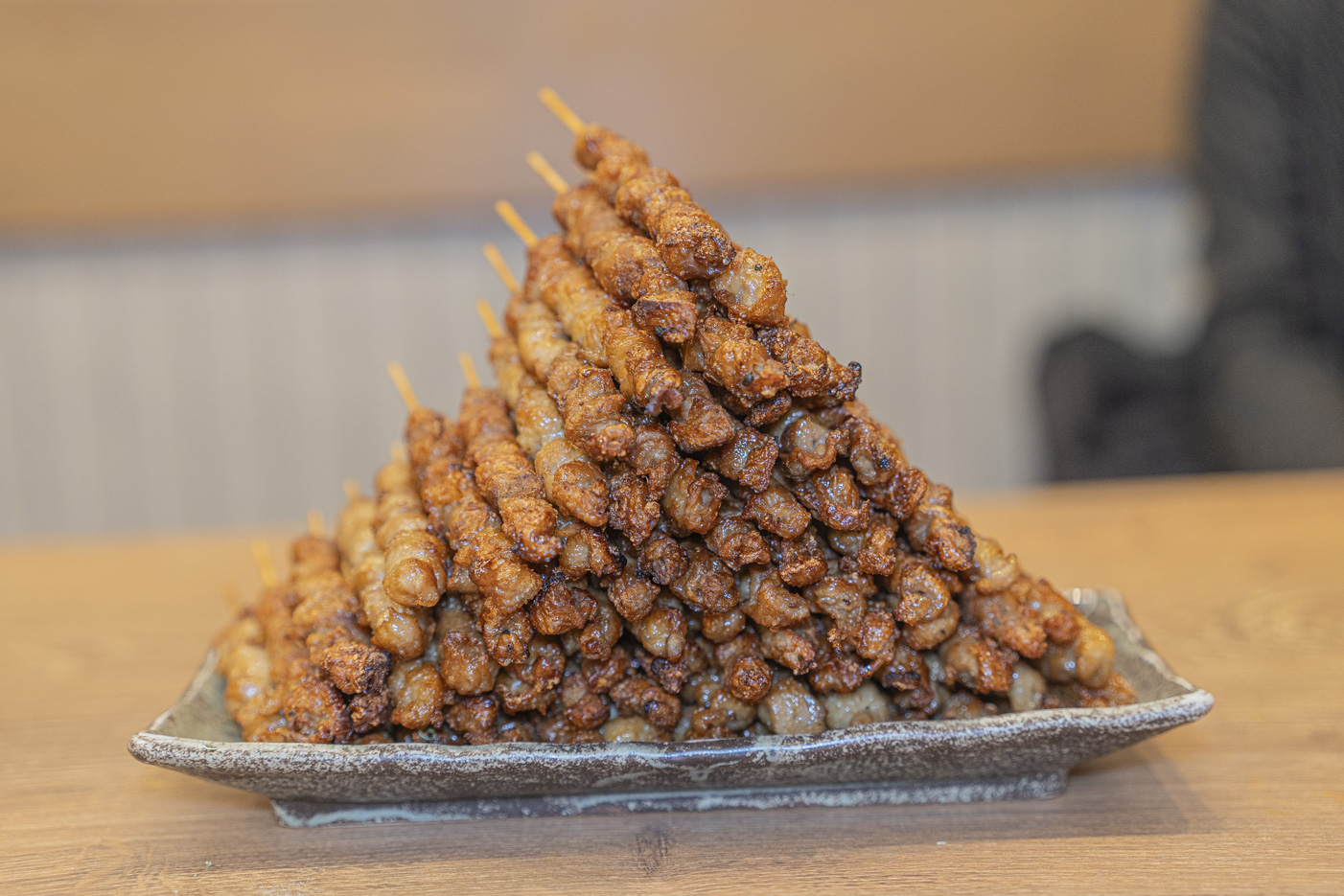
This shop is run by a disciple trained at Torikawa Gonbei, an originator of Fukuoka’s longstanding chicken-skin-skewer tradition. The source says the skewers were originally grilled seven times for a very crisp finish, then reduced to five rounds to improve speed, leaving them a little softer and juicier. Good torikawa is now widely available, but this remains one of the established names from an earlier era. Expect a line according to the original record.
Record 106 · Original dining, photographed-shop or historical record
Bakery Hakata
ベーカリーハカタ
This neighborhood bakery, with a 30-year history in the source record, is about three minutes from Hirao Station on the Nishitetsu Tenjin Omuta Line. We discovered it by following the bread aroma from a main-road crossing into a side street. The interior and bread styles feel like a trip back 30 years, and the prices seemed to have escaped bread inflation: most items were under JPY 200. Its signature soft French bread was developed to be deliciously tender and became a large, distinctive loaf. It is popular enough to supply hotels and restaurants and can be eaten plain or as a sandwich. The reviewer particularly recommends the fresh-cream maritozzo.
Record 107 · Original dining, photographed-shop or historical record
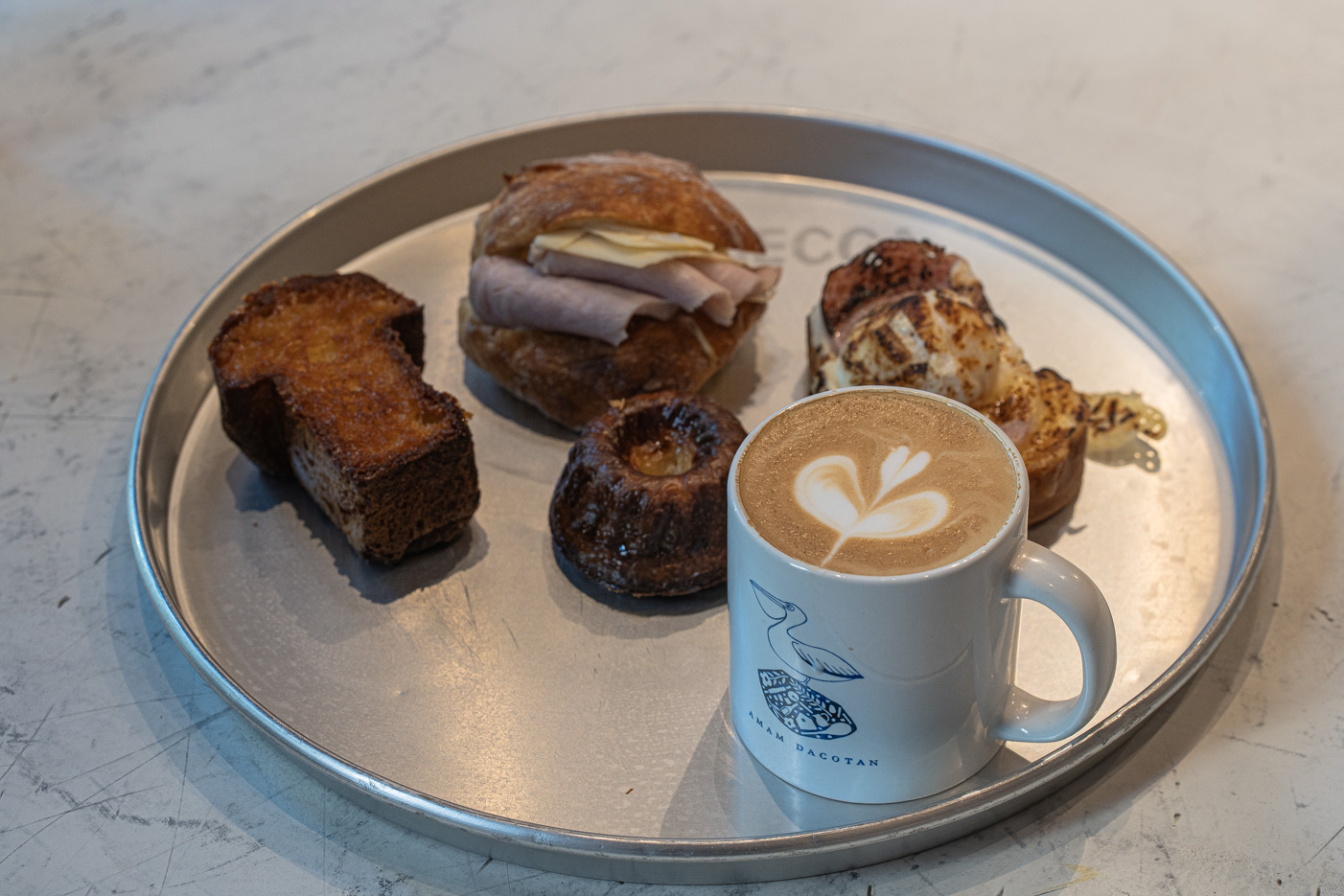
DACOMECCA
This is the bakery associated with I’m donut?, near Hakata Station and busy with commuters each morning. If the extreme wait at I’m donut? puts you off but you are curious about its style, this offers another way to explore it. Methods such as charcoal-grilling bacon for bread or heating a milk carton to make cream gave it a different feel from an ordinary bakery. A large range of breads makes it especially appealing to bread enthusiasts.
Record 108 · Original dining, photographed-shop or historical record
Udon Taira
うどんたいら
Guest review, credited in the original to Lililila: ‘On a day when cherry blossoms were drifting through the air, I left the hotel to try Fukuoka’s udon with fried burdock. Arriving around noon, I found the expected line and entered after about five groups ahead of me. A Korean menu was provided while waiting, so I ordered beef-and-burdock-tempura udon at JPY 680 and chicken rice at JPY 150 as soon as I reached the counter. Most diners were office workers, with a few Korean visitors. After drinks the previous night, the clear, savory broth was soothing. The noodles looked almost limp when lifted but had a lively, springy resistance in the mouth. Beef and burdock tempura added welcome texture. If your stomach feels unsettled after a night out and you want a proper meal without an expensive Tenjin or Canal City stop or a fast-food chain, this is worth considering.’
Record 109 · Original dining, photographed-shop or historical record
Yakiniku Keishu
焼肉慶州
Yakiniku Keishu, with branches around Fukuoka, opened this charming-looking Imaizumi restaurant with a good-value JPY 4,000 yakiniku course. It covers the expected sequence of appetizers, assorted meats, rice, kimchi and other sides, and dessert. Private rooms dominate the interior, allowing an affordable meal to feel more refined. As a beef specialist it also carries much more luxurious cuts. A broad wine selection is stored separately, offering plenty of matches for the beef.
Record 110 · Original dining, photographed-shop or historical record
DAIMYO Butamabushi
DAIMYO ぶたまぶし
DAIMYO Butamabushi is an izakaya in Tenjin’s Daimyo area serving an inventive kakuni, or braised-pork, mabushi. Because the dish began as an experimental offering in an existing izakaya, the original reviewer emphasizes checking operating hours first. The record says that from November it would be a Friday-through-Monday lunch special, without establishing that this schedule still applies. Fresh rice fills an oke-style wooden tub, topped with pork braised for a long time in a special sauce and an egg yolk. The distinctive extra is making your own bonito-kombu broth: kombu dashi is poured from a Nambu iron pot through bonito flakes in a dripper. Use the resulting broth for a final ochazuke and another stage of flavor.
Record 111 · Original dining, photographed-shop or historical record
Warau Sakana
笑う魚
This izakaya offers clay-pot rice of the kind often found in more expensive omakase meals, at a lower price. Orders require at least two portions and take 50 minutes, and there is a JPY 300 table charge, but the reviewer found it worth trying. The recommended pot combines sea bream and salmon roe. Mix the thick fish pieces and roe into the rice and try a bite first, then pour over the accompanying broth for ochazuke. The original text first calls it salmon broth and later describes long-simmered sea-bream bones; that inconsistency remains unverified. Broth refills were available and made it possible to keep enjoying its savory depth.
Record 112 · Original dining, photographed-shop or historical record
Hakata Tempura Takao — Canal City branch
博多 天ぷら たかお キャナルシティ店
At Canal City, two familiar meal choices are a bowl at Ramen Stadium or a tempura set at Hakata Tempura Takao. Takao regularly has a line. Tempura is fried and served in stages, so it reaches you hot. Although meal tickets are normally purchased from a machine, the original record says international diners could sit down and order from a Korean-translated menu; this does not establish English support. Pickles, tempura dipping sauce, and the house specialty kombu mentaiko were unlimited. The reviewer suggests saving rice to enjoy with that roe rather than using it all with the tempura.
Record 113 · Original dining, photographed-shop or historical record
THEATER 010
Beside Canal City is Theatre 010, in a building the reviewer thought resembled a museum. It pairs colorful live performances with food attributed in the source to a Michelin chef. Recorded standing admission was JPY 1,100. Bringing a leaflet distributed at Canal City included one complimentary drink, making the show feel especially good value; this historical offer has not been reconfirmed. Beer was JPY 880 and a highball JPY 1,000. Performances changed every 30 minutes, ranging from glamorous entertainers to rappers. The reviewer found it a fun stop to try during a Fukuoka trip.
Record 114 · Original dining, photographed-shop or historical record
Hakata Kushiage Kushisho — Shimokawabata branch
博多串揚げ 串匠 下川端店
Kushisho is a chain known for Hakata fried skewers, with branches around Hakata Station and Watanabe-dori. We visited Shimokawabata, about five minutes from Nakasu’s Don Quijote. The kushikatsu was naturally good, and fried ice cream was an unusual extra: hot, crisp batter surrounds cold vanilla ice cream that melts inside. Dinner was an upscale omakase starting around JPY 3,600, but lunch specials around JPY 1,500 included loin-and-tenderloin fried-skewer sets. Items are fried as you eat rather than arriving all at once, giving lunch some of the omakase experience too.
Record 115 · Original dining, photographed-shop or historical record
Tomato Ramen Sanmi (333) — Tenjin Daimyo main branch
三味(333
This separate record repeats the recommendation for a tomato-based motsunabe that may divide opinions. The tomato acidity balanced the soft, fatty wagyu offal, and the reviewer would suggest it even to people who had not enjoyed motsunabe elsewhere in Fukuoka. Cheese makes it milder and creamier; chili powder adds heat. Ramen is the main specialty, but the hot pot is particularly recommended. The karamen resembles Korean yukgaejang, with an enjoyable chew if konnyaku noodles are substituted. The finishing egg rice is another highlight. The repeat entry is preserved.
Record 116 · Original dining, photographed-shop or historical record
Tonkatsu Wakaba — Chikushiguchi branch
とんかつわか葉筑紫口店
We visited Tonkatsu Wakaba’s Hakata Chikushiguchi branch on a reader recommendation. The chain has several locations, and at this office-worker-area branch near Hakata Station we entered around 1 p.m. without waiting. The suggested premium Kagoshima pork was in the JPY 2,000 range, but a weekday US-pork lunch special at JPY 1,200 persuaded us to choose the cheaper option. Pick loin if you like more chew, or tenderloin if softness matters most. The crust was crisp and the inside moist and tender, making it a good introduction to Japanese tonkatsu. The reviewer’s personal highlight was the corn dressing: neither particularly sweet, salty, nor sour, but beautifully balanced.
Record 117 · Original dining, photographed-shop or historical record
Hakata Yakiniku HACHI HACHI — Daimyo branch
博多焼肉 HACHI HACHI 大名店
This yakiniku restaurant is immediately beside Tempura Hirao on Tenjin’s Daimyo street. During a weekday evening visit we entered without a wait, perhaps because it was still less well known. Simple side dishes were a surprise success: sukiyaki-style short rib and salted beef-rib soup with rice were JPY 580 each, with generous portions suited to solo dining. Curiosity about the meat led us to order a seven-cut wagyu yakisuki assortment, which showed the restaurant’s commitment to beef. Charcoal grilling made the yakiniku especially enjoyable.
Google Maps for this record is provided with the venue’s map links below.
Record 118 · Original dining, photographed-shop or historical record
Tempura Hirao — Daimyo branch
天麩羅処ひらお 大名店
On busy Daimyo street in Tenjin, locals also line up for Tempura Hirao, a restaurant with more than 40 years of history in the source record. Freshly fried pieces are served directly to an all-counter seating area. The tempura set was excellent, and the reviewer felt most menu choices would be satisfying. A complimentary squid shiokara was particularly good: not overly salty, with fragrant yuzu. It had once been described as refillable without limit, but the source visit recorded only one serving. Both the tempura and the squid go especially well with rice.
Record 119 · Original dining, photographed-shop or historical record
Hasshu Hanare — Hakata branch
八州 離れ 博多店
This annex of the izakaya Hasshu is in a building popular with office-worker diners by Hakata Station’s Chikushi Exit. Its roast-beef lunch bowl was affordable at JPY 1,000, with double meat for an additional JPY 500. The generous, very tender beef made it a satisfying low-cost station-area meal. The one disappointment was overly wet rice, perhaps because we arrived just before last order.
Record 120 · Original dining, photographed-shop or historical record
Yakiniku Gangan
焼肉がんがん
This locally popular yakiniku restaurant is in residential Hirao, a little away from the main Fukuoka tourist areas and about five minutes on foot from Nishitetsu Hirao Station. Its signature is thick beef tongue cut open, stuffed with plenty of scallions, and grilled. The tongue’s springy texture and the sweetness of the scallions worked very well together. An affordable tongue assortment was also satisfying. Loin, short rib, and skirt steak were tender enough to melt in the mouth, while the offal and pork neck were less to the reviewer’s taste.
Record 121 · Original dining, photographed-shop or historical record
Hakata Takenoya
博多 竹乃屋
Takenoya began in Hakata and, in the source record, had 25 branches nationwide, with locations across central Fukuoka and Kyushu. Although yakitori and chicken-skin skewers are often seen as evening drinking food, its yakitori set made an excellent regular meal. It included four kinds of chicken skewer, rolled egg, two pieces of grilled scallion, and half a seasoned soft-boiled egg. Add a few of its signature torikawa as well. Prepared over 72 hours, they are crisp outside and soft within, worthy of their status as a Fukuoka specialty.
Record 122 · Original dining, photographed-shop or historical record
Shirogane Sabo
白金茶房
Shirogane Sabo is a tranquil café in Shirokane. The garden and natural-wood interior are unusual in the city and create the feeling of a mountain cabin. Pancakes are its signature, though Japan has so many good pancake cafés that the reviewer did not find these especially distinctive. Come for the atmosphere. The coffee was very good, and favorable reports about lunch made the reviewer want to return for it. Given the setting and prices, it felt almost as much like a restaurant as a café.
Record 123 · Original dining, photographed-shop or historical record
Shinjidai — Fukuoka Tenjin branch
新時代 福岡天神店
We were skeptical of a constantly busy, youthful restaurant advertising JPY 50 food, but its signature ‘legendary’ Den-kushi skewers were quite good when freshly served and crisp. This nationwide chain had locations near Hakata Station and in Tenjin. Historical drink prices were strikingly low too: draft beer JPY 190, highballs JPY 150, and a one-liter mega highball JPY 450. Eating in added a JPY 300 table charge. Takeout was also an option, although the skewers had softened slightly by the time they reached the hotel. They make an easy snack when you want something small.
Record 124 · Original dining, photographed-shop or historical record
Hakata Ramen Hakataya — Kawabata branch
博多ラーメンはかたや 川端店
On Nakasu-Kawabata’s comparatively quiet shopping street, this shop served a tonkotsu bowl for JPY 290 in the original record. It is a simple everyday stop for residents and a useful gentle morning meal after a night out. Even at that price, the bowl included pale pork-bone broth, straight ramen noodles, and thin slices of pork chashu. It was not the very concentrated style popular elsewhere, but the clean broth and manageable portion were appealing. The reviewer especially recommends it for breakfast if staying near Nakasu; confirm present prices and hours.
Record 125 · Original dining, photographed-shop or historical record
I’m donut?
The original reviewer considered I’m donut? beside Tenjin-minami Station one of the longest waits in Fukuoka at the time. The ‘a doughnut, but not a doughnut’ positioning drew crowds, while low Google ratings appeared to reflect frustration with the queue system. Prices were JPY 100–200 higher than at other shops, but the reviewer liked the flavor enough to want it regularly if there were no line. The dough was soft and chewy, like a moister, chewier version of Mister Donut’s Pon de Ring, though the reviewer’s speculation about glutinous rice was not an established ingredient fact. The deliberate physical queue, rather than a numbered-ticket system, remained the major frustration.
Record 126 · Original dining, photographed-shop or historical record
Hakata Issou
一双
Hakata Issou was described in the source as one of Fukuoka’s most popular tonkotsu restaurants. Its broth is so concentrated and foamy that it is nicknamed ‘cappuccino ramen’ in Japan. The original account attributes it to brothers who won a Fukuoka ramen competition three years running. The soup was rich enough to have small particles in it, which the reviewer guessed were from pork bones. Ordinary straight noodles let the broth take the lead. Add garlic for a clear change in flavor, then spicy takana greens if it becomes too rich, for three stages of enjoyment. The source listed three city branches and supplied the Gion branch map because the reviewer felt the wait was shorter there.
Record 127 · Original dining, photographed-shop or historical record
Hakata Torikawa-yaki Gu
博多とりかわ偶
This torikawa restaurant is known for the owner’s flamboyant salt-scattering performance. Chicken-skin skewers are a Hakata specialty, crisp outside and pleasantly chewy inside. Watching the owner grill throughout the meal is entertaining, and the food delivers too. The recommended Teiban set feels a little like omakase, with six types including three torikawa skewers, pork belly, chicken liver, shiitake, and grilled mountain yam. A Korean-translated menu was available on request. The reviewer found the food an especially good match for a highball.
Record 128 · Original dining, photographed-shop or historical record
Makoto
眞
This restaurant is tucked into lanes near the end of Nakasu’s riverside. It is a welcome change if salty dishes and raw food have tired your palate. The source reports admission beginning at 10:30 a.m., but a line forming from 9 a.m. and around 30 people waiting by approximately 9:40 a.m.; arrive early if this is a priority. The charcoal aroma of grilled mackerel and soy-sauce-dressed grated daikon are a wonderful match, with white rice and miso soup full of fried-tofu pieces balancing the saltiness. The meal makes a memorable start to a travel day. This assessment retains the guest review credited in the original to Lililila.
Record 129 · Original dining, photographed-shop or historical record
Ganso Hakata Mentaiju
元祖博多めんたい重
Hakata Mentaiju is a well-known Fukuoka destination for an upscale presentation of mentaiko. The original Korean reviewer noted that the core ingredient was familiar to Korean diners, even if the setting was more luxurious. For a first visit, the Hanmensui set combines a mentaiju rice box, mentaiko-rich tsukemen dipping noodles, and mentaisui with a rich chicken broth. At JPY 3,718 in the original record, it was relatively expensive, but sharing between two diners was possible. The reviewer noted that many Korean diners found it salty.
Record 130 · Original dining, photographed-shop or historical record
Noodle Bar Kiwami — Daimyo branch
麺処 極み 大名店
Noodle Bar Kiwami combines ramen with wagyu shabu-shabu. Although it is in Tenjin’s central Daimyo area, the lack of a sign can make it hard to find, so use the map. Wagyu rests over very soft, old-style noodles. Pour the hot flying-fish broth over it and the beef cooks lightly, creating a shabu-shabu-style bowl. Eat promptly because the noodles are very soft. The broth is lightly seasoned; add the supplied sauce if you want more flavor. Two slices of wagyu were included at JPY 1,200, which the reviewer considered good value.
Record 131 · Original dining, photographed-shop or historical record
Hakata Tempura Nagaoka
博多天ぷら ながおか
Tempura Nagaoka offers an omakase-like experience at an accessible price, with each piece fried in front of you. Menu prices were shown for two people, but solo diners could order for half that amount. A particularly recommended side is iburigakko cream cheese: smoked pickled daikon combined with soft, rich cream cheese. The smoke, sweet-and-tart pickle, and smooth cheese balance beautifully. If it is on the menu, the reviewer suggests trying it.
Record 132 · Original dining, photographed-shop or historical record
Hakata Seafood Uoden
博多シーフードうお田
Hakata Seafood Uoden attracted attention in 2021 with its dramatic-looking lunch bowls. The most popular was the Mentaiko Ikura Tamagoyaki Don, combining salmon roe, mentaiko, and rolled egg. Rice, egg, and mentaiko fill an oke-style tub, with salmon roe arranged alongside. The salty roe works well with the egg and rice. Nearby office workers also frequent the restaurant, so the source recommends arriving around 11:30 a.m.
Record 133 · Original dining, photographed-shop or historical record
Nishimuraya
西村や
Daimyo Garden, a new Tenjin space opened in 2023, combines a green lawn with upscale restaurants. Nishimuraya is on the second floor; the source describes it as combining French cooking and ramen and associates it with one-Michelin-star recognition, which has not been freshly verified for this preview. Lunch offered fusion ramen around JPY 1,000–1,500, while dinner had an accessible course option. The simple JPY 4,000 dinner course, explicitly excluding tax, impressed for its value as much as its refinement. The reviewer recommends it for a special evening.
Record 134 · Original dining, photographed-shop or historical record
GROCERIA WAKITA
GROCERIA WAKITA, 産地産直レストラン グロッサリア脇田店
This bakery is convenient to visit from the Toranoyu hot-spring ryokan outside central Fukuoka. A nearby Trial supermarket, which reminded the original reviewer of warehouse-style shopping, also makes the area useful for provisions. Breads and dishes use rice and wheat sourced directly from nearby farms, reportedly attracting visitors from outside the area. Although the bakery is central to the business, hamburger steak is available too. The Gorgonzola bread chosen for takeout was especially good, and the breads generally made a strong impression.
This is a worthwhile stop when visiting Nihiki no Oni. It has the feel of a roadside rest stop, with expansive scenery and simple udon or soba. Mountain ingredients include shiitake, bracken, fried burdock, simmered beef, and carrot, giving the noodles a wholesome character. The nearby Kokonoe Yume Otsurihashi, the ‘dream’ suspension bridge, is another well-known sightseeing stop to consider. Separate original map links for the teahouse and bridge are retained below.
Record 136 · Original dining, photographed-shop or historical record
Omusubi Café TABIMUSUBI
おむすびCafé TABIMUSUBI たびむすび
Finding a good, inexpensive meal in heavily touristed Yufuin can be harder than expected, so consider returning to the station area. Tabimusubi is about 25 seconds on foot from Yufuin Station, with a clean, warm-looking wooden interior. Around JPY 1,000 can buy a filling meal that also introduces local specialties. If hungry, choose the Omusubi to Toriten Plate: two rice balls to wrap yourself, the local fried-chicken specialty, clear miso soup, warabi mochi, rolled egg, and pickles. The rice balls use nori from the Ariake Sea, an area prized for seaweed, which added to the enjoyment. If you would rather save room for snacks on Yunotsubo Street, the Hanetsuki Omusubi offers a good alternative with fragrant crisp rice edges.
Record 137 · Original dining, photographed-shop or historical record
Kurobuta Katsuretsu Taishotei
大正亭
This traditional tonkatsu specialist stays close to the cutlet’s origins, building flavor around Kagoshima black pork and a special sauce. It follows the history of cutlets as Japanese Western-style cooking while emphasizing seasonality and the ingredients themselves. Purebred black pork is shipped directly from Kagoshima. The source describes the breed’s roughly 400-year history, firm red meat, gentle sweetness, and good-quality fat. The cutlets are fried slowly at 175°C to preserve their juices, using 100 percent vegetable oil and breadcrumbs passed through a 9 mm sieve. The sauce is a special blend from Kobe’s longstanding Hinode brand, founded in 1900, whose deep, spicy character complements the pork. The ingredients are good enough to enjoy with salt alone. It is a place to explore traditional tonkatsu through Kagoshima produce and a careful cooking philosophy.
Record 138 · Original dining, photographed-shop or historical record
Fukuoka Motsunabe Yumeya
福岡もつ鍋 ゆめ屋
Yumeya is close to a main road but set in a quiet side street, with a dark-wood exterior and tidy interior. This newer motsunabe specialist has a first floor centered on counter seats suited to solo diners; adjustable partitions also allow seating together. The recorded opening time of 7 a.m. makes breakfast possible. Individual motsunabe was JPY 1,600, with miso, soy-sauce, or spicy broth. The miso becomes richer as it bubbles, pairing soft tofu with springy large-intestine offal. Add noodles or rice to finish as udon or cheese risotto. Dressed offal, grilled offal, mentaiko, and other sides make it suitable for a solo drink or a small group as well.
Record 139 · Original dining, photographed-shop or historical record
Niku ga Ichiban — Takasago branch
肉が一番 高砂店
Niku ga Ichiban’s Takasago branch offers steak and offal dishes at accessible prices in Fukuoka’s Chuo Ward. Affordable highballs and lemon sours make it an easy after-work stop. The tenderloin-and-offal set pairs rare-cooked red meat with rich large-intestine offal, with a choice of sauce. Small, medium, large, and extra-large rice portions were the same price, and tofu could replace rice. The dish that makes the reviewer want to return is motsunabe for two at JPY 2,600, including champon noodles to finish. Plenty of offal, garlic, sesame, and a salt-based broth build deep flavor. After the offal and vegetables, noodles absorb the soup for a satisfying, good-value finale.
Record 140 · Original dining, photographed-shop or historical record
the theo
the theo, テテオ
Yufuin’s famous P-roll comes from B-speak, near the entrance to Yunotsubo Street. The shop is useful for gifts but has nowhere to sit and eat. For that, head a little uphill to the café the theo, where you can enjoy the same P-roll at the same price in a more comfortable setting. It offers views of Yufuin’s natural surroundings, and a nearby gallery provides something else to explore. Rather than struggling to eat in a park, the reviewer suggests coming here. The source stresses booking because of its popularity.
Record 141 · Original dining, photographed-shop or historical record
Curry Honpo — Mojiko Retro branch
伽哩本舗 門司港レトロ店
Curry Honpo’s Mojiko Retro branch is on the second floor of a building in front of Mojiko Station in Kitakyushu, outside Fukuoka City. It specializes in Mojiko’s signature yaki curry. Rice is topped with curry, egg, and cheese, then baked in the oven; the hot melted cheese and egg mellow the curry. There are versions with meat, seafood, and vegetables, with a choice of heat and portion size. It fits naturally into a visit to Mojiko Station and the retro streets.
This is the Mojiko Retro branch, not the Hakata main restaurant: Awaya Building, second floor, 9-2 Minatomachi, Moji Ward, Kitakyushu City.
Record 142 · Original dining, photographed-shop or historical record
Hana-Hana
華華 Hana-Hana
Hanahana is a small restaurant in Kuzuha, Moji Ward, Kitakyushu, serving Japanese courses based on seasonal ingredients. Instead of sharing one large platter, diners follow a succession of small dishes at an unhurried pace. The course changes with the day’s ingredients and can be enjoyed with drinks. Counter seating and low tables suit a meal for two or a family visit. Keep it in mind if you want a quieter meal away from central Mojiko Retro.
This reservation-only restaurant is away from the center of Mojiko Retro. Check both the route to 3-2-11 Kuzuha, Moji Ward, Kitakyushu City, and reservation availability before traveling.
Record 143 · Original dining, photographed-shop or historical record
MOJIKO BEER HOUSE
Mojiko Beer House is a brewery-run restaurant on the waterfront in Mojiko Retro, Kitakyushu. Its signature baked curry uses curry made with Mojiko’s Weizen beer. Other options include wood-fired pizza with dough fermented using beer yeast and homemade sausages and ham. Several draft beers can be paired with the food. The first floor is a casual food-court-style area, while the third floor offers dining with views of the Kanmon Strait. It is a convenient stop for a meal and a drink while walking around Mojiko.
Record 144 · Original dining, photographed-shop or historical record
Green Gables — Mojiko Retro branch
グリーンゲイブルズ 門司港レトロ店
Green Gables is on the first floor of Kaikyo Plaza’s west building in Mojiko Retro, Kitakyushu. The café offers sea views with cake, coffee, or black tea. Its signature Retro Banana is an original baked sweet made with butter, almonds, and banana, also suitable as a souvenir. Banana roll cake, fresh caramel, and other desserts give you a choice of treats. It works well for a break over a banana dessert and tea after sightseeing or a meal around Mojiko Retro.
Record 145 · Original dining, photographed-shop or historical record
Kawara Soba Inaka
瓦そば 田舎
Inaka, close to the entrance to Furuyu Onsen, is a kawara-soba specialist worth considering for lunch in the area. Green-tea soba is spread over a large roof tile with shredded egg, beef, scallions, and nori, then dipped into warm sauce. The noodles start soft, but the parts touching the tile become crisp as the meal progresses, creating different textures on the same plate. Mildly spicy grated-daikon-and-chili and fresh lemon balance the savory beef and nutty tea noodles. The simple menu lets you focus on this one dish. It is a distinctly regional meal before entering the hot-spring village or after leaving your accommodation.
Record 146 · Original dining, photographed-shop or historical record
Kansendo Kameya
甘泉堂 亀屋
Kansendo Kameya is a small confectionery shop tucked into a quiet lane in Furuyu Onsen, useful for both a snack and gifts during a village walk. Traditional wagashi share the displays with roll cakes, cream puffs, apple pies, and other Western-style sweets. Its signature Yuri is a local traditional sweet rooted in Furuyu’s old practice of simmering lily roots to drink; eat it as it is or dissolve it in warm water like kuzuyu. Apple pie baked in a retro aluminum cup has plenty of apple and a modest sweetness. Try one while strolling after a bath and take a few treats home as reminders of Furuyu.
Record 147 · Official-source introduction; no visit claimed
amam dacotan — Ropponmatsu branch
This Ropponmatsu bakery is surrounded by stone walls and climbing greenery. Bread displays and the kitchen continue inside the entrance, making it a useful stop for bread to accompany a meal or a snack for a walk. The official shop information links to a Ropponmatsu takeout-ordering window, worth reading if you already know what you want. The address is 3-7-6 Ropponmatsu. Nearby Dacotan Café is at 7-8, and Dacomecca near Hakata Station is another separate shop, so distinguish a café visit from a bread purchase when setting your destination.
Address: 3-7-6 Ropponmatsu, Chuo Ward, Fukuoka City, Fukuoka Prefecture.
Record 148 · Official-source introduction; no visit claimed
ASAKO IWAYANAGI FUKUOKA
This dessert shop is in Bio Square 2B at Daimyo Garden City. Baked sweets, cakes, and chocolate gifts are joined by lighter options such as bread, gelato, and crêpes. Lunch, parfaits, and afternoon tea can be paired with Japanese tea or coffee, so decide whether you want a meal or dessert before choosing your visit. There is a Fukuoka-specific TableCheck reservation page; check the conditions for the menu you want. The Tokyo main shop may have different terms, so select the FUKUOKA branch.
Address: Fukuoka Daimyo Garden City, Bio Square 2B, 2-6-50 Daimyo, Chuo Ward, Fukuoka City, Fukuoka Prefecture.
Record 149 · Official-source introduction; no visit claimed
L+ HIRAO LANDIC HOUSE & CAFE
About one minute on foot from Nishitetsu Hirao Station, this complex combines a café with plants and design spaces. You can have tea or a meal in an interior reminiscent of a kitchen and living room, and many of the plants are also for sale. A reading-and-relaxation lounge and a terrace provide places to pause during a Hirao walk. Reservations to view the residential spaces are separate from café use. Café inquiries should go to 092-406-9010 rather than the general main number. The address is 2-19-17 Ogusu.
Address: 2-19-17 Ogusu, Minami Ward, Fukuoka City, Fukuoka Prefecture.
Record 150 · Official-source introduction; no visit claimed
Lotus Palace — Daimyo branch
This Vietnamese restaurant is on the second floor of Daimyo Garden City Tower. Beyond an entrance with gray molding and black marble are wooden tables. Its indoor location works well between Daimyo and Tenjin shopping stops, about three minutes on foot from Tenjin Station on the subway Airport Line. It is also close to the Nishitetsu Grand Hotel-mae bus stop. The same brand has a branch on Hakata Station’s tenth-floor Kooten restaurant level, so confirm both the Daimyo branch name and the Garden City Tower second-floor address for directions and reservations.
Address: Fukuoka Daimyo Garden City Tower, second floor, 2-6-50 Daimyo, Chuo Ward, Fukuoka City, Fukuoka Prefecture.
Record 151 · Official-source introduction; no visit claimed
SANCHO PANZA
This Spanish and Latin American restaurant is on the fifth floor of a building in Daimyo 1-chome. An interior with orange arches is separate from the terrace, and the menu suits a dinner centered on tacos with several additional dishes. If you want the terrace, ask about the weather and available seats when booking. Some evenings combine dining with live music. Reservations are recommended on performance days, and busy periods may involve a seating time limit, so agree on your group’s plans and check the booking terms.
Address: Daimyo 11511 Building, fifth floor, 1-15-11 Daimyo, Chuo Ward, Fukuoka City, Fukuoka Prefecture.
Record 152 · Official-source introduction; no visit claimed
SNOW BASE
This Hawaiian café and dining spot on Josui-dori combines white exterior walls with a blue interior. Its listed menu includes loco moco, garlic shrimp made with fermented black garlic, and fresh doughnuts made from house-mixed dough. Nonalcoholic Hawaiian cocktails give nondrinkers options too. Some food, including loco moco and Spam rice balls, is available for takeout, with advance contact helping arrange collection. Look for the SNOW BASE sign to distinguish it from neighboring shops, and confirm the 3-37 Josui-dori address.
Address: 3-37 Josui-dori, Chuo Ward, Fukuoka City, Fukuoka Prefecture.
Record 153 · Official-source introduction; no visit claimed
STEREO COFFEE
Blue neon marks this coffee shop in a Watanabe-dori side street. A converted two-story house has standing space and a counter on the first floor, where you can enjoy coffee with views outside and music. Upstairs, AND is a multipurpose space hosting gallery exhibitions and pop-ups related to music, clothing, and interiors. Allow different amounts of time depending on whether you want just coffee or an exhibition too. If a pop-up is your purpose, check the official schedule before visiting 3-8-3 Watanabe-dori.
Address: 3-8-3 Watanabe-dori, Chuo Ward, Fukuoka City, Fukuoka Prefecture.
Record 154 · Official-source introduction; no visit claimed
stock — painstock × COFFEE COUNTY
At 6-17 Nishinakasu, this collaboration combines painstock bread with COFFEE COUNTY coffee. Broad stairs and terraces on both sides mark the entrance, with bakery and coffee spaces inside. Painstock’s Tenjin branch also runs a separate online store, so distinguish delivery ordering from an in-person visit. The online product list does not necessarily reflect that day’s shop inventory; ask the store if you want a particular bread. Checking the bakery and coffee counters’ operating notices separately is the most precise approach.
Address: 6-17 Nishinakasu, Chuo Ward, Fukuoka City, Fukuoka Prefecture.
Record 155 · Official-source introduction; no visit claimed
Suage — Fukuoka Ohashi branch
This Suage branch is on the first floor of Ohashi Hill and serves soup curry with chicken legs, vegetables, and other ingredients. Choose a curry, then combine a regular or squid-ink soup with your preferred heat, toppings, and rice portion, making it easy for each person to customize a meal. Chicken-leg curry offers fried or simmered preparation, and vegetable-focused curries and a children’s menu are also listed. Order takeout with staff or call ahead. The Fukuoka Ohashi branch is at 1-3-3 Ohashi, and its telephone number is 092-403-3333.
Address: Ohashi Hill, first floor, 1-3-3 Ohashi, Minami Ward, Fukuoka City, Fukuoka Prefecture.
Record 156 · Official-source introduction; no visit claimed
THE FULL FULL HAKATA
A red awning and a spiral-bread illustration mark this Gionmachi bakery. From the entrance you can see the oven and the finishing of savory breads. Its mentaiko French bread is described as baked and cut in the shop. Wine is sold alongside bread, so it can be a place to pause with food as well as pick up a snack. THE FULL FULL HAKATA is distinct from the other Full Full branches, at 9-3 Gionmachi. Ask the Hakata branch about the bread you want and how to use the space.
Address: 9-3 Gionmachi, Hakata Ward, Fukuoka City, Fukuoka Prefecture.
Record 157 · Official-source introduction; no visit claimed
THE ONO MARKET — ETWAS TENJIN
This restaurant-and-grocery space is on the first floor of Hotel Etwas Tenjin. Separate areas cover fish and sushi, Chinese food, bread, wine and sake, and groceries, allowing a meal and shopping in one stop. Lunch and dinner courses, à la carte dishes, and takeout have separate menus, so check the one relevant to your plans. There is a weekday closure between meal services; ask the shop if you plan to arrive at an in-between time. The address is 3-5-18 Tenjin. Distinguish the food space from the hotel check-in desk.
Address: Hotel Etwas Tenjin, first floor, 3-5-18 Tenjin, Chuo Ward, Fukuoka City, Fukuoka Prefecture.
Record 158 · Official-source introduction; no visit claimed
The Pie Hole — Fukuoka branch
This pie café is on the first floor of Paseo Hirao, about five minutes on foot from Hirao Station. White tiles, a blue entrance, and ‘Hi, Fukuoka!’ on the window identify the Fukuoka branch. The 13-seat café serves plated pie with drinks, making it a useful break on a Hirao walk. Reservations are listed through telephone or the Fukuoka branch’s official Instagram direct messages. Parking is available for drivers. To avoid confusing it with another regional branch, use the Fukuoka address at 2-11-20 Shirogane.
Address: Paseo Hirao, first floor, 2-11-20 Shirogane, Chuo Ward, Fukuoka City, Fukuoka Prefecture.
Record 159 · Official-source introduction; no visit claimed
Oishii Kooriya — Tenjin-minami branch
This shaved-ice specialist is on the first floor of Minami Tenjin Building in Watanabe-dori. It is operated by ice maker Kyushu Seihyo and uses its own Hakata Junhyo ice. Alongside fruit-based shaved ice, options such as coffee brûlée and salted-caramel macchiato broaden the dessert selection. Regular items, limited-time flavors, and drinks are listed separately, so check availability if you have a particular order in mind. Look for the curved glass window and Oishii Kooriya sign, and confirm the 5-14-12 Watanabe-dori address.
Address: Minami Tenjin Building, first floor, 5-14-12 Watanabe-dori, Chuo Ward, Fukuoka City, Fukuoka Prefecture.
Record 160 · Official-source introduction; no visit claimed
Yokatai — Deitos branch
This standing bar is on Hakata Horoyoi-dori inside Hakata Station’s Deitos. Oden simmering in a large pot and fried chicken wings make it possible to combine a small meal with a drink before or after travel. The station setting has a wooden counter and gourd decorations; use it differently from a seated restaurant where you would linger. If catching a train, calculate your departure time and the route through the station before ordering. Confirm the Yokatai Deitos branch and Horoyoi-dori signs to avoid similarly named shops nearby.
Address: Hakata Horoyoi-dori inside Hakata Station Deitos, 1-1 Hakataekichuogai, Hakata Ward, Fukuoka City, Fukuoka Prefecture.
Record 161 · Official-source introduction; no visit claimed
West — Gates branch
This West branch is on basement level 1 of the Gates building in Nakasu. It offers both udon meals and izakaya dishes, with different service times by menu, so check according to whether you want one bowl or several dishes. There is a meal-ticket machine, and takeout and delivery are explained separately. Use the Gates branch name and 3-7-24 Nakasu address to find the basement dining space. Since West has many branches, specify Gates when making inquiries too.
Address: Gates building, basement level 1, 3-7-24 Nakasu, Hakata Ward, Fukuoka City, Fukuoka Prefecture.
Record 162 · Official-source introduction; no visit claimed
Sutton Yakizen Hakata
This grilled-meat and set-meal restaurant is on the first floor of Sutton Hotel Hakata City in Hakataekimae 3-chome. A rounded black-stone exterior, curved steps, and a central glass door mark the entrance. Lunch choices include bulgogi, hamburger steak, chicken nanban, and ginger pork, as well as stone-pot bibimbap and doenjang-jjigae sets, allowing a group to choose different meals. It can fit after hotel arrival or before heading to Hakata Station. Confirm the name Sutton Yakizen Hakata and the address 3-4-8 Hakataekimae.
Address: Sutton Hotel Hakata City, first floor, 3-4-8 Hakataekimae, Hakata Ward, Fukuoka City, Fukuoka Prefecture.
Record 163 · Official-source introduction; no visit claimed
Donkihotei — restaurant
This Western-style restaurant in Minato lists Ohori-koen as the nearest station. Red brickwork and a yellow oval sign identify it, with handmade hamburger steak at the center of the menu. Its own notices say some dishes in old menu photos have been discontinued, so check today’s menu instead of expecting an old set exactly as pictured. Credit cards are not accepted according to the listed information, and there is no dedicated parking. Plan payment and transport before visiting. The address is on the first floor at 2-9-13 Minato. This is a restaurant, separate from the Don Quijote retail chain.
Address: First floor, 2-9-13 Minato, Chuo Ward, Fukuoka City, Fukuoka Prefecture.
Record 164 · Official-source introduction; no visit claimed
Bread, Espresso & Hakata-tto
This Hakata-tto branch in Hakataekimae 2-chome combines bread and coffee. The source photograph shows a meal of thick bread with toppings and vegetables; check the shop’s information for the dishes currently sold. Although it shares a brand, it is run by a separate company, so applying another location’s general notices may cause confusion. Menu information and the branch’s Instagram are linked below; use the Hakata-tto notices for particular bread dishes or temporary closures. Its full name is Bread, Espresso & Hakata-tto, at 2-8-12 Hakataekimae.
Address: 2-8-12 Hakataekimae, Hakata Ward, Fukuoka City, Fukuoka Prefecture.
Record 165 · Official-source introduction; no visit claimed
Tetsunabe — Deaibashi branch
Tetsunabe’s Deaibashi branch is on the first floor of the Riverside Building in Nakasu. Gyoza served in round iron pans are the focus. The listed 60 seats combine counter, table, and low-table seating, making it suitable for a group sharing dumplings over dinner. Takeout is offered in units of 20 or 40, so decide the amount you need first. Its address and seating differ from the Nishinakasu main shop. Confirm the Deaibashi branch at 4-5-9 Nakasu and ask about closure days.
Address: Riverside Building, first floor, 4-5-9 Nakasu, Hakata Ward, Fukuoka City, Fukuoka Prefecture.
Record 166 · Official-source introduction; no visit claimed
Hakata Chinchin — Akasaka branch
Under a red awning in Akasaka 1-chome, this tantanmen and Sichuan restaurant serves special tantanmen, matanmen, mapo tofu, and gyoza, with set combinations available alongside noodles. There are 20 seats across counters and tables and no private room, making the counter a practical option alone. It is entirely nonsmoking and does not accept credit cards. The restaurant is within walking distance of Akasaka Station; look for a white lantern and red tantanmen banner. Specify the Akasaka branch at 1-7-27 Akasaka on your map.
Address: Unit 102, 1-7-27 Akasaka, Chuo Ward, Fukuoka City, Fukuoka Prefecture.
Record 167 · Official-source introduction; no visit claimed
Haruyoshi Bar RIO
This Haruyoshi bar and restaurant has a riverside terrace. Beyond the dark entrance and RIO neon sign are counter, table, and sofa seats, so ask what suits your group. If you want the river-facing terrace, check its availability when booking. Smoking is allowed throughout, with no separate smoking room, an important consideration for anyone sensitive to smoke. Credit cards and PayPay are accepted, but other electronic money is not listed as usable. The destination is Unit 104, Rivière Champ, 2-4-11 Haruyoshi.
Address: Unit 104, Rivière Champ, 2-4-11 Haruyoshi, Chuo Ward, Fukuoka City, Fukuoka Prefecture.
Record 168 · Official-source introduction; no visit claimed
Sumidokoro Kichi
This yakitori restaurant is about two minutes on foot from Nishitetsu Ohashi Station’s west exit. It serves grilled chicken skewers and other chicken dishes, with Japanese sake to pair with them. Chochin, a chicken-ovary dish listed in limited quantities, should be checked for availability before ordering. Look for the brick entrance, wooden walls, noren curtain, and Sumidokoro Kichi sign. The address is 1-12-19 Ohashi. Reservations and menu inquiries can be made at 092-561-6625.
Address: 1-12-19 Ohashi, Minami Ward, Fukuoka City, Fukuoka Prefecture.
Record 169 · Official-source introduction; no visit claimed
Ishimura Manseido Bon Cinq The Parlour
This Nakasu dessert shop is an option for cake after dinner. A round B sign on a brick corner, turquoise window frames, and a projecting canopy identify the entrance. Choose a cake from the display to enjoy plated with a drink, making it easy to connect dinner and dessert within Nakasu. This is Bon Cinq The Parlour, distinct from Ishimura Manseido’s other confectionery shops, at 3-2-12 Nakasu. It closes on Sundays and public holidays, so keep that in mind when planning an evening visit.
Address: 3-2-12 Nakasu, Hakata Ward, Fukuoka City, Fukuoka Prefecture.
Record 170 · Official-source introduction; no visit claimed
Nagahama Yatai Yamachan — Nakasu branch
Enter the Nishikikoji lane from Nakasu’s main street and look for Yamachan among the storefronts. Despite the yatai name, this is a fixed restaurant with a red-and-white noren, so use 2-4-18 Nakasu as your destination rather than looking for a roadside stall. The source photograph shows ramen; confirm the present menu and availability with the shop. Operator information lists 30 seats and permits smoking. Consider that environment if smoke bothers you. Its address differs from the Tenjin branch, so specify Nakasu for reservations or inquiries. The telephone number is 092-262-7882.
Address: Nishikikoji, 2-4-18 Nakasu, Hakata Ward, Fukuoka City, Fukuoka Prefecture.
Record 171 · Official-source introduction; no visit claimed
Tachigui Sushi Heishiro — Kokura Station Shinkansen branch
This Tachigui Sushi Heishiro is inside Kokura Station’s Shinkansen ticket gates. It is a standing sushi branch, different in both location and format from the conveyor-belt restaurant on the sixth floor of Amu Plaza Kokura’s west building. Look for this specific branch when planning a meal on a Shinkansen travel day. Its information says it does not sell takeout, so it is unsuitable if you want sushi to carry away. Allow enough time for both ordering and reaching your train afterward.
Address: Inside the Shinkansen ticket gates at Kokura Station, 1-1-1 Asano, Kokurakita Ward, Kitakyushu City, Fukuoka Prefecture.