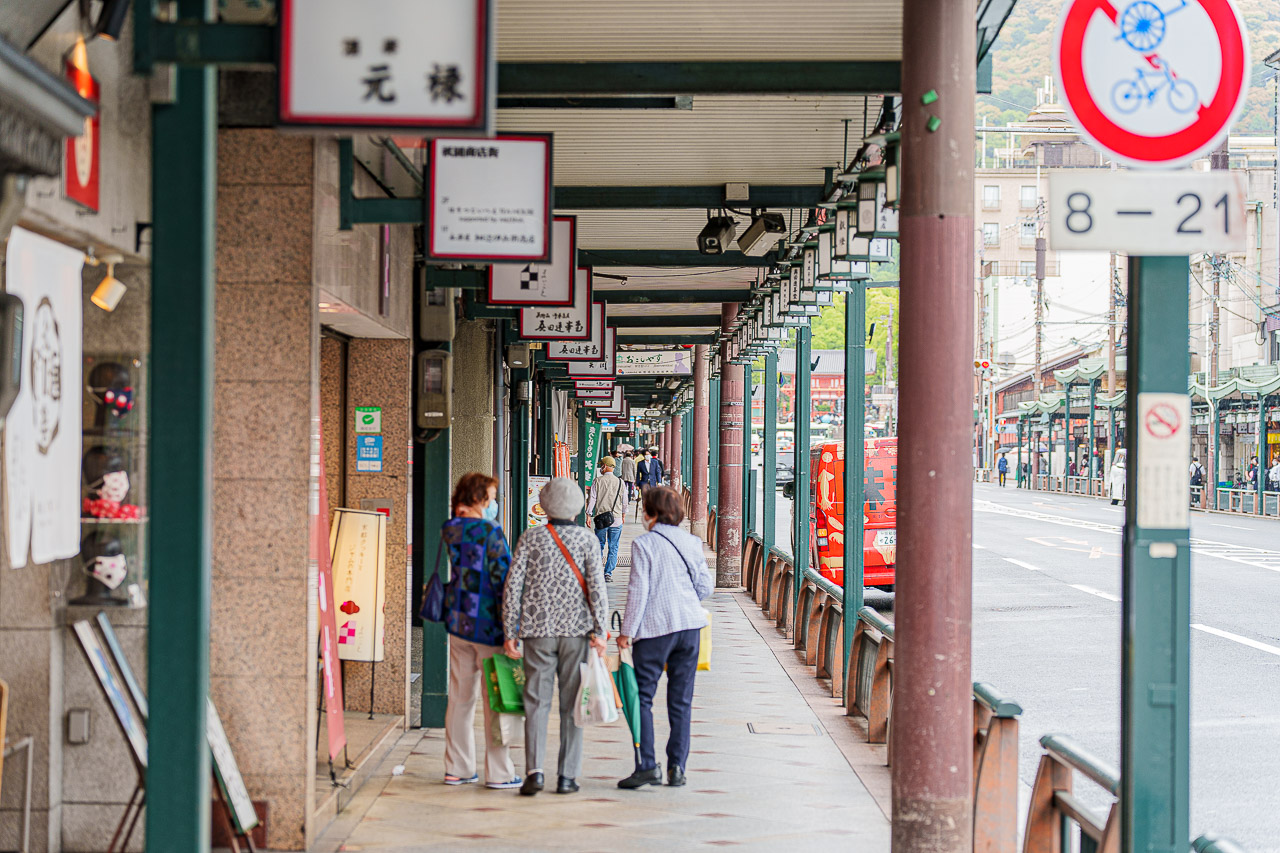
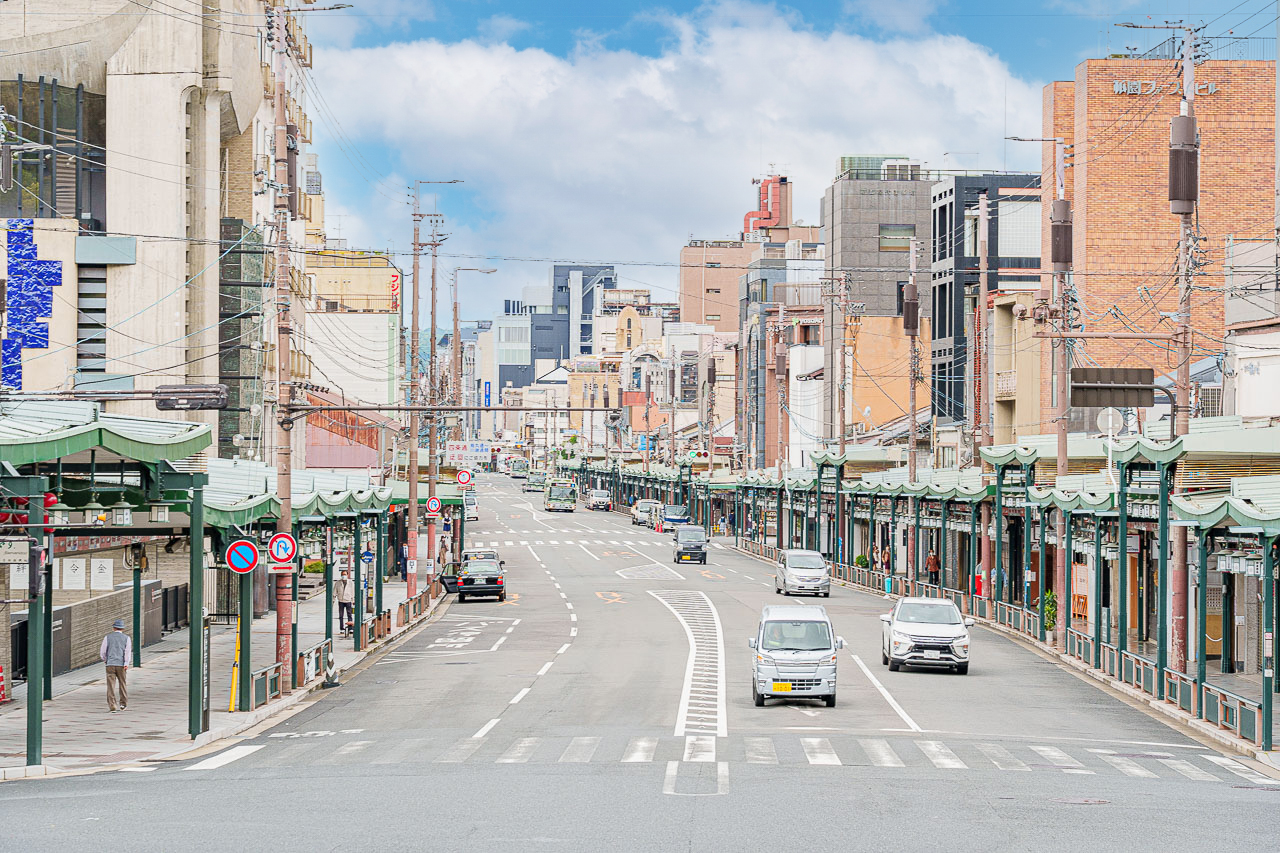
Leaving Kawaramachi Station brings you to Shijo Street, a beautiful part of Gion.
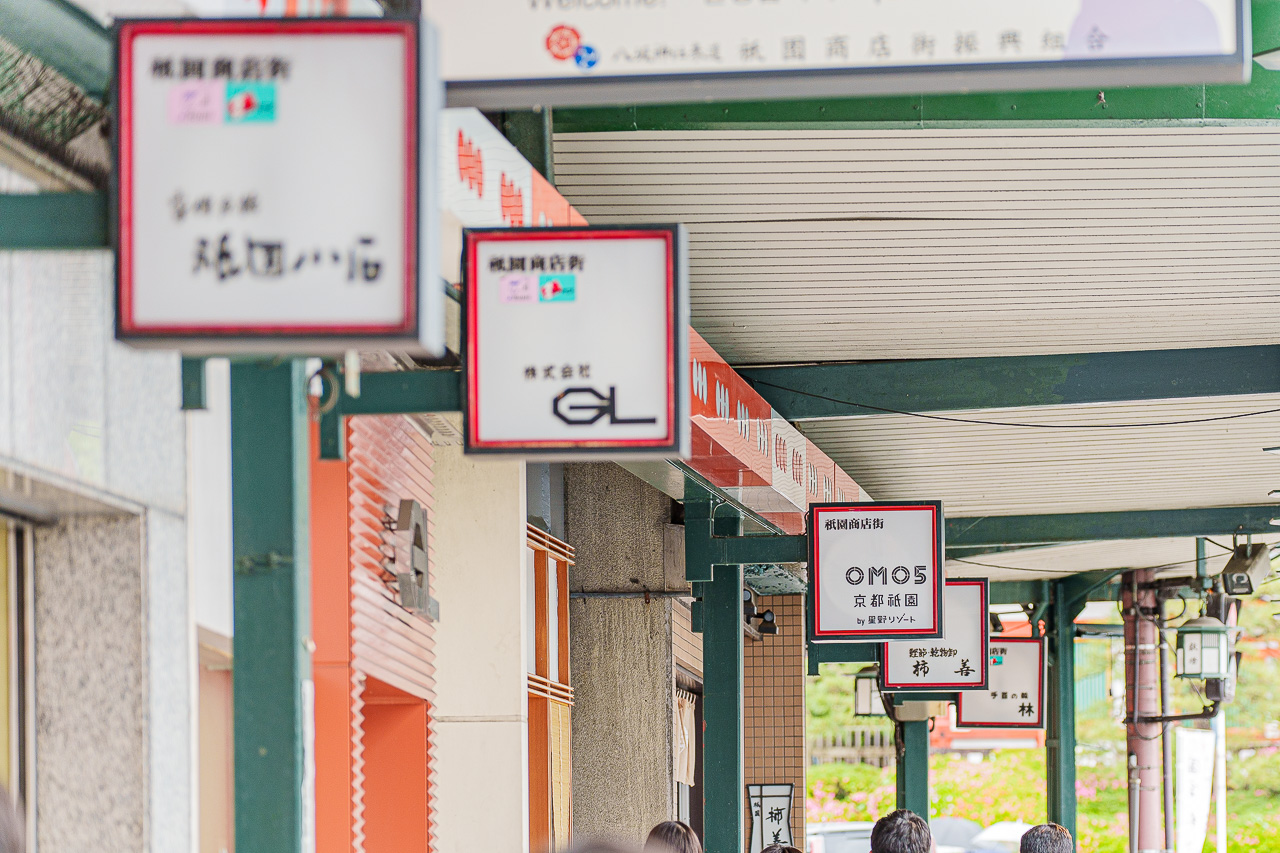
OMO5 Kyoto Gion by Hoshino Resorts stands directly in front of the red Yasaka Shrine visible from Shijo Street.
It is around 15 minutes on foot from OMO5 Kyoto Sanjo, where I stayed the night before,
or a short 5-minute taxi ride.
OMO5 Kyoto Sanjo by Hoshino Resorts: Seeing, Hearing and Walking Historic Kyoto
OMO5 Kyoto Sanjo by Hoshino Resorts: Seeing, Hearing and Walking Historic Kyoto
On the second day of the Kyoto trip, I came to OMO5 Kyoto Sanjo, around 15 minutes by bus from the previously introduced OMO3 Kyoto Toji. Kyoto travel: a journey back 1,200 years…
errdaytrip.com
Kawaramachi Station is about 5 minutes away, giving convenient access to Kyoto sights from Yasaka Shrine to Kodaiji and Kiyomizudera.
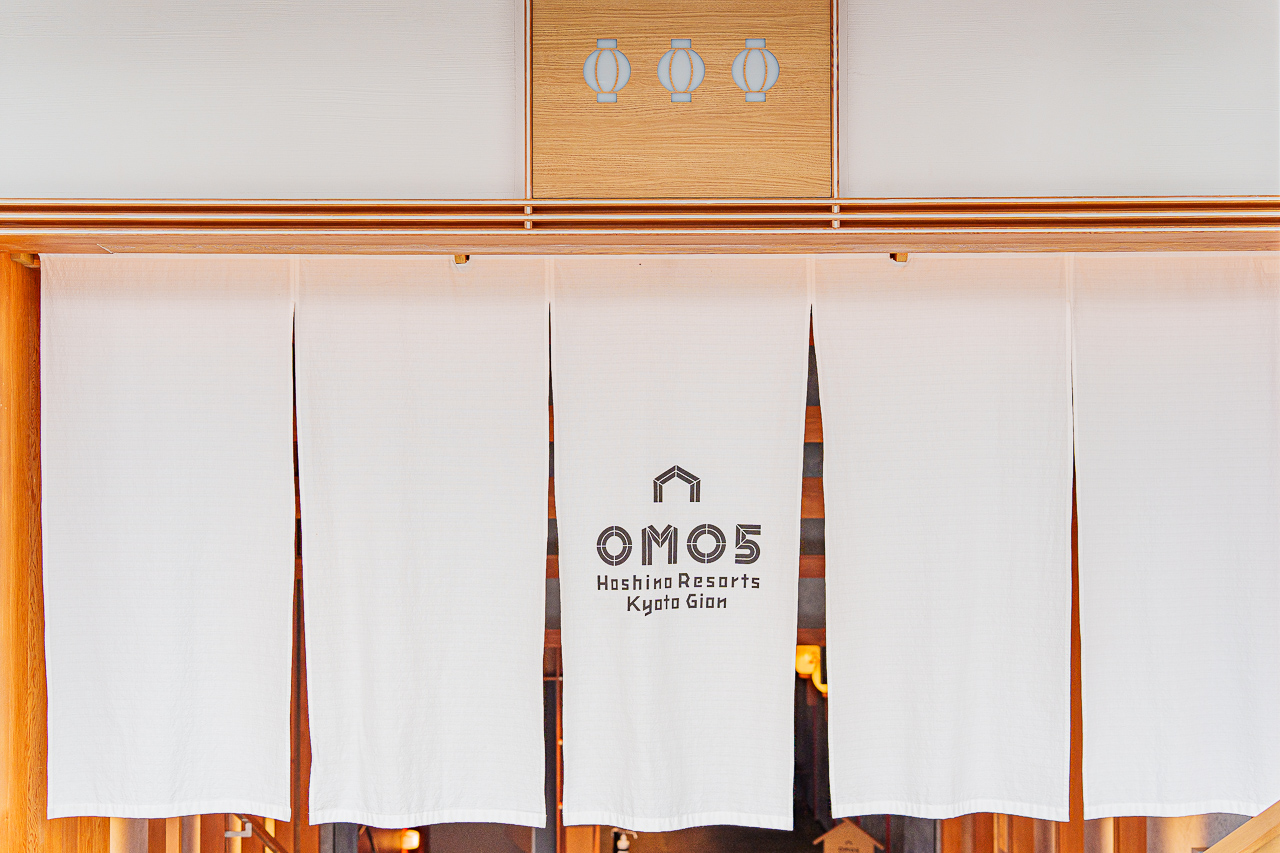
The entrance has a fabric curtain resembling those often seen at shrines.
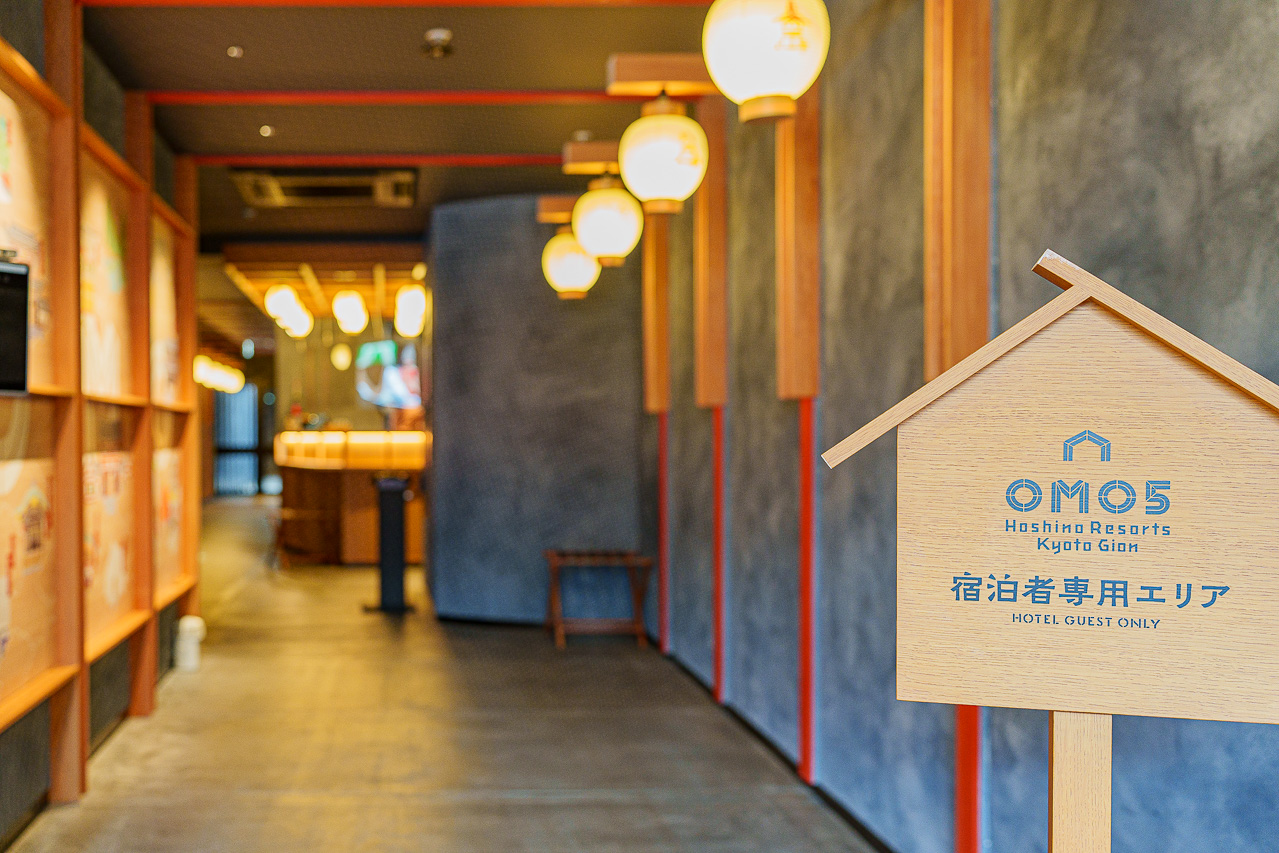
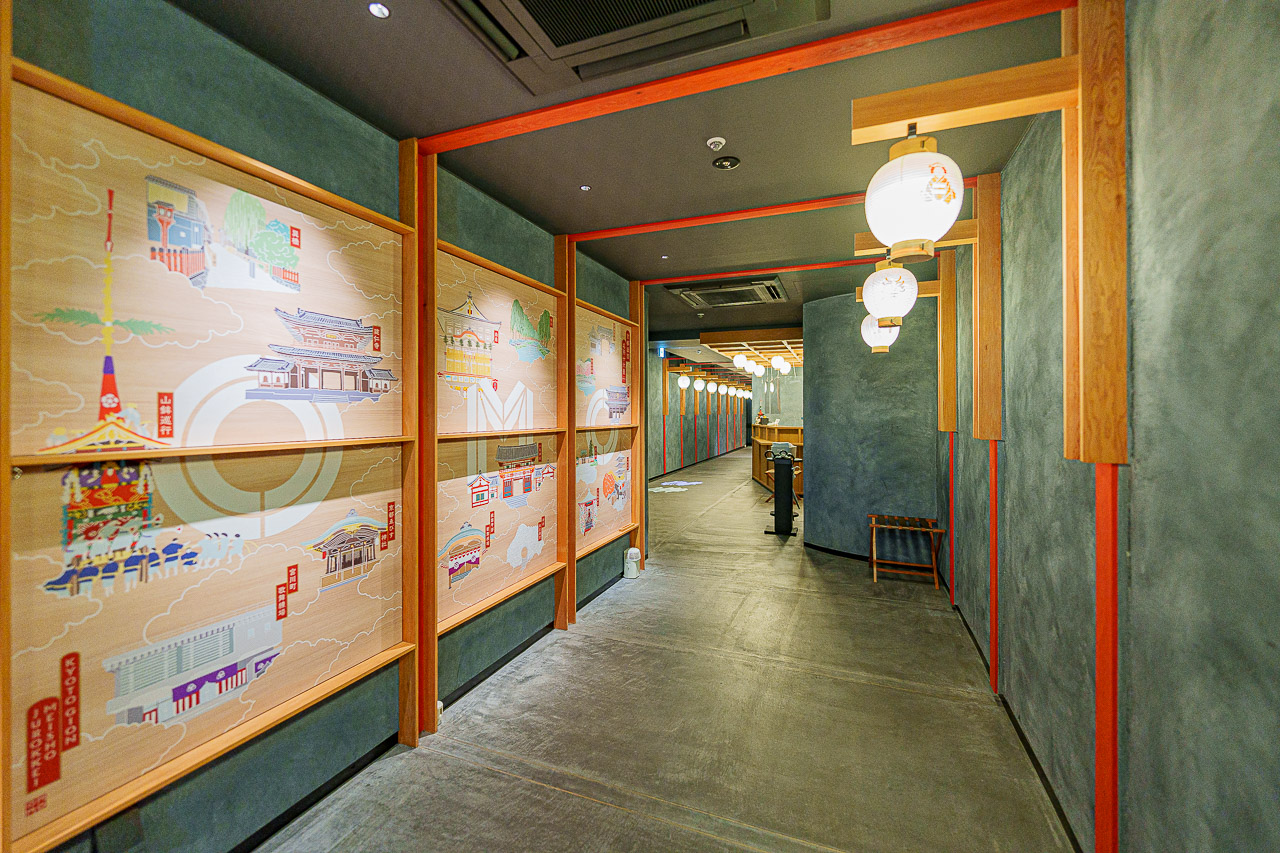
Its torii-like colors and lanterns made entering feel a little like visiting a shrine.
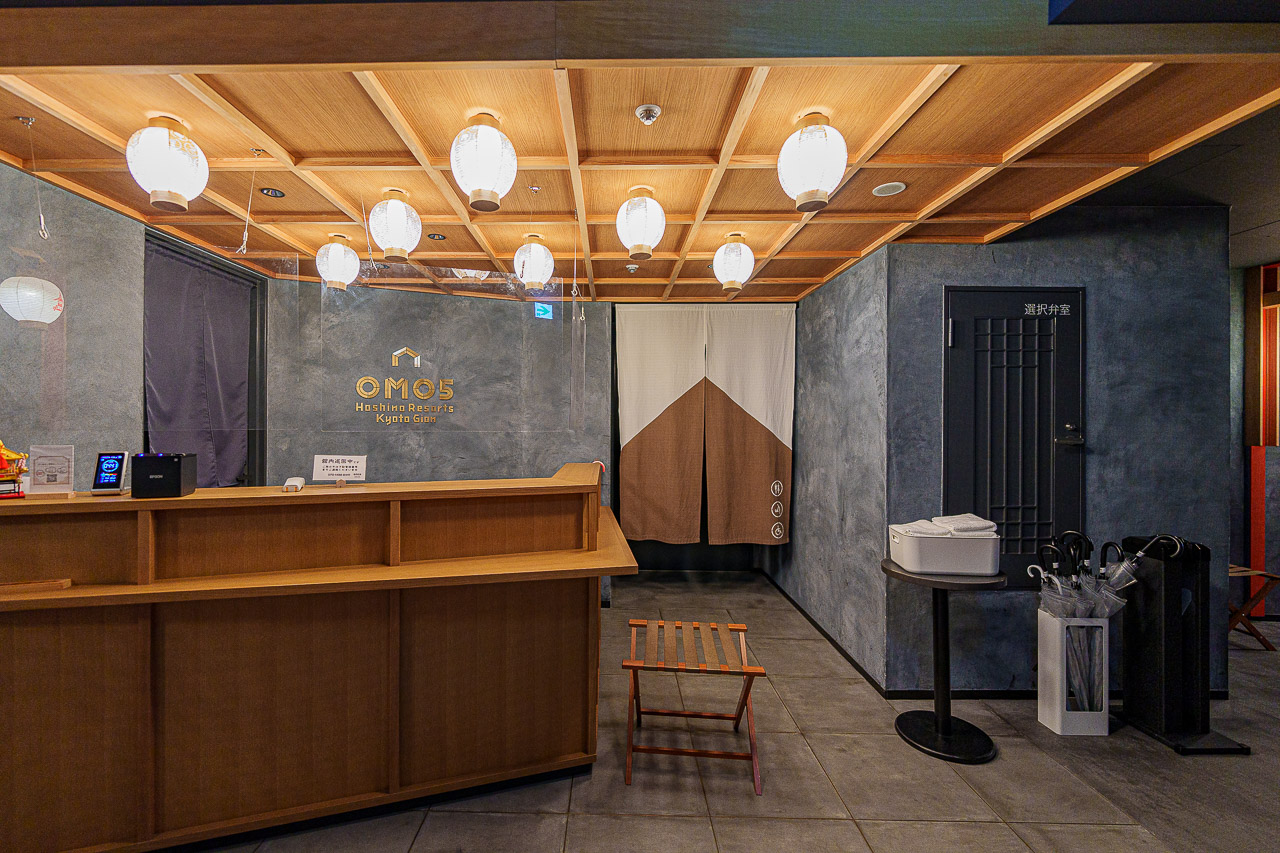
As at other OMO properties, tablet check-in was straightforward.
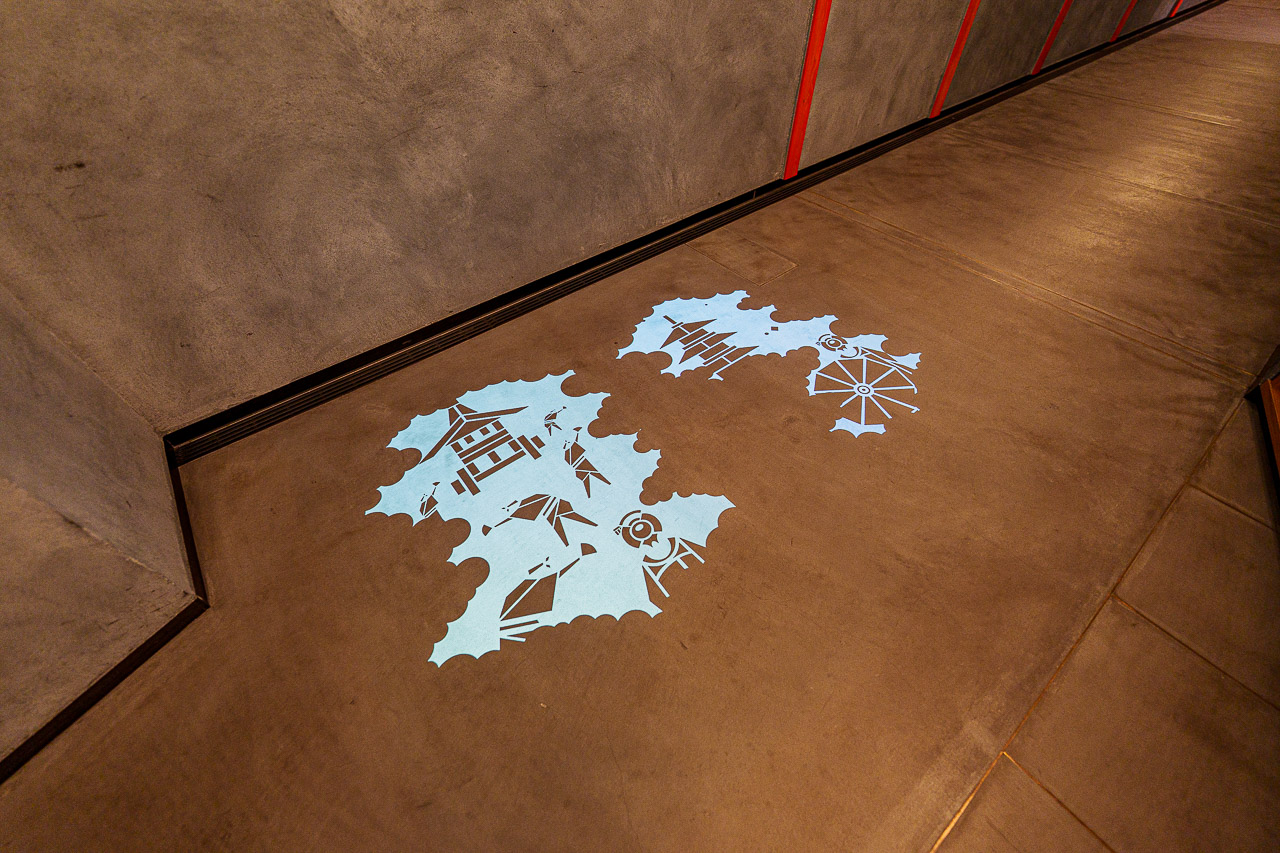
Cute projection mapping on the reception floor presented Gion's history.
At the city-exploration OMO brand, the number indicates the service level.
The numbers 1, 3, 5 and 7 indicate an increasing range of services and facilities.
For example, the source compares OMO1 to a capsule hotel and OMO7 to a full-service hotel with a restaurant and café.
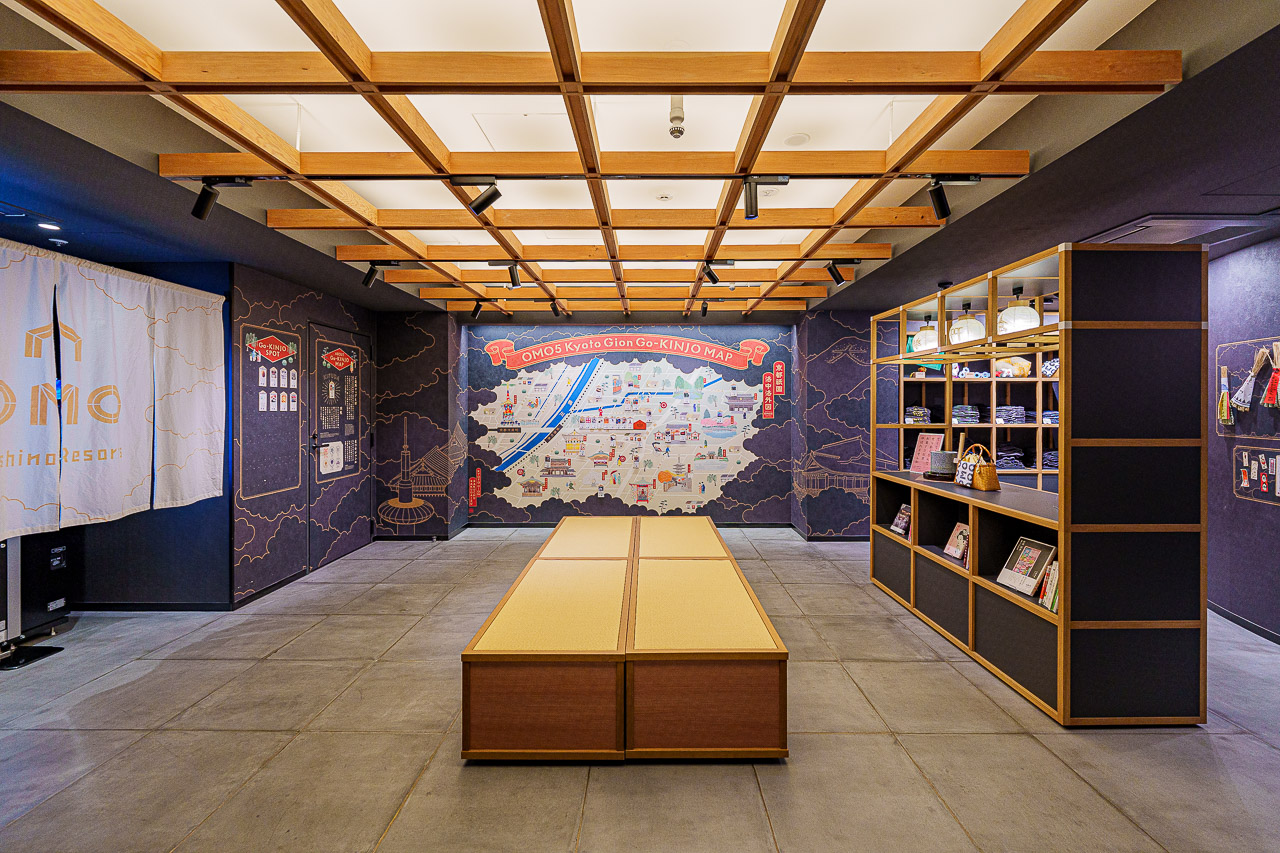
A central part of OMO is its shared OMO Base.
Like a lounge, it lets travelers rest or chat about the next day's plans.
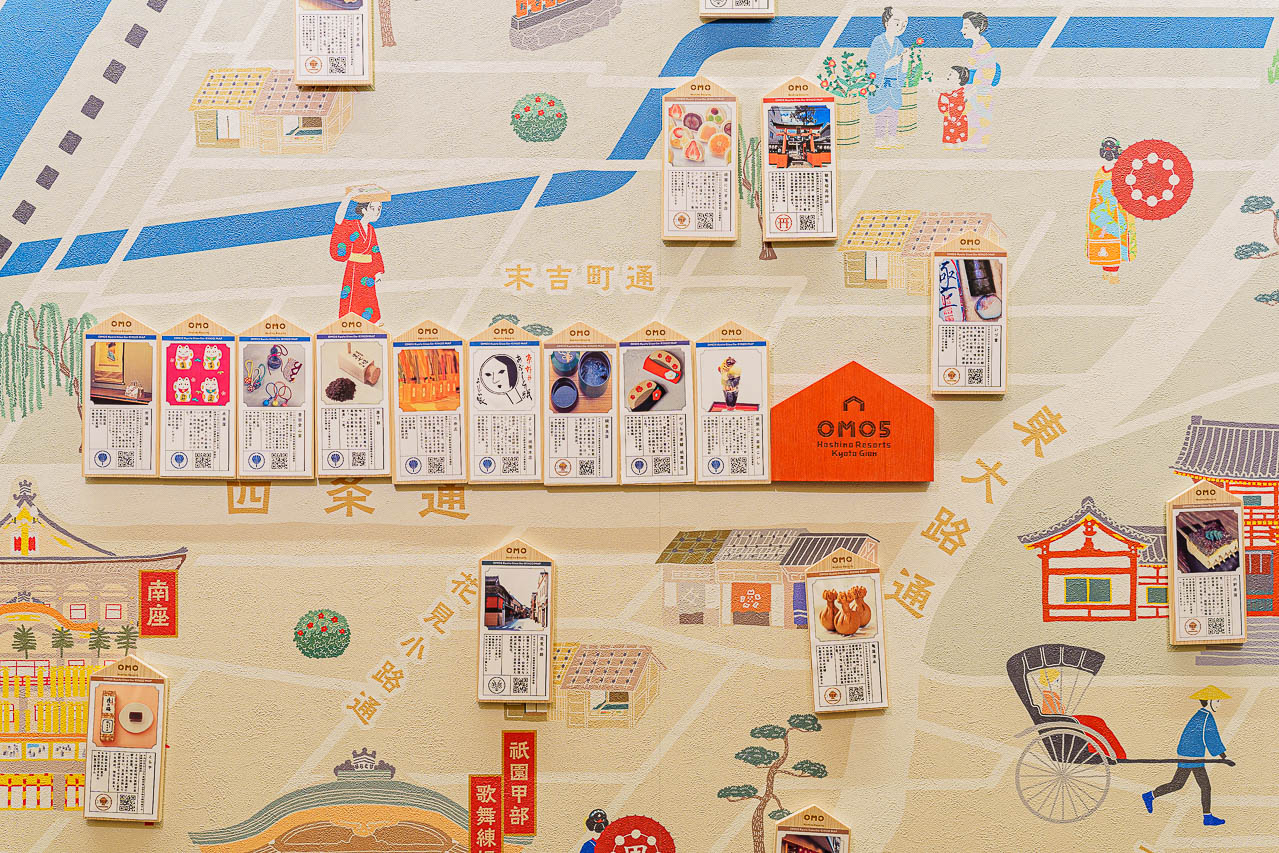
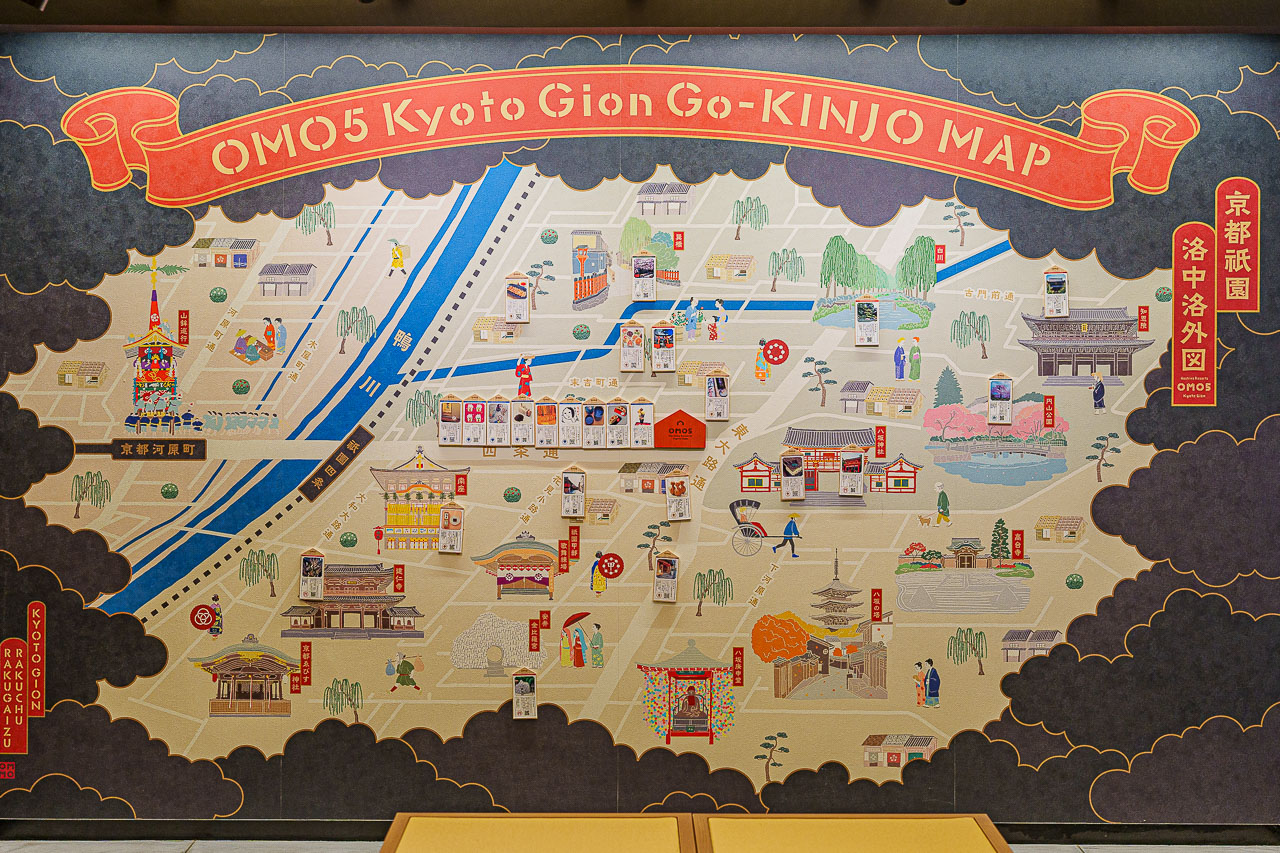
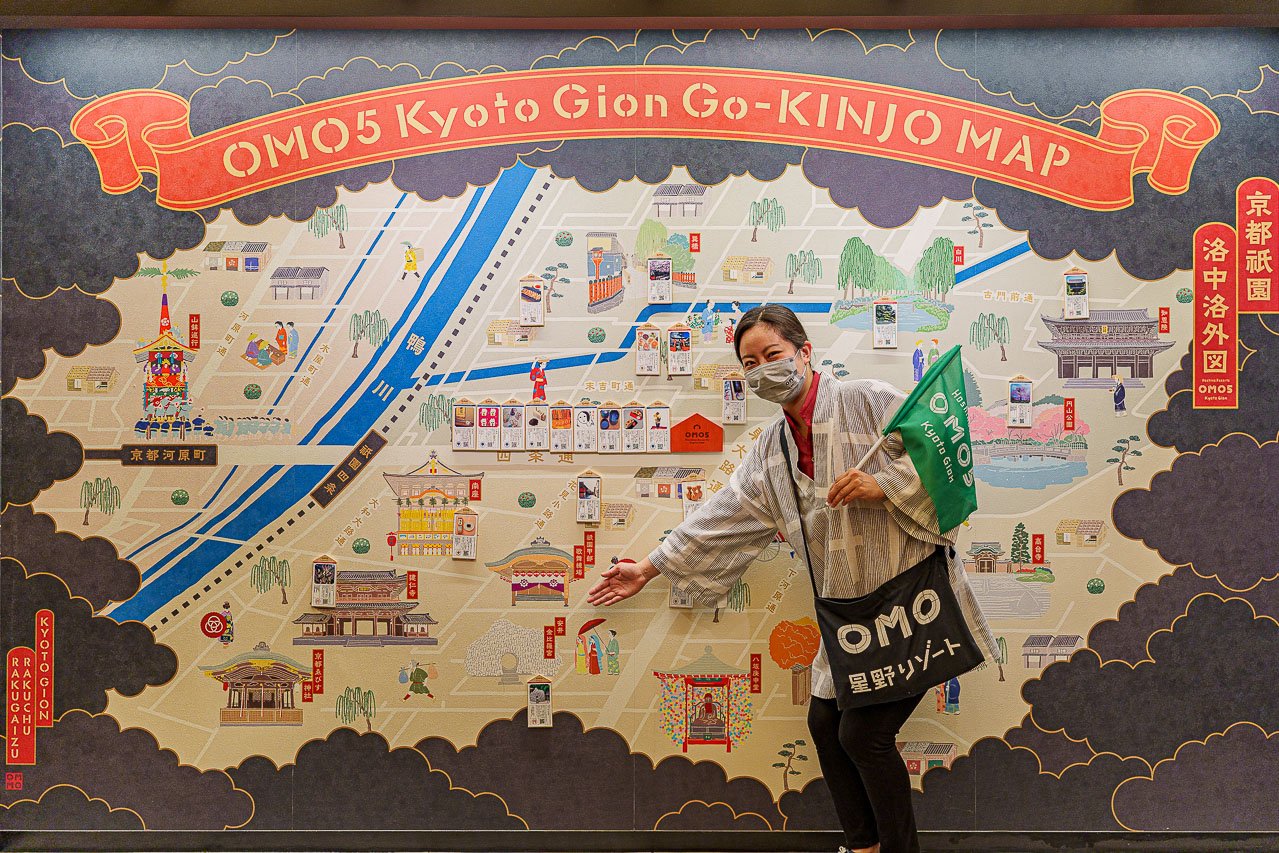
Its neighborhood map marks nearby restaurants and sights.
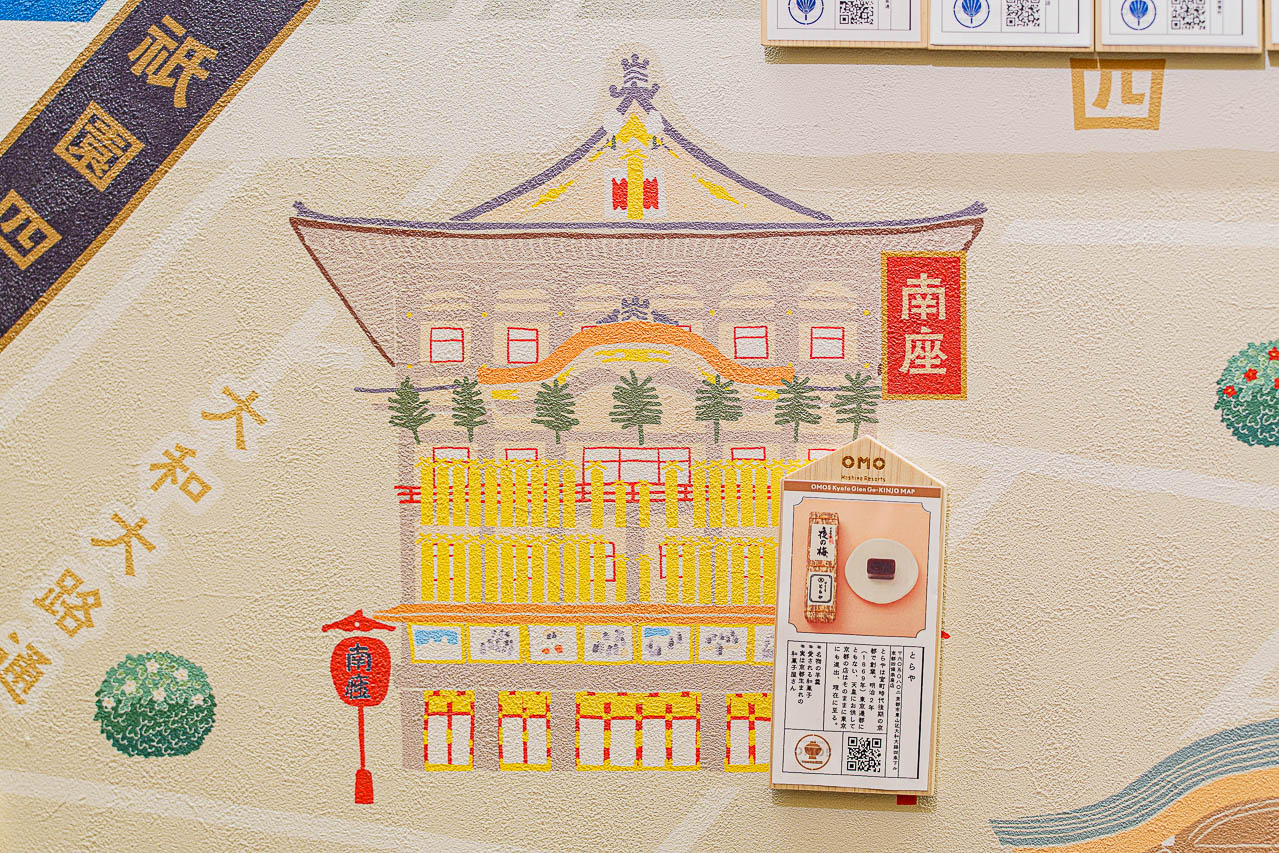
Photographs show what each place is like, and QR codes give immediate access to location information.
Staff-discovered spots range from recommended Japanese-sweet shops to souvenir stores and restaurants.
Asking staff for their recommendations added confidence.
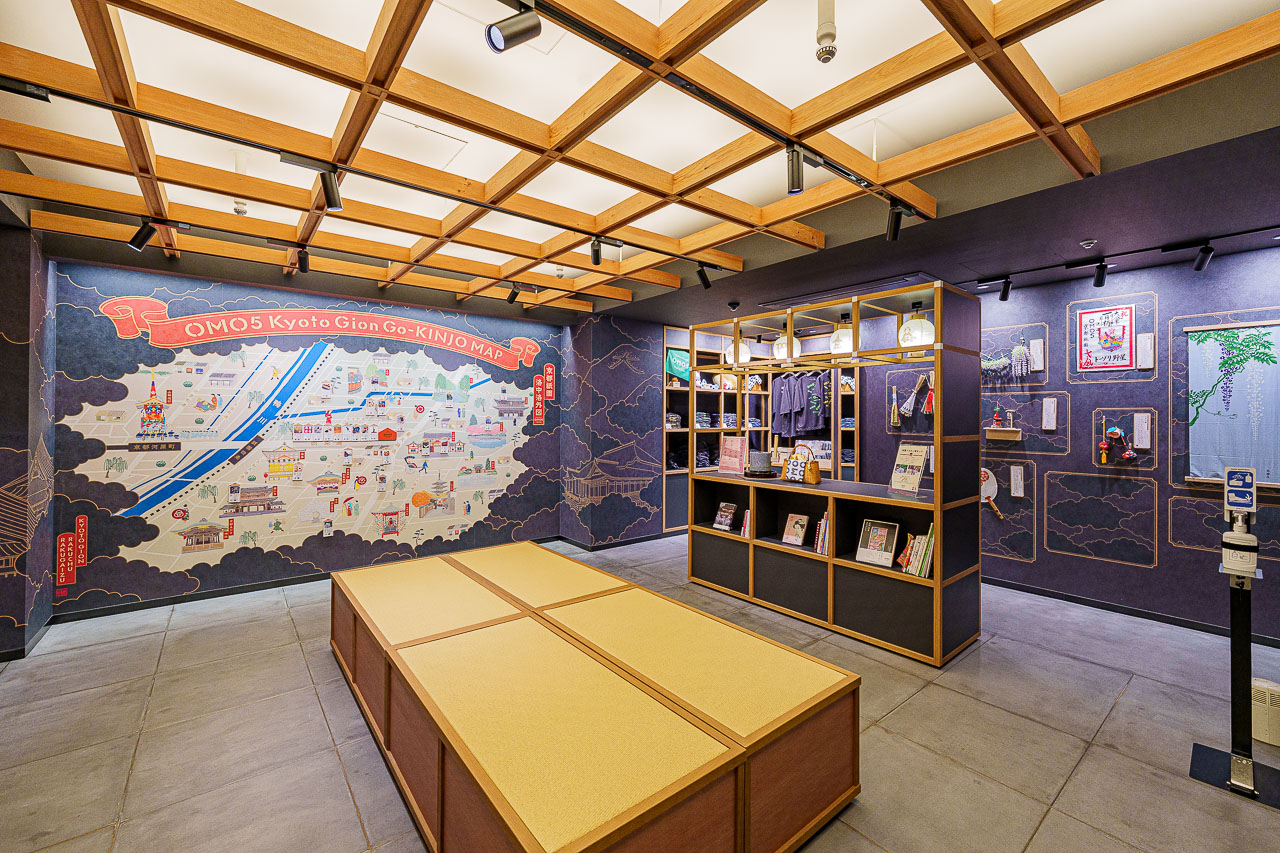
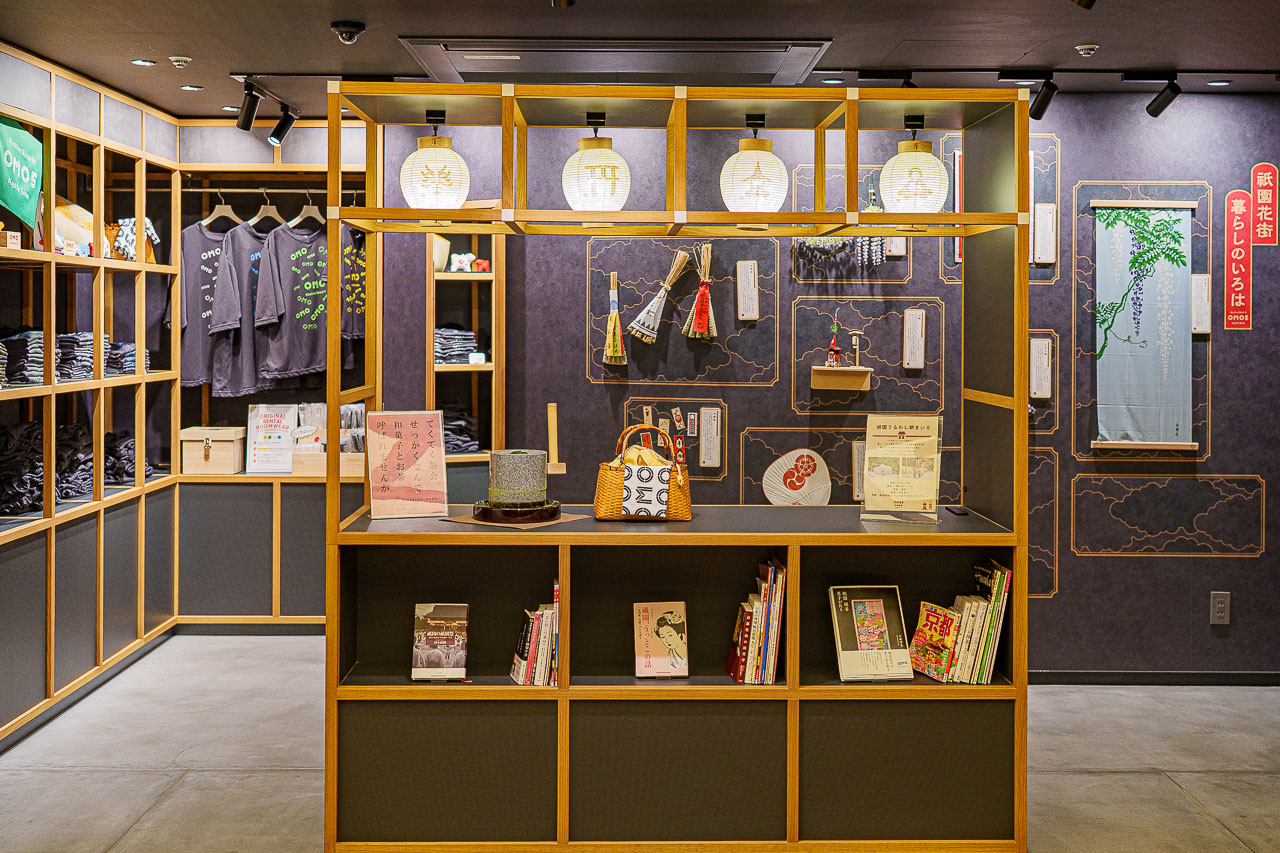
Each OMO hotel has a particular service in this account; at OMO5 Kyoto Gion, guests could learn about tea practice.
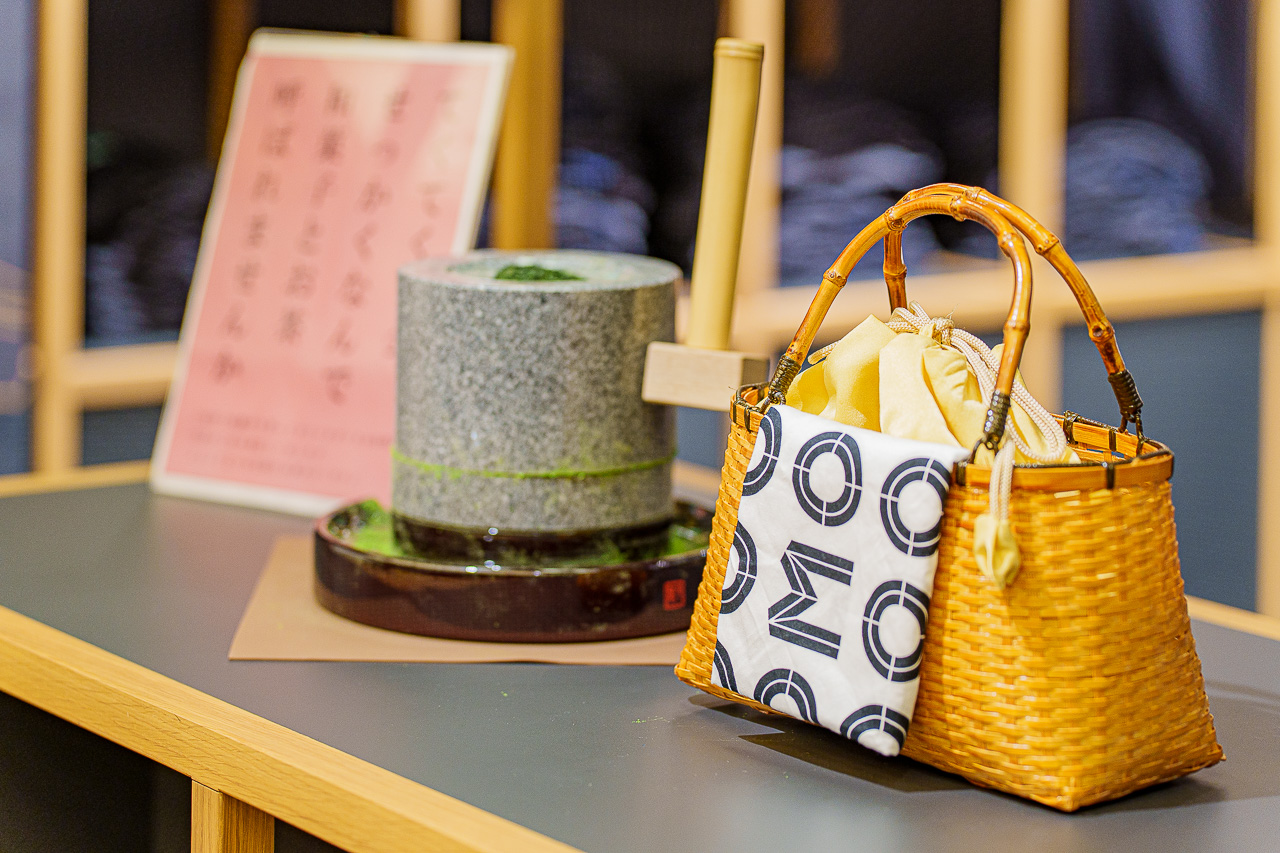
The Gion Tekuteku Tea Gathering took place at the OMO Base from the 15:00 check-in time until 18:00.
Guests who brought Japanese sweets, including ones chosen from the neighborhood map, could borrow a matcha set.
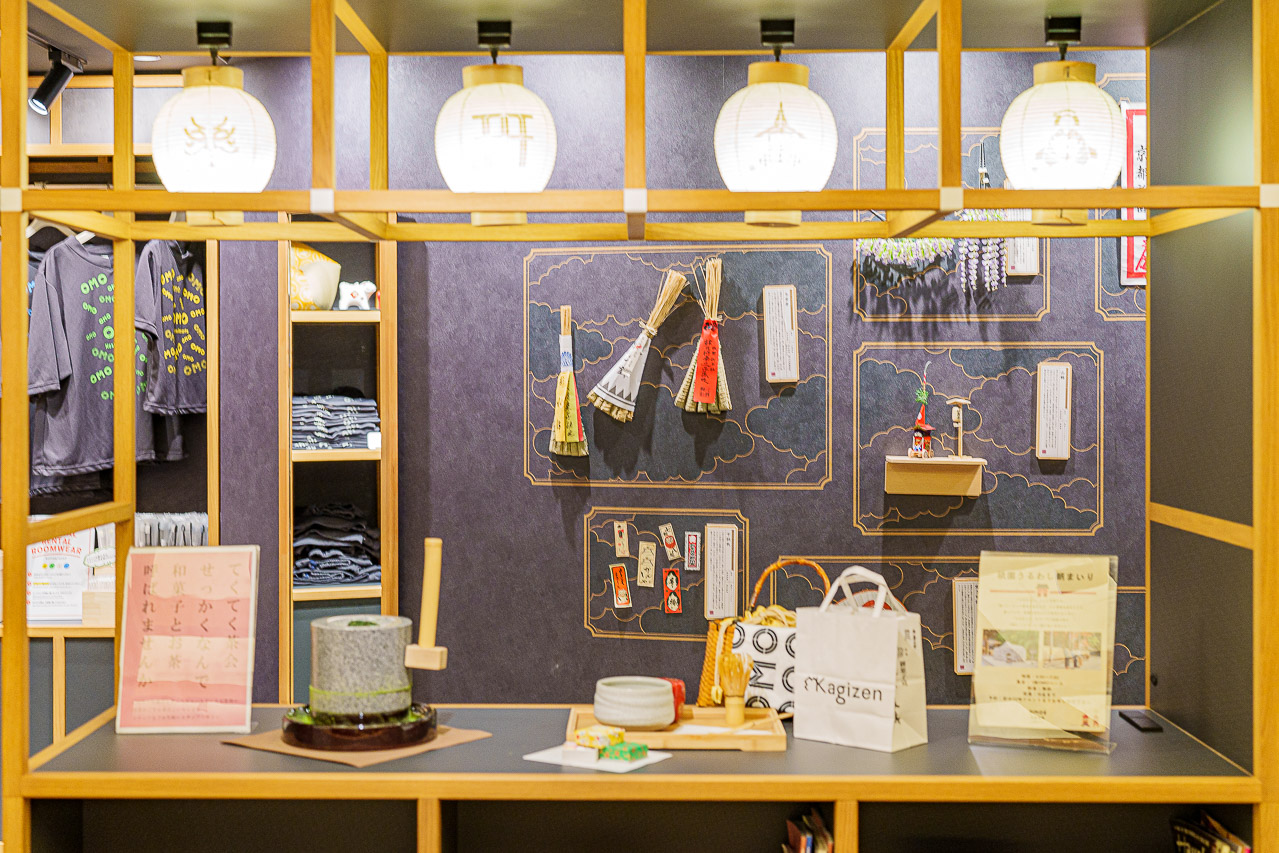
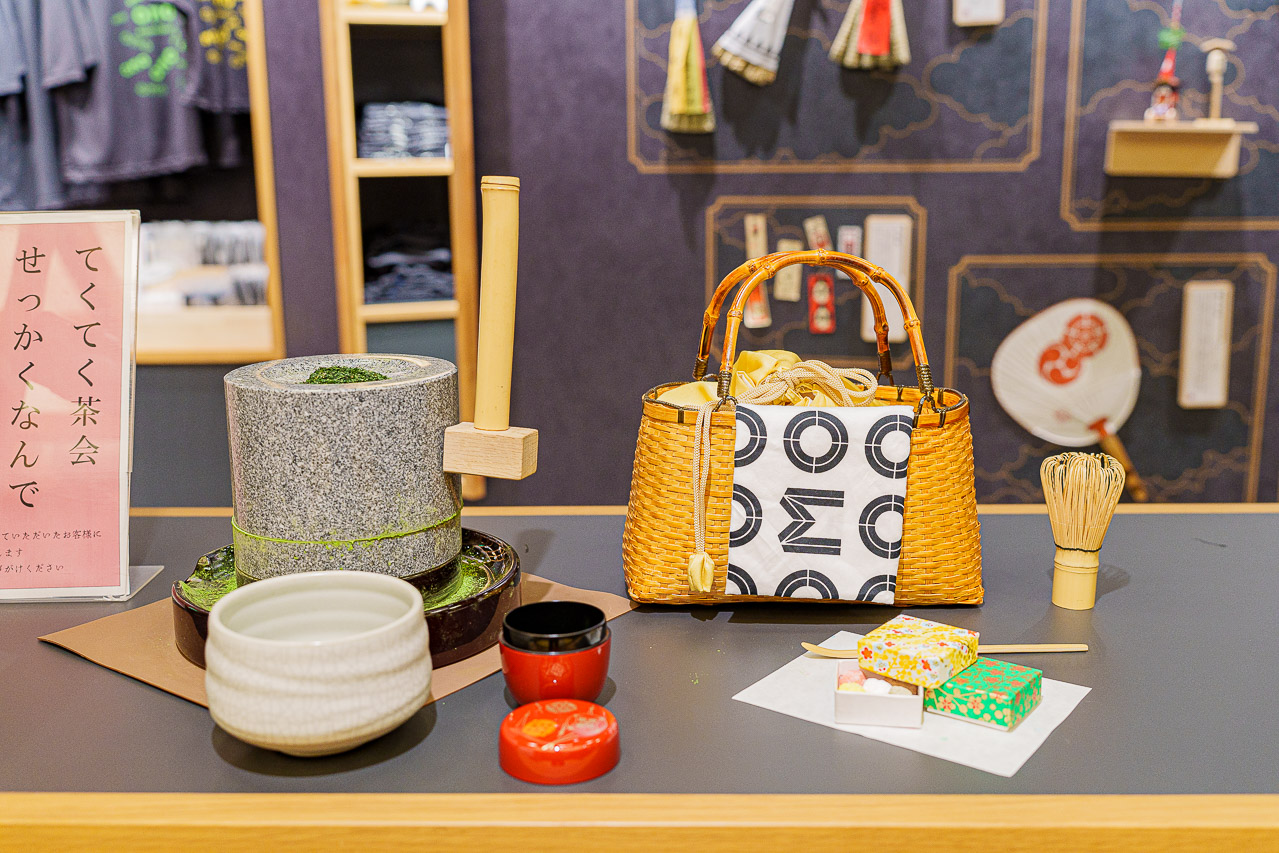
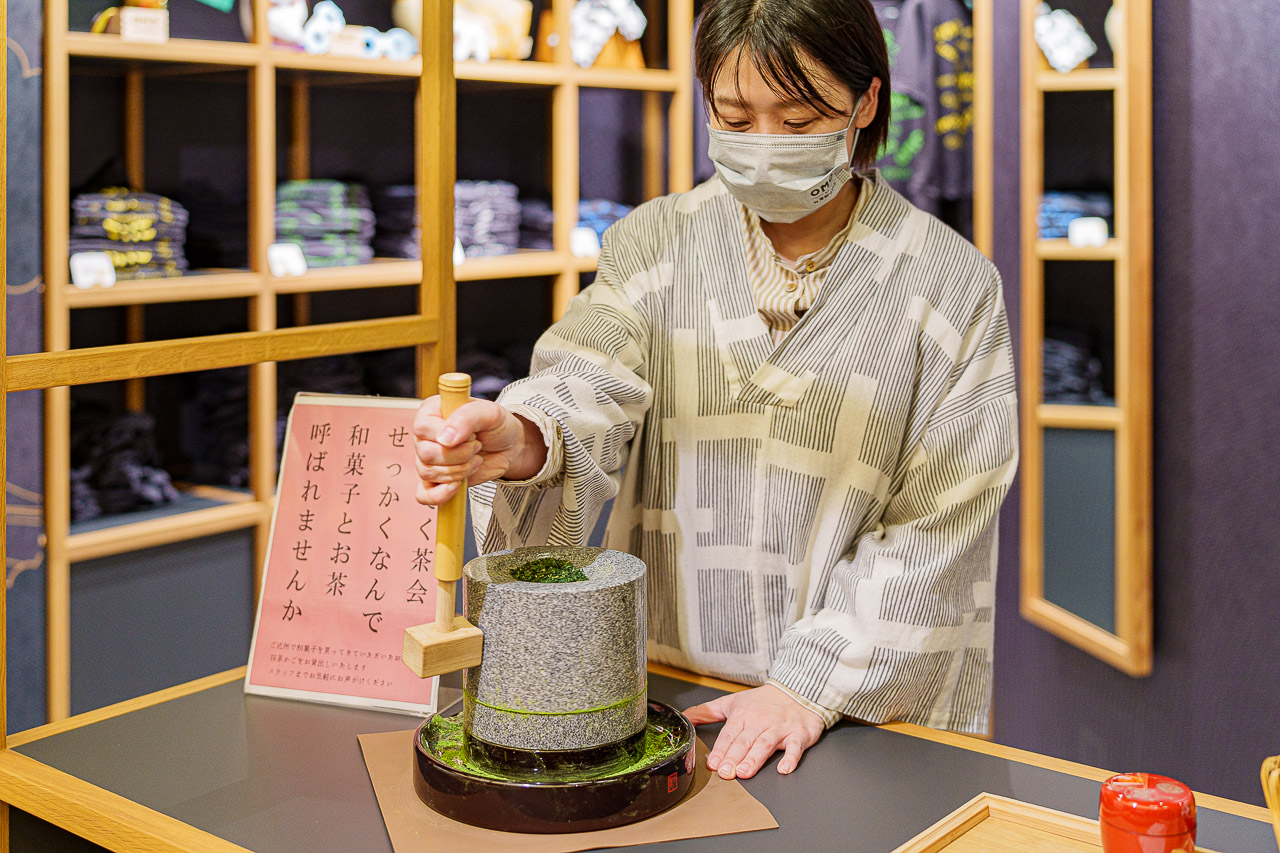
It was a chance to grind matcha myself with a stone mill.
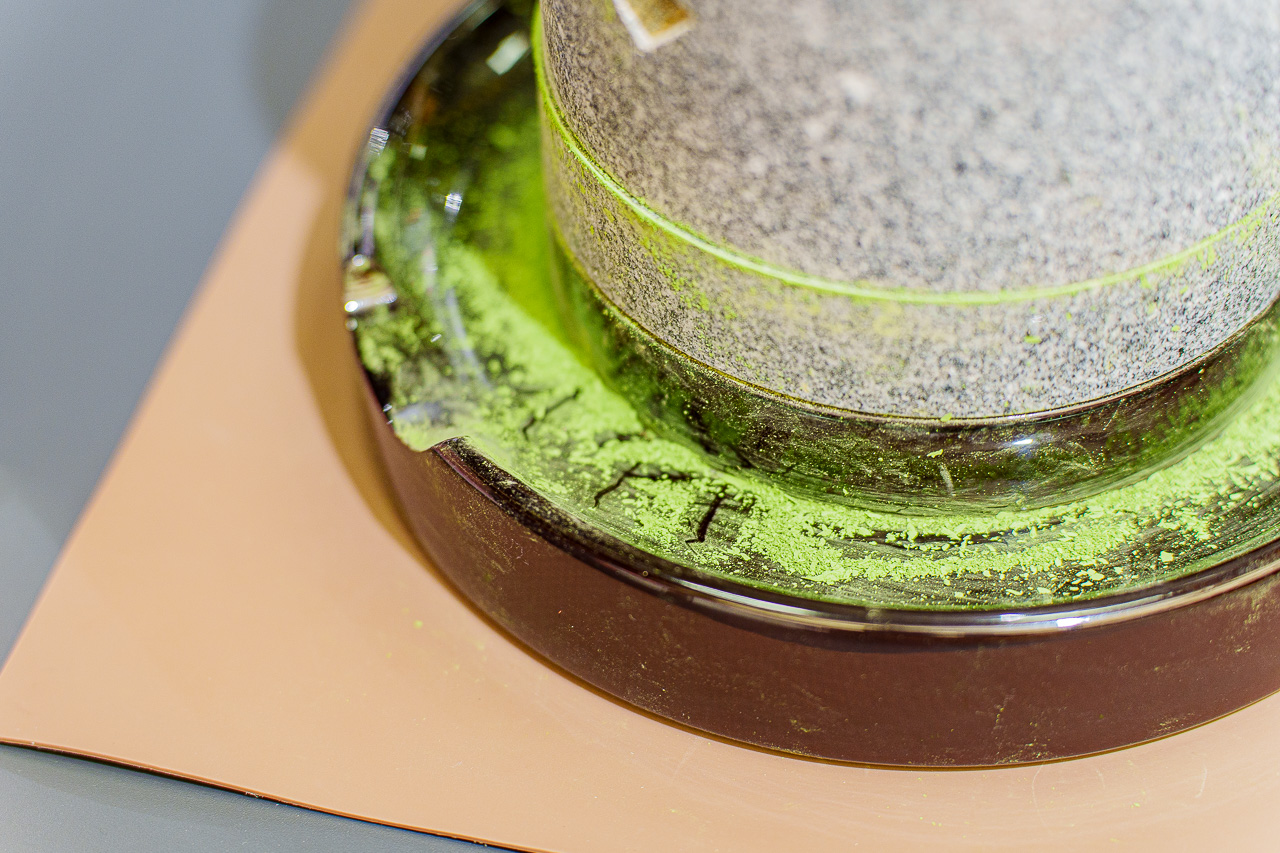
The explanation in the account says grinding too fast creates frictional heat and bitterness, while too slowly means a long wait for tea.
We were told to make about 1 revolution per minute.
It took more effort and ground less quickly than I expected.
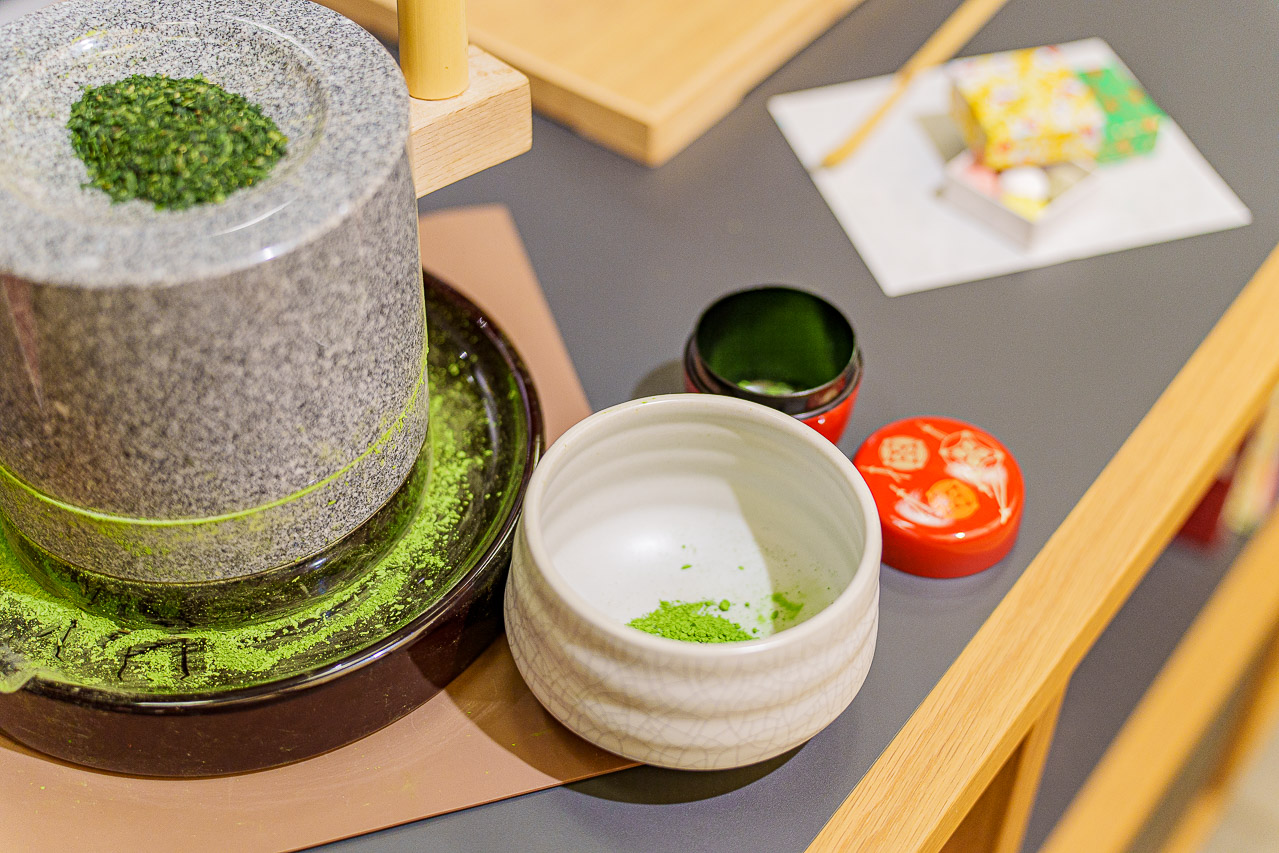
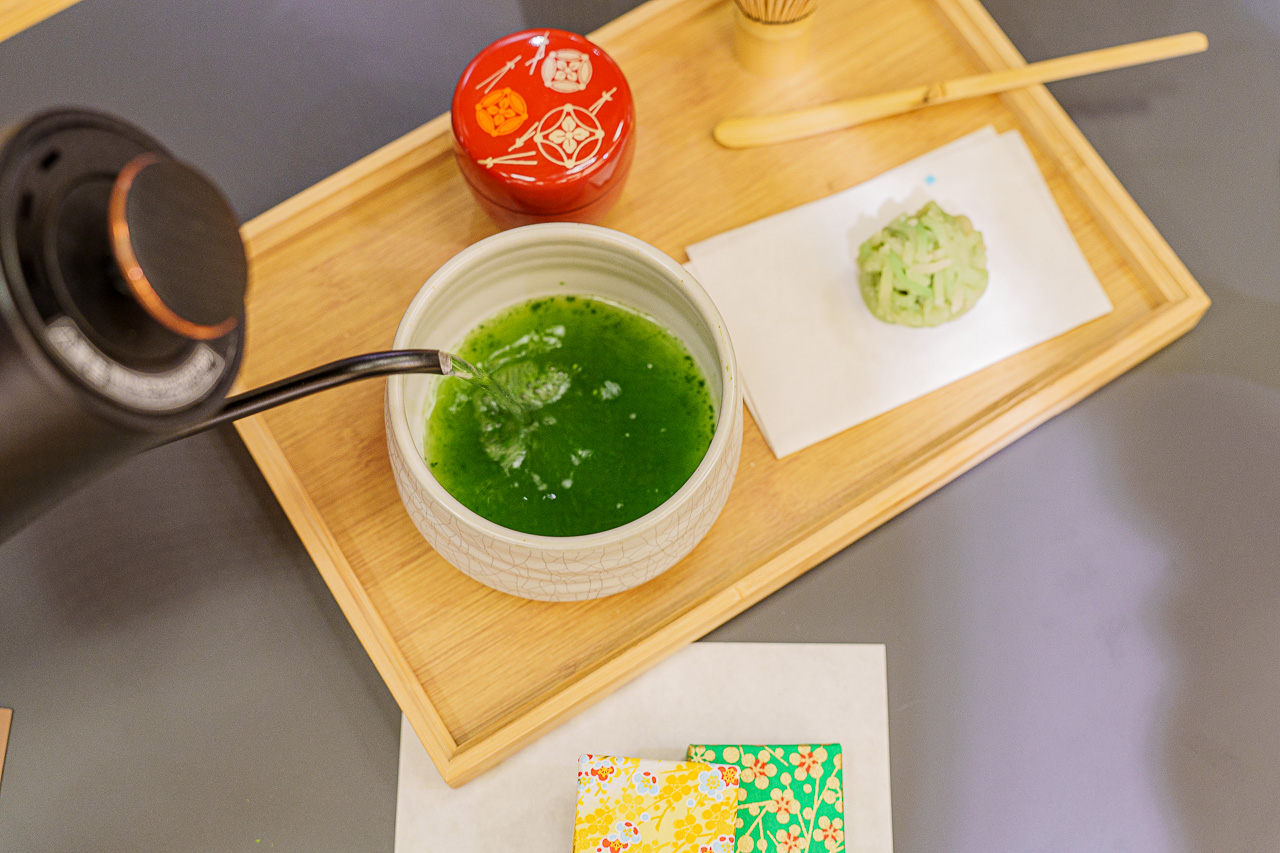
Grinding enough for a cup would take around 15 minutes. Instead, after trying for about 5 minutes, we were supplied with matcha already ground.
Perhaps because I had ground some myself, the aroma felt twice as good.
The tea set could be taken to the room and enjoyed there.
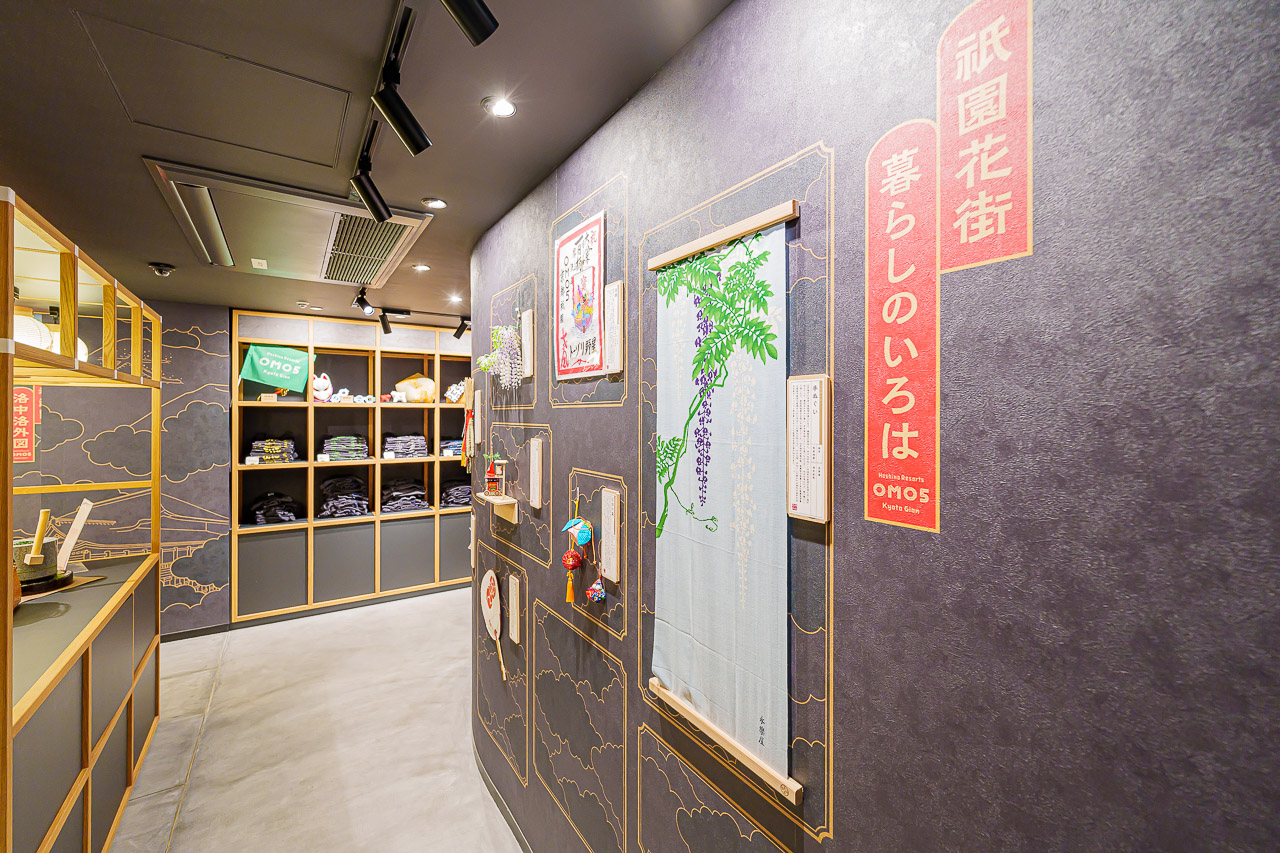
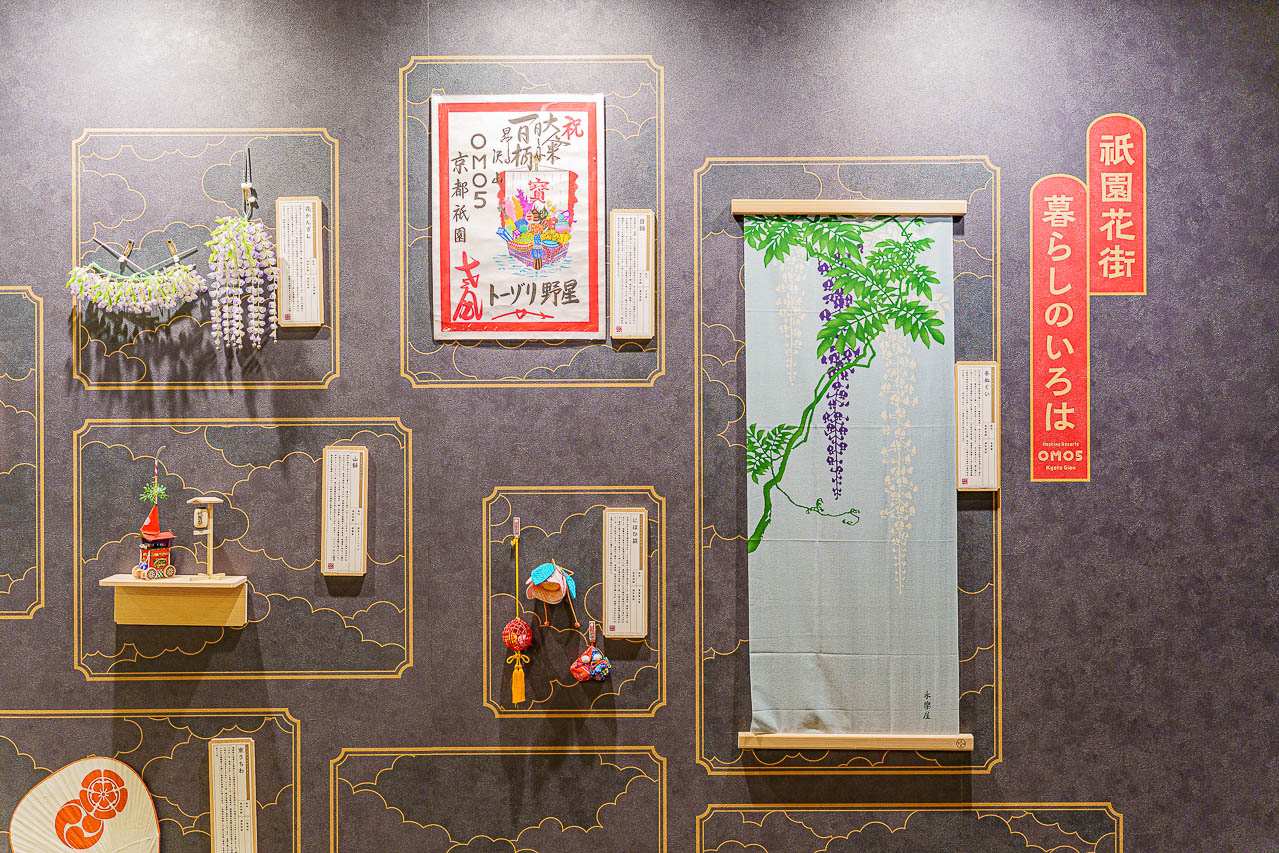
Objects associated with Kyoto hung along one wall.
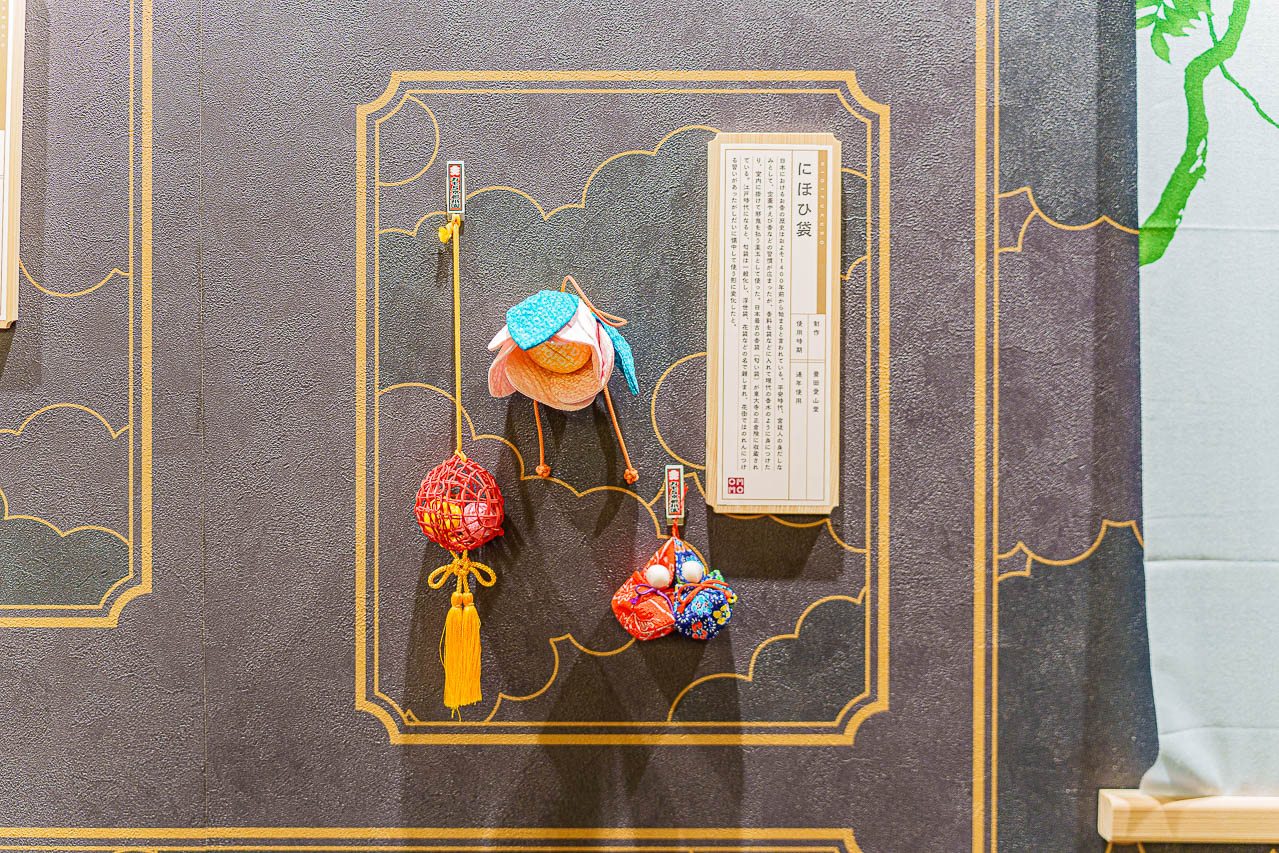
Scent pouches said to have been carried by people in old Kyoto.
With so many geisha in the neighborhood, I wondered if they had often used them.
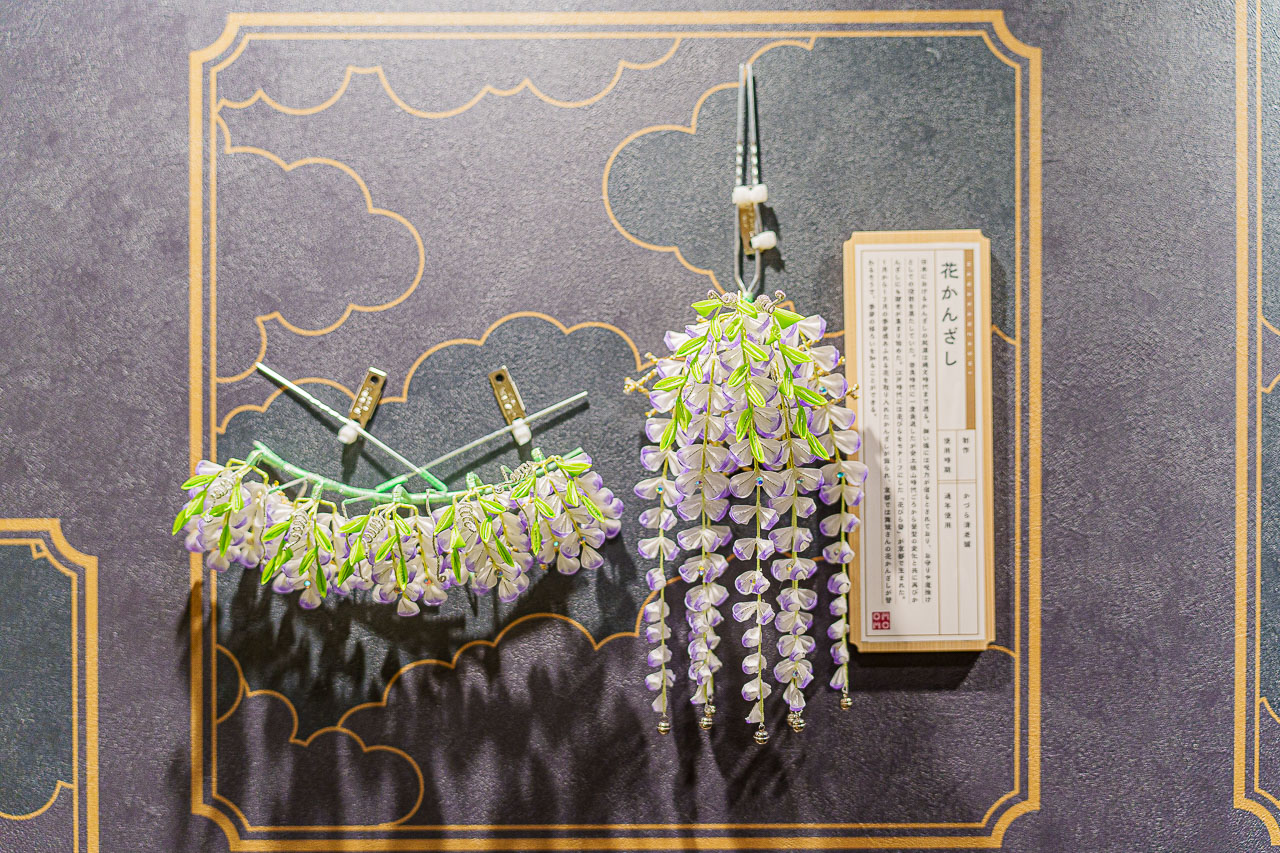
Hana-kanzashi floral hair ornaments used in geisha hairstyling.
The decorations reportedly change with the seasons.
For the season of this visit, they featured wisteria flowers.
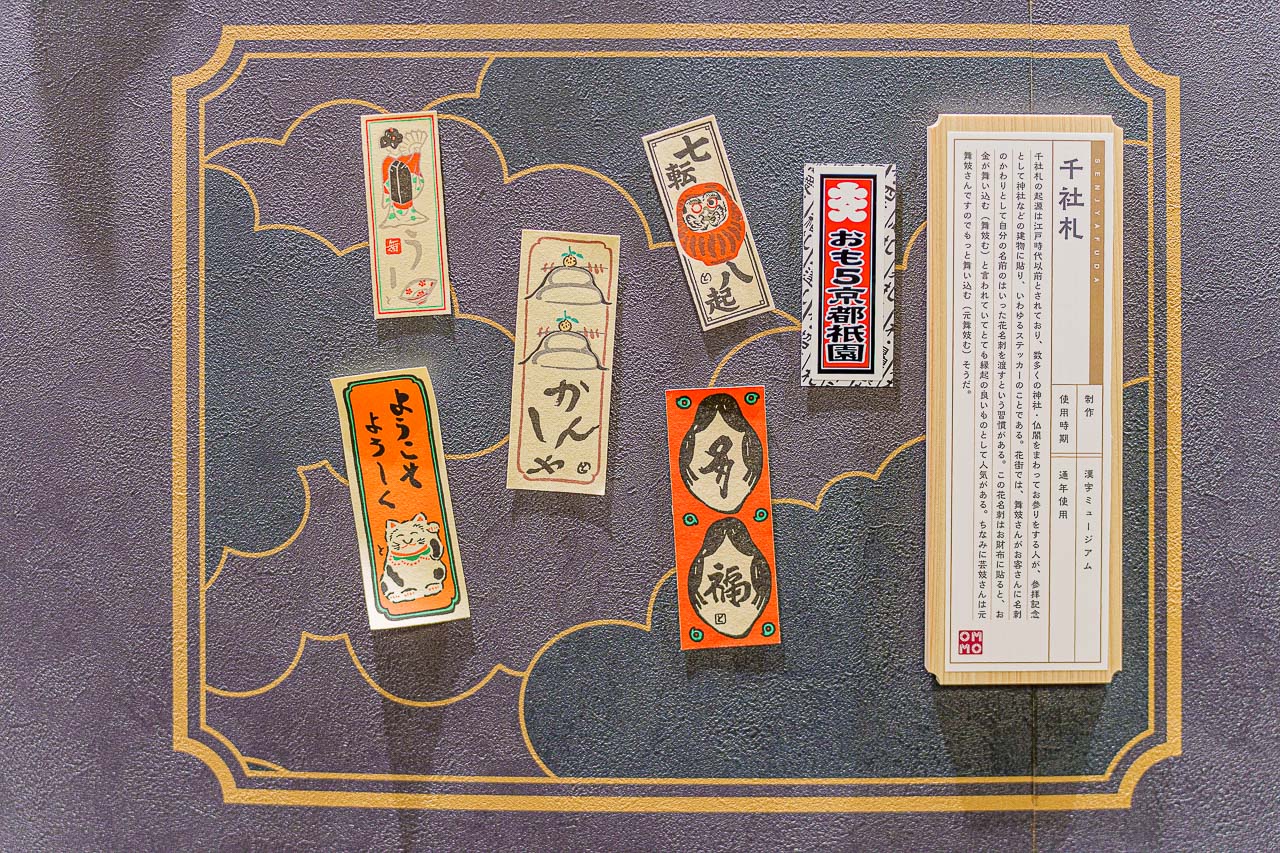
Senjafuda, described as the name slips once used like geisha calling cards.
Long stickers with entertainers' names are still sold in Japan, making me feel that this older custom continues in some form.
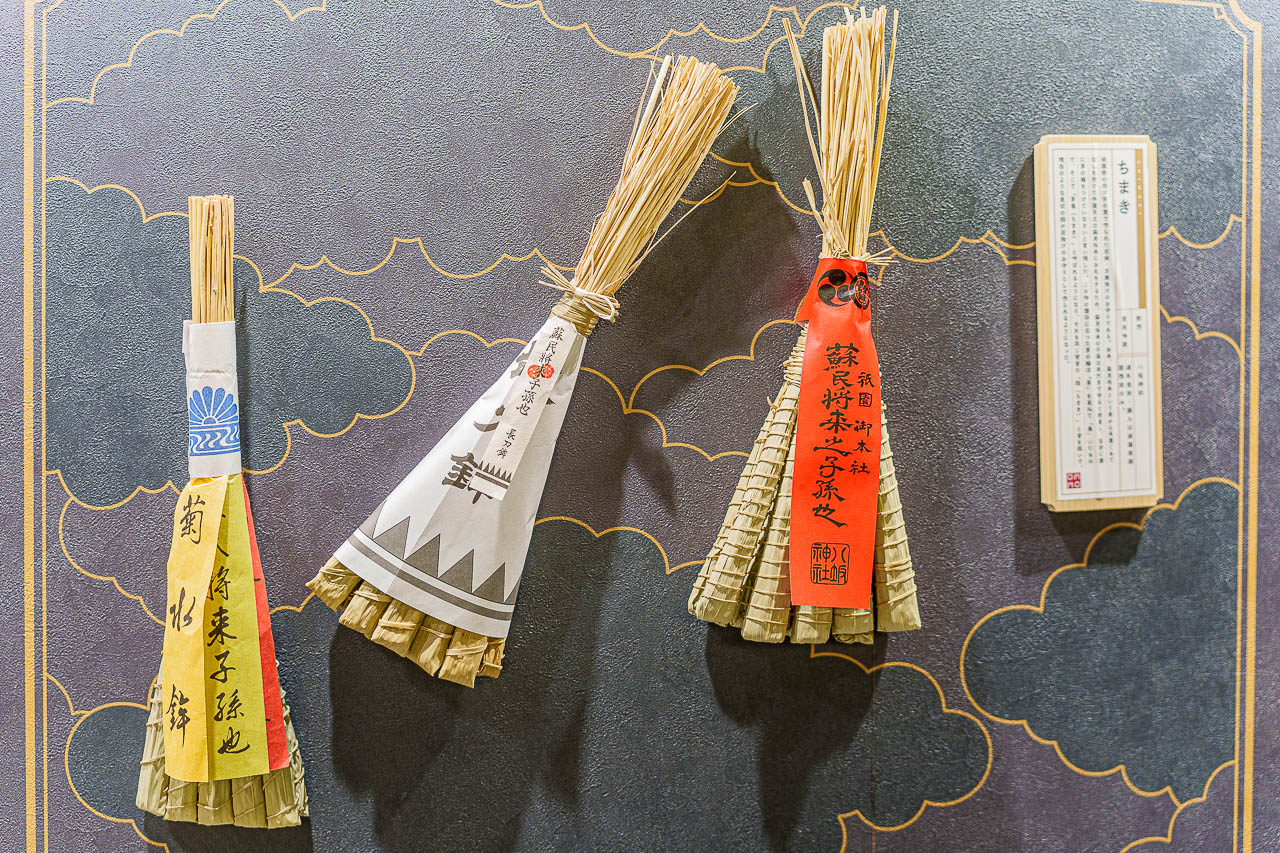
A decoration named Momaki in the source, said to bring good fortune and keep misfortune away.
The account says many Kyoto homes hang it on January 1 each year; that seasonal explanation has not been newly verified.
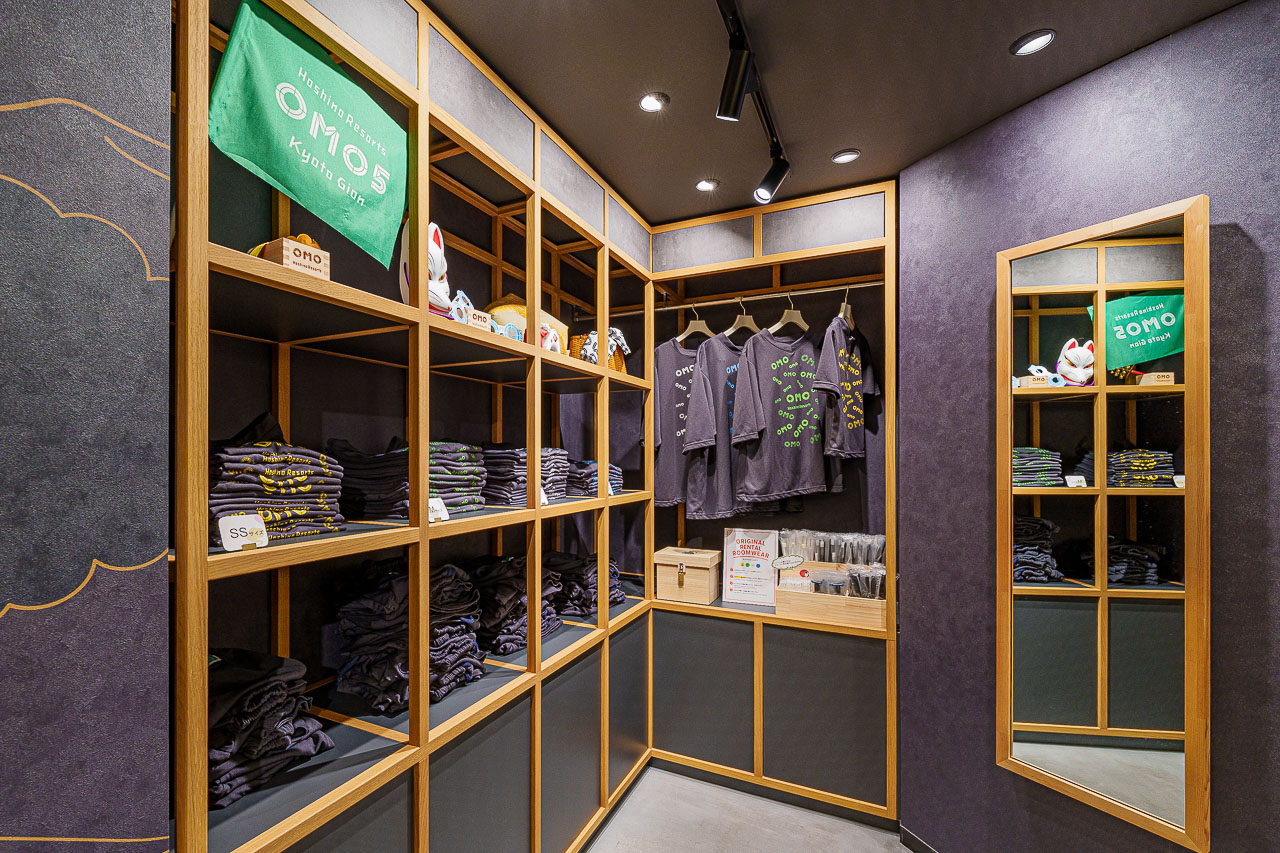
Pajamas for rental and amenities stood in a corner.
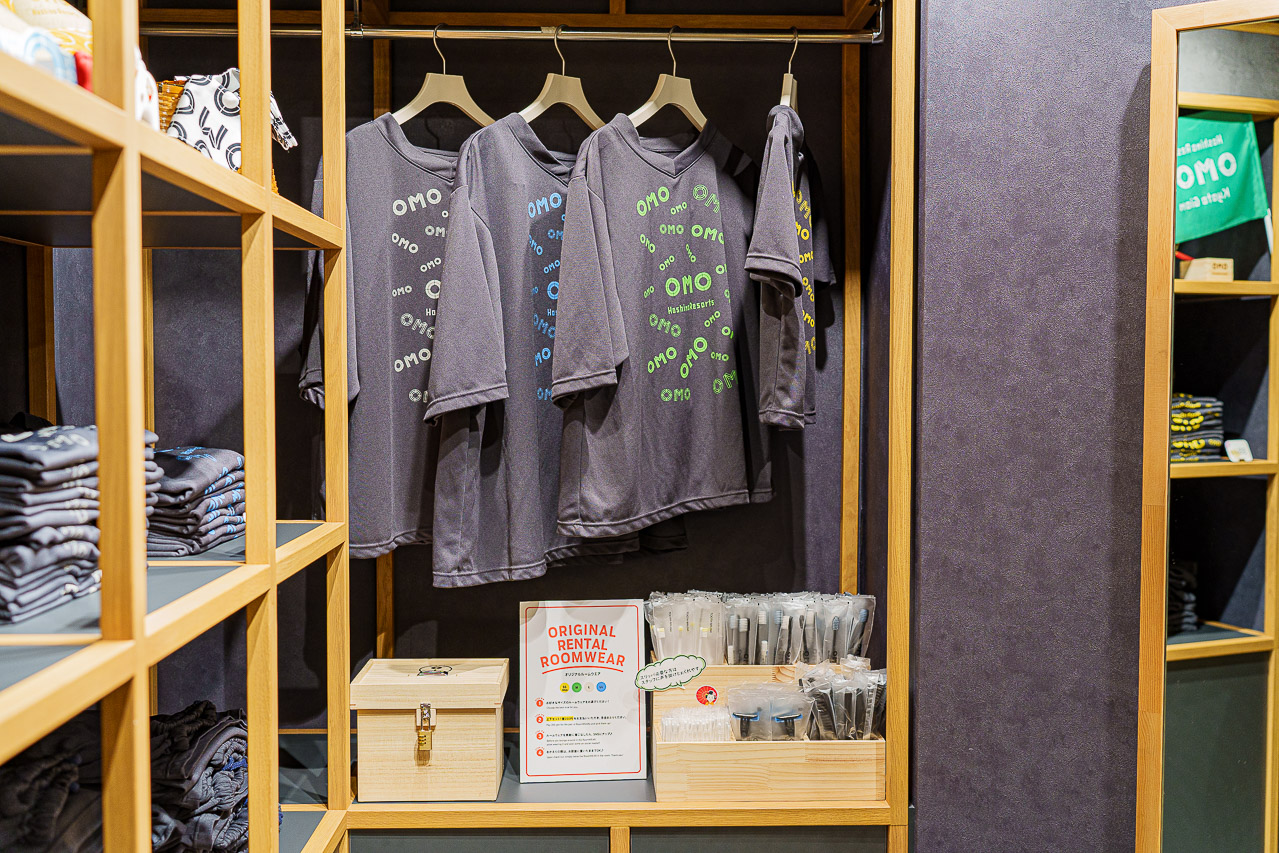
Pajamas cost ¥200. Their cute design made trying a rental appealing.
In this account, OMO rooms did not generally have amenities already supplied, so I picked them up before going upstairs.
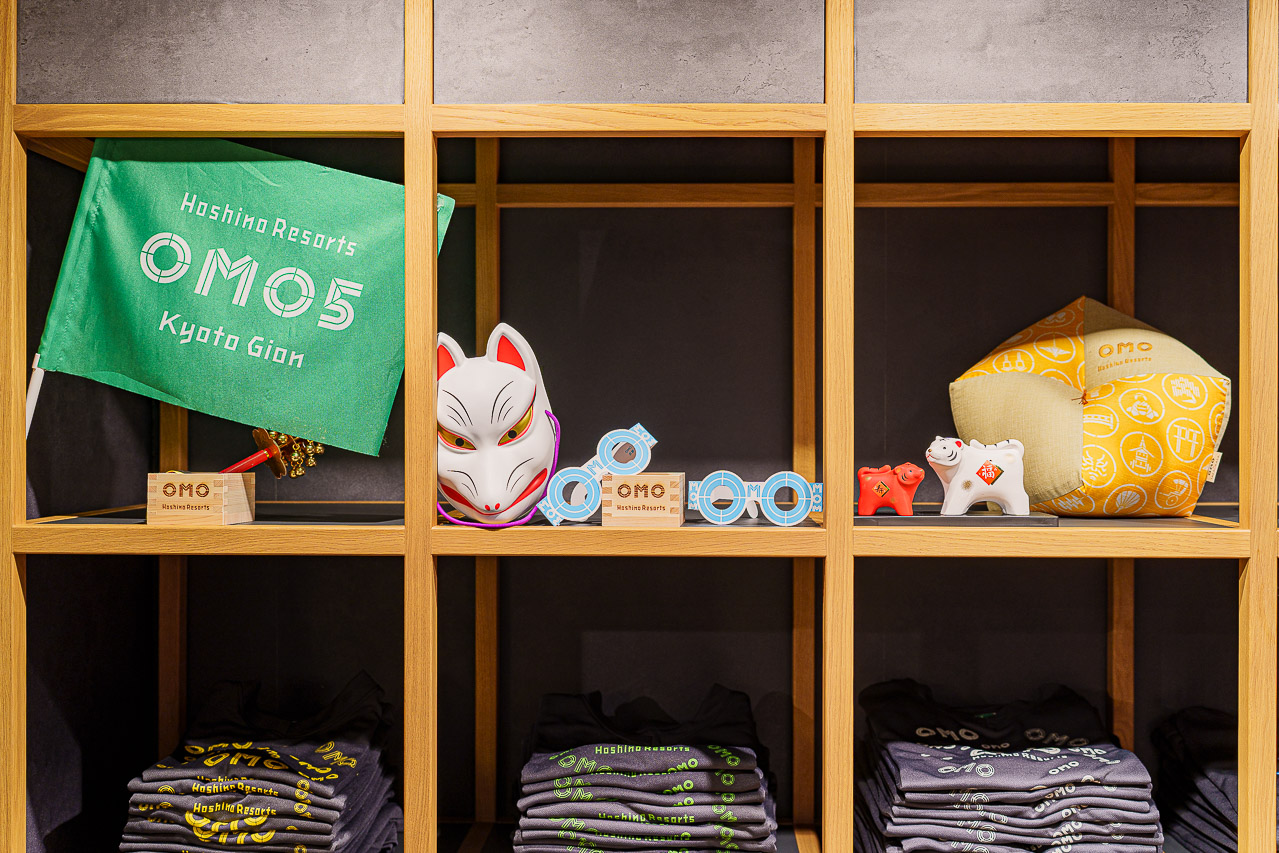
Fox masks, glasses and other objects seemed intended for some activity, though I did not know which.
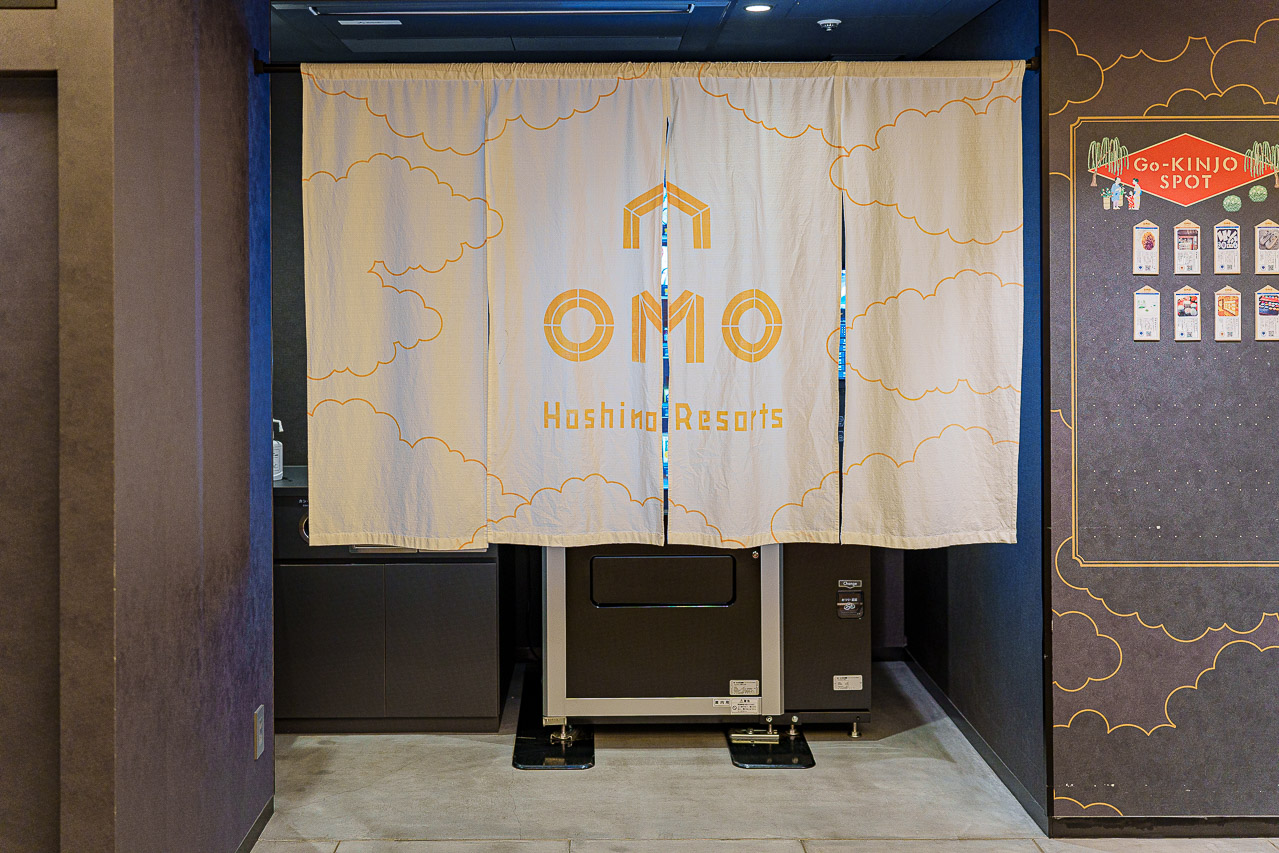
Beside them was a discreetly concealed space.
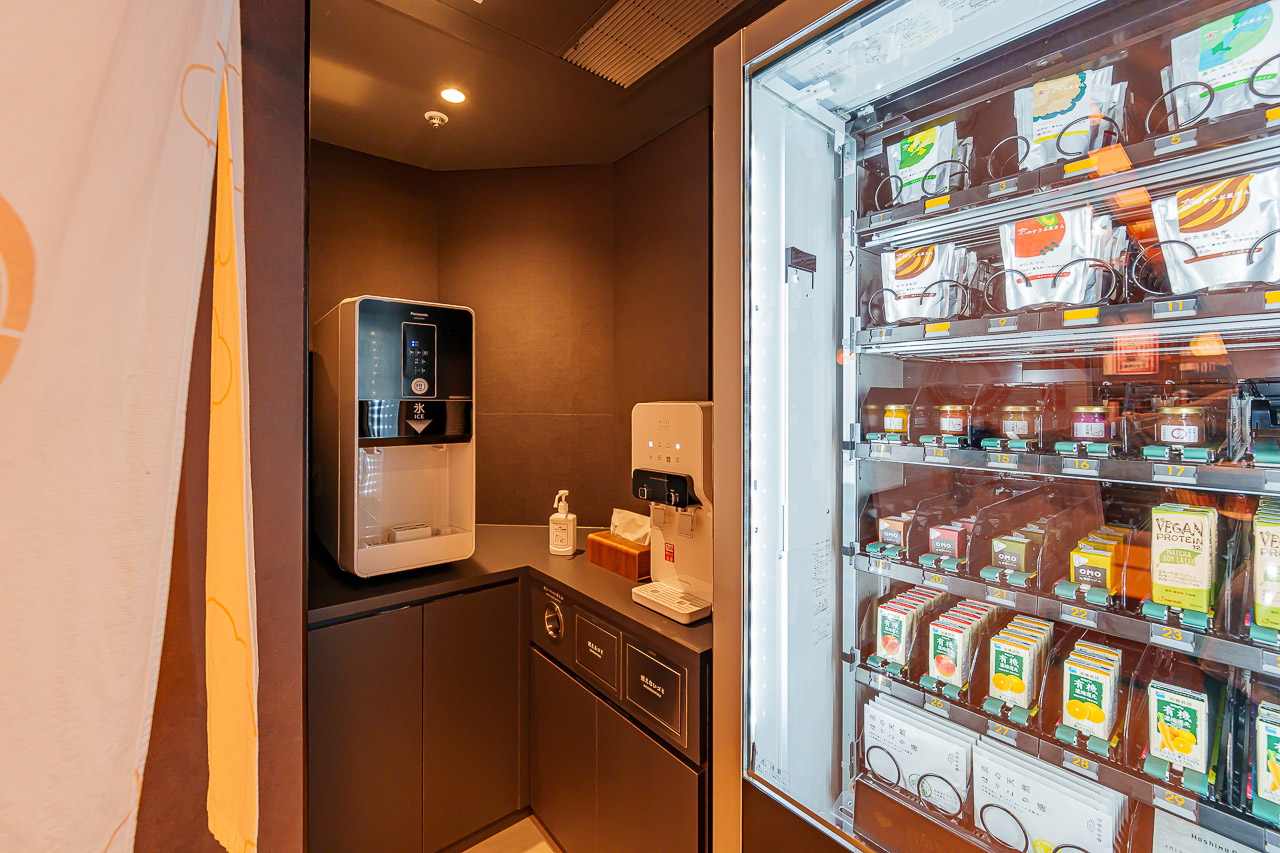
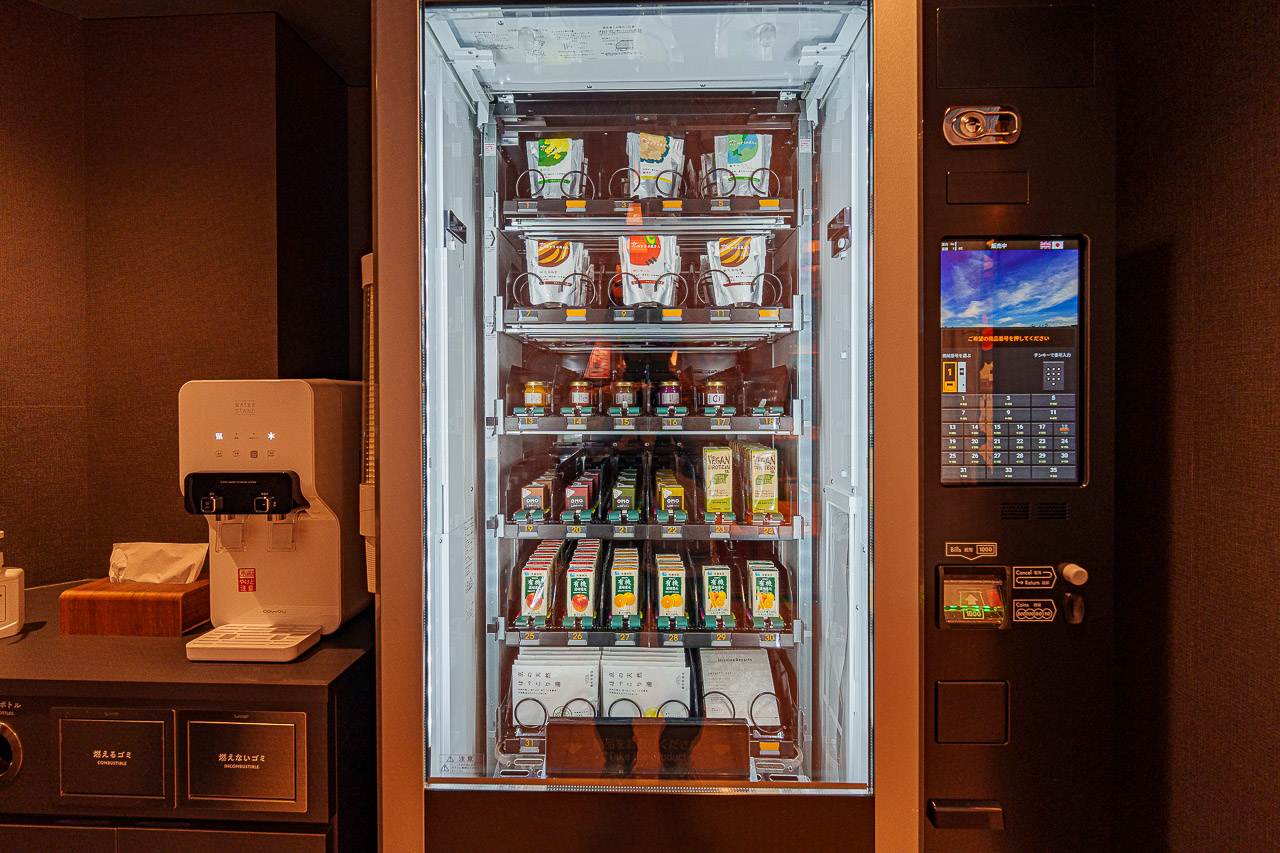
Inside were vending machines and a water dispenser.
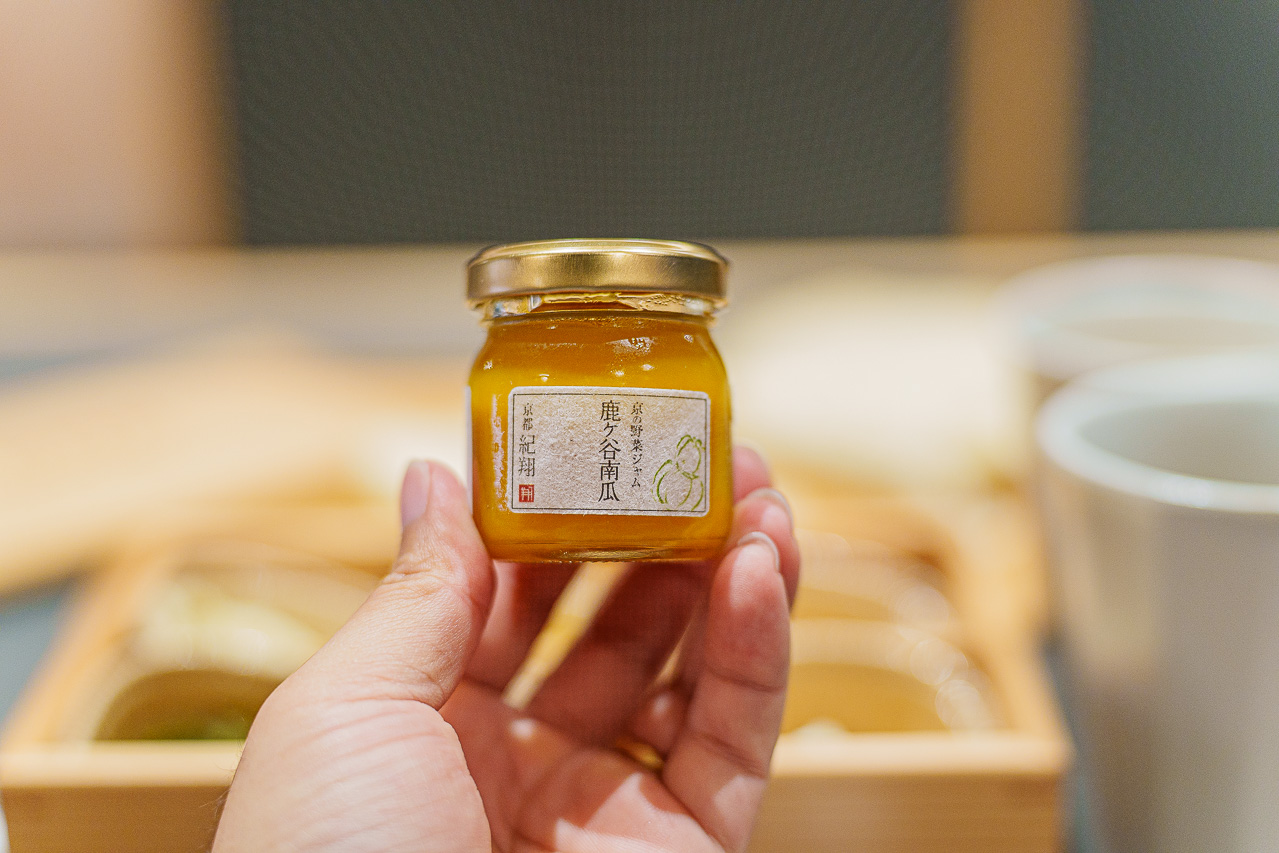
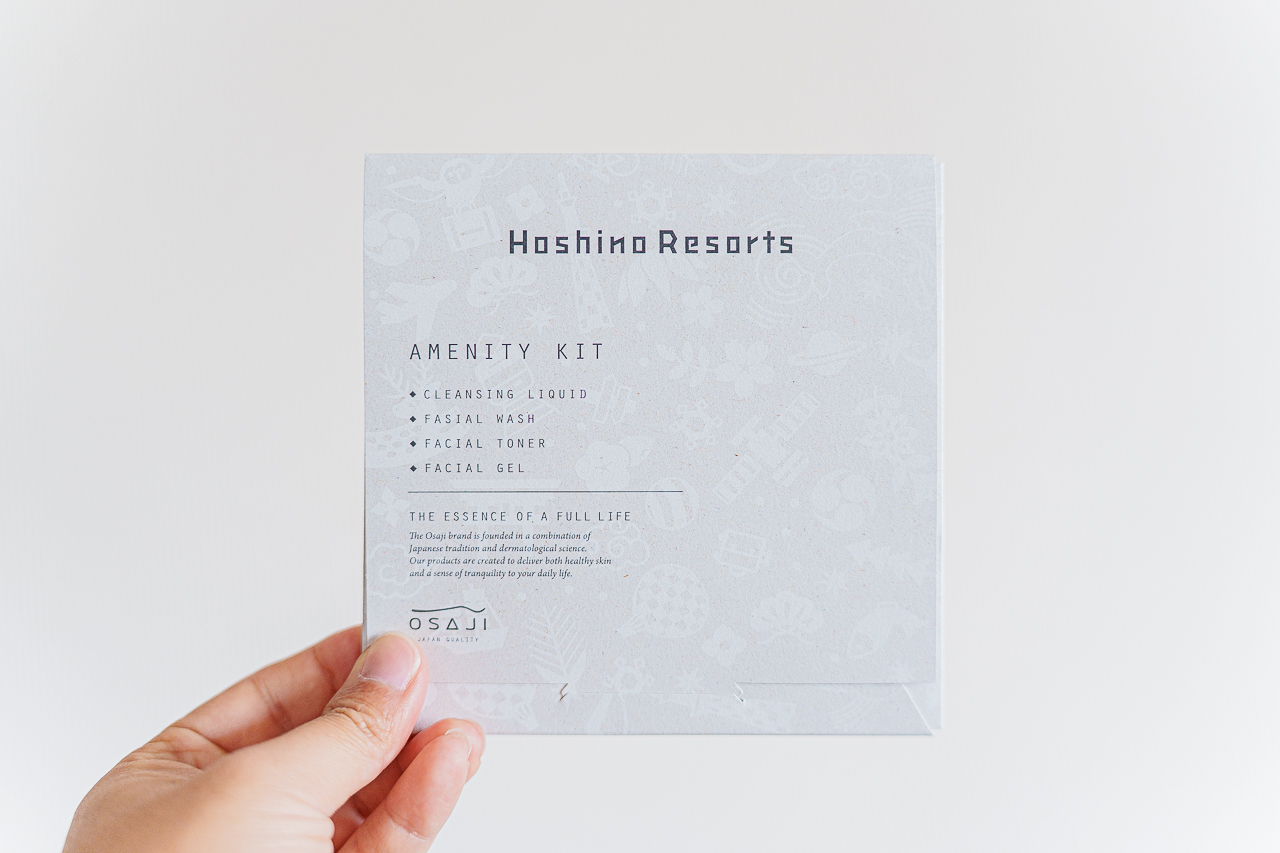
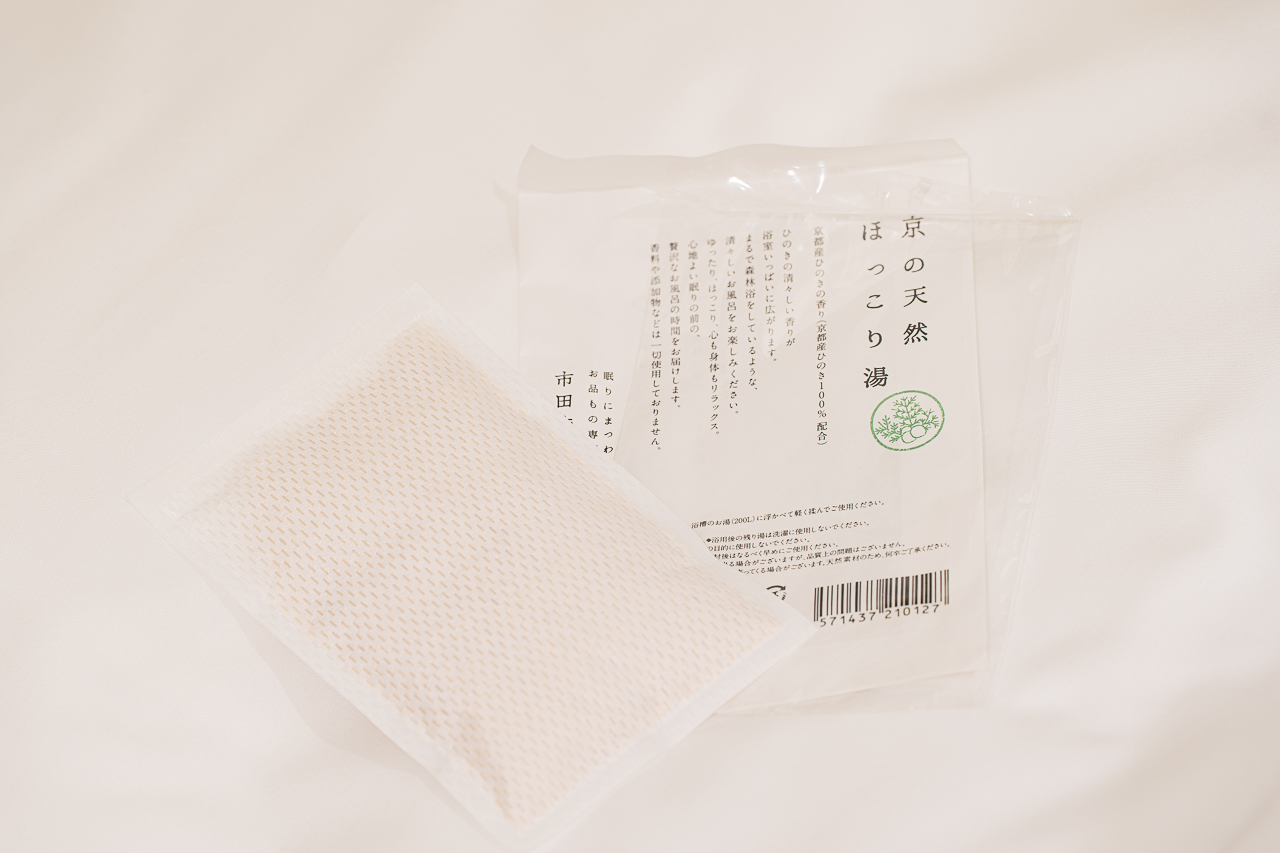
The machines sold jams, drinks, bath additives and skincare.
Jam may seem unusual, but OMO5 Kyoto Gion's breakfast included baking your own bread.
I cover that breadmaking later in the account.
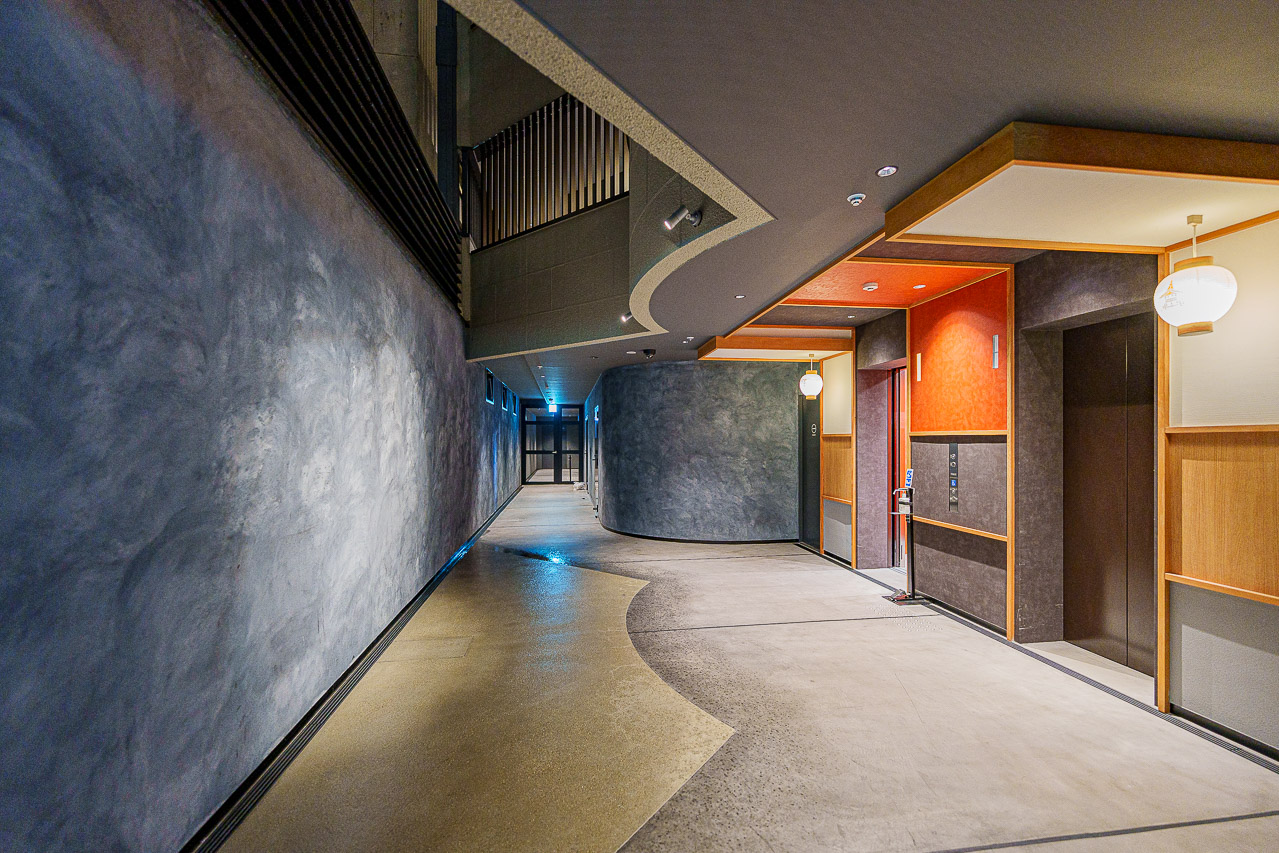
With the tea set, amenities and vending-machine purchases, I took the elevator to the room.

Tatami flooring meant removing shoes at the entrance.
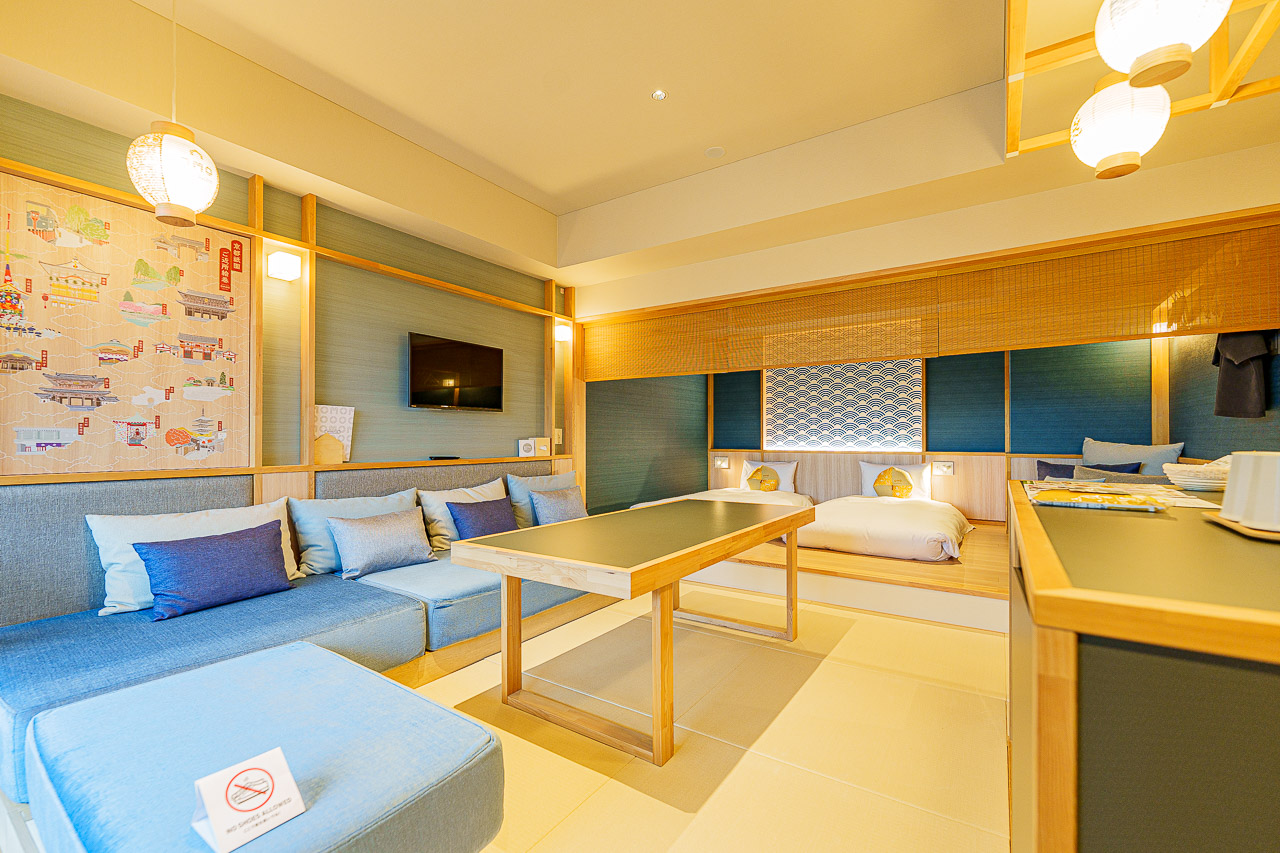
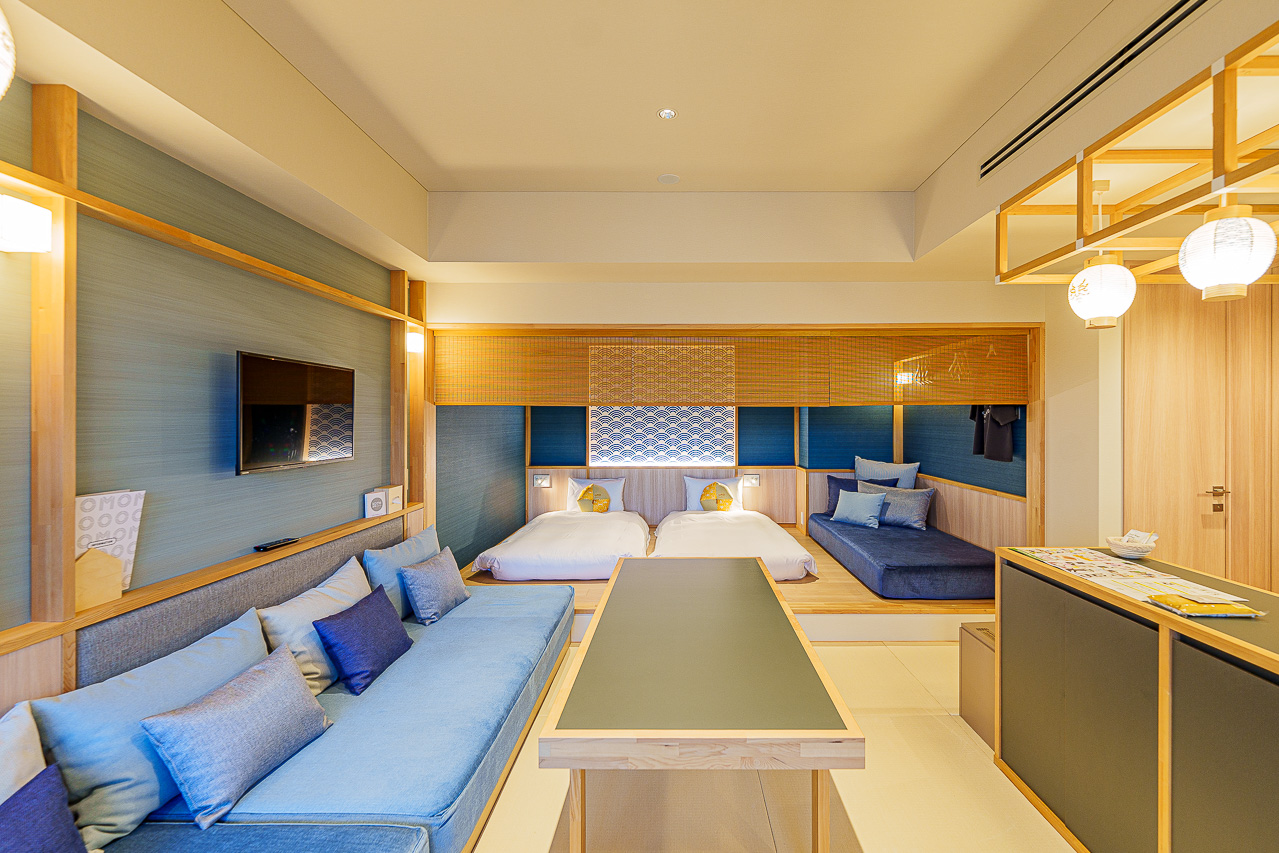

The room felt very spacious—easily twice the size of a typical business-hotel room, in my impression.
The interior reflected Japan and shrine-filled Gion.
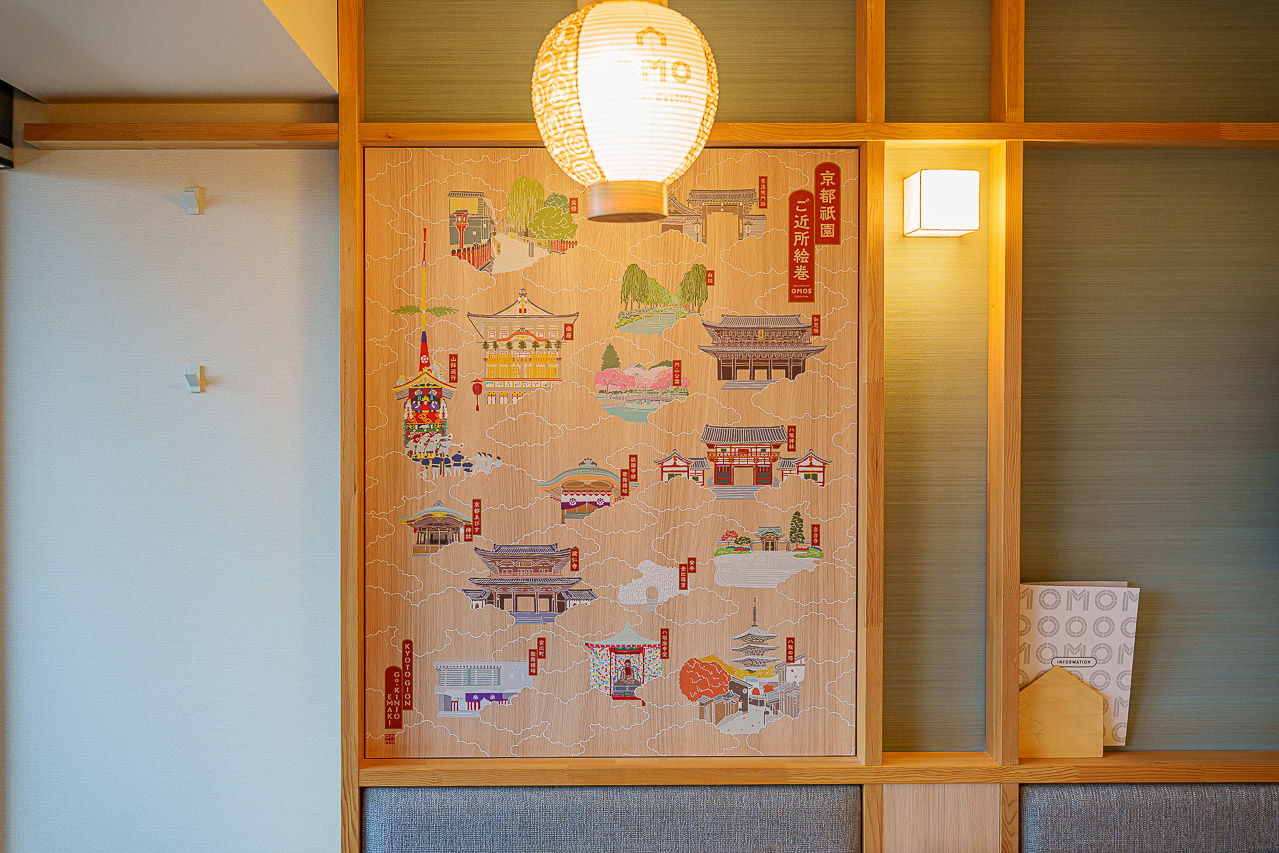
Wall illustrations represented well-known local temples.
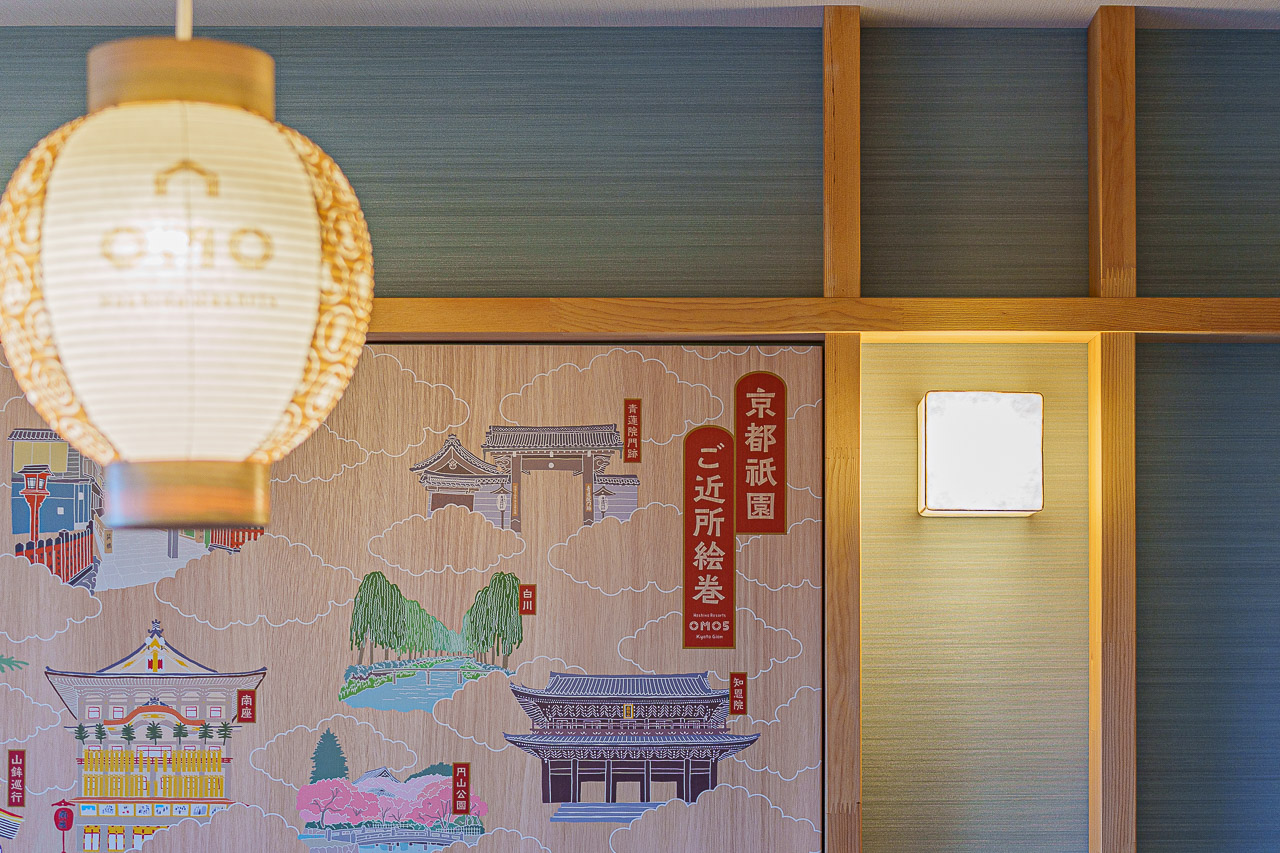
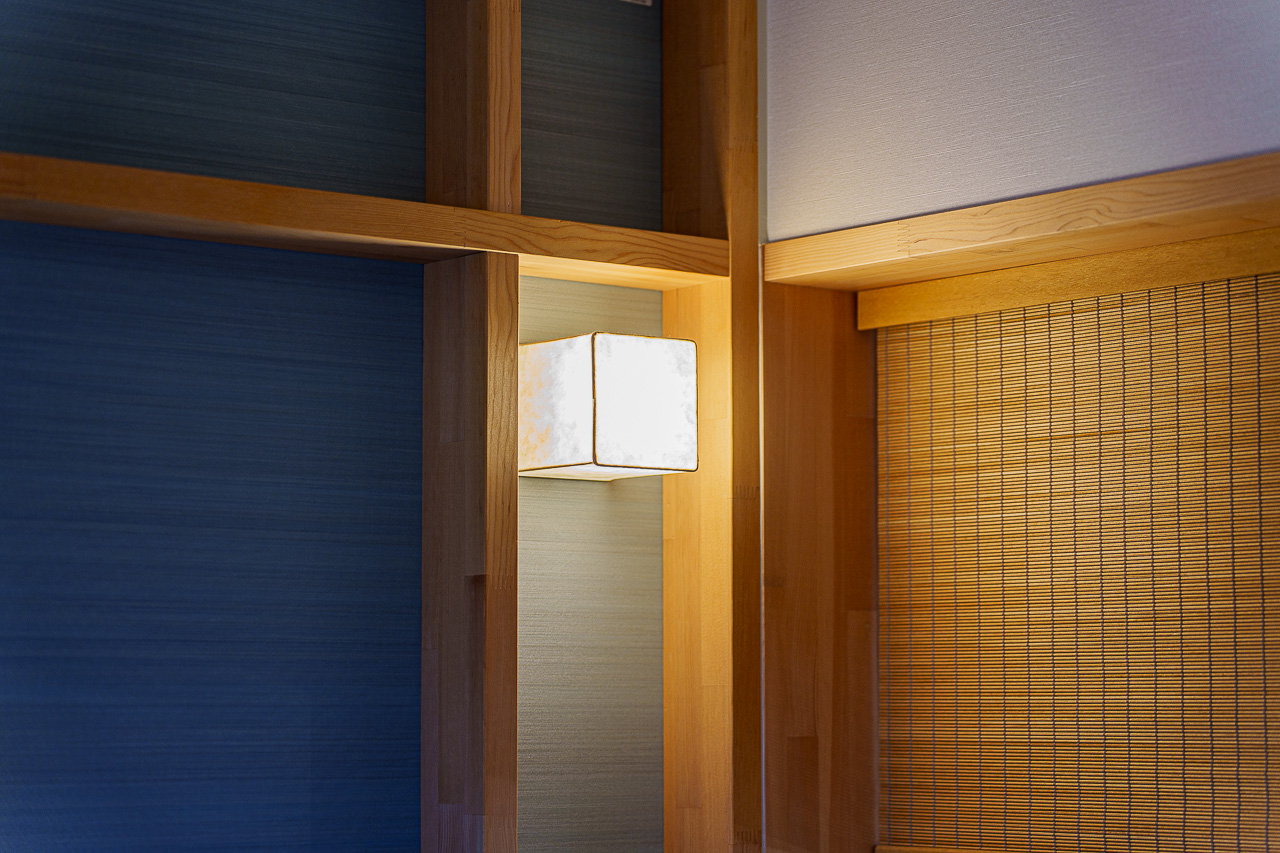
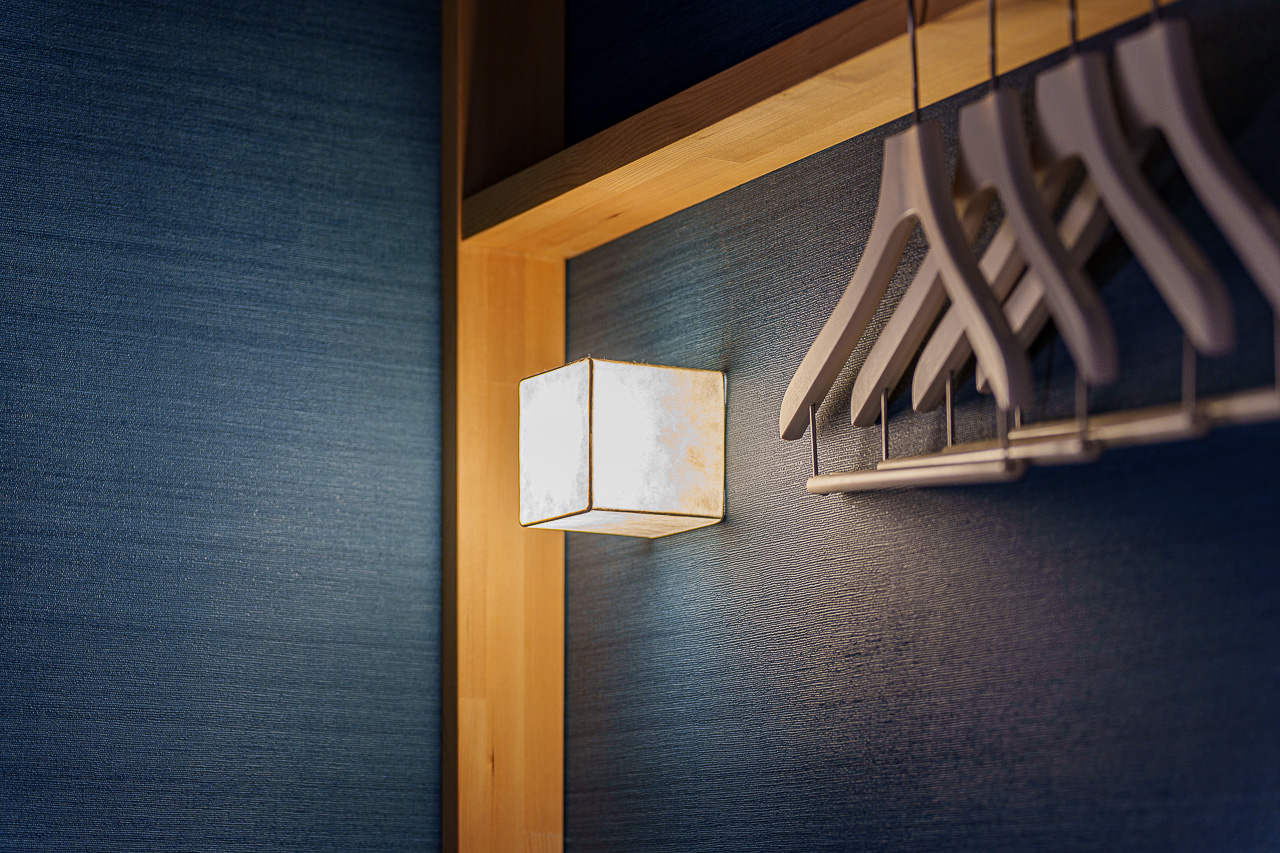
The light fittings also looked familiar from shrines.
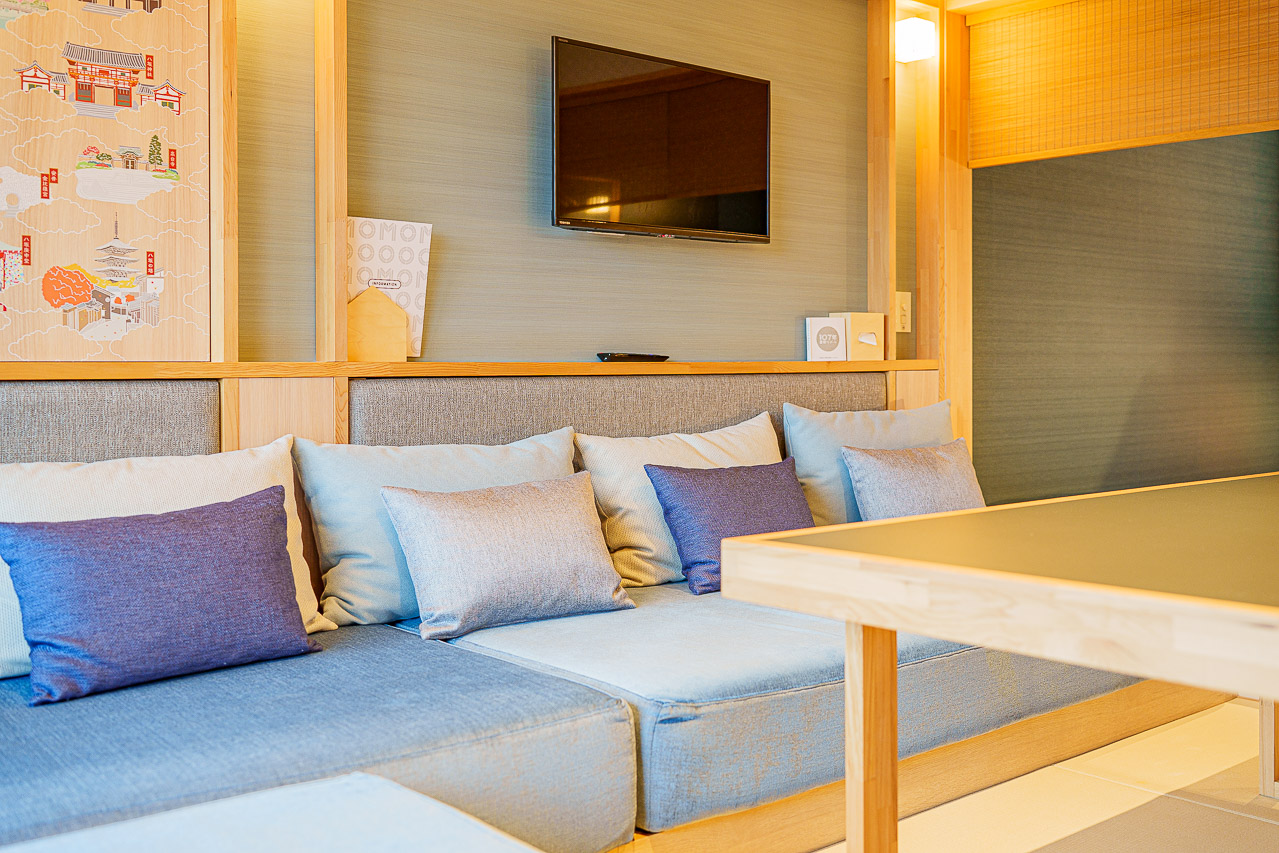
A sofa large enough to lie down on, in my impression.
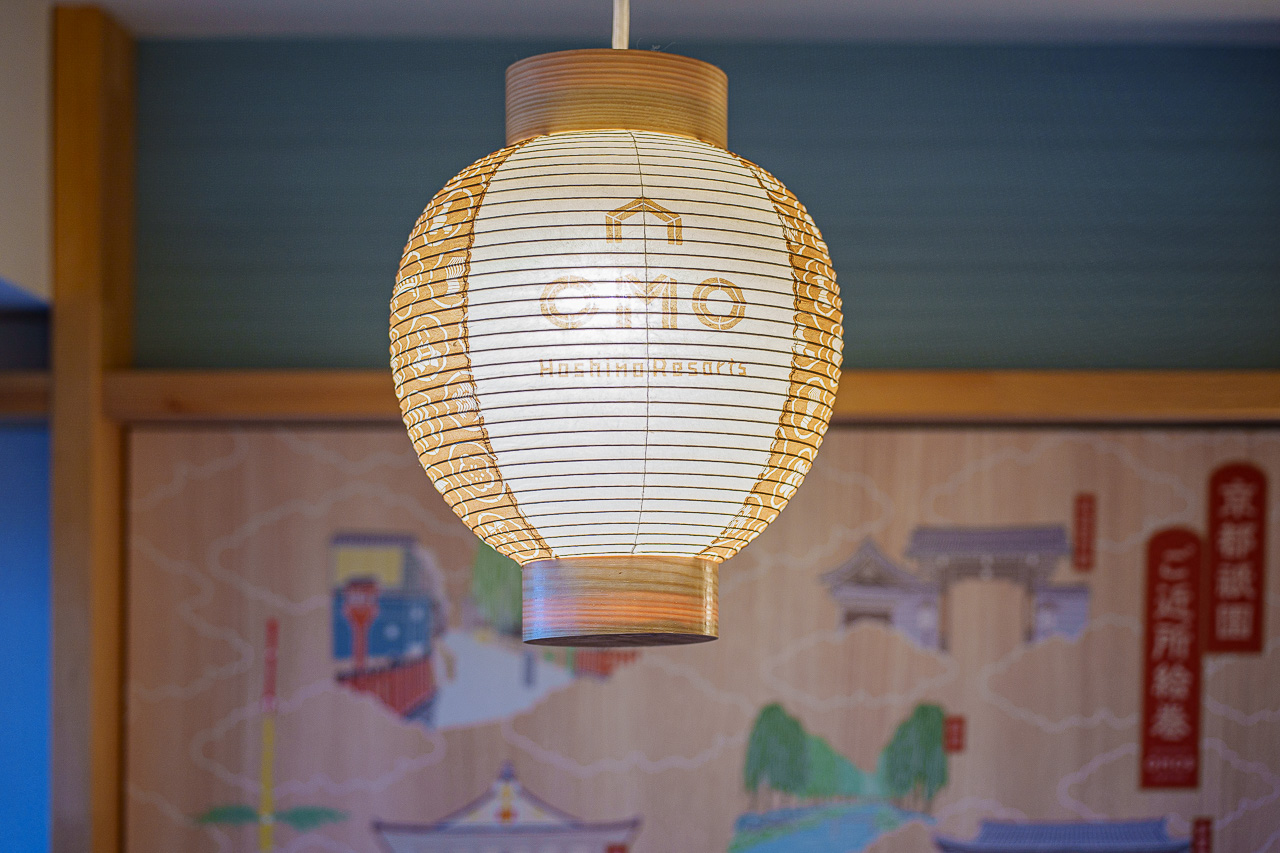
A light bearing the OMO logo caught my eye.
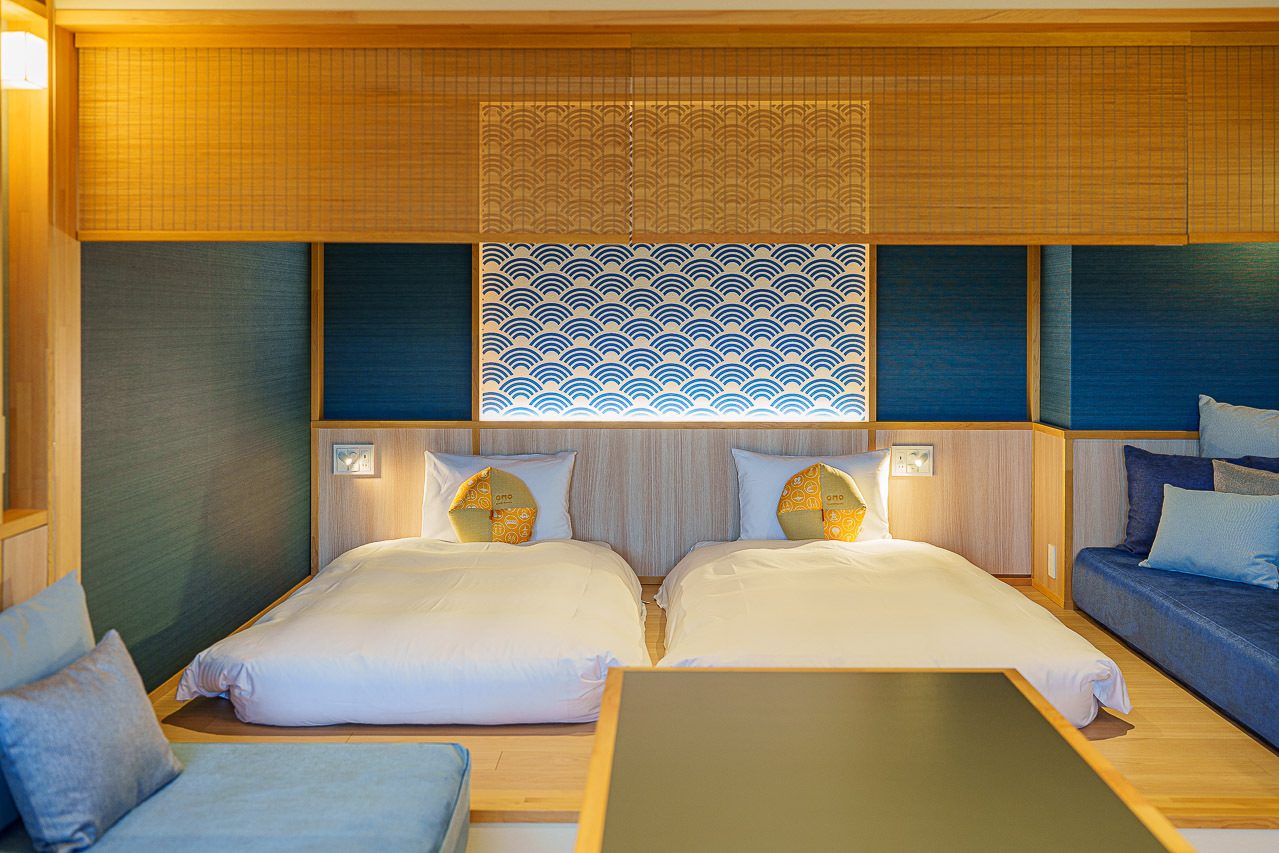
The beds stood one step higher.
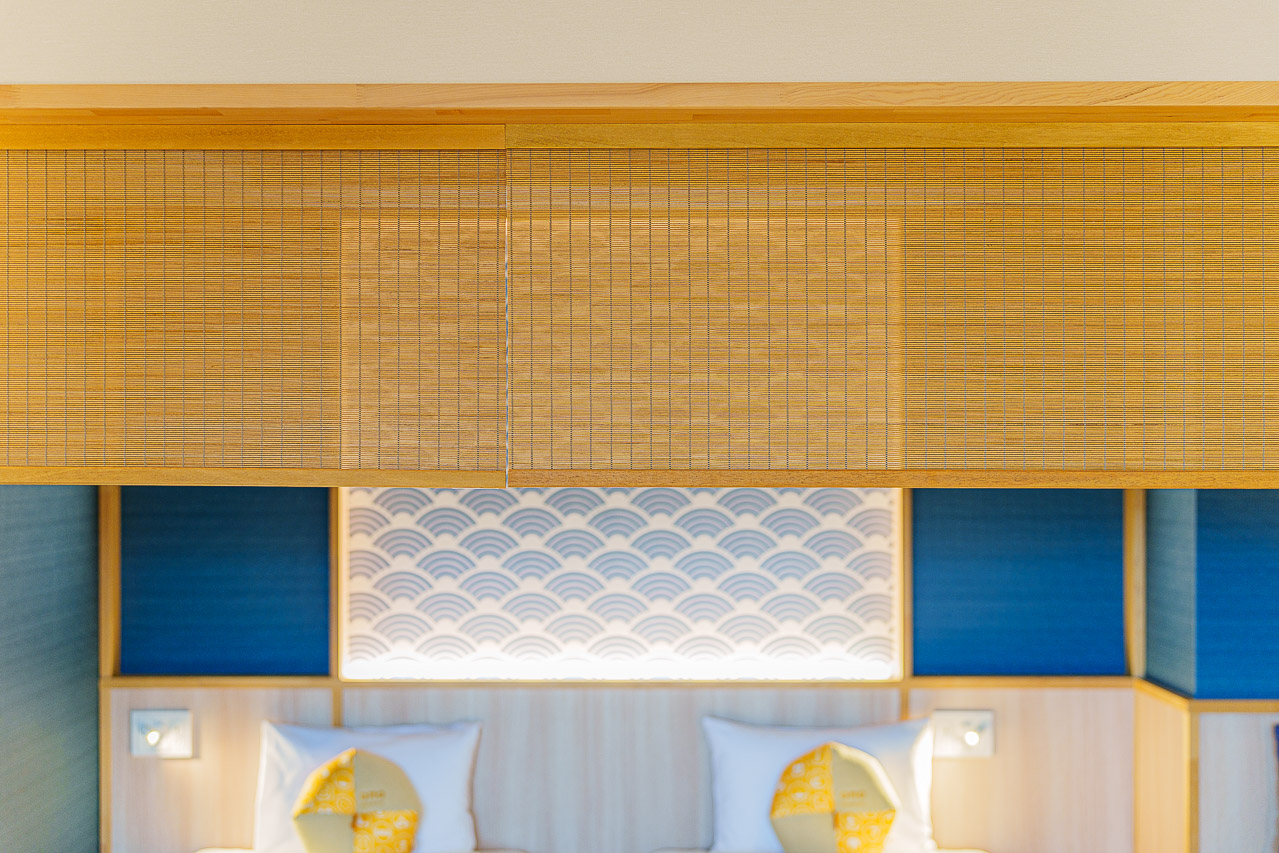
Sudare, often seen at Kyoto windows.
These traditional Japanese blinds use horizontal slats of bamboo or other natural material woven together with string, colored thread or decorative material.
The source explains their common use in closely spaced Kyoto houses as a way to maintain privacy.
Although there was no bedroom door, the sudare naturally marked the boundary between living and sleeping areas.

A Japanese-style pattern decorated the wall behind the beds.

The bedroom alone felt about the size of an ordinary business-hotel room.
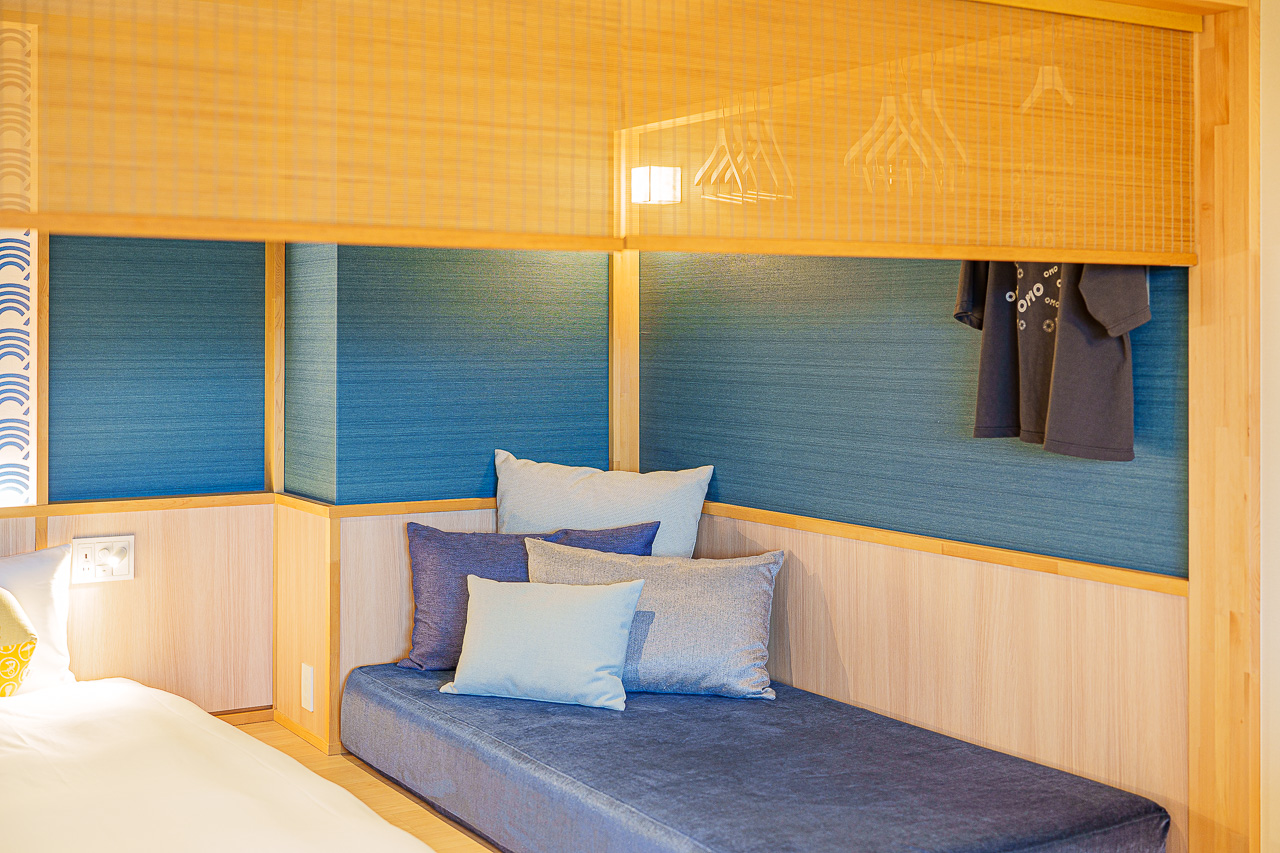
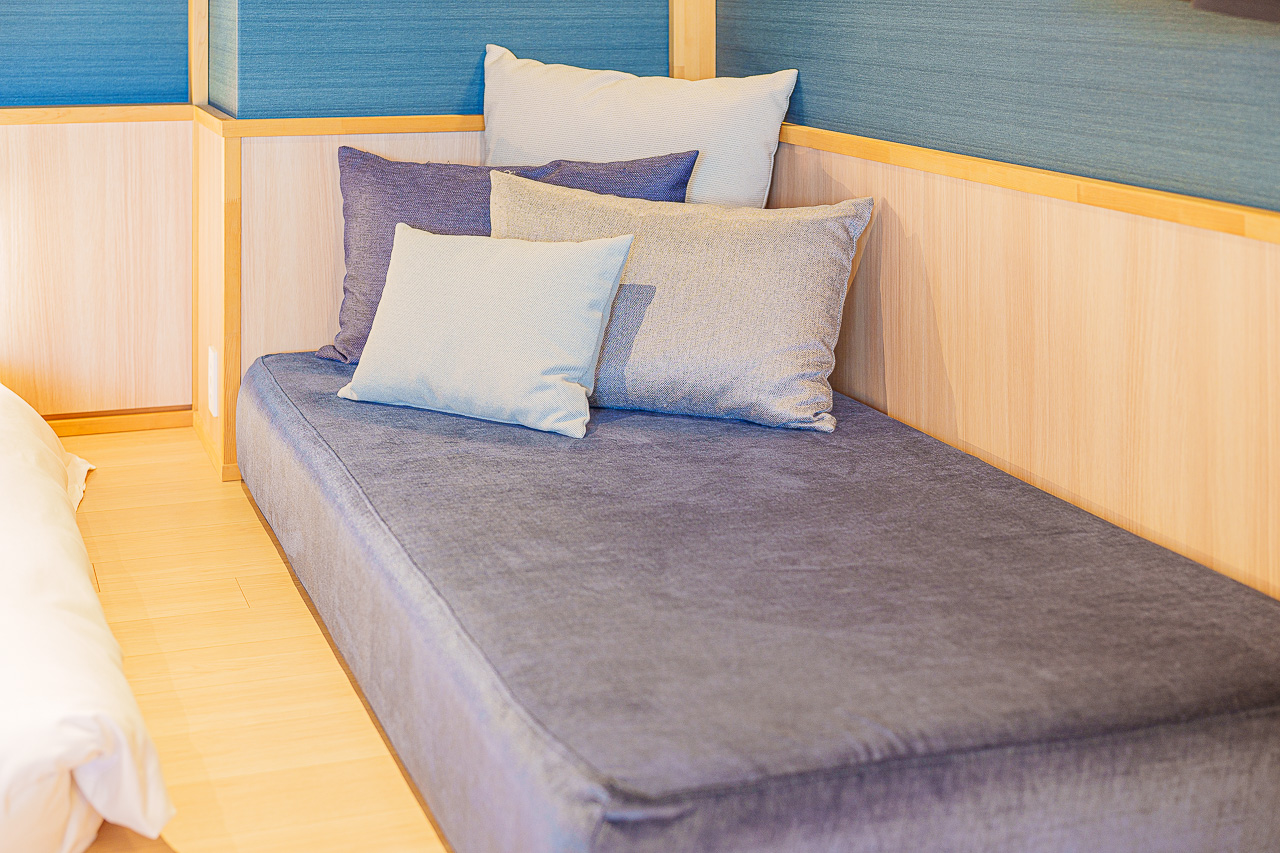
Another sofa looked large enough for someone to lie down; this is not an extra-guest entitlement.
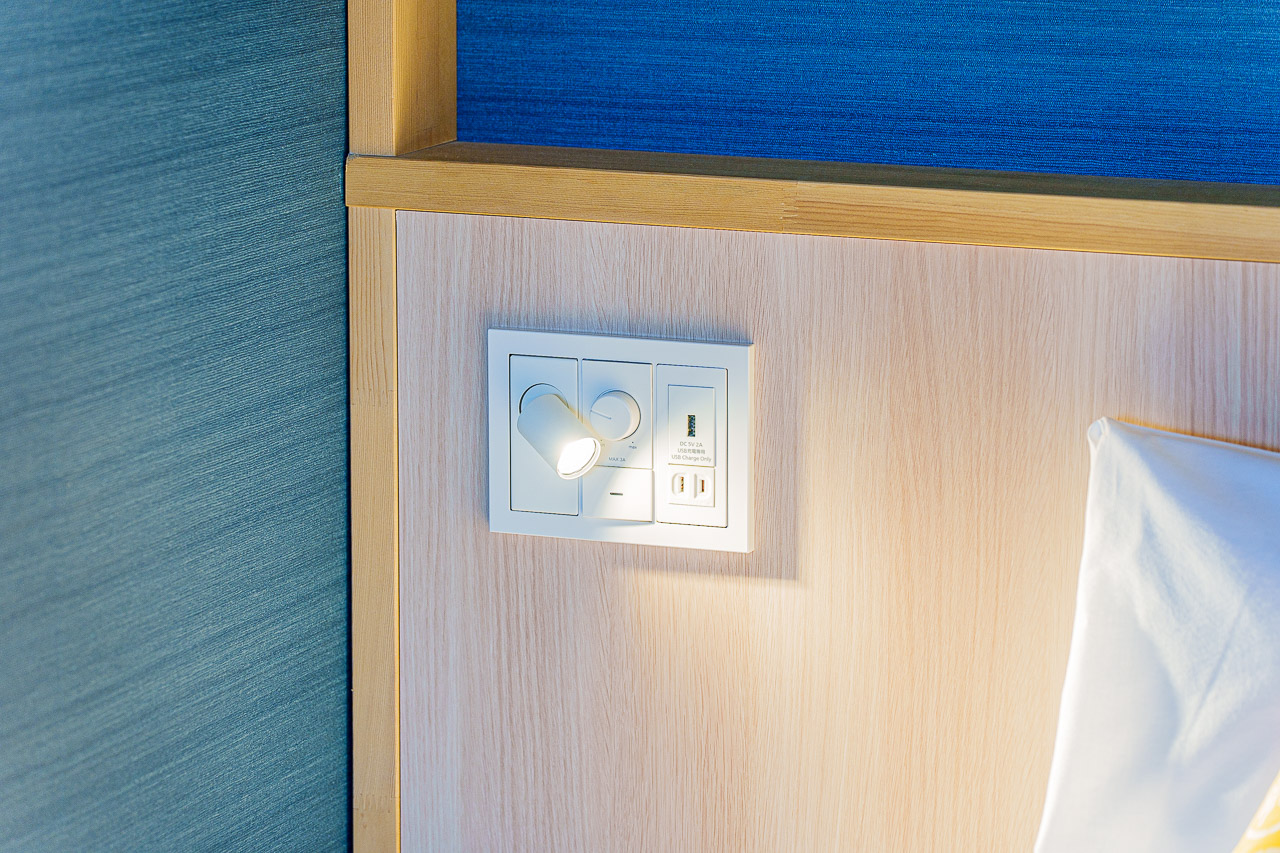
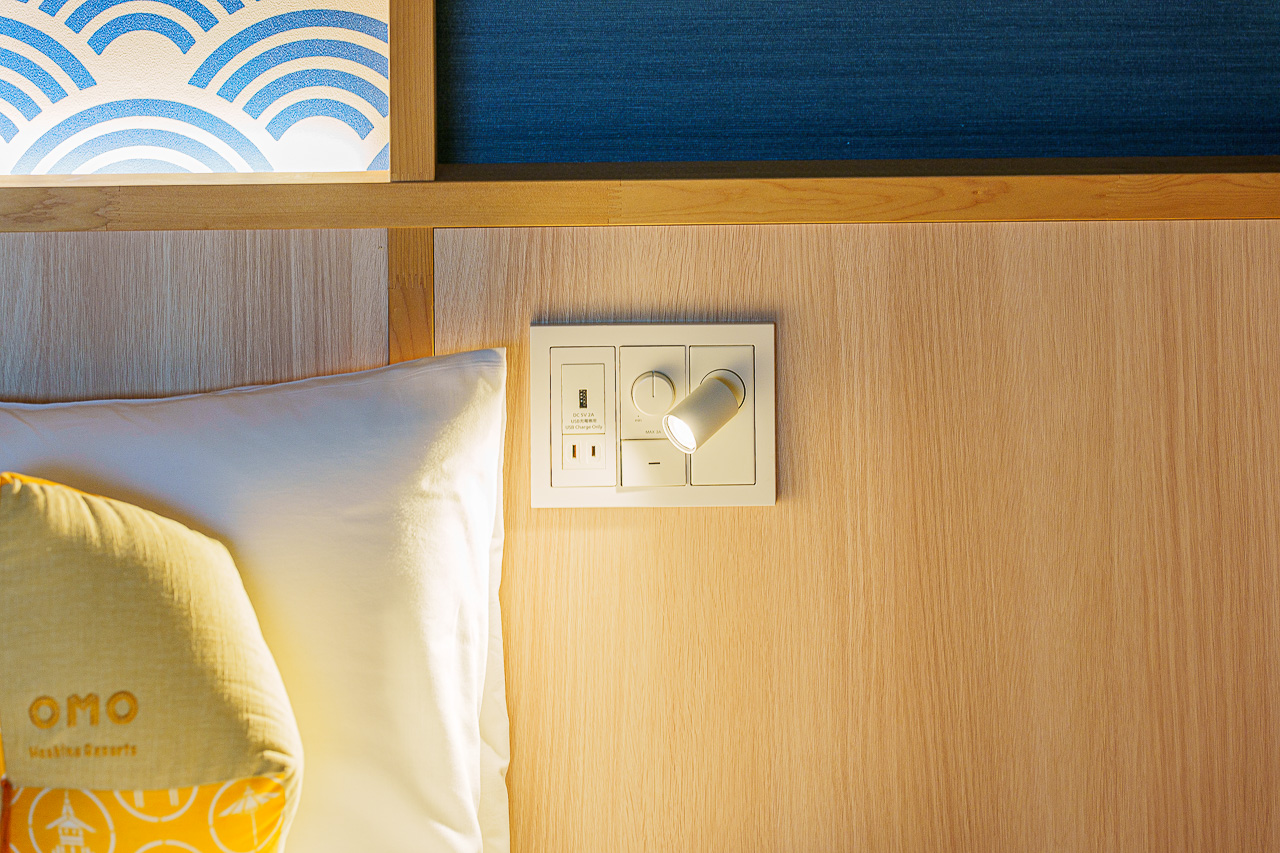
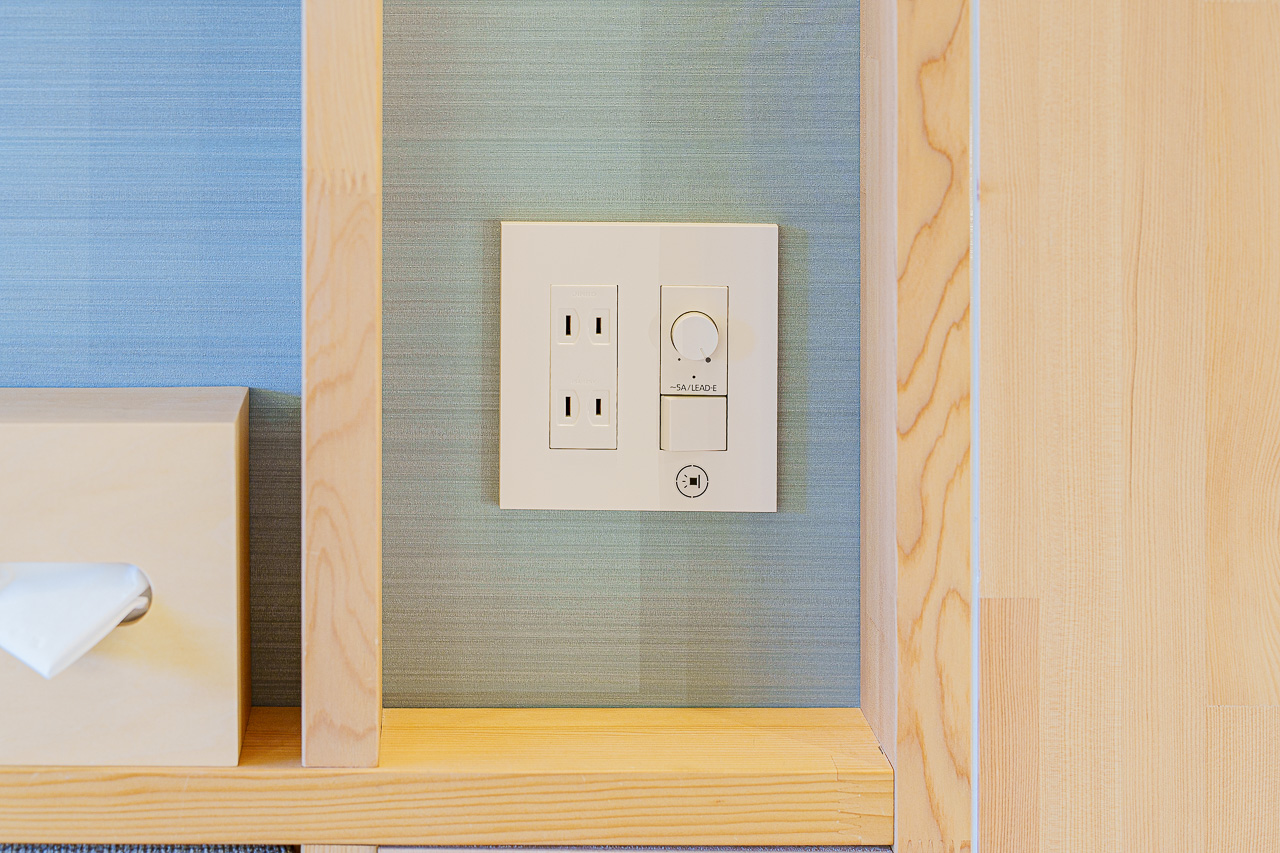
Charging cables and power sockets were placed throughout.
For someone like me carrying several devices, the many charging points were especially useful.
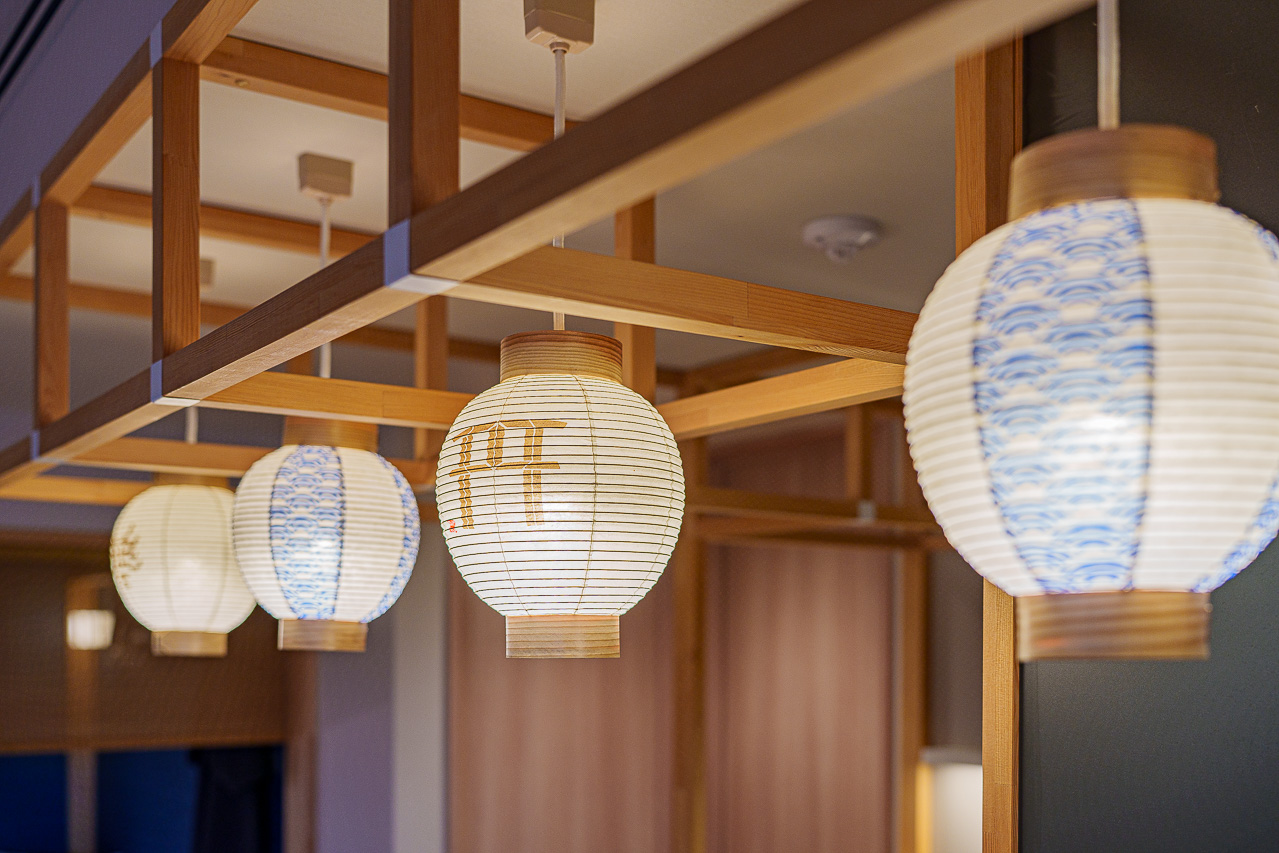
Lanterns inside the room added the feeling of staying at a shrine's accommodation.
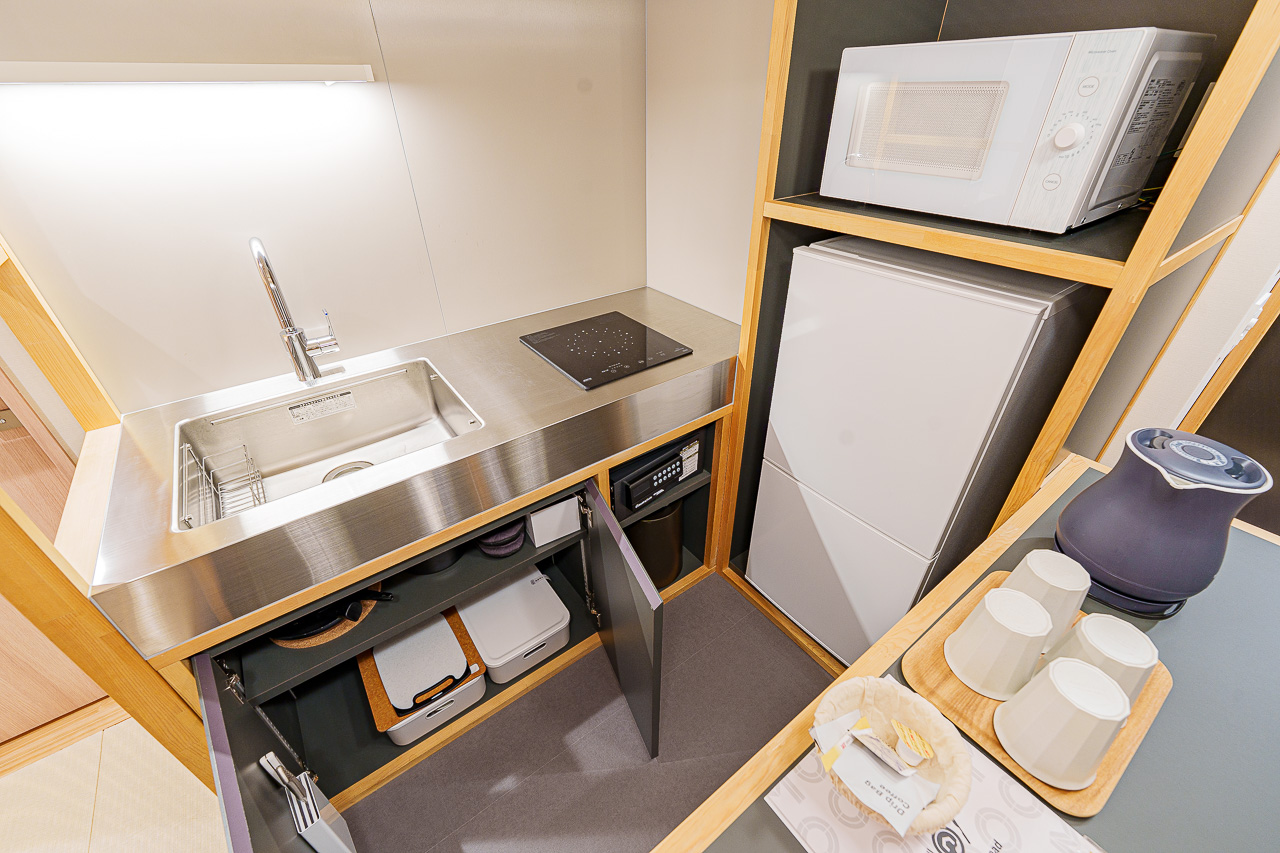
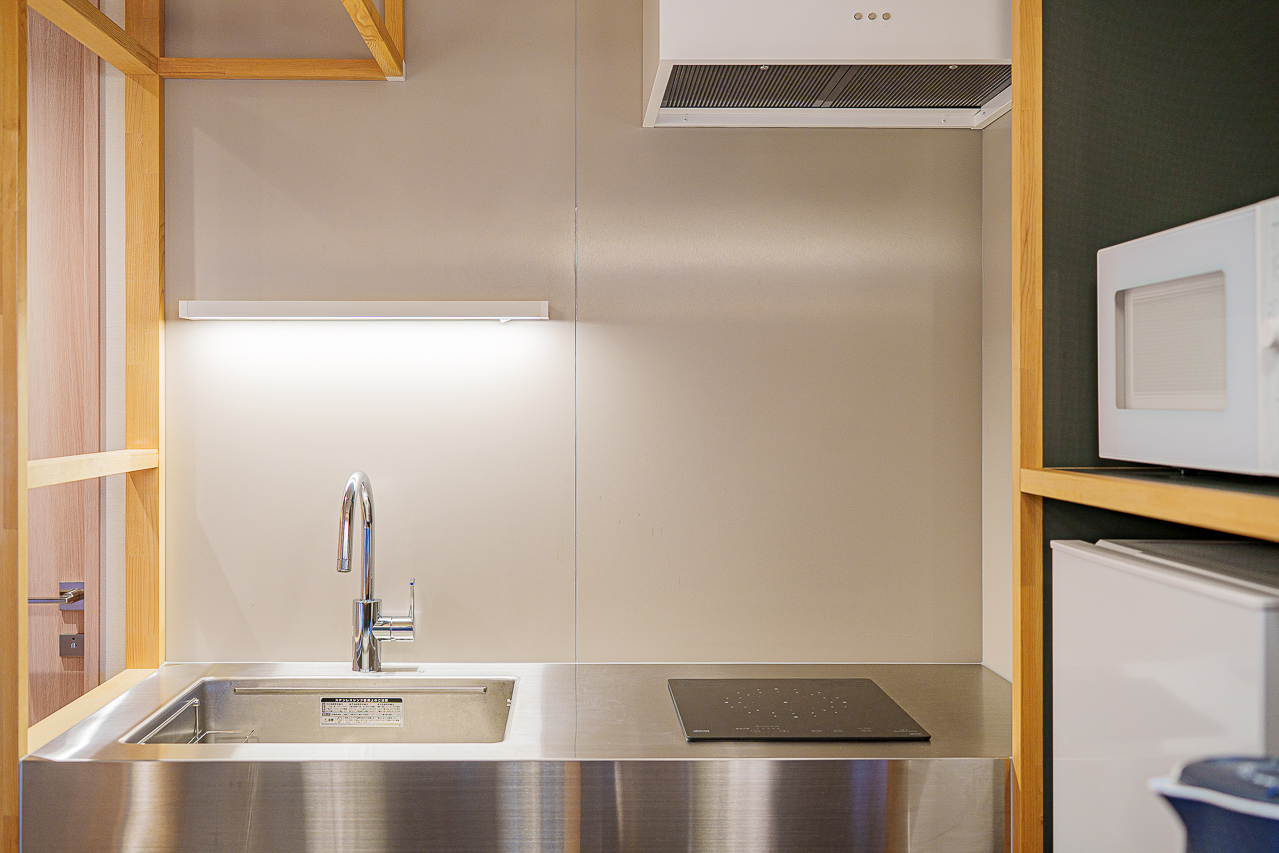
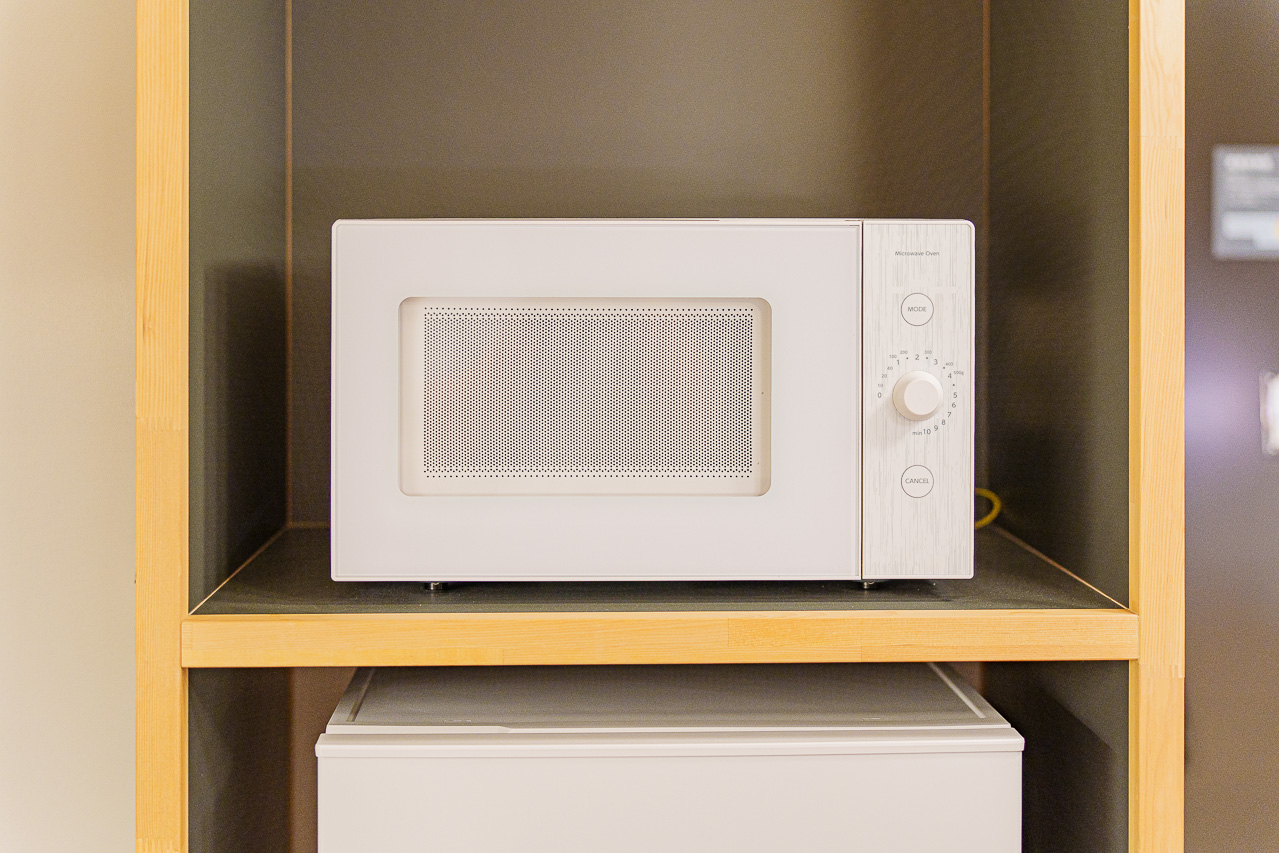
The kitchen had a sink, induction hob, tableware and microwave for practical use.
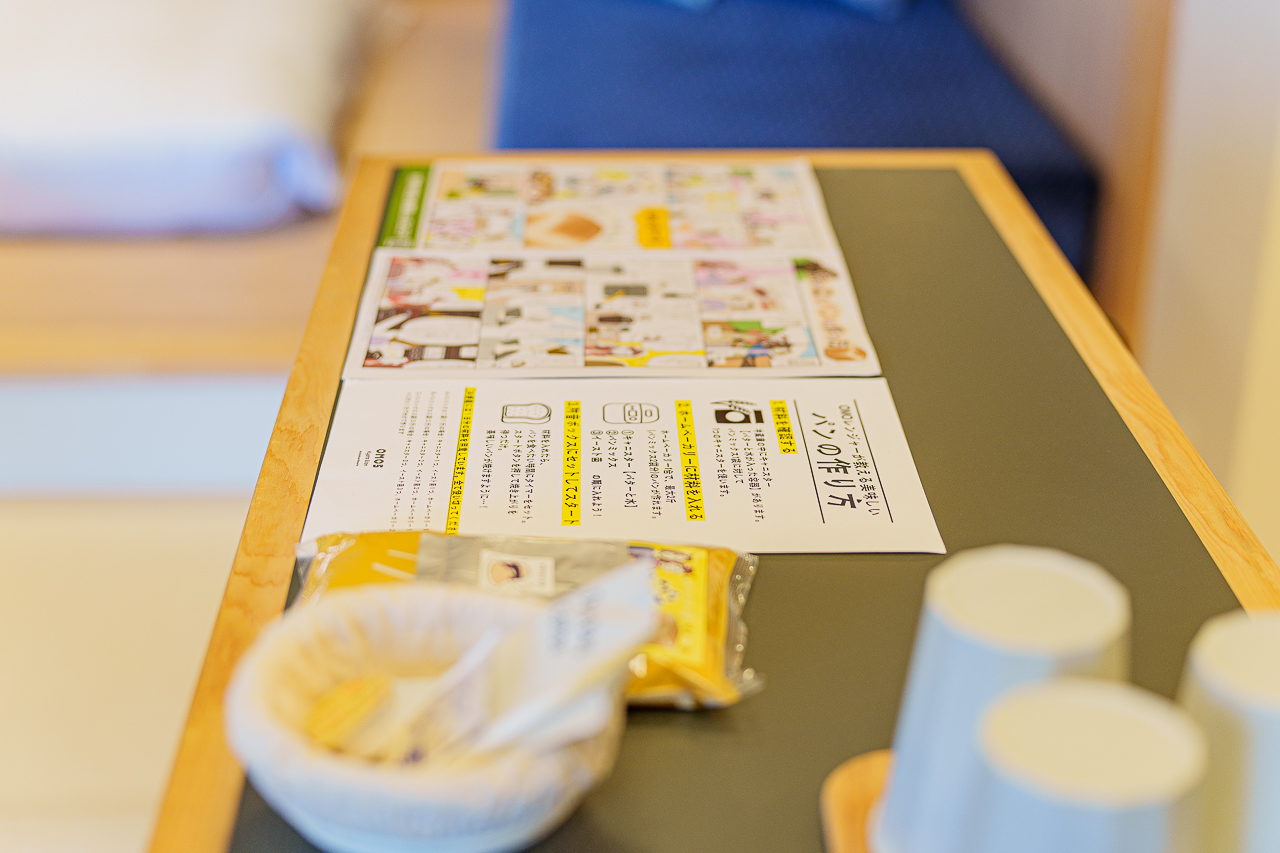
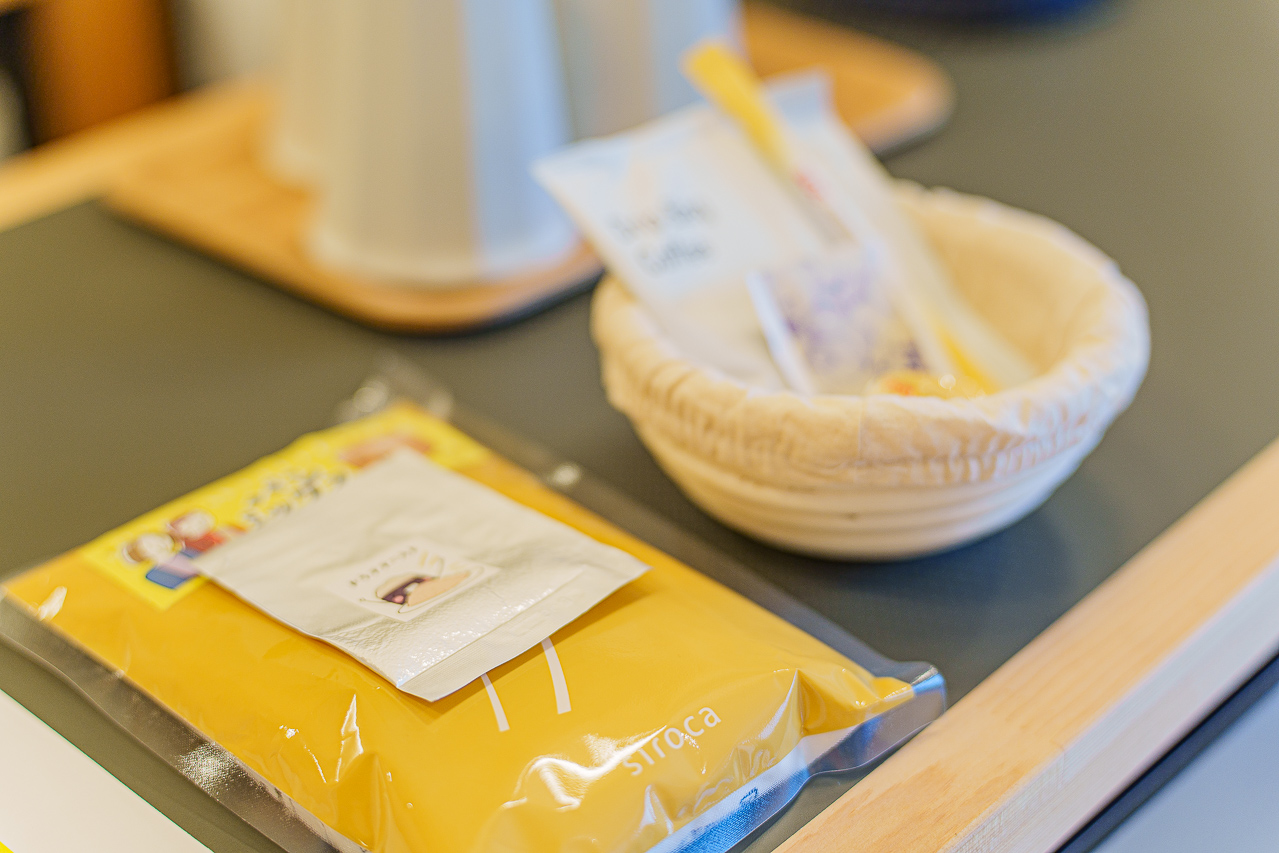
Paying ¥1,000 for breakfast brought the ingredients for home breadmaking.
The machine's maximum delay timer was 13 hours, so I would set it before bed for warm breakfast bread. I planned to prepare it later.
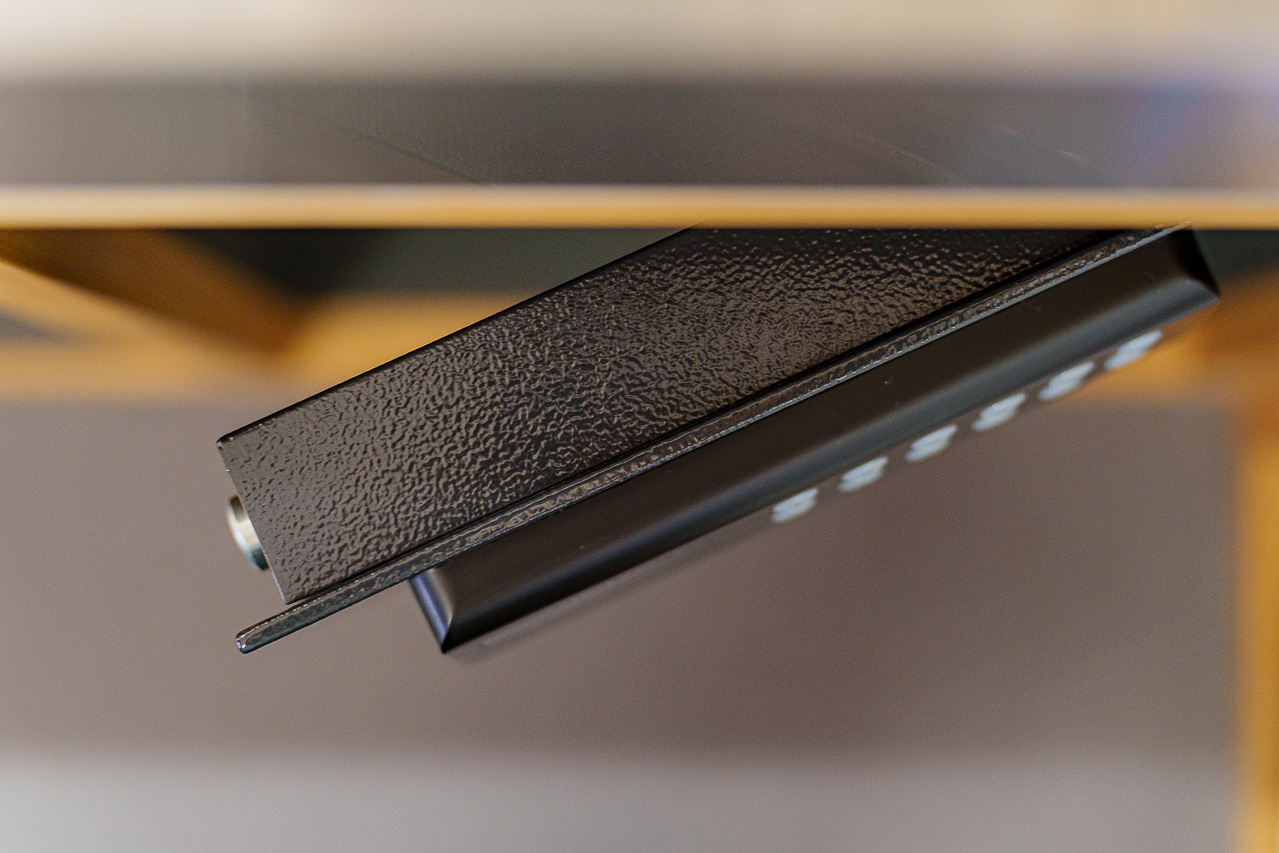
A substantial safe was below.
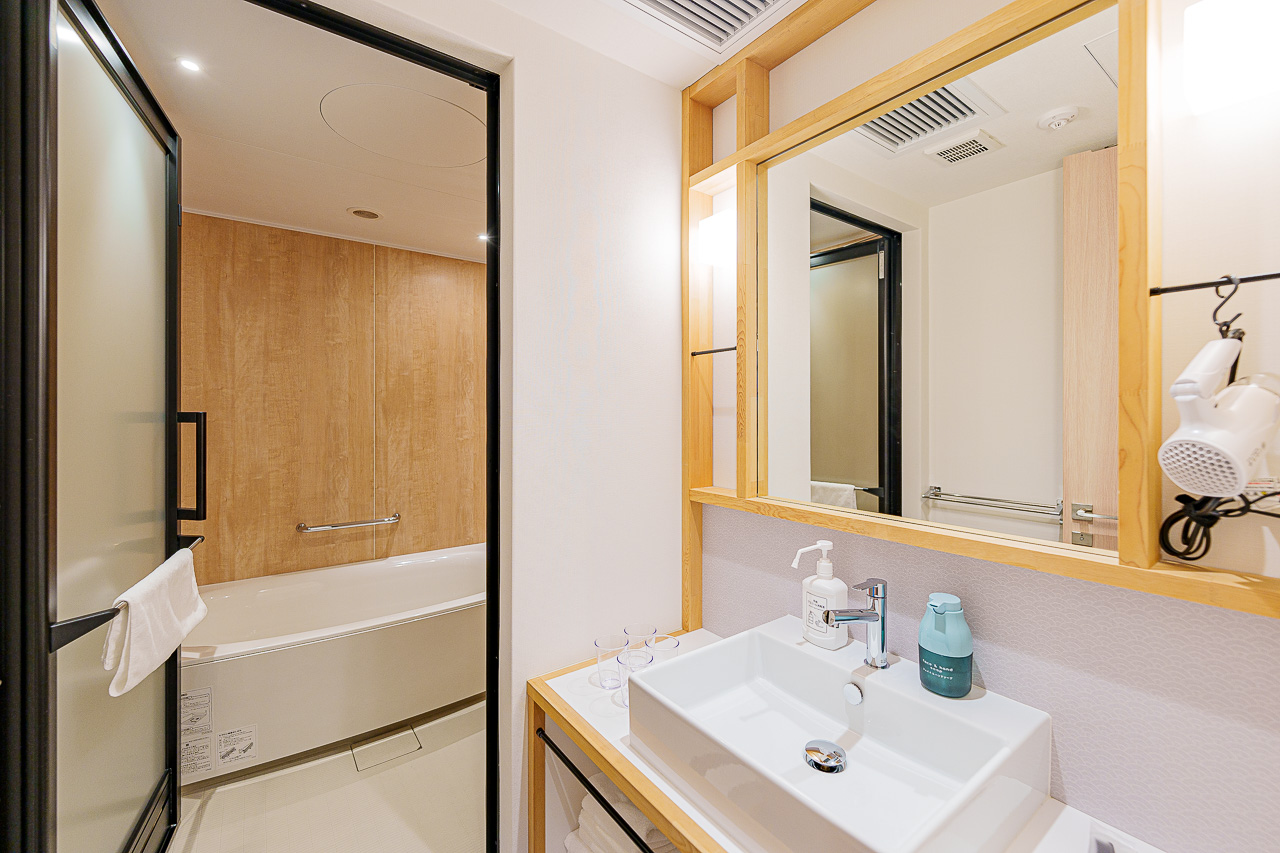
The washbasin, bathroom and toilet were separate.
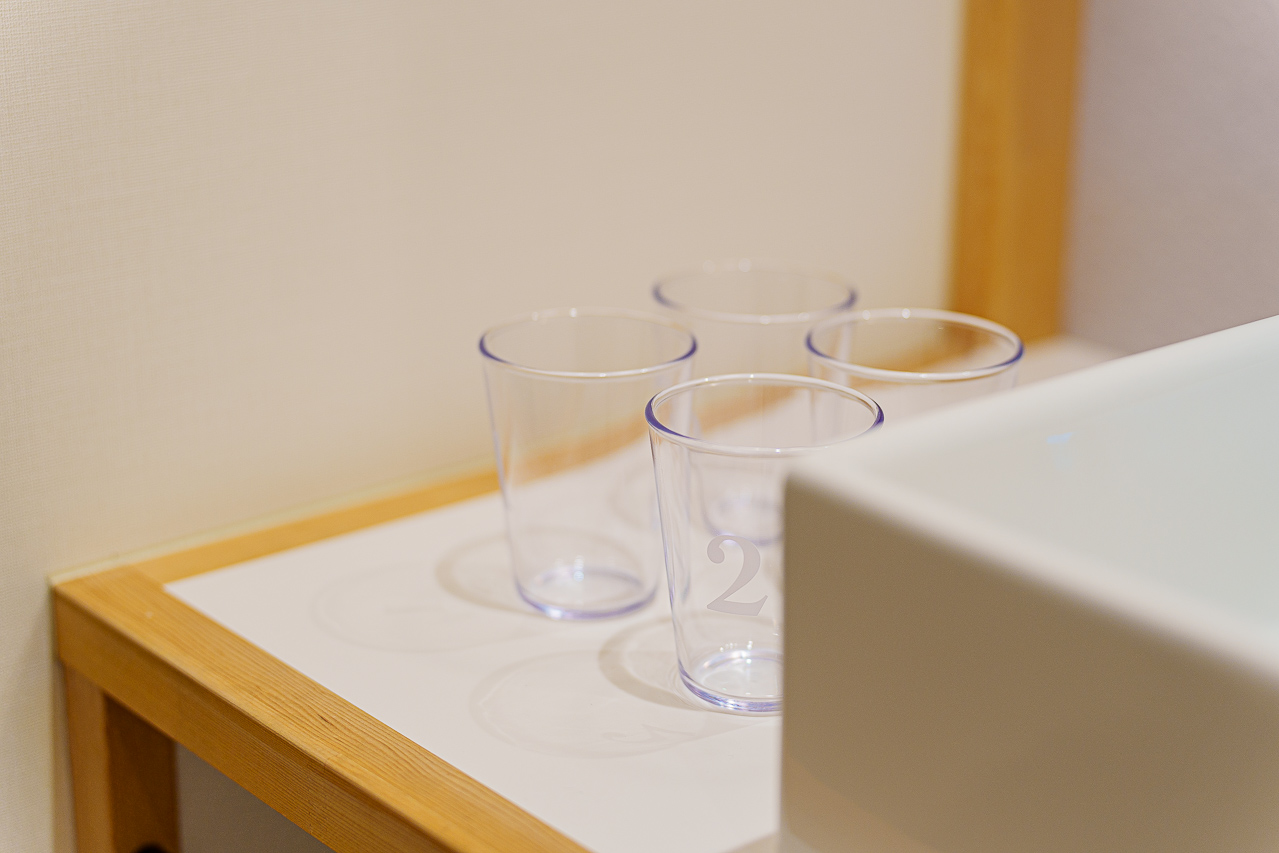
Numbered cups helped guests keep track of their own—a thoughtful detail.
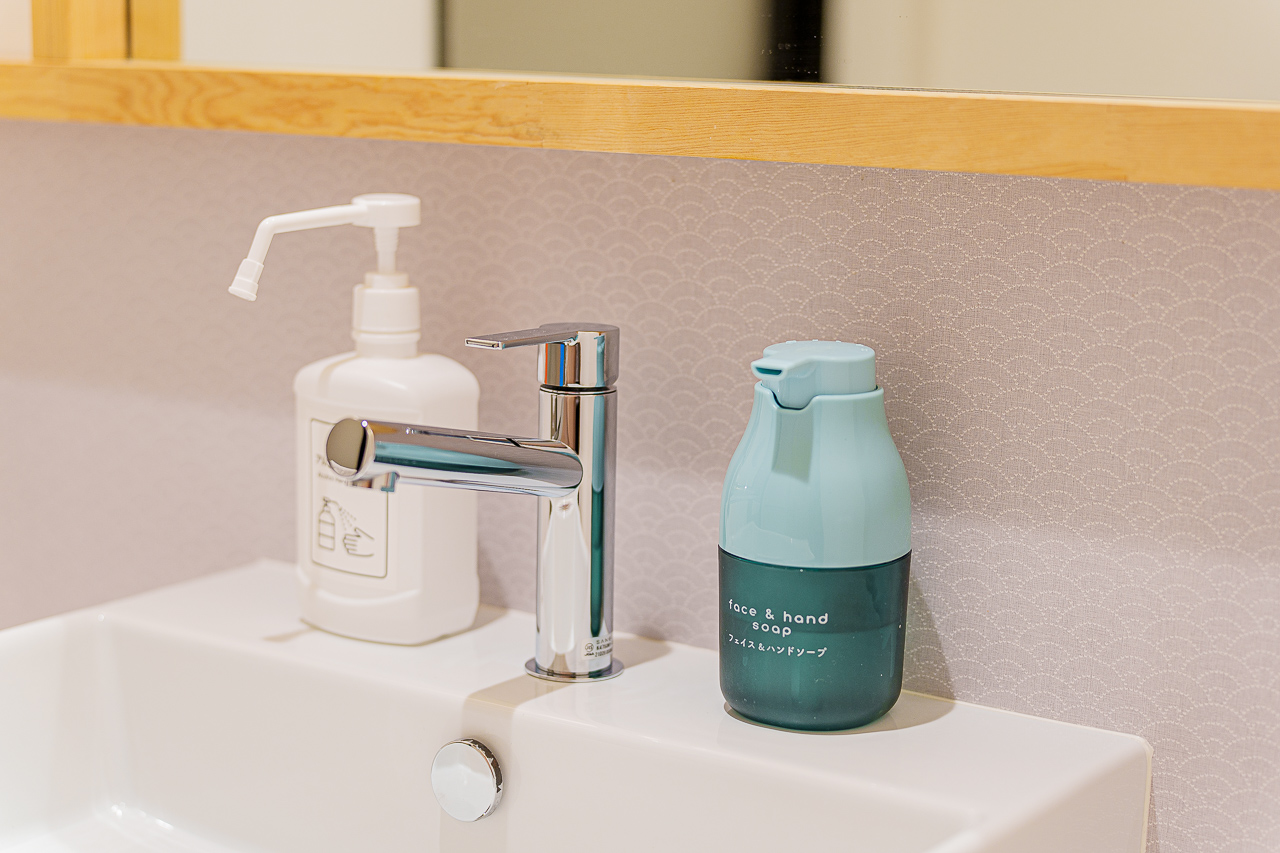
Cleansing foam and sanitizing spray were supplied.
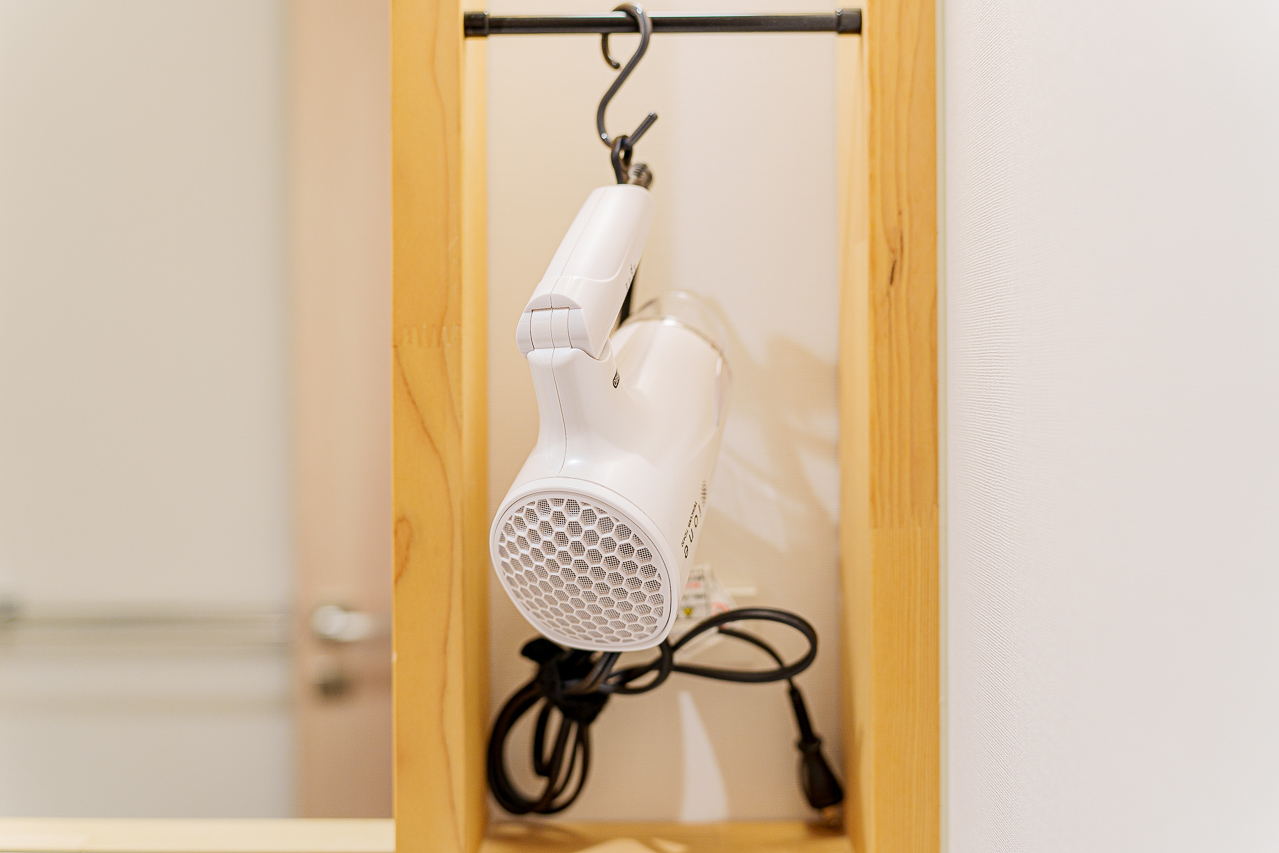
I wondered whether this was the hairdryer's intended position.
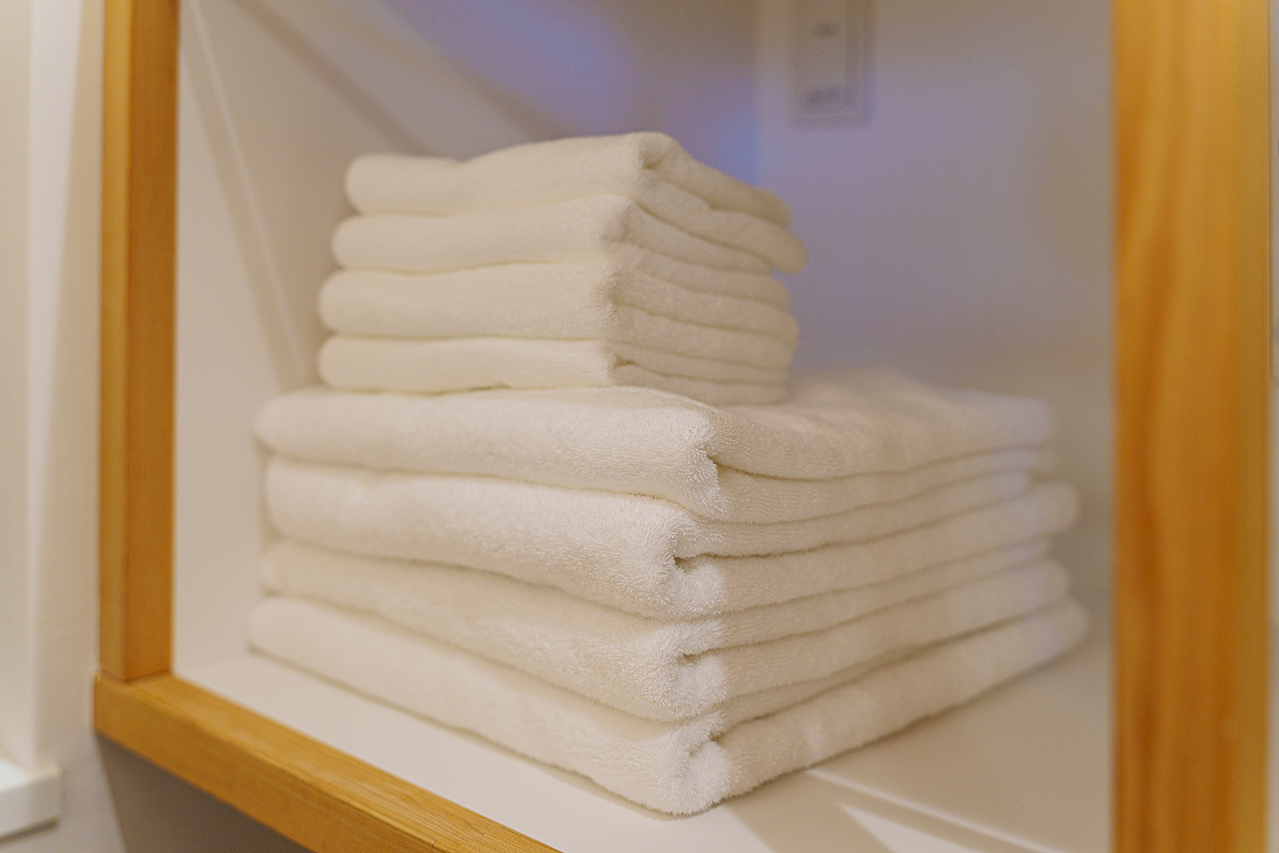
With capacity for up to 4, the room had 4 face towels and 4 bath towels.
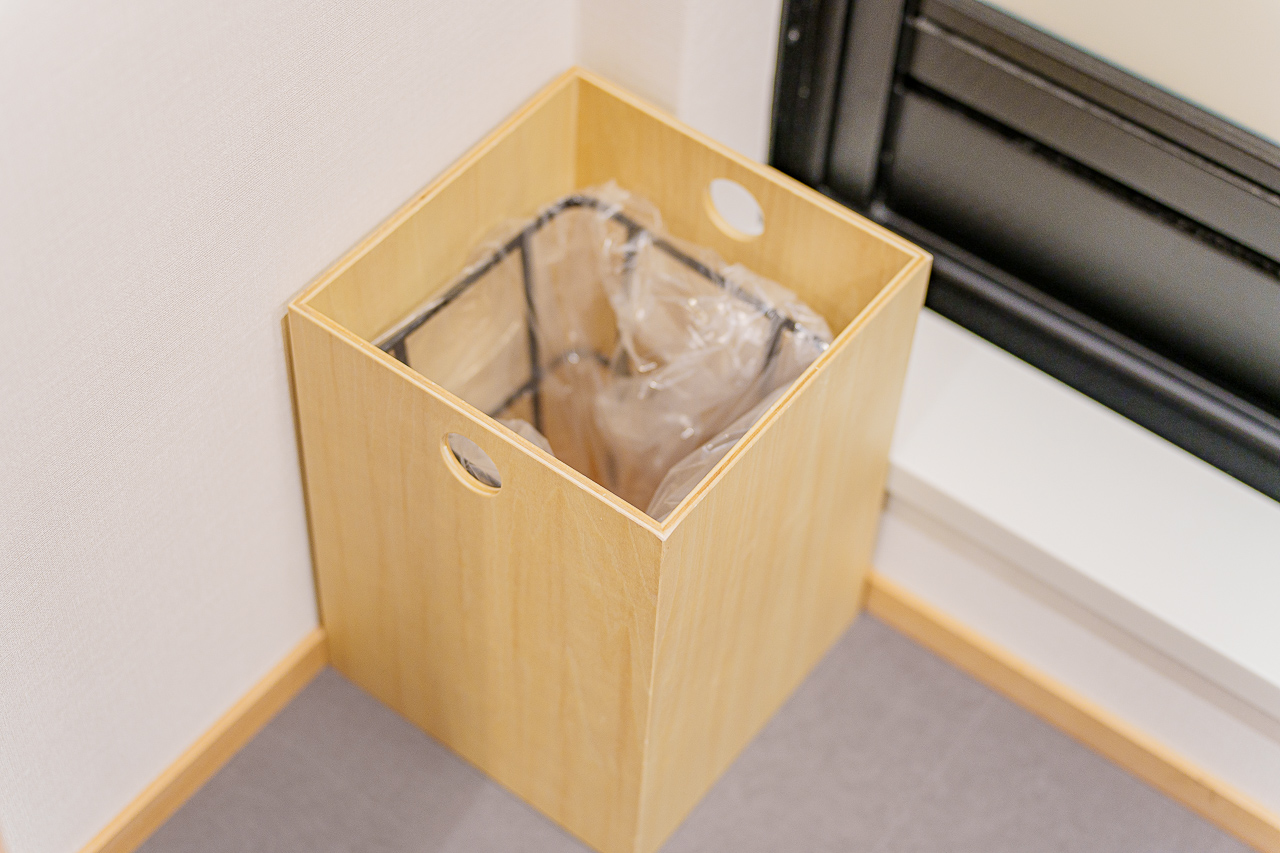
Even the wastebasket had a hinoki-wood feel.
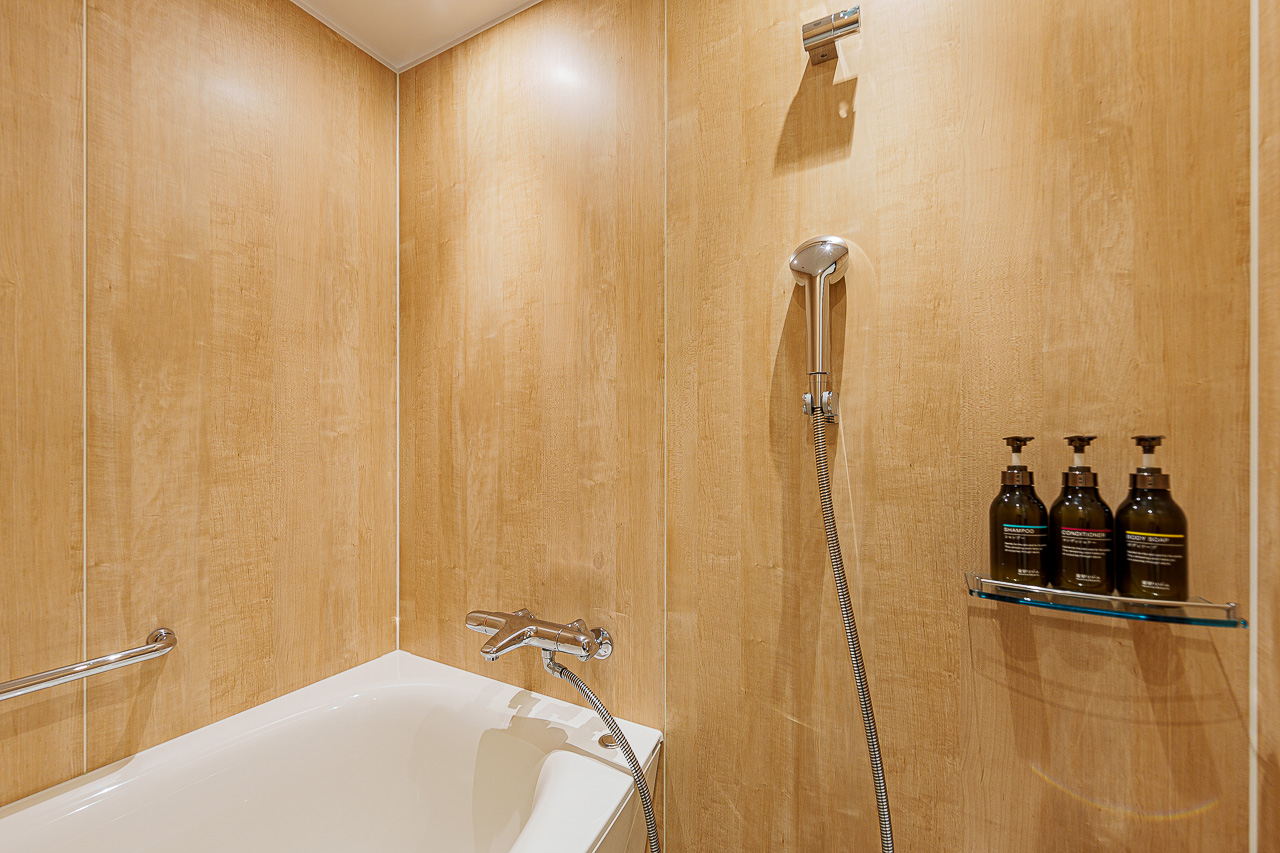
The bathroom walls did not seem to be real wood, but opening the door released a strong hinoki scent.
It felt like arriving at an upscale ryokan bath.

Hoshino Resorts' original cleansing products.
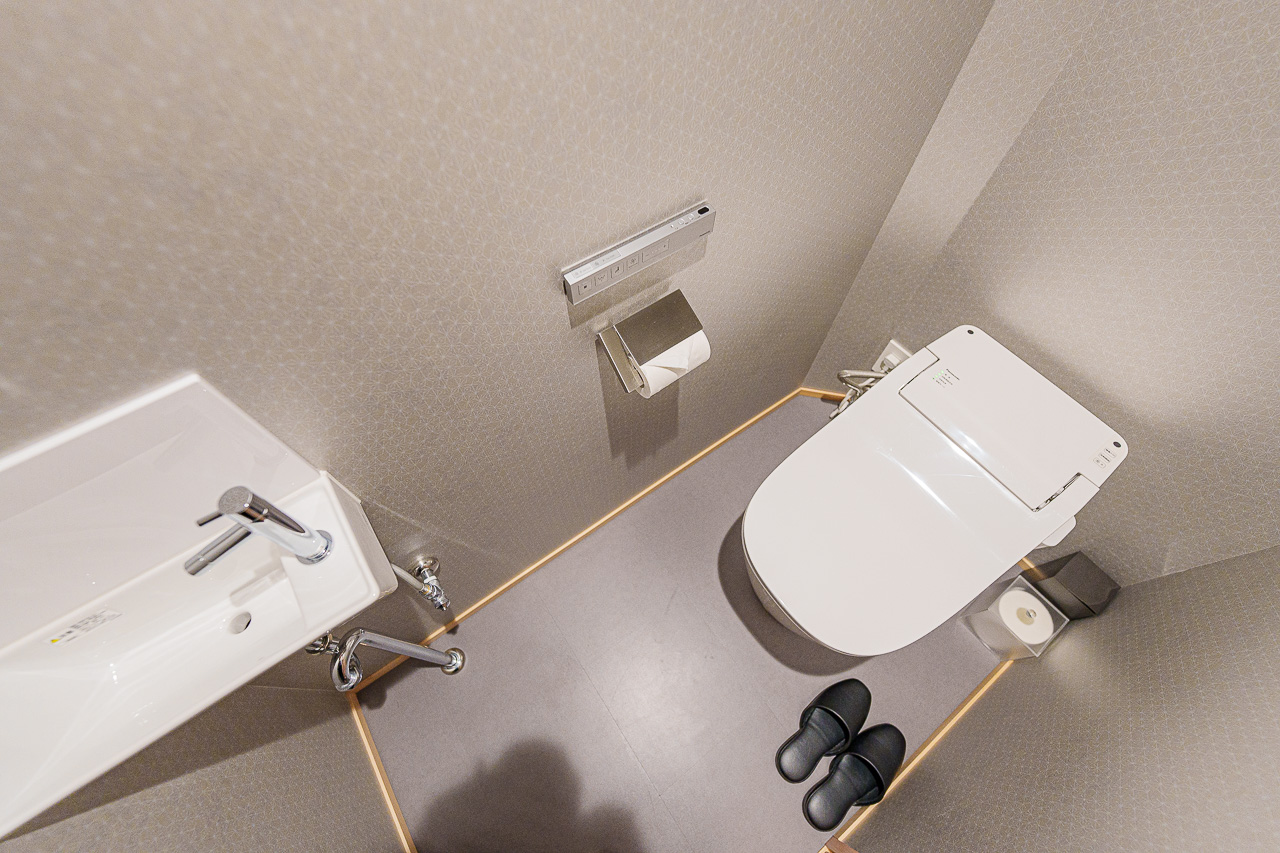
A separate toilet was convenient.

The account says Kyoto's shidashi meal-delivery culture developed in the Edo period, 200–300 years ago.
For dinner I tried the hotel's shidashi arrangement.
Reservations were required by 3 days before the stay. Choices were Ume, ¥3,240; the Tsuki shidashi box, ¥4,320; or the Matsukado shidashi box, ¥5,400, using the source's meal names. I reserved the Matsukado box.
https://urakata.in/new_reserve/courses/omo5_gion?center_id=942
OMO5京都祇園 by 星野リゾート/祇園おせわがかり
© 2015 - 2022. OMO5京都祇園 by 星野リゾート/祇園おせわがかり All rights reserved. powered by ウラカタ
urakata.in
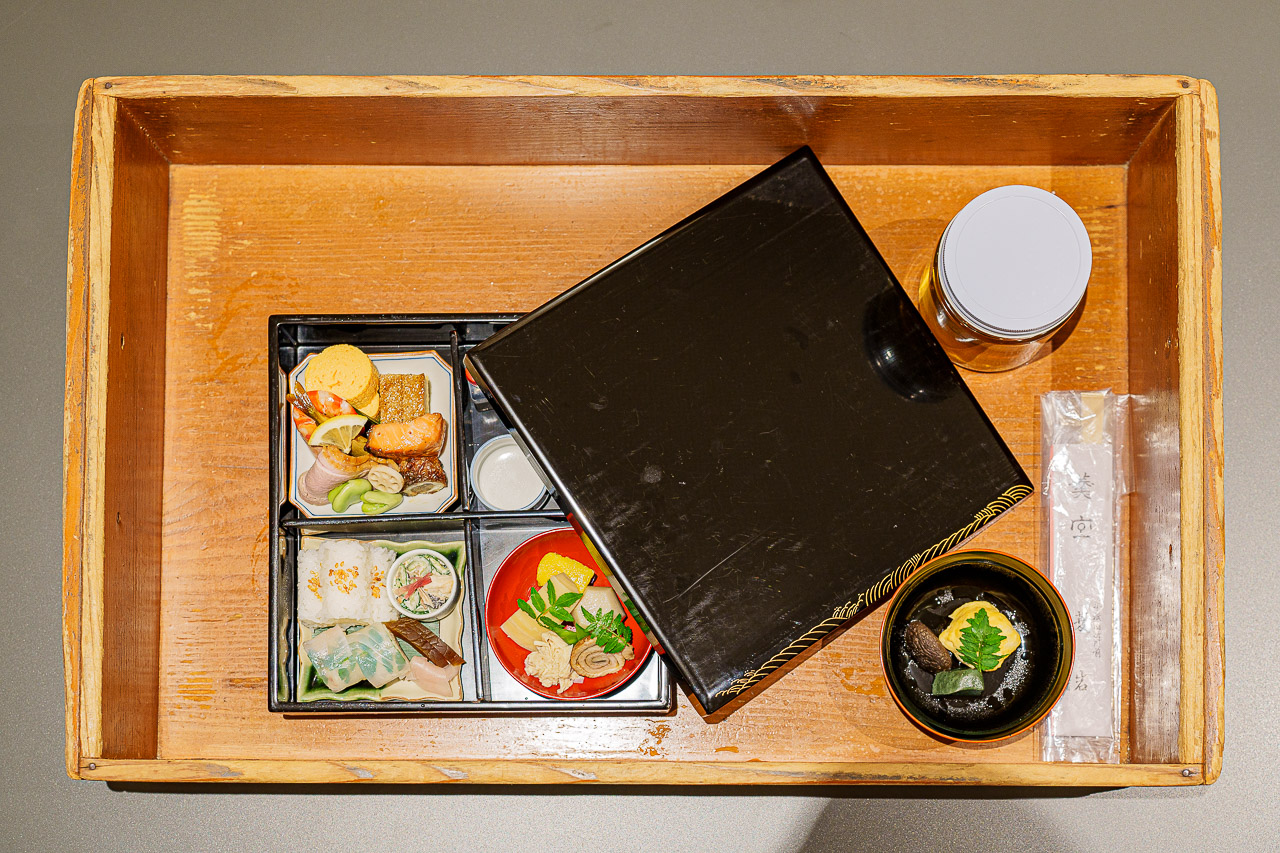
At around 18:00, hotel staff knocked on the room door.
The meal arrived in a large wooden carrying box holding a refined food container.
I was told the shop's delivery riders carried at least 5 of these boxes on a shoulder while cycling.
Even one was heavy, so that was impressive.
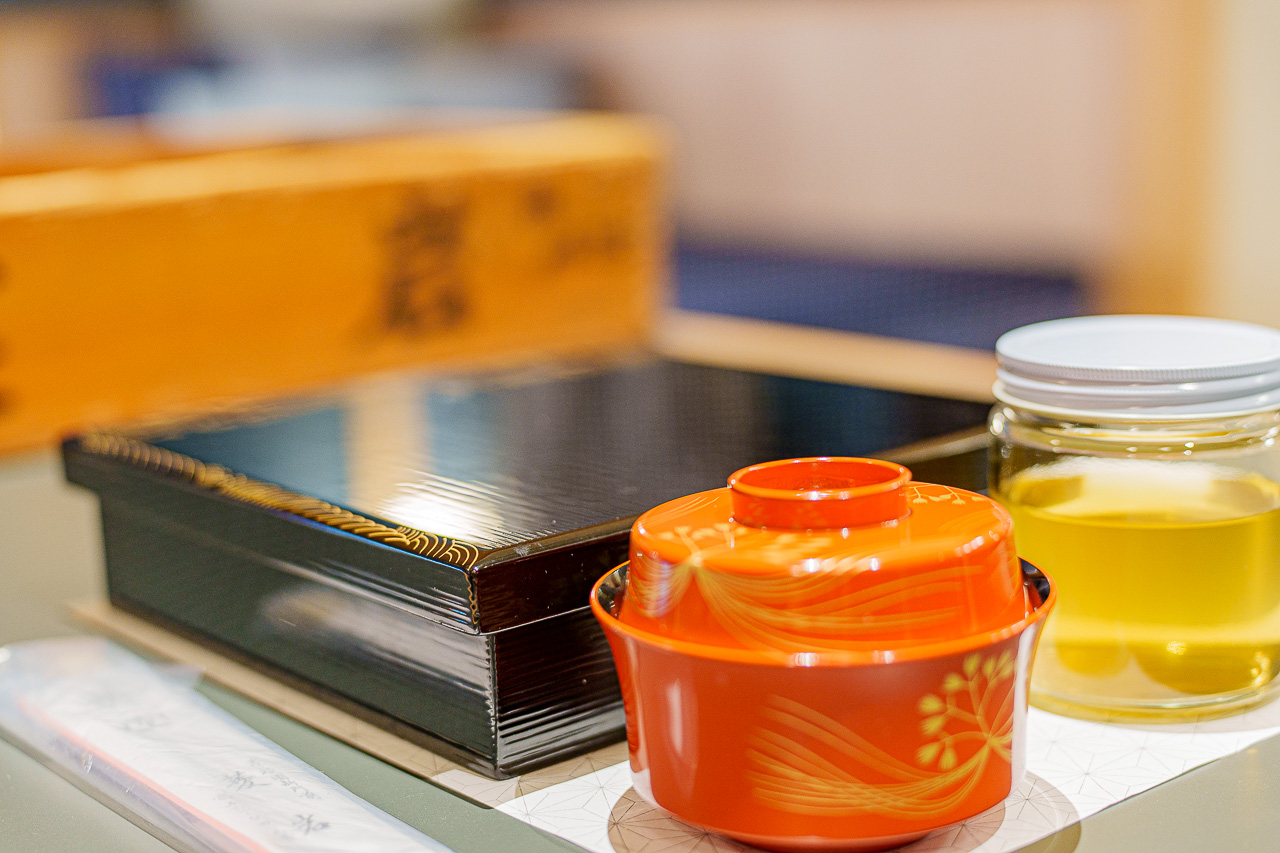
The explanation said Gion's attention to etiquette extends to the meal's orientation: the gold stripes should face the diner.
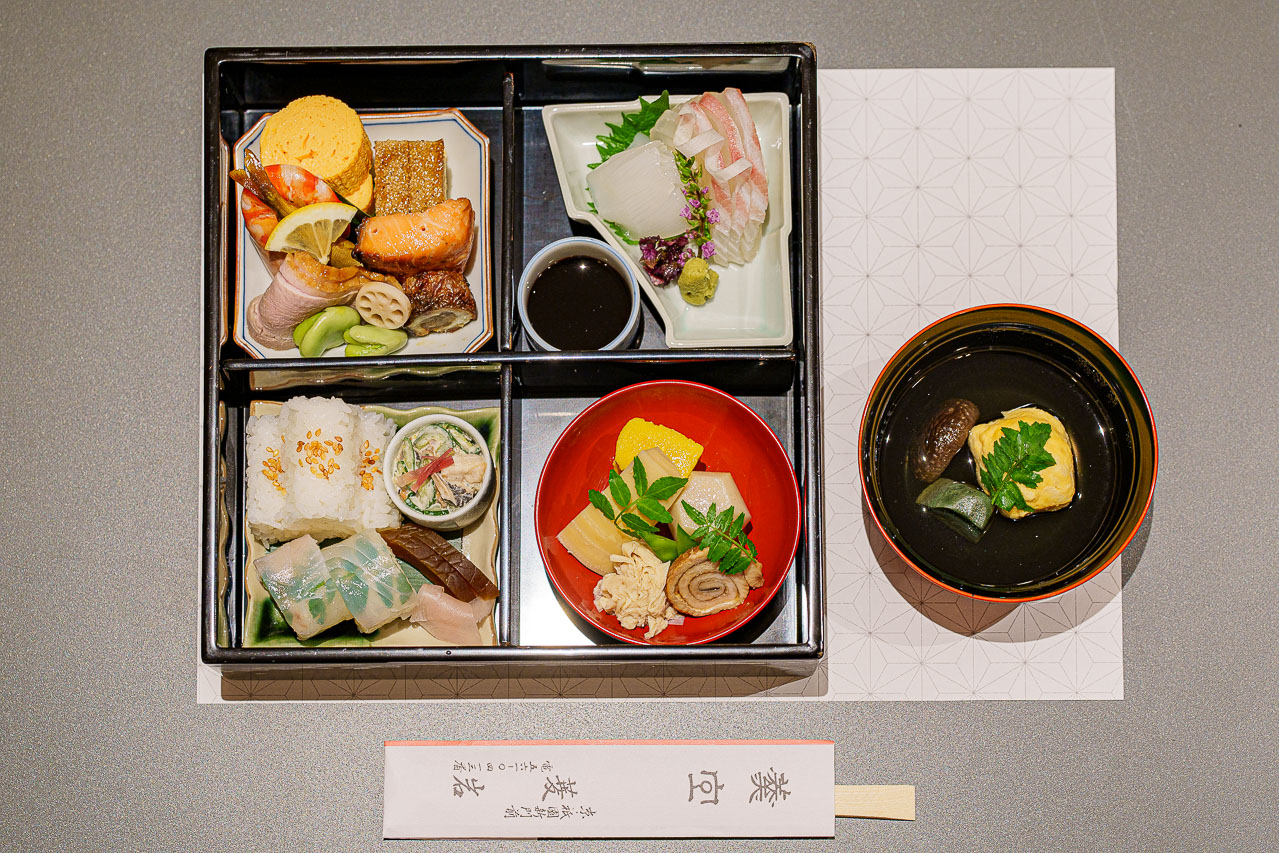
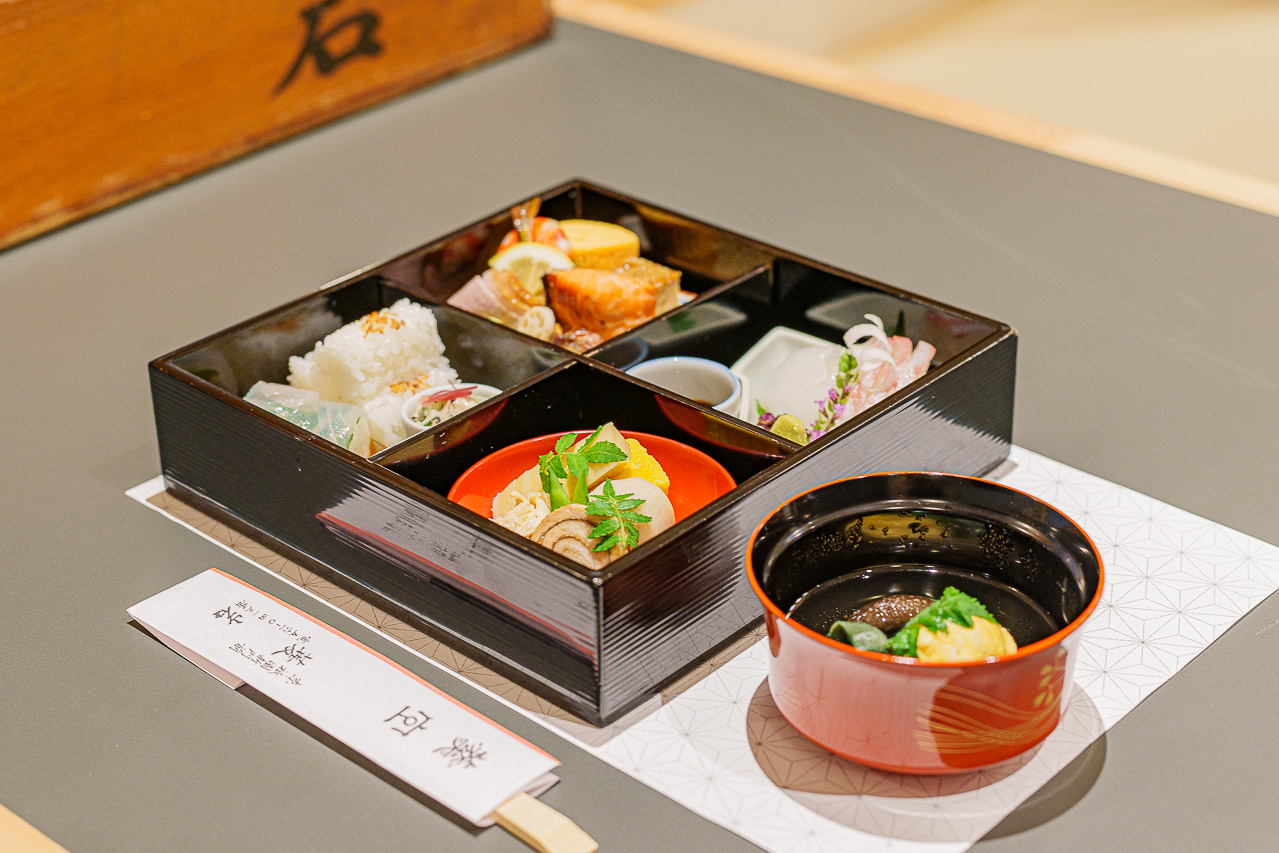
Opening it revealed neatly arranged dishes.
Looking up the name rendered Hisaiwa in this account, I found it described as a 200-year-old establishment.
Having a delivered meal from such a business felt like an unusual opportunity.
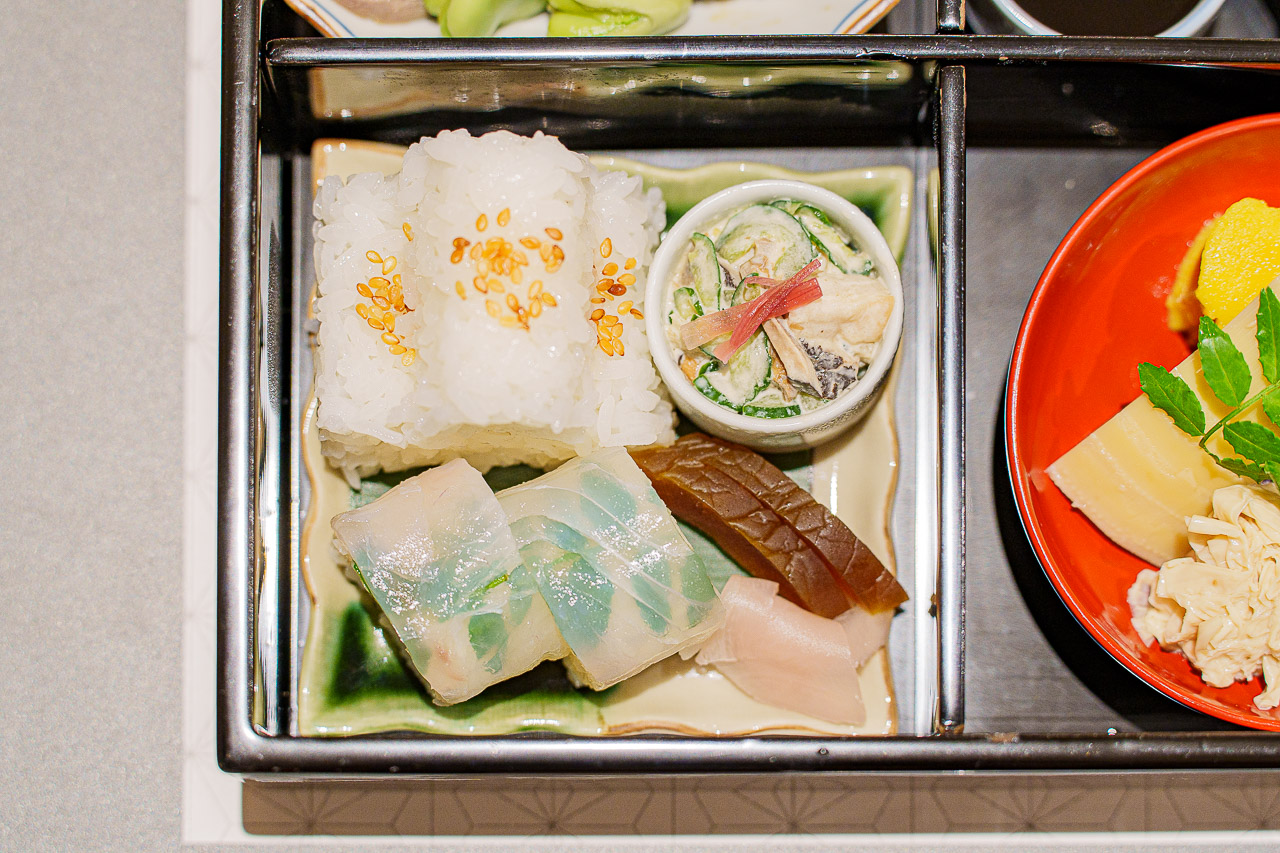
Many of the dishes were unfamiliar to me.
The lower row held rice, sushi, pickles,
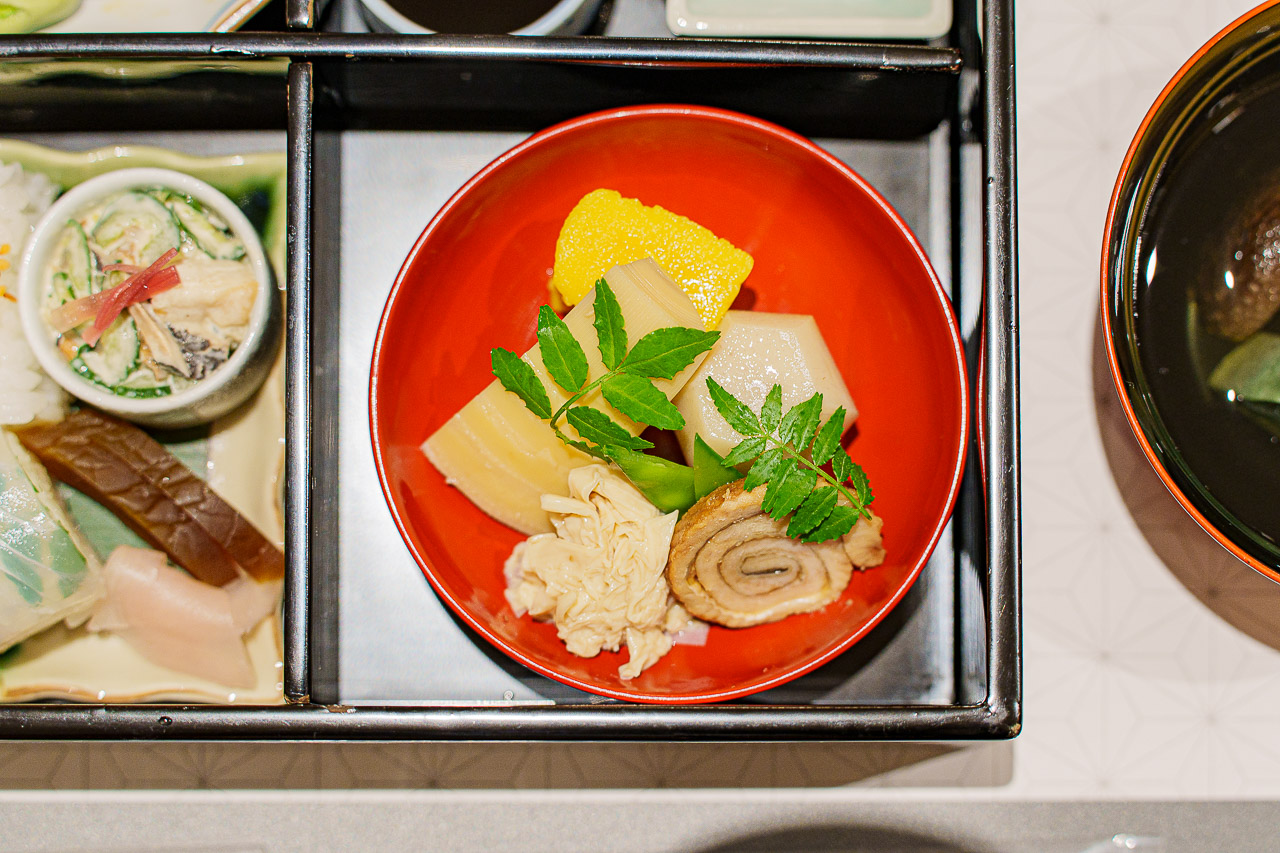
tender bamboo shoots, yuba, eel, rolled egg and taro.
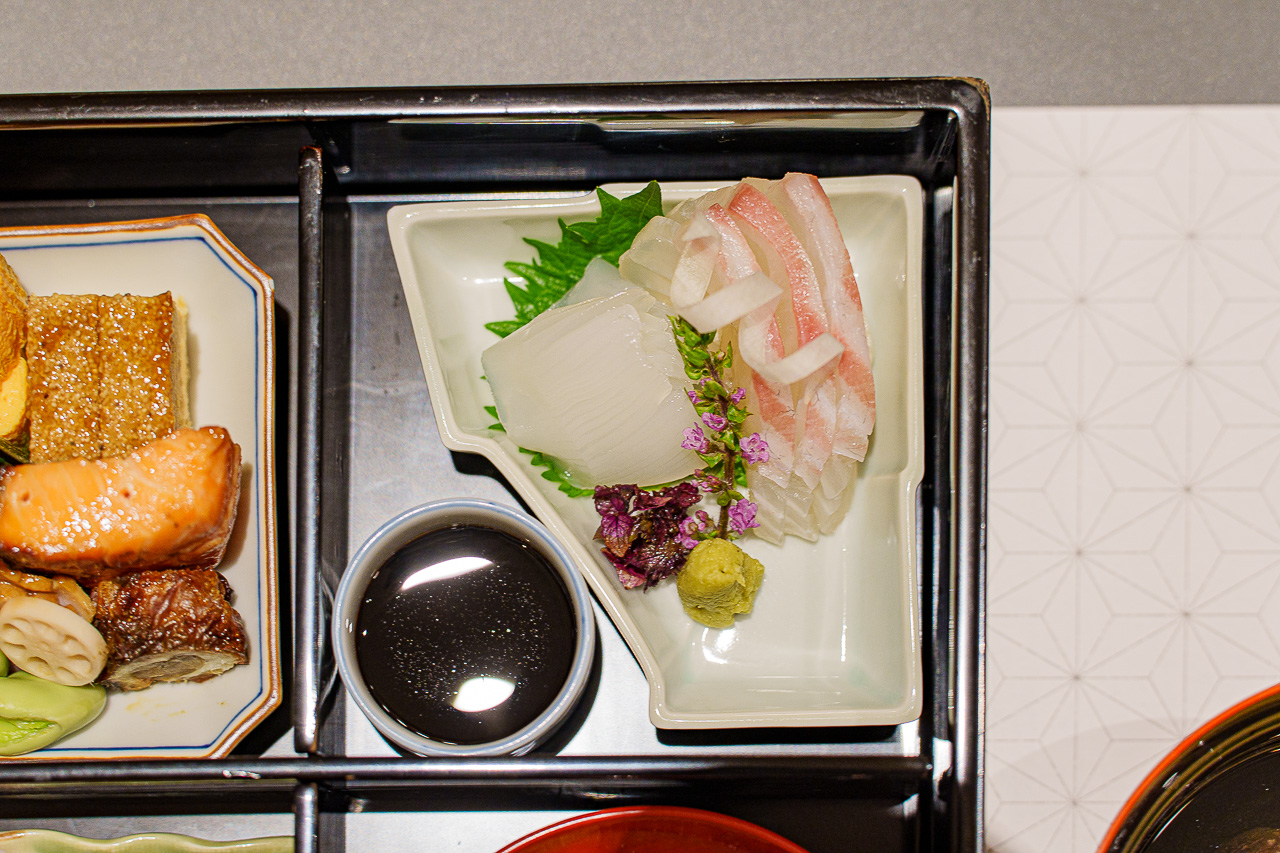
The upper row included fresh assorted sashimi,
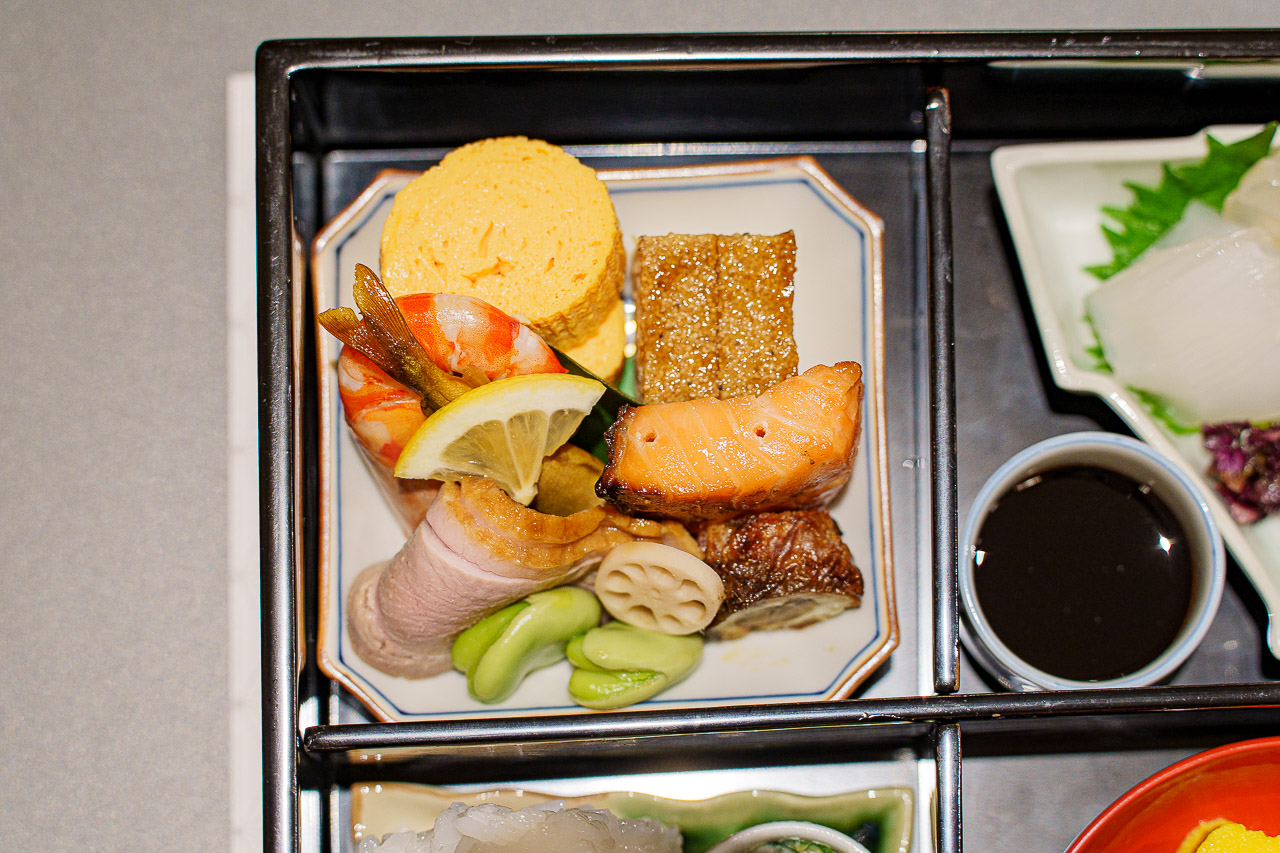
rolled egg, shrimp, grilled fish, duck, salmon, lotus root and beans—a wide and carefully arranged selection.
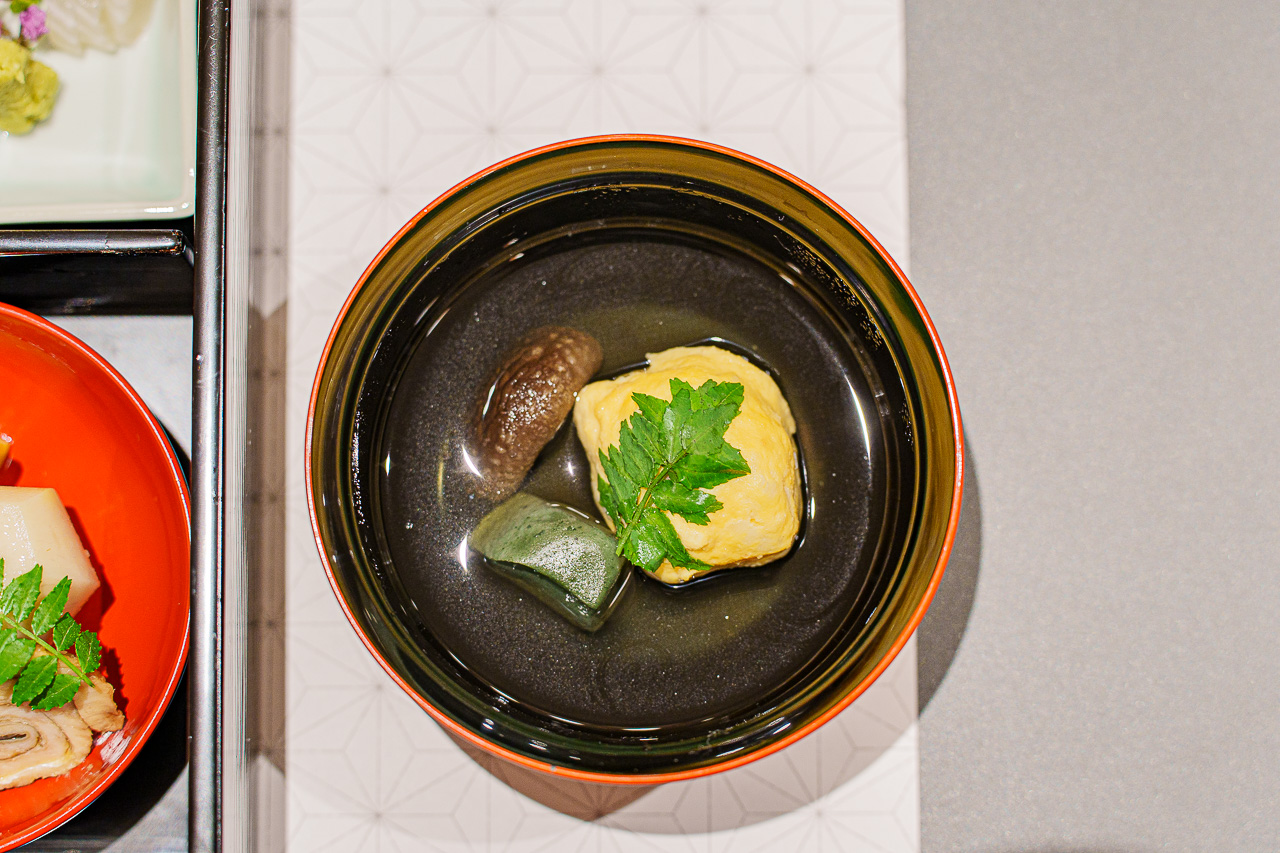
Soup stock and its ingredients arrived separately. Pouring the stock over them gave just the right savory flavor.
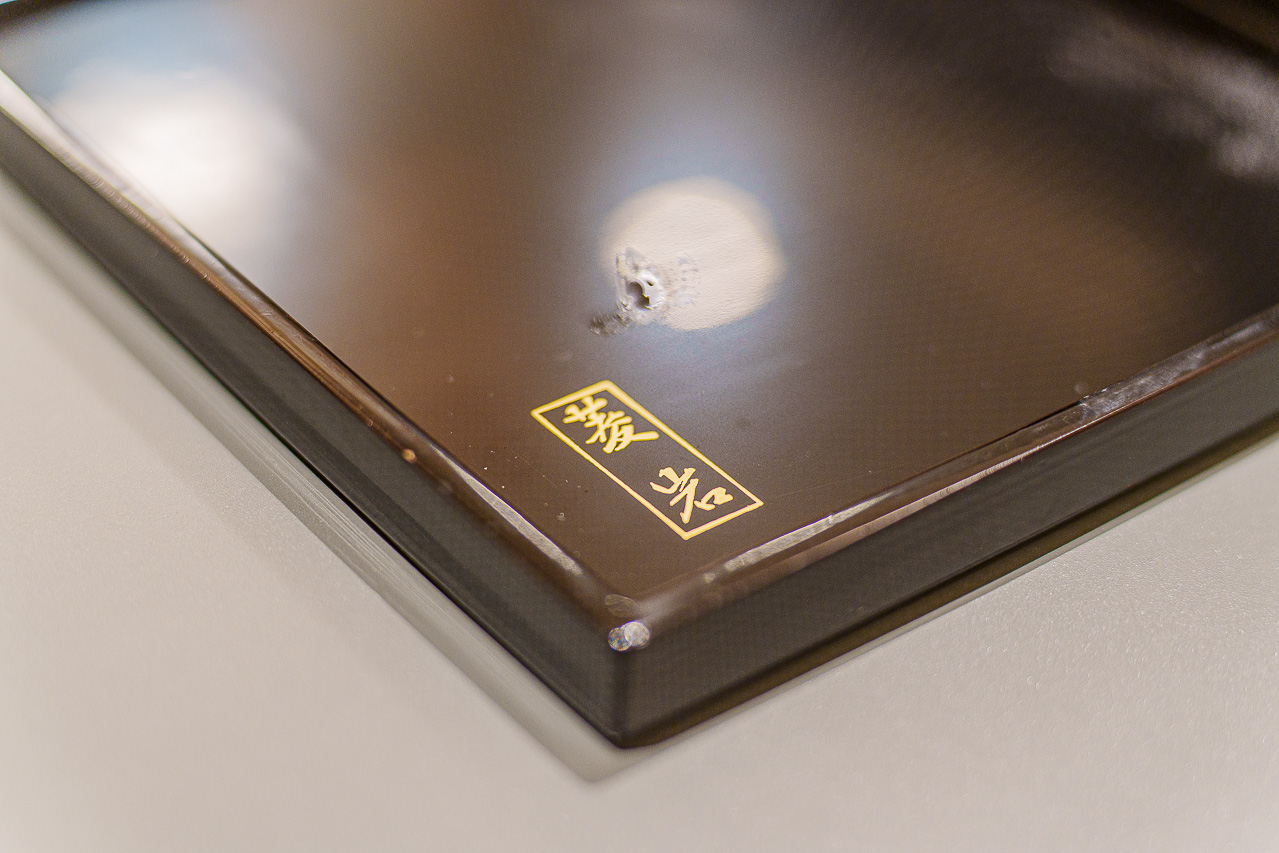
The account describes the Matsukado box as part of Kyoto's food culture, ordered from established cooks for weddings, celebrations or important guests.
In Kyoto, where some places require an introduction from a regular customer, tasting traditional food this way as a visitor felt special.
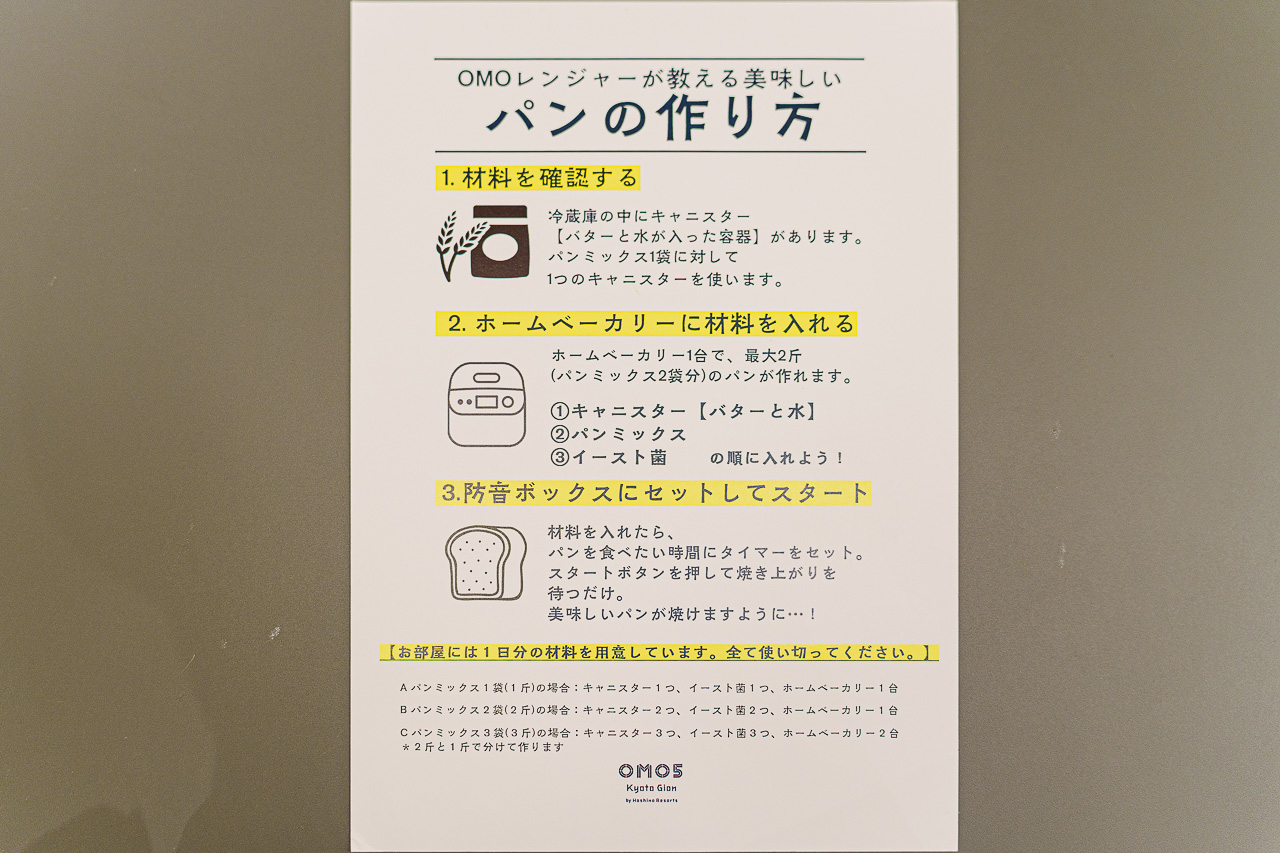
Before bed, it was time to try the breadmaker.

The illustrated instructions made it straightforward, but as they were in Japanese, I recorded the steps in photographs.
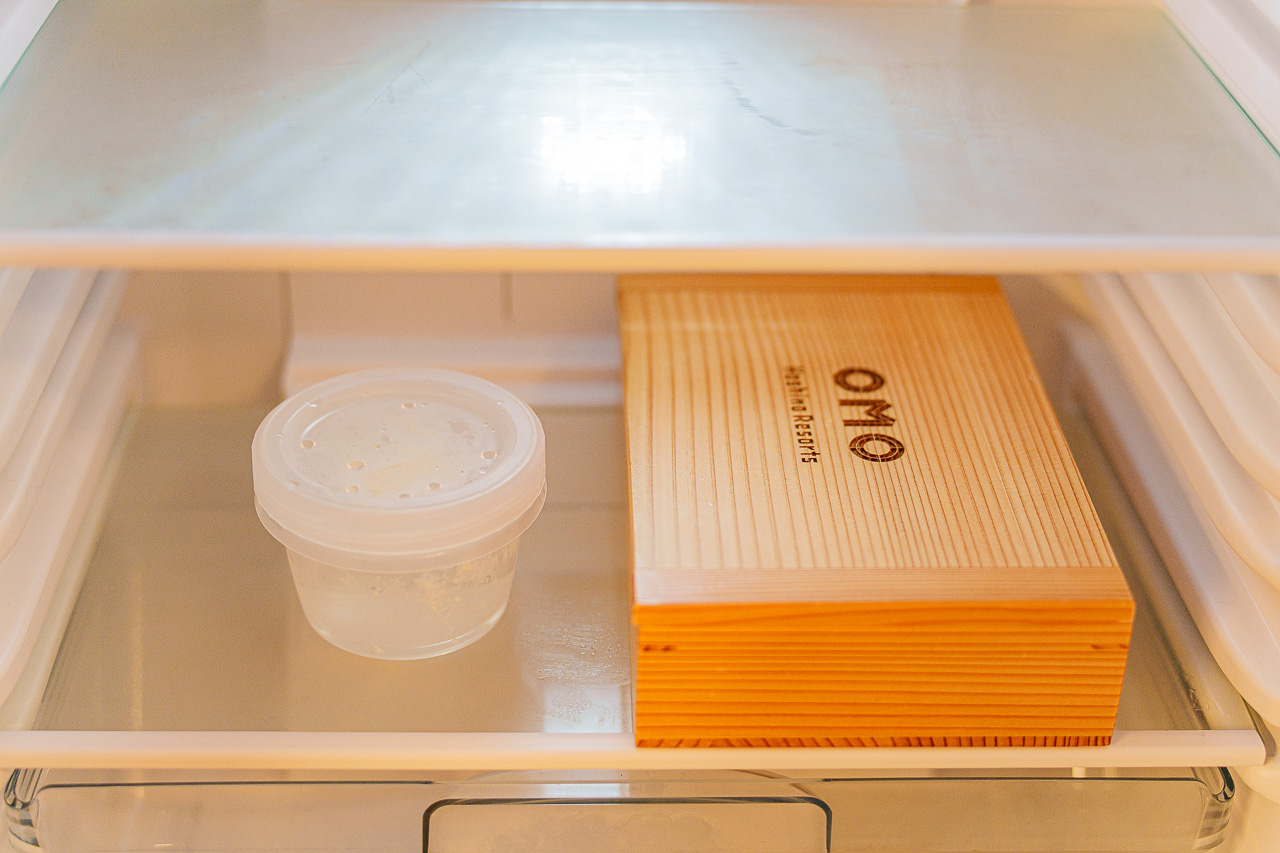
A container of water and butter was in the refrigerator.
I took it out first.
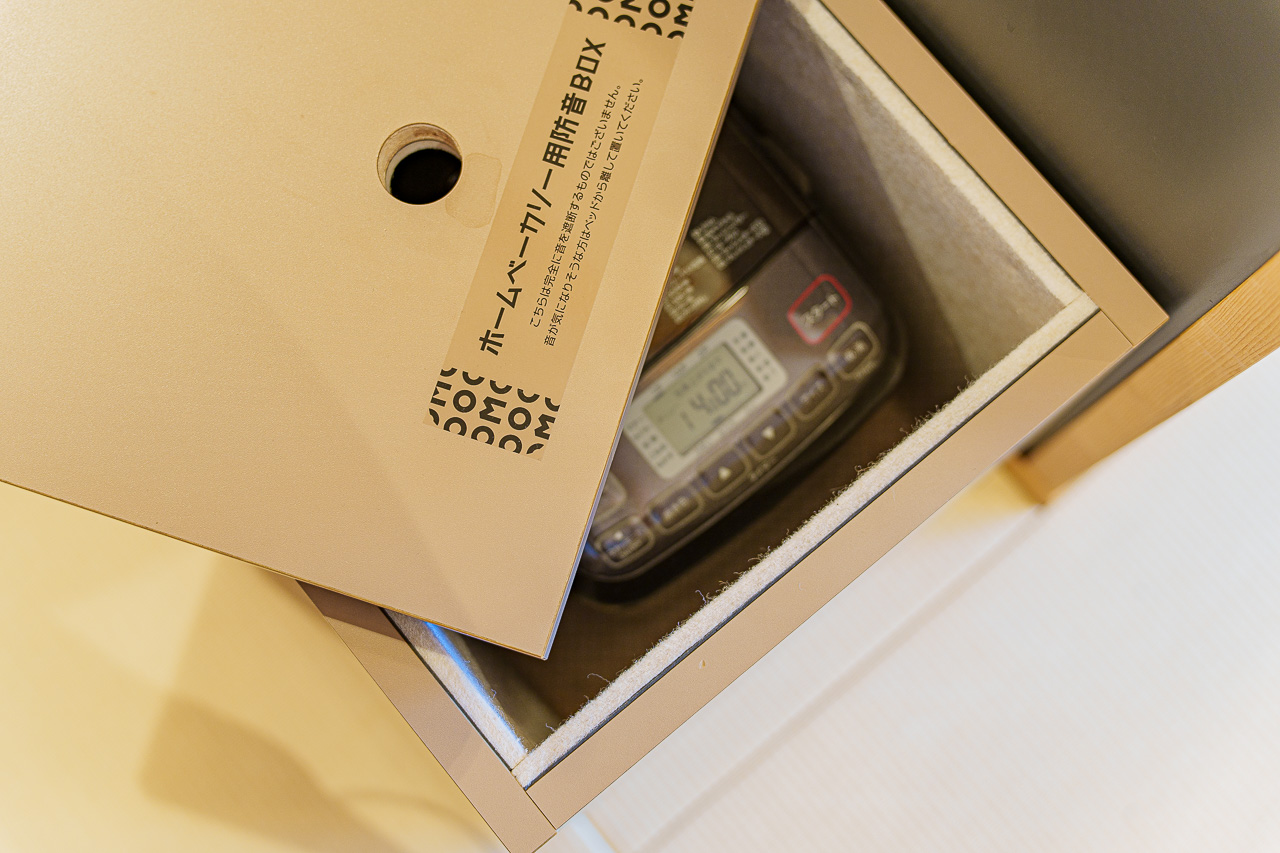
Then I took out the breadmaker and removed its inner pan.
A slight turn released it.
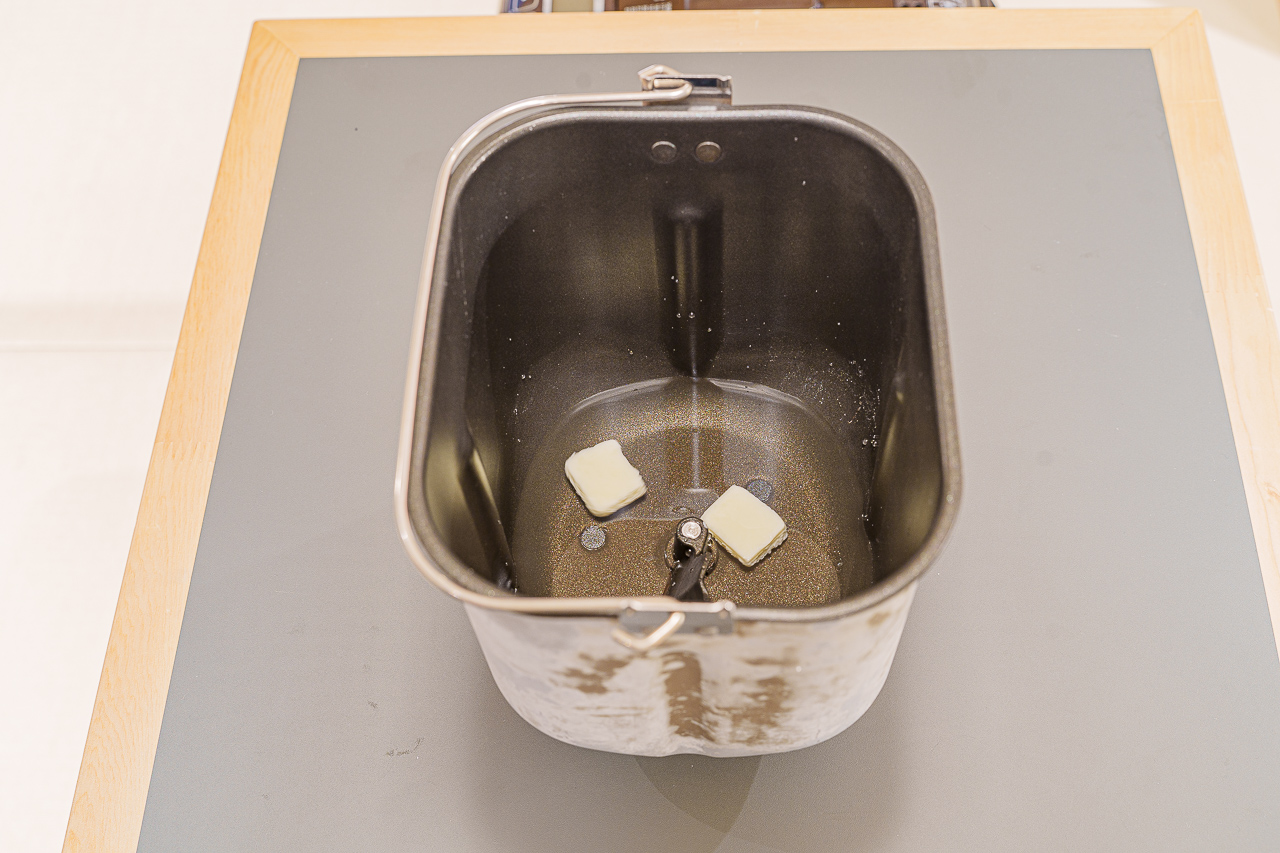
I poured the water and butter into the pan,
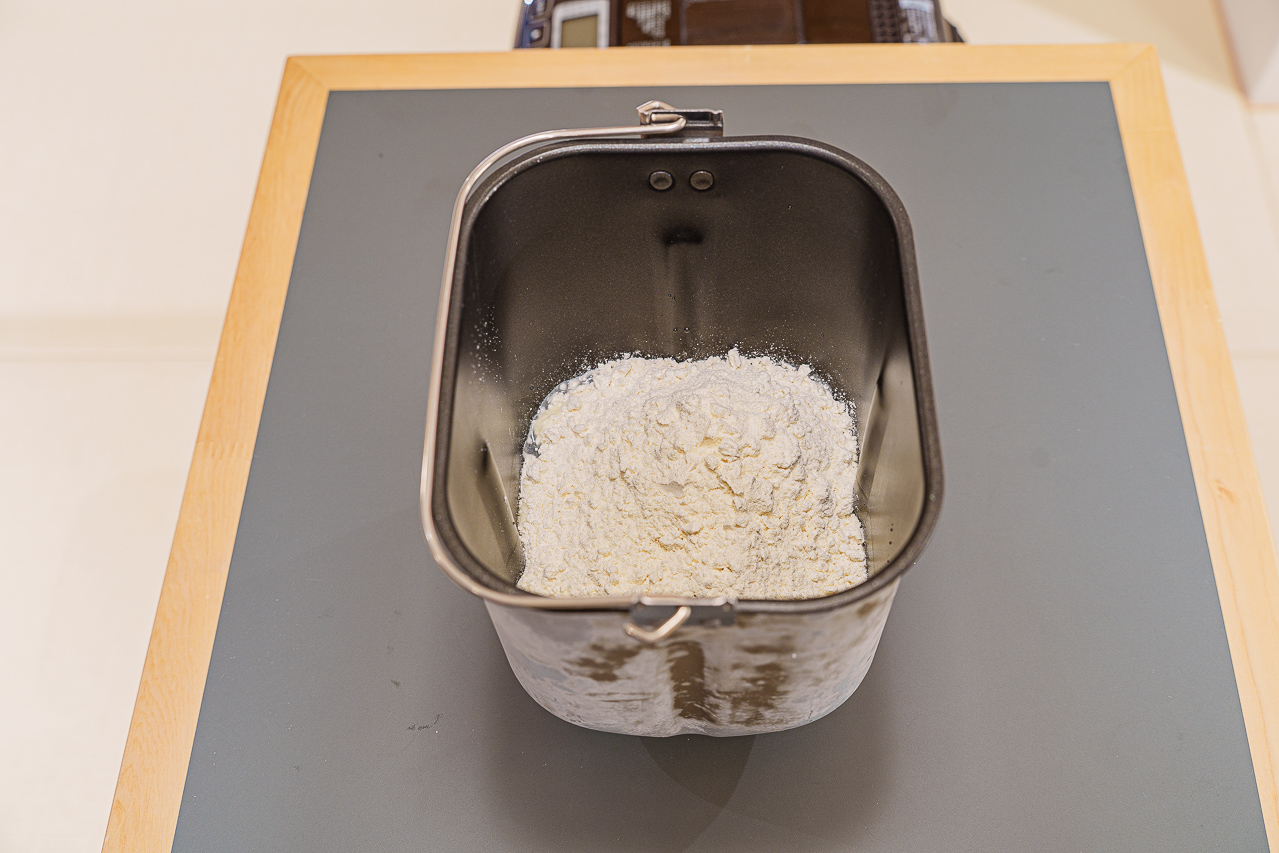
added the flour,
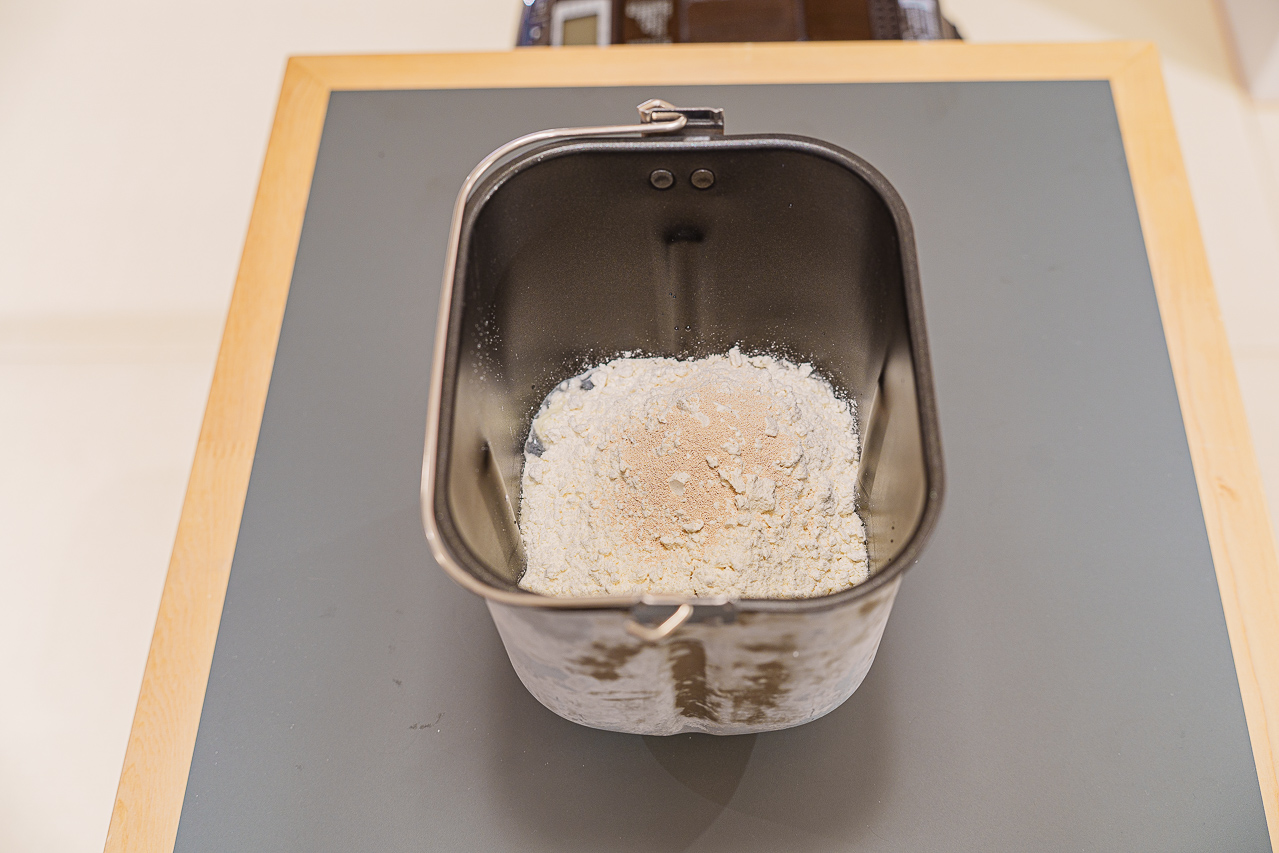
and added the yeast without letting it get wet.
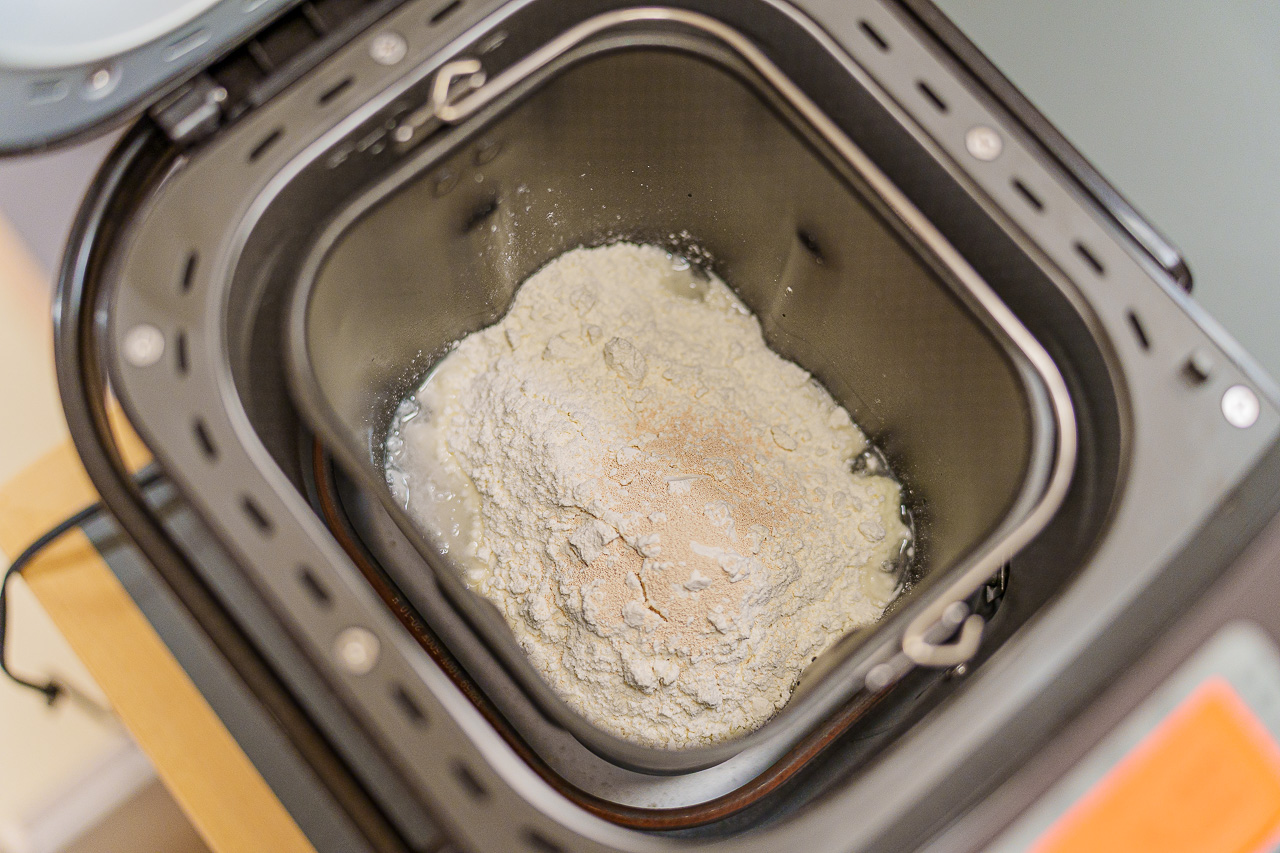
After carefully fitting it back, I closed the lid,
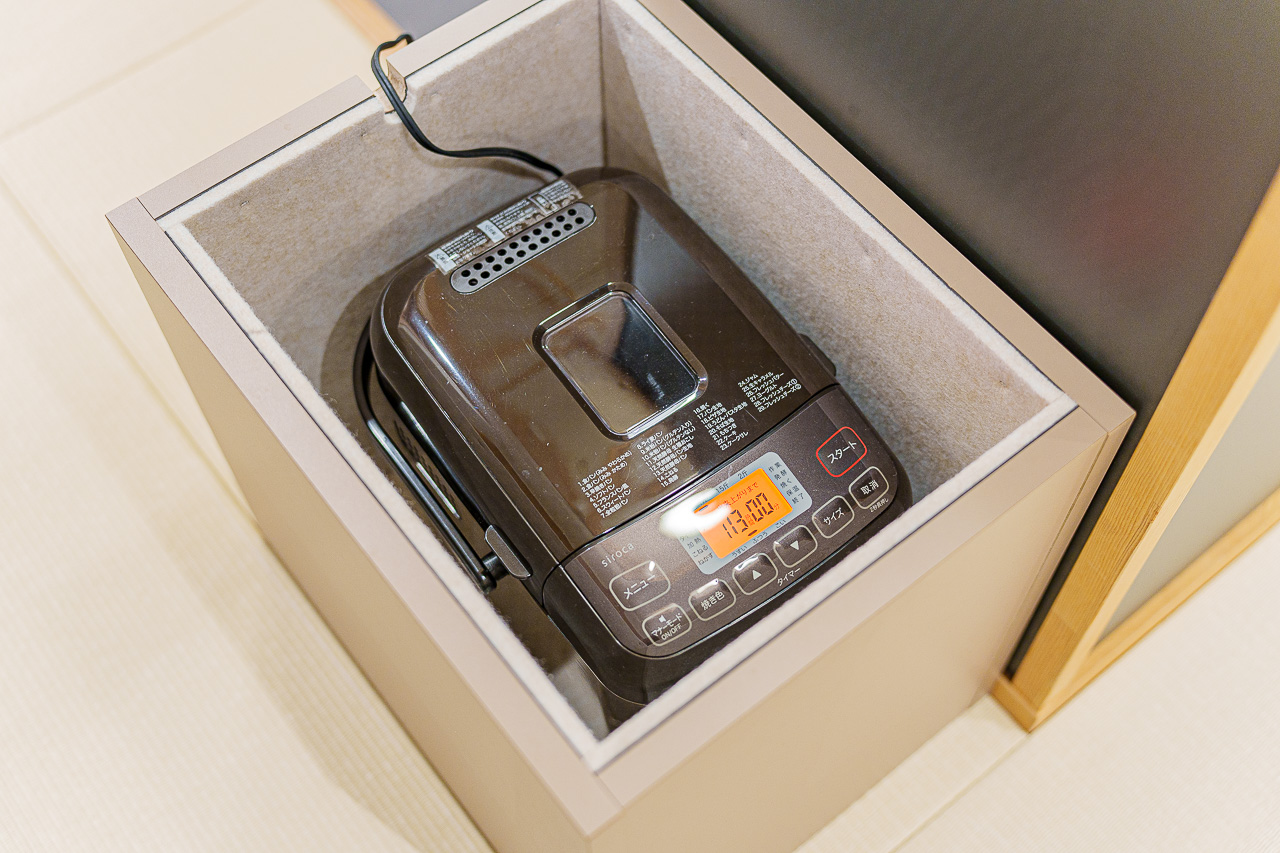
set the time and made sure to press Start. Forgetting that would spoil the plan.
As breadmaking makes noise, putting the machine in its sound-insulating box was important.
Closing the box finished the preparation. Easy enough.
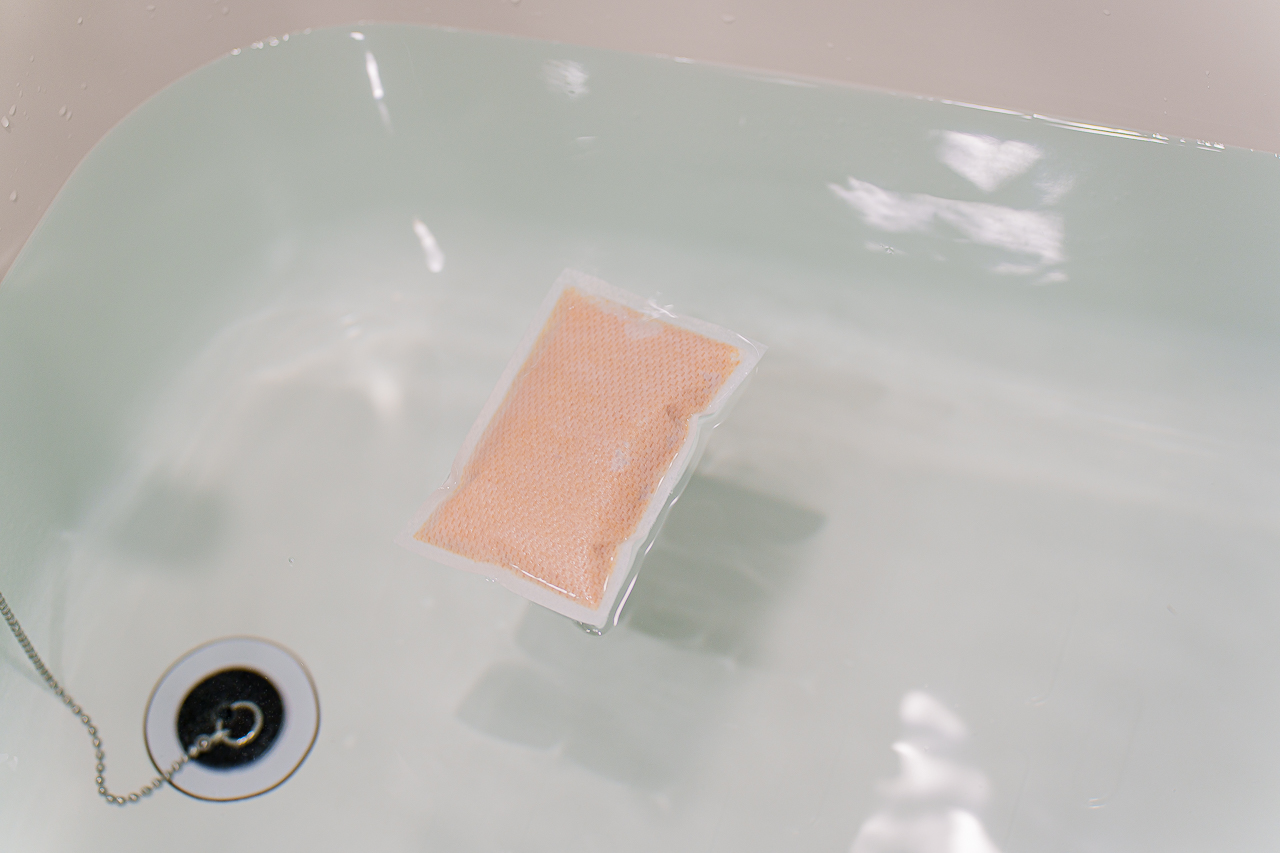
I took a bath before getting ready for bed.
The hinoki-scented bath additive bought downstairs made it feel like an upscale ryokan.
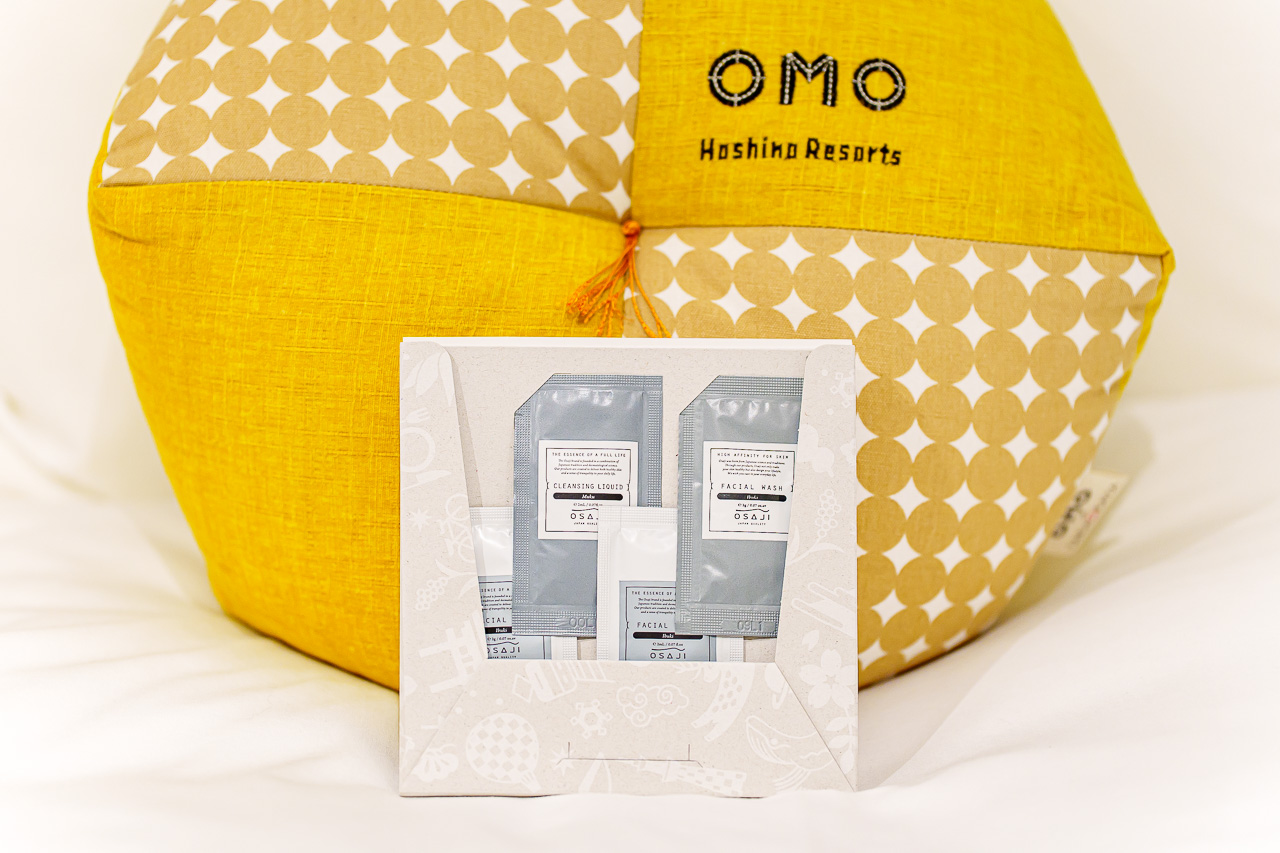
The OSAJI skincare smelled particularly good.
It was described as using natural ingredients, with an organic-feeling fragrance I liked.

OMO5 Kyoto Gion also had an OMO Ranger walking route.
Gion's Beautiful Morning Walk

Our OMO Ranger, Ottana-san, handed over a senjafuda-style name slip like the ones associated with Gion's geisha.
Staff reportedly rotate among the Kyoto properties, and by chance the same guide had shown me Sanjo too.
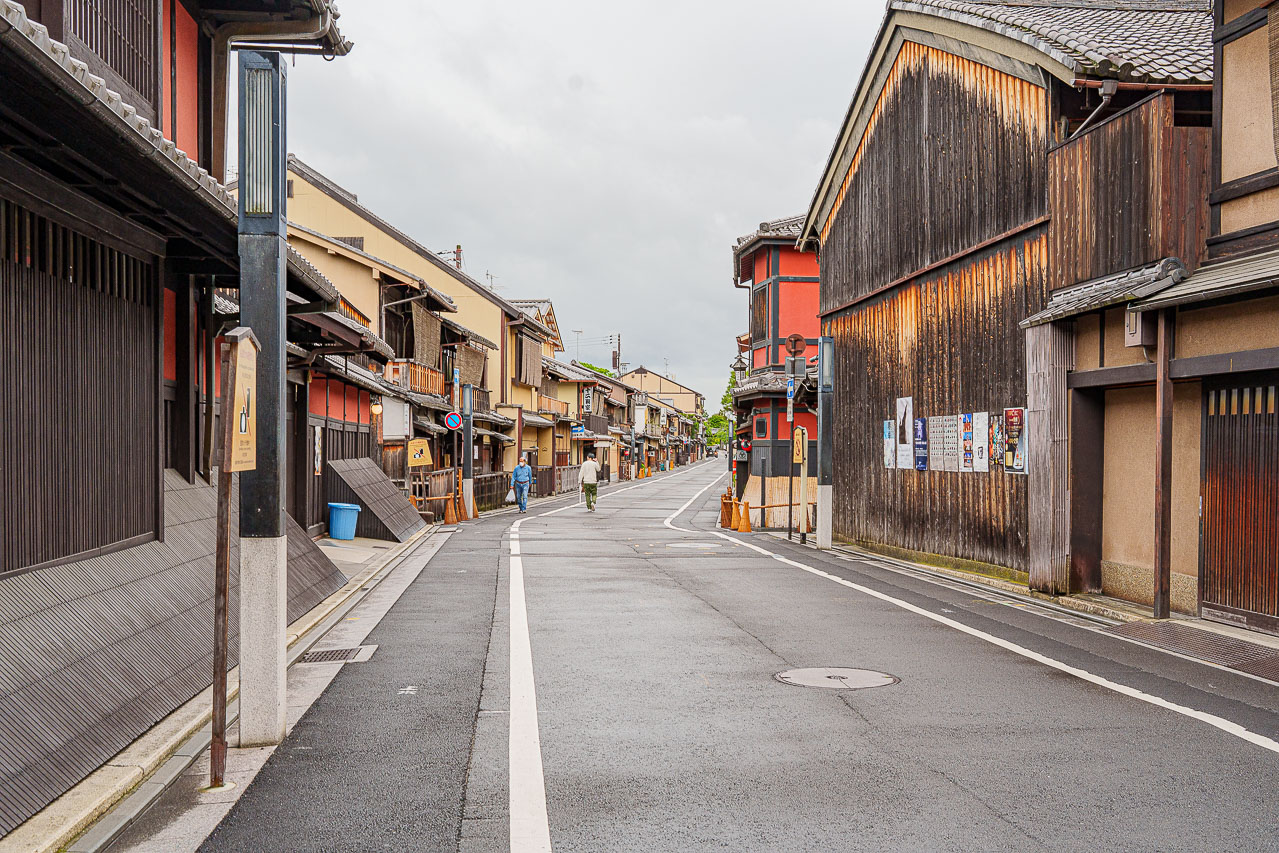
I was puzzled that Gion's streets did not look as I remembered.
I recalled tightly laid stone, but there was asphalt instead.
Asked about it, the guide explained that work below the road required temporary asphalt, with the stone surface to be restored afterward.
Maintaining history and tradition is not simple.
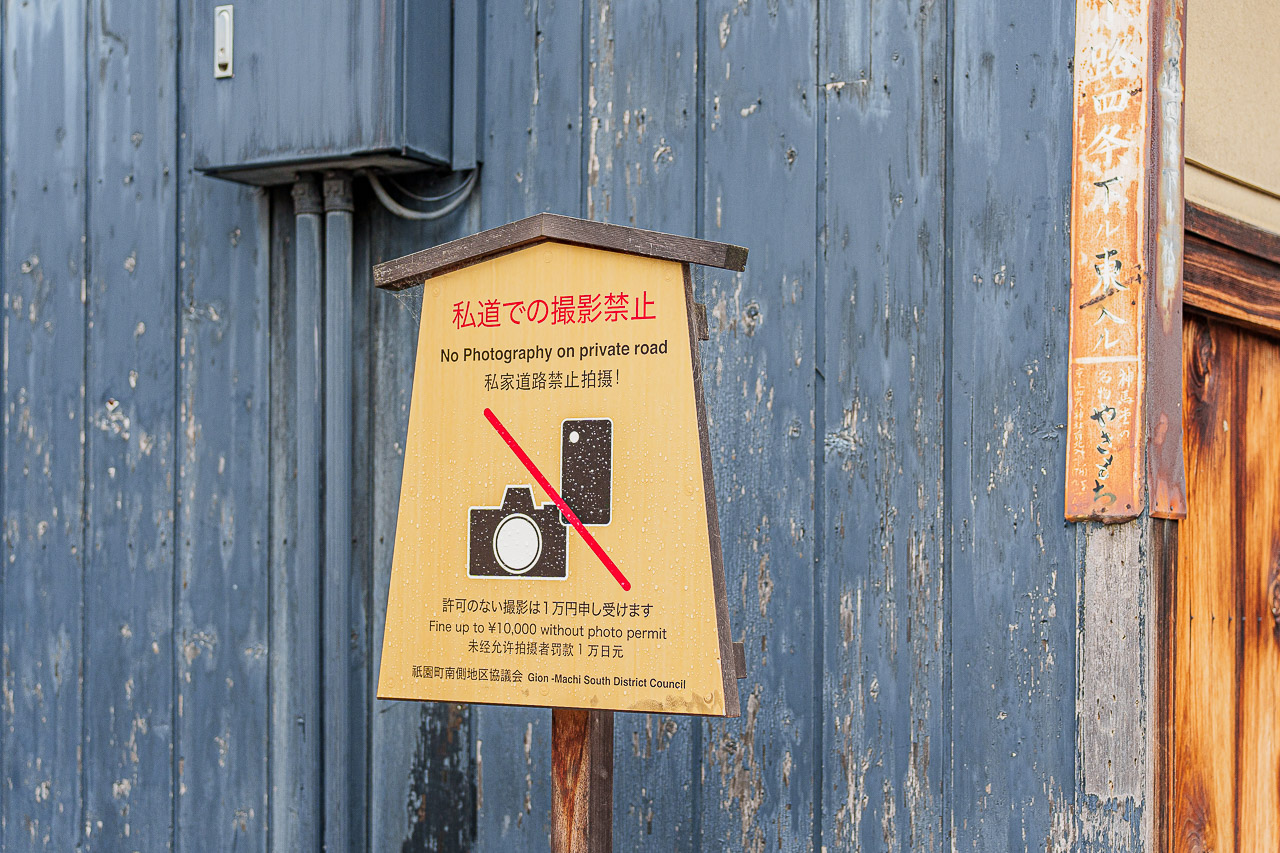
Kyoto's exacting side.
Signs prohibiting photography on private property stood in several places.
The original account interpreted these signs as warning of a ¥10,000 photography penalty even in spaces that looked like roads rather than house interiors. This is its dated description, not a verified current rule for all Gion streets.
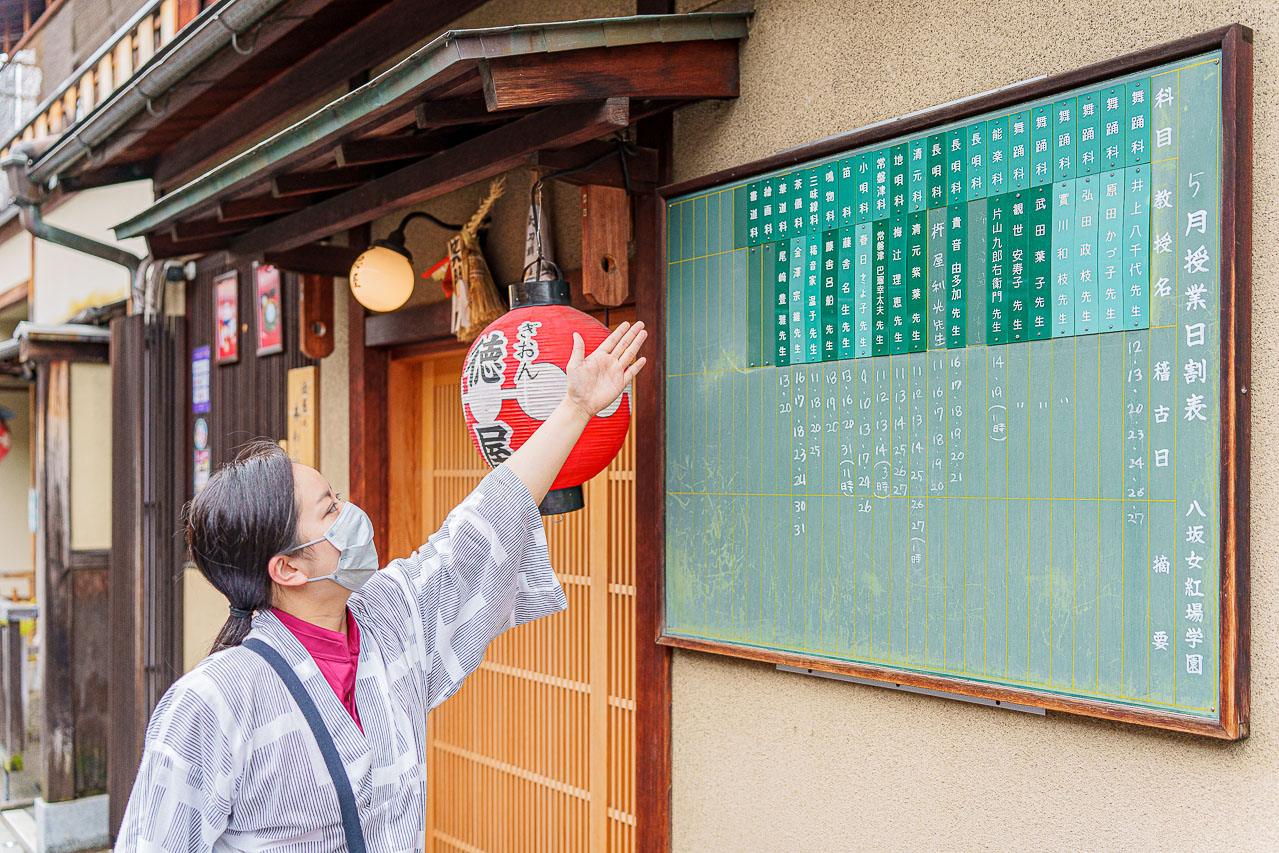
A school for training geisha.
Teachers' and students' names were displayed.

Kyoto houses had many sudare screens protecting privacy.
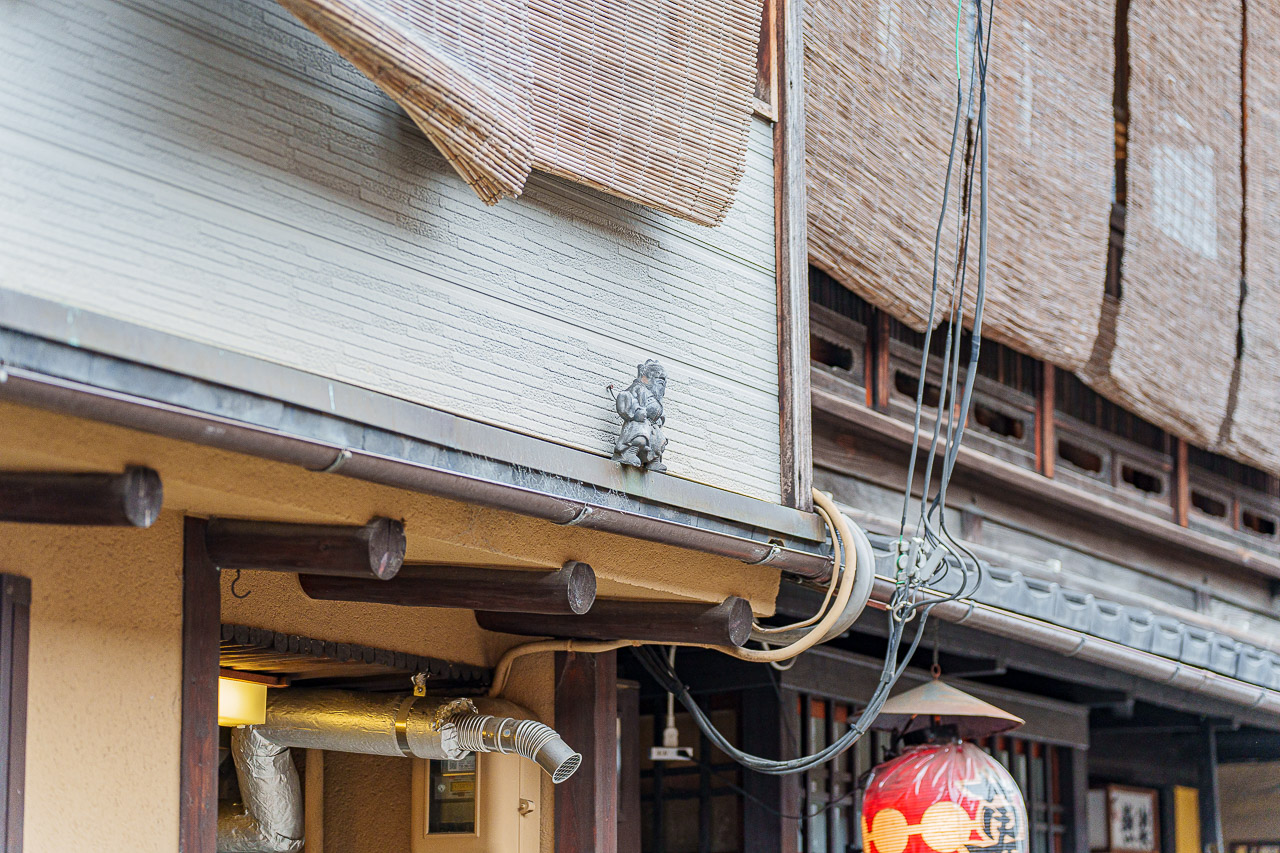
The account calls the roof guardians Shogi and says they ward off misfortune.
In the story, they look toward open space so the misfortune driven away does not enter another house.
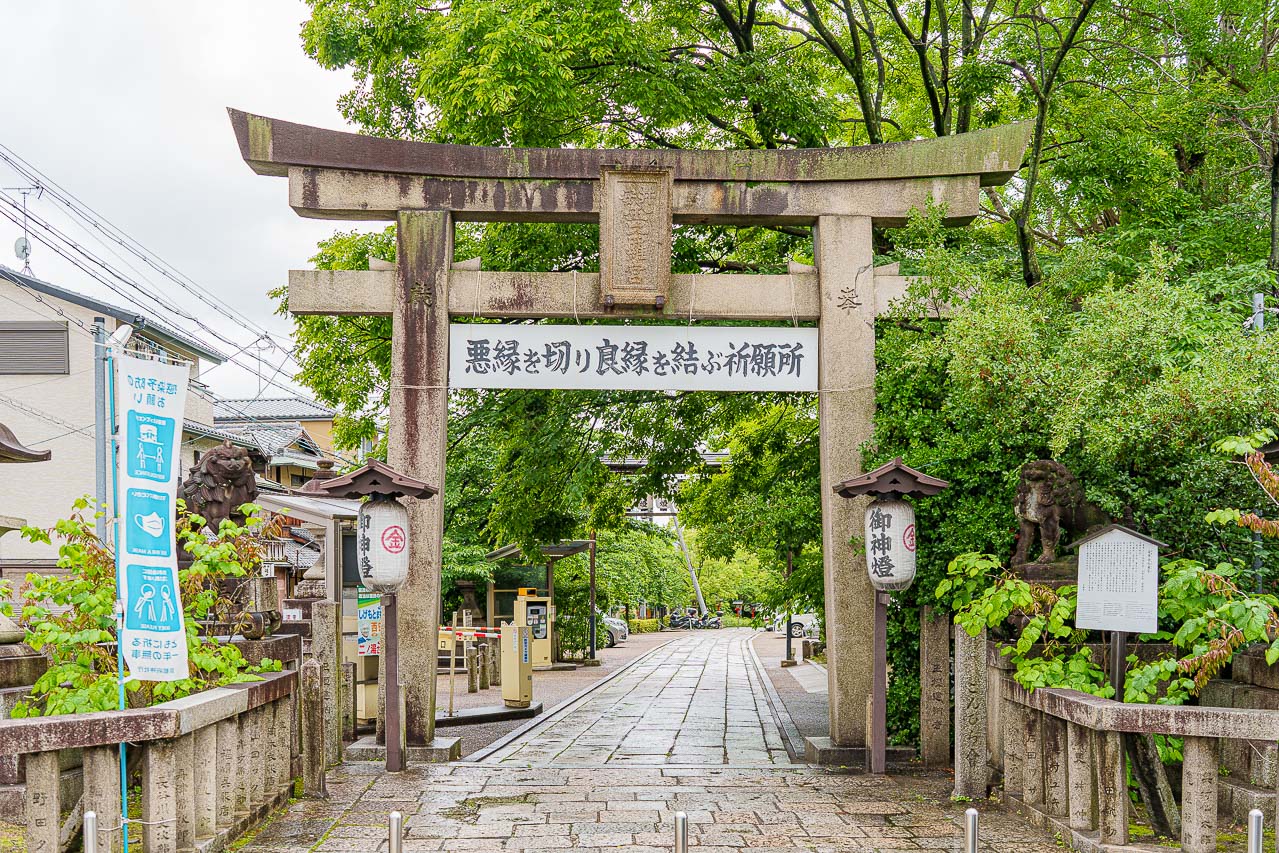
Listening to these stories, we reached Yasui Konpiragu.
People often visit shrines to pray for luck or health, but this one felt different.
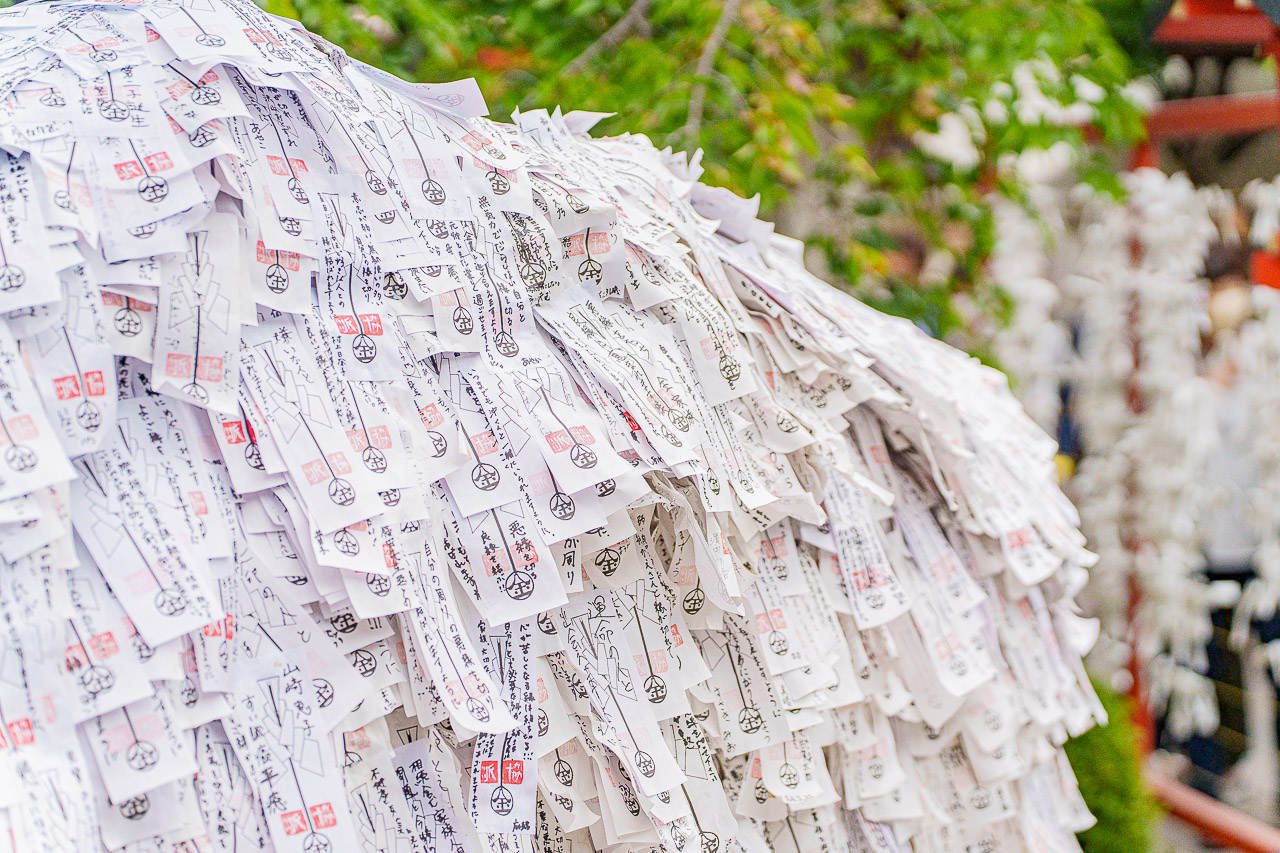
Known in the account for breaking unwanted ties, it had an unsettling atmosphere.
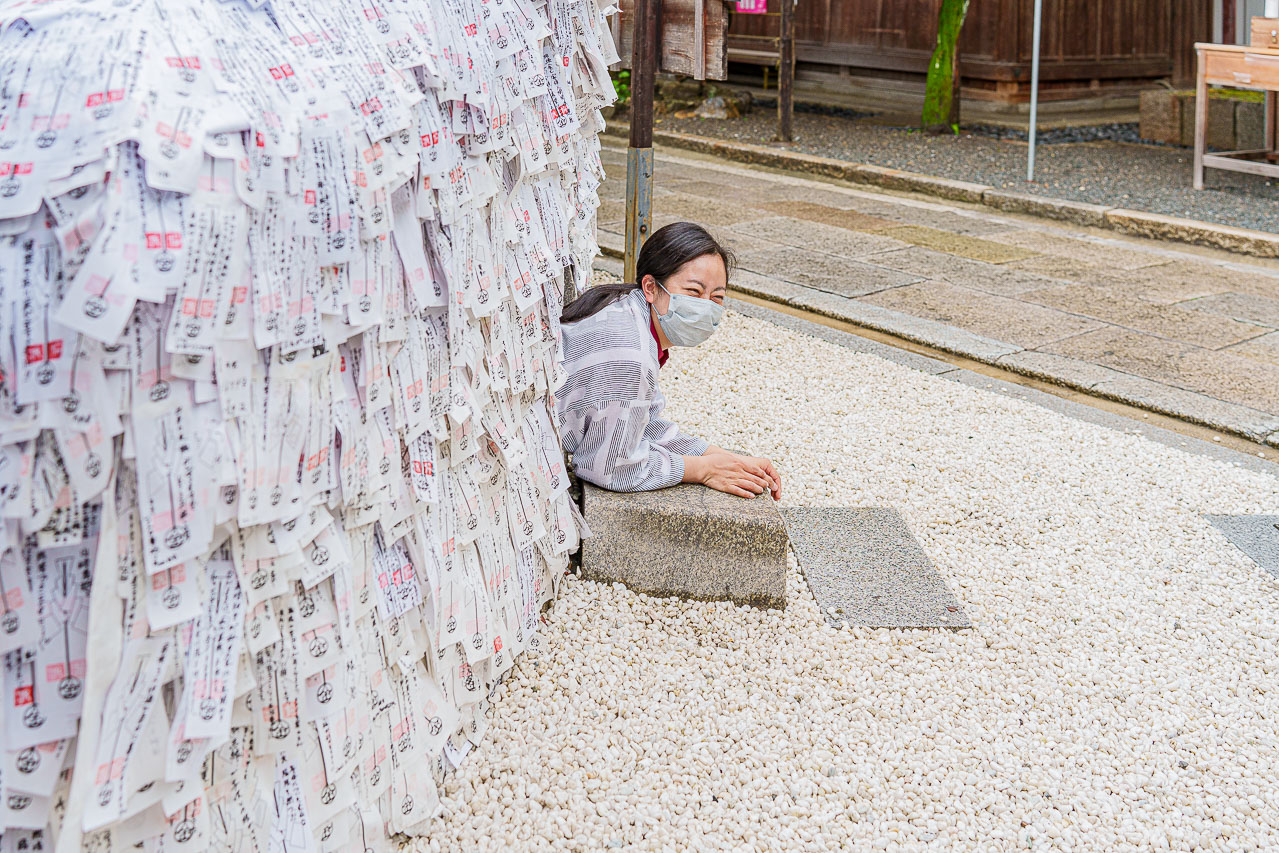
The ritual described involves writing the tie one wants to sever and passing through the stone's hole in both directions, said to cut bad ties and form good ones. This is a belief described in the source, not a guaranteed effect.
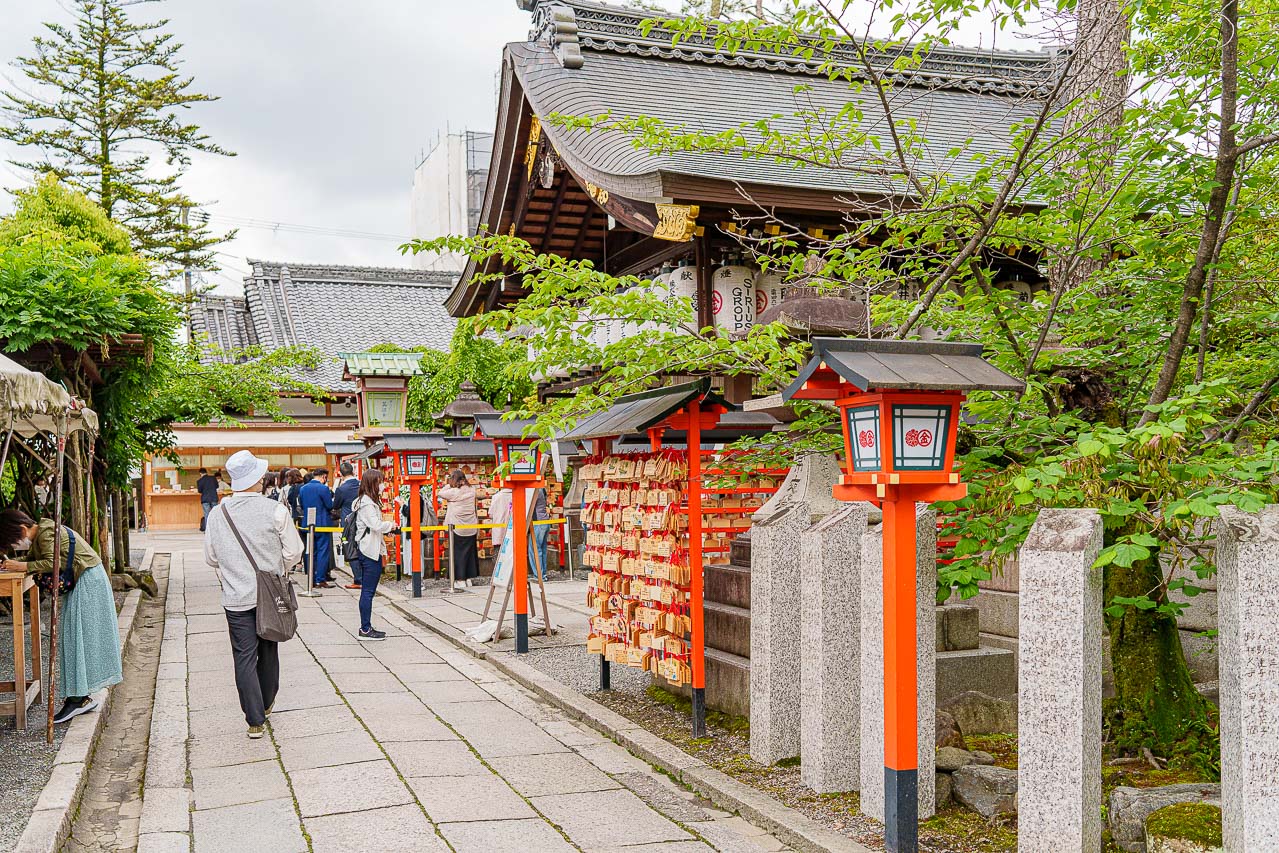
Photographing people's prayer plaques close up felt intrusive, so I took a picture from a distance.
A quick look suggested many requests such as 'let them forget me' or 'stop them contacting me.'
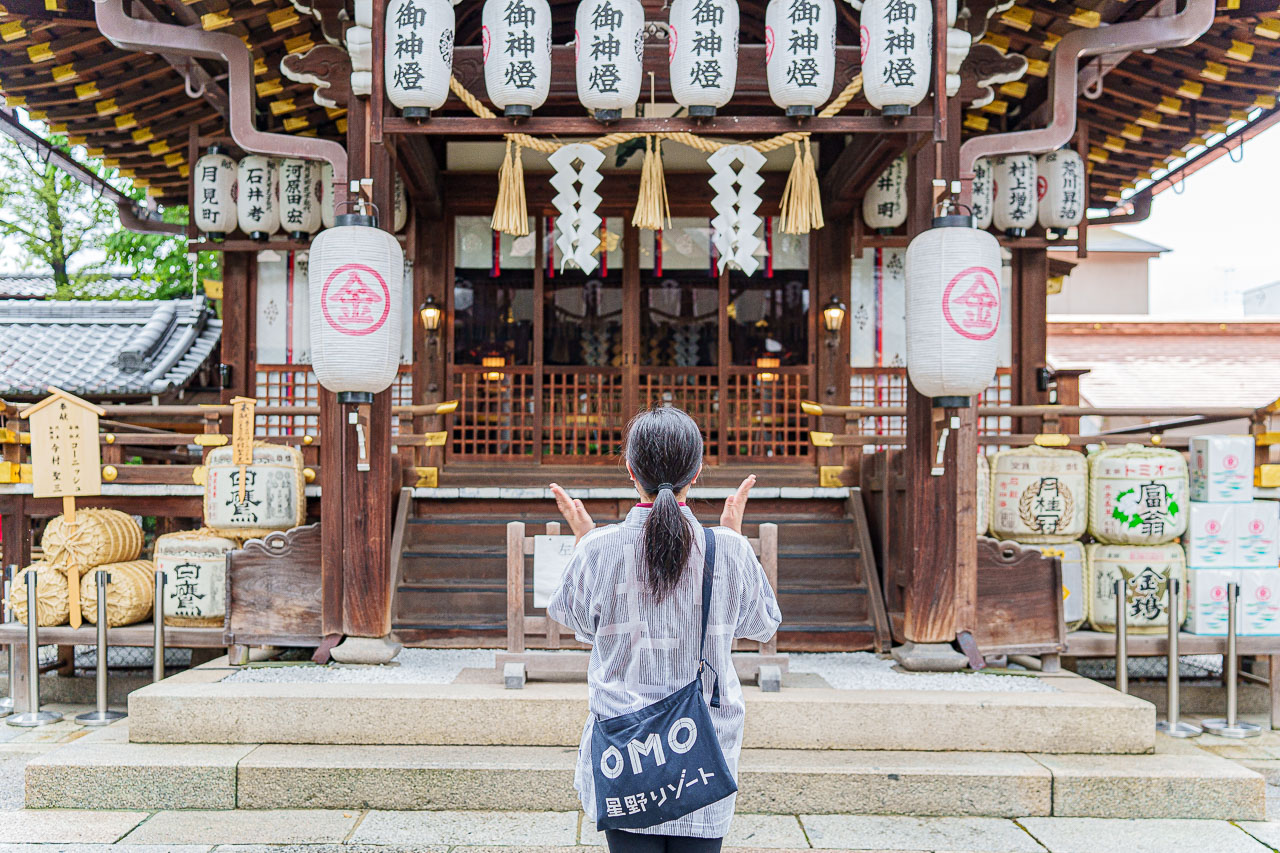
I offered a prayer with good intentions and moved on.

We also walked a little along Nene no Michi.
The guide said I was lucky: parked cars often make photography difficult, but not that morning.
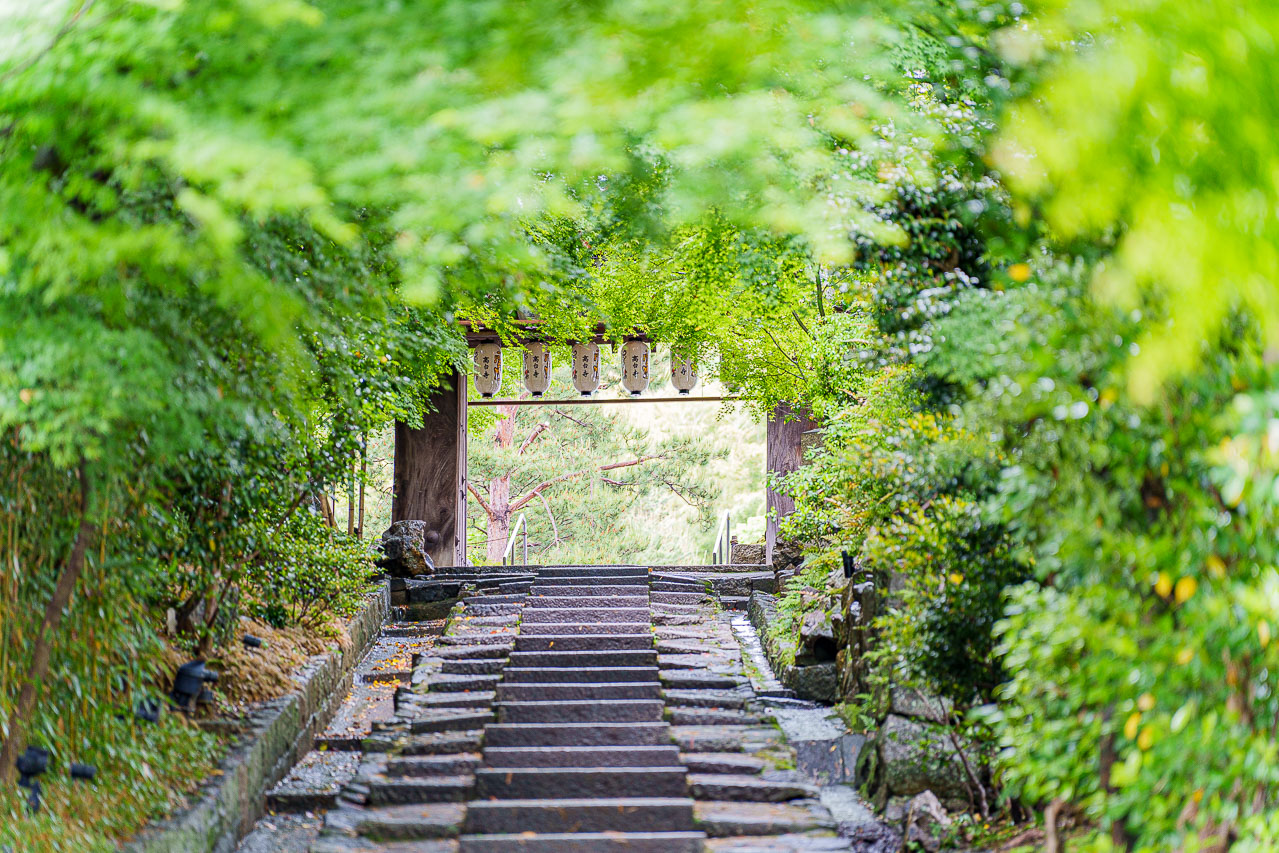
Almost every direction seemed to make a beautiful photograph.
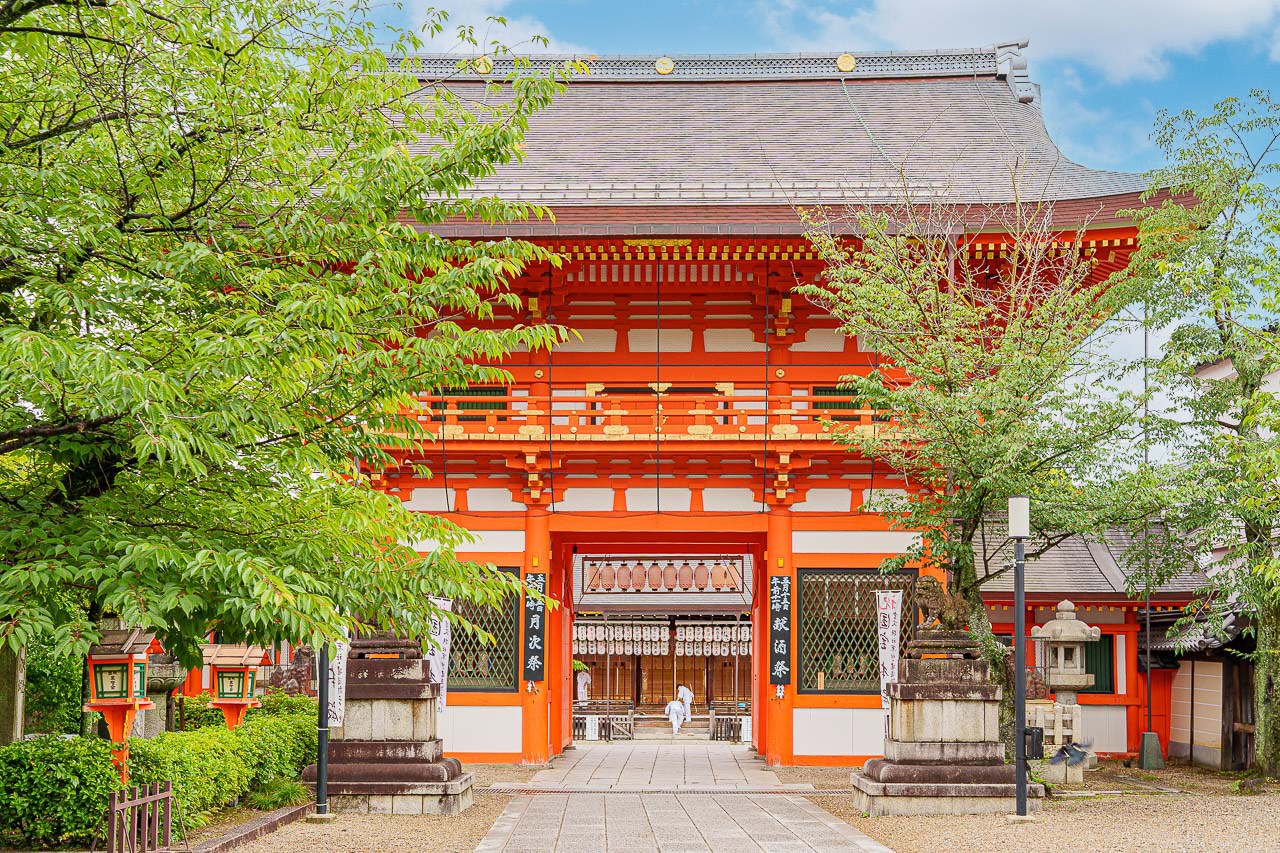
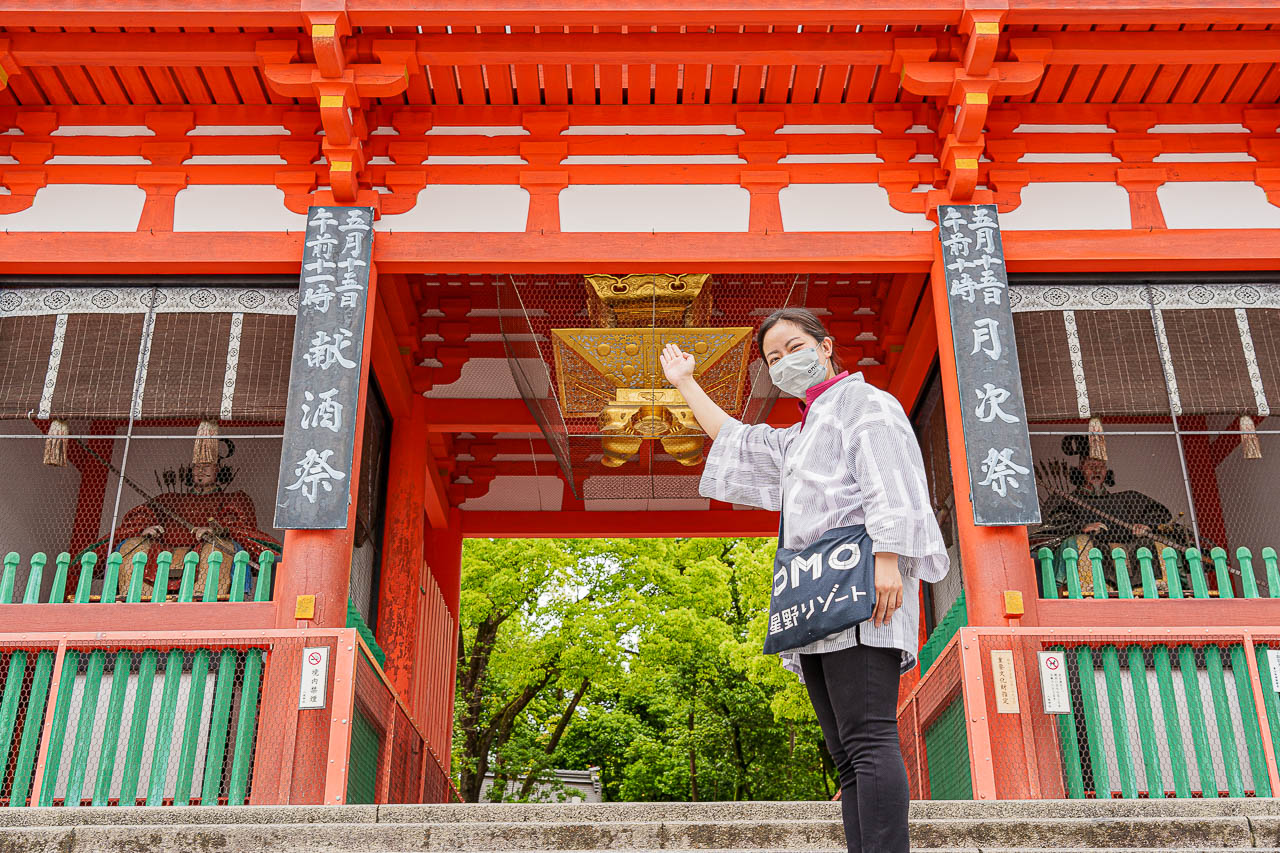
After visiting Yasaka Shrine in front of the hotel, I thought the morning walk had finished, but there was more.

Back at the OMO Base, tea with a salty, herbal fragrance was waiting.
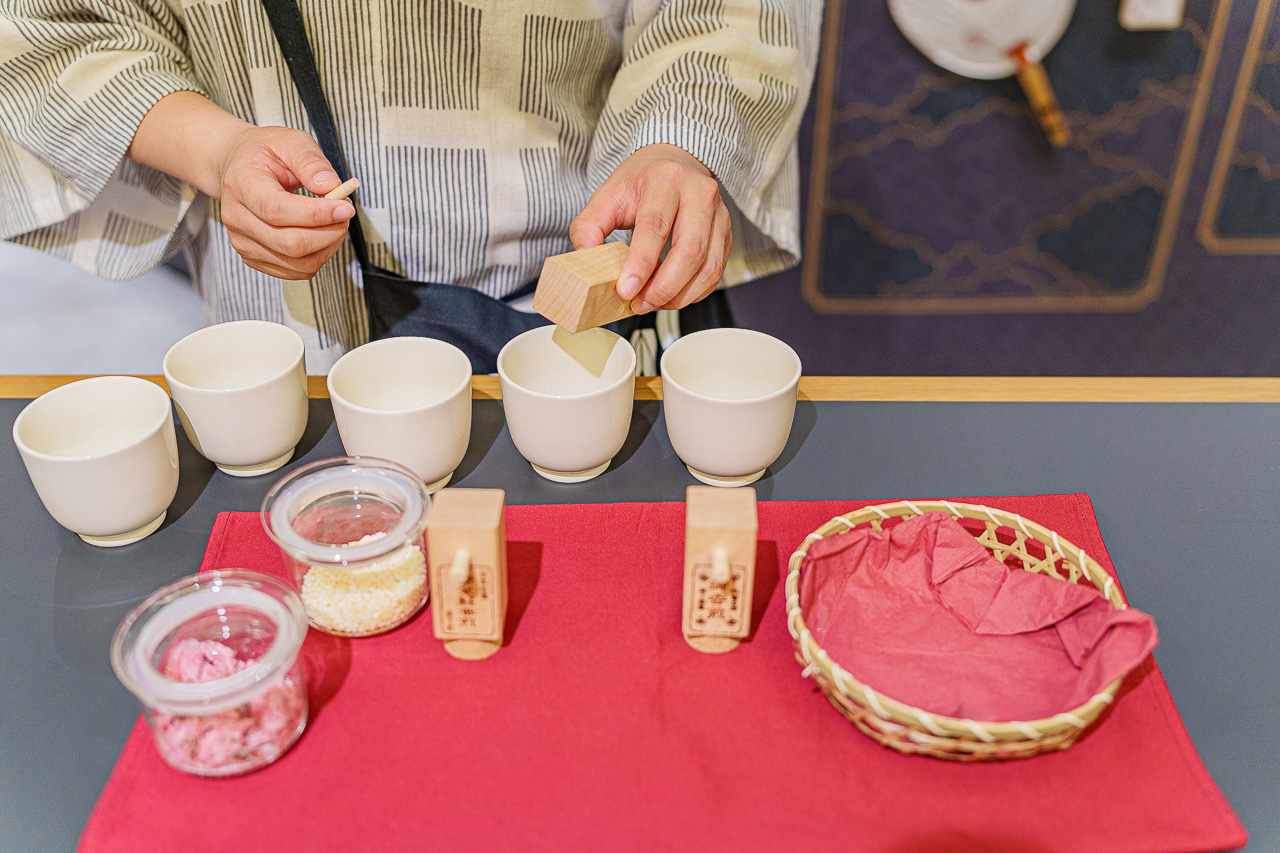
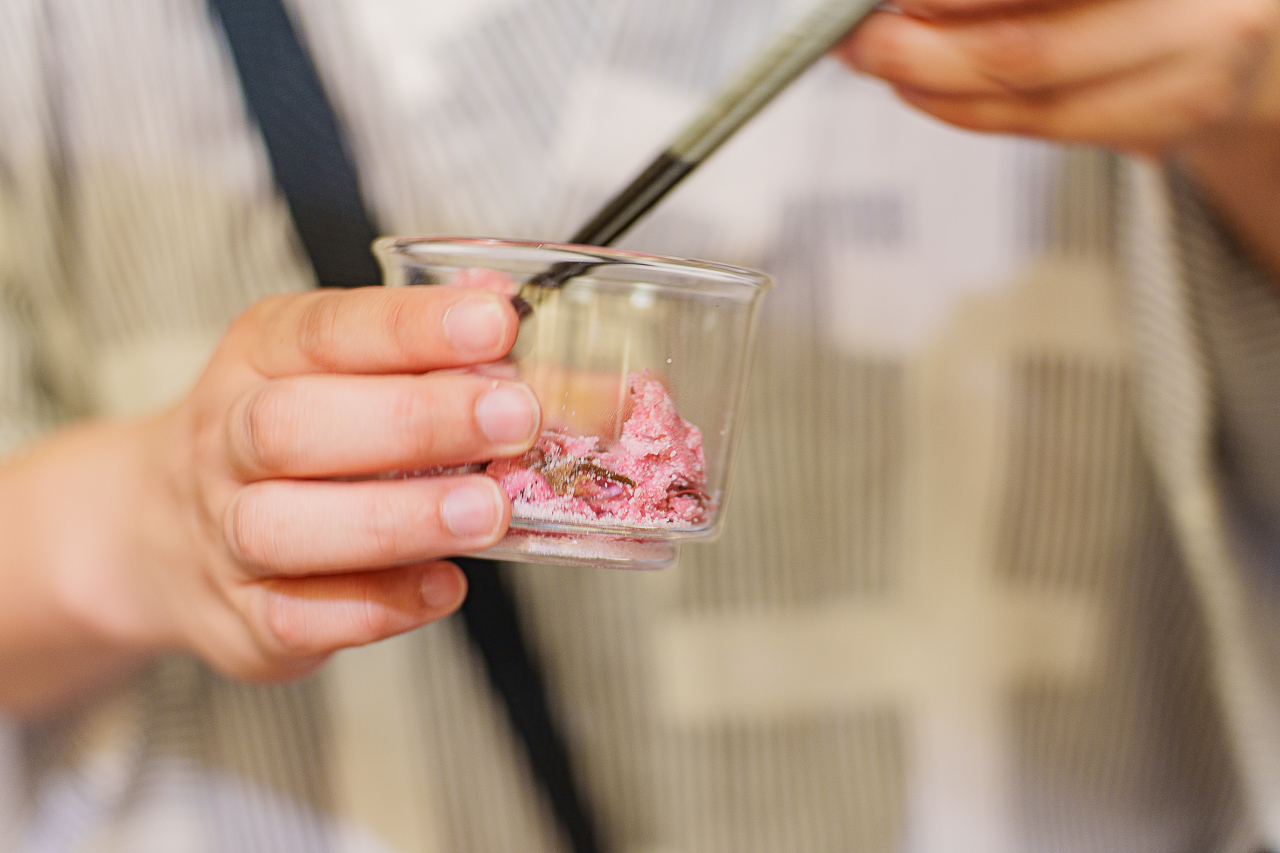
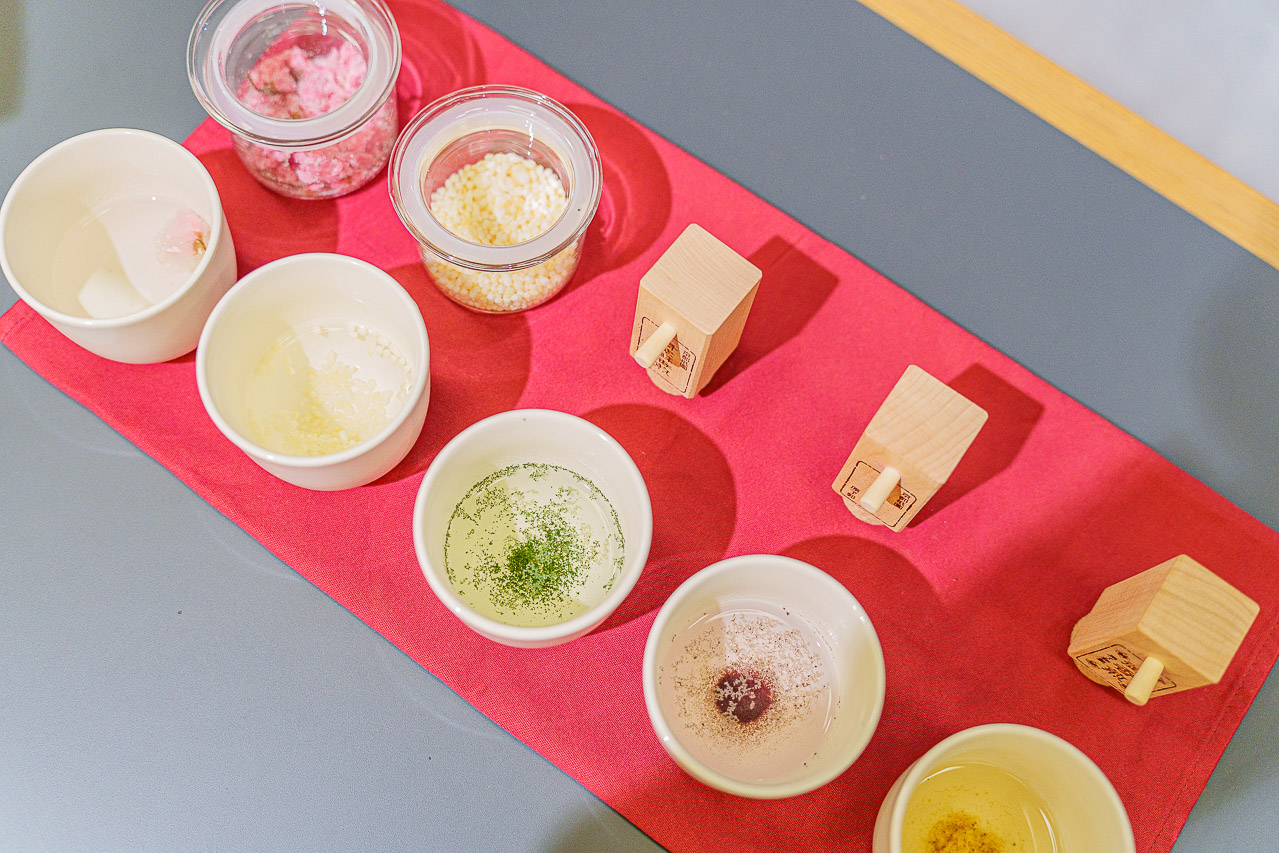
The account calls it Okosen, a tea travelers reportedly drank after visiting shrines. Its aroma was distinctive.
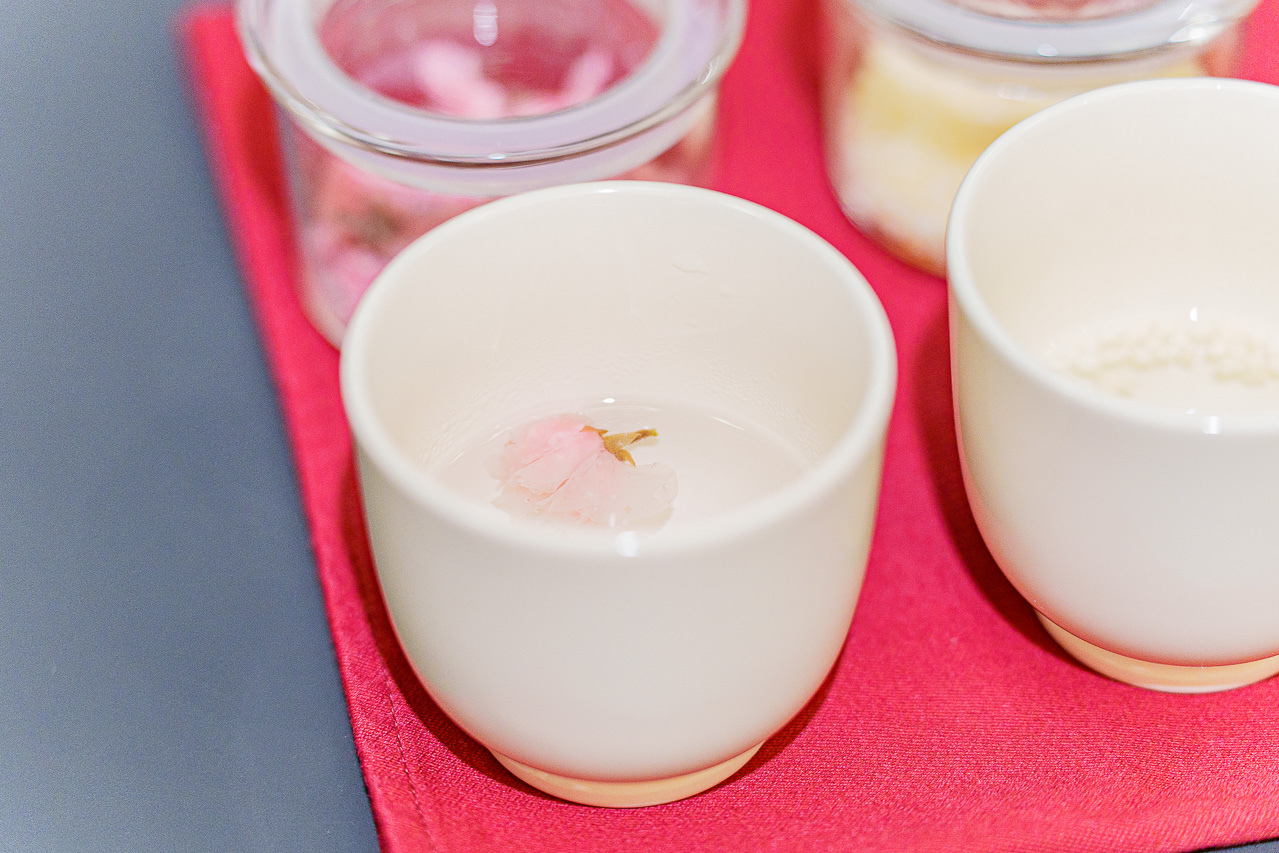
The dated review describes the warm tea after a morning walk as healthy and restorative. That is the author's impression, not a newly verified health benefit.
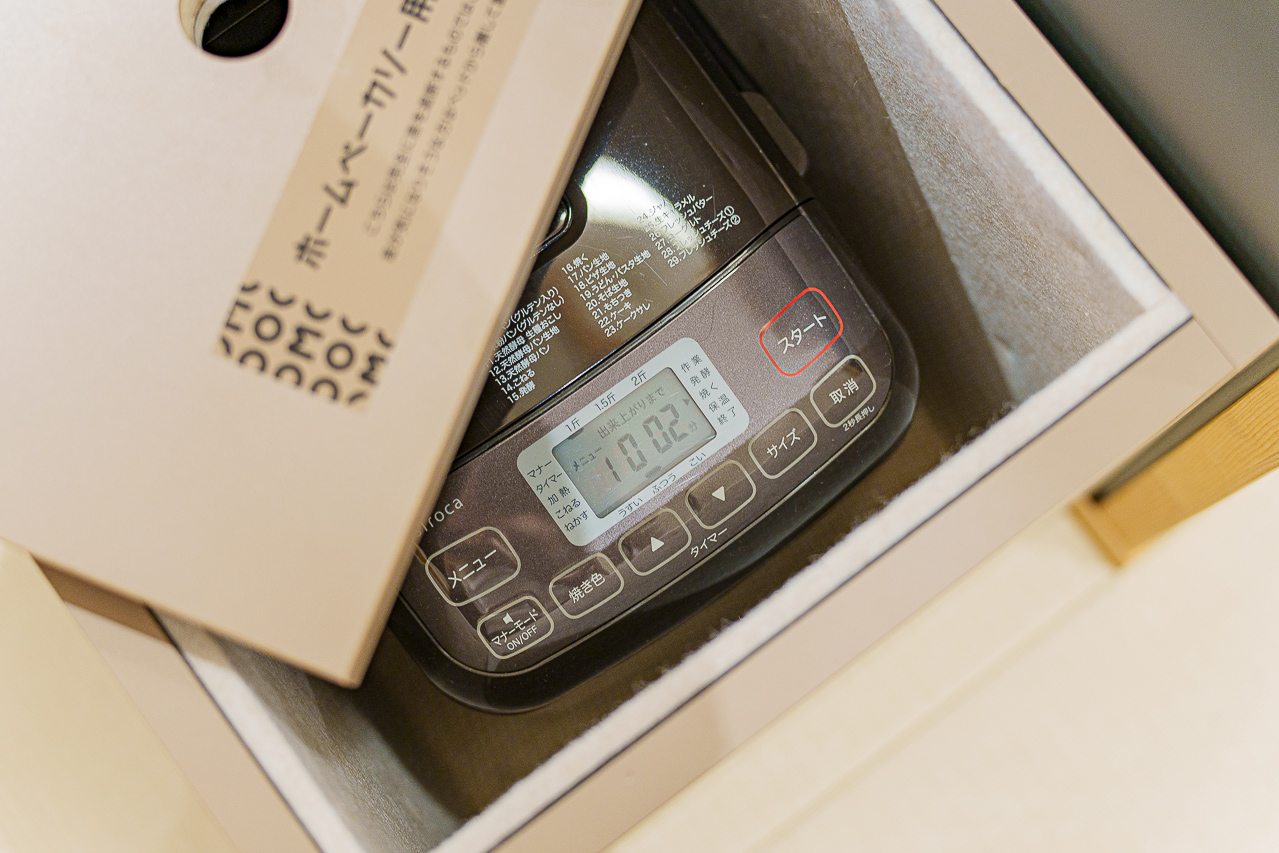
Back in the room, it was time to try the breakfast prepared the previous night.
Two minutes left. I was excited.

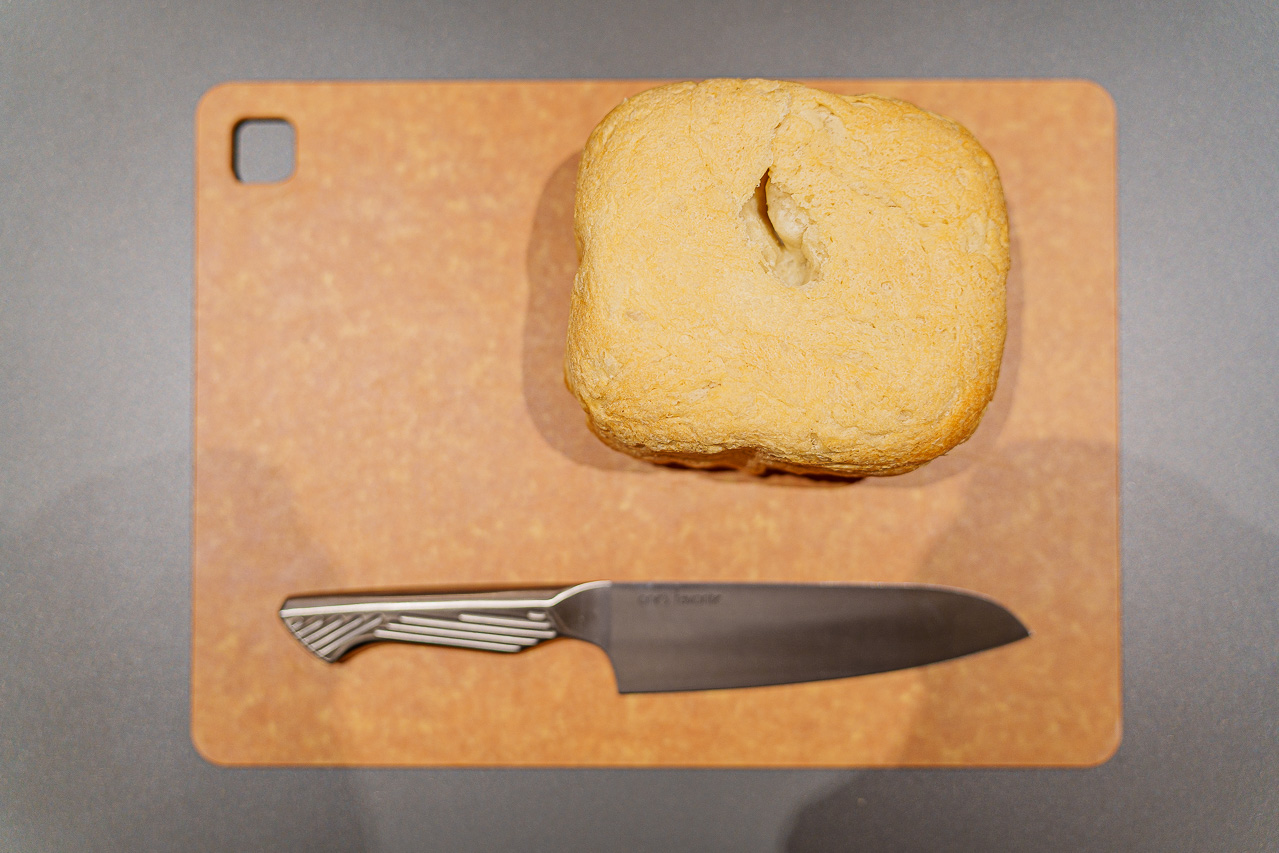
The loaf fresh from the breadmaker looked wonderful.
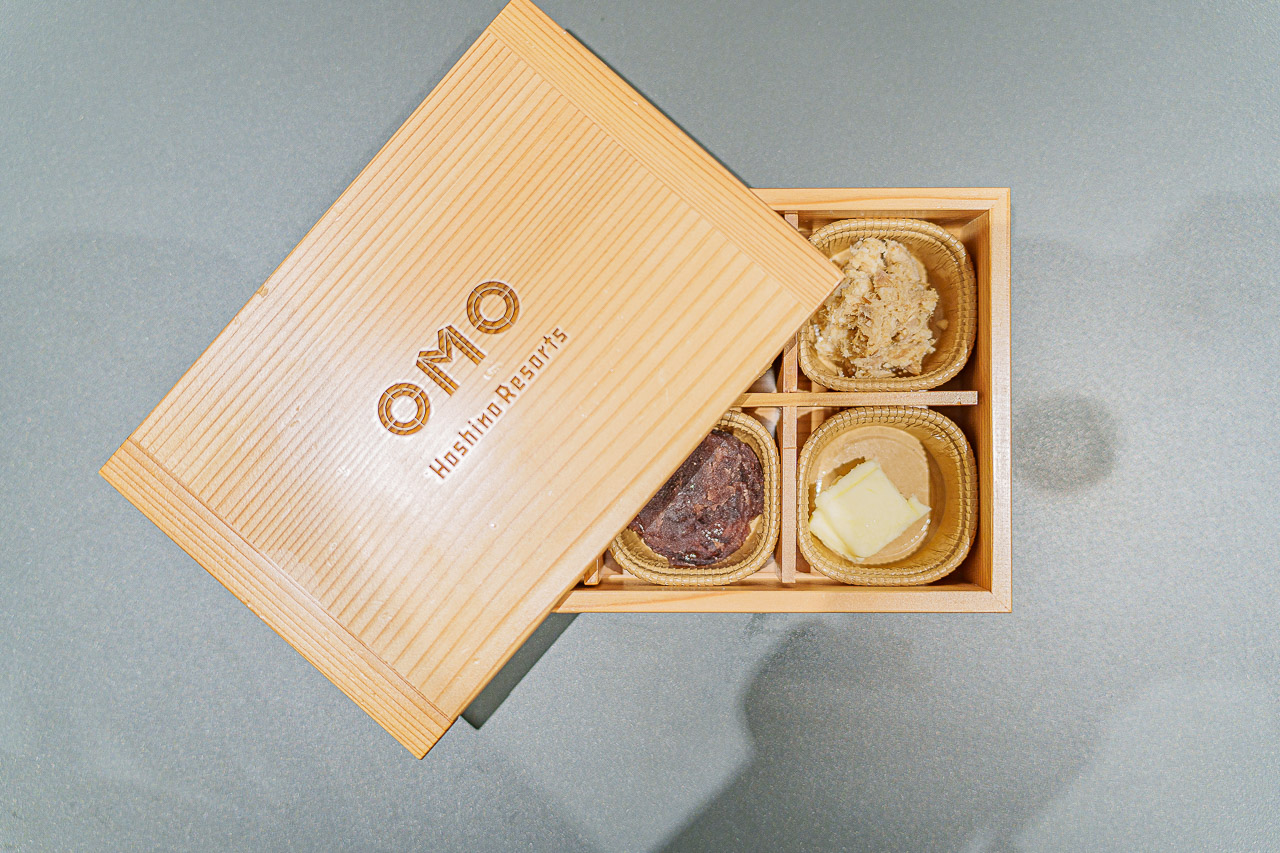
The breakfast set included 6 condiments.
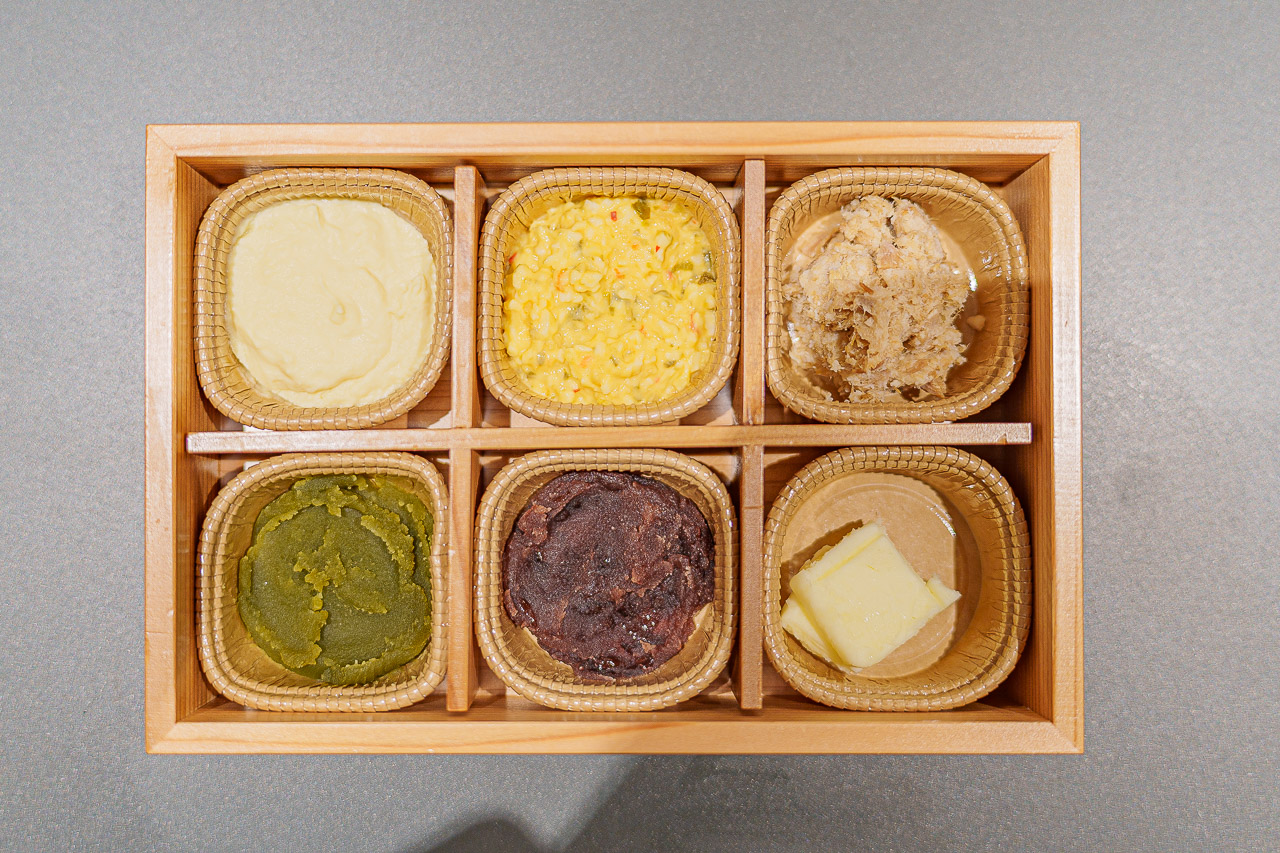
Clockwise from upper left: soy-milk jam, egg spread, pork rillettes, butter, sweet red-bean spread and matcha spread.
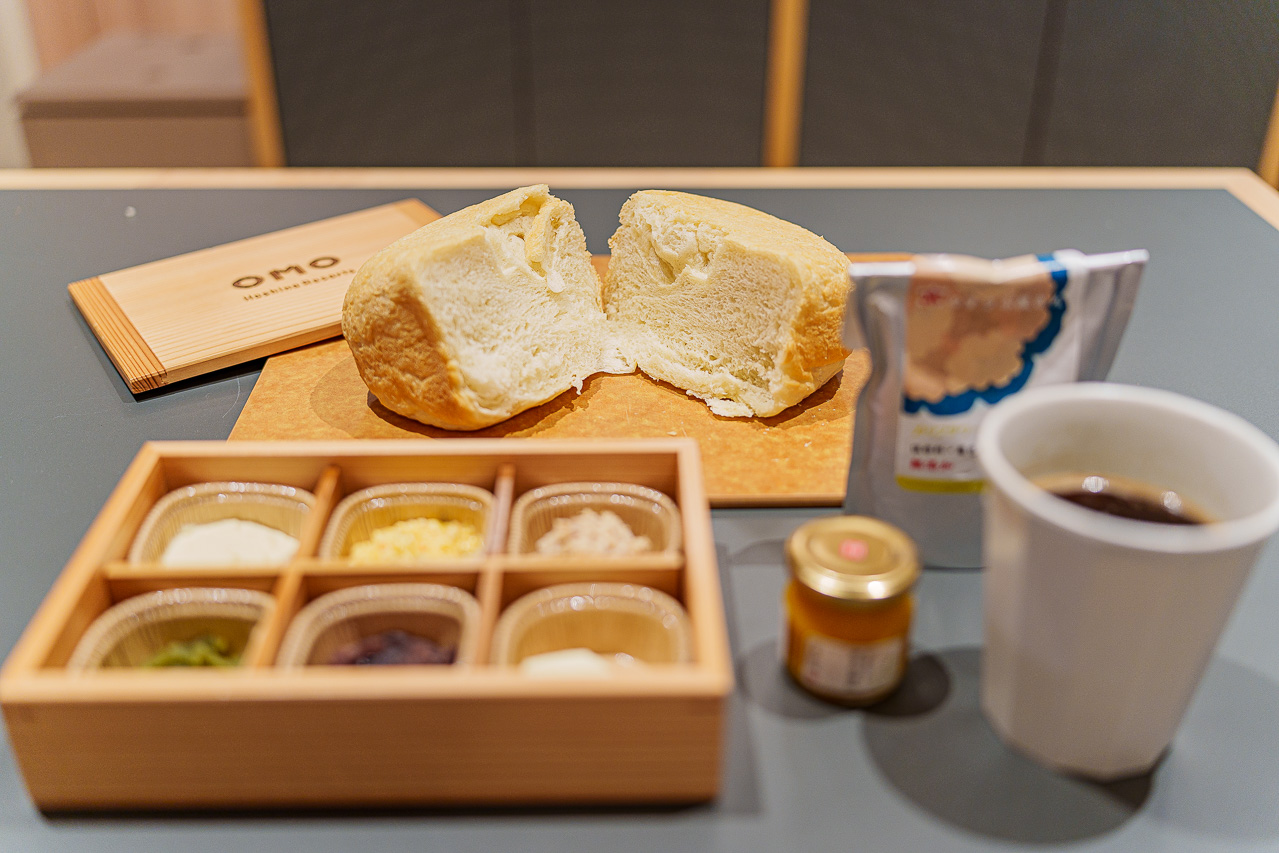
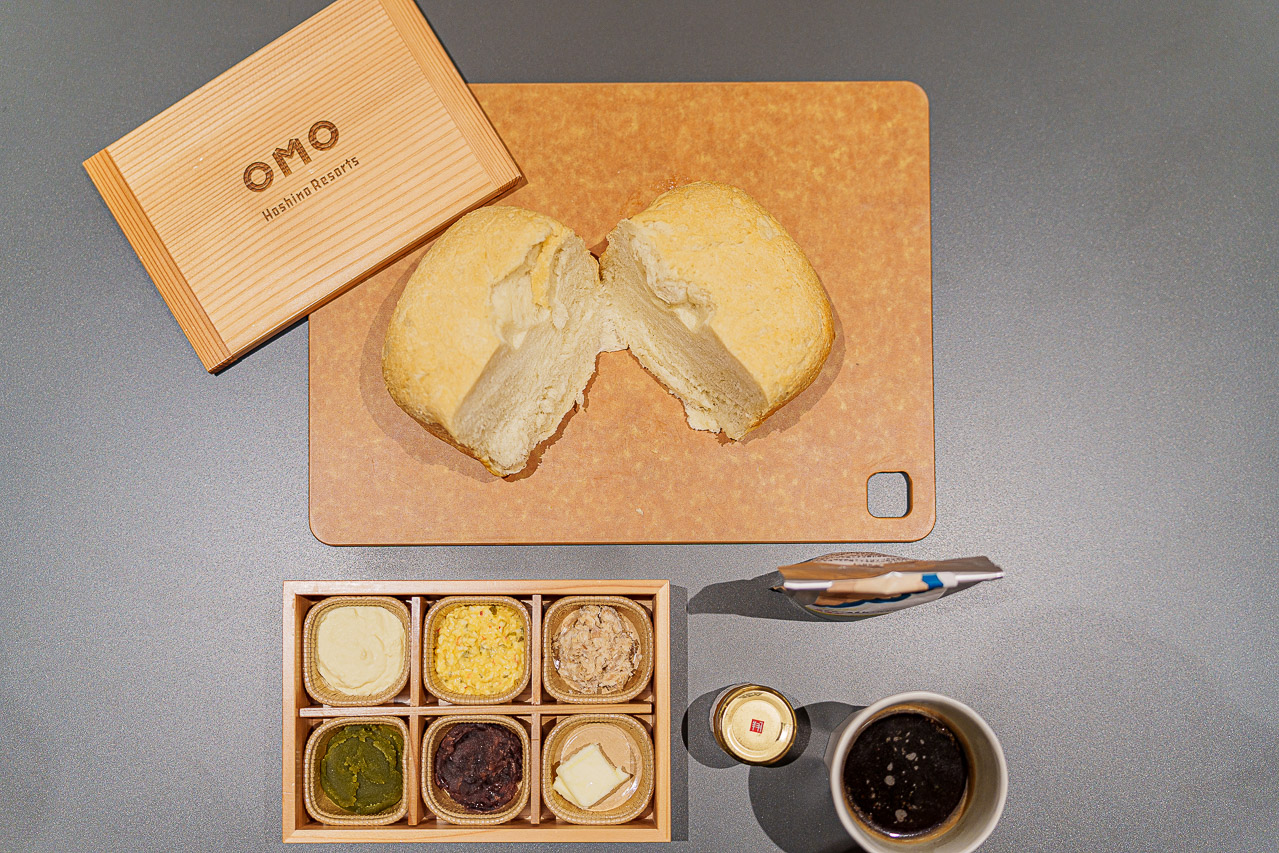
Brewing the included drip coffee completed breakfast.
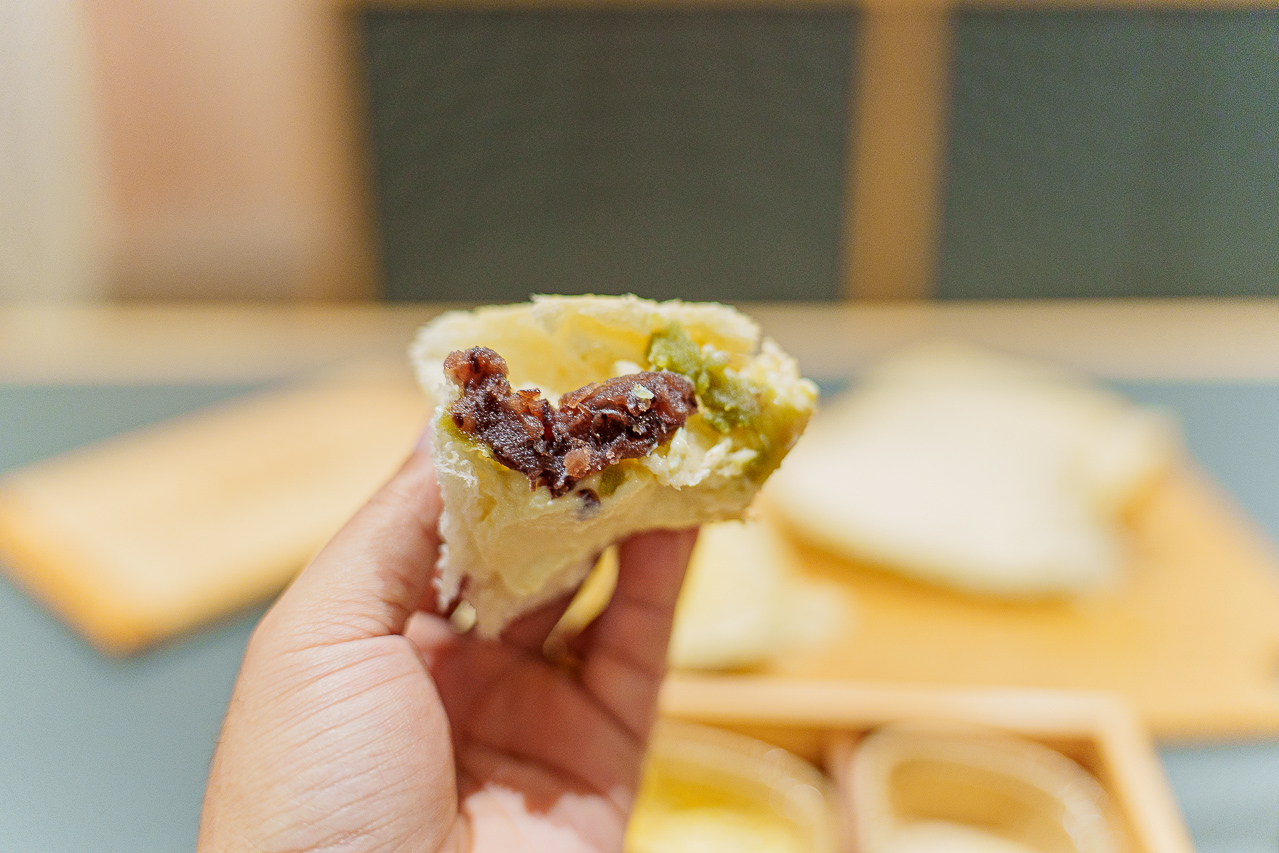
A double layer of red-bean and matcha spreads.
Tearing chunks from the loaf was enjoyable too.
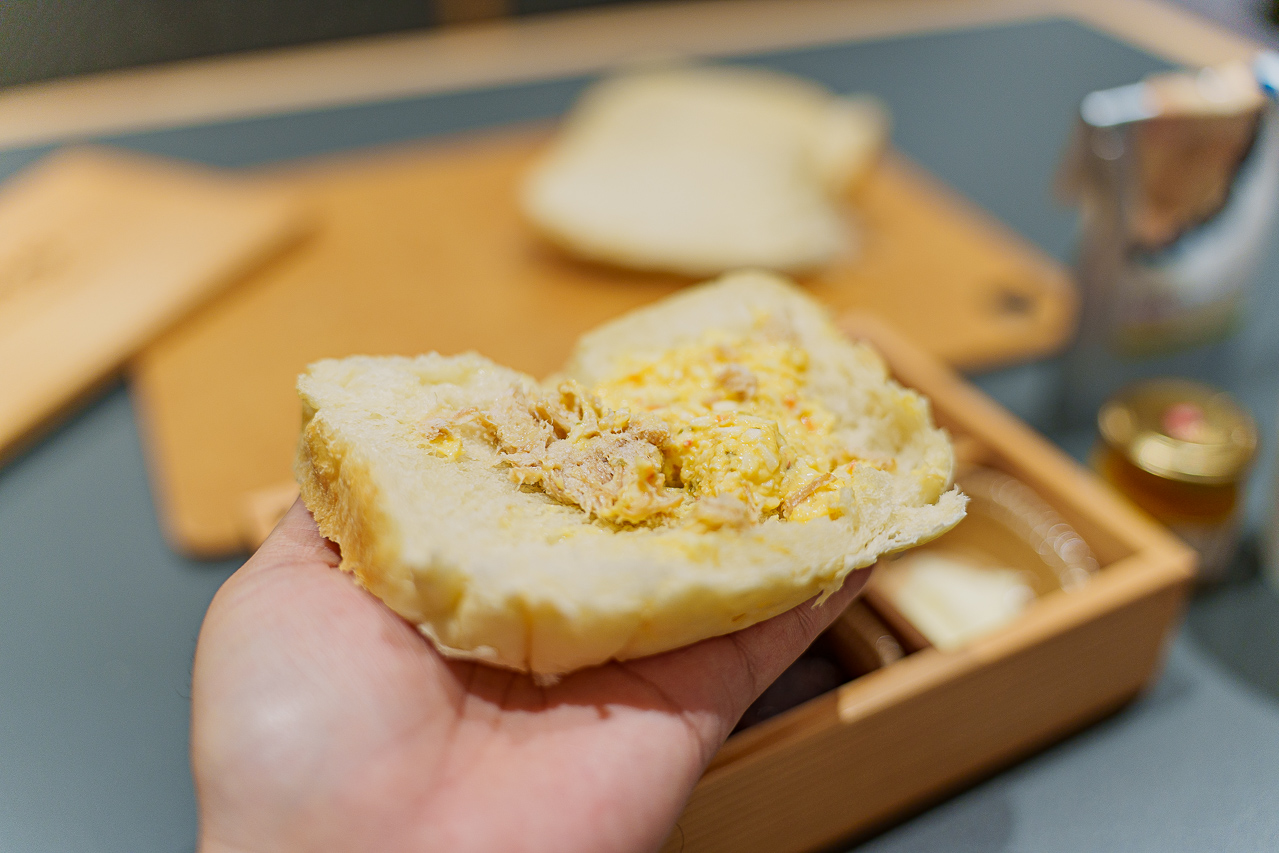
A sandwich with egg spread and pork rillettes.

Then 3 flavors together: soy-milk jam, red-bean spread and matcha spread.
Pumpkin jam sold in the downstairs vending machine was another good addition.
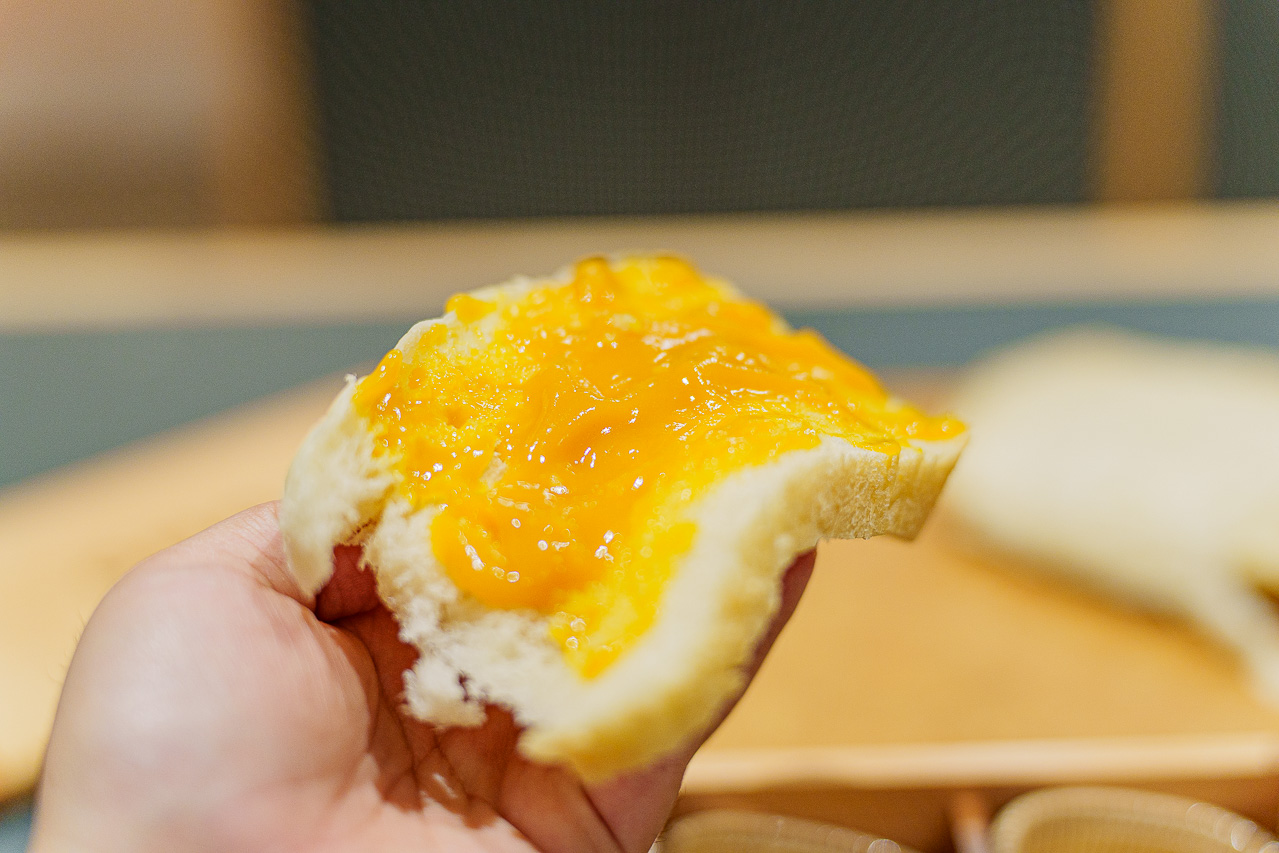
A generous layer made a pumpkin-jam sandwich.
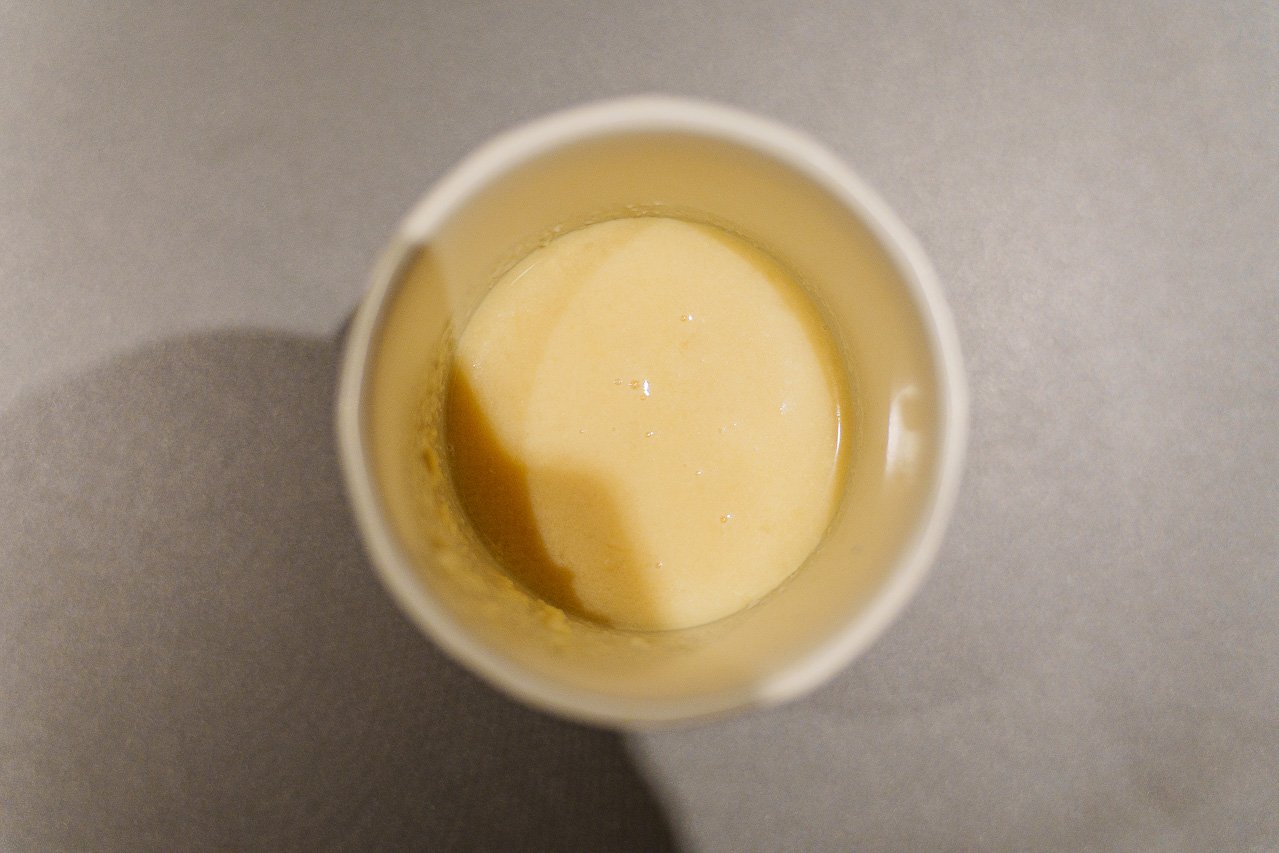
Finally, I tried a cup of cauliflower soup, bought because it was unusual; cauliflower is described as broccoli's cousin.
It tasted wholesome.
A satisfying breakfast. Then it was time to check out.

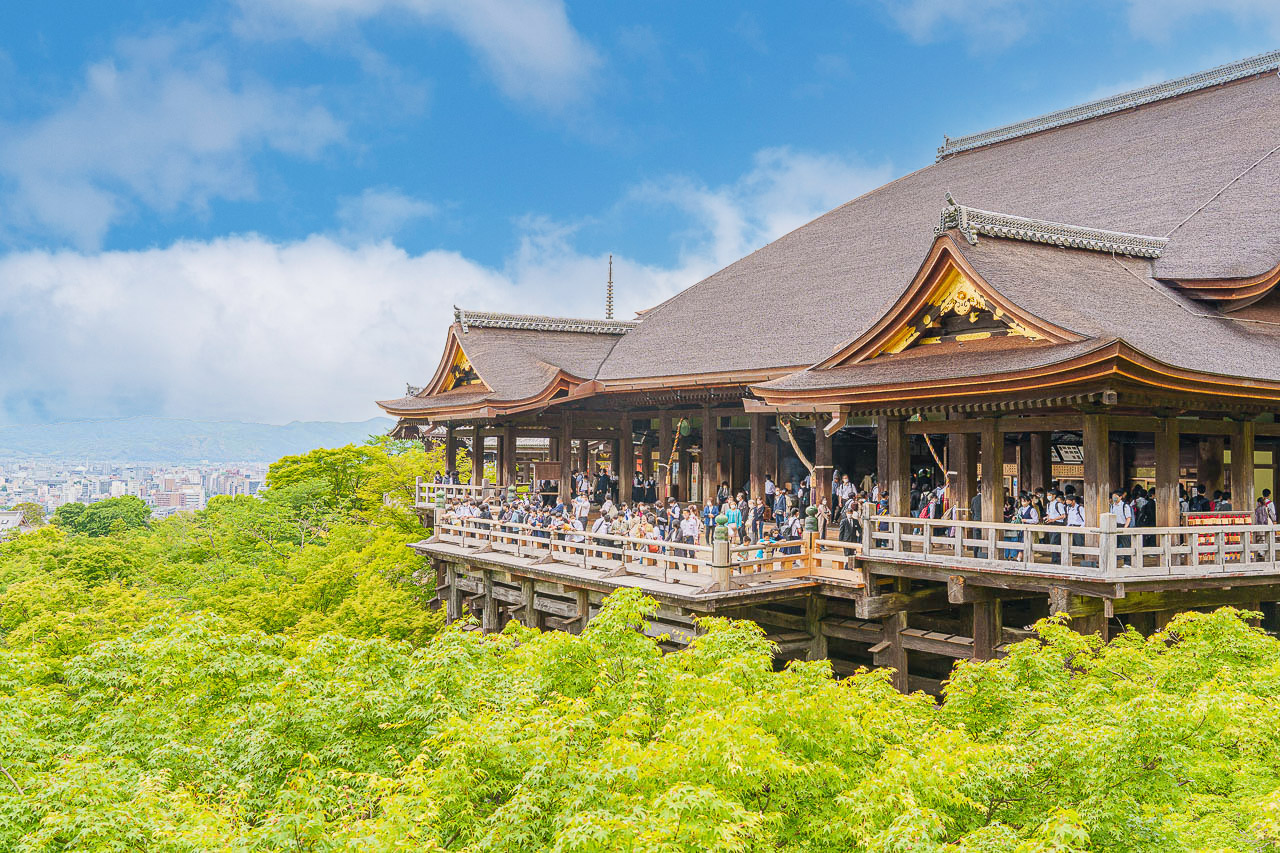
Kyoto's culture is not always easy for visitors to encounter or understand, including restaurants requiring an introduction. The kind OMO Ranger helped explain it accessibly.
For a day at OMO5 Kyoto Gion, I felt a little like a local who knew Gion's history and traditions.
OMO5 Kyoto Gion by Hoshino Resorts
Address: Kyoto, Higashiyama Ward, Gionmachi Kitagawa, 288
Phone: 0570-073-099
https://www.hoshinoresorts.com/kr/resortsandhotels/omobeb/omo/5kyotogion.html
Hoshino Resorts OMO5 Kyoto Gion | Official website
www.hoshinoresorts.com