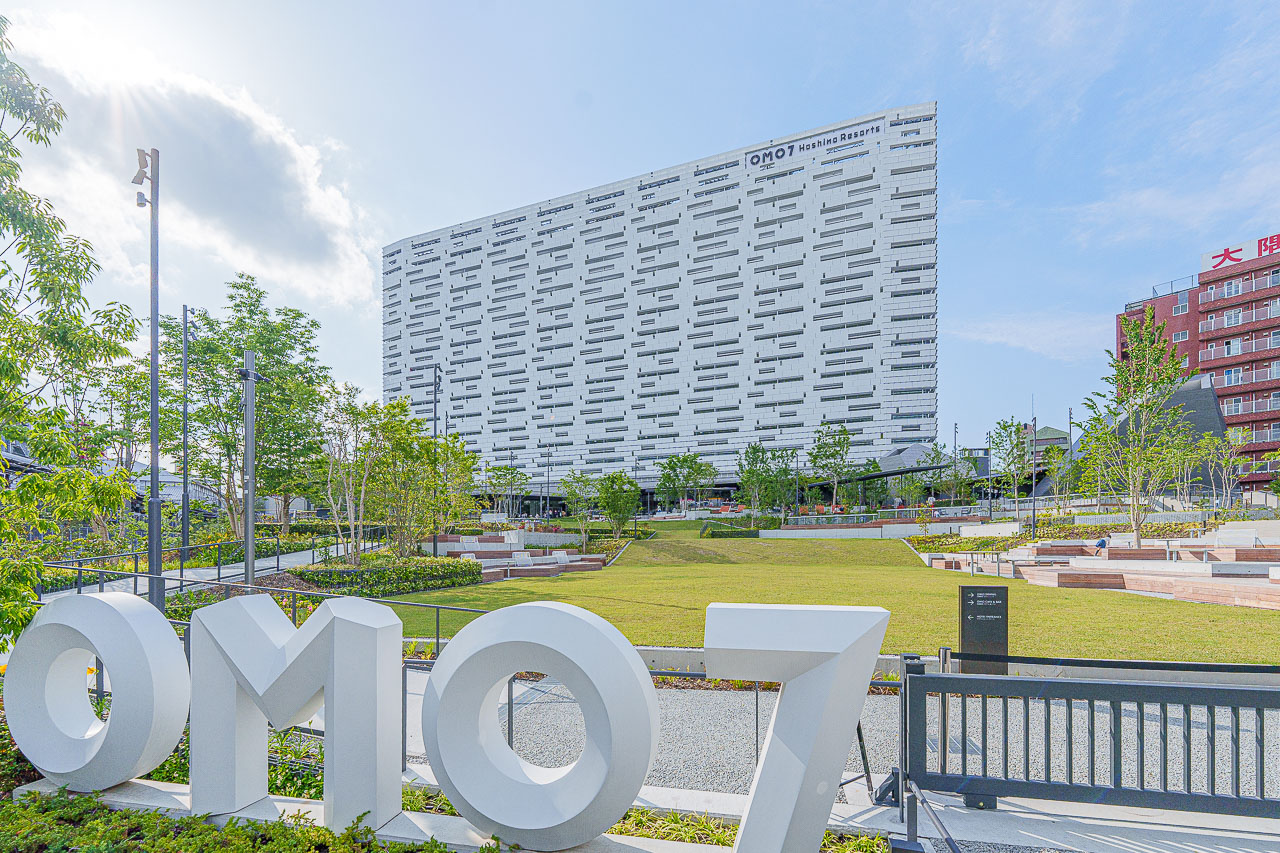
We came to Osaka to stay at OMO7 Osaka by Hoshino Resorts, newly opened on April 22, 2022.
With 436 rooms and the Miyagreen garden, it is larger than many resorts. A property of this scale is unusual in central Osaka in the author’s experience.
OMO7 Osaka by Hoshino Resorts: A City Resort for Travelers
OMO7 Osaka by Hoshino Resorts: A City Resort for Travelers
Hoshino Resorts’ OMO brand, described within the group’s 108-year history, serves guests staying in a city to explore it. The numbers 1, 3, 5 and 7 indicate increasing services or fac… [The original linked excerpt ends here.]
errdaytrip.com
From Local Food Walks to Full-Course Dinner at OMO7 Osaka
From Local Food Walks to Full-Course Dinner at OMO7 Osaka
We came to stay at OMO7 Osaka, newly opened on April 22, 2022. After introducing the facilities, rooms and activities, this account turns to the hotel’s food… [The original linked excerpt ends here.]
errdaytrip.com
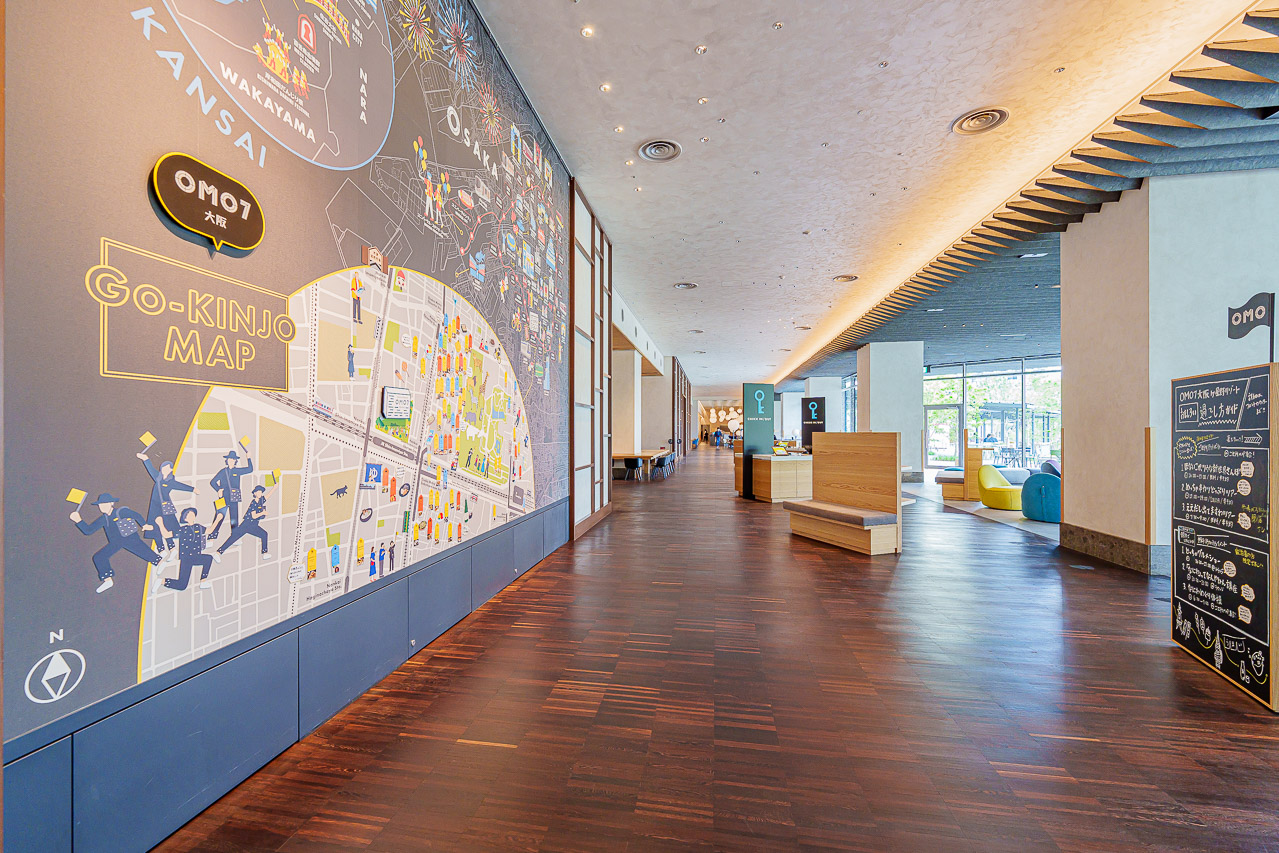
Usually we book a hotel to visit sights nearby. With OMO, there are enough guest activities to make the hotel itself the starting point for planning a trip.
The reason is its OMO Ranger service.

During our two-night, three-day stay, I joined three OMO Ranger experiences.
Places are limited, so the source recommends reserving activities when booking the hotel.
The services I used were free, but some OMO Ranger experiences cost extra. Check each activity’s conditions.
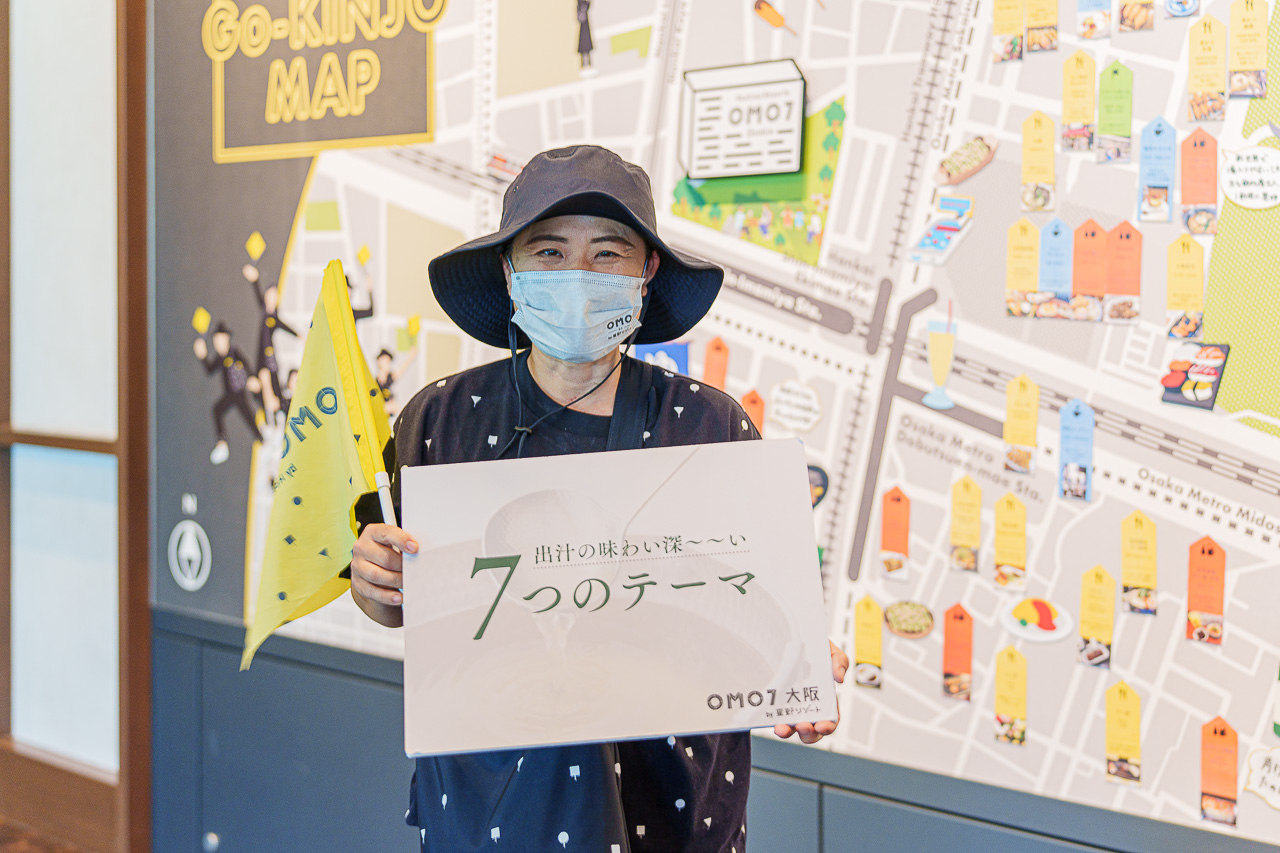
The first tour, ‘In Search of Delicious Dashi,’ leaves at 7:30 a.m.
Osaka, often called the nation’s kitchen, is famous for food.
Dashi is one of its strengths, and this tour looks at why.
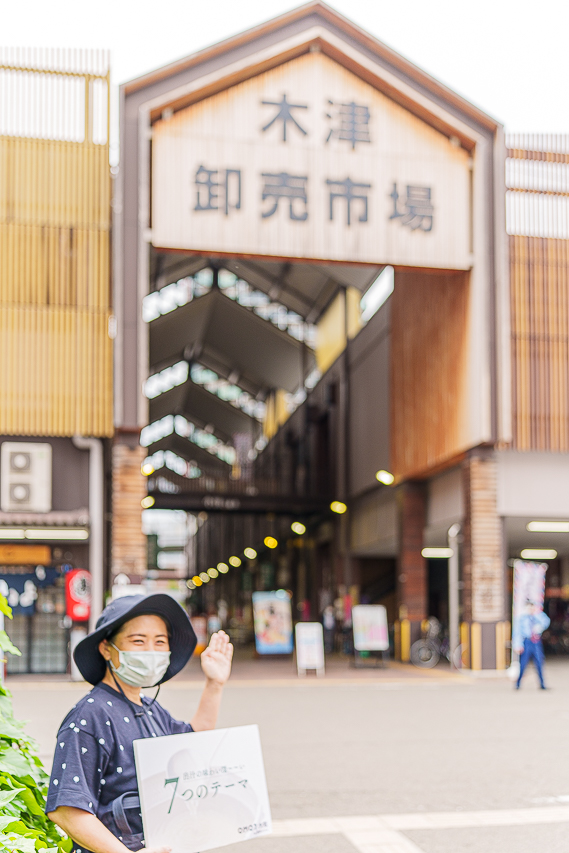
With an experienced, constantly smiling OMO Ranger, we walk about 15 minutes to Kizu Wholesale Market, described as having 300 years of history.

Visiting a wholesale market at 7:30 a.m. is not something I would often organize on an independent trip.
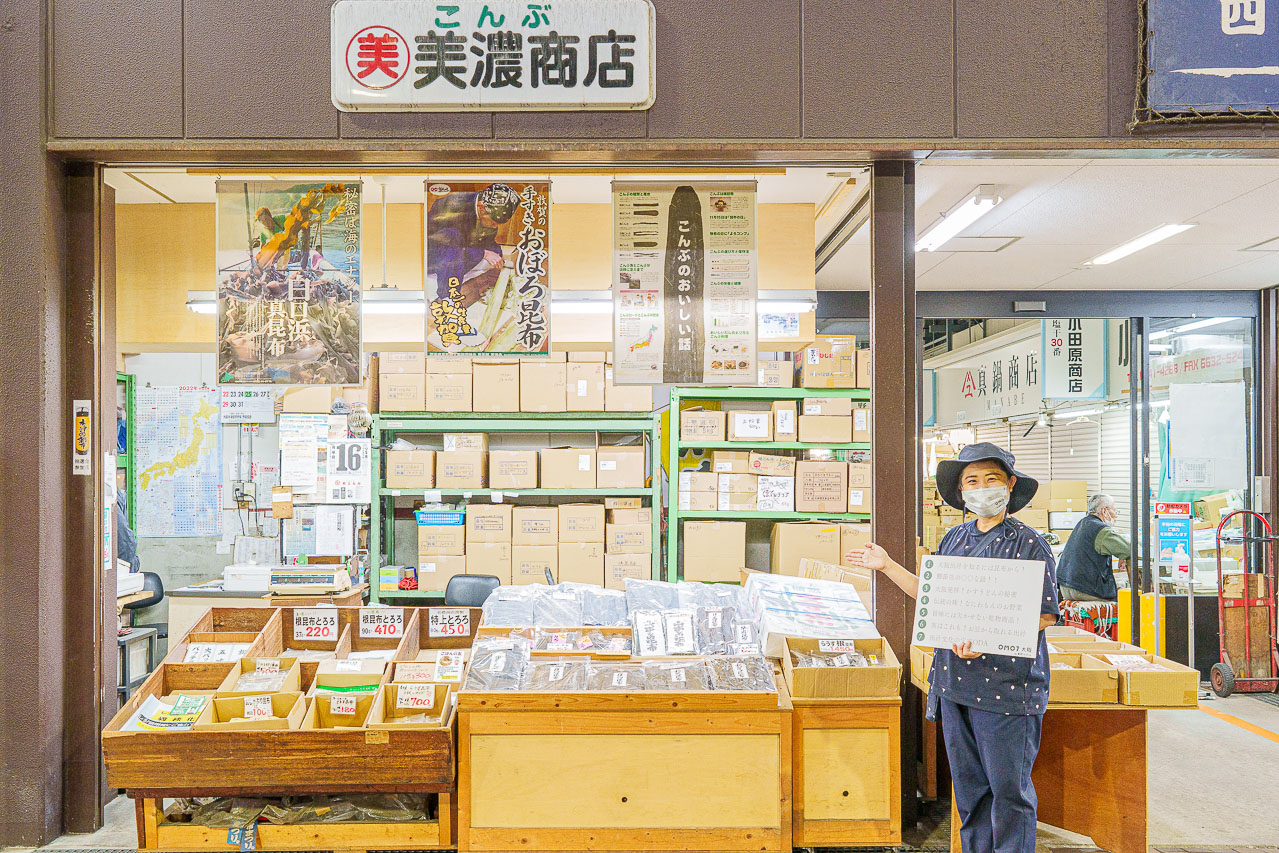
The dashi tour begins at a kombu shop.
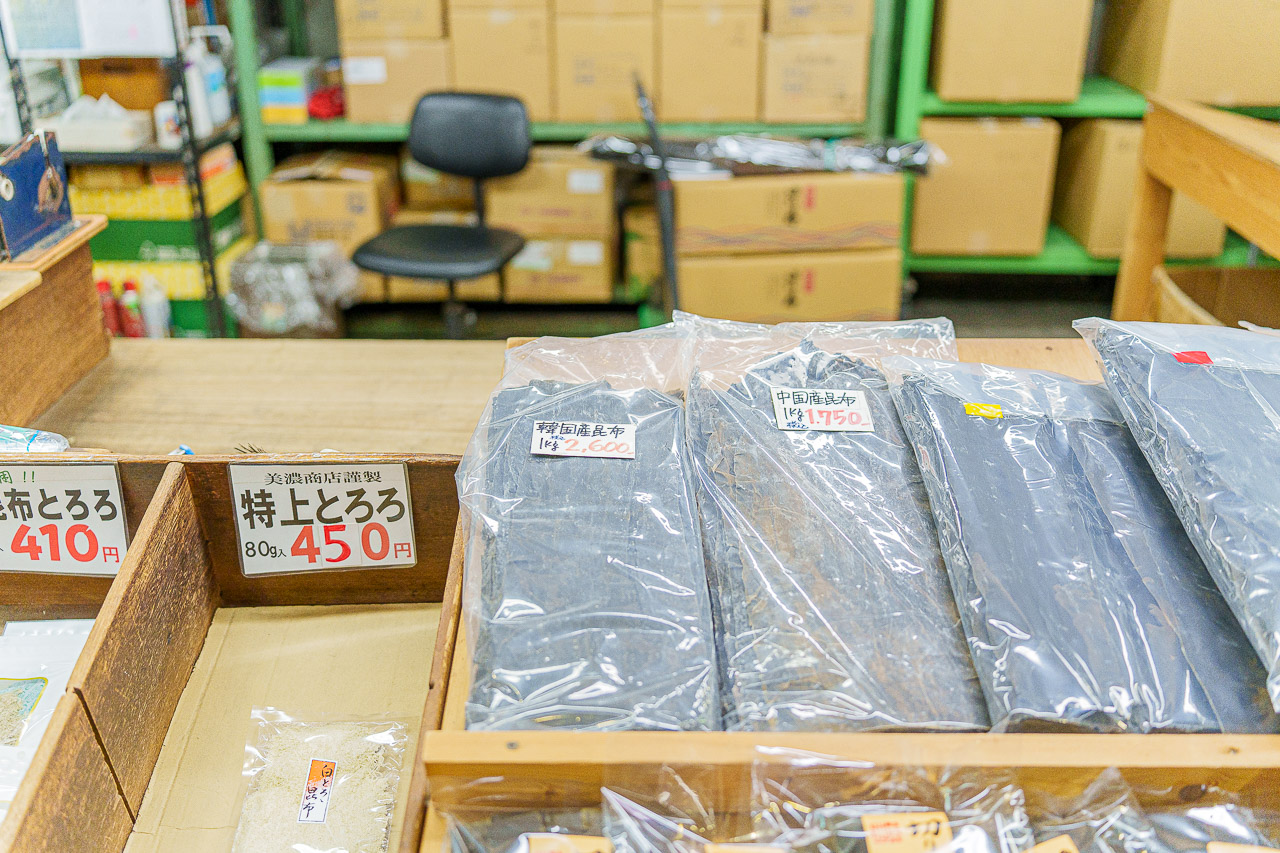
Kelp is central to dashi.
Among the selection, I notice Korean kombu.
Seeing it priced much higher than the Chinese product gives this Korean visitor a small sense of pride; the comparison is specific to the display seen.
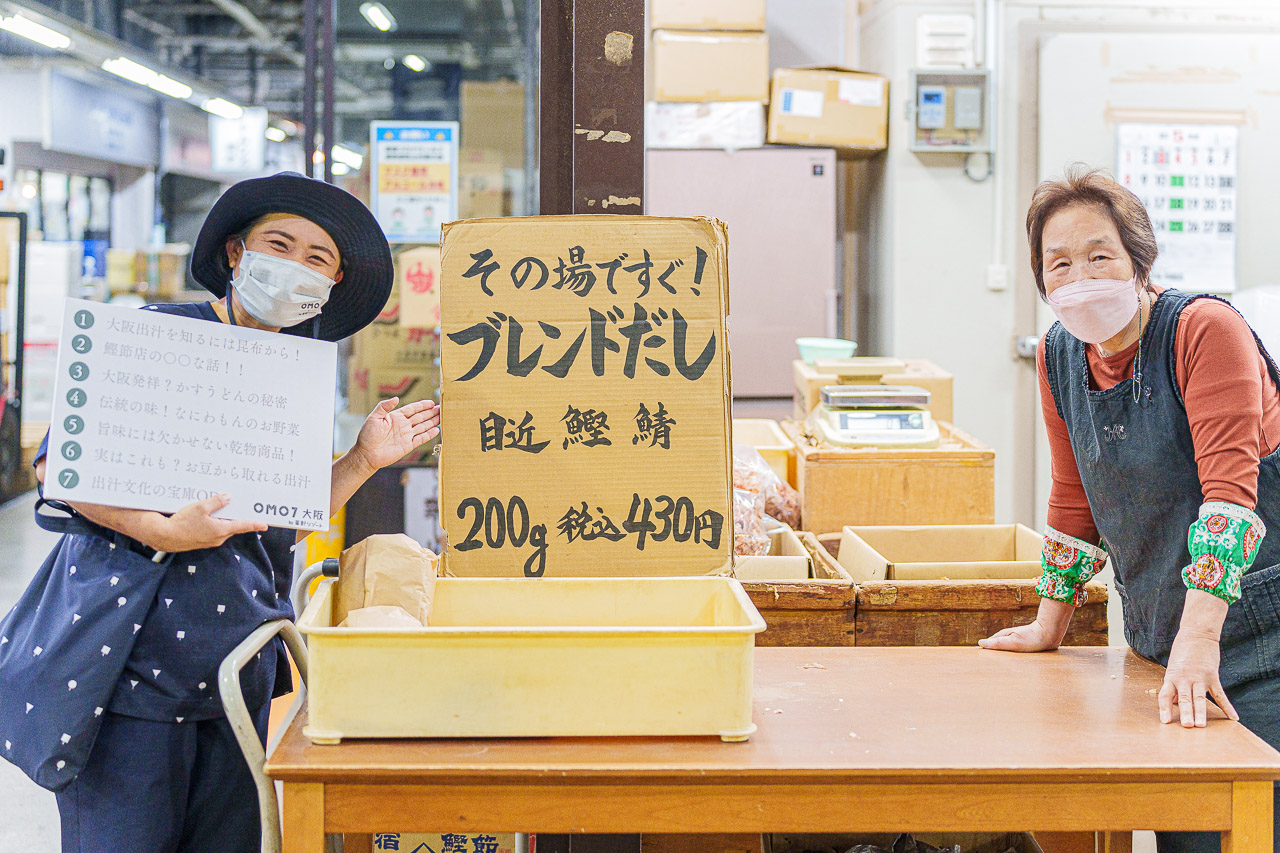
Japanese dashi also calls for bonito flakes.
A shop shaves and sells quality dried fish described as supplied from Kochi, known for bonito, and Hokkaido; that sourcing description is from the account.
Its own blended flake mixture is particularly popular, according to the guide: JPY 430 for 200 g.
Shopping is possible during the tour if something appeals.
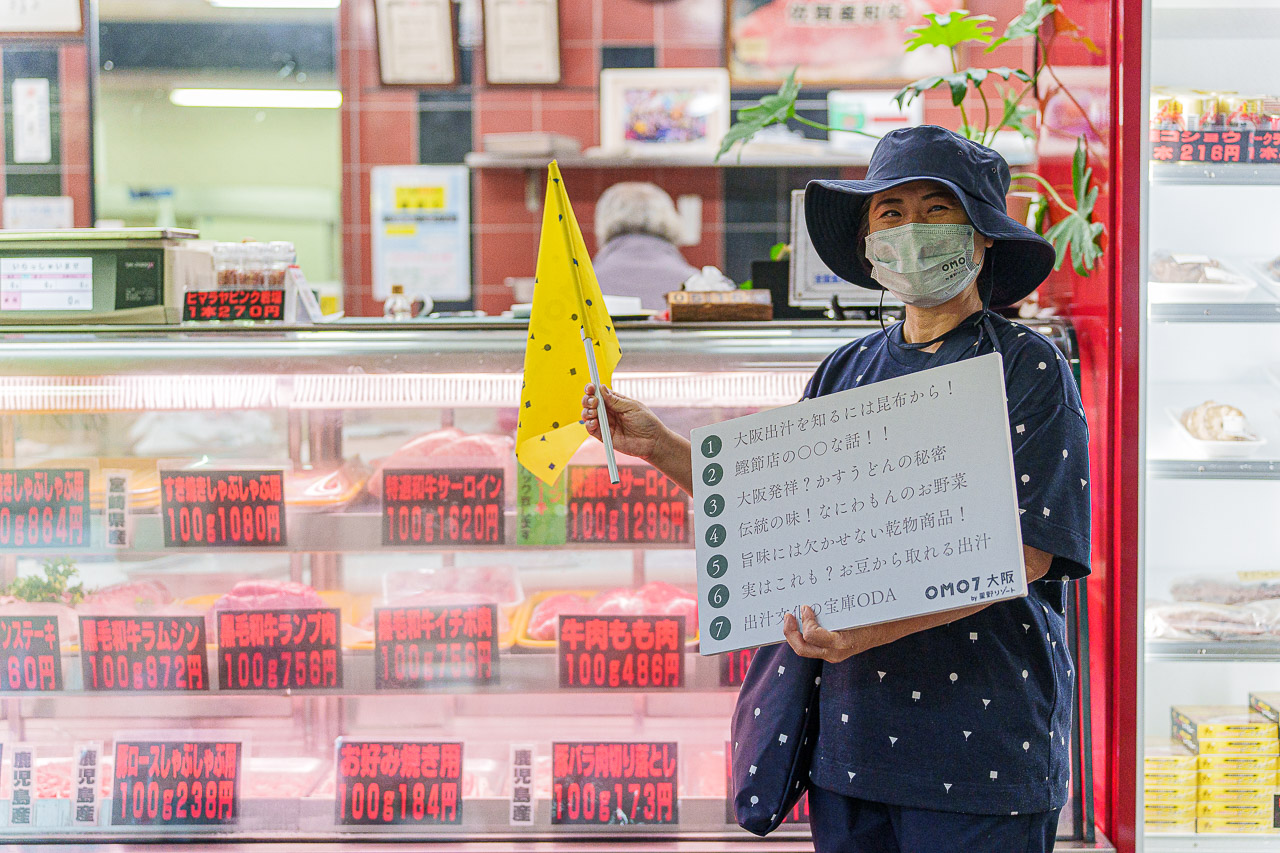
We also visit Washima Butcher, offering meat the author finds good quality at reasonable prices.
Beef-related ingredients are also part of the source’s explanation of Osaka’s kasu udon broth.
Alongside familiar sukiyaki and shabu-shabu cuts, I notice pork sold specifically for okonomiyaki.
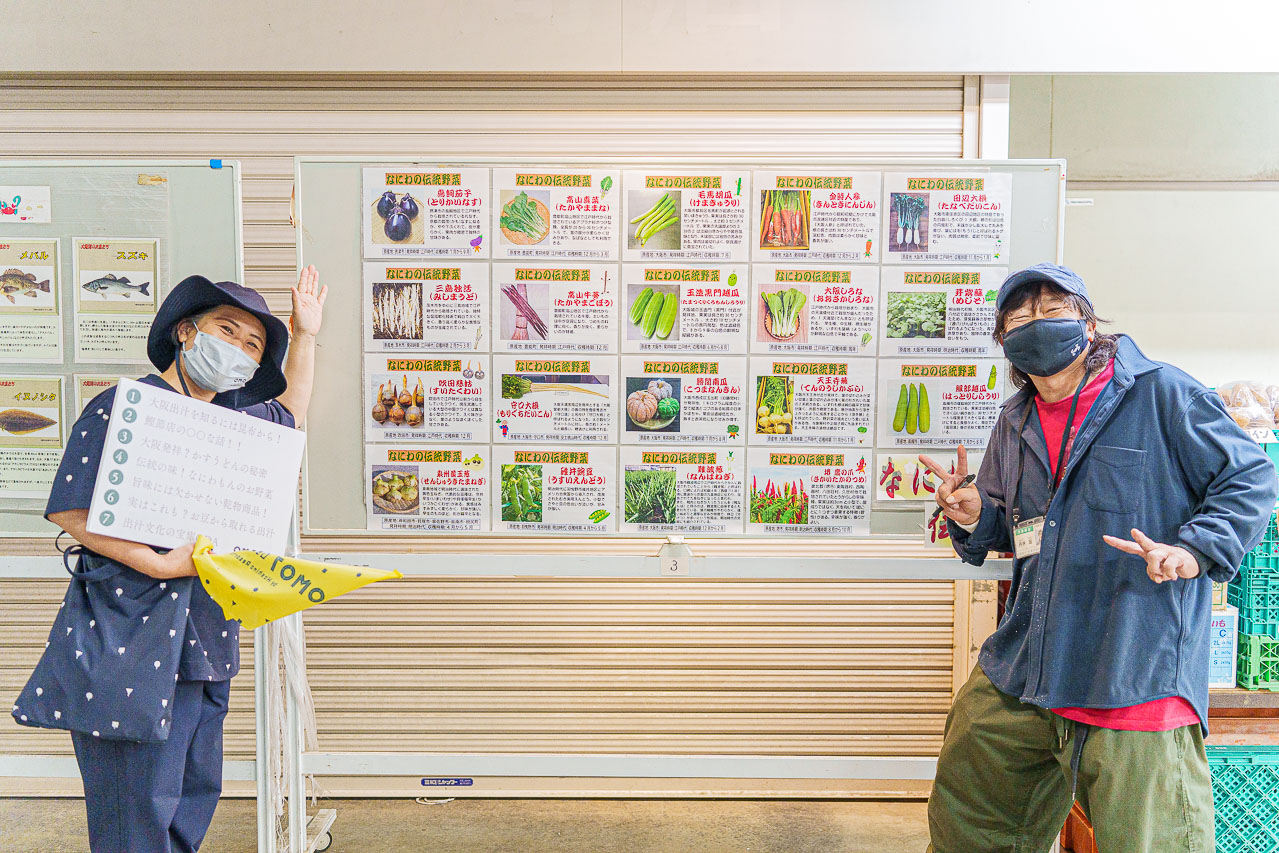
Next are vegetables, essential to so many dishes.
The energetic owner selling local Osaka vegetables makes an impression.
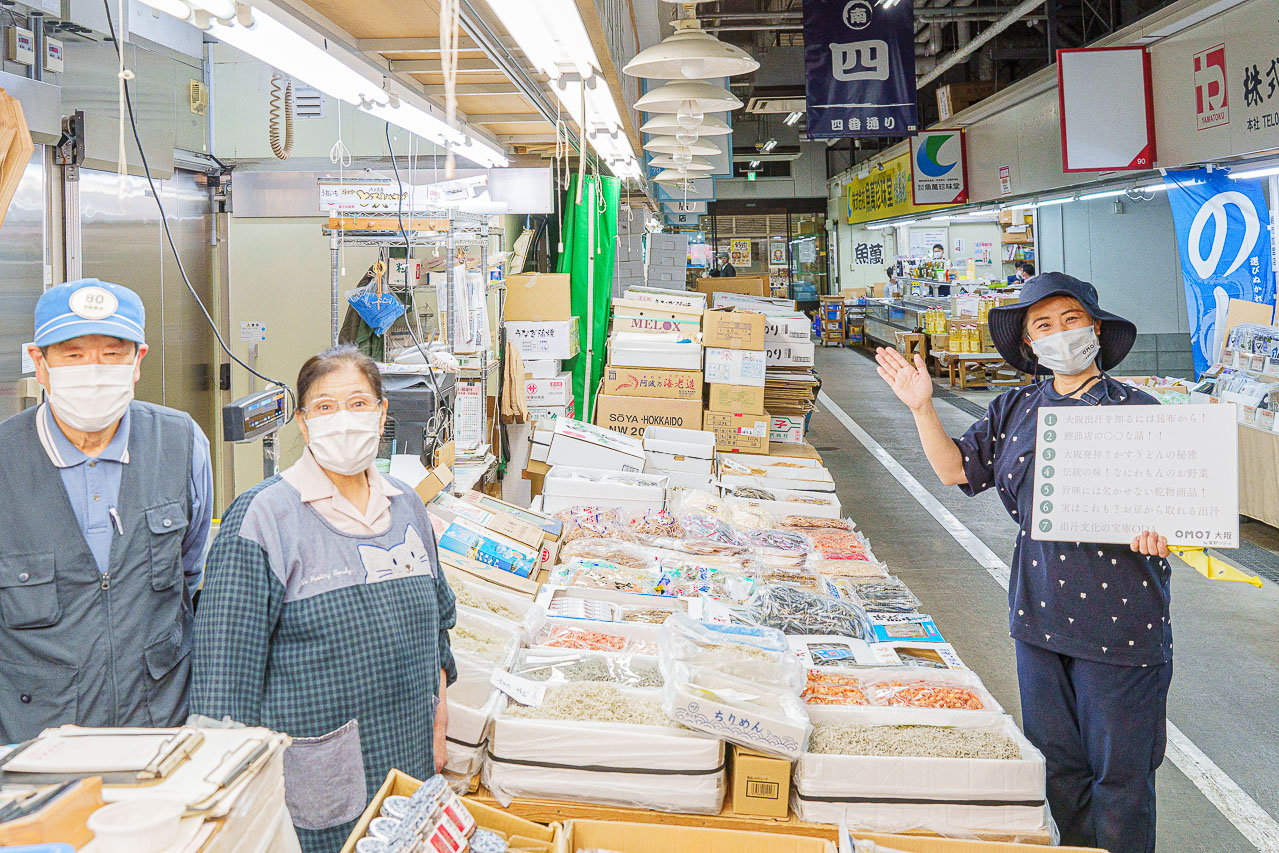
Small dried fish are another important dashi ingredient in Japan.
There is a shop focused on dried foods as well.
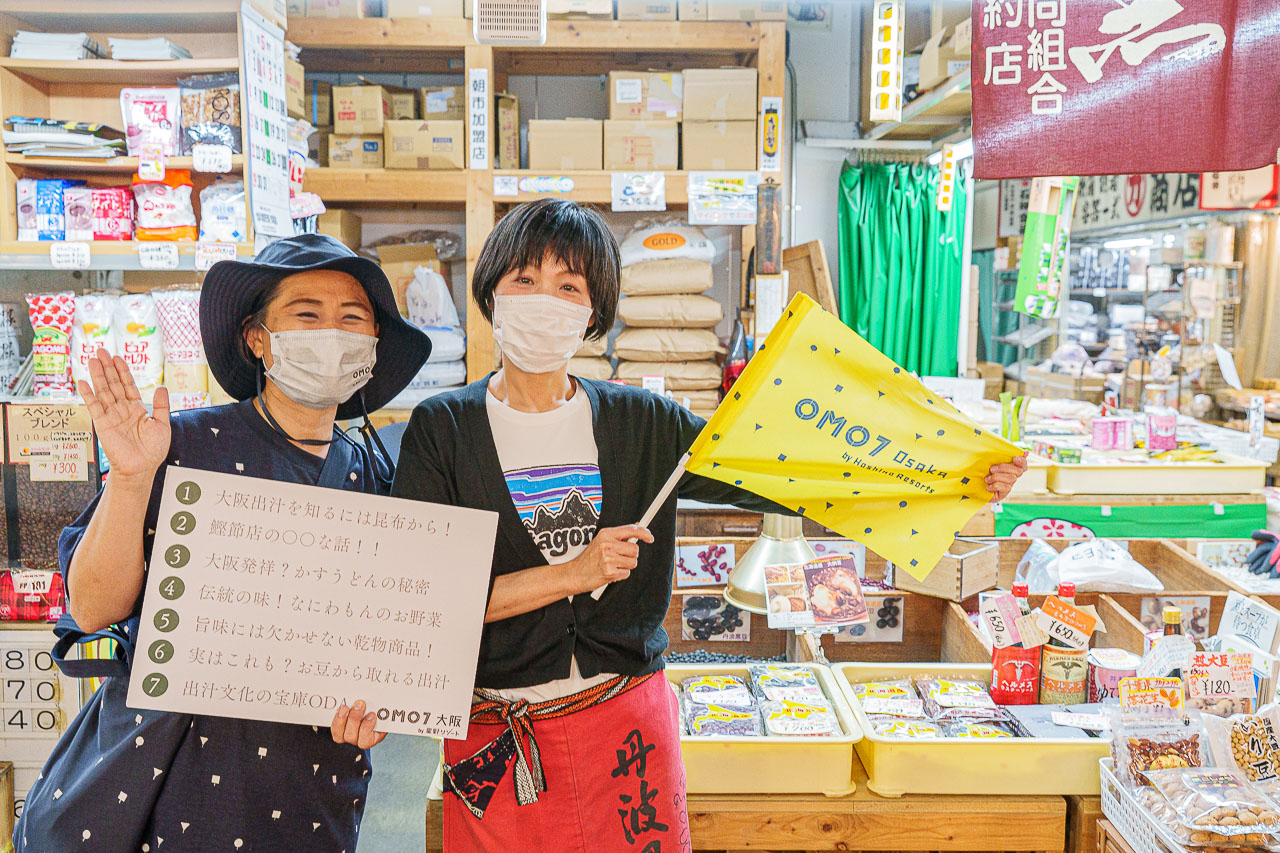
This one sells beans and red beans.
The guide says some older Osaka residents eat red-bean rice on the first day of each month to ward off bad luck.
I mention Korea’s winter-solstice custom of eating red-bean porridge for a similar symbolic reason, and we drift away from dashi.
I no longer remember why beans mattered to the broth, but this kind of small conversation is part of the tour’s appeal.
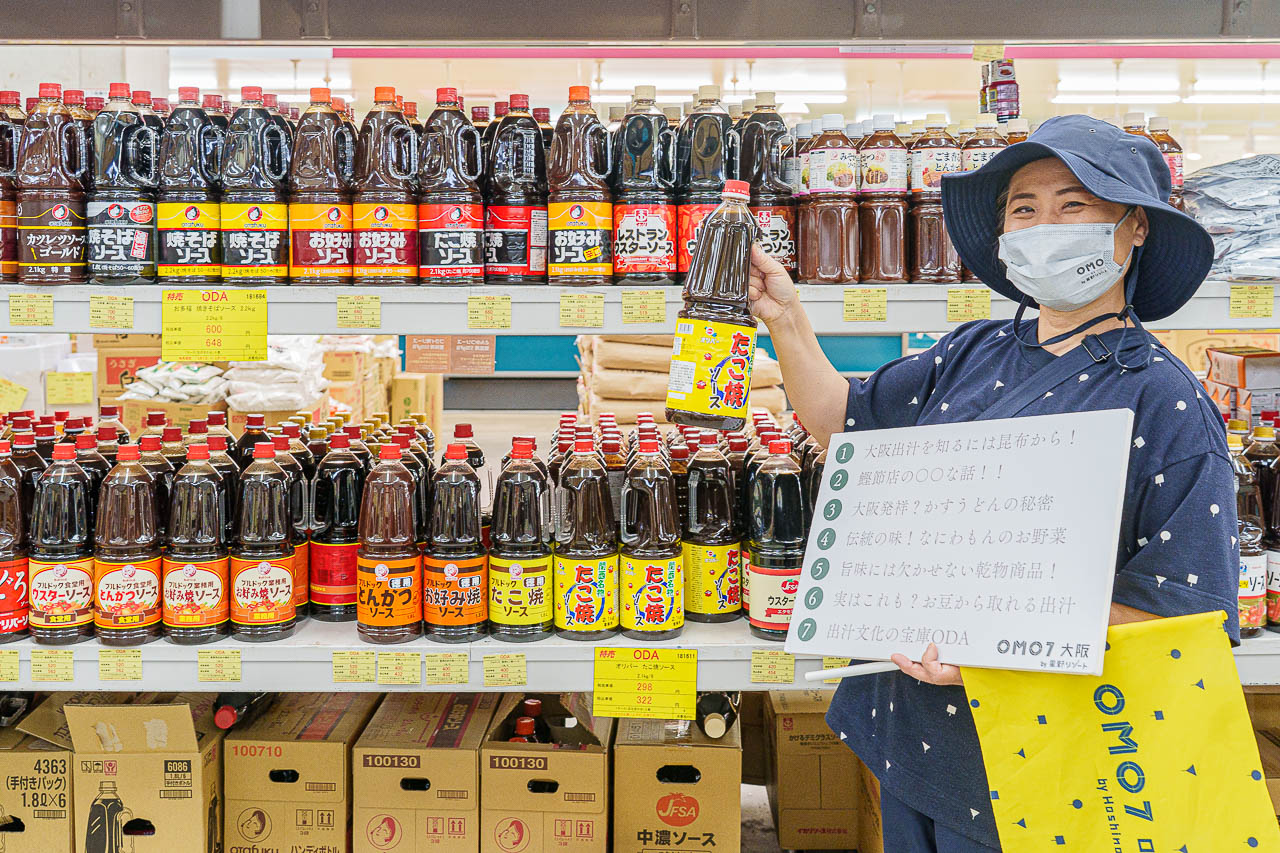
The final stop is ODA supermarket, a treasure trove within Kizu Market.
It has a broad assortment of sauces for sauce-loving Osaka diners.
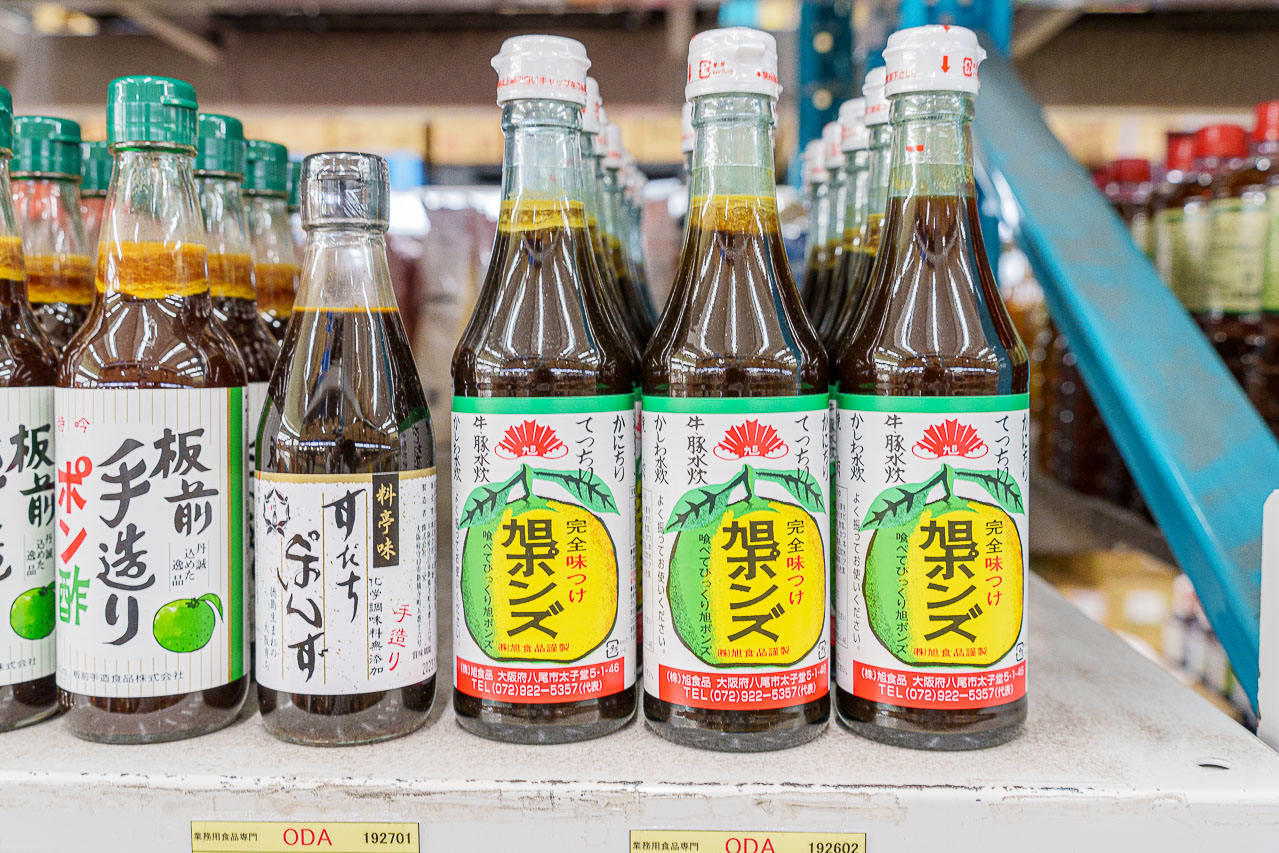
Asahi Ponzu, around twice the price of other ponzu in the source comparison, is reportedly so good that even our Ranger uses it sparingly.
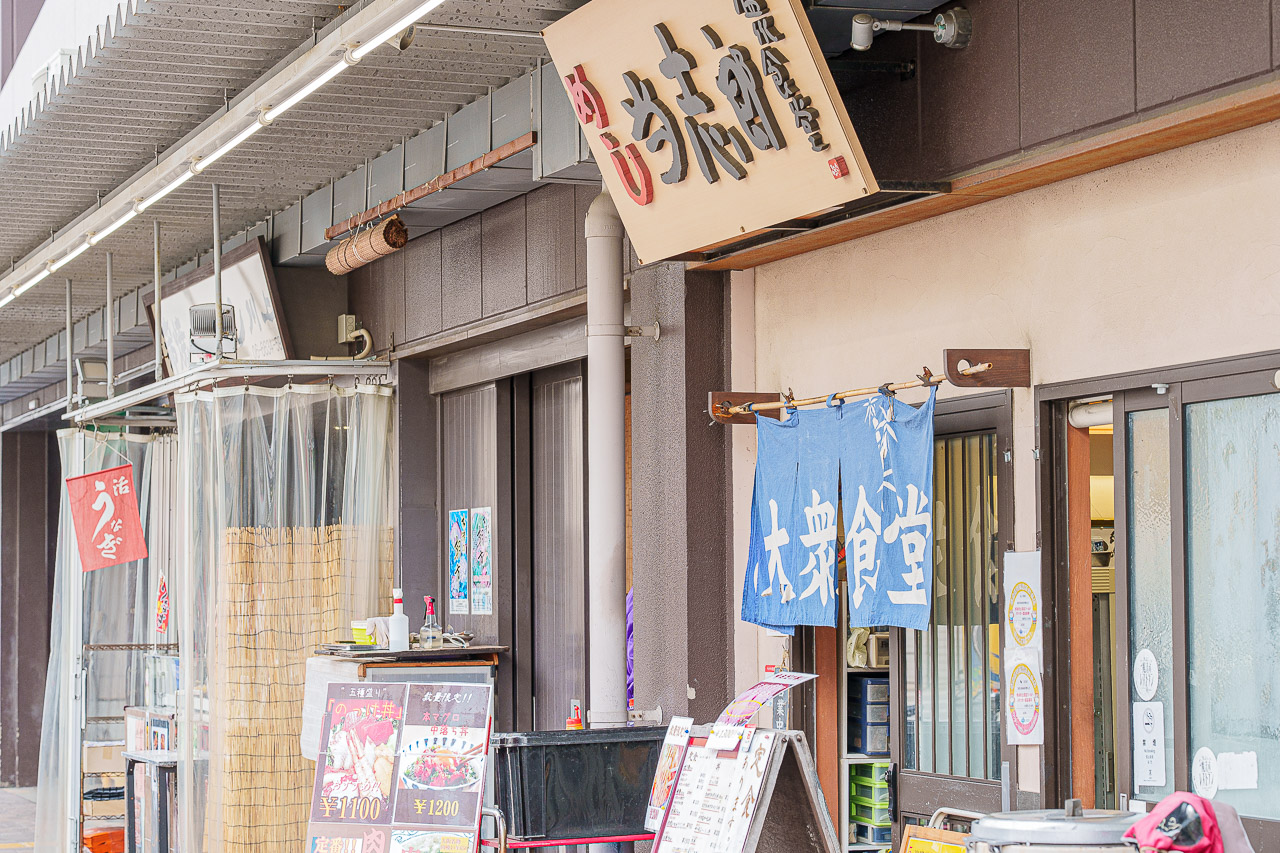
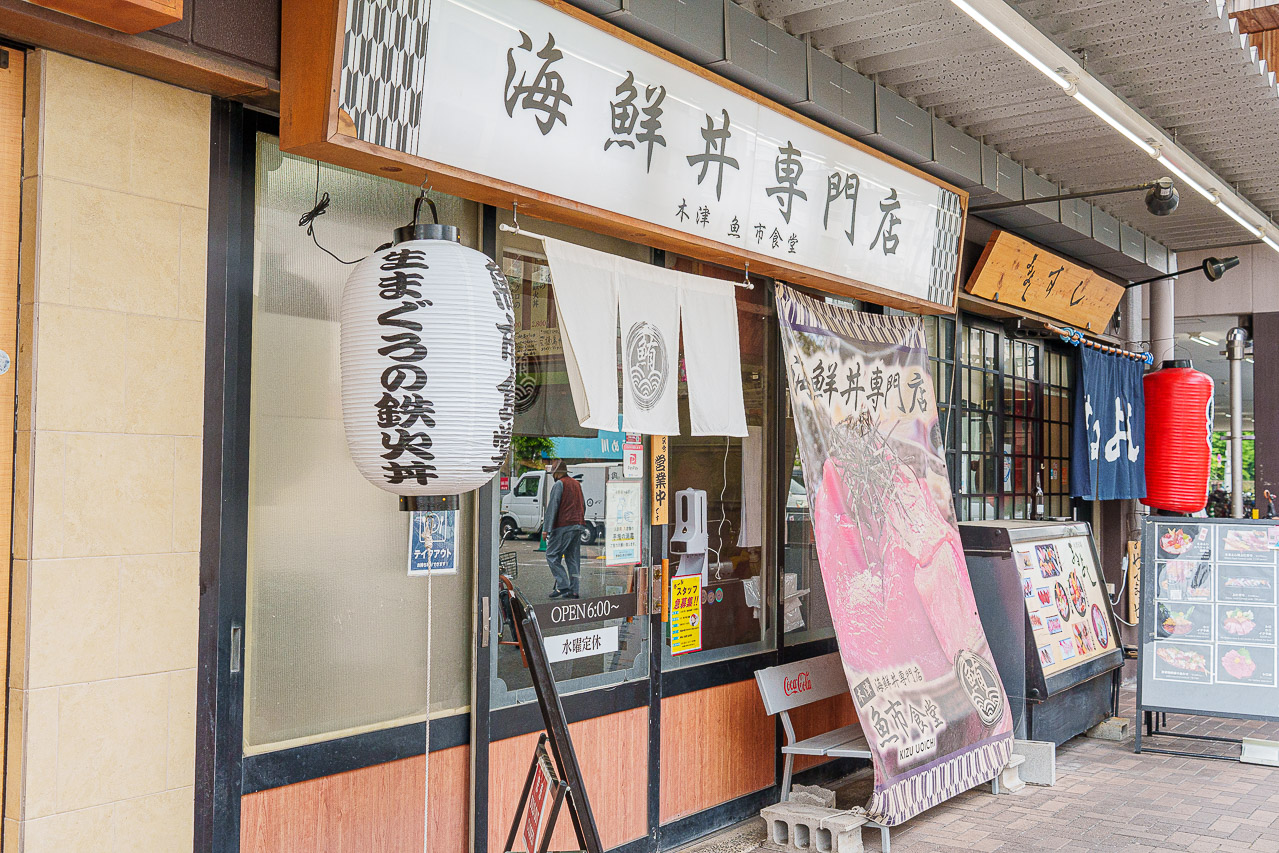
After our dashi search, we notice the market restaurants.
Serving busy market workers from early morning and using the market’s fresh ingredients, they look promising—though this passage does not claim a meal there.
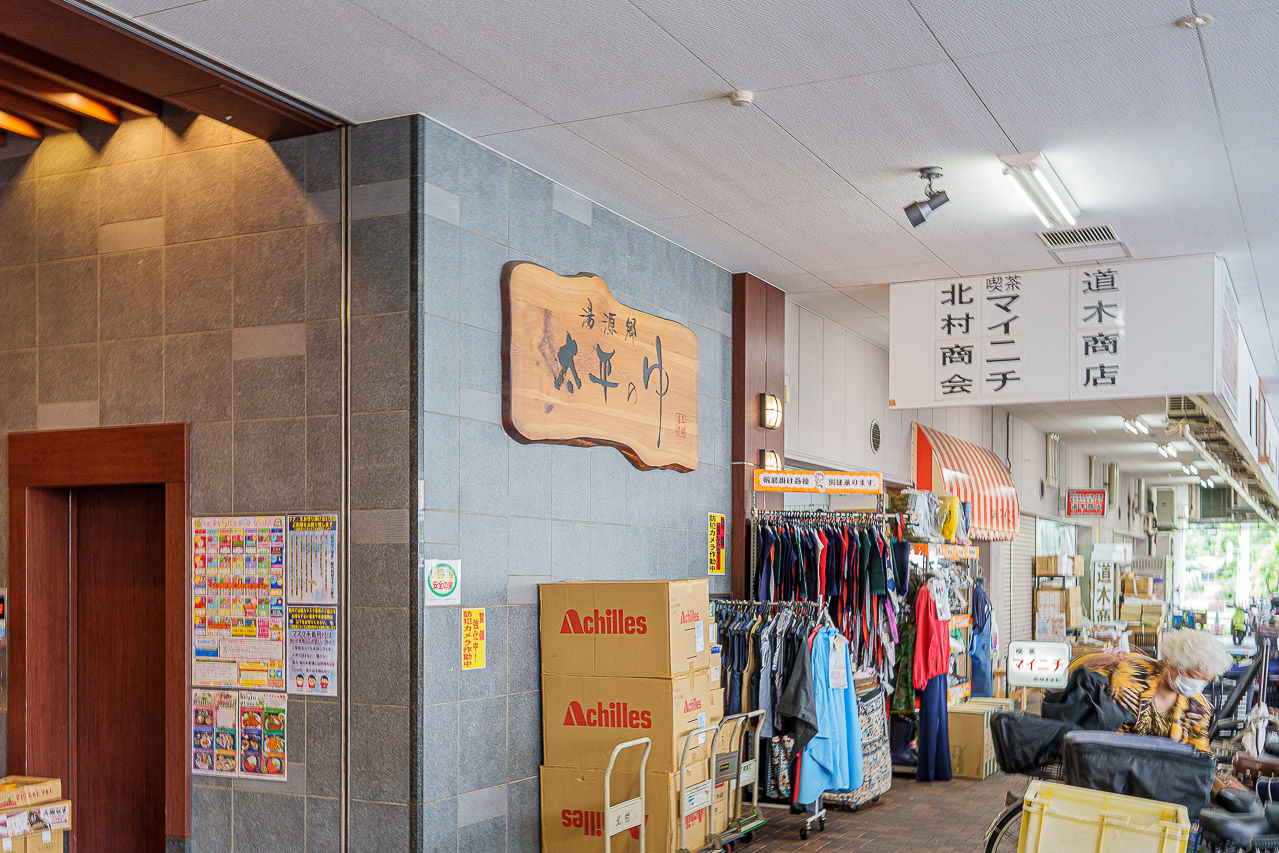
A public bath inside a traditional market is another surprise, fitting the author’s impression of Osaka’s enthusiasm for bathing.
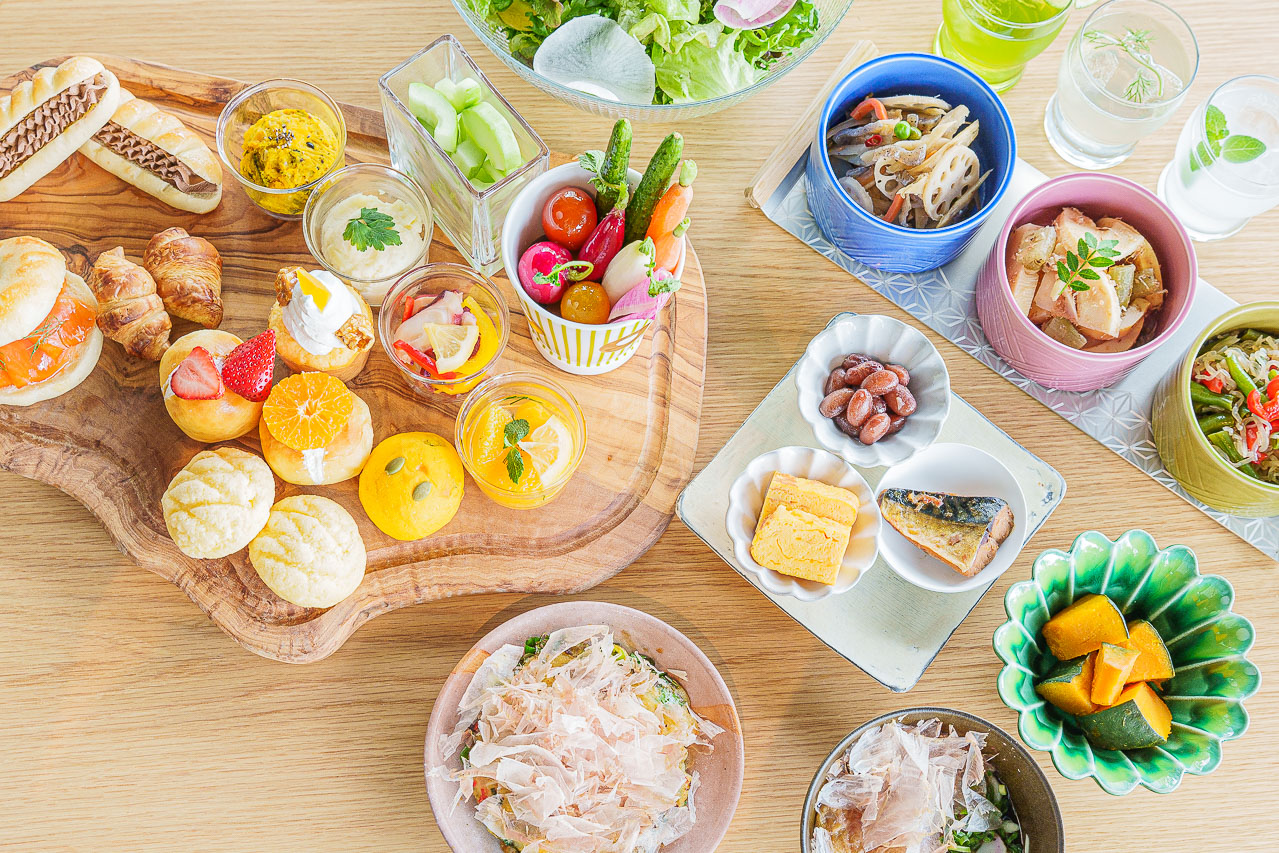
After this tour, I think a stay of two nights or more could include the hotel buffet one morning and breakfast at Kizu Market after the dashi walk another day.
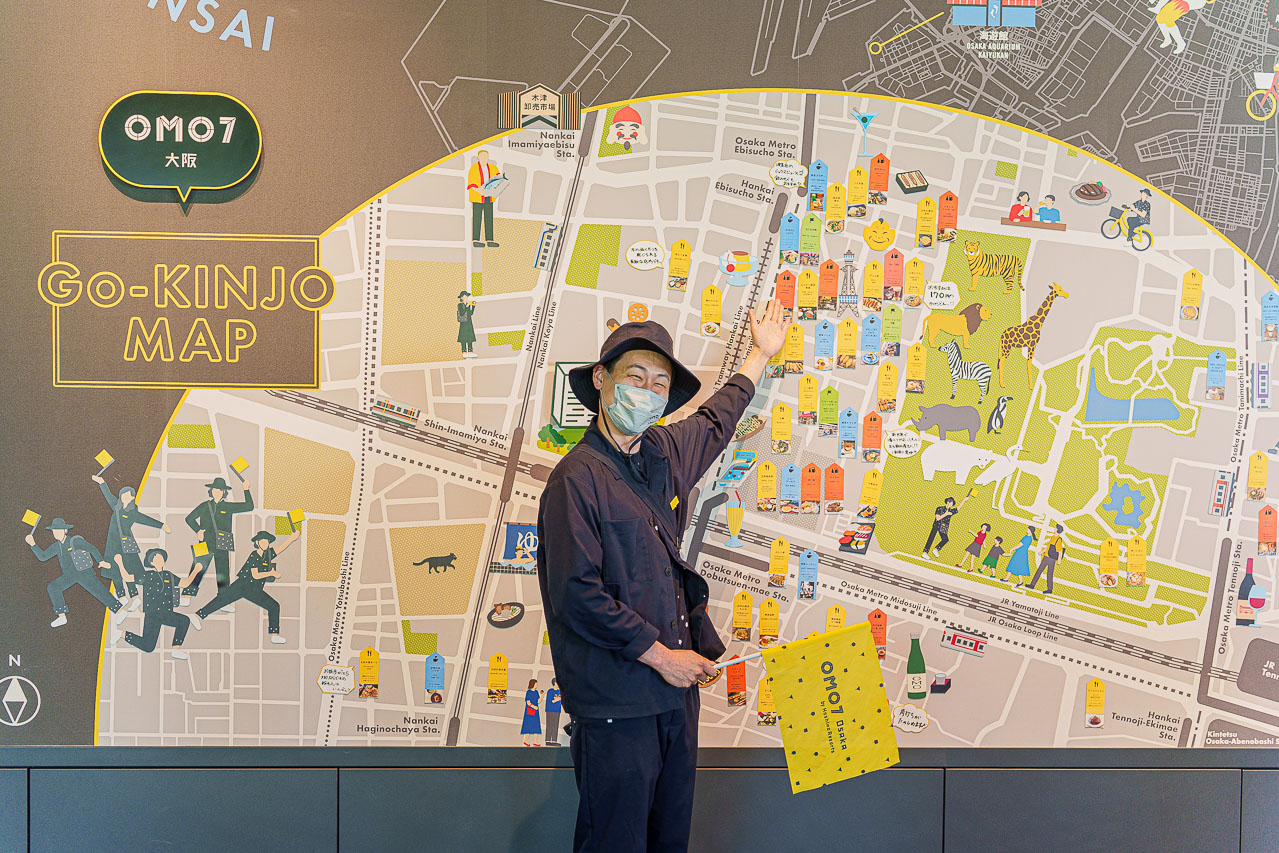
In the afternoon, we join ‘Let’s Go to Shinsekai.’
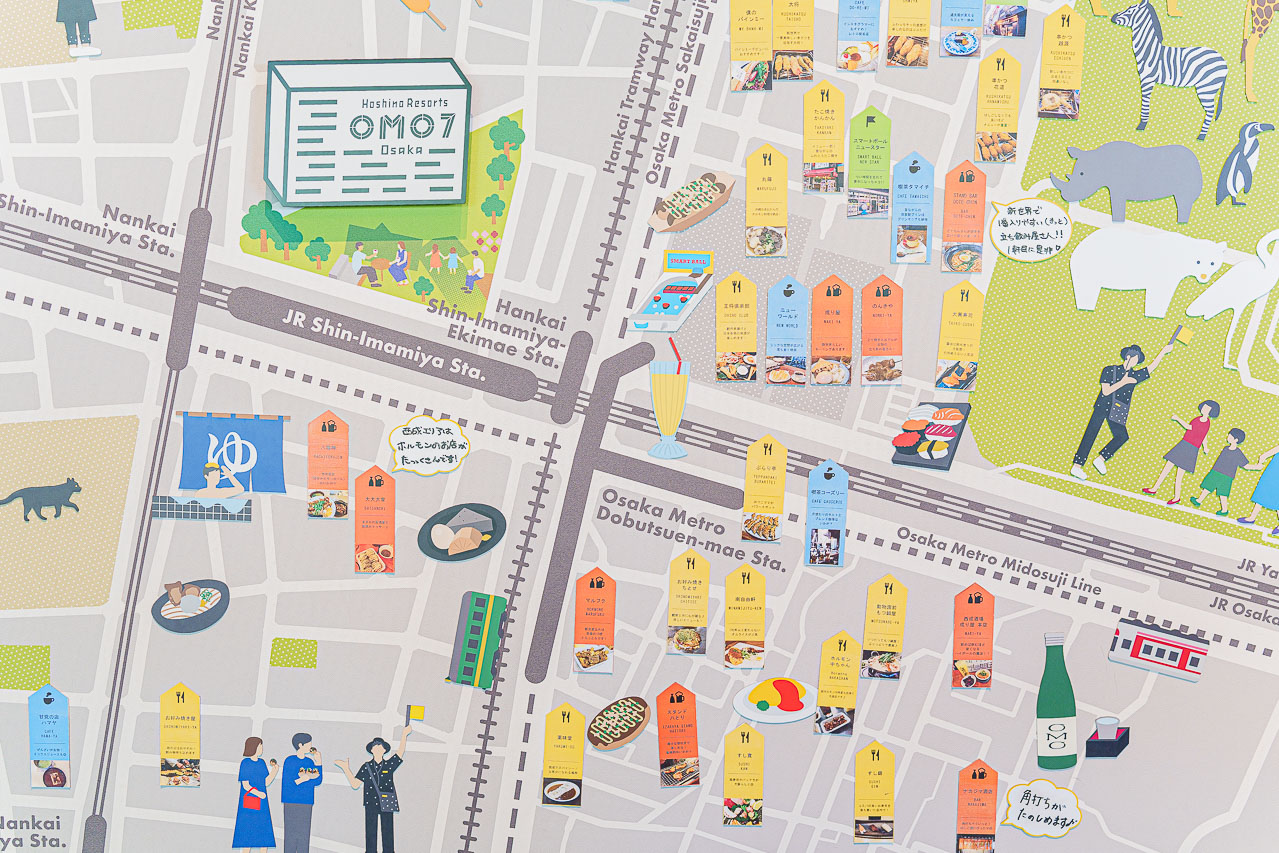
A Ranger who knows the district takes us through its retro streets.
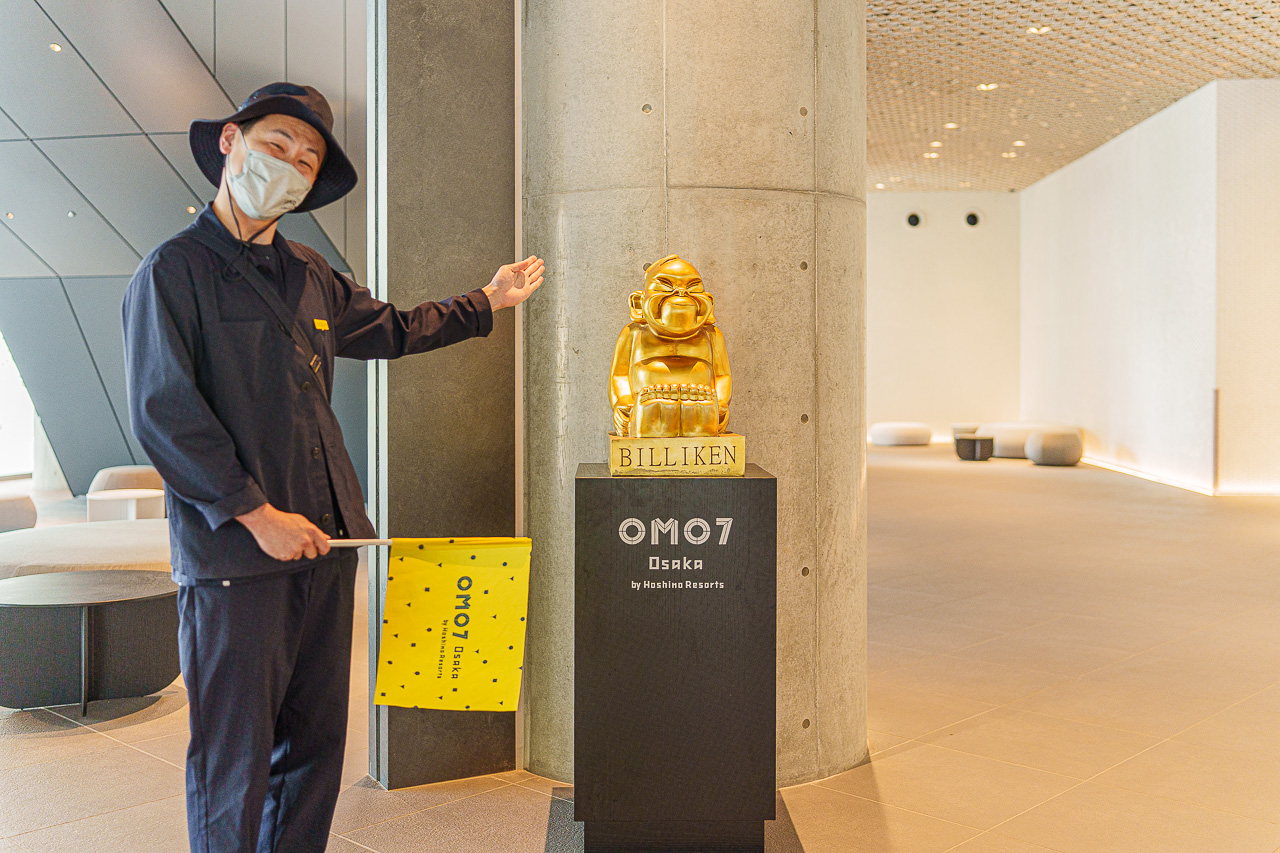
Before leaving, the guide explains the Billiken statue on the hotel’s first floor.
Billiken figures appear frequently around Osaka. The source explains that American artist Florence Pretz created this lucky figure after seeing a mysterious character in a dream.
It also connects the name with U.S. president William Taft’s nickname Billi plus Ken. That naming story is retained as the source’s account, not independently established history.
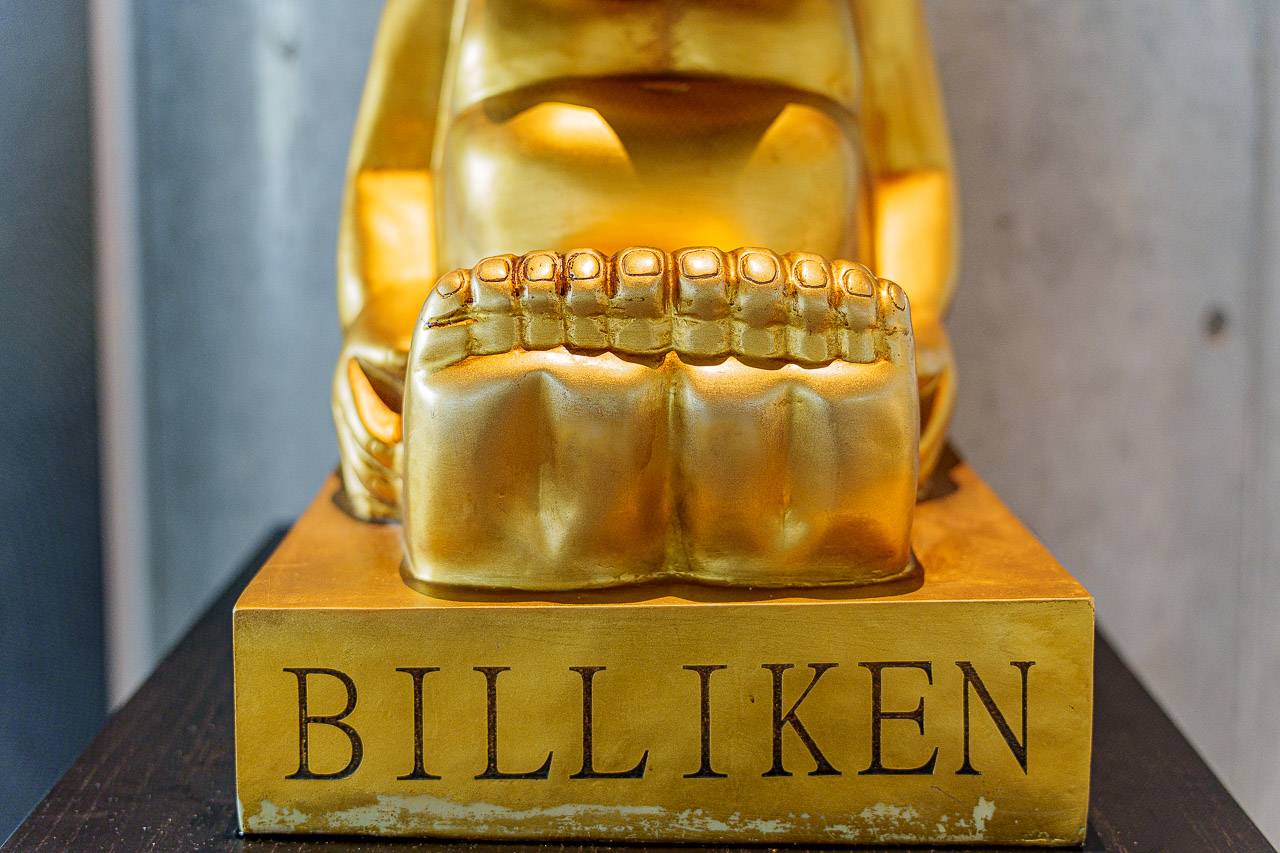
Billiken became a popular American lucky mascot; according to the guide’s story, an Osaka businessman adopted the trend and promoted it as a god of good fortune, a role it still has locally.
Tradition says Billiken likes having its soles rubbed and may grant the wishes of those who do so.
The source says the first figure is missing, the second is at Shinsekai’s tourist information center and the third is in Tsutenkaku.
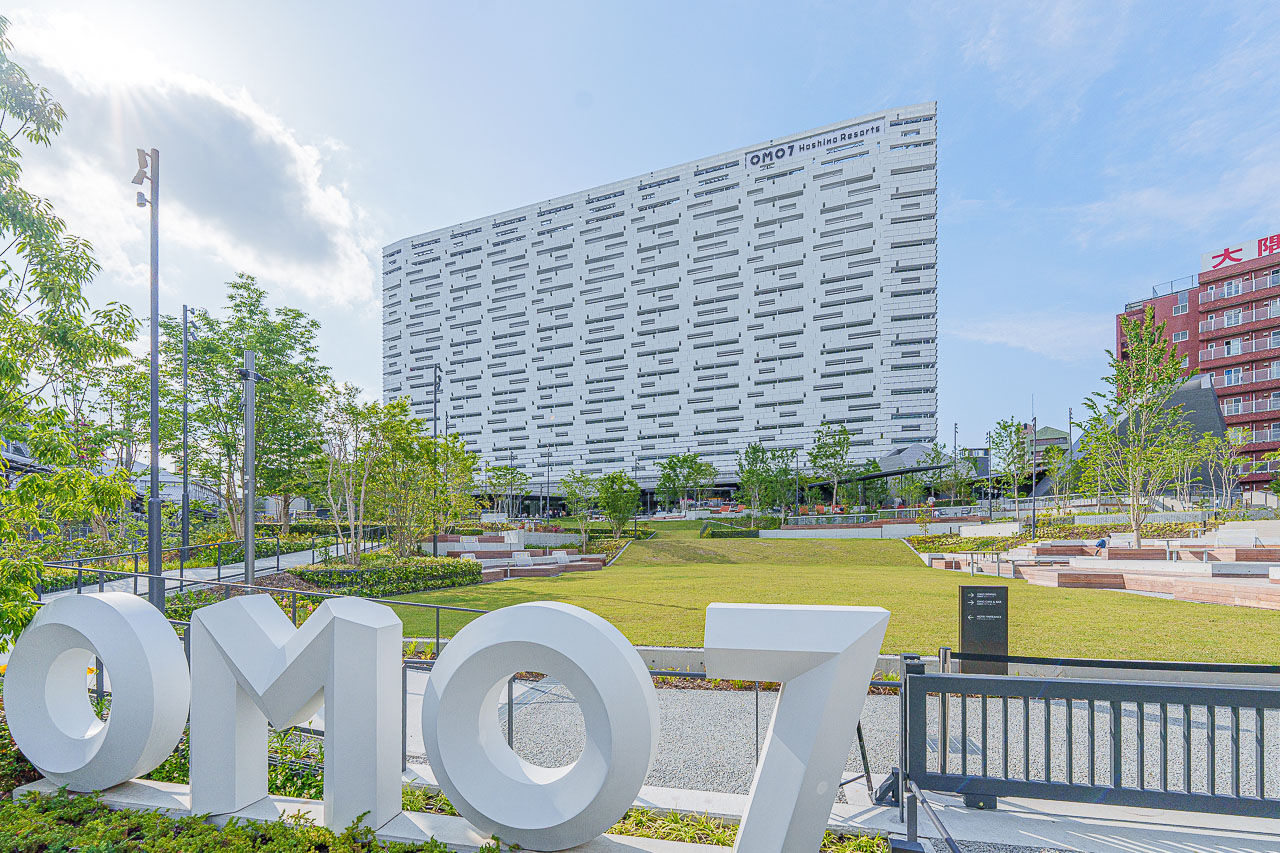
Outside, OMO7’s size strikes us again.
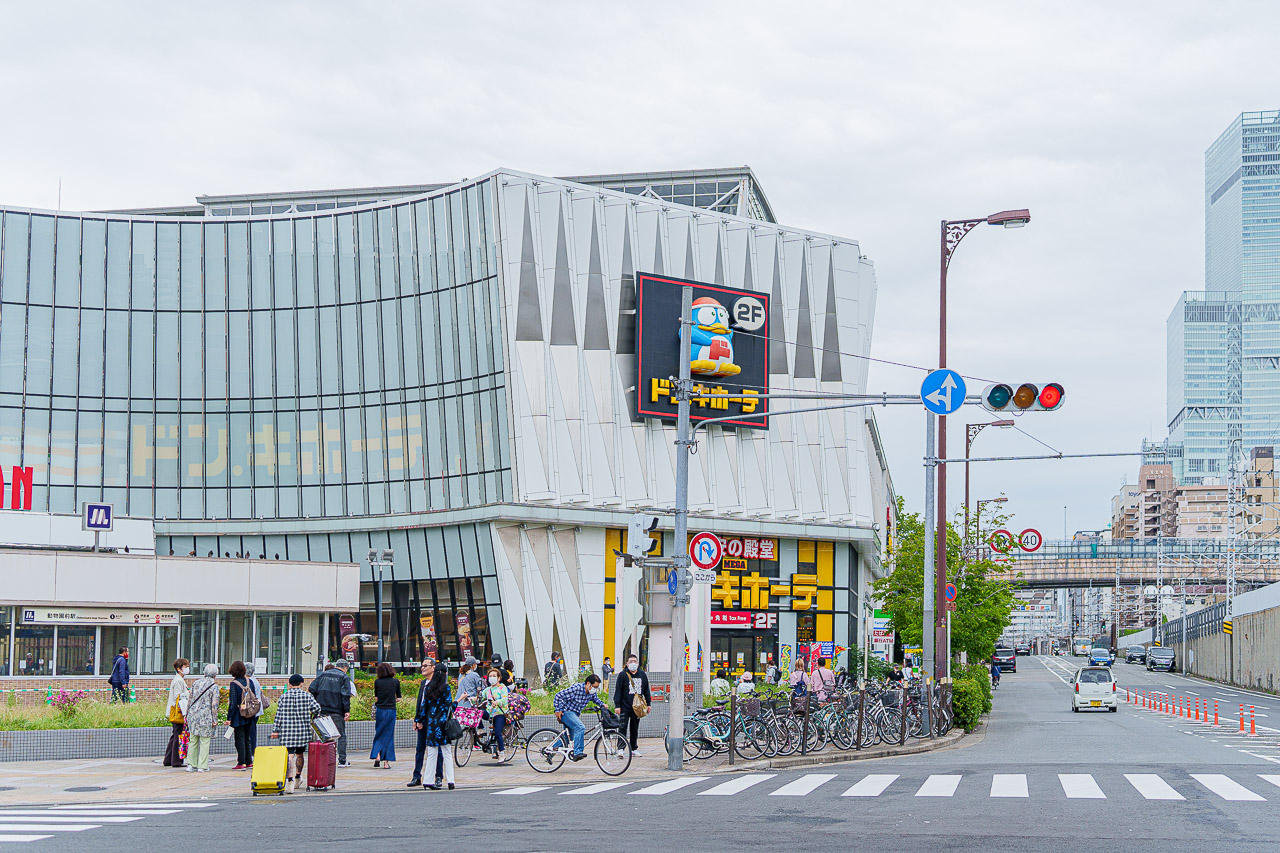
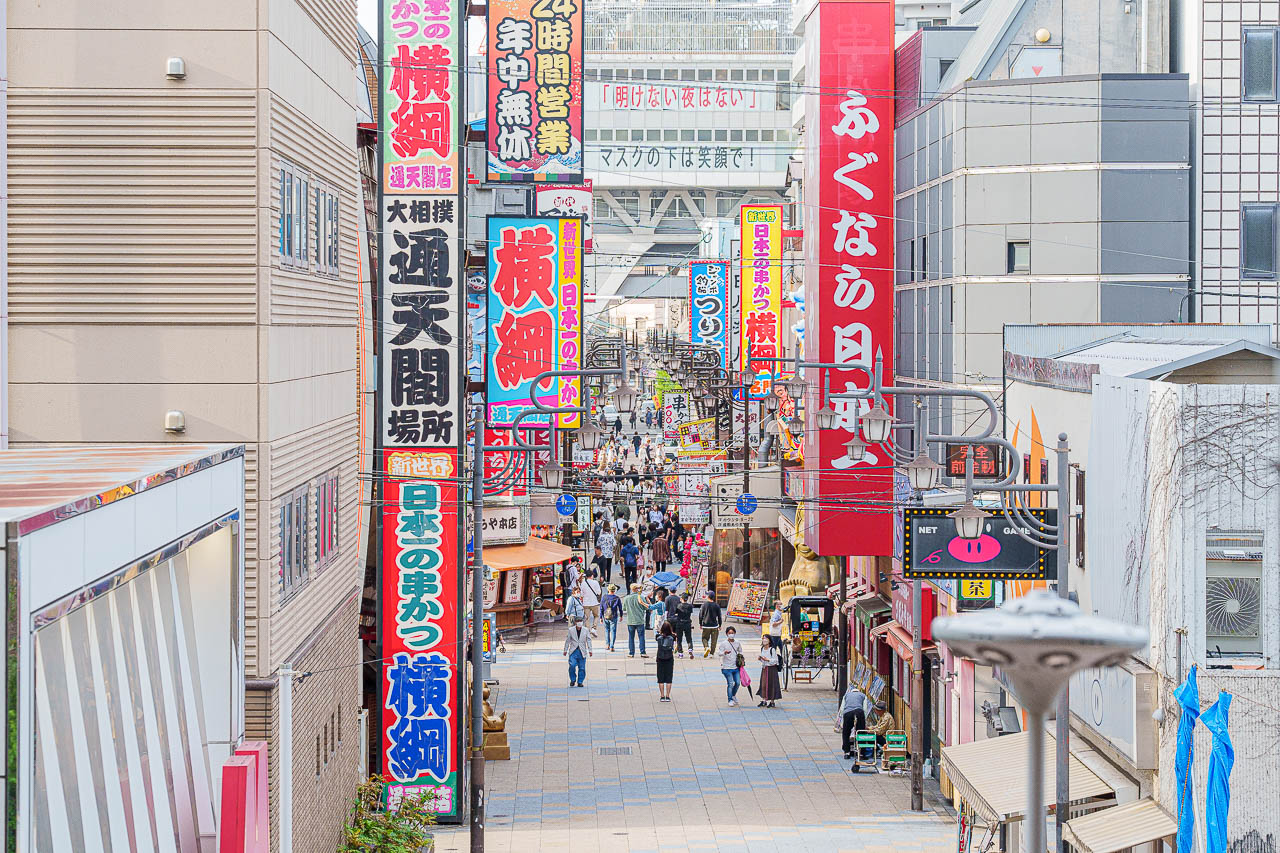
Crossing the road and passing Don Quijote, we find a narrow side street.
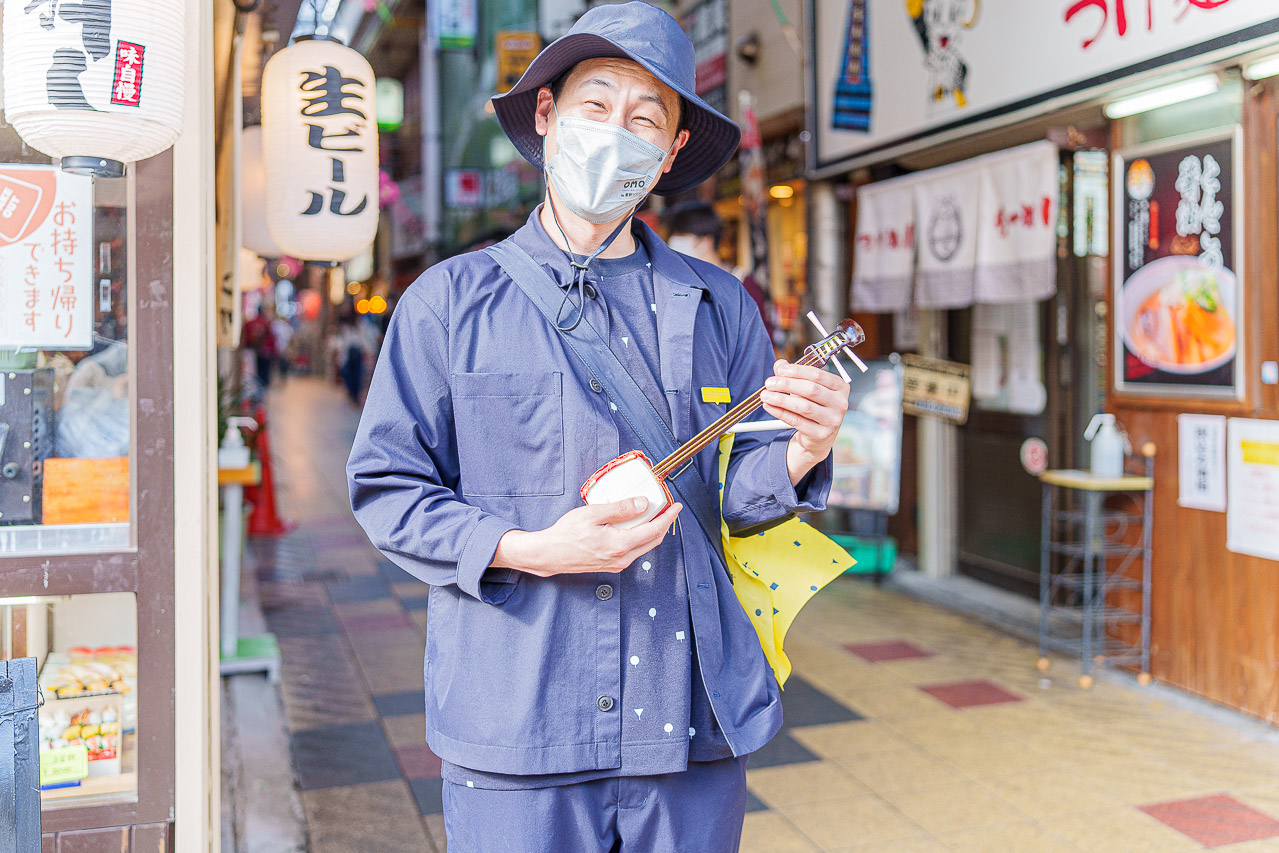
Jan Jan Yokocho, a lane linking Shin-Imamiya and Shinsekai.
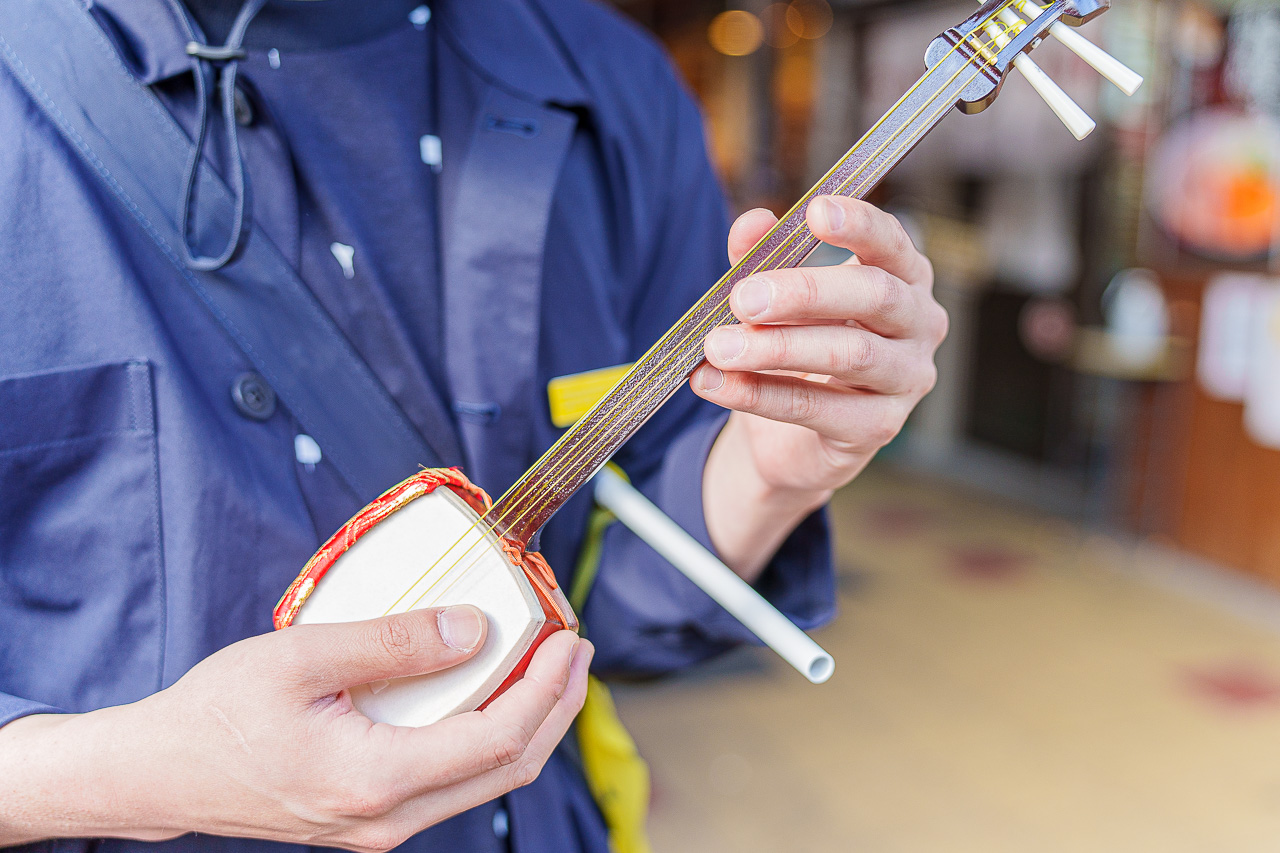
Its name is said to imitate the ‘jan-jan’ sound of the shamisen.
Believe the story or not.
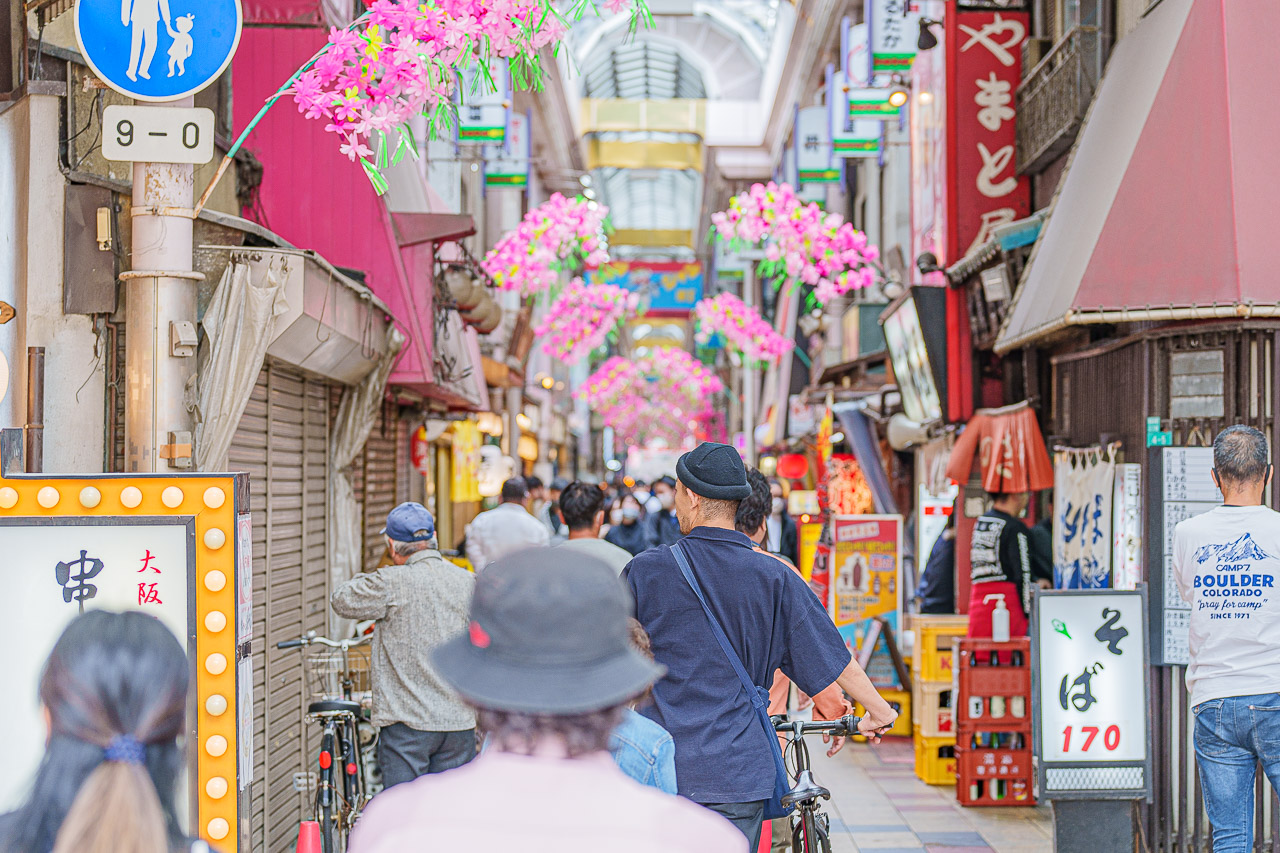
The lane is narrow, but packed with places to eat and drink.
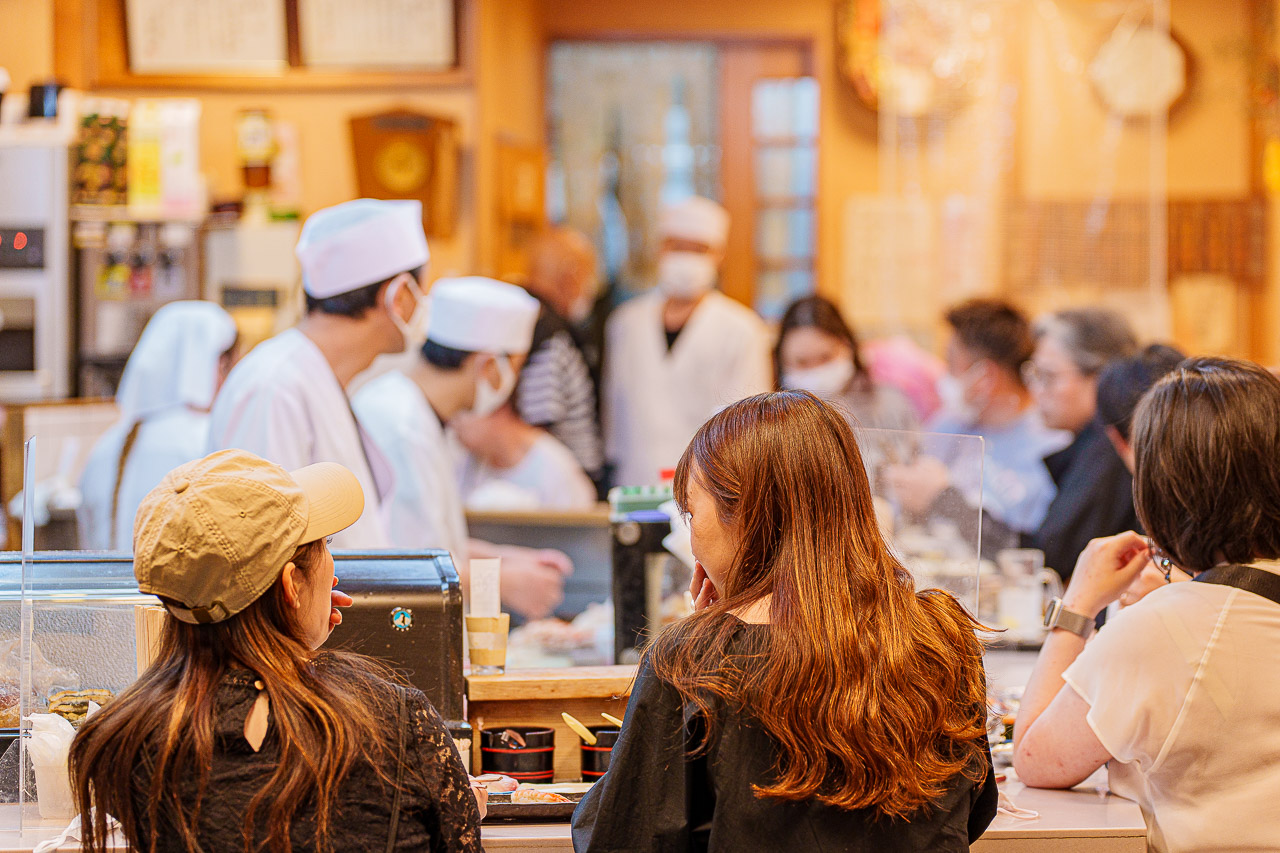
Sushi,

Osaka’s kasu udon,
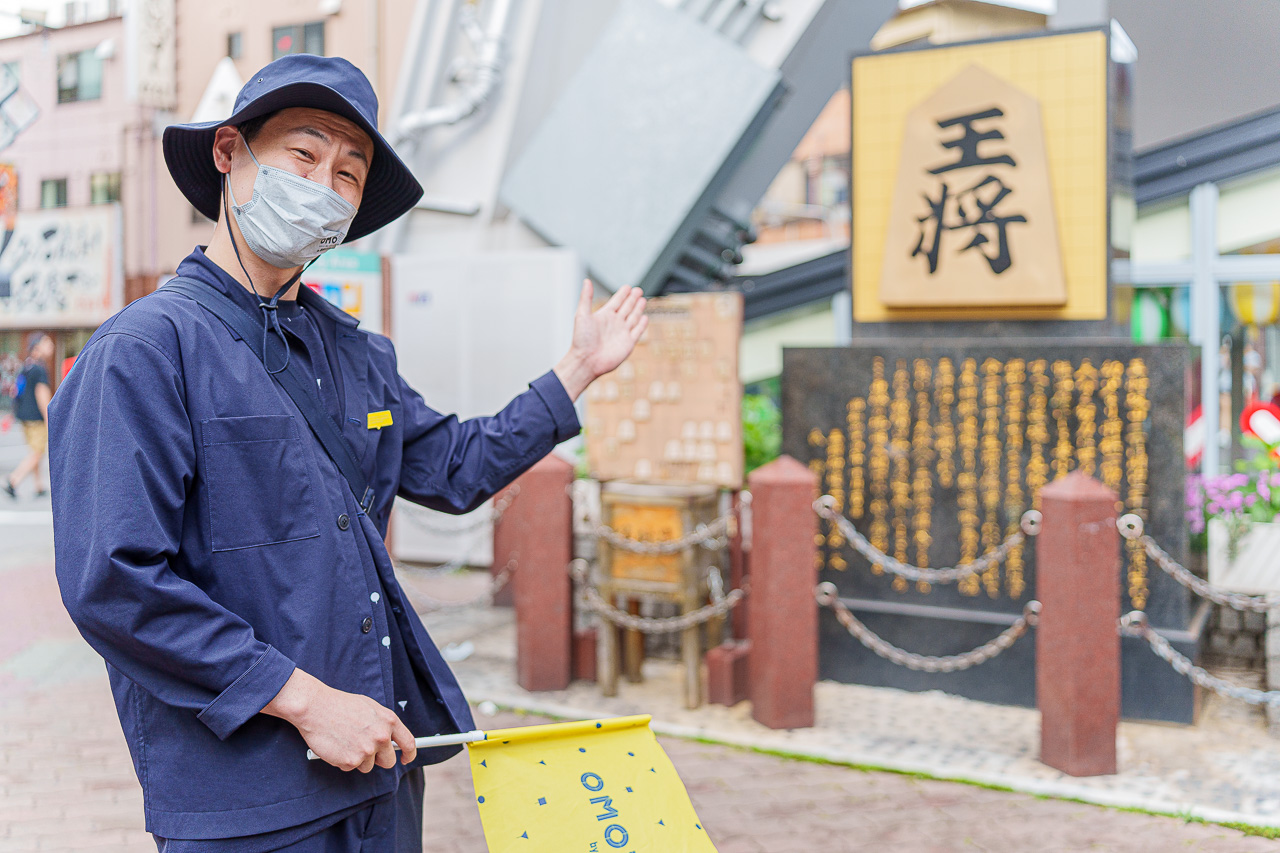
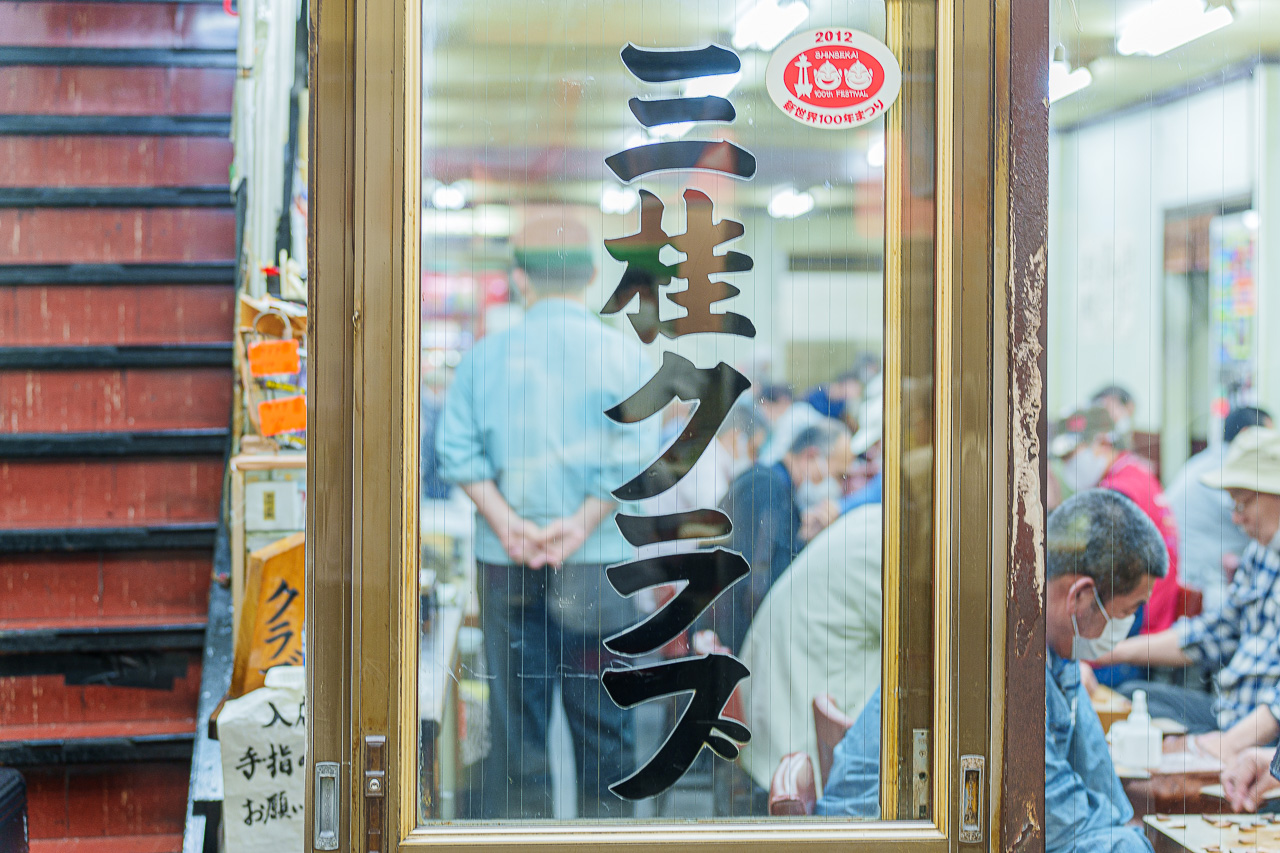
shogi clubs,
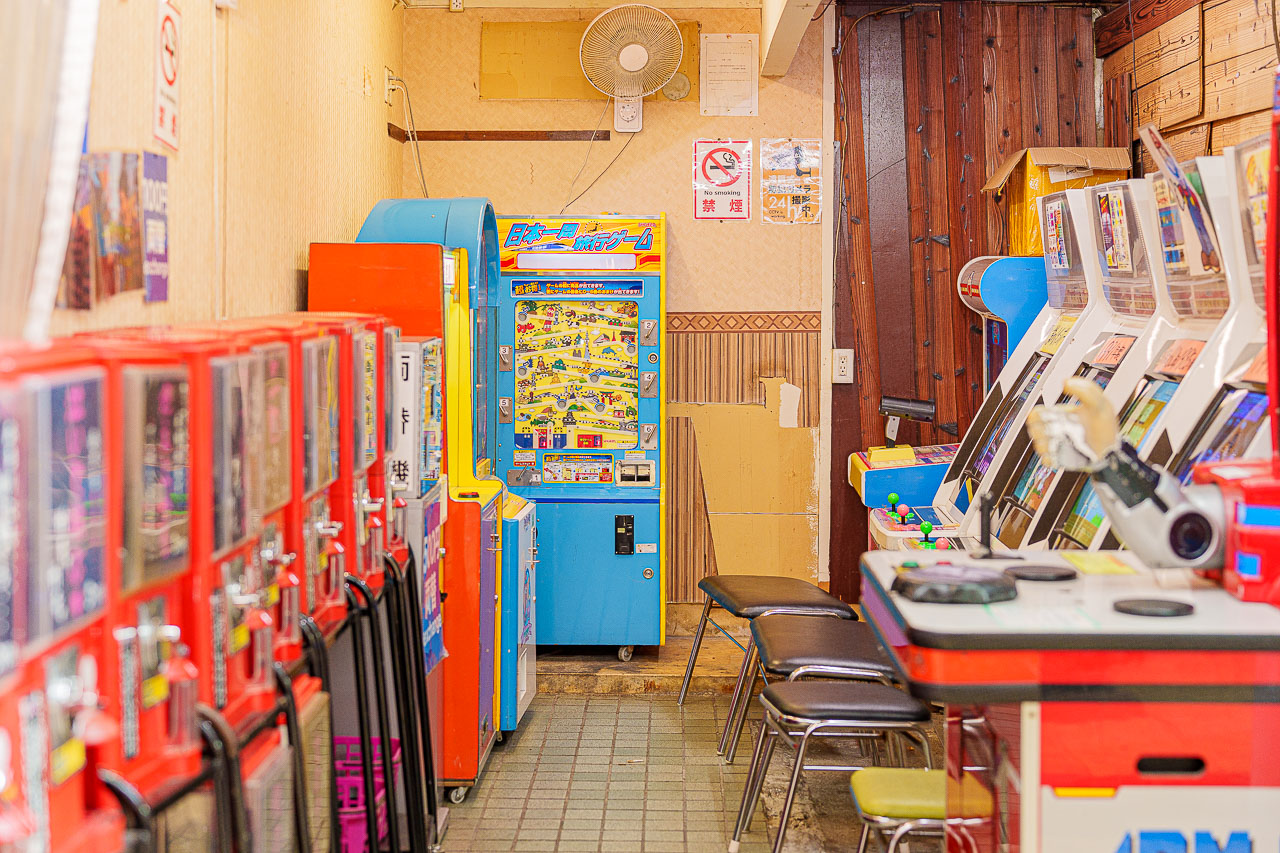
and an old game arcade.
If you are short on time, Jan Jan Yokocho alone can give a strong sense of Shinsekai.
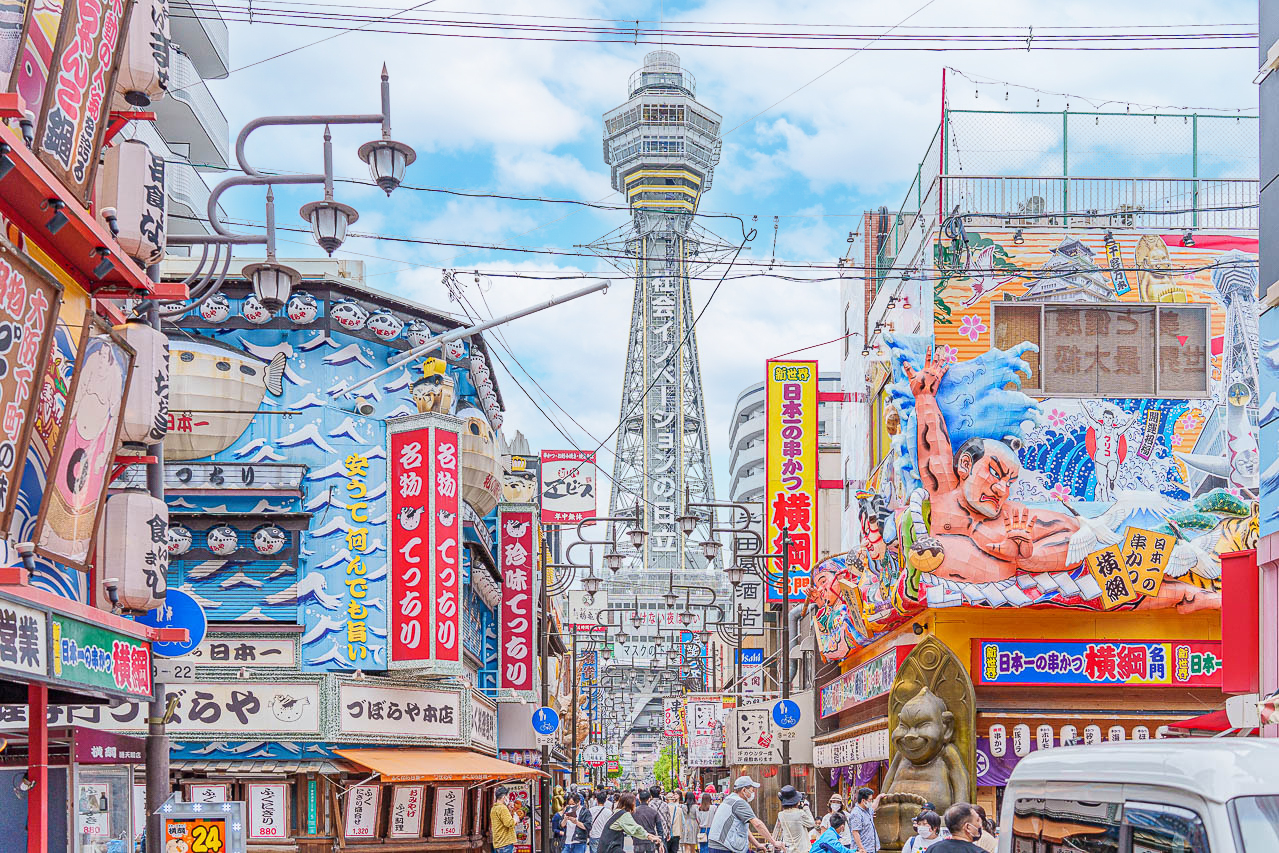
Beyond it, the wider district opens up with its nostalgic atmosphere.
The source traces the name Shinsekai, ‘New World,’ to the amusement area developed around Tsutenkaku in 1912, expressing an embrace of new culture and technology.
The author contrasts its later crowds with an older reputation for nightlife, poor safety and daytime drinking. That is the source’s account of its image, not a current assessment of residents or safety.
Limited redevelopment left much of the older entertainment-district appearance intact.
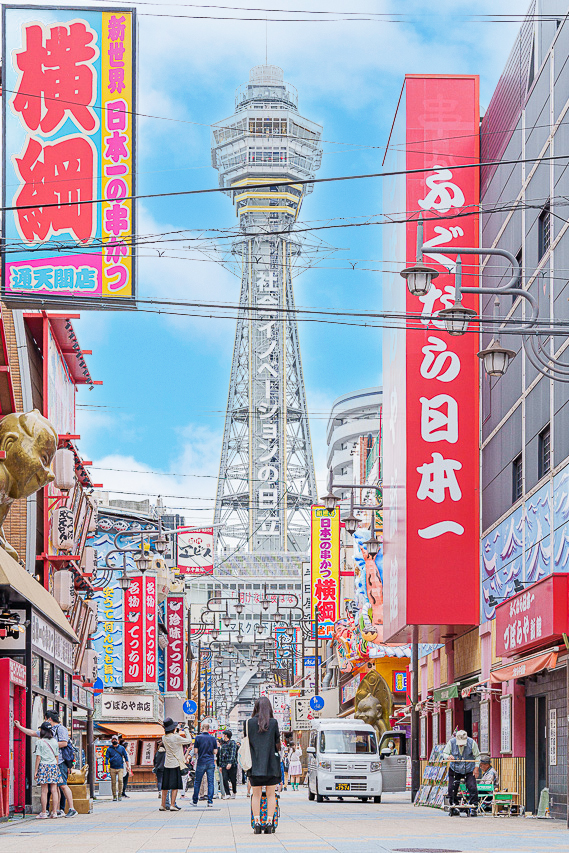
That unchanging atmosphere has itself become part of the appeal.
The account describes a second heyday, with visitors, tidier streets and more restaurants reinforcing one another.
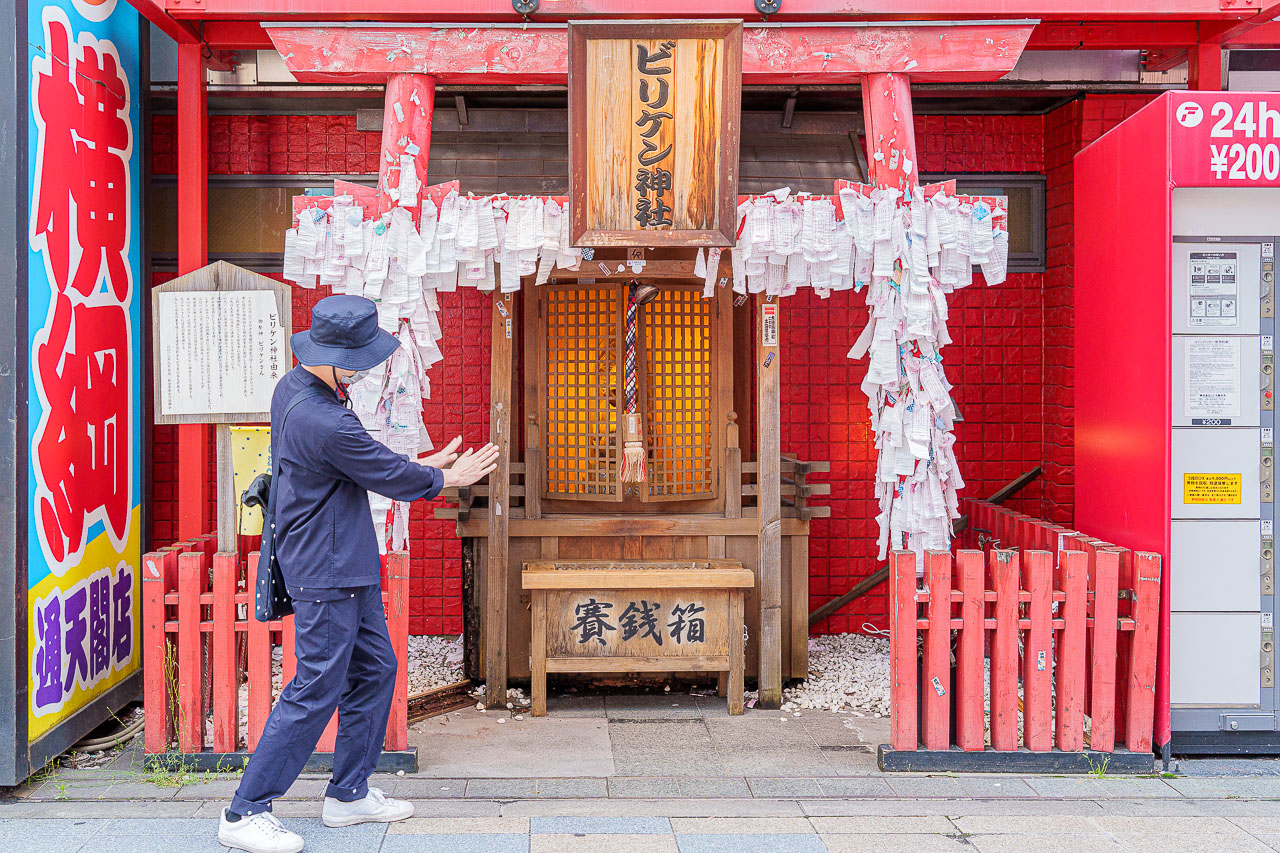
We reach Billiken Shrine.
The original wooden Billiken was reportedly enshrined here before going missing.
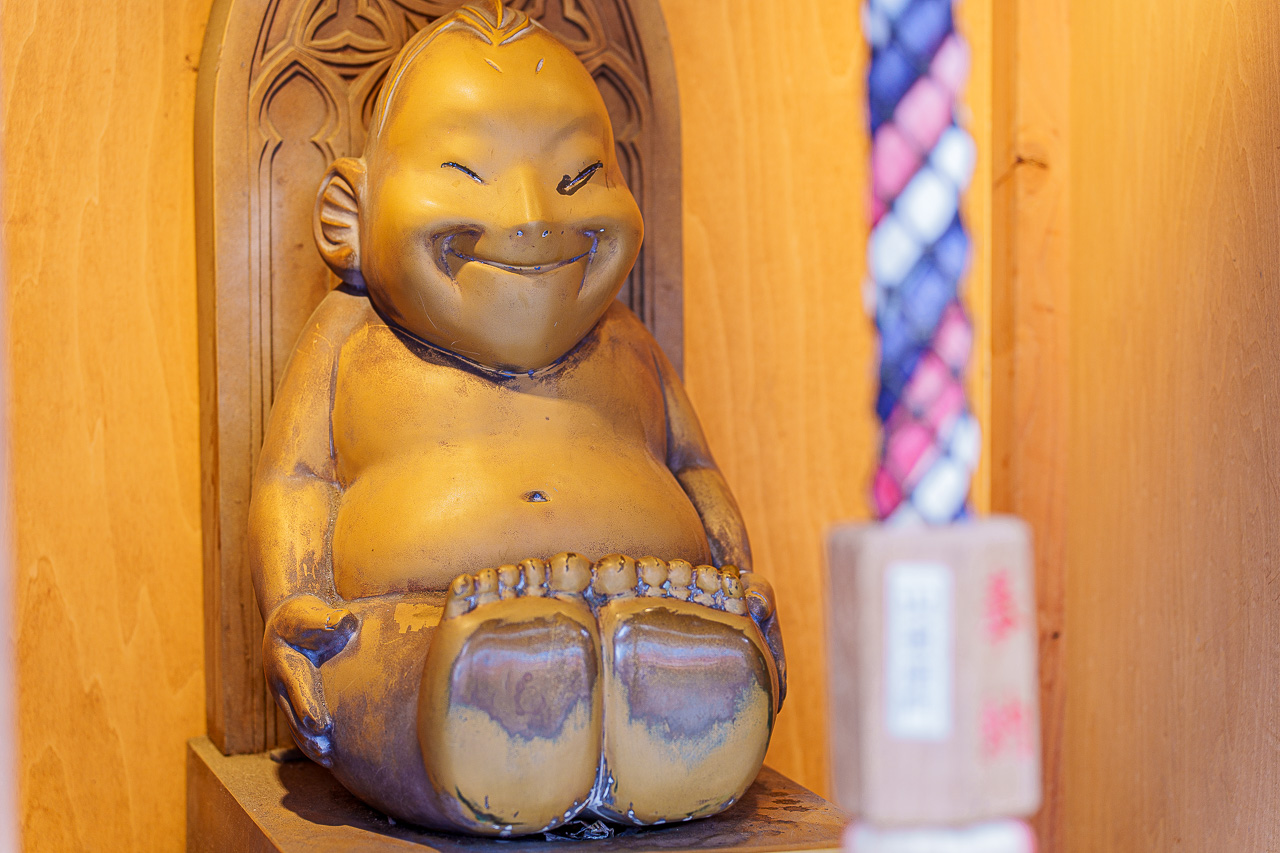
The present one is said to have been brought from elsewhere.
Its soles are already worn from plenty of rubbing.
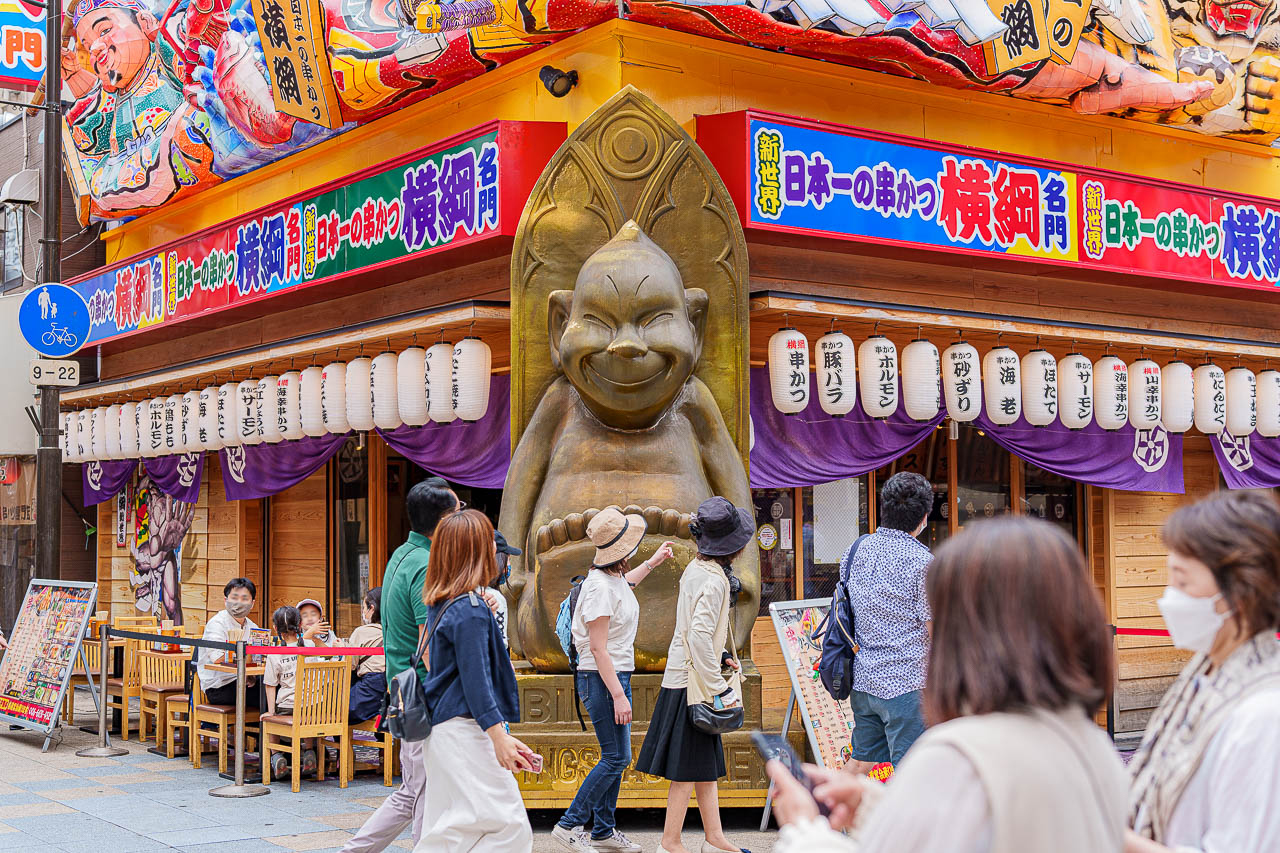
A huge Billiken makes a good photograph.
Perhaps it is coincidence: statues were placed around the district with hopes of revival, and the streets became popular again. The author playfully wonders whether they worked.
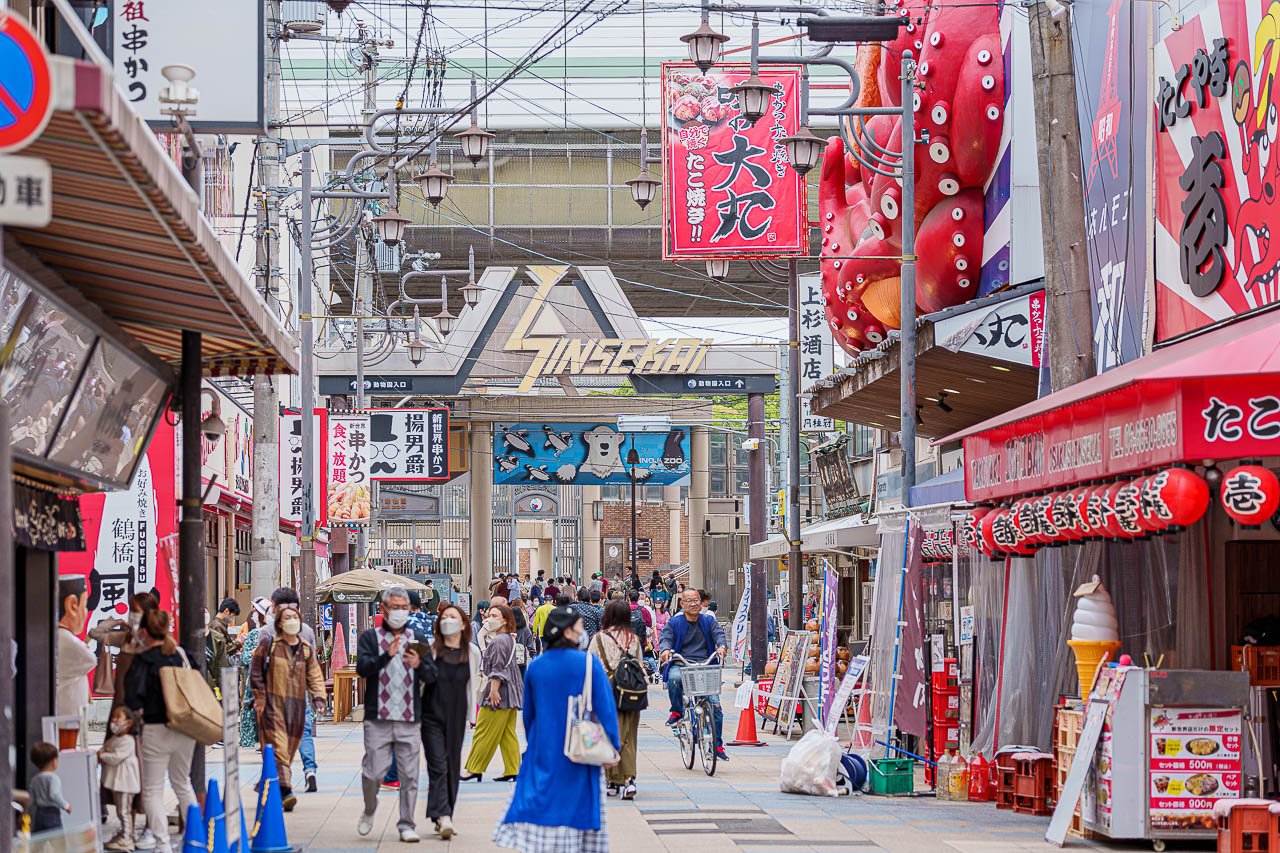
Shinsekai’s streets feel retro but clean during our visit.
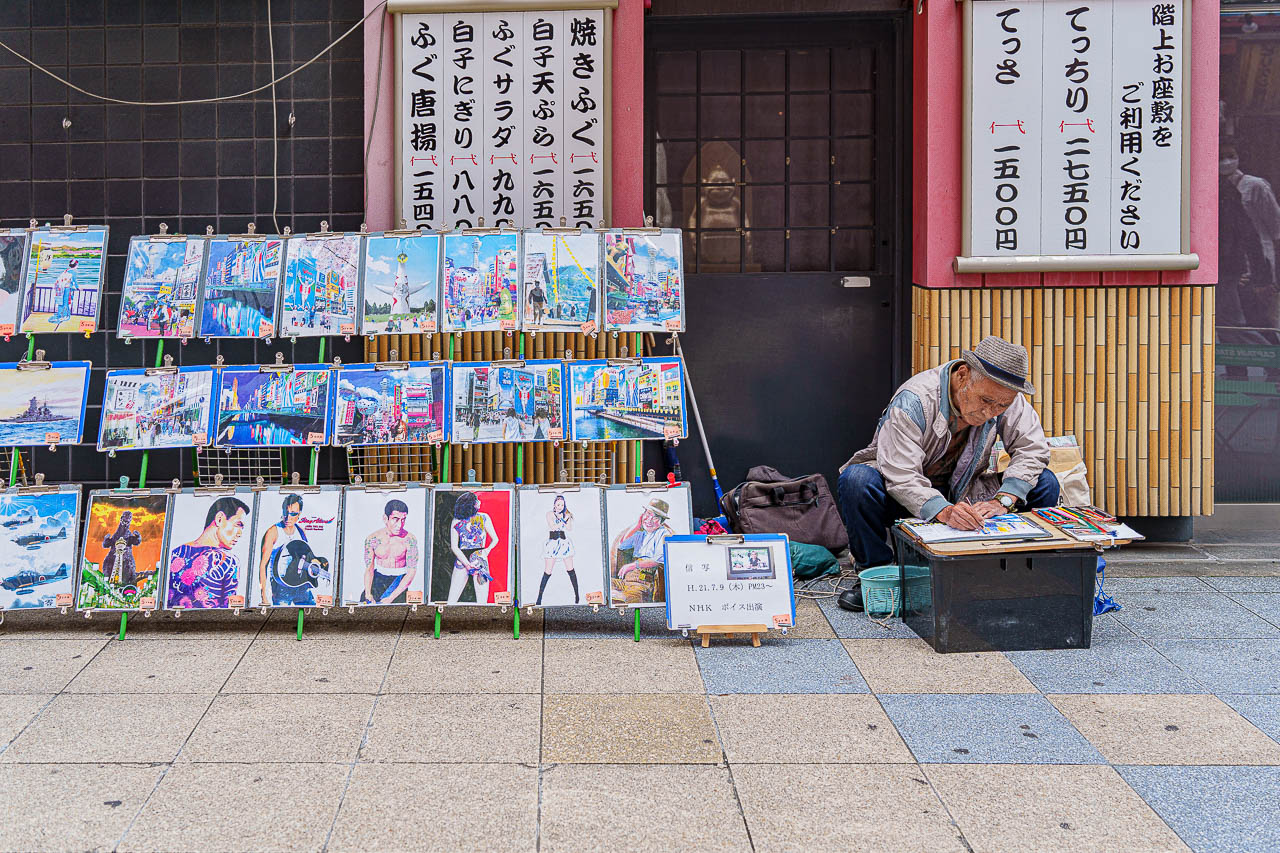
A street artist.
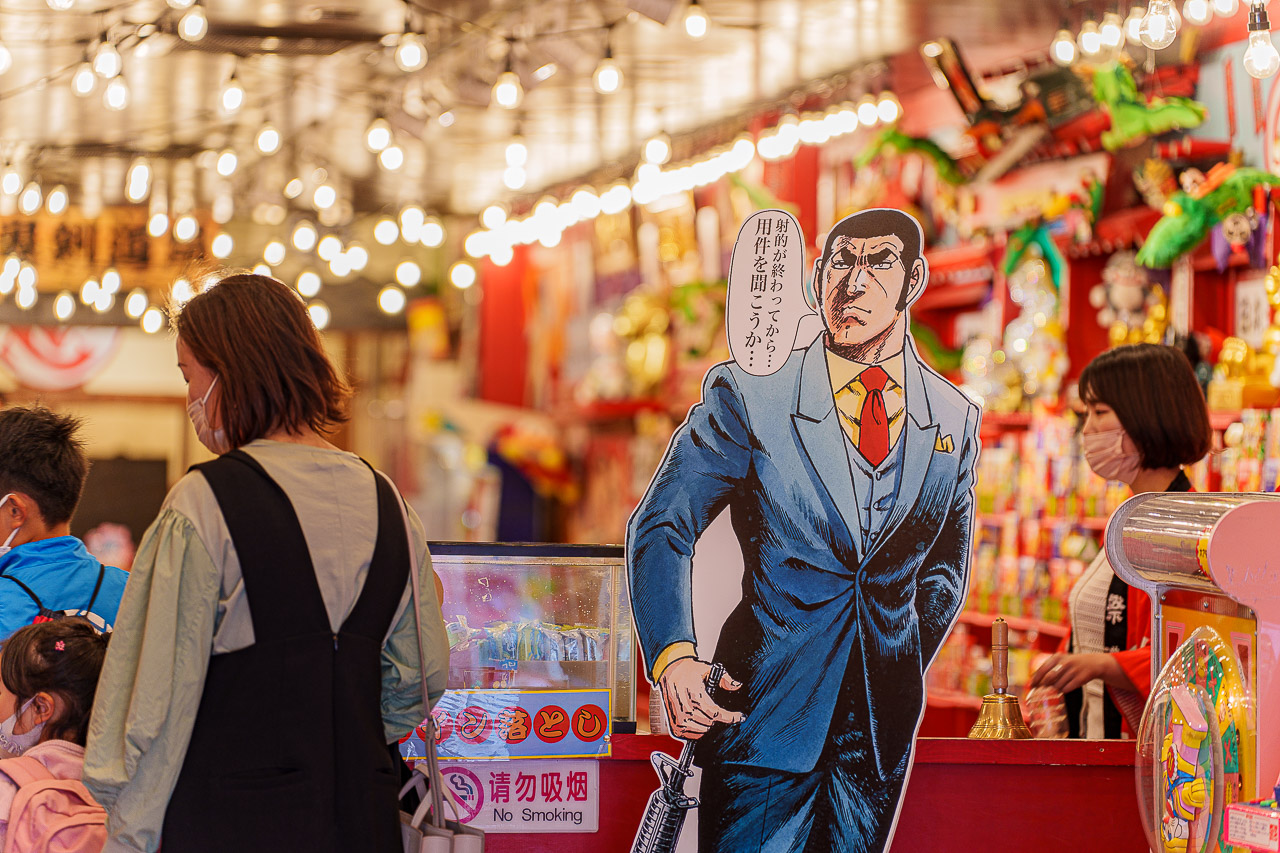
Shooting-gallery games appear in several places.
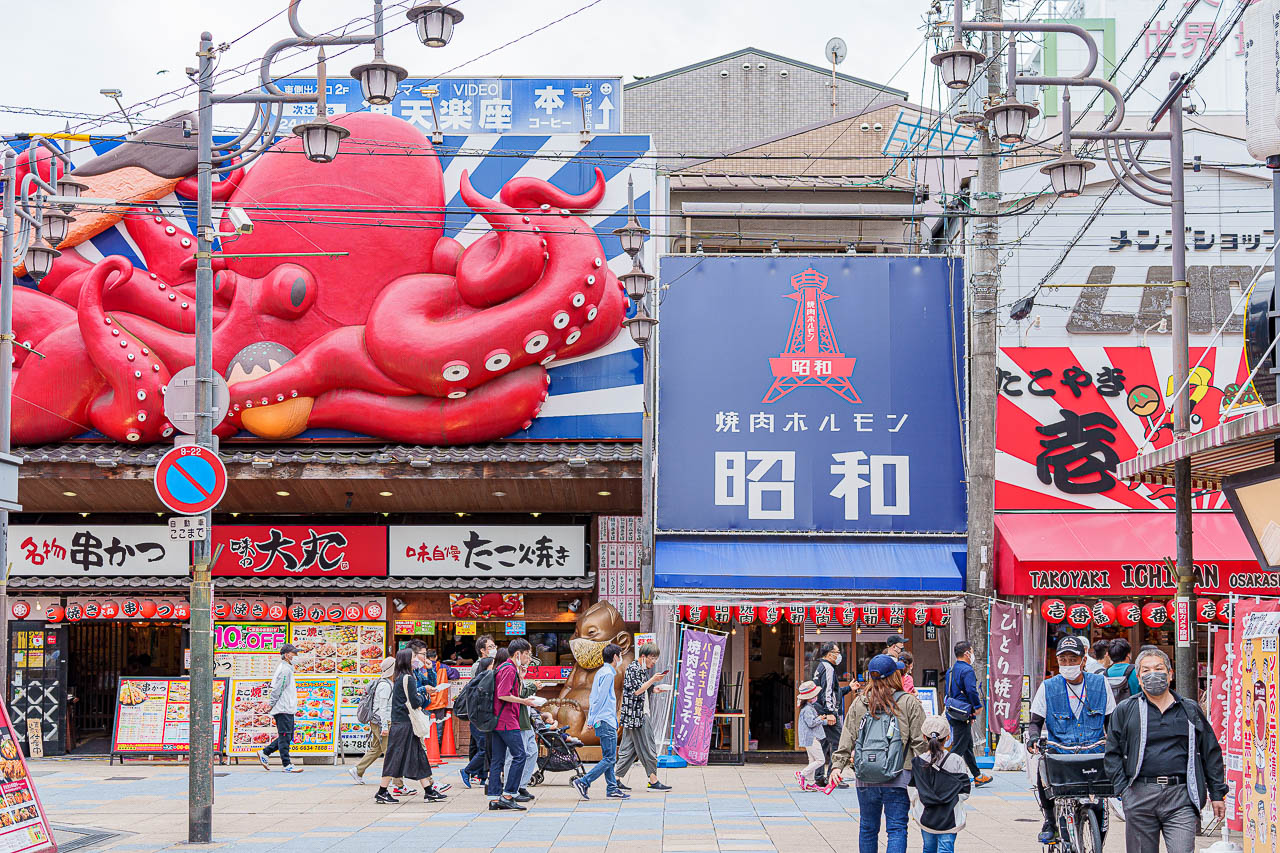
Flamboyant signs, distinctively Osaka.
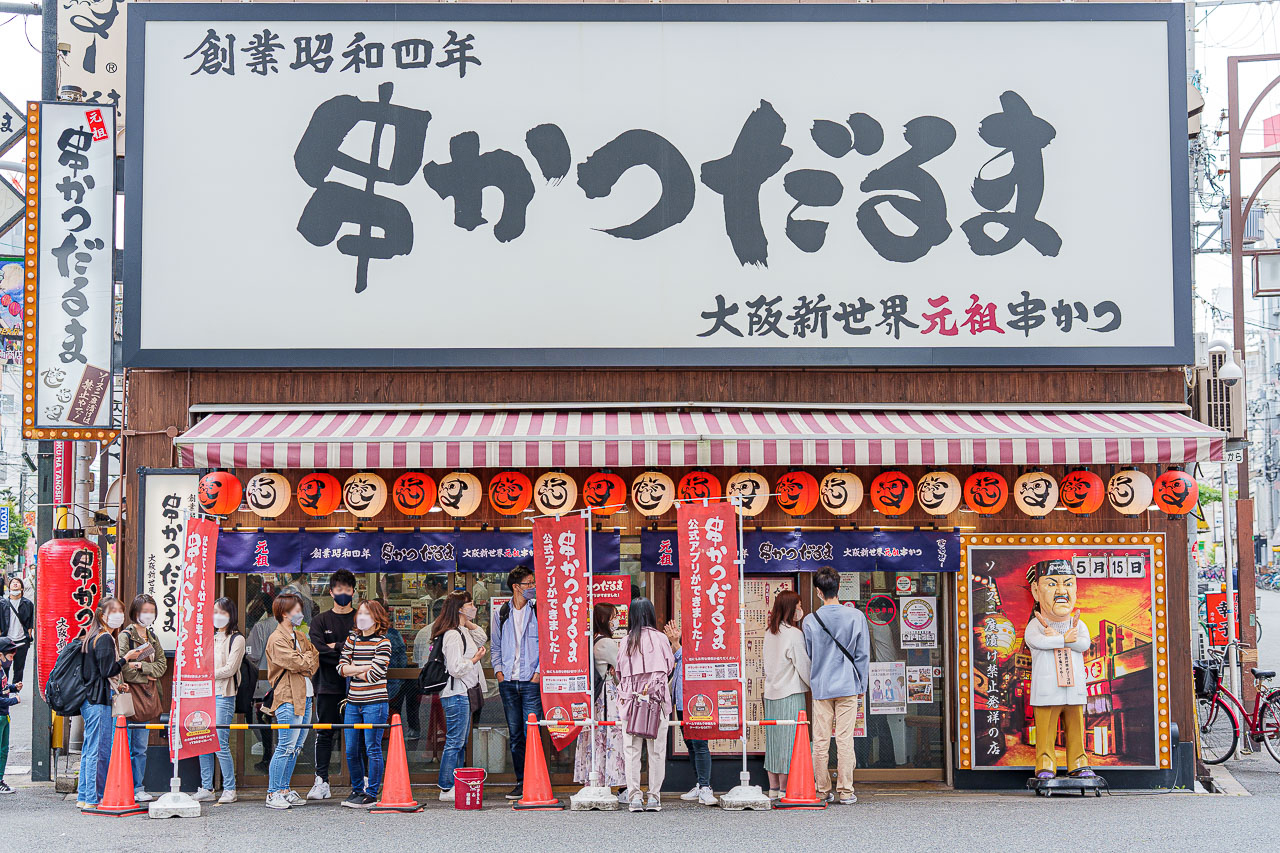
Daruma, described as a founding name in kushikatsu.
Starting in Shinsekai, it became a well-known chain around Osaka, according to the account.
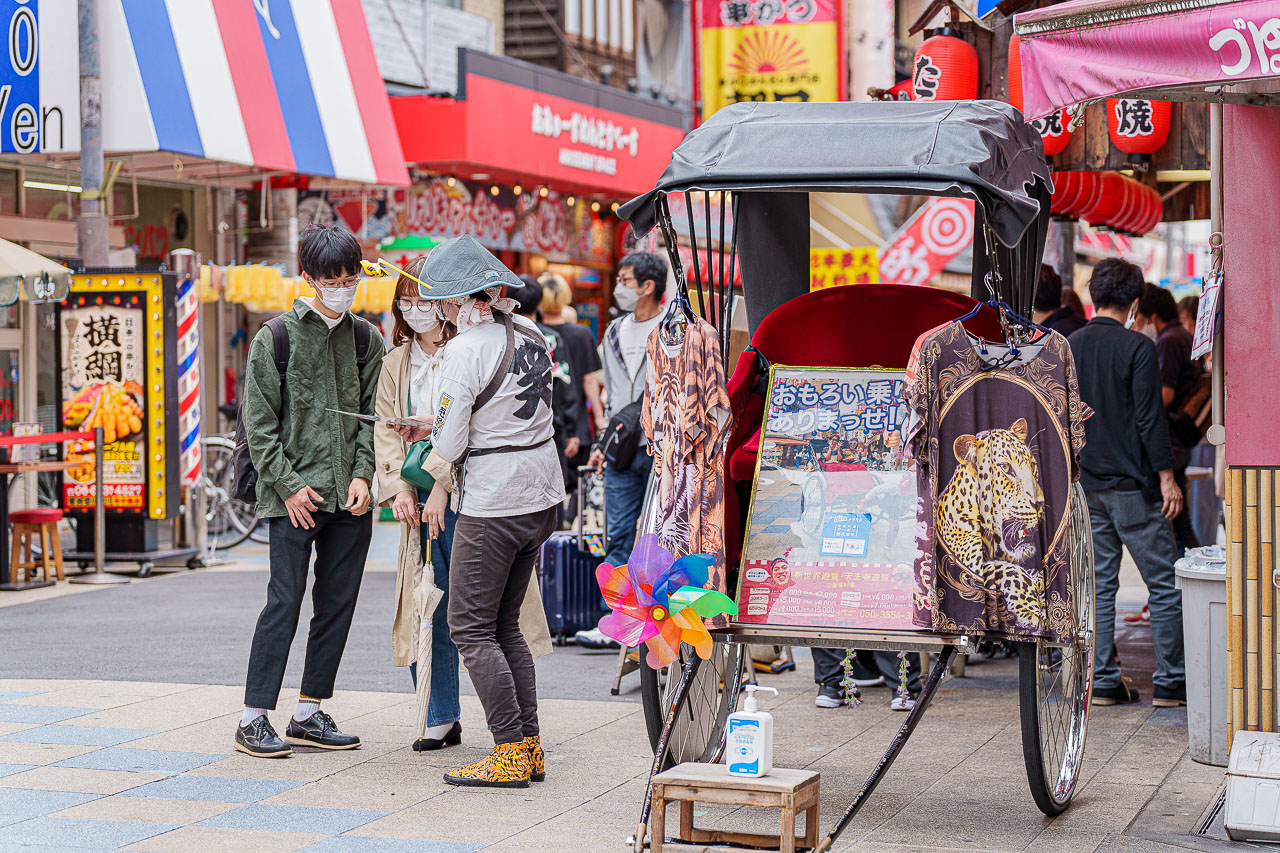
A rickshaw driver, a familiar sight at Japanese attractions.
The leopard-print clothing and shoes stand out.
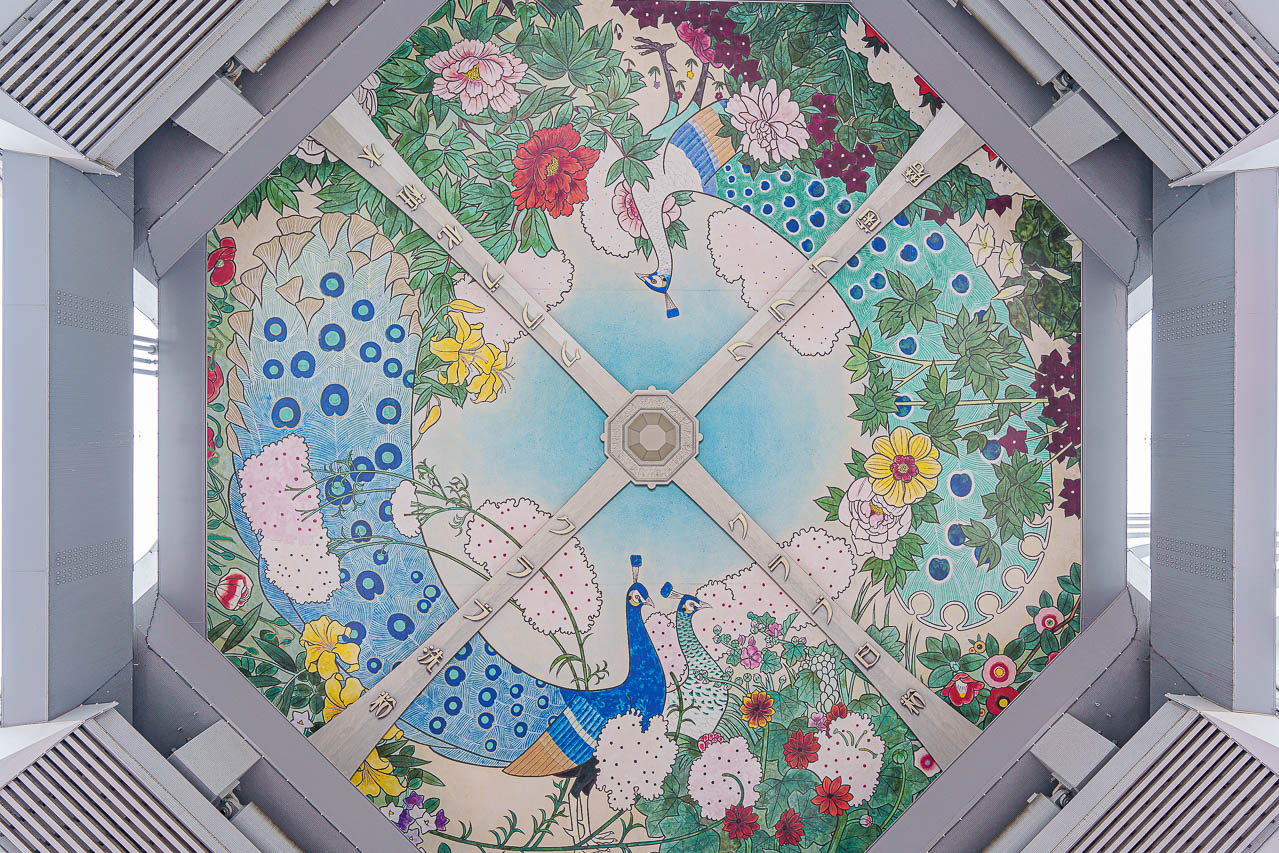
Before long, we reach Tsutenkaku.
Look up to see an elaborate painting.
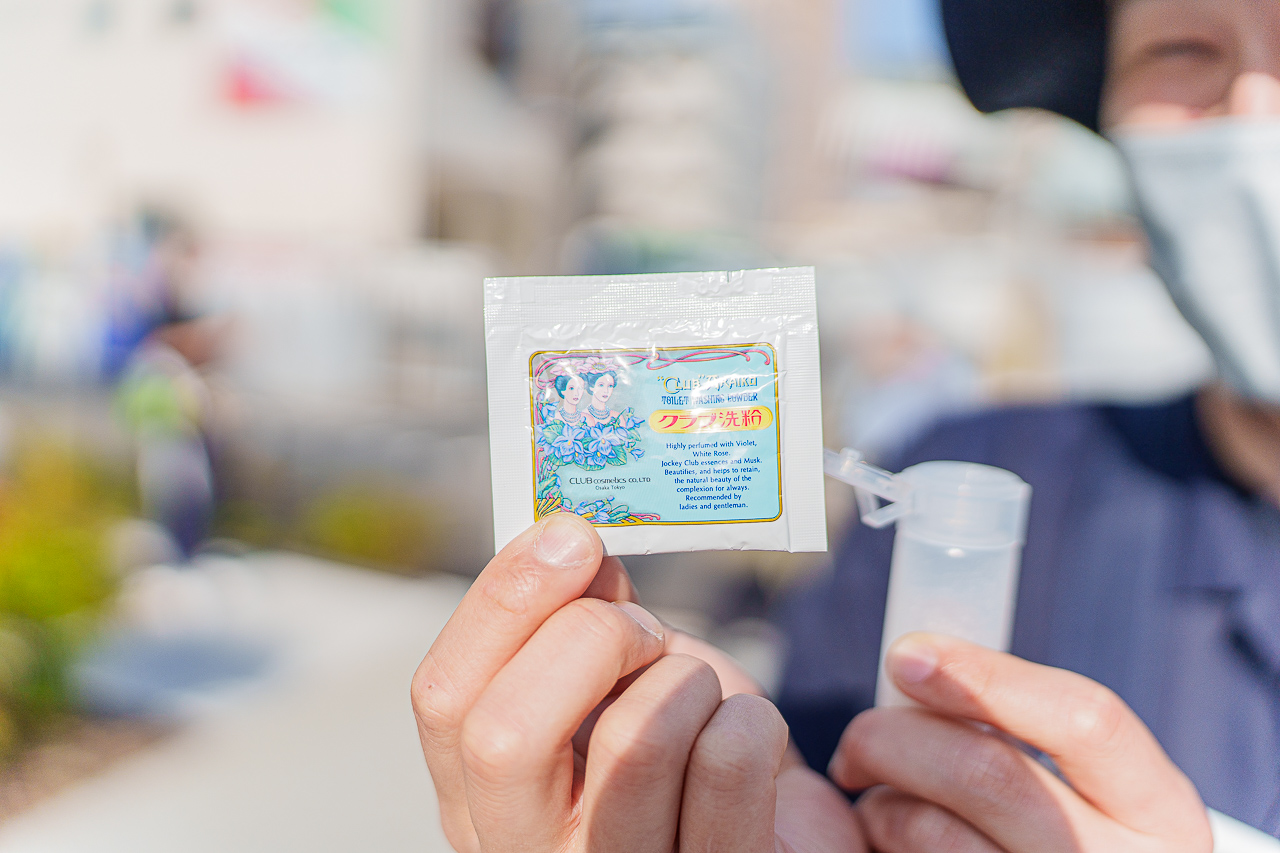
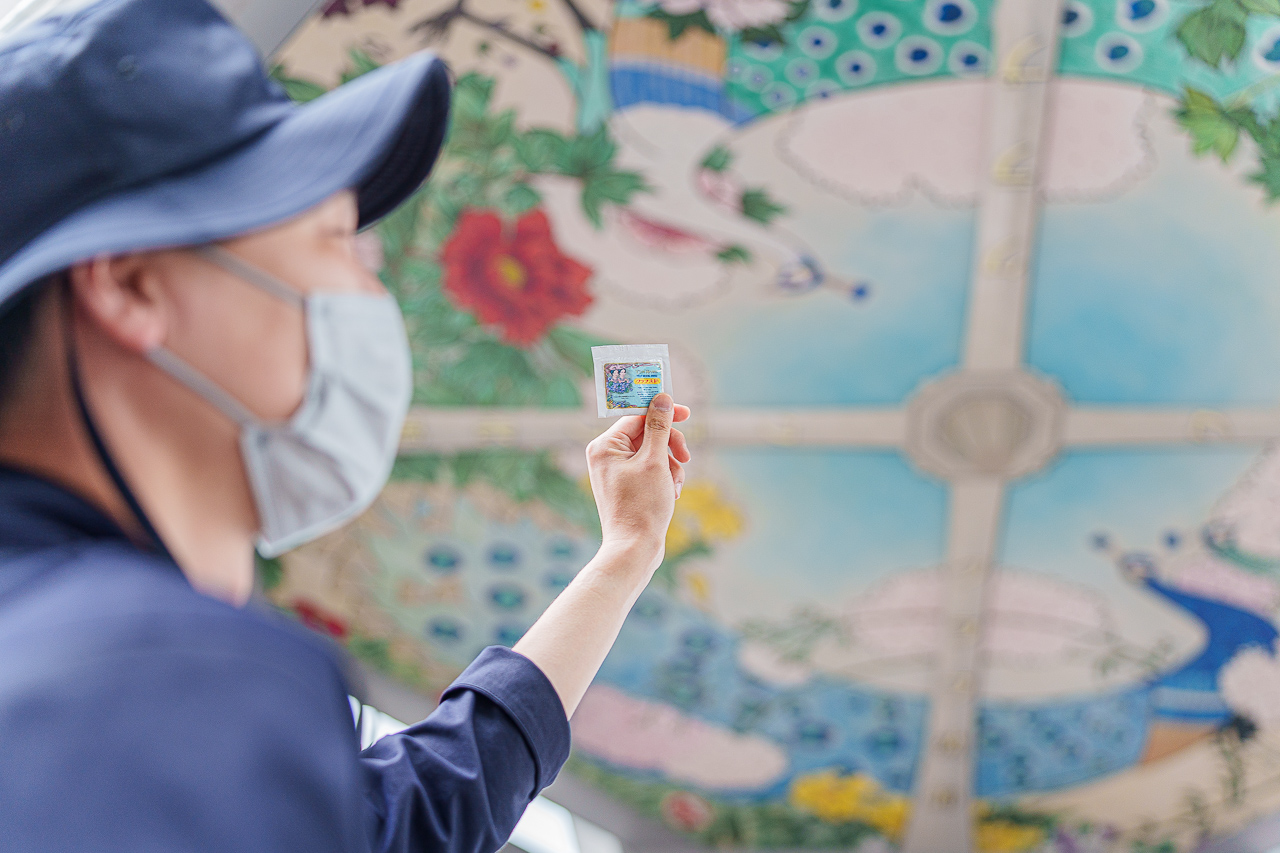
Hard to imagine today, but the guide says it was an advertisement for a cosmetics company a century ago.
That explains the resemblance to the company’s product illustrations.
When Tsutenkaku was rebuilt after its wartime loss, the old advertising artwork was restored too, according to the source.
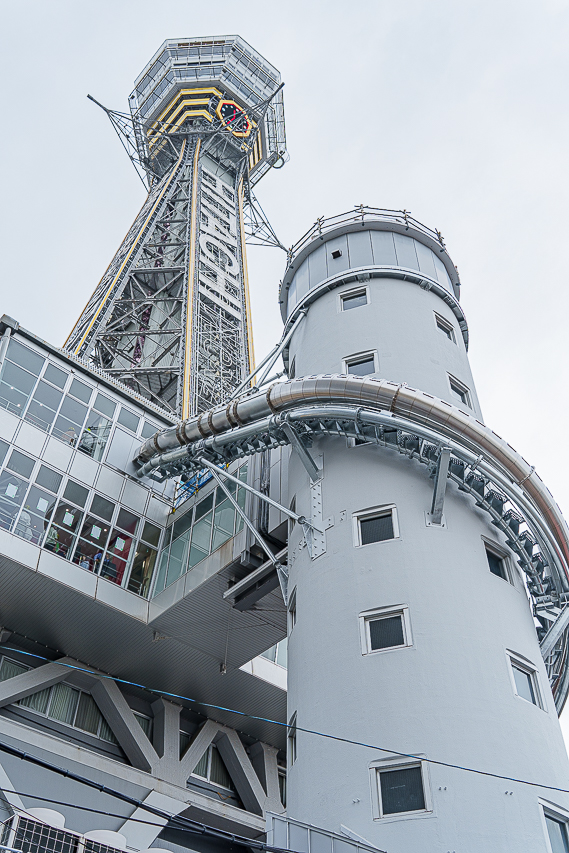
Tsutenkaku’s Tower Slider opened in May 2022.
A slide of the sort I associate with a water park runs from the tall tower.
JPY 1,000 per person sounds inexpensive until you consider a ride of about ten seconds—then it feels rather costly.
Osaka, the commercial city, strikes again.
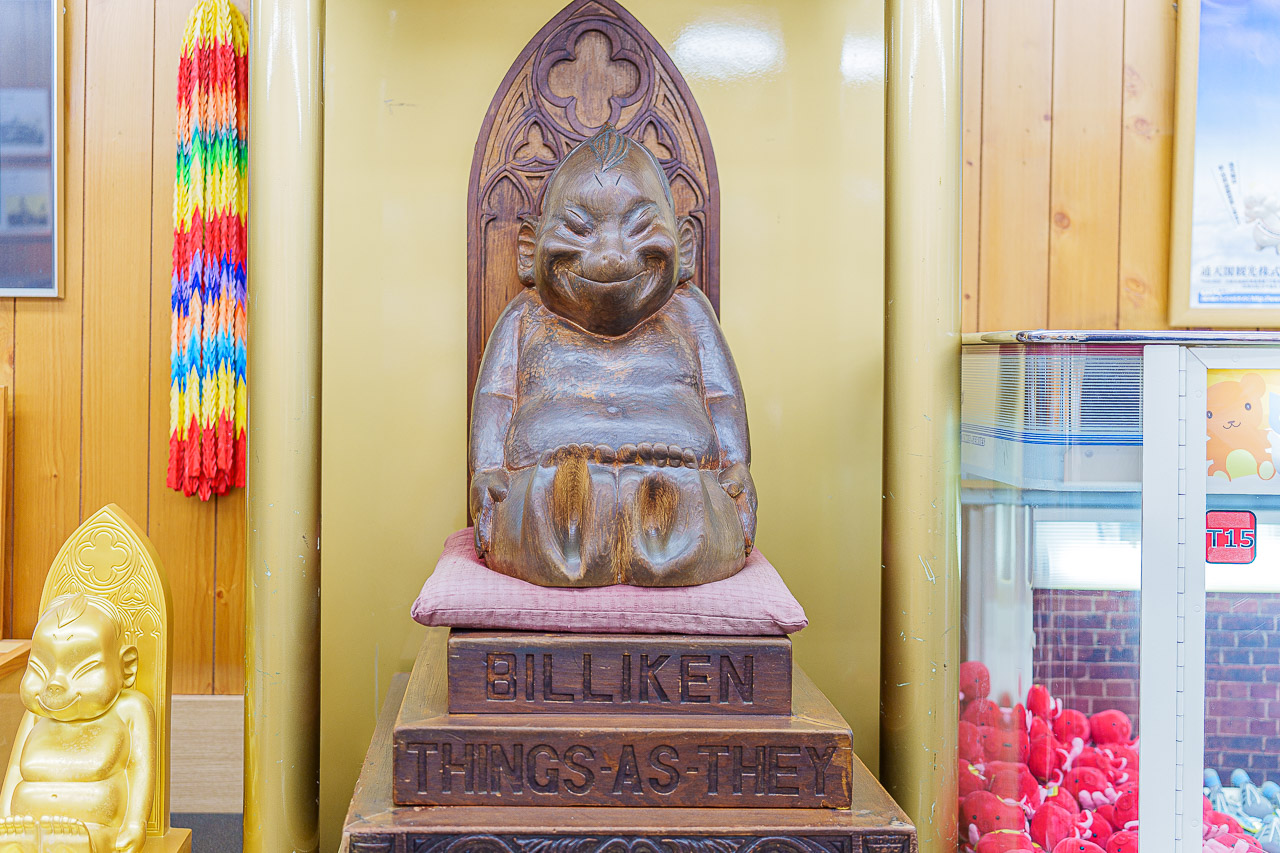
We stop at the tourist information center to see the second Billiken.
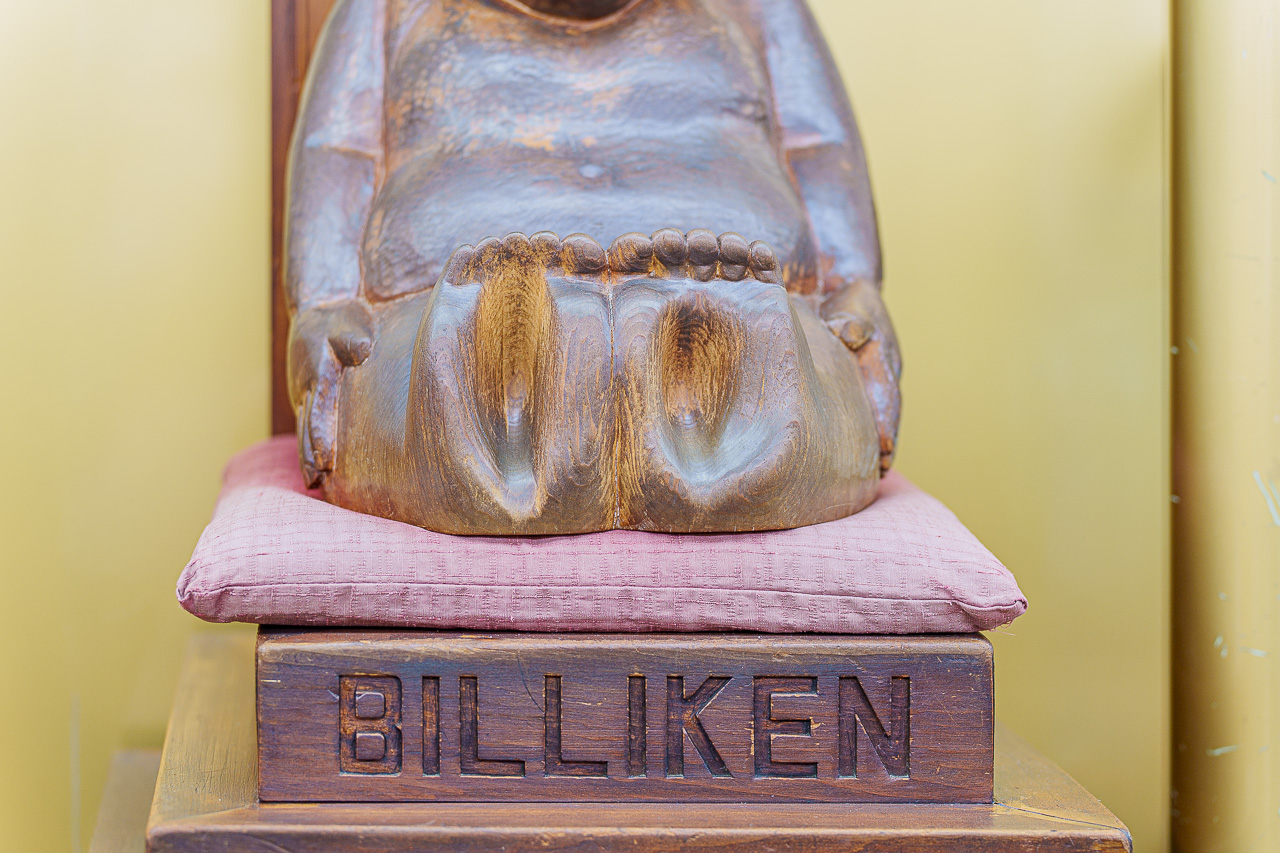
Rub the soles to please it and make a wish, the story goes.
Look closely and the two feet are worn to different depths.
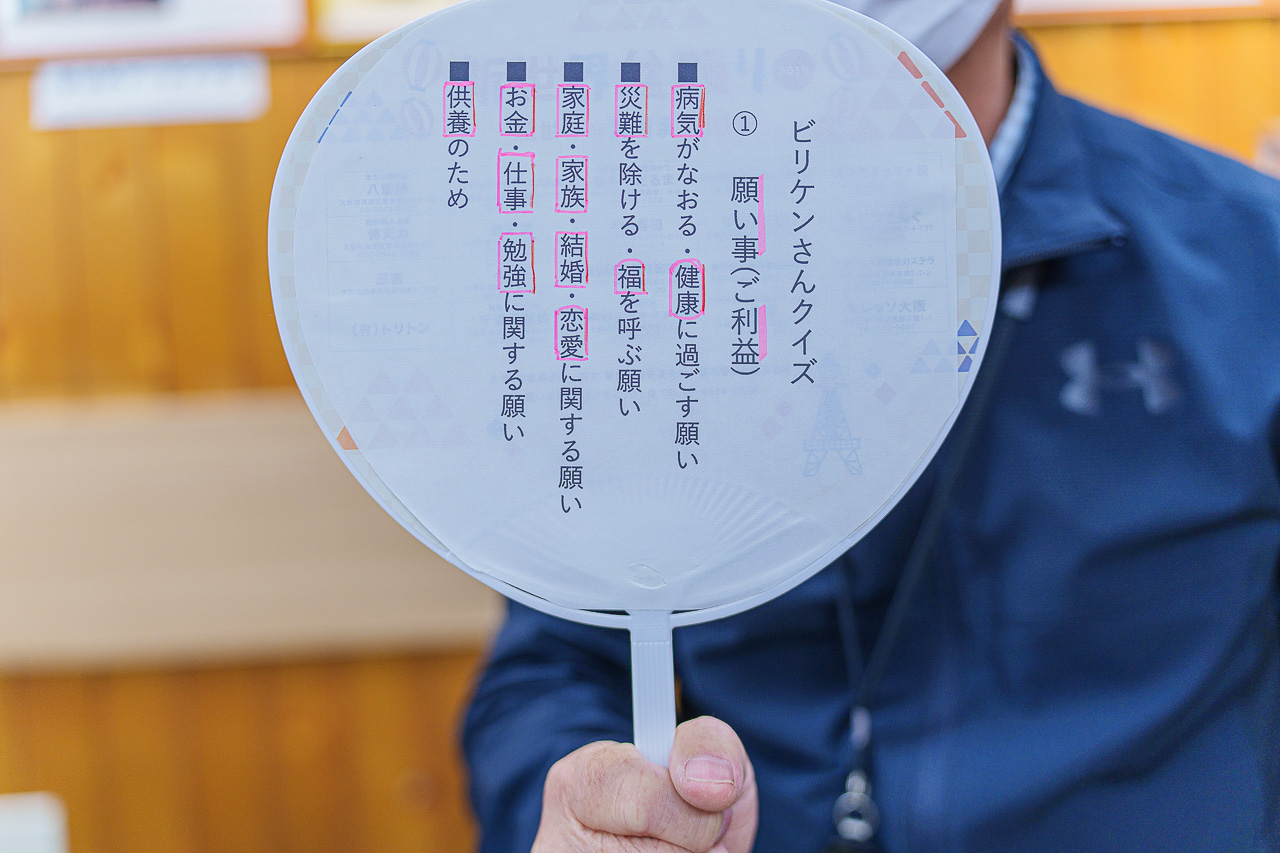
The explanation given is that the left concerns health, protection from disaster and good fortune, while the right concerns money, work and study, attracting more rubbing. These are beliefs described by the guide.
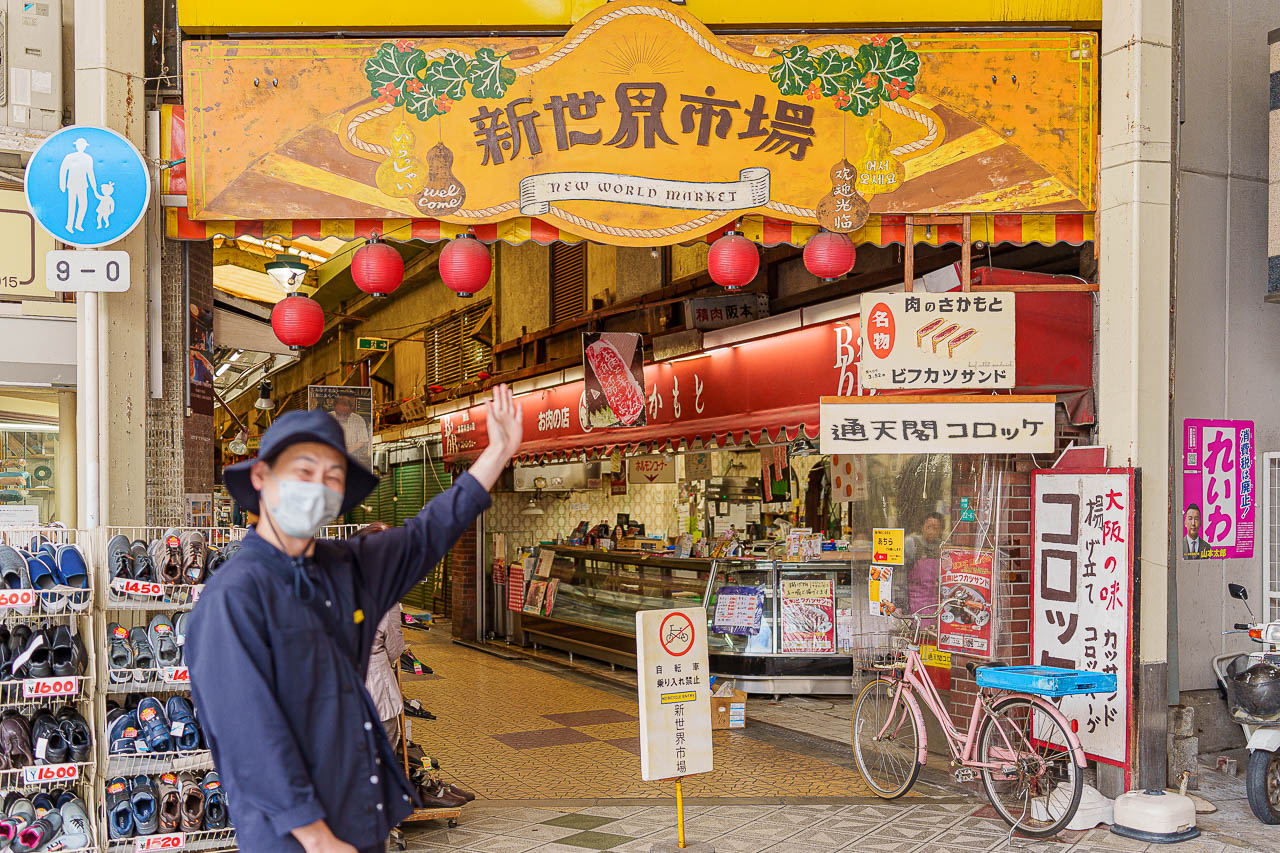
Deeper into the neighborhood is Shinsekai Market.
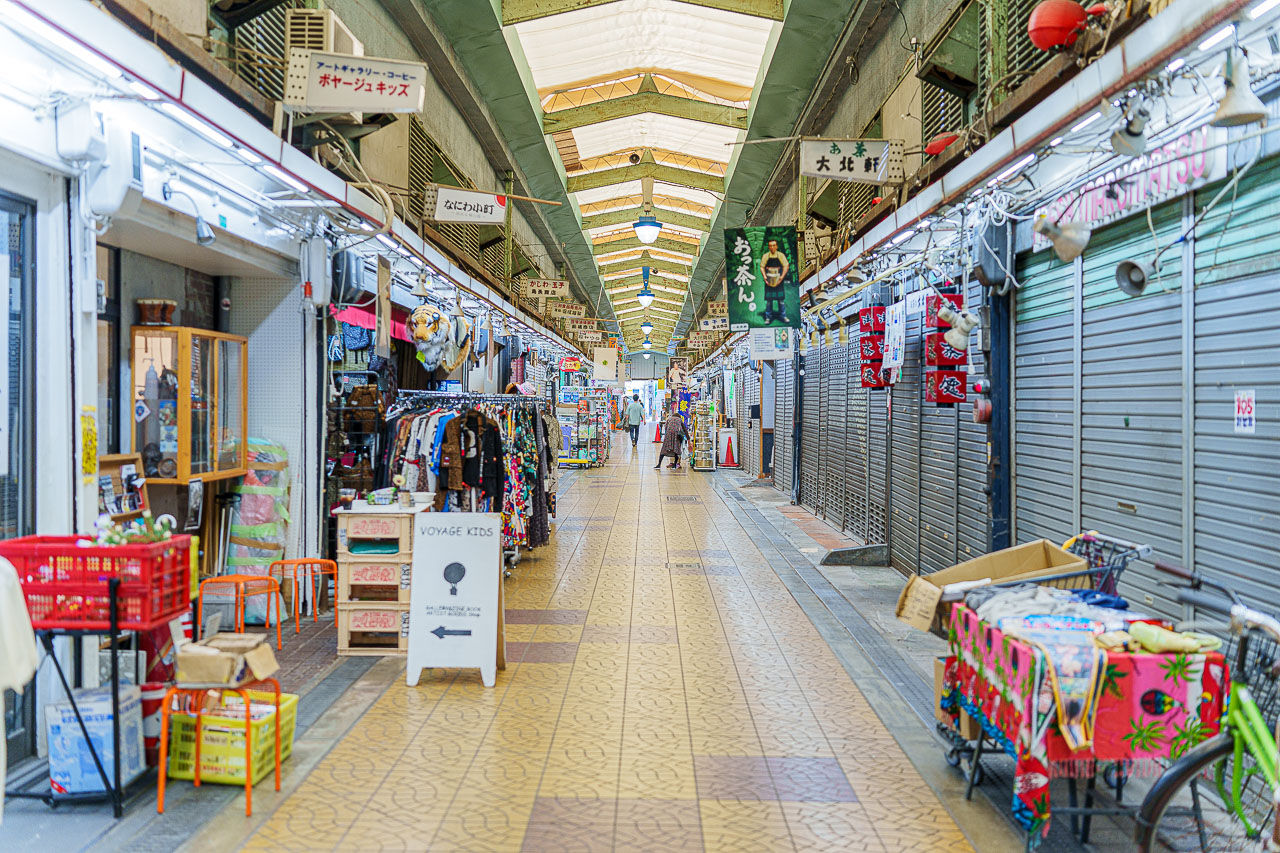
It is noticeably quieter than the main streets.
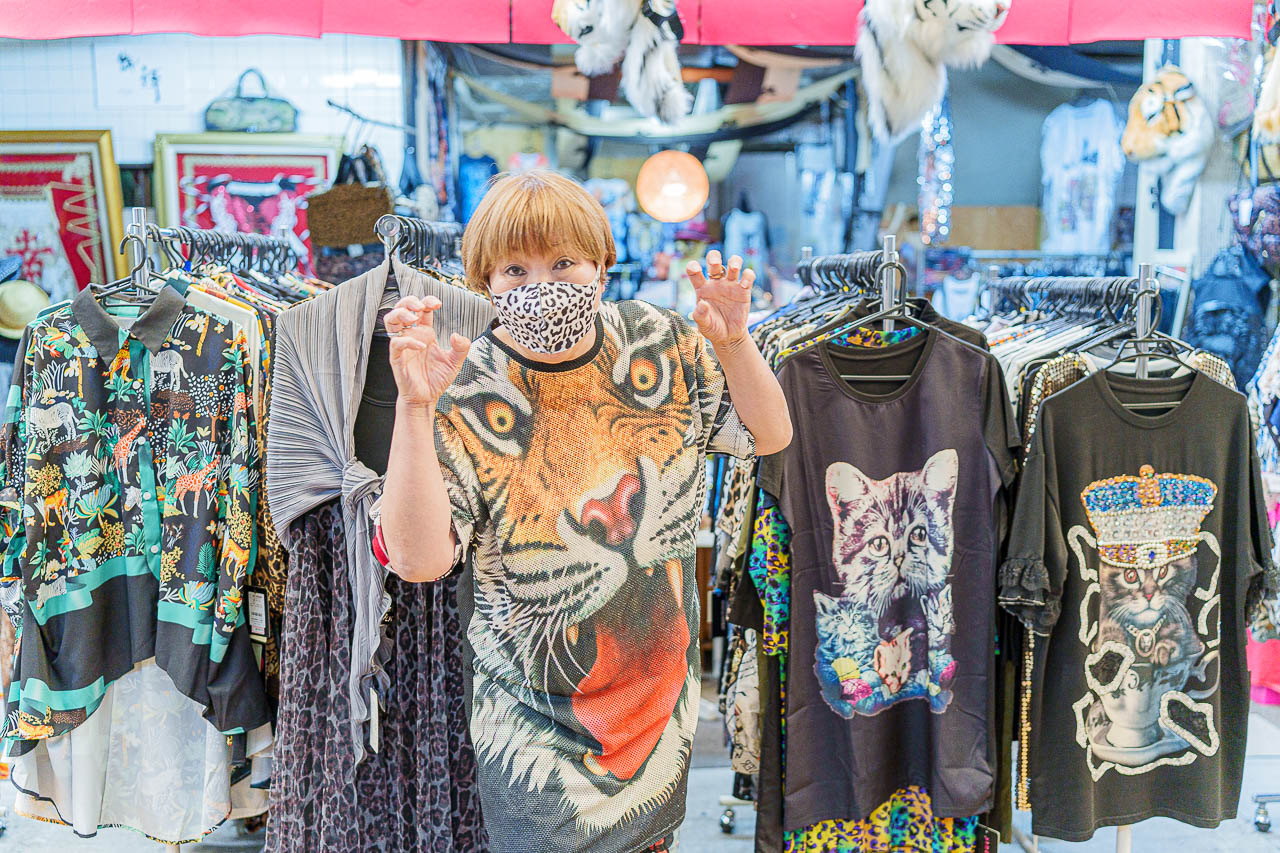
Naniwa Komachi is full of leopard print.
Its owner Takahashi says the pattern gives them energy, and stocks more than 10,000 leopard-print items, a collection unusual even in Japan.
That has also made the owner a frequent television guest, according to the source.
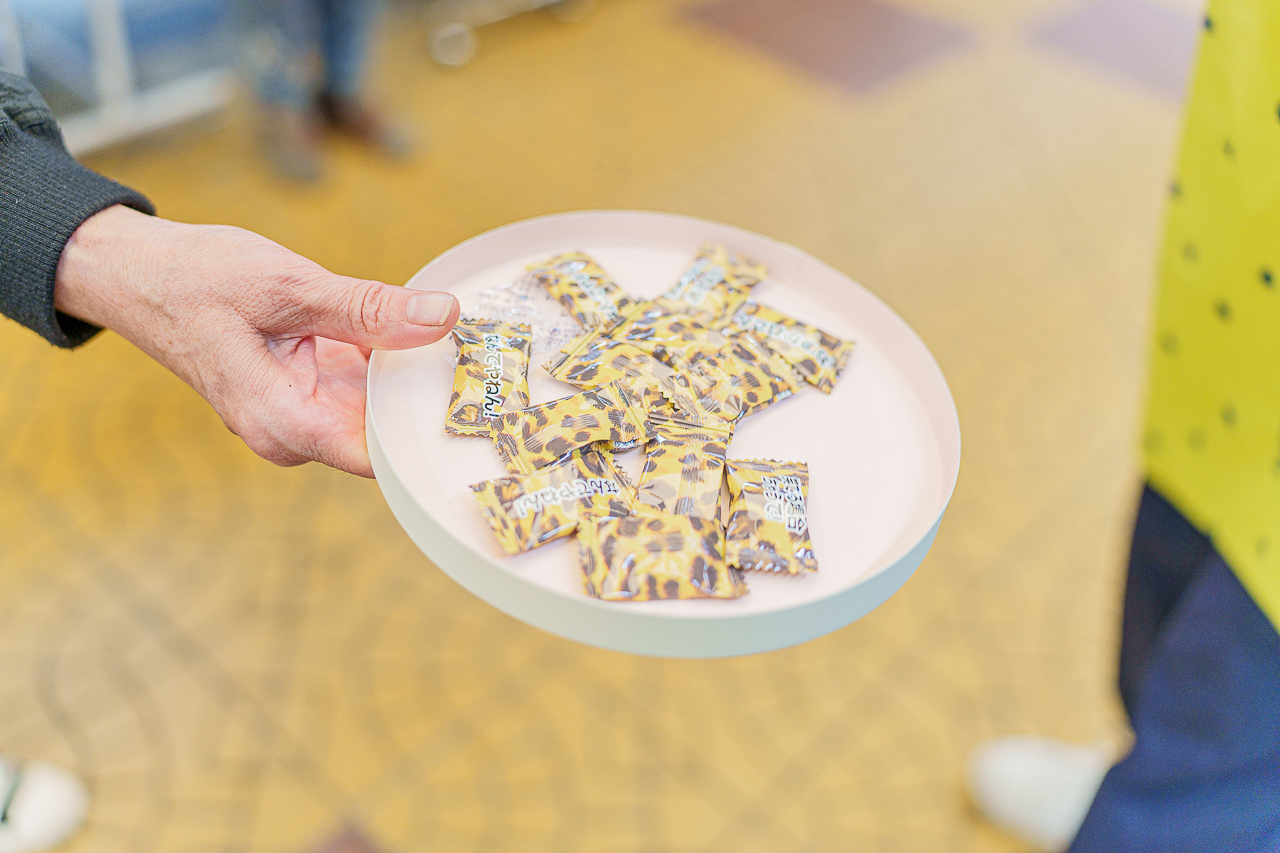
Even the candy has leopard spots.
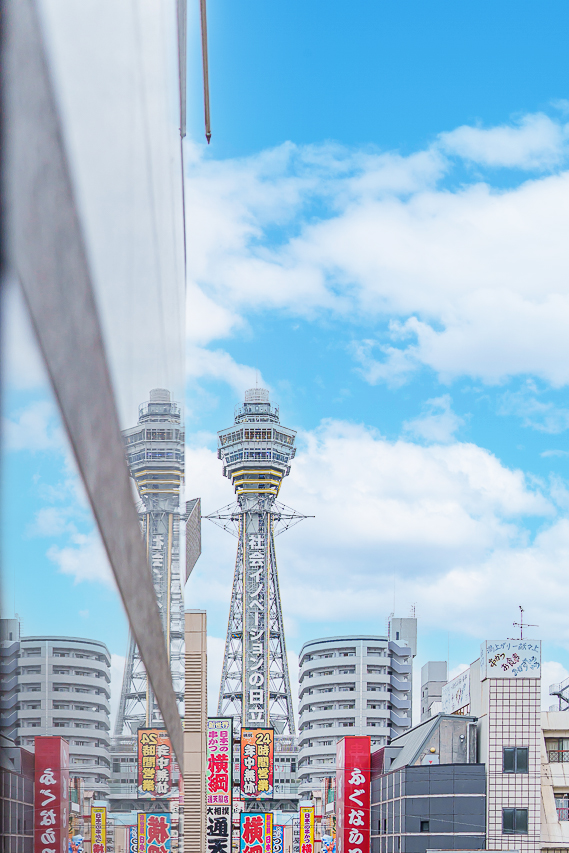
After the roughly hour-long tour, our Ranger points out a wonderful view on the way back.
A true Shinsekai specialist.
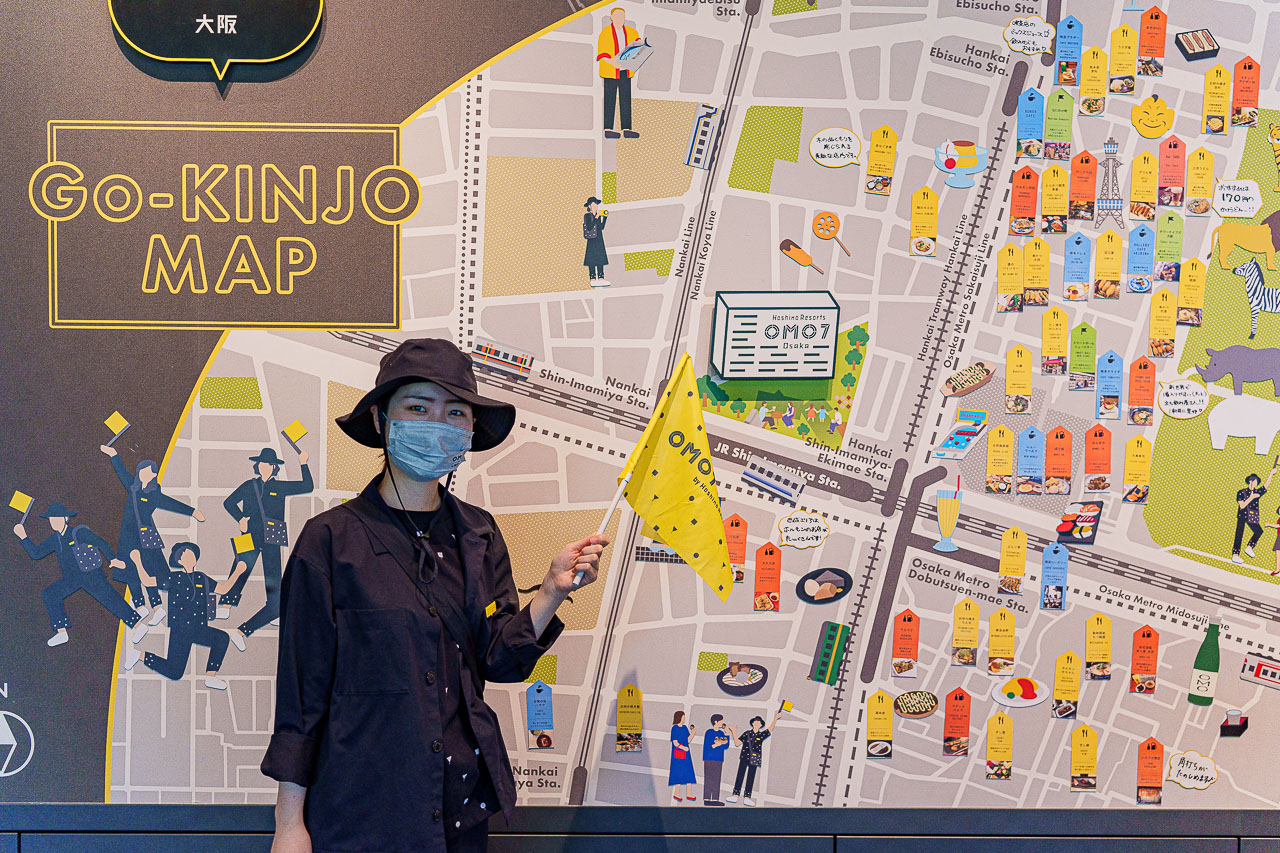
For dinner, we sign up for ‘Discover the Appeal of Kushikatsu’ to try restaurants in the district we have just explored.
The tour visits three popular local kushikatsu shops.
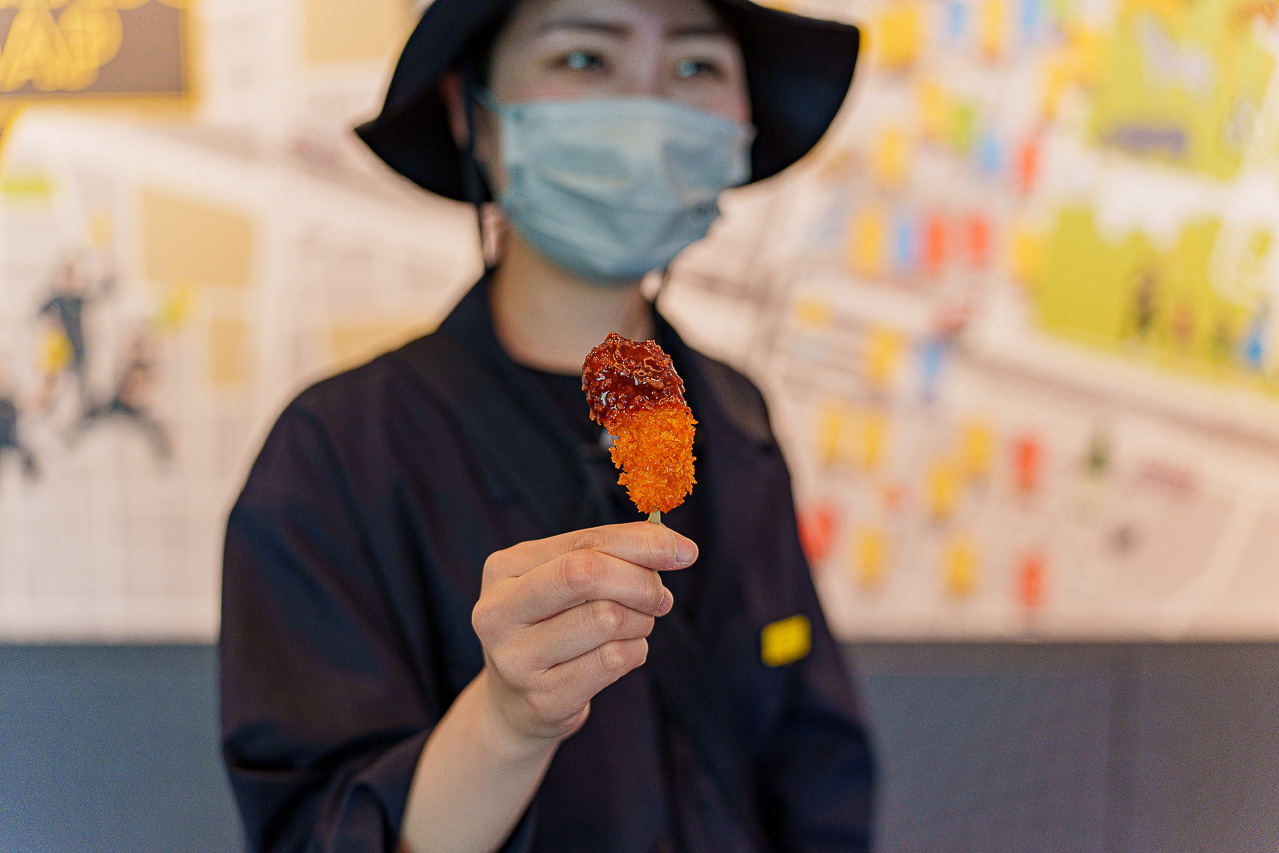
Having seen the skewers earlier, I can hardly wait.
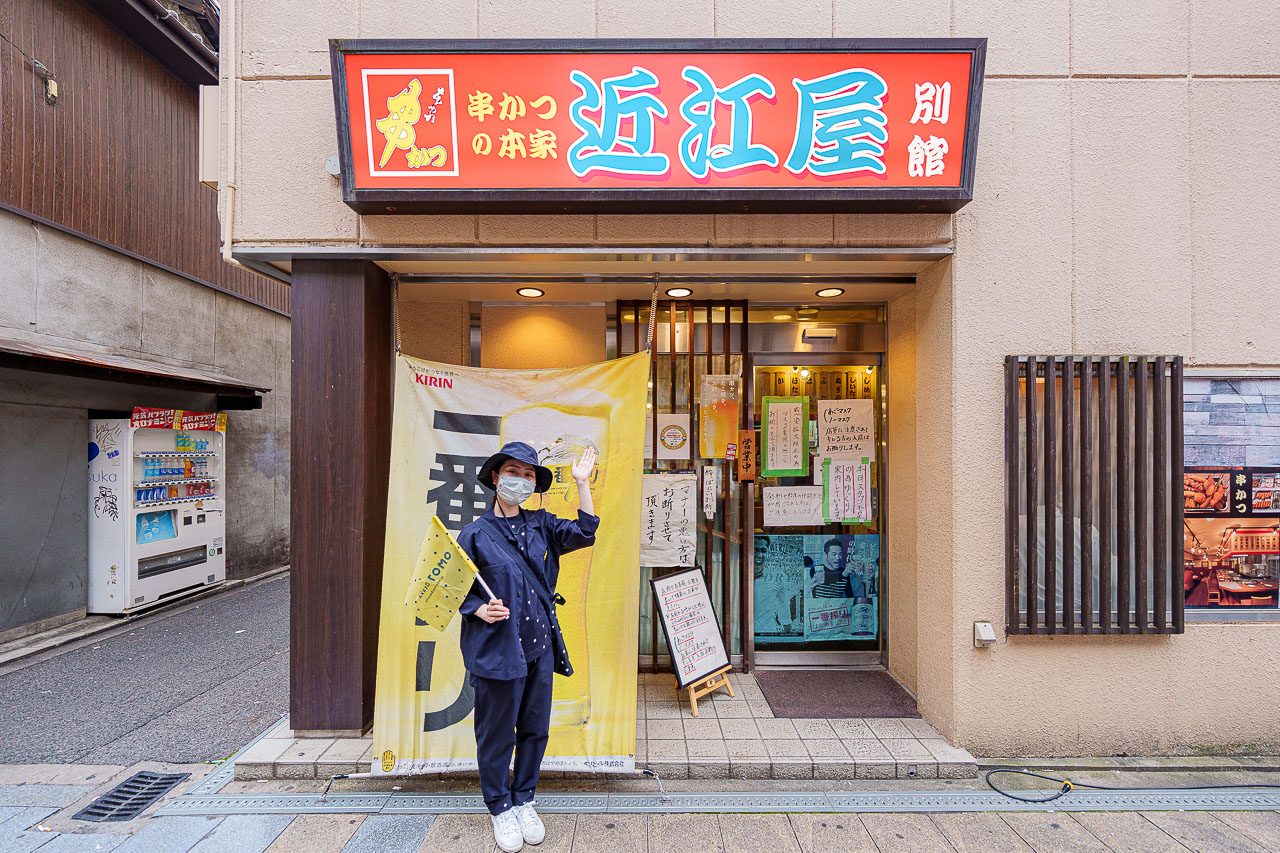
The particular restaurants vary according to circumstances.
The Ranger handles seating reservations too, making the evening convenient.
Capacity is small, so early booking matters.
In my view, this is a particularly worthwhile tour.
The first stop is Omiya, with its unusual coating.
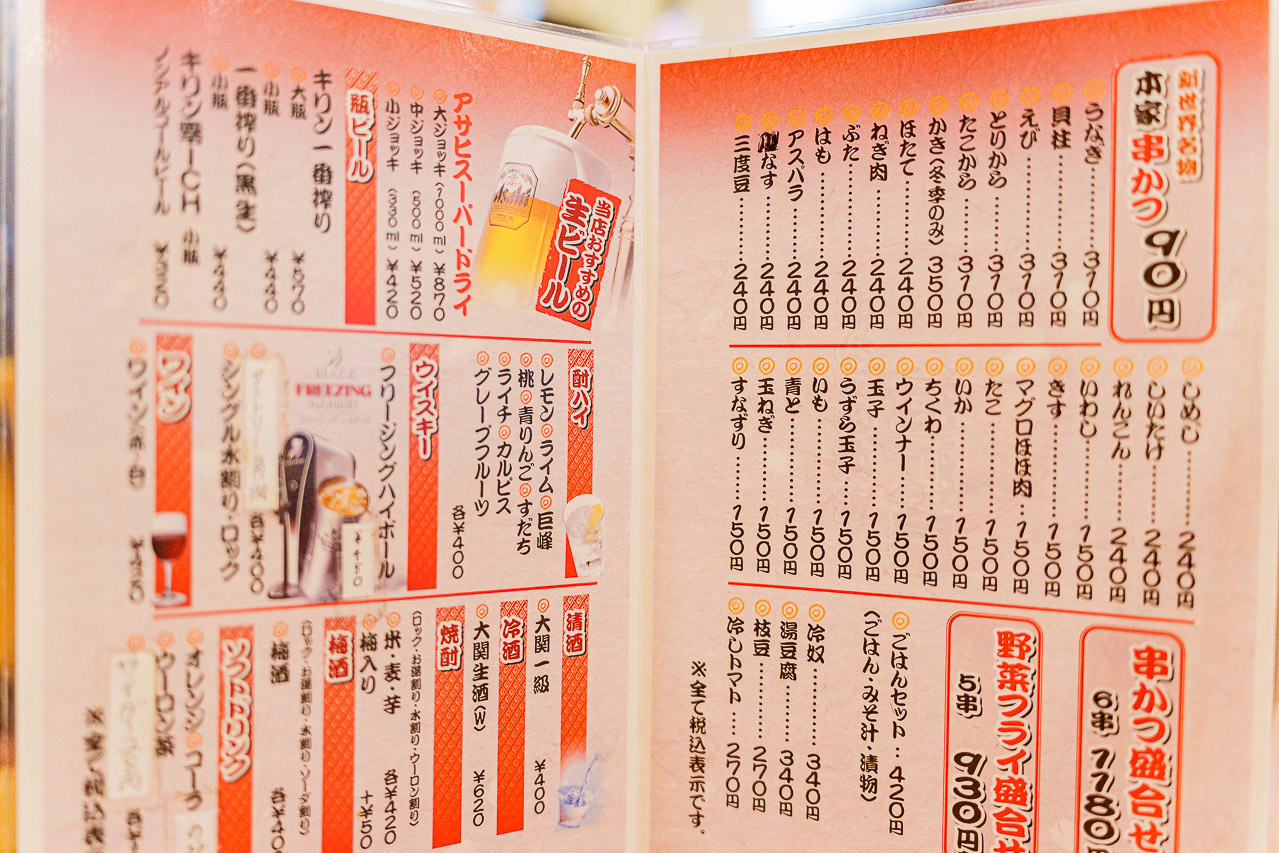
The original beef kushikatsu was only JPY 90.
Other skewers were around JPY 150–300, approachable prices in the source period.
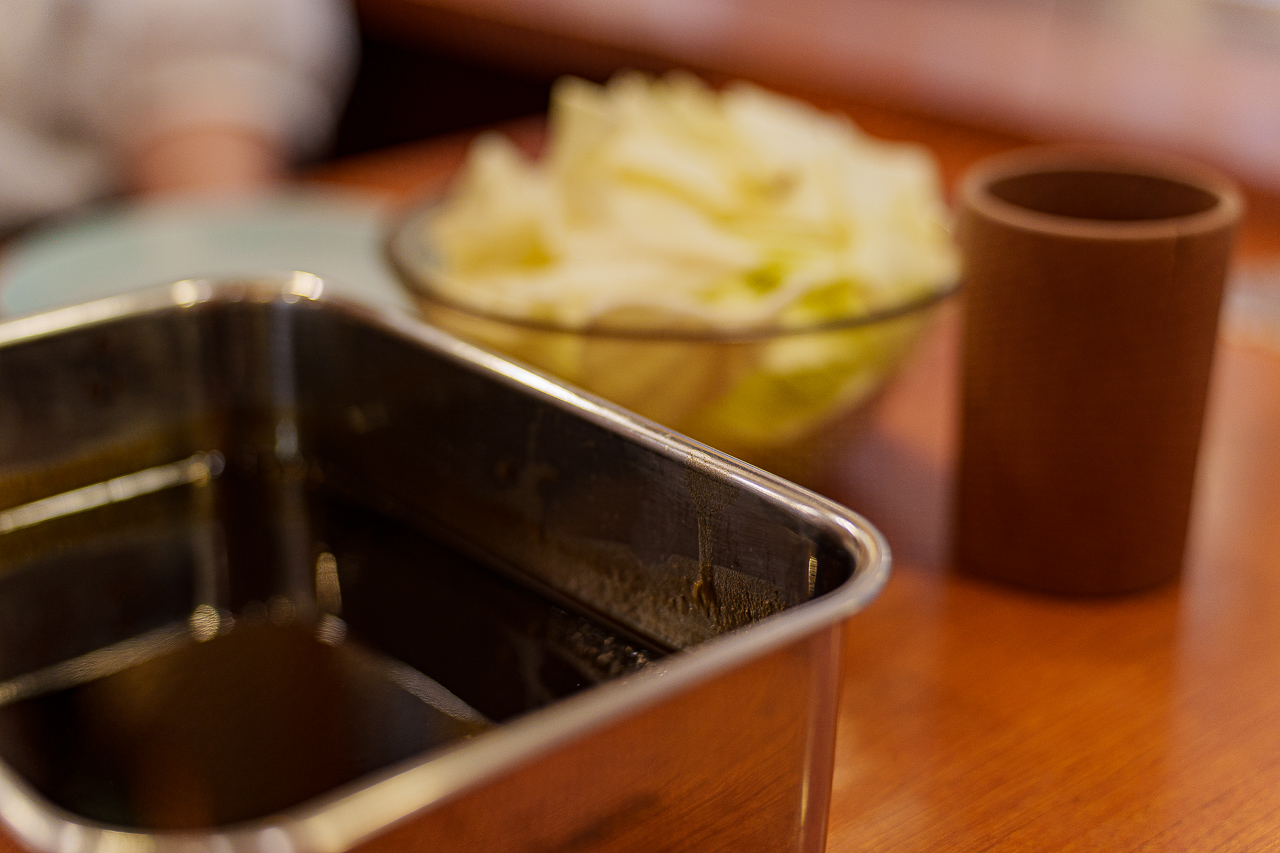
A sauce container and cabbage are familiar kushikatsu companions.
Osaka and Kansai have a well-known rule for the shared dipping sauce.
Traditionally, a stainless-steel container holds it on the table. A skewer should be dipped only once.
Visitors sometimes get corrected when trying to dip again.
It is not simply about saving sauce: the container is shared, so a skewer that has touched your mouth must not go back in. Follow the shop’s actual serving system, which may differ.
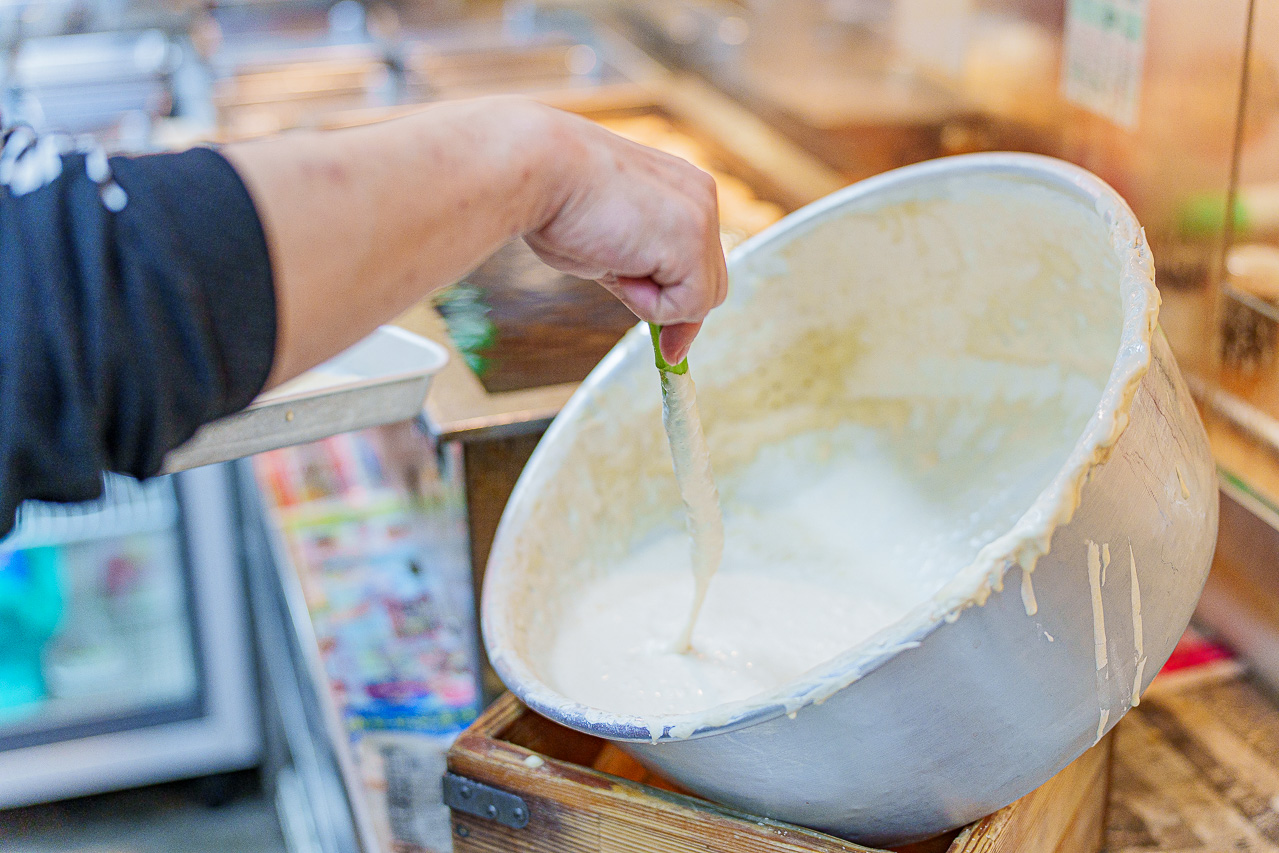
Omiya’s distinctive batter goes on,
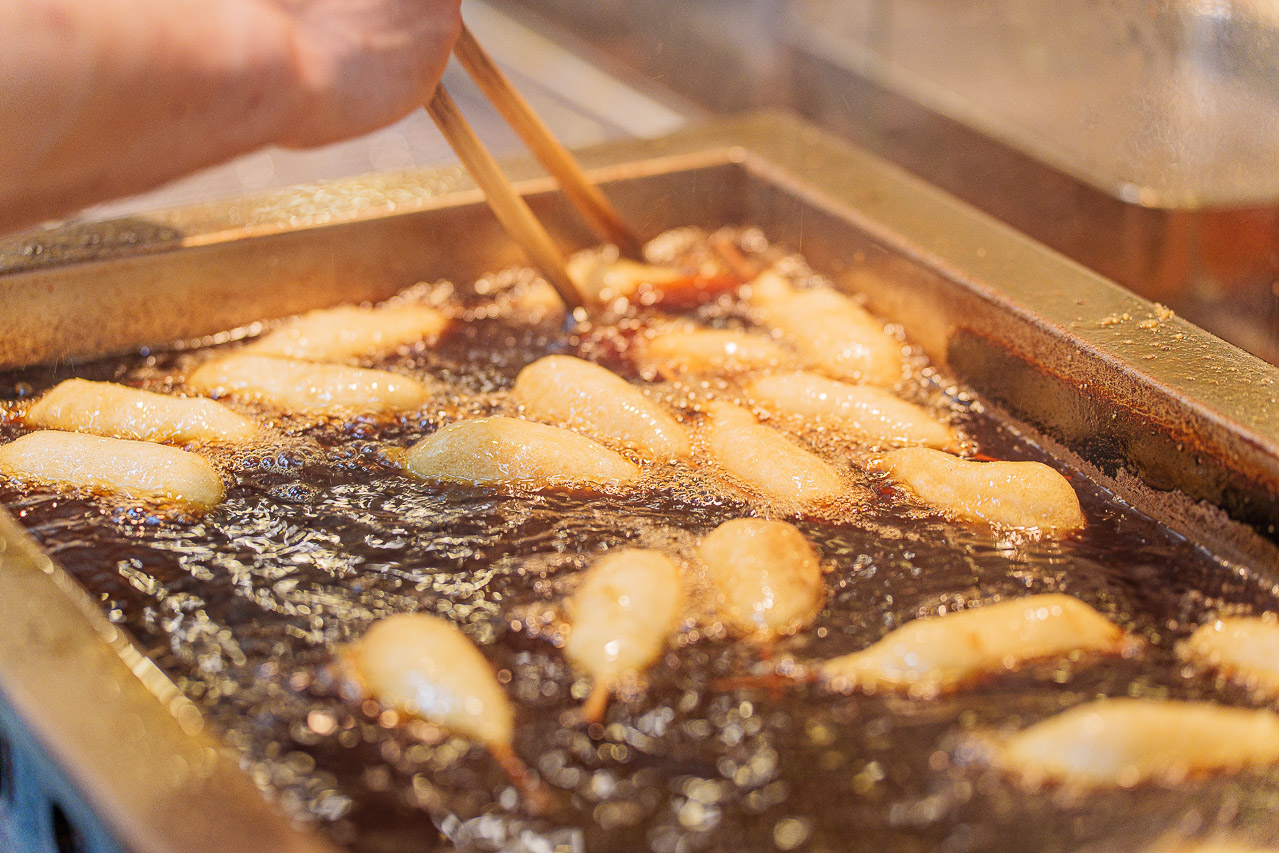
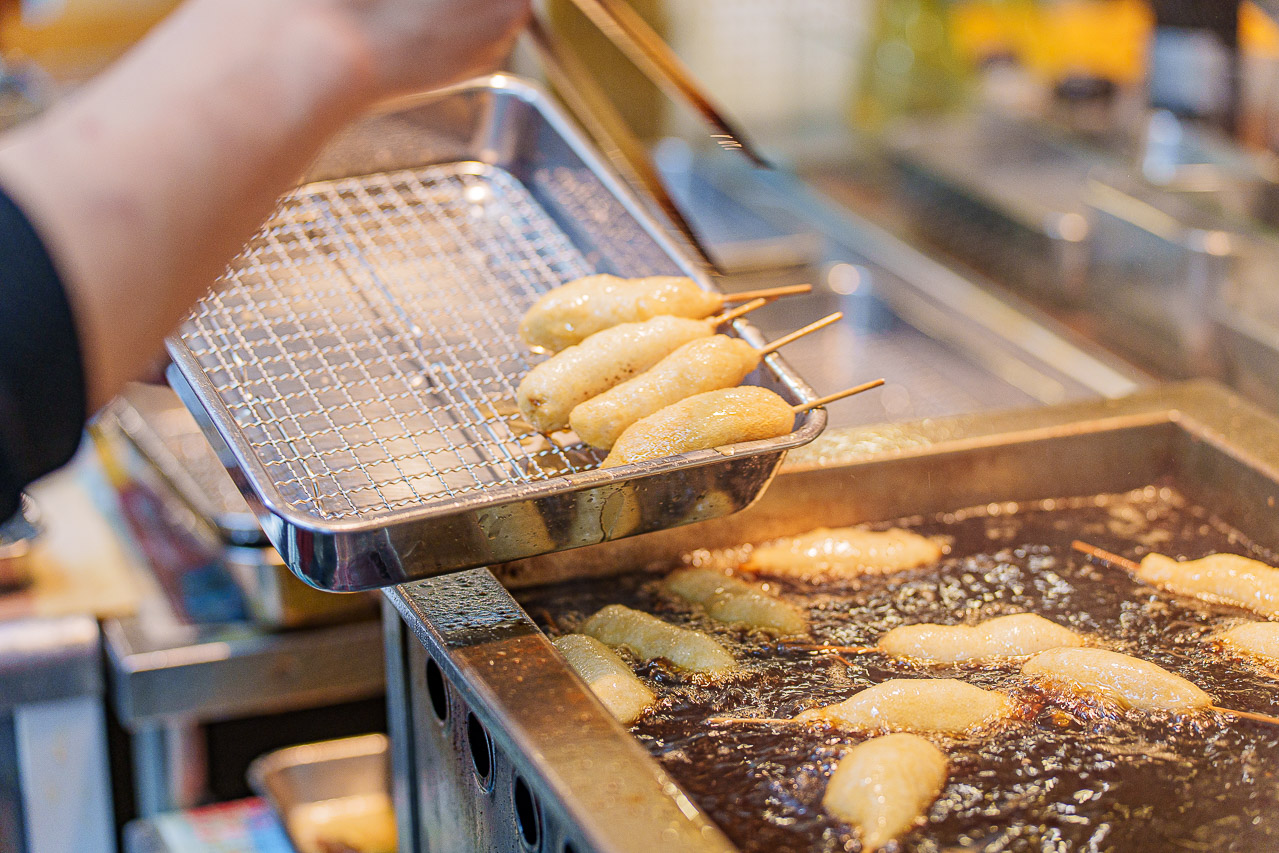
then frying completes the skewer.
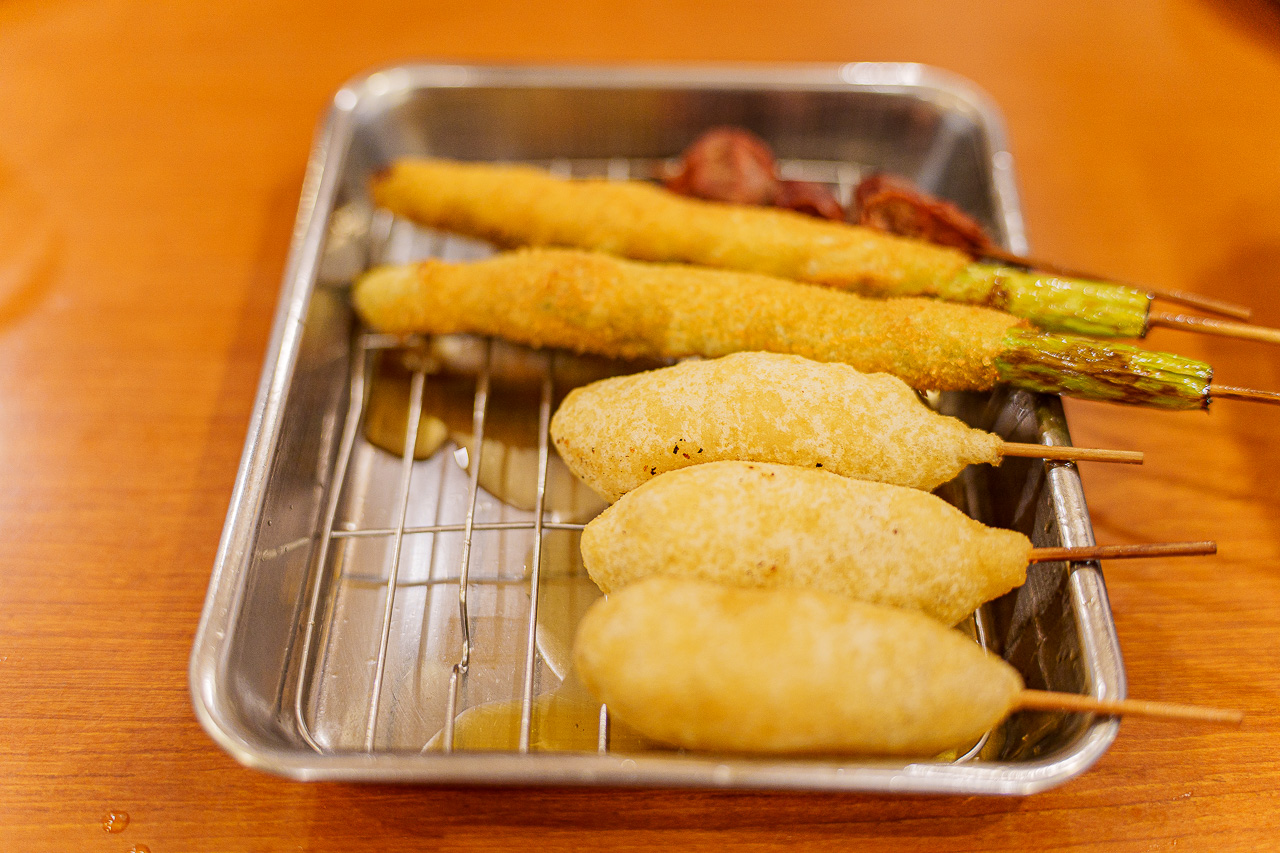
We order the original beef, asparagus and chicken gizzard.
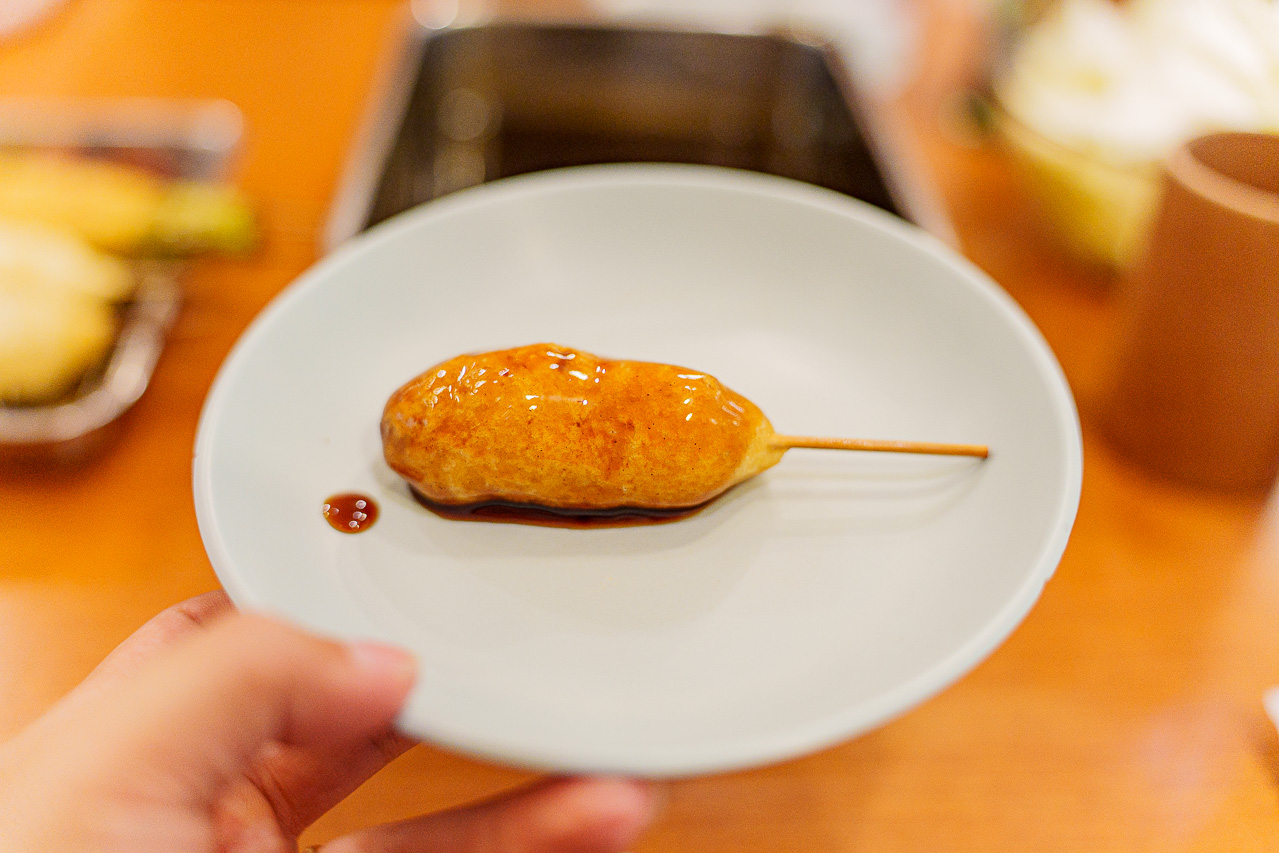
The skewers look a little like corn dogs..
The coating is chewy, different from the usual crisp kushikatsu texture.
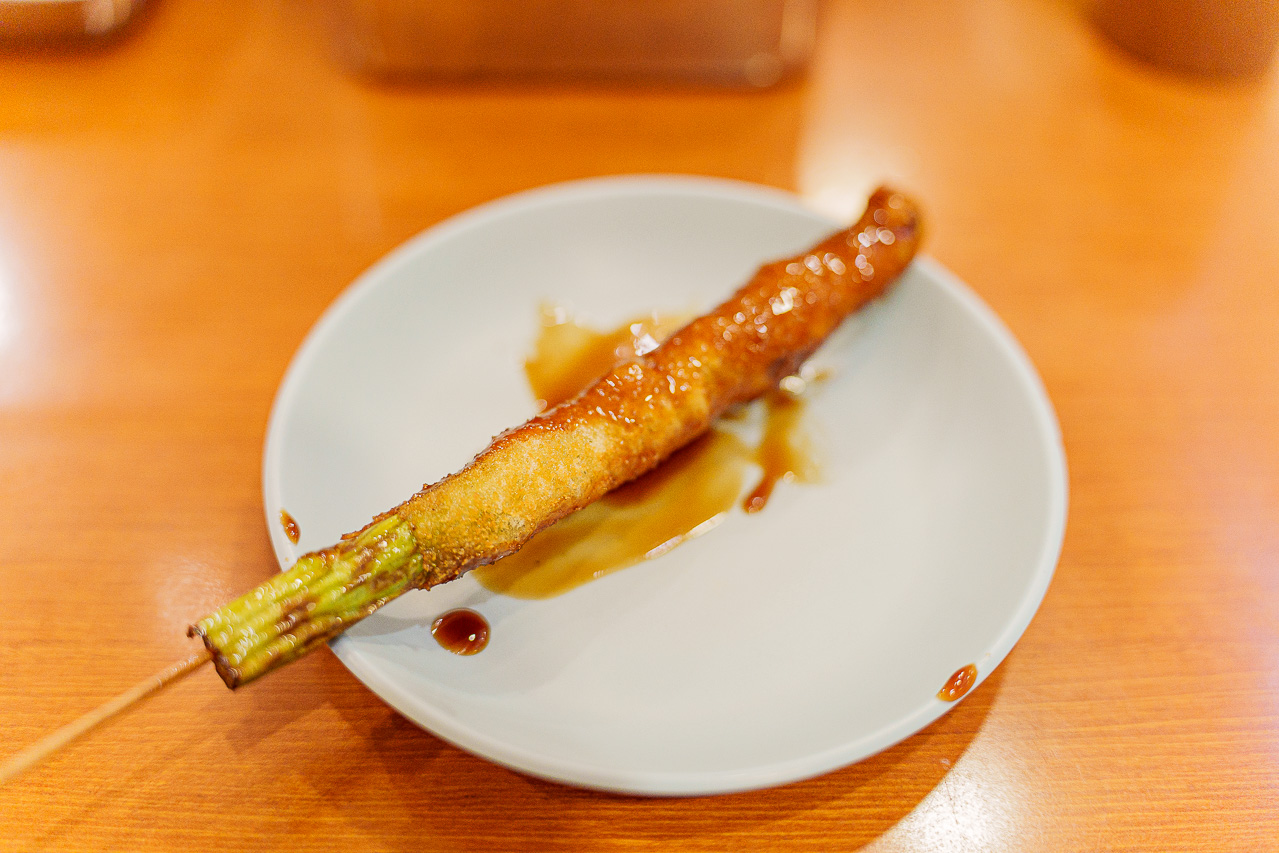
An enormous asparagus spear.
I do not know where it grew, but it looks at least twice the size of an ordinary one.
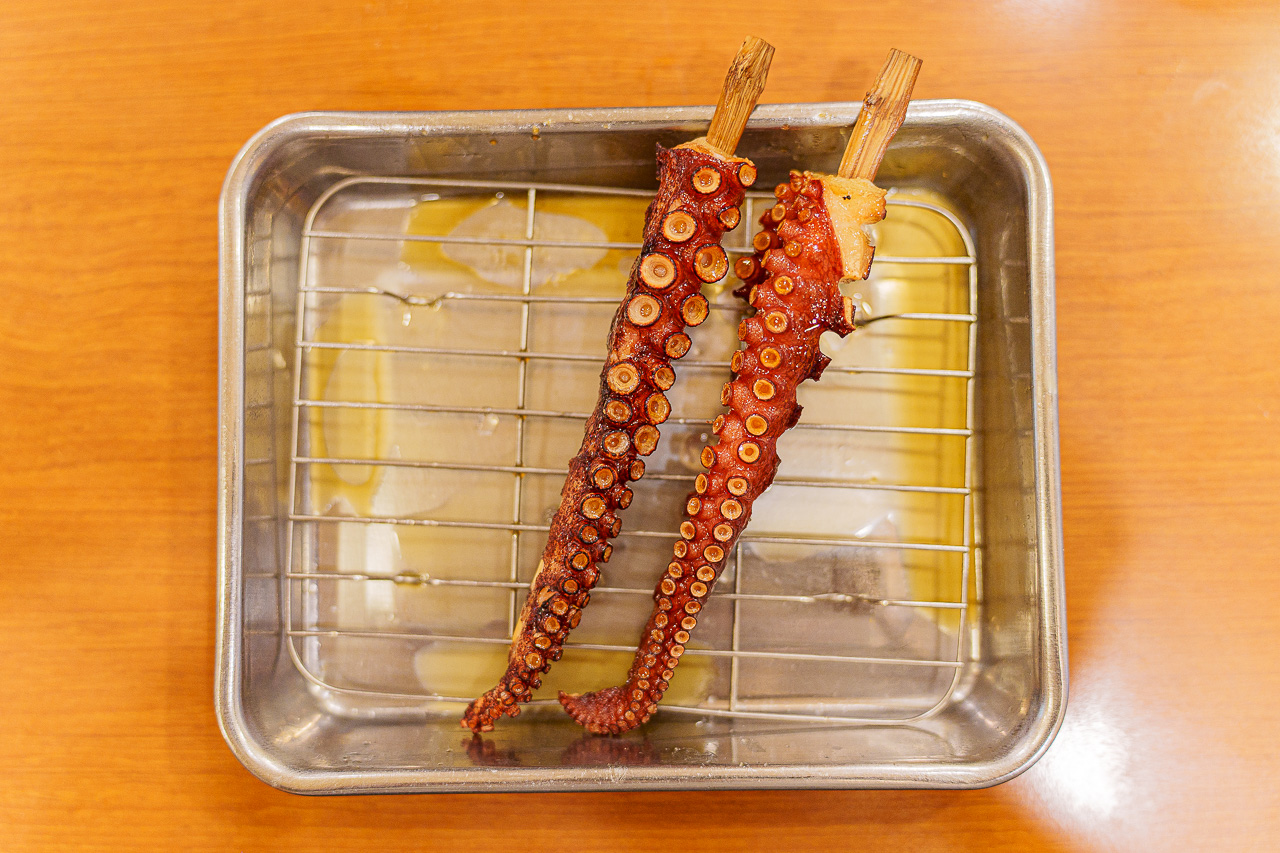
The long octopus-leg skewer is striking.
It is one of the shop’s specialties.

Manganji pepper, not on the printed menu, reminds the author of a Korean fried pepper.
Grown especially in Kyoto, it is mild, with a texture closer to a pepper than a bell pepper in the author’s comparison.

Another off-menu item is sea bream in ponzu.
During our May visit, it was the local sea-bream season, and they offered it as an extra.
Very generous.
I suspect arriving with the Ranger helped, though I cannot confirm that.
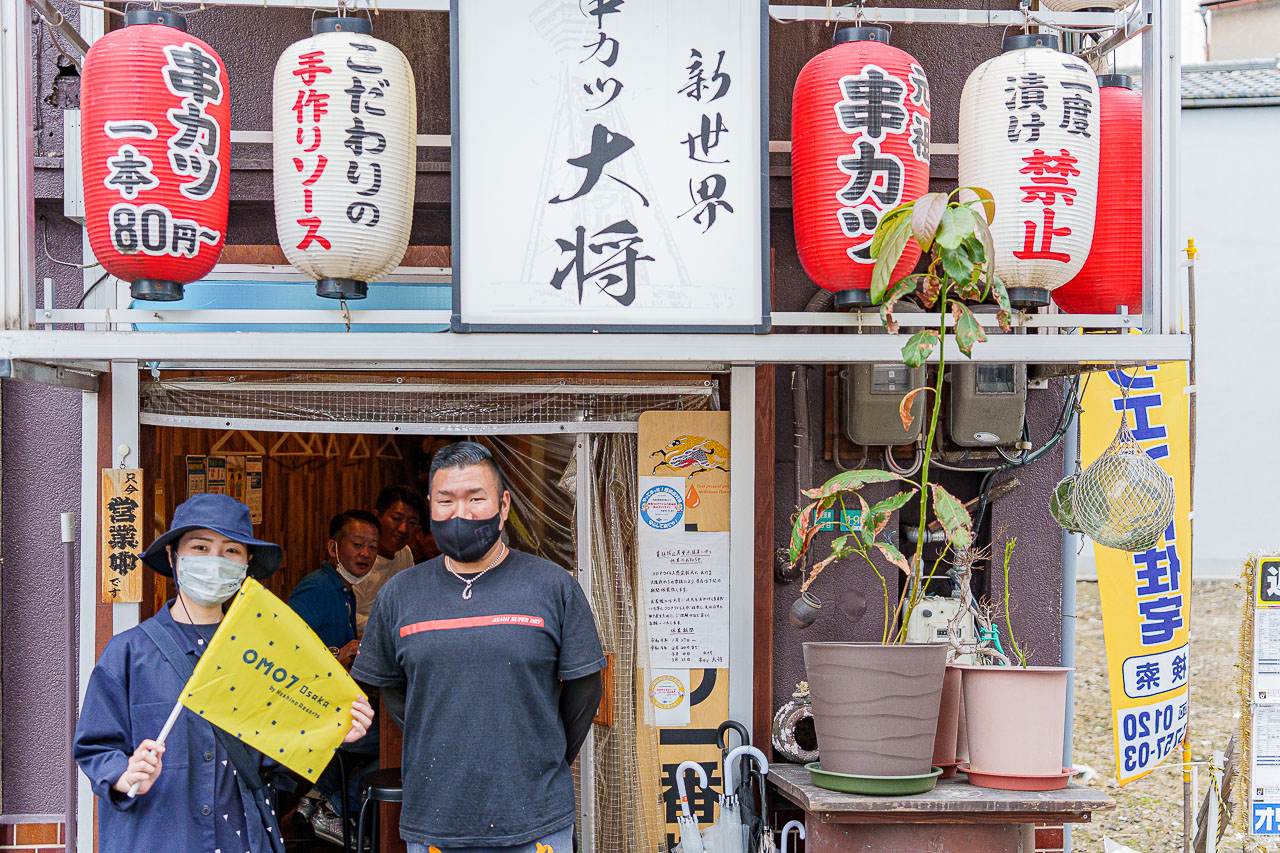
The second shop, Kushikatsu Taisho, feels thoroughly local.
It might be difficult to find without knowing the neighborhood.
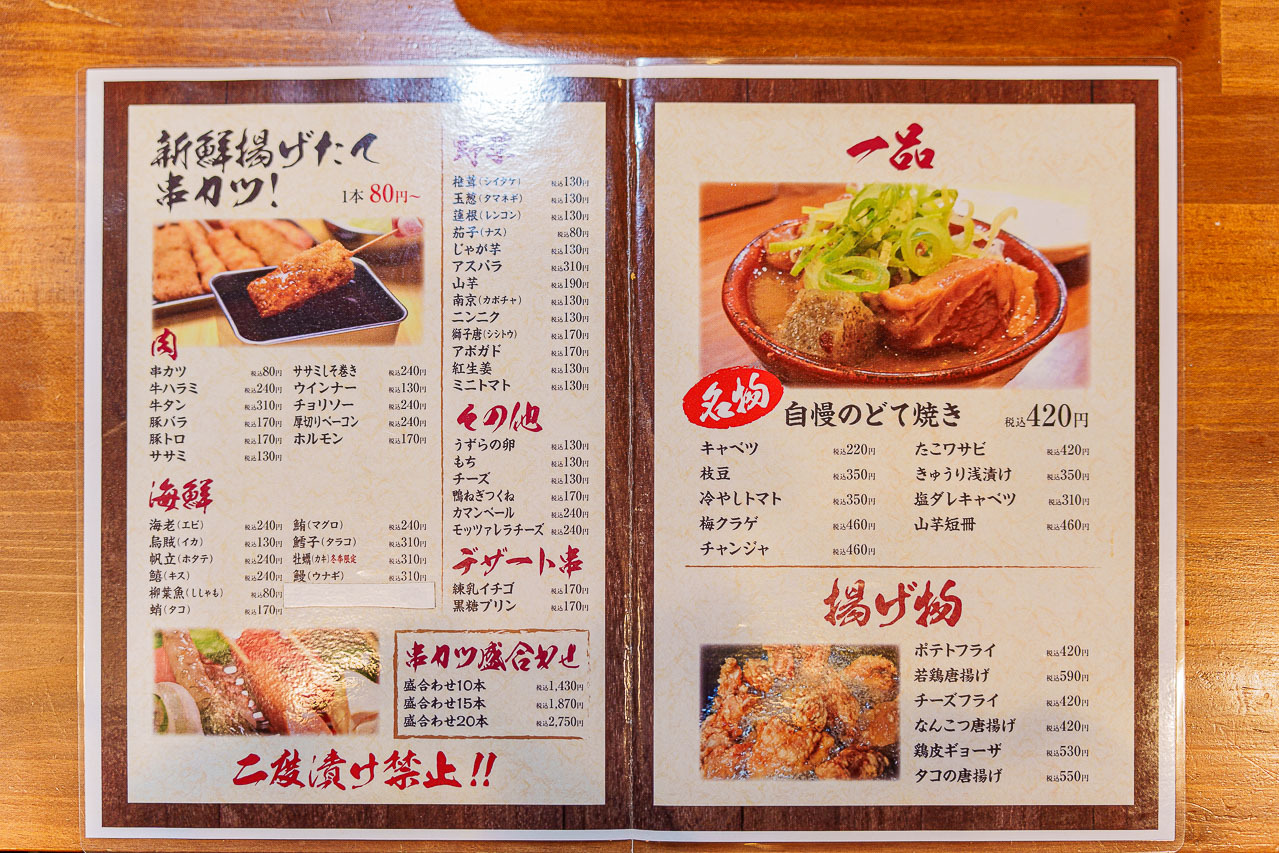
Skewers were JPY 80 each—remarkably inexpensive.
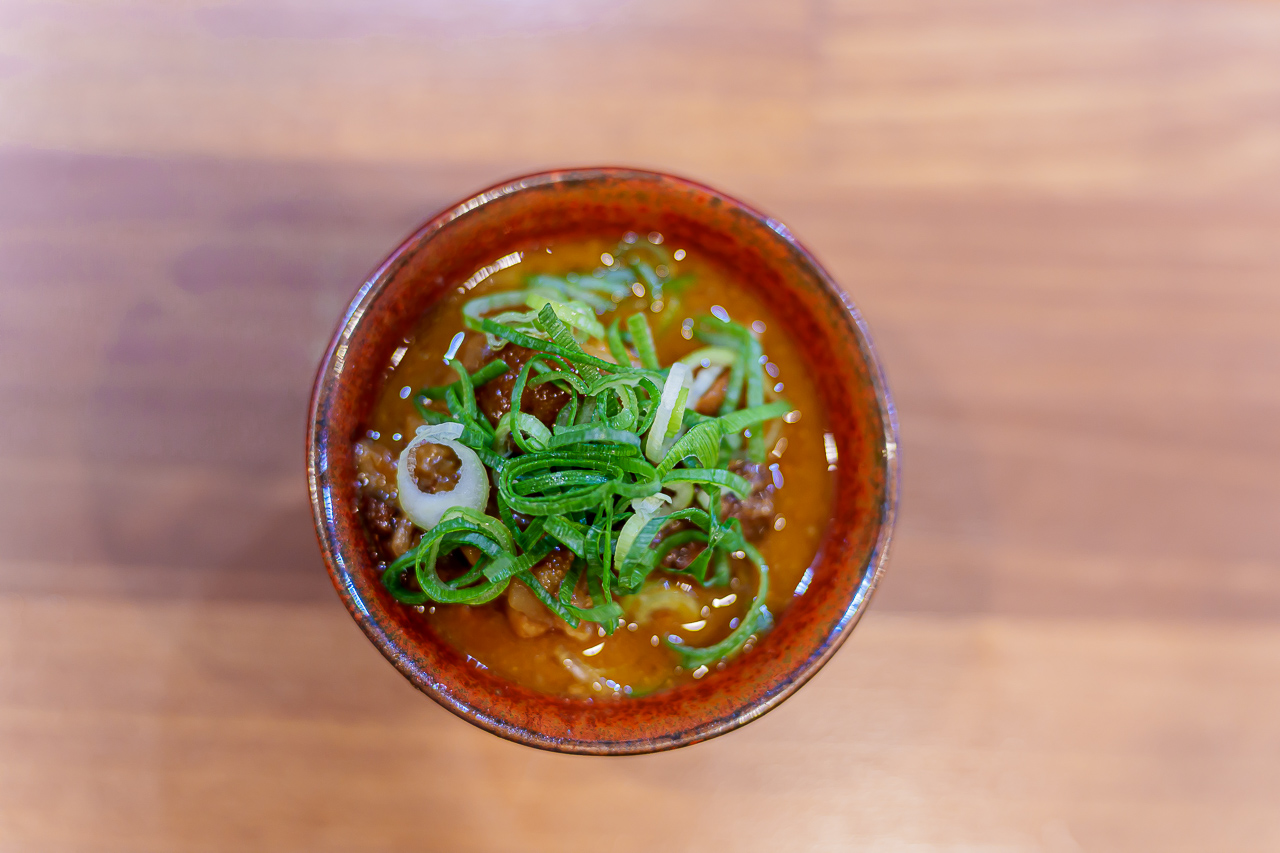
Doteyaki is a first order the guide associates with Osaka, especially Shinsekai, diners.
Beef tendon simmered in miso makes an excellent accompaniment to drinks.
The author jokes that one serving could accompany three beers.
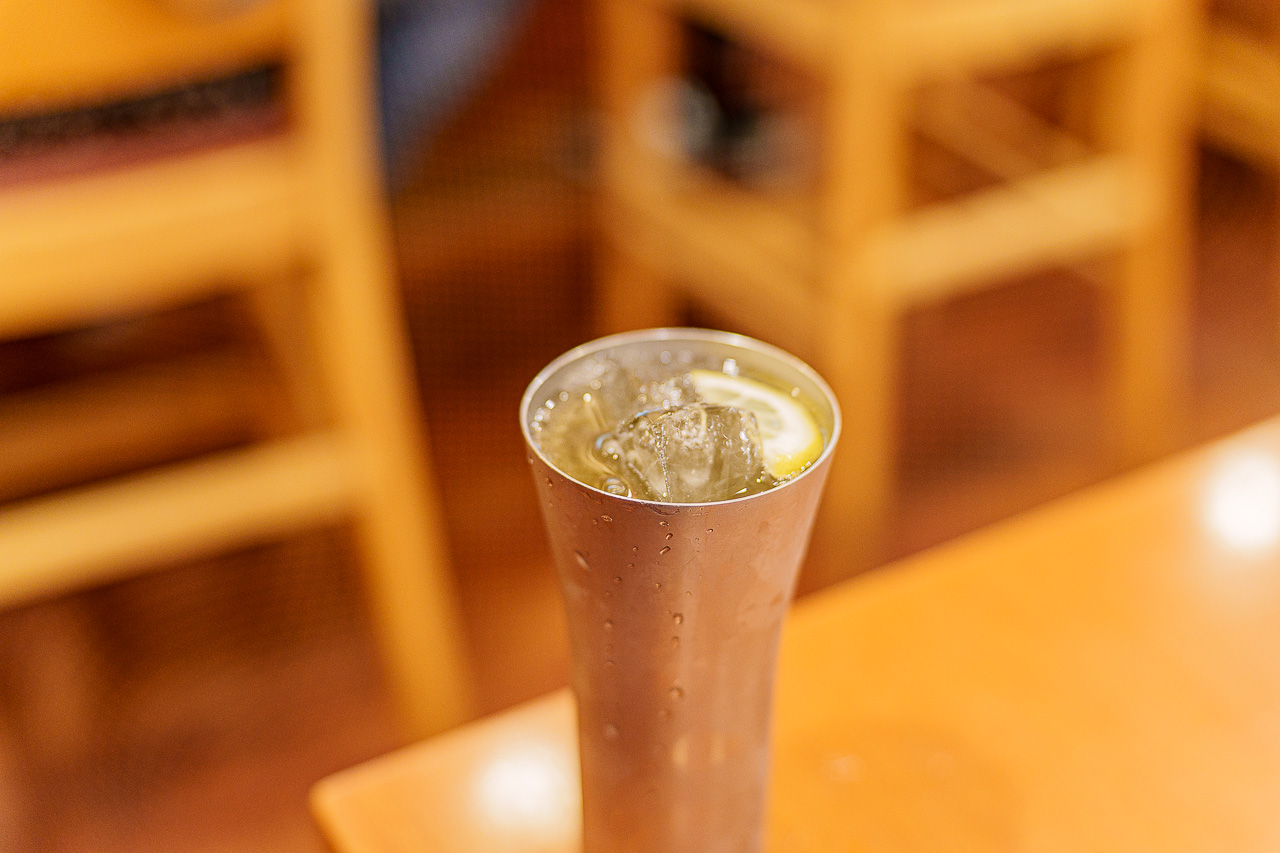
Or even five whisky highballs.
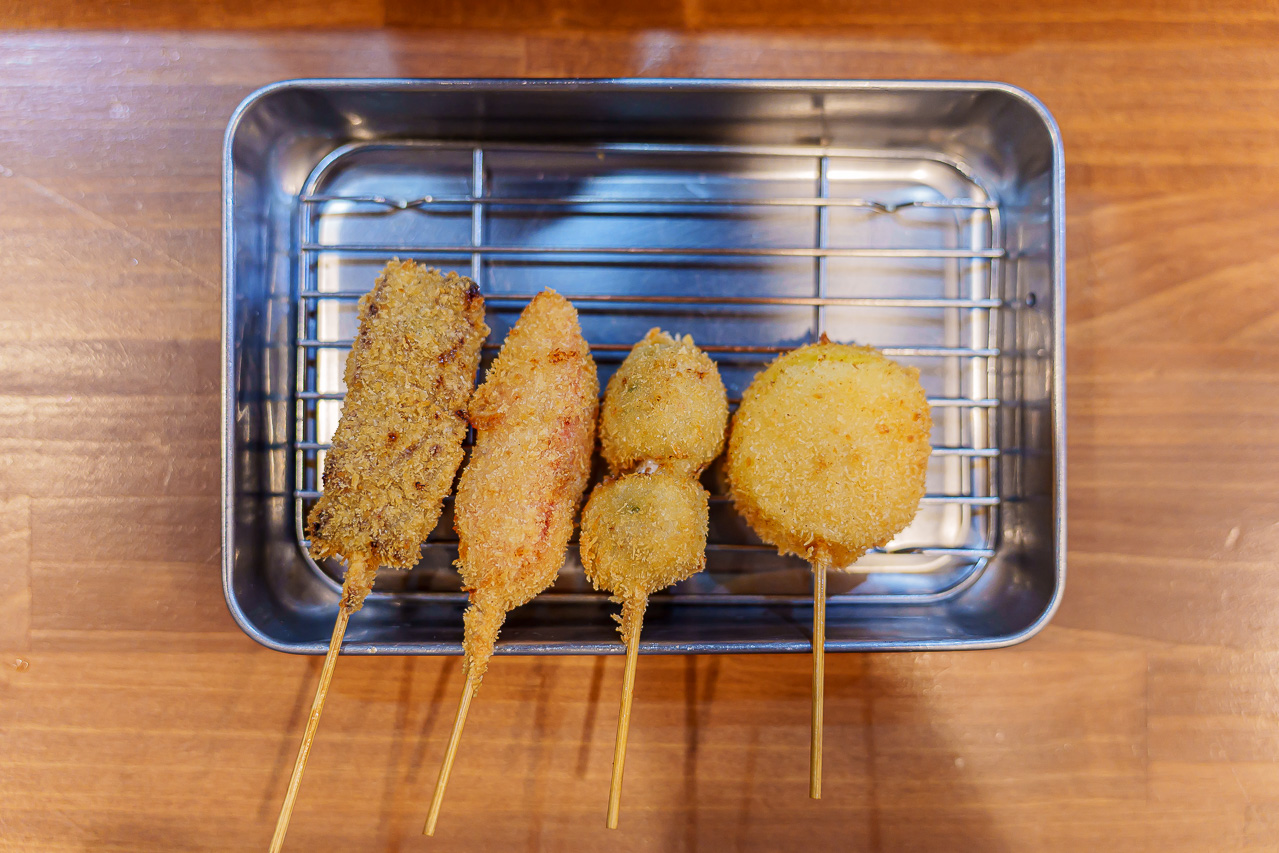
From left: original beef, tarako pollock roe, eel and a tour-exclusive skewer.
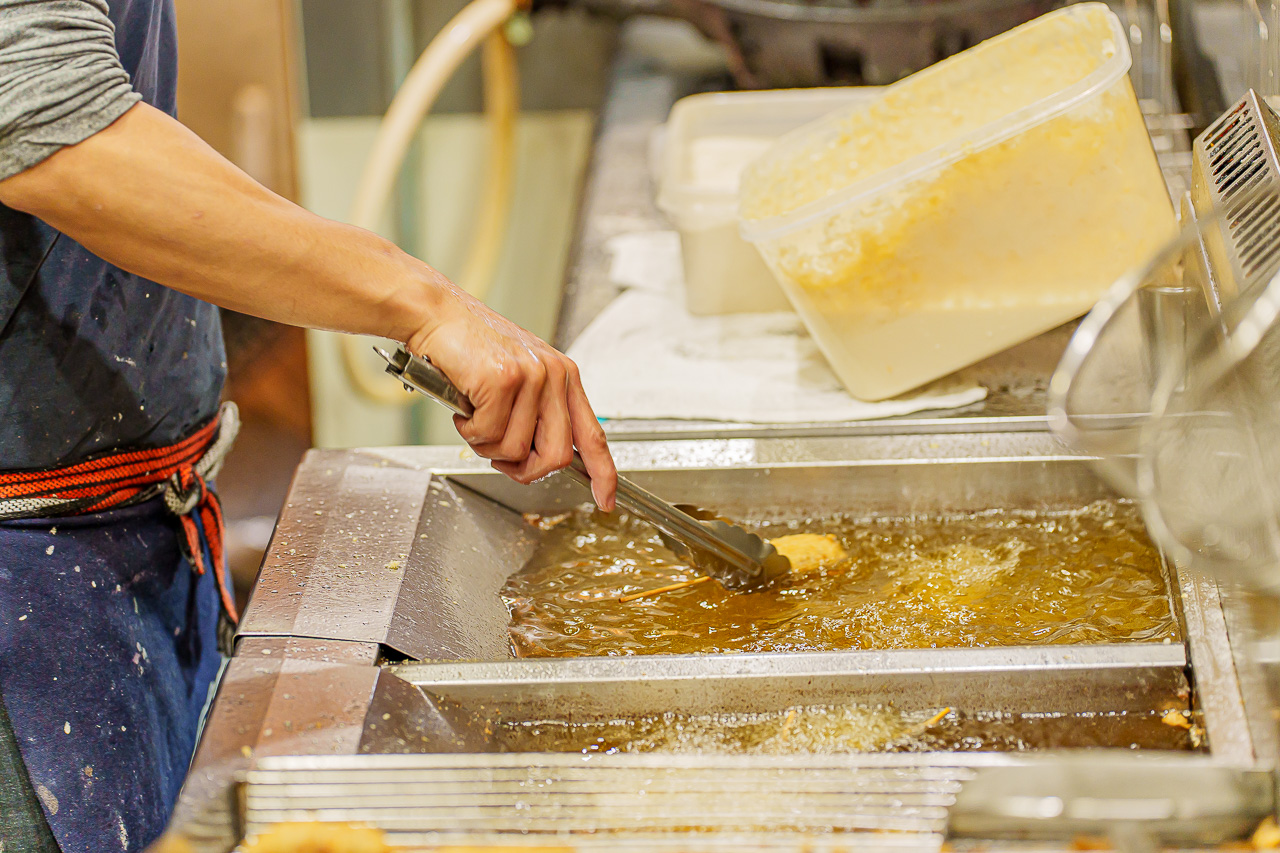
Watching skewers fry continuously makes me hungry.
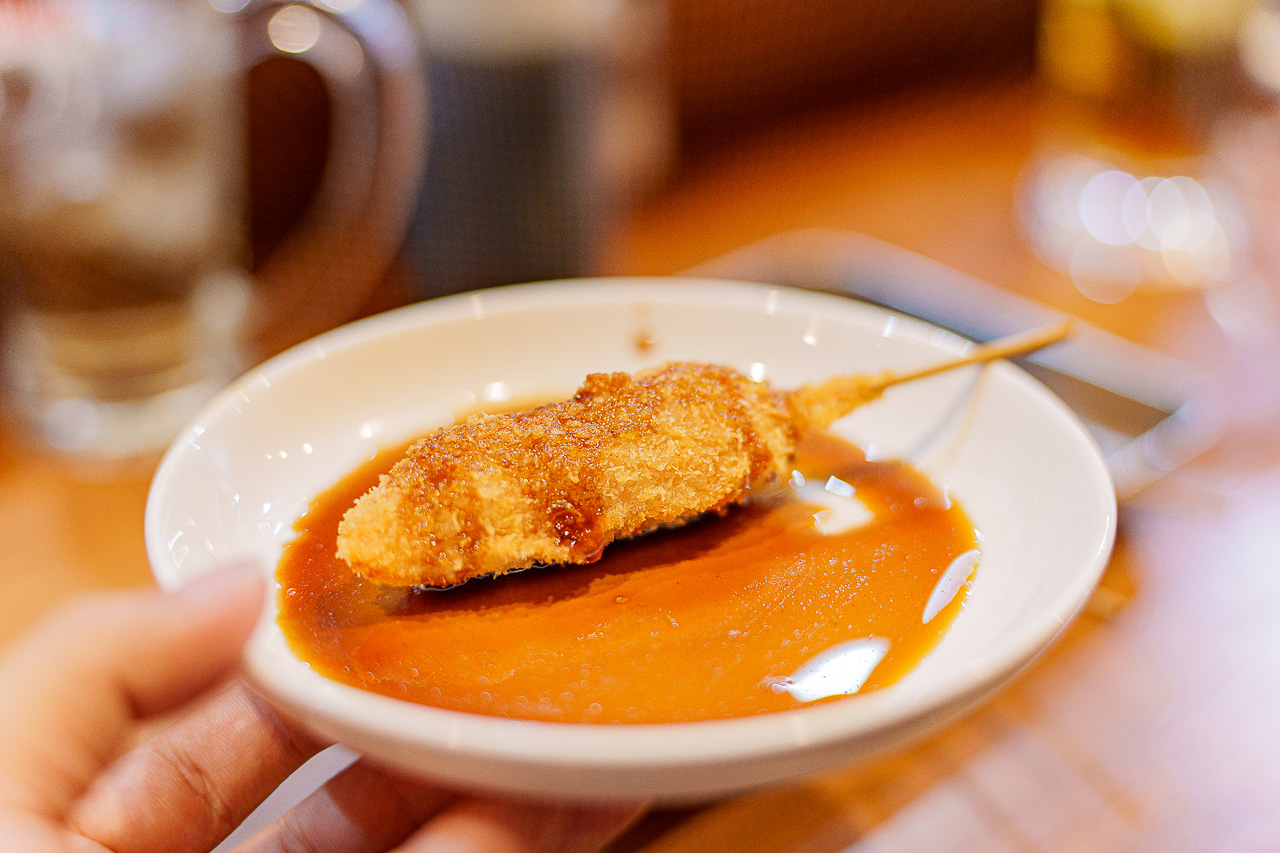
The sauce system differs from the previous shop’s shared container.
The source says many restaurants switched from dipping to pouring sauce during the pandemic.
I enjoyed the older style too, but pouring seems a sensible alternative.
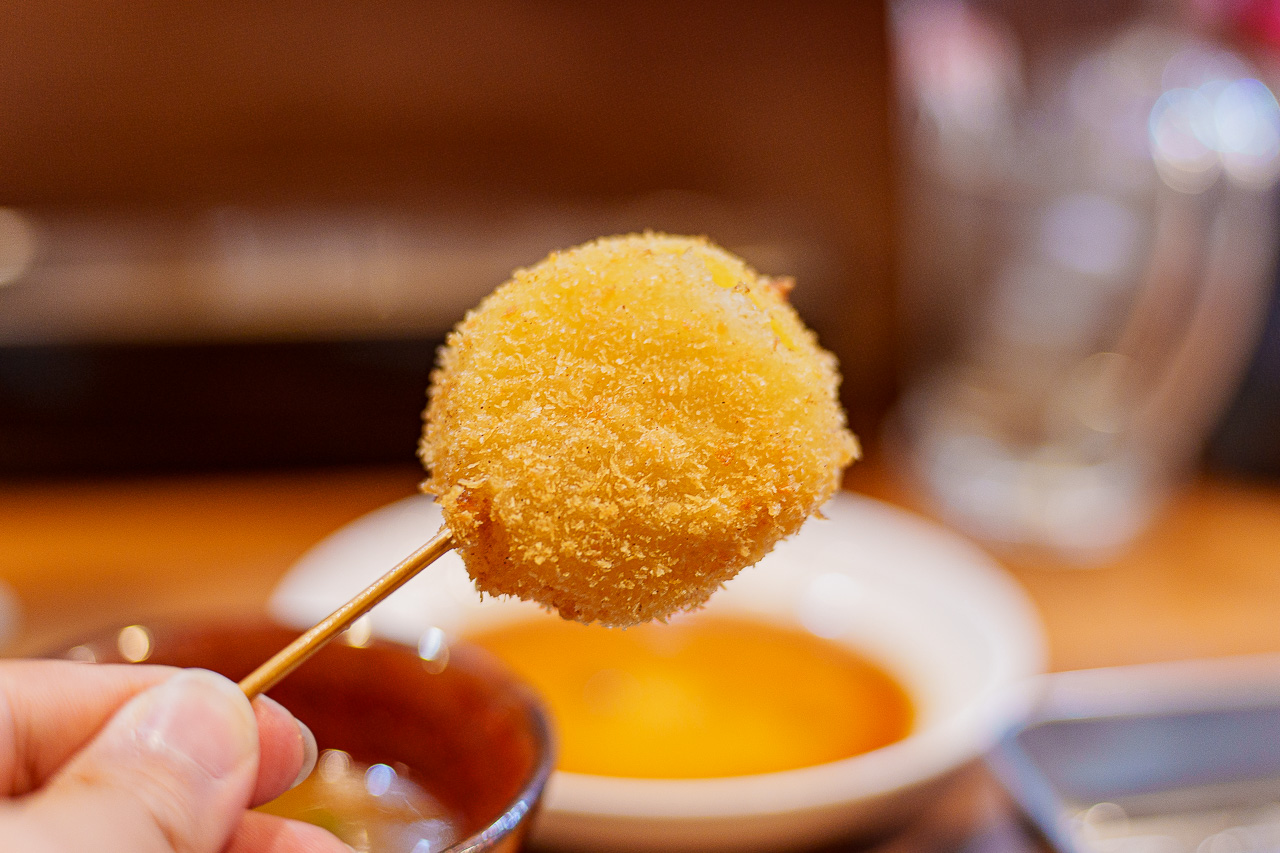
A mysterious skewer available on this tour.
You will not know what it is until you try it.
Its flavor may divide opinion, but I find it fresh and delicious.
The author deliberately keeps the ingredient secret to preserve the surprise for participants; no ingredient is guessed here.
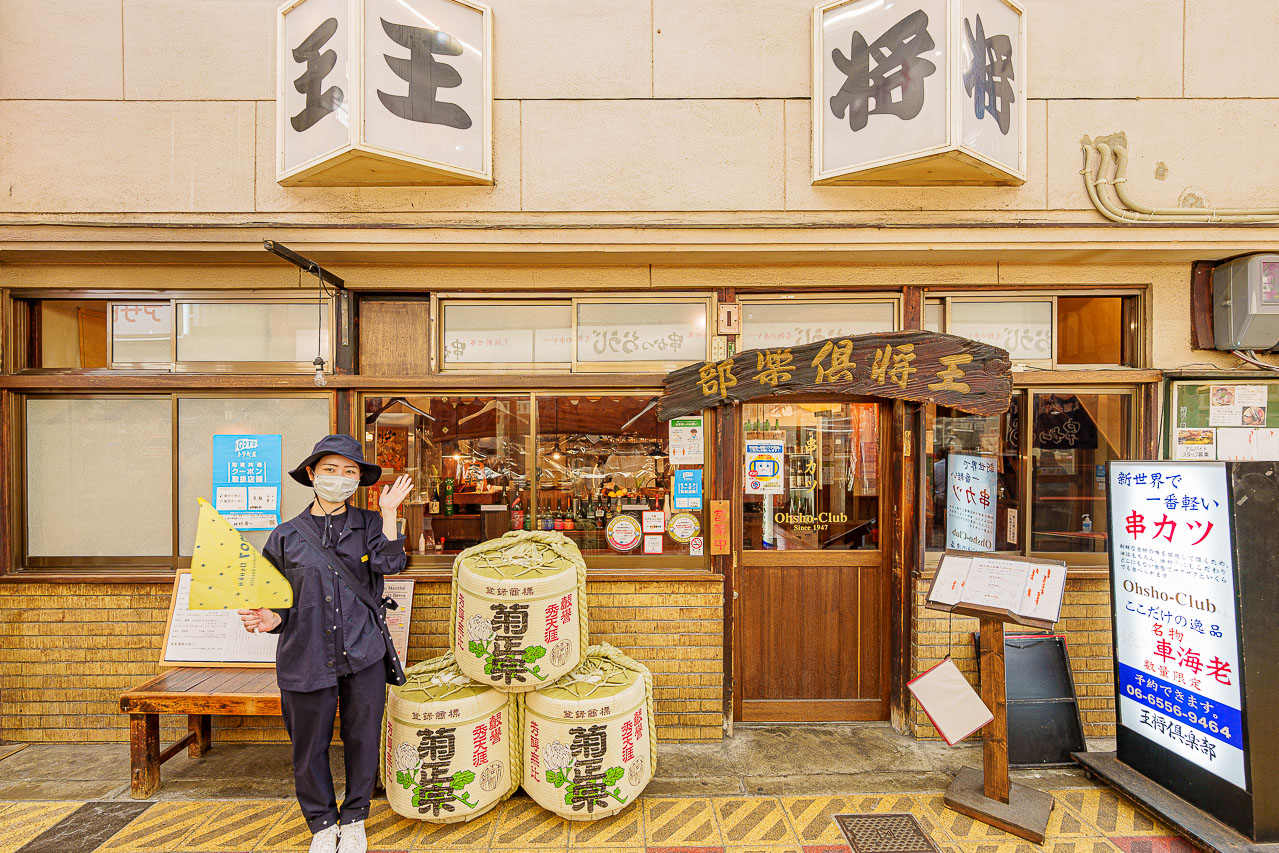
The last stop is Osho Club, described as serving especially light-tasting kushikatsu in Shinsekai.
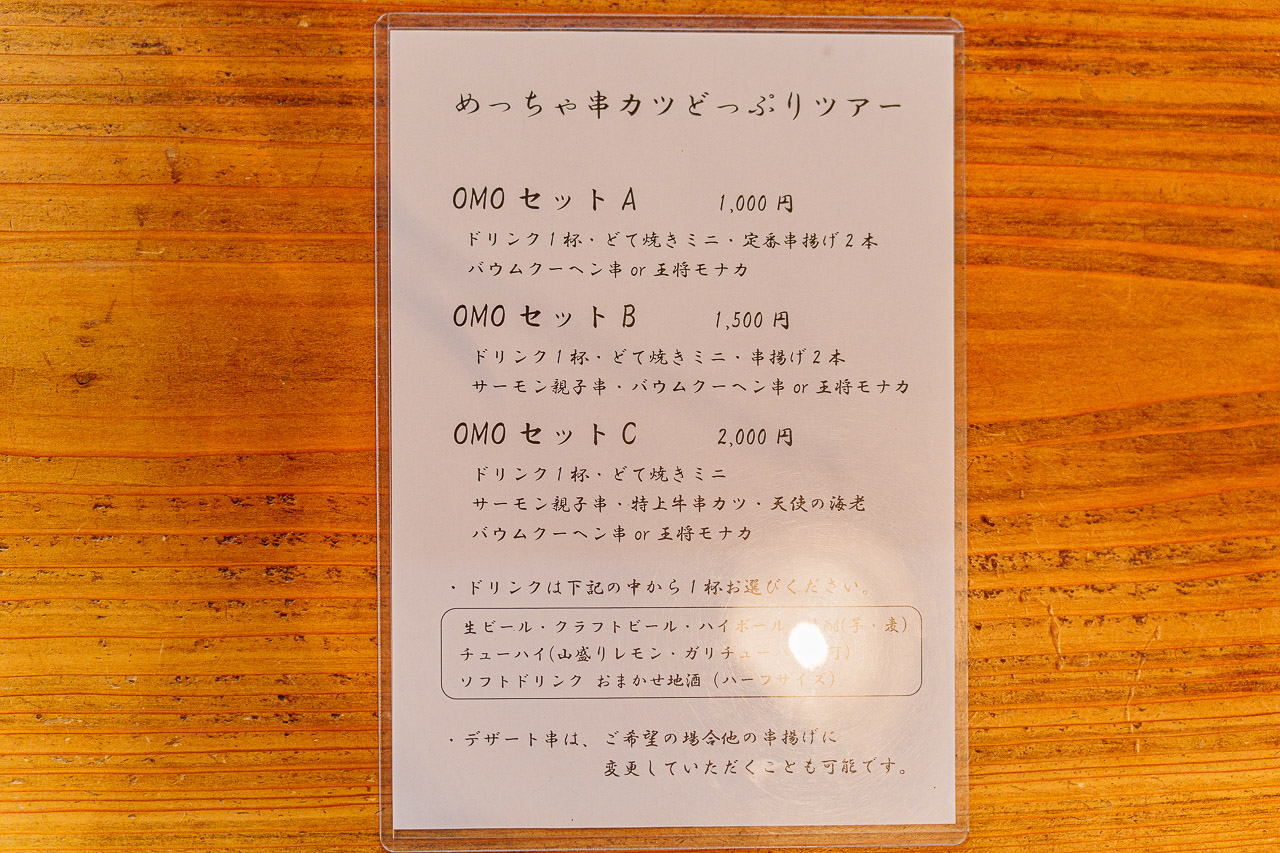
Tour menus offered three prices: JPY 1,000, JPY 1,500 and JPY 2,000.
Since this is already our third restaurant, we choose the JPY 1,500 B Set.
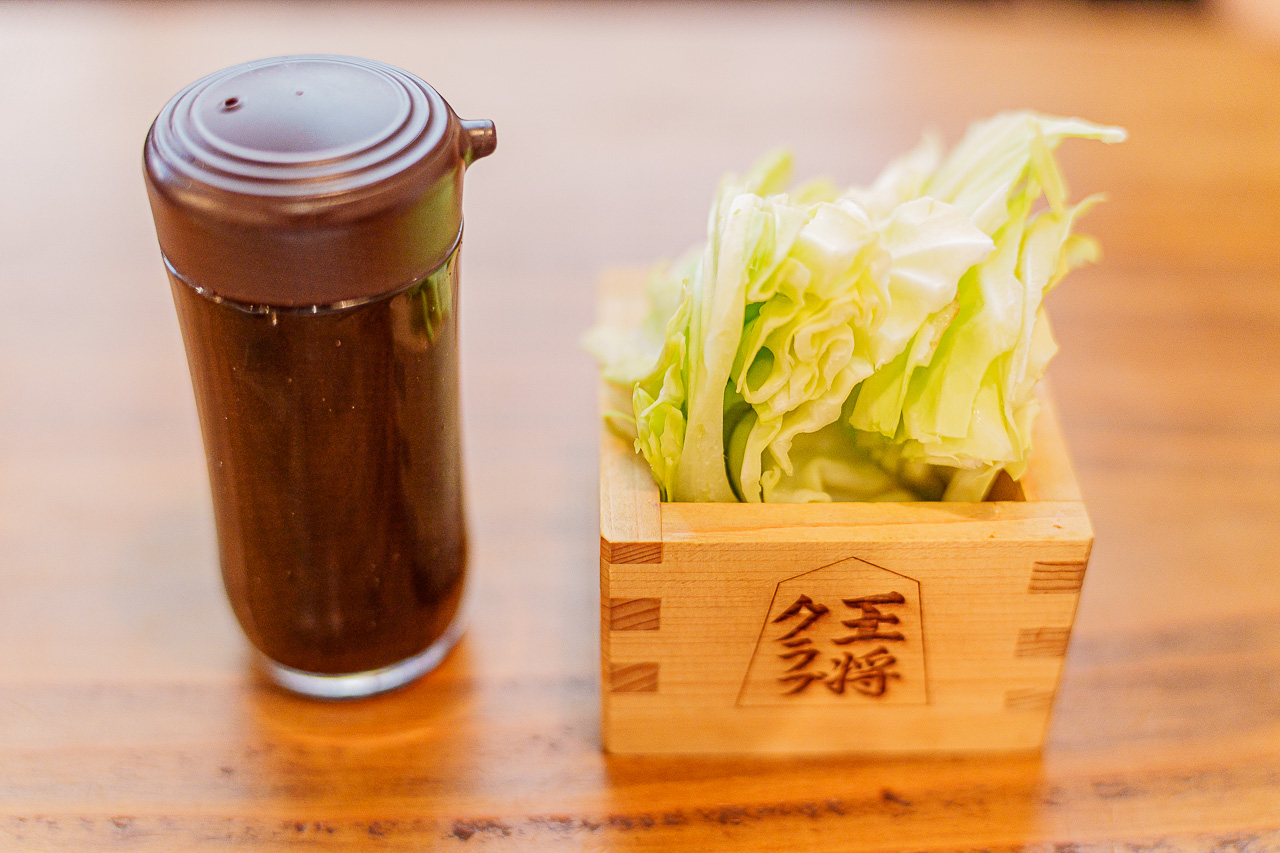
It, too, has changed to pour-on sauce.
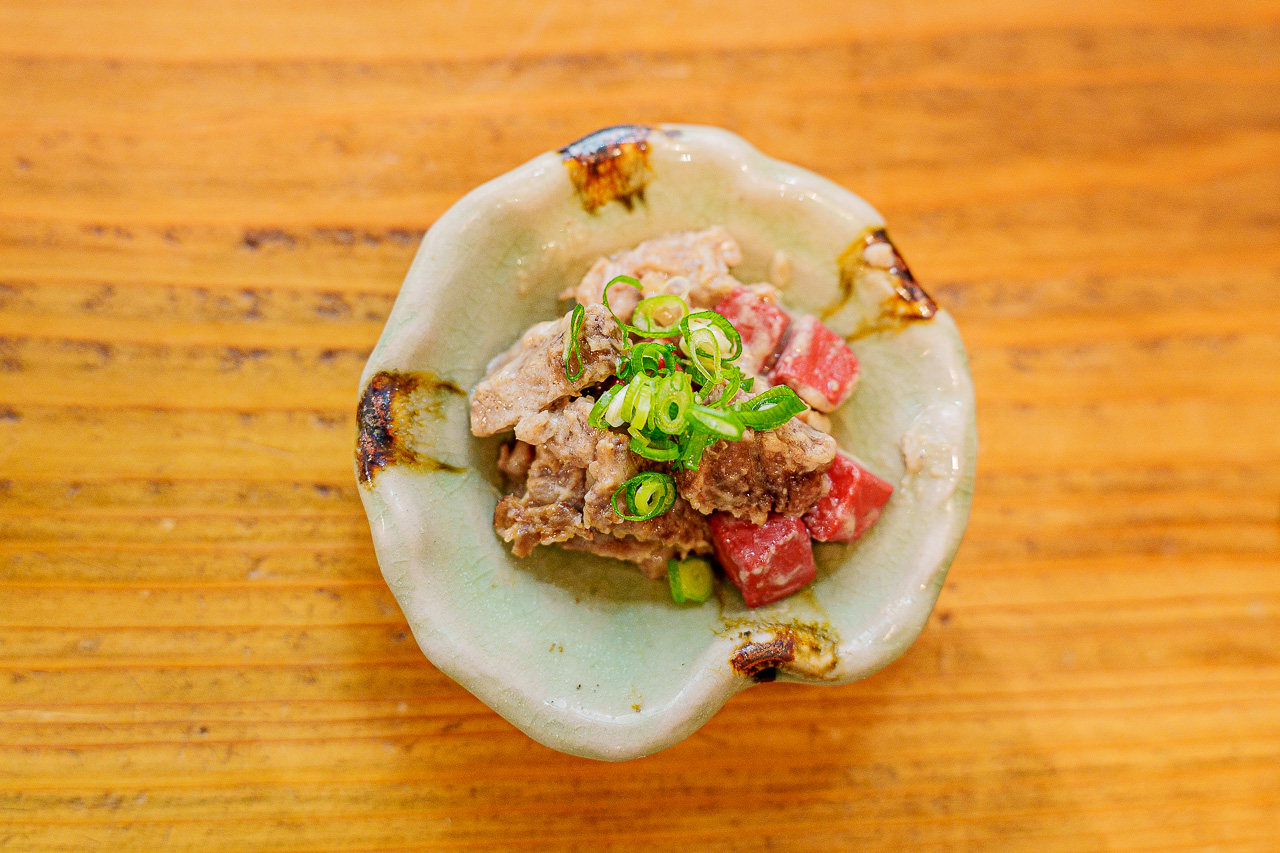
First comes doteyaki.
This version is different from the previous shop’s, served with a fresher, almost salad-like impression.
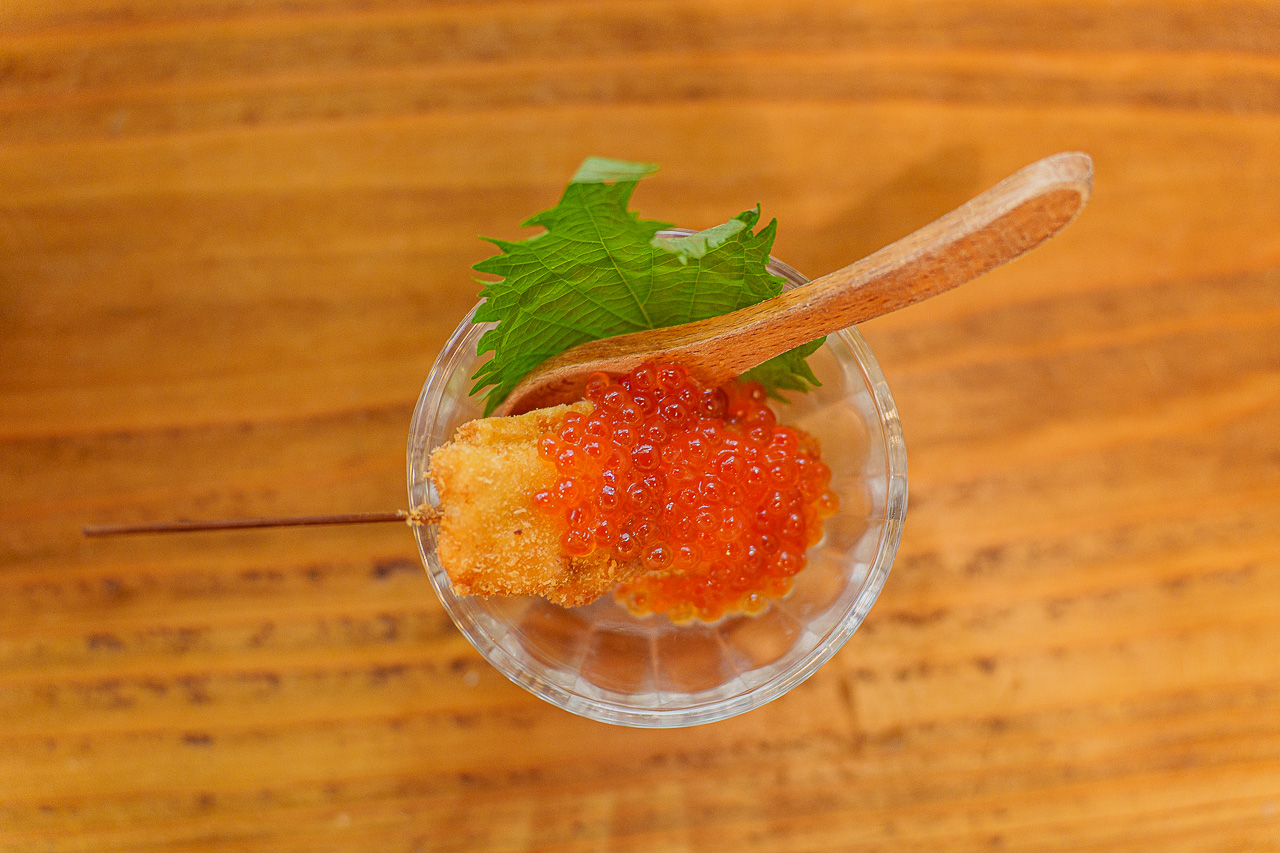
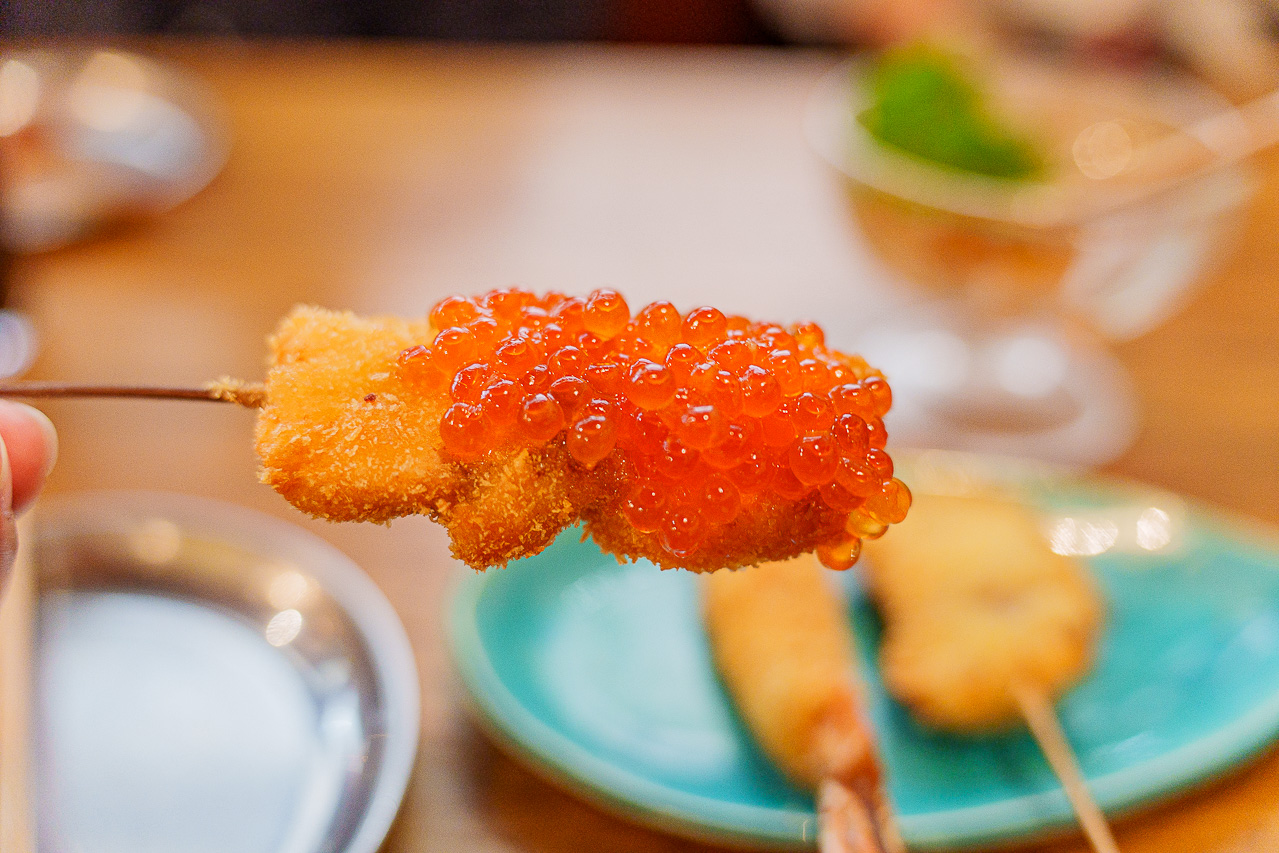
Next, salmon kushikatsu topped generously with salmon roe.
The plates and presentation feel as neat as a dessert shop’s.
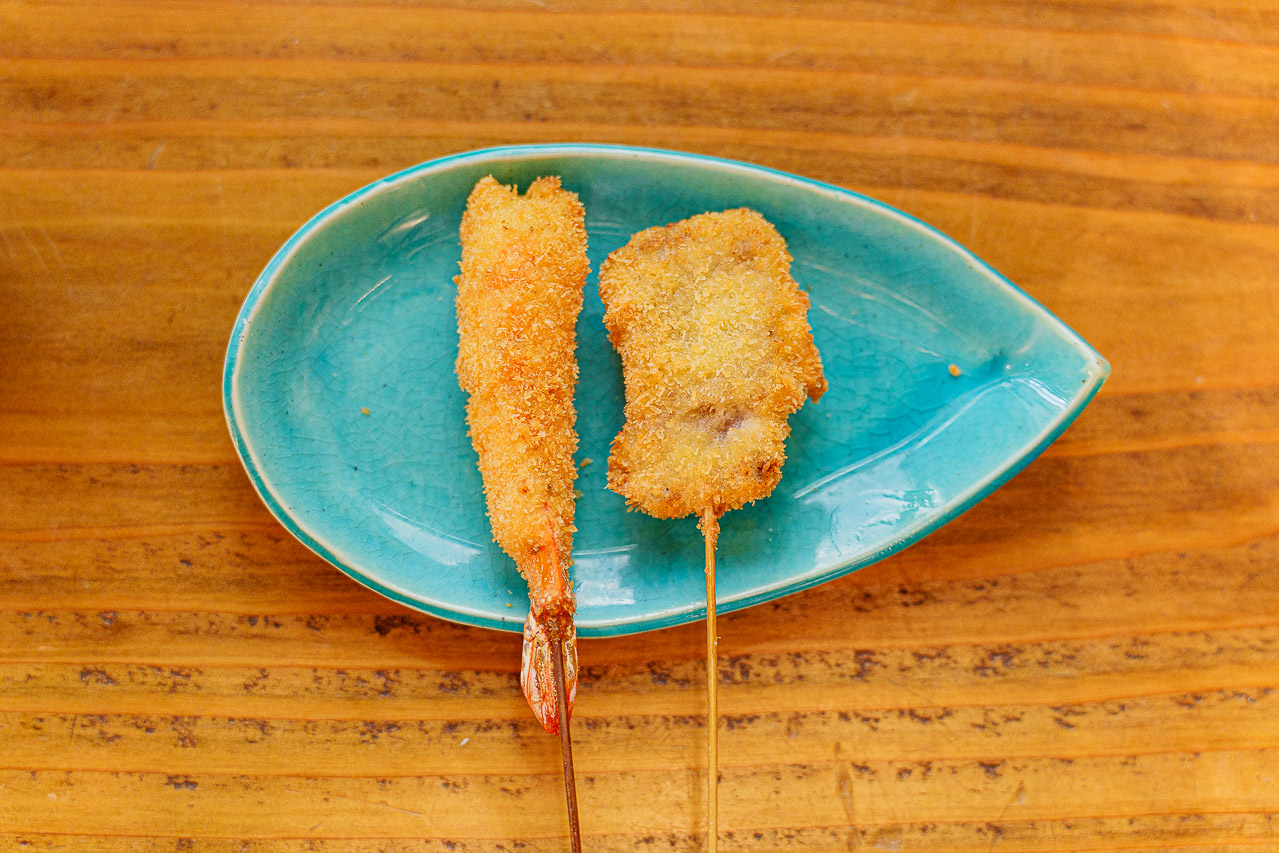
Fried shrimp and the original beef skewers arrive too.
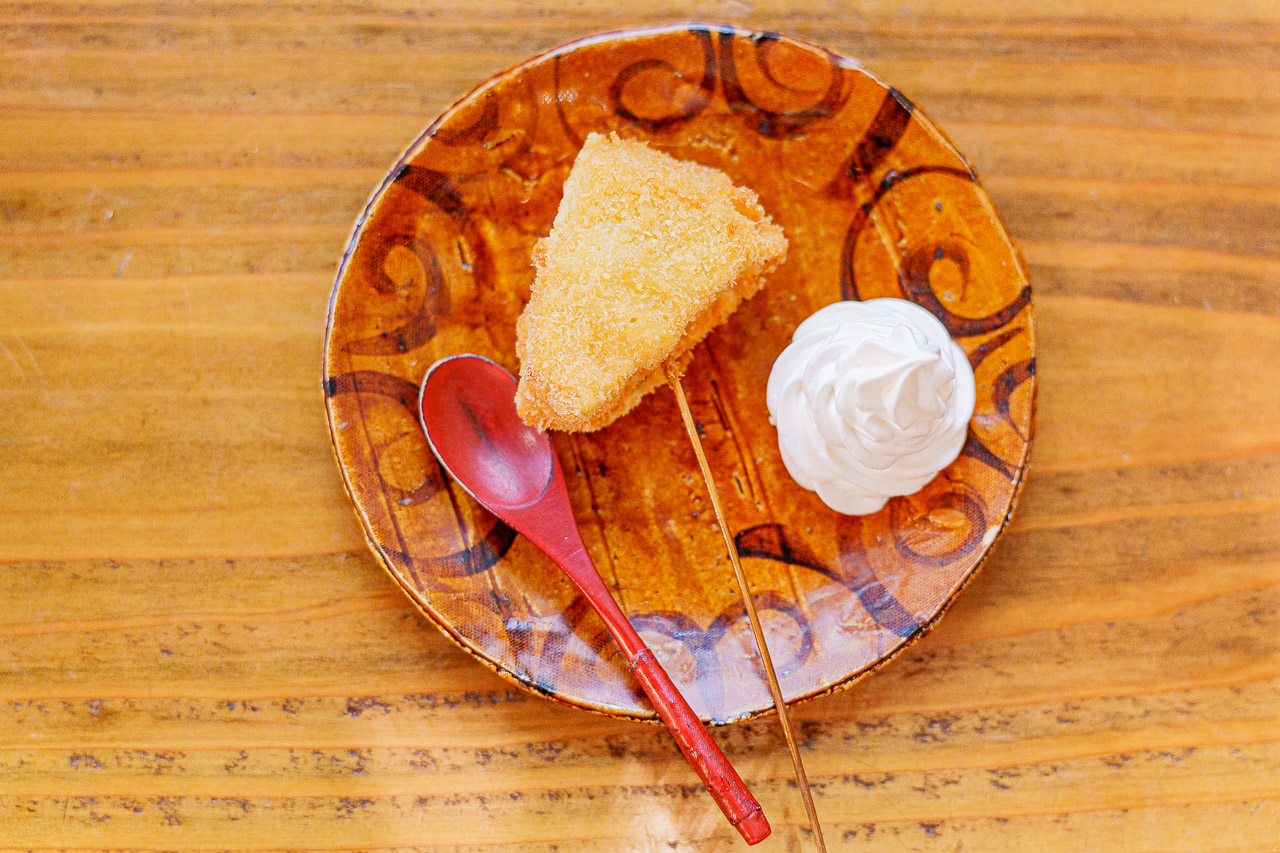
The finale is particularly memorable:
a choice of Baumkuchen kushikatsu for dessert
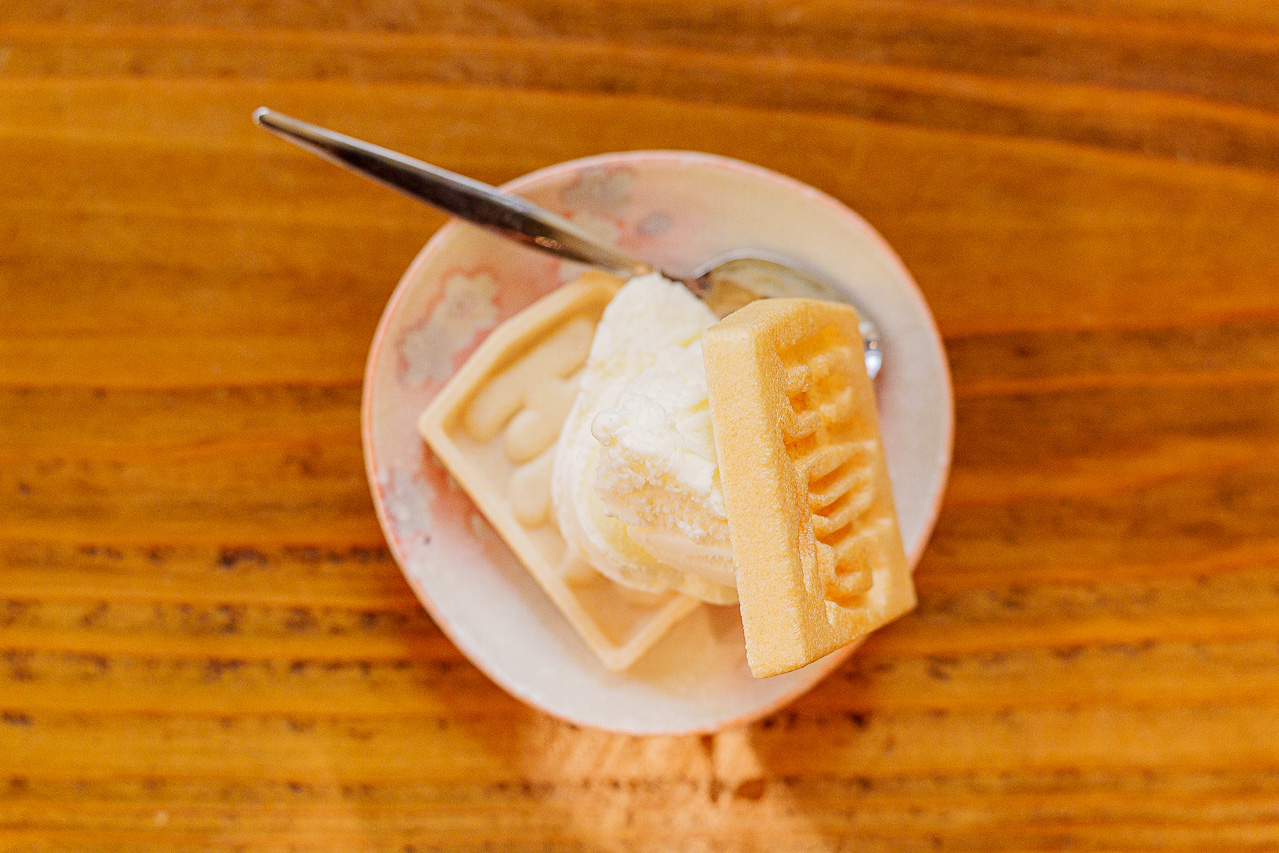
or the shop’s signature monaka ice cream.
Personally, the fried Baumkuchen is both intriguing and delicious.
After the satisfying tour, we return to the hotel.
Anyone wanting to stay out longer could part from the Ranger and continue to another shop under that tour’s arrangement.
With so many similar-looking restaurants in Shinsekai, choosing can be difficult. A guide introducing distinctive local places was genuinely useful.
No searching for the route or queueing at each shop on this visit—I would recommend the experience enthusiastically.
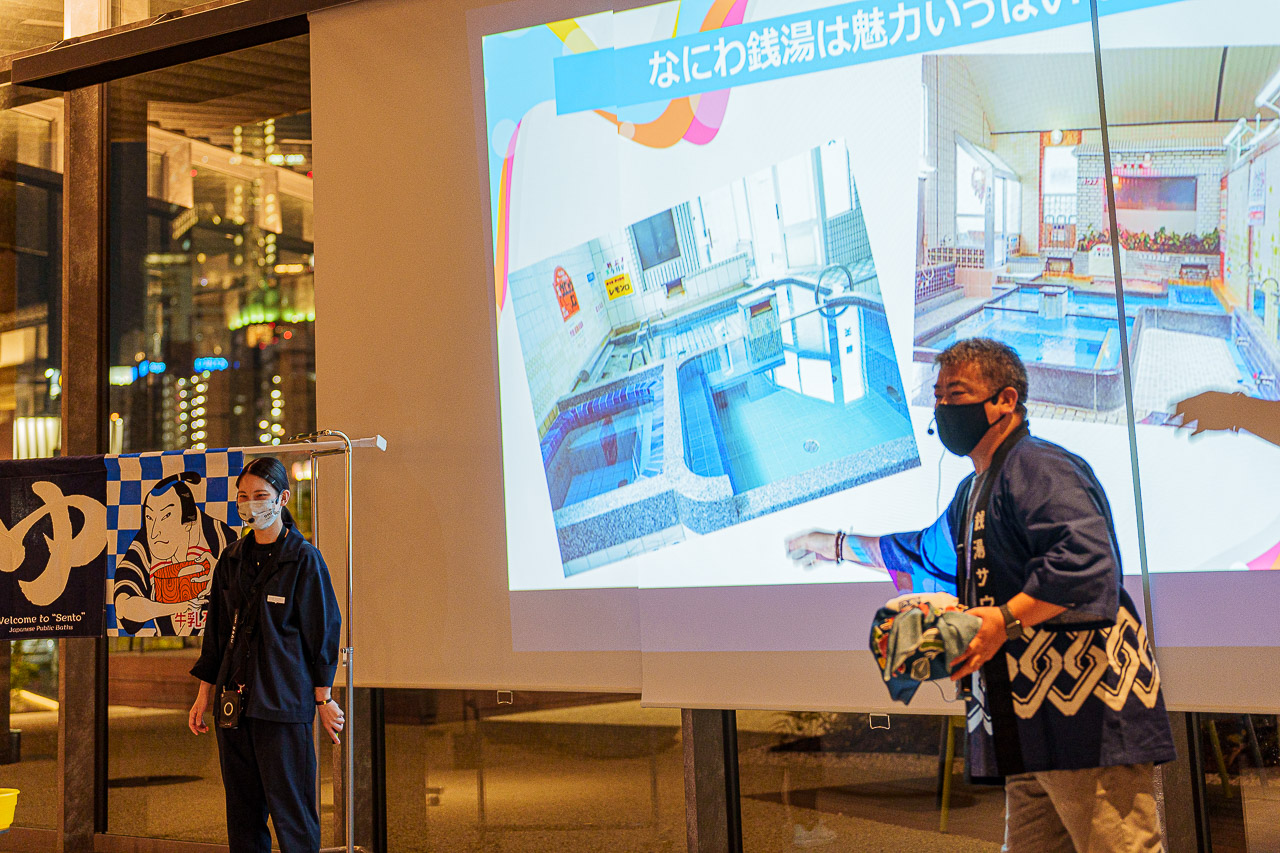
Back at the hotel, another event awaits.
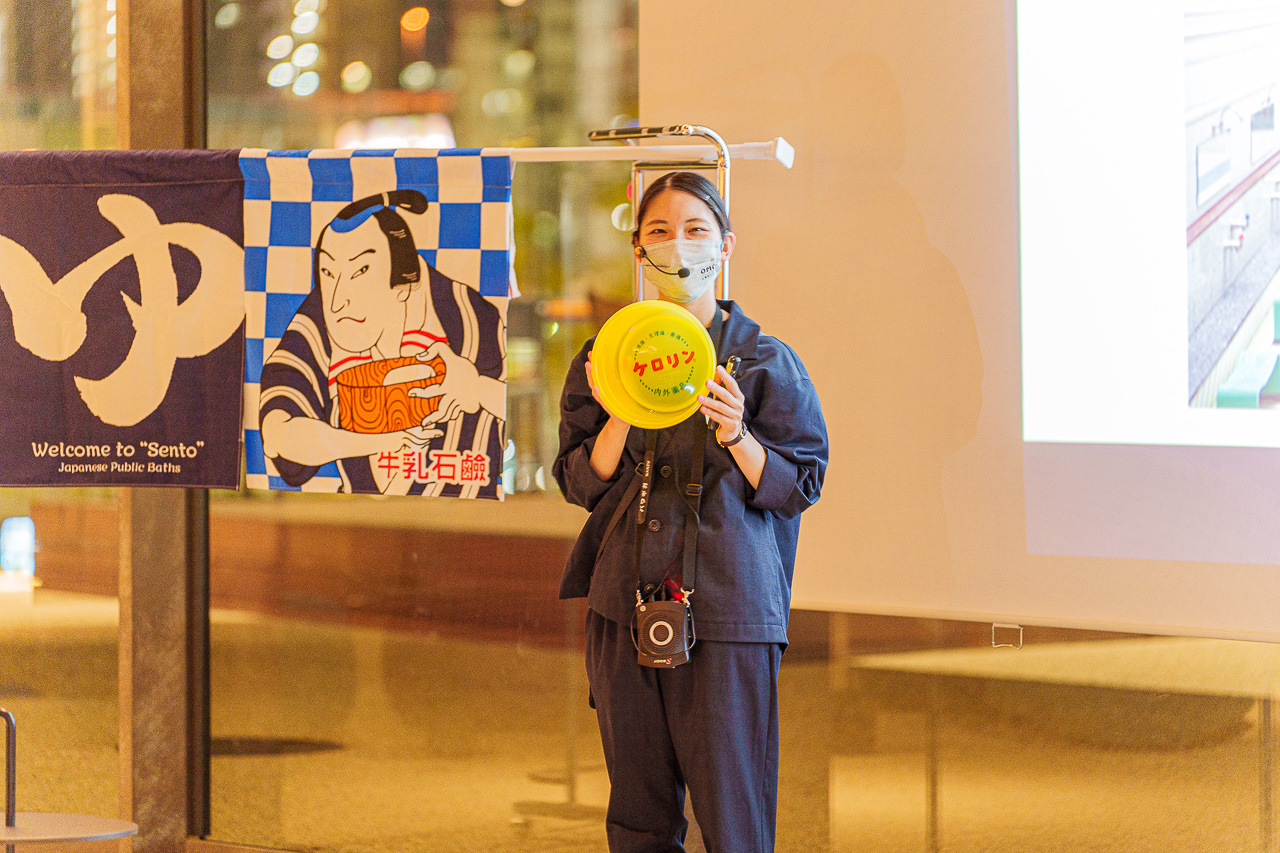
At 8:30 p.m. is the ‘What Is Naniwa?’ session.
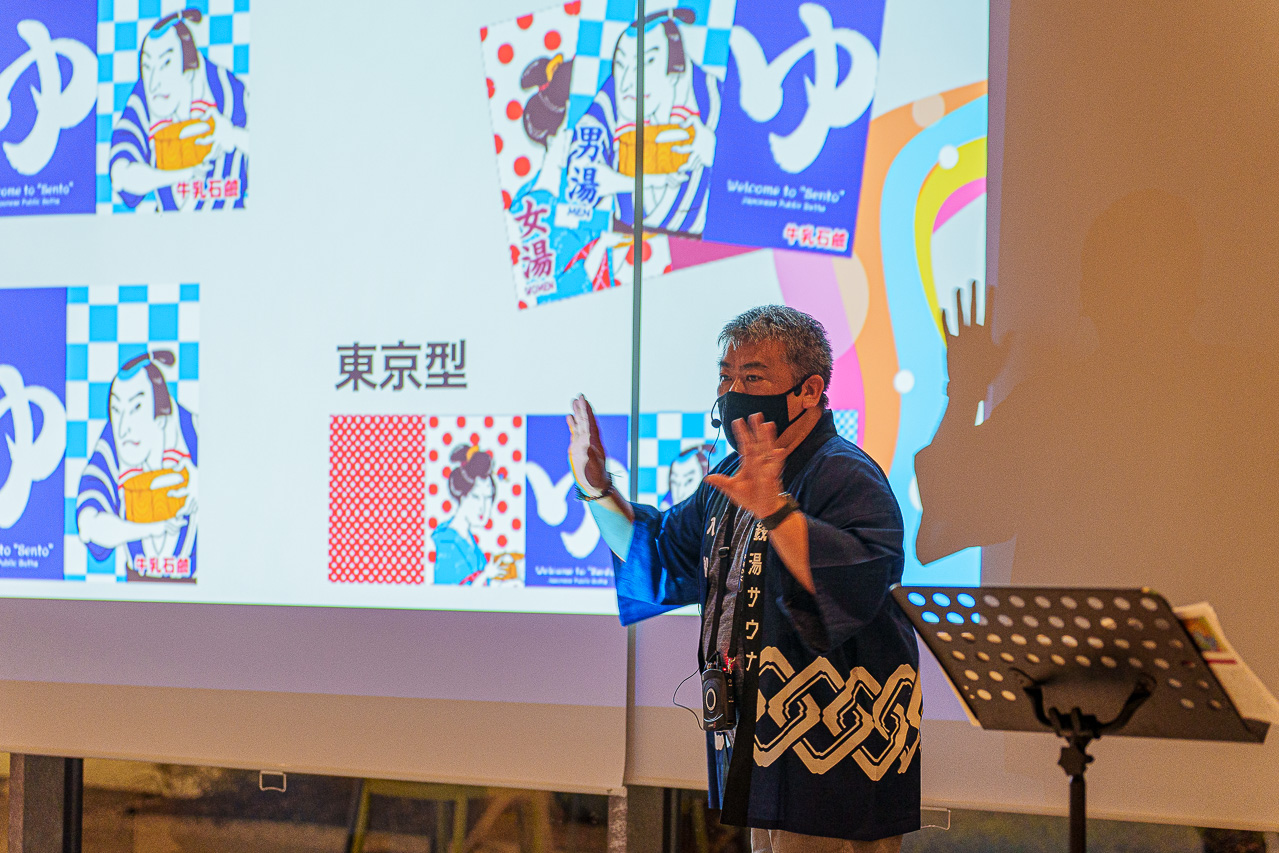
OMO7 stands in the Naniwa area, and the session introduces local specialties and history.
Hotel staff and local shopkeepers work together, making it more engaging and informative than I expected.
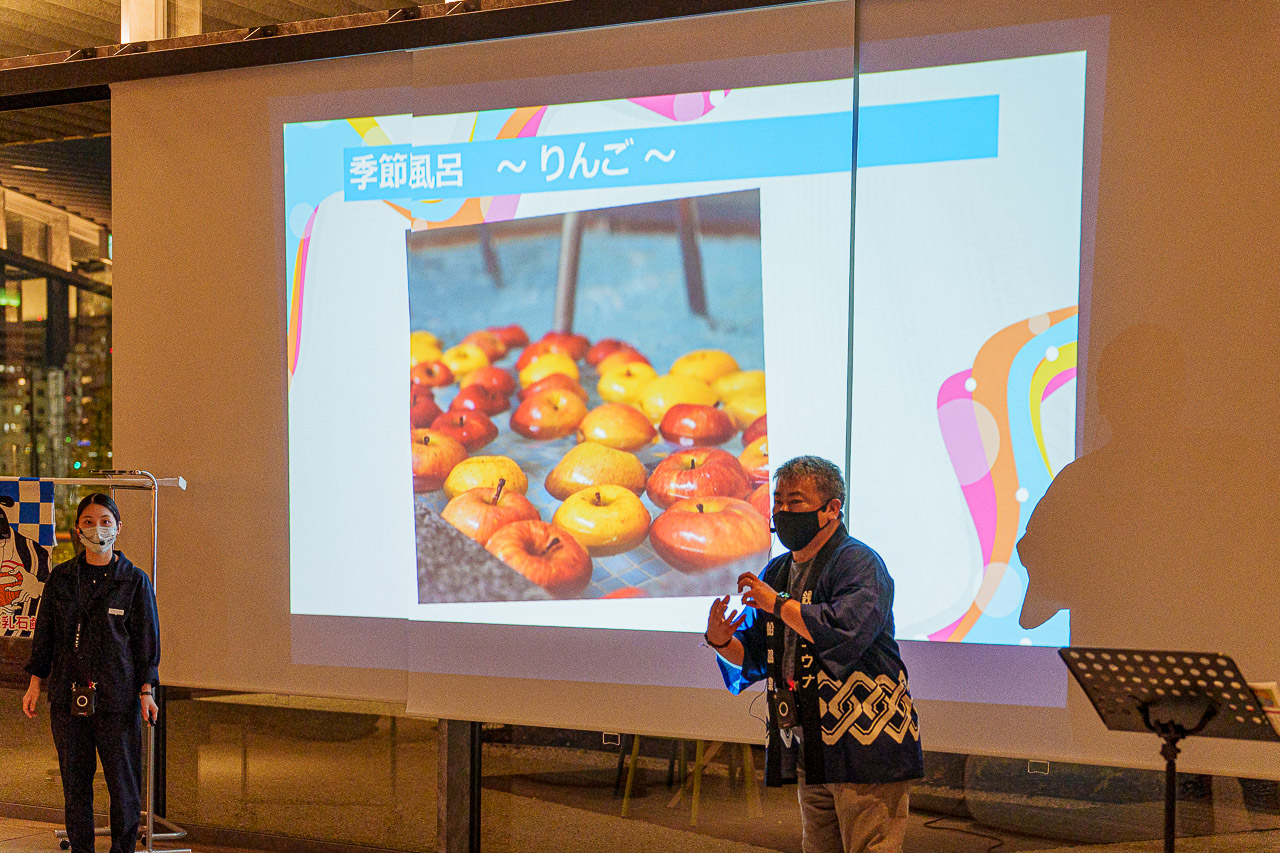
This session asks why Osaka has so many public baths, including stories of unusual services offered in the past.
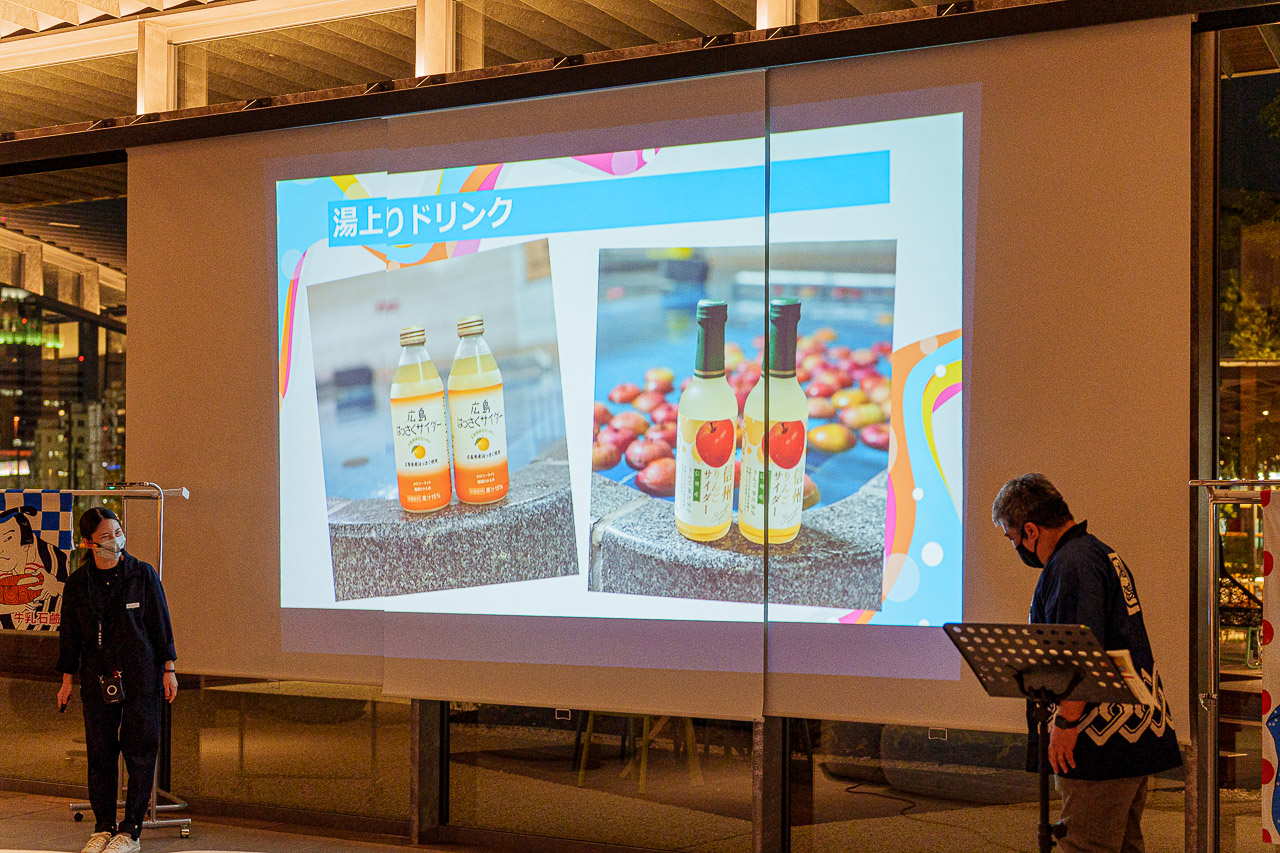
One amusing story describes adding apples to make a bath distinctive, only for customers to eat them.
The owner then took inspiration from that problem and successfully sold apple juice—a reversal of fortune in the anecdote.
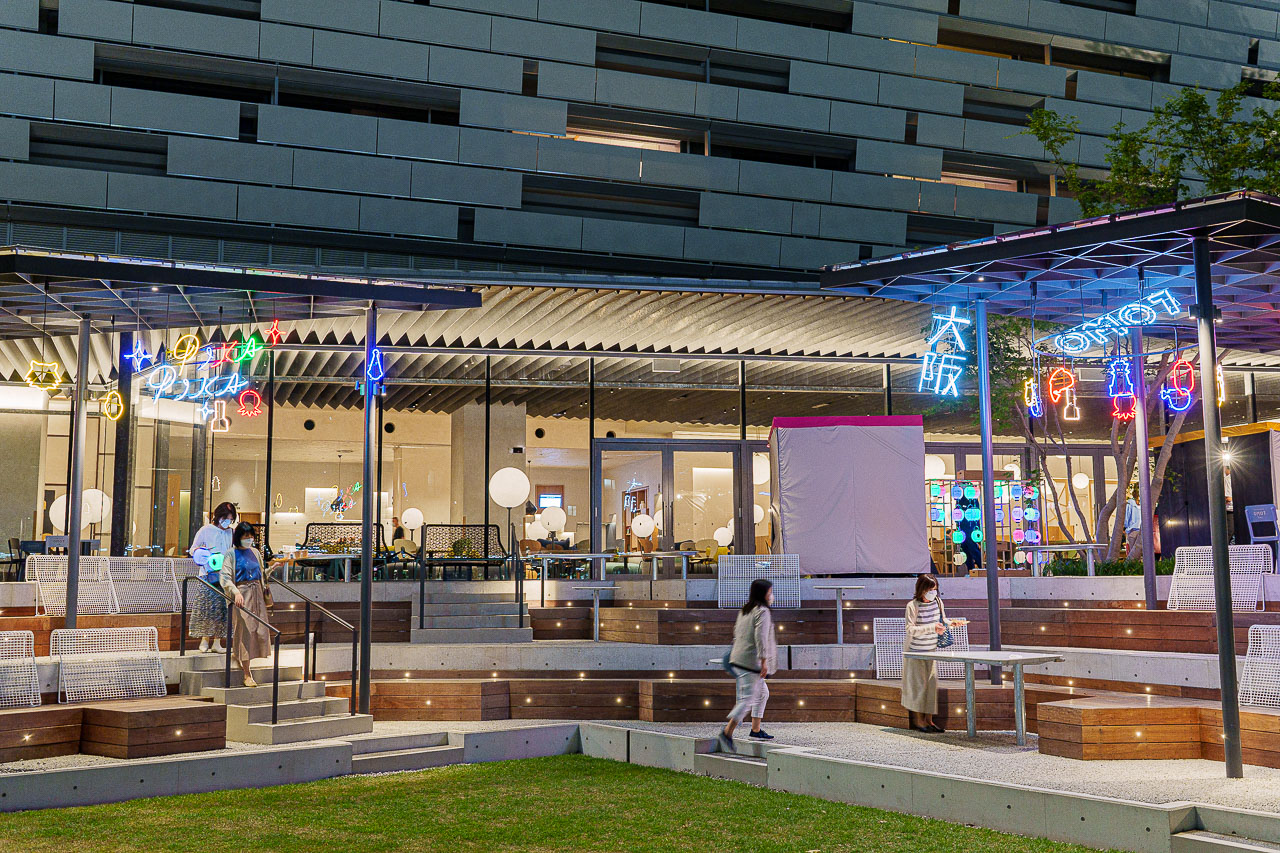
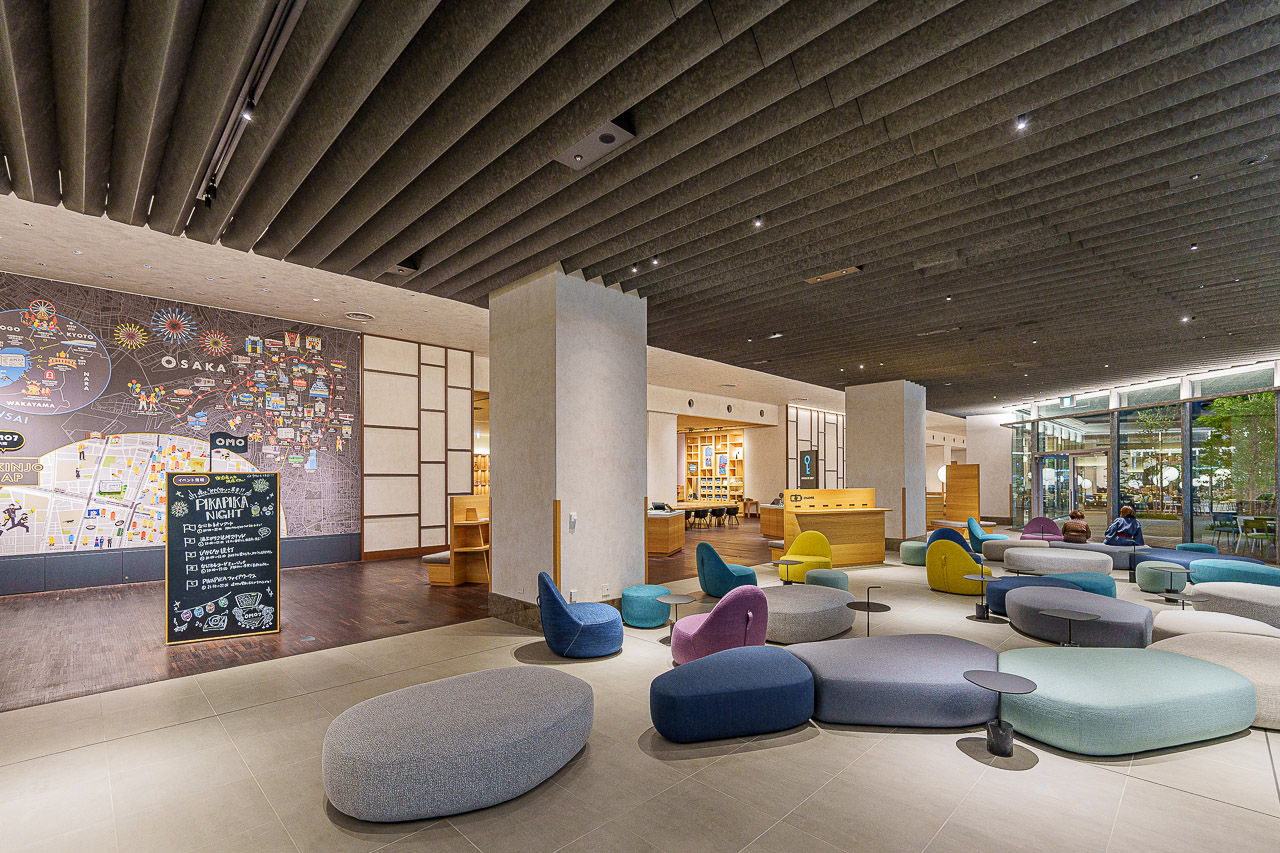
After the Naniwa session, we head to Miyagreen for Pika Pika Night.
The event described ran from April through the end of August 2022, around 8–10 p.m.
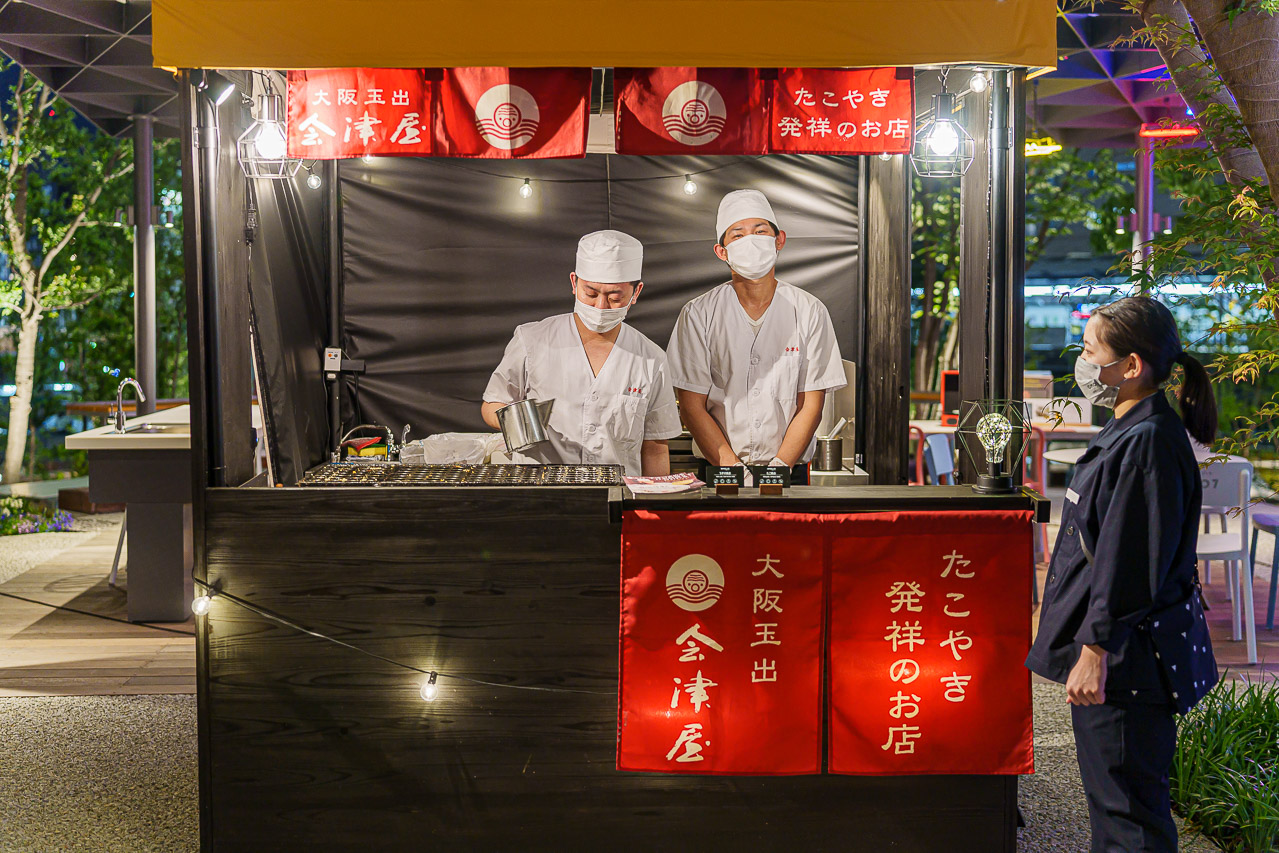
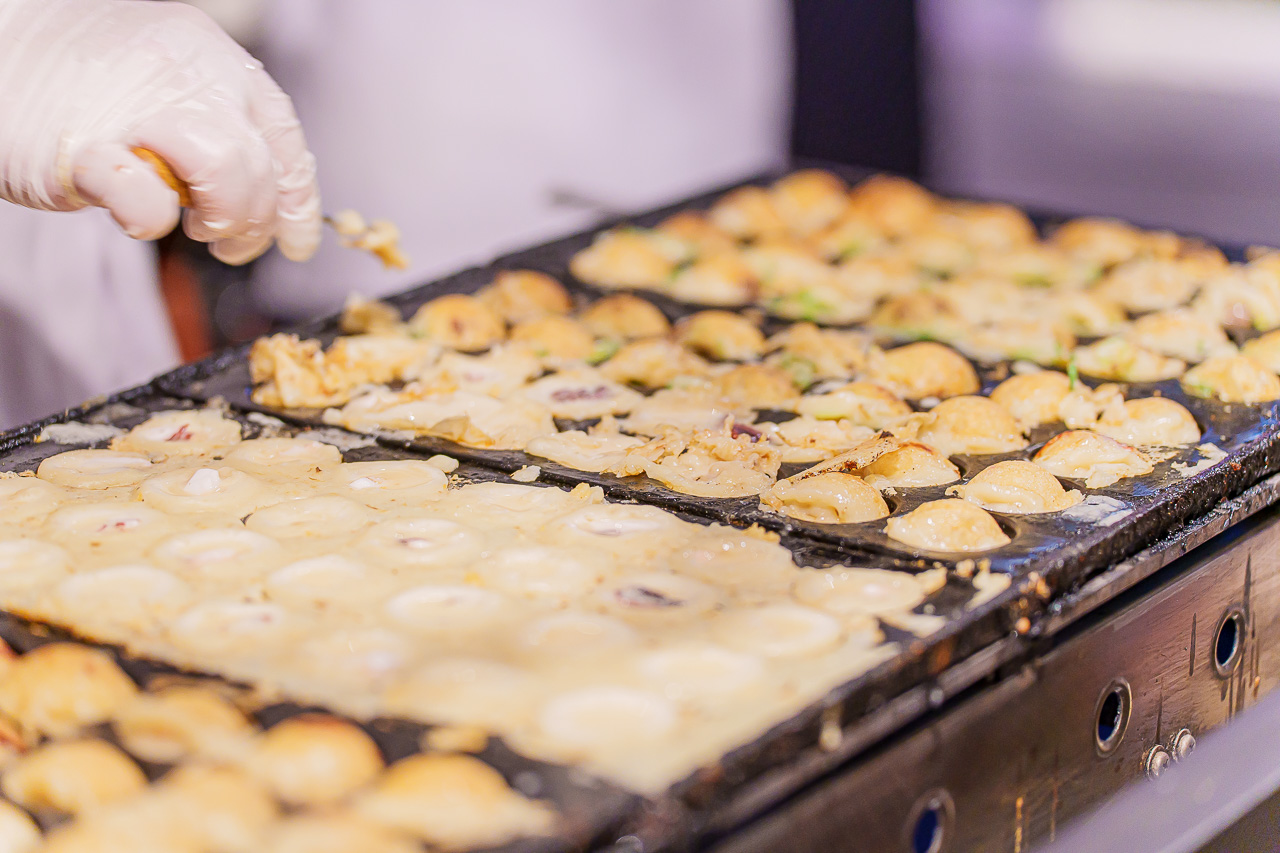
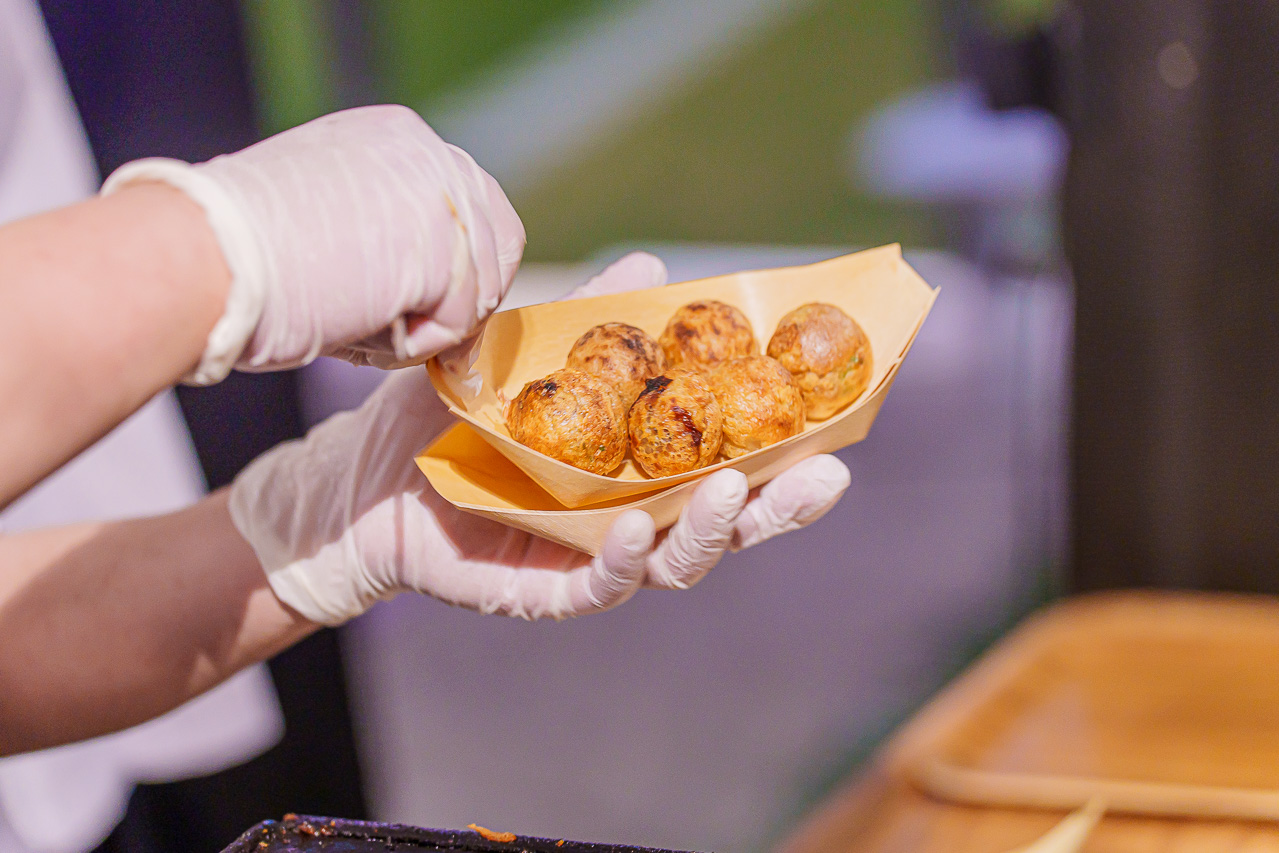
Guests could sample sauce-free takoyaki from Aizuya, described as the dish’s original shop.
Eating that famous takoyaki comfortably at the hotel without a queue feels remarkable.
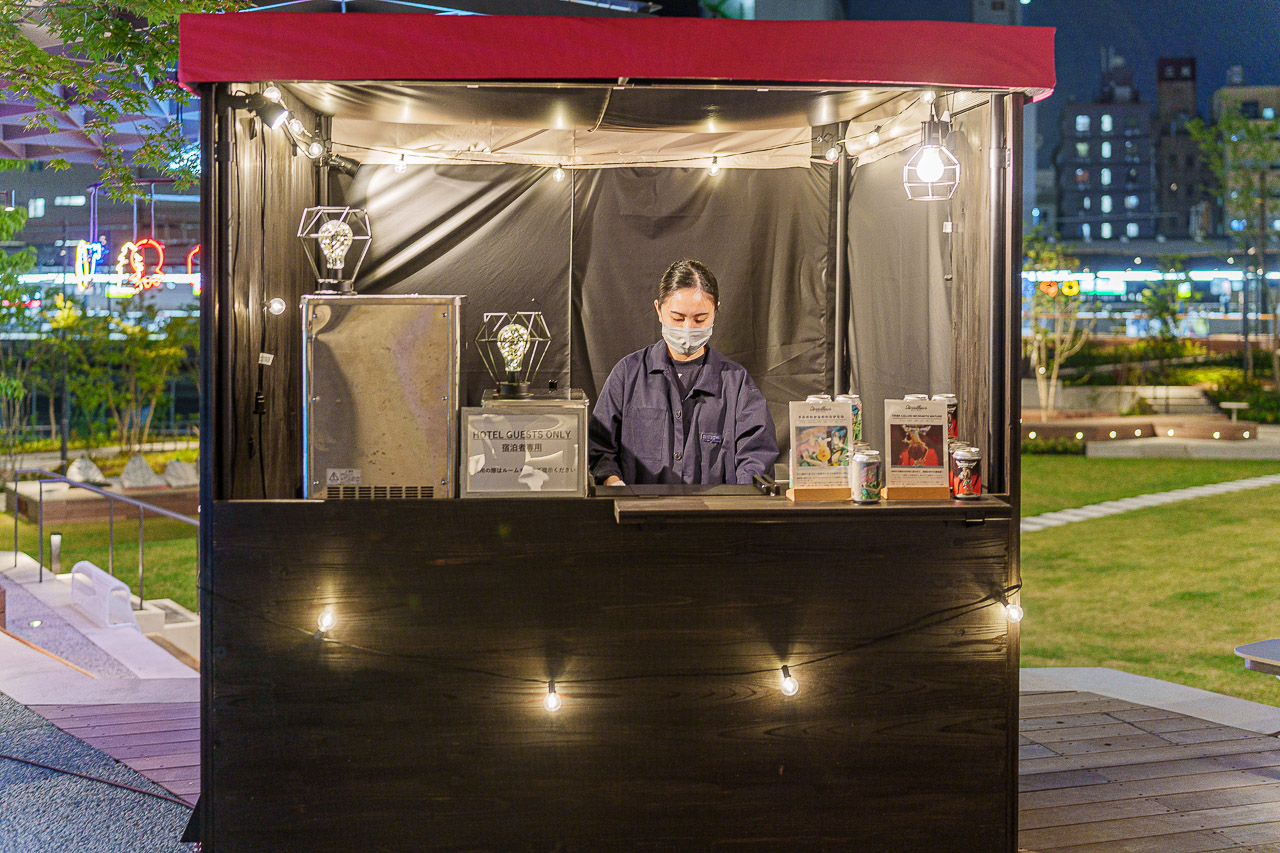
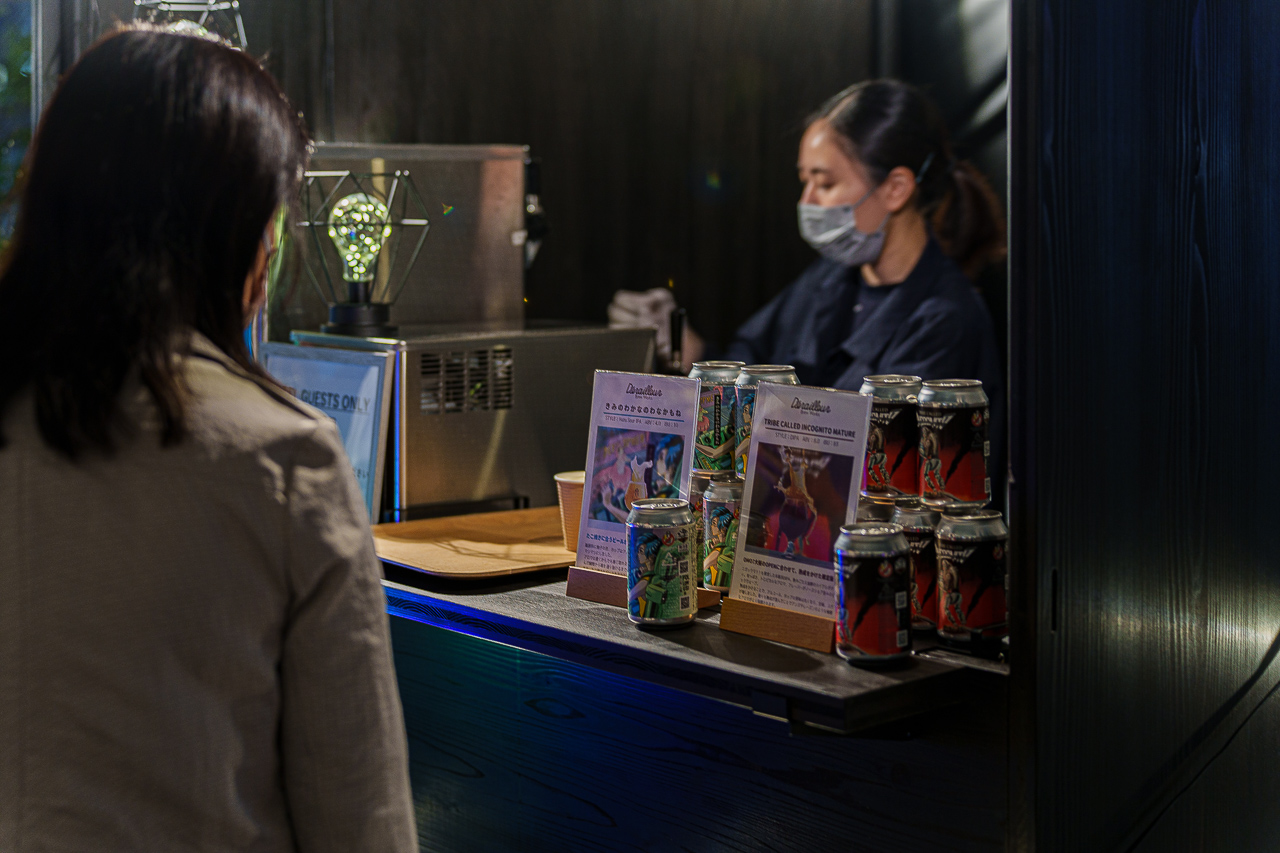
For me, takoyaki calls for beer.
Fruit-aromatic craft beer was also complimentary under the event’s arrangements.
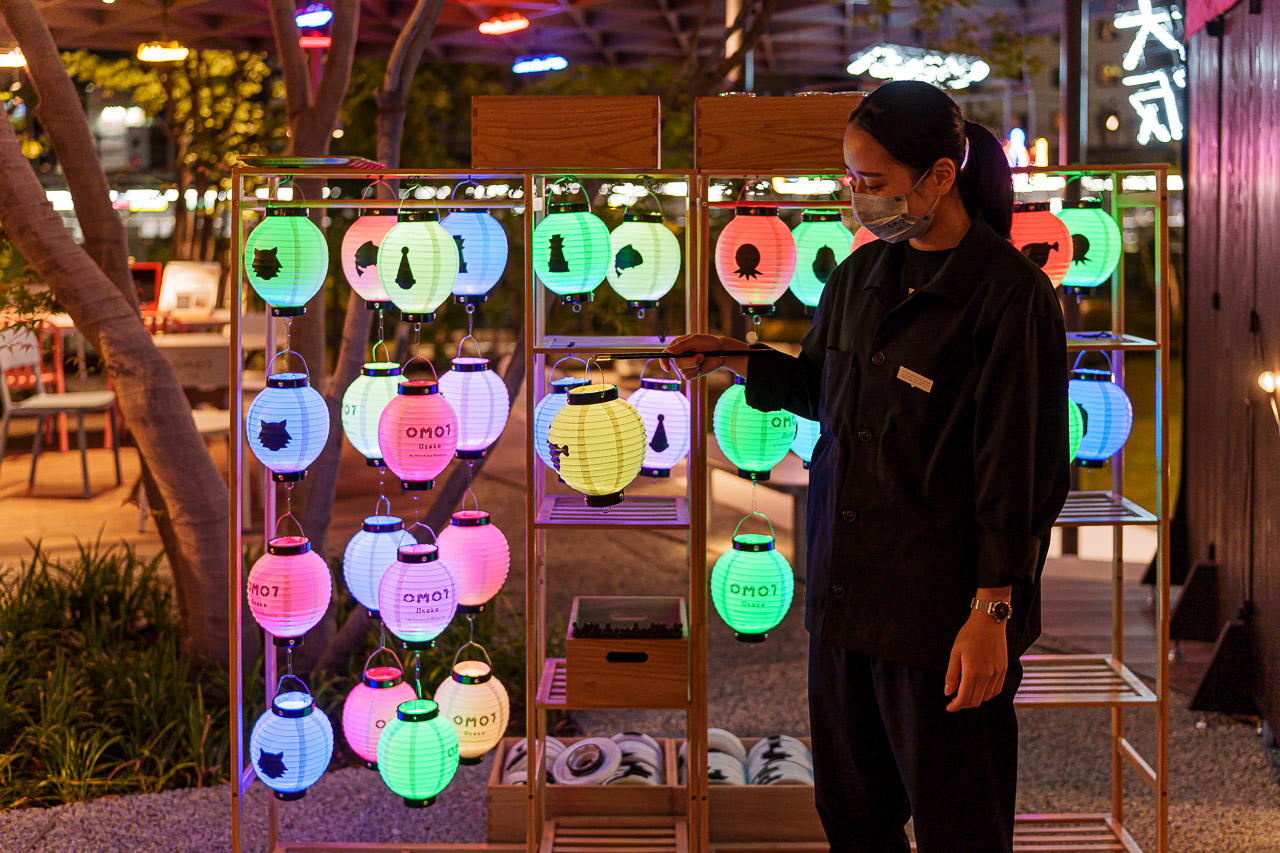
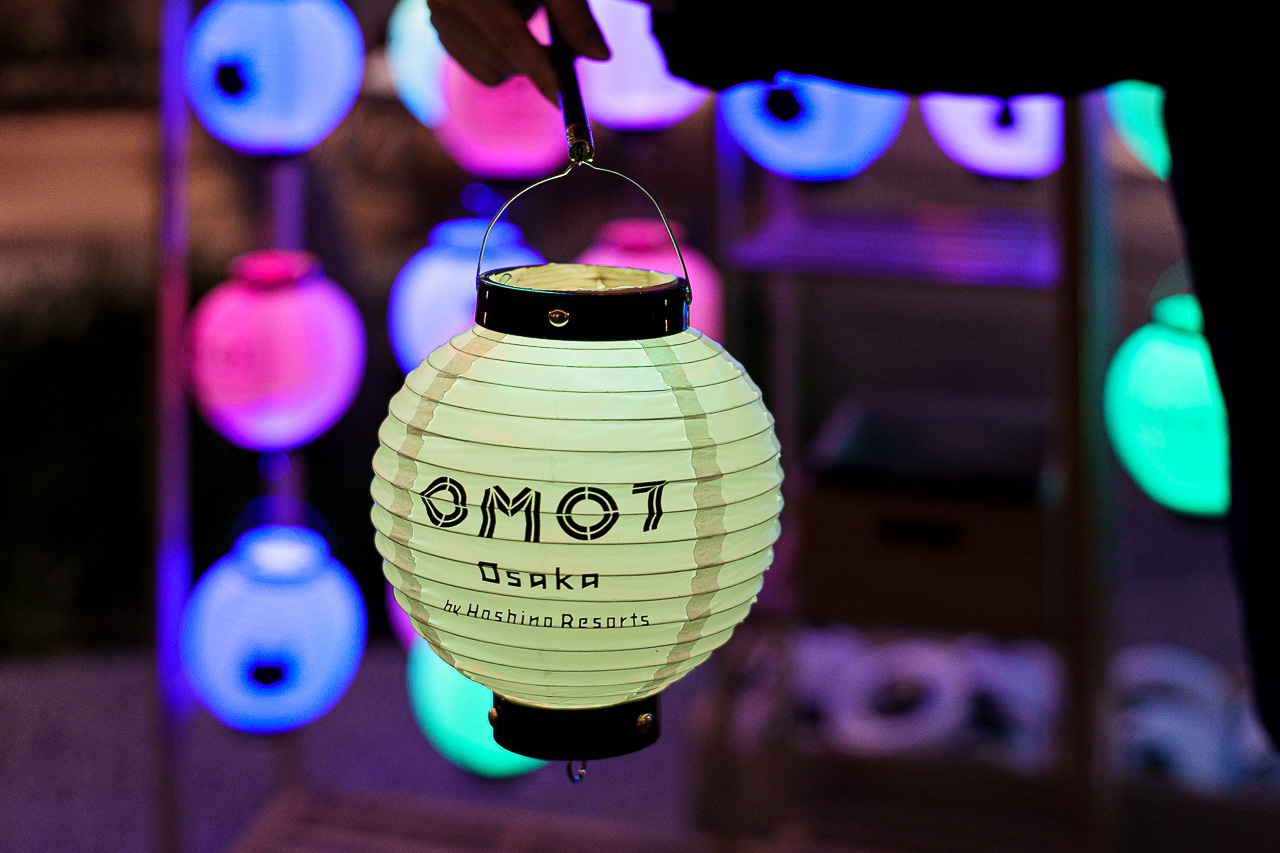
We take a glowing Pika Pika lantern and settle into a seat.
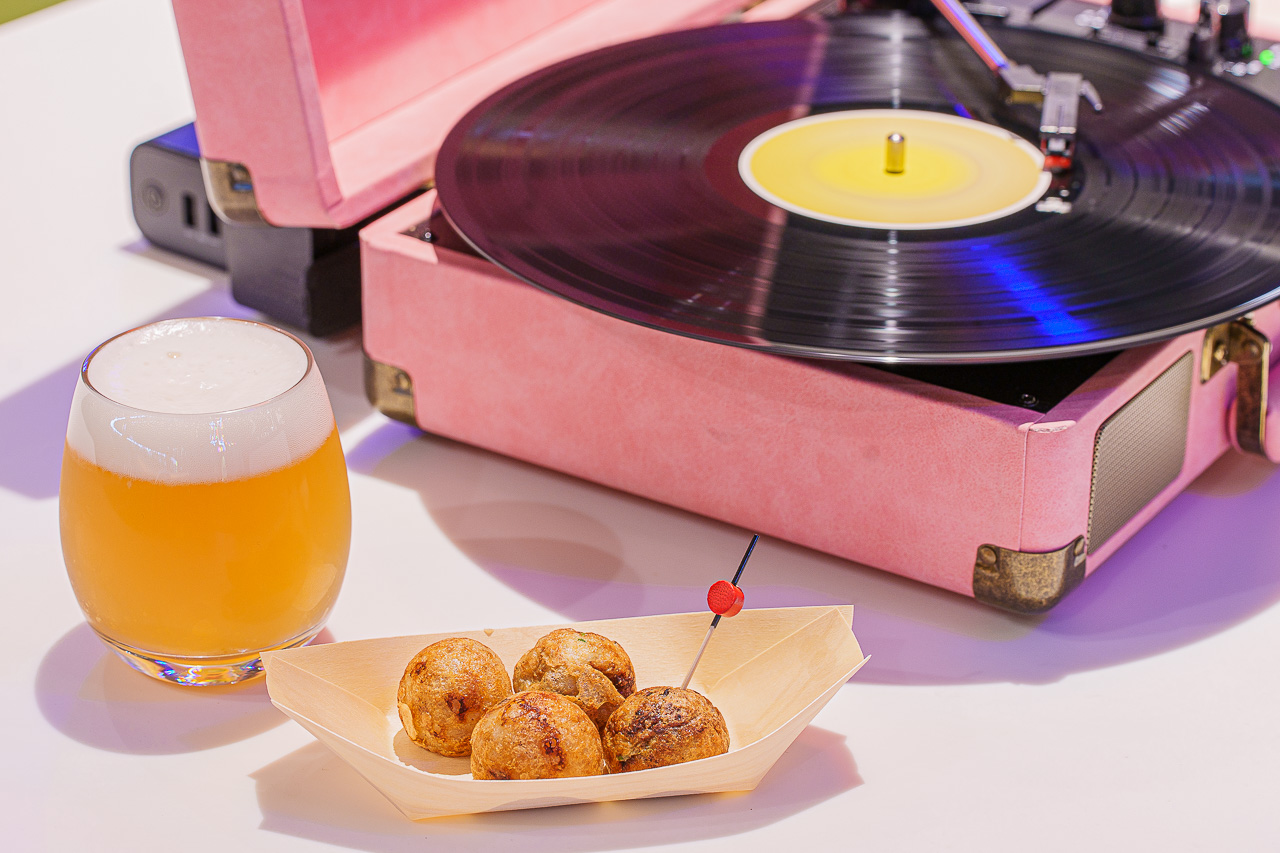
A vinyl record plays at a nearby table, adding to the Osaka-night atmosphere.

Miyagreen Looks Even Better at Night

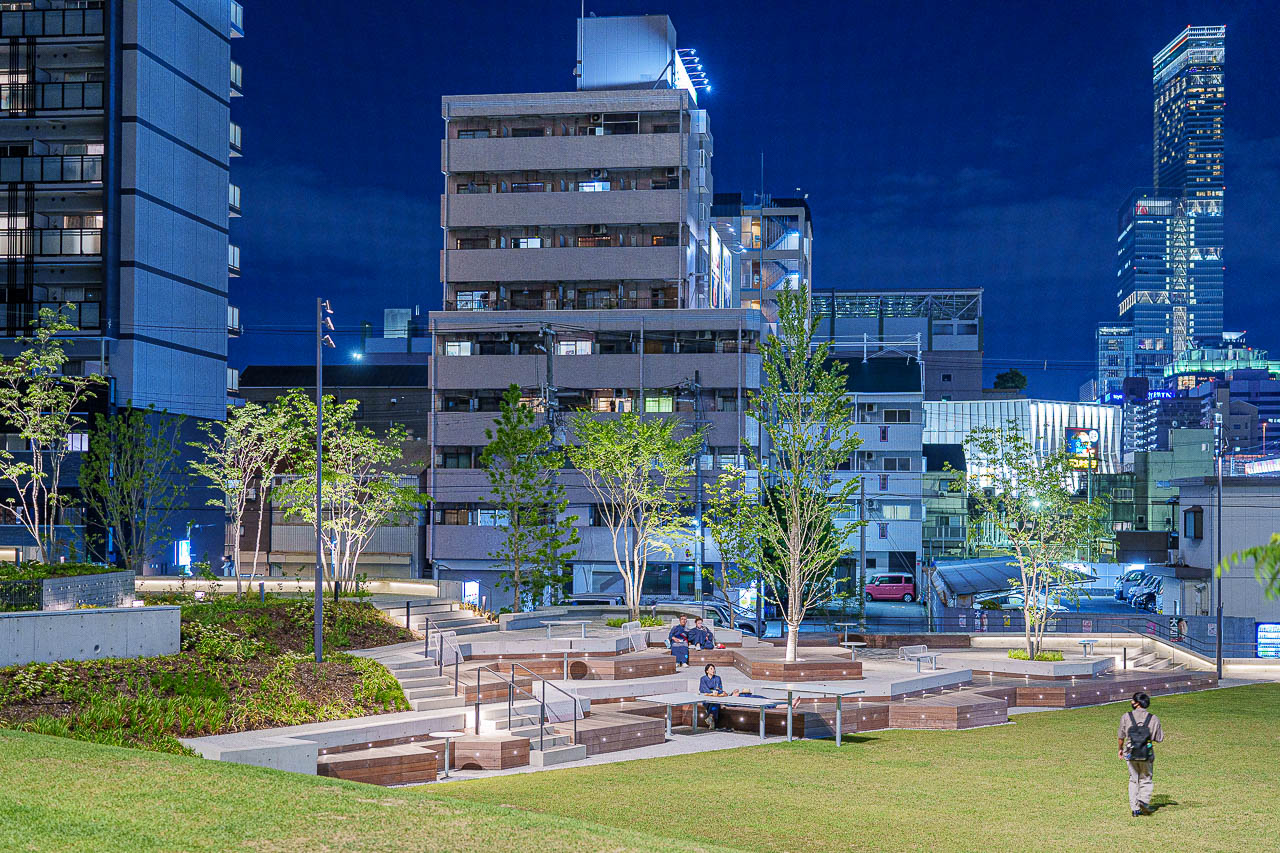
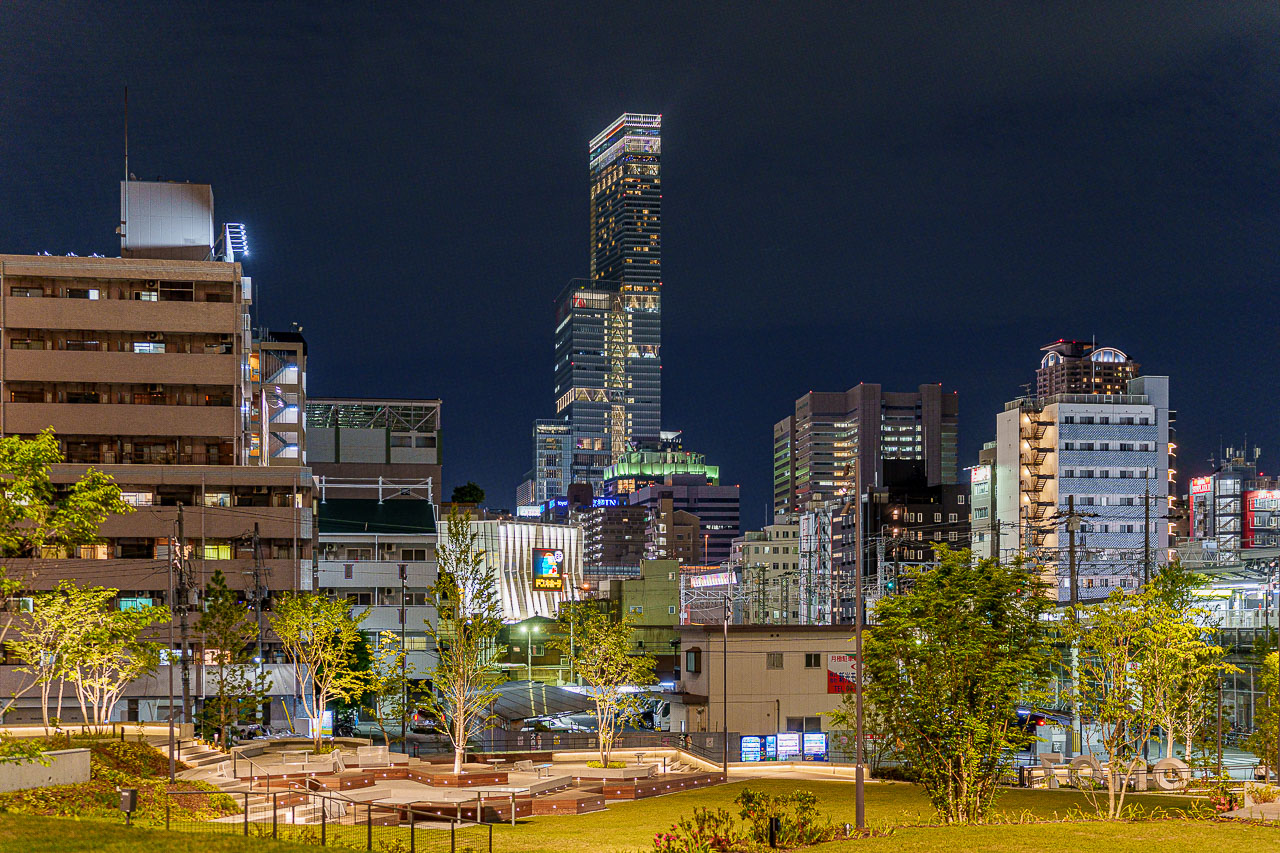
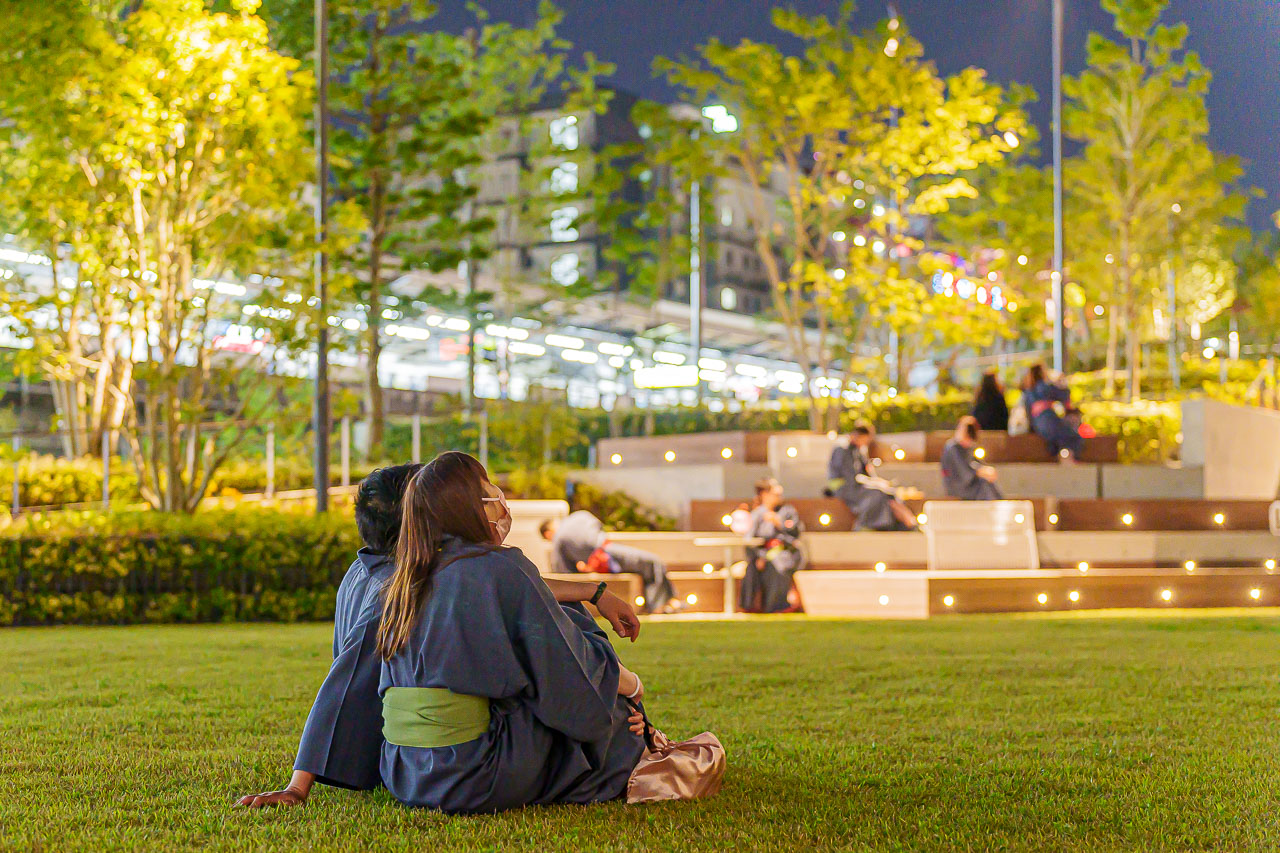
People begin finding places on the lawn for the 9:50 p.m. fireworks display.
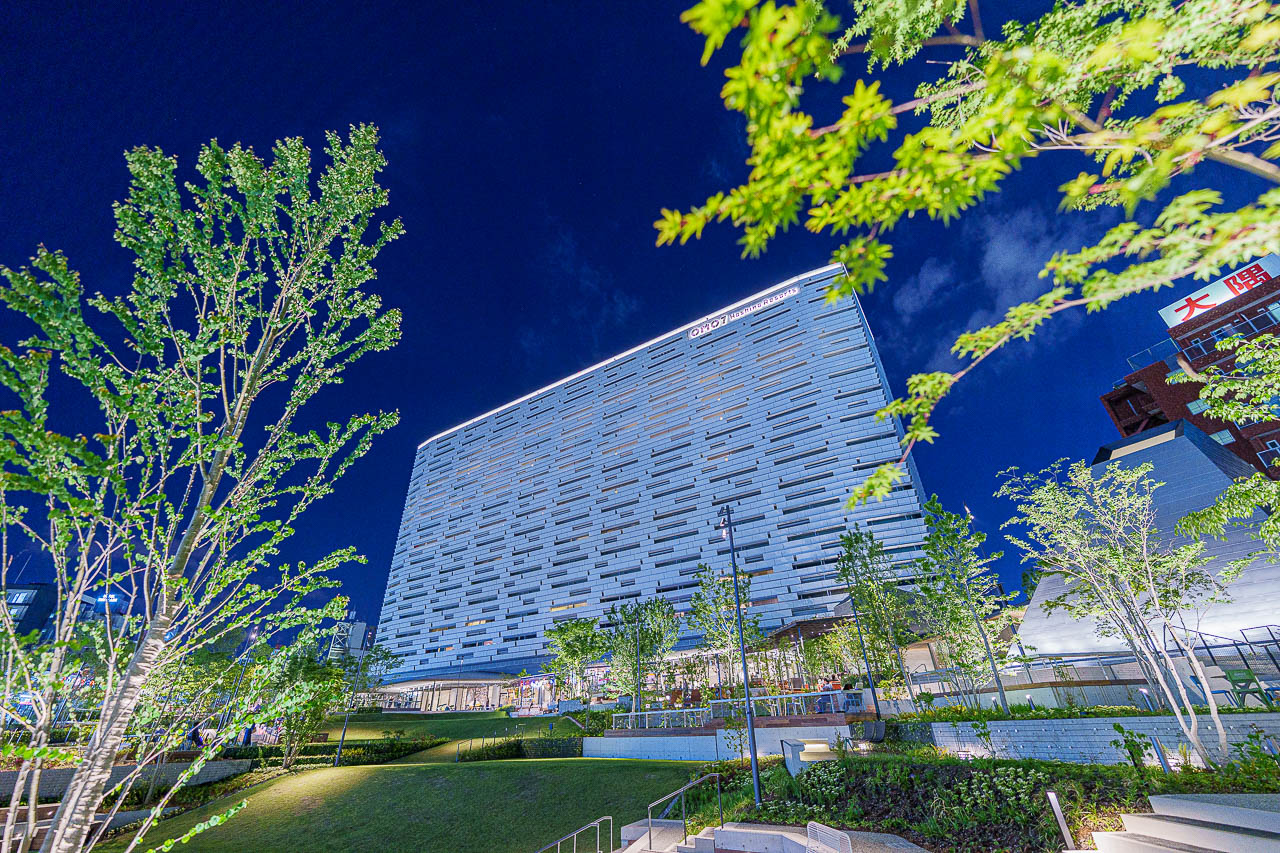
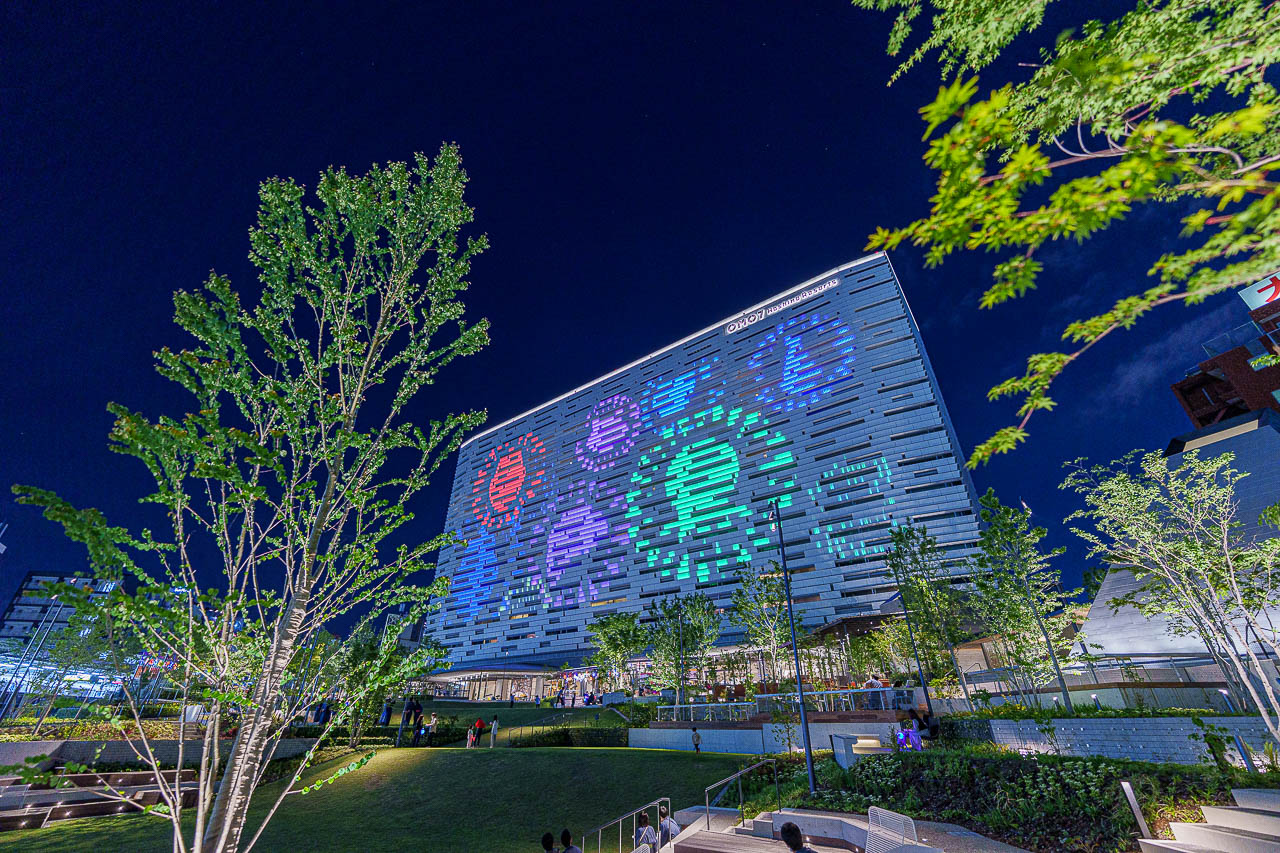
Octopus, tiger and pufferfish motifs associated with Osaka appear one by one in the display.
OMO7 offered plenty to do simply by staying at the hotel.
Our busy time with the Rangers felt almost like a trip tailored for me, making the stay joyful and memorable.
OMO7 Osaka by Hoshino Resorts
https://www.hoshinoresorts.com/kr/resortsandhotels/omobeb/omo/7osaka.html
Address: 3-16-30 Ebisunishi, Naniwa Ward, Osaka
Phone: 0570-073-099
Source access estimate: five minutes on foot from JR Shin-Imamiya Station