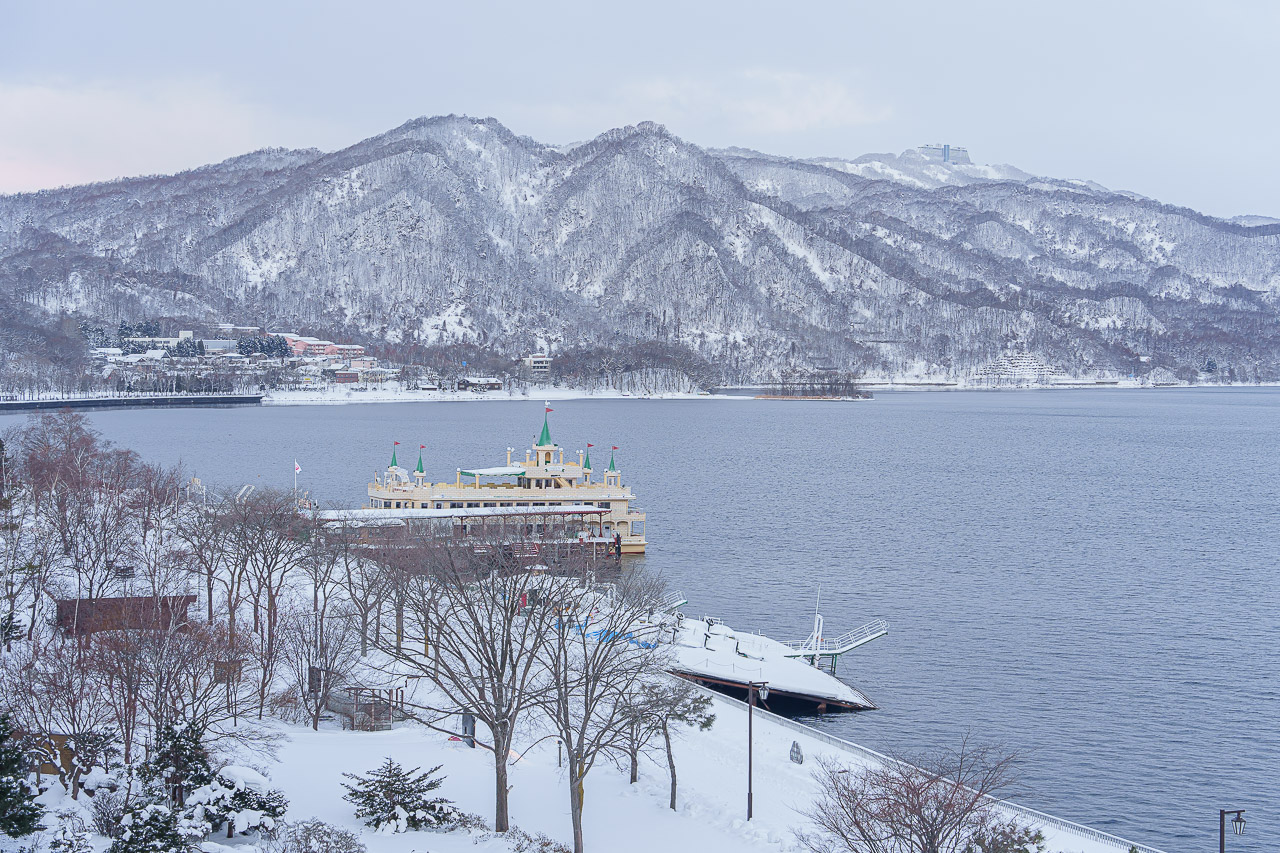
We came to Lake Toya, one of Hokkaido’s well-known hot-spring destinations.
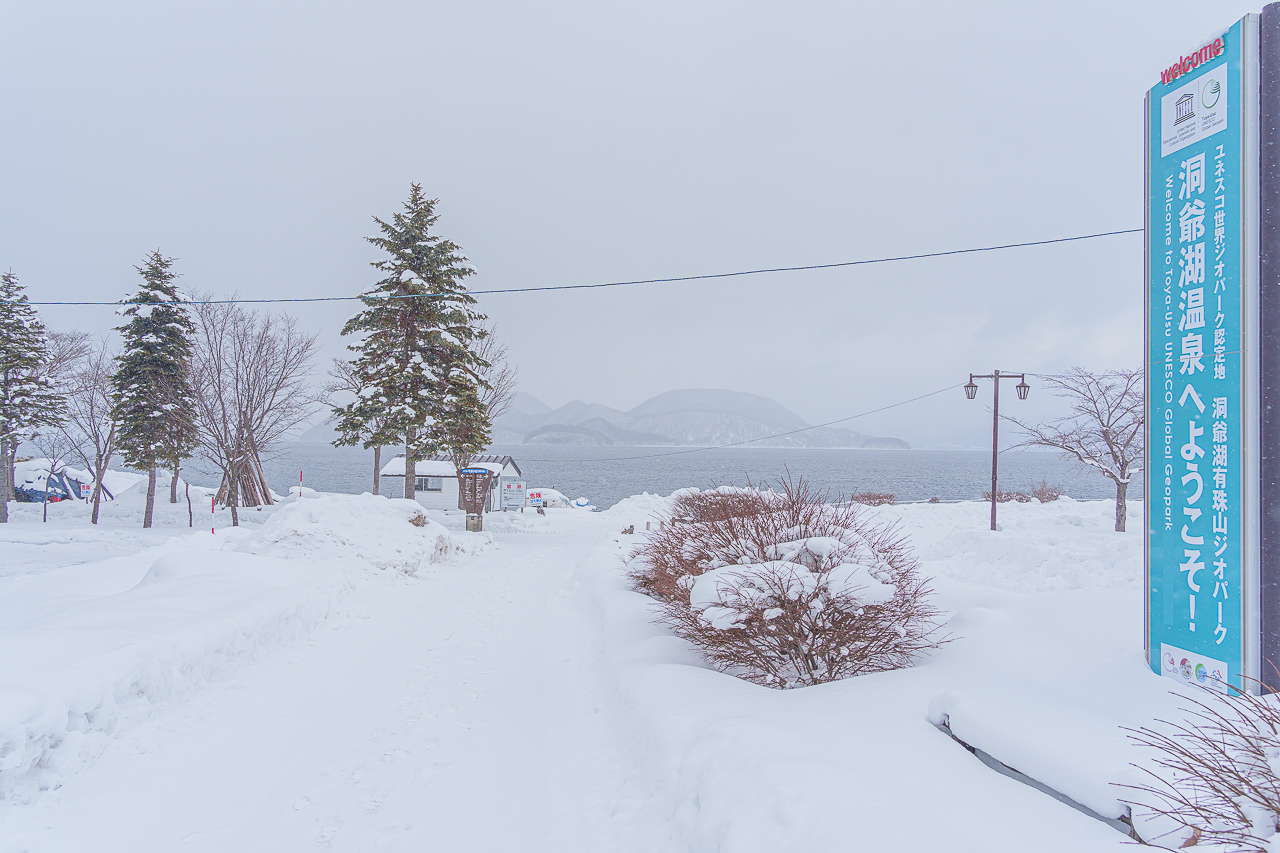
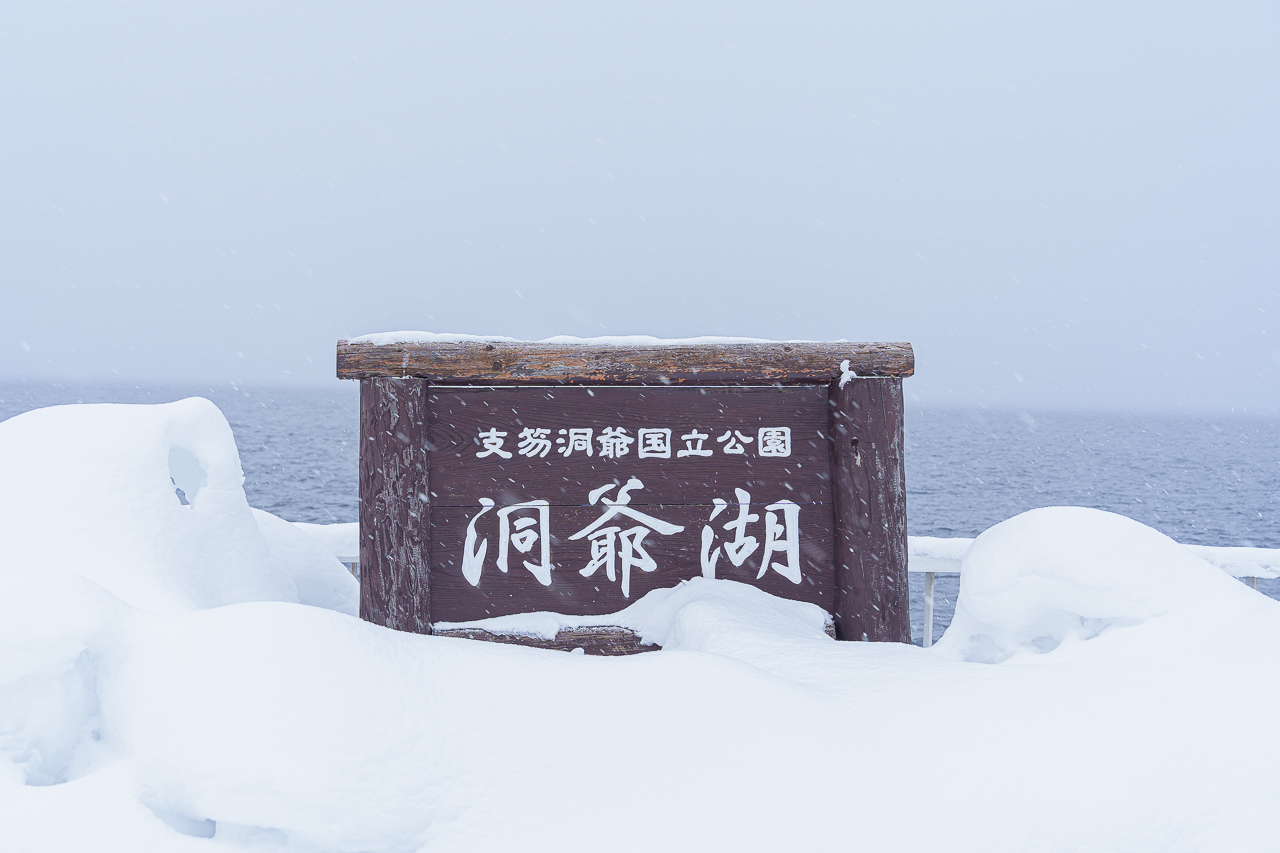
The lake lies in the Toya caldera in southwestern Hokkaido.
The source ranks it as Japan’s ninth-largest lake by area and third-largest caldera lake after Hokkaido’s Lake Kussharo and Lake Shikotsu.
Almost circular, it measures roughly 11 km east–west and 9 km north–south. The surroundings form part of Shikotsu-Toya National Park, and the Toya-Usu area is described as both a Japanese and global geopark.
It has also appeared in selections of Japan’s 100 scenic views, 100 new travel destinations, and 500 beautiful streets and paths to walk.
The 34th G8 summit, the Hokkaido Toyako Summit, took place here July 7–9, 2008.
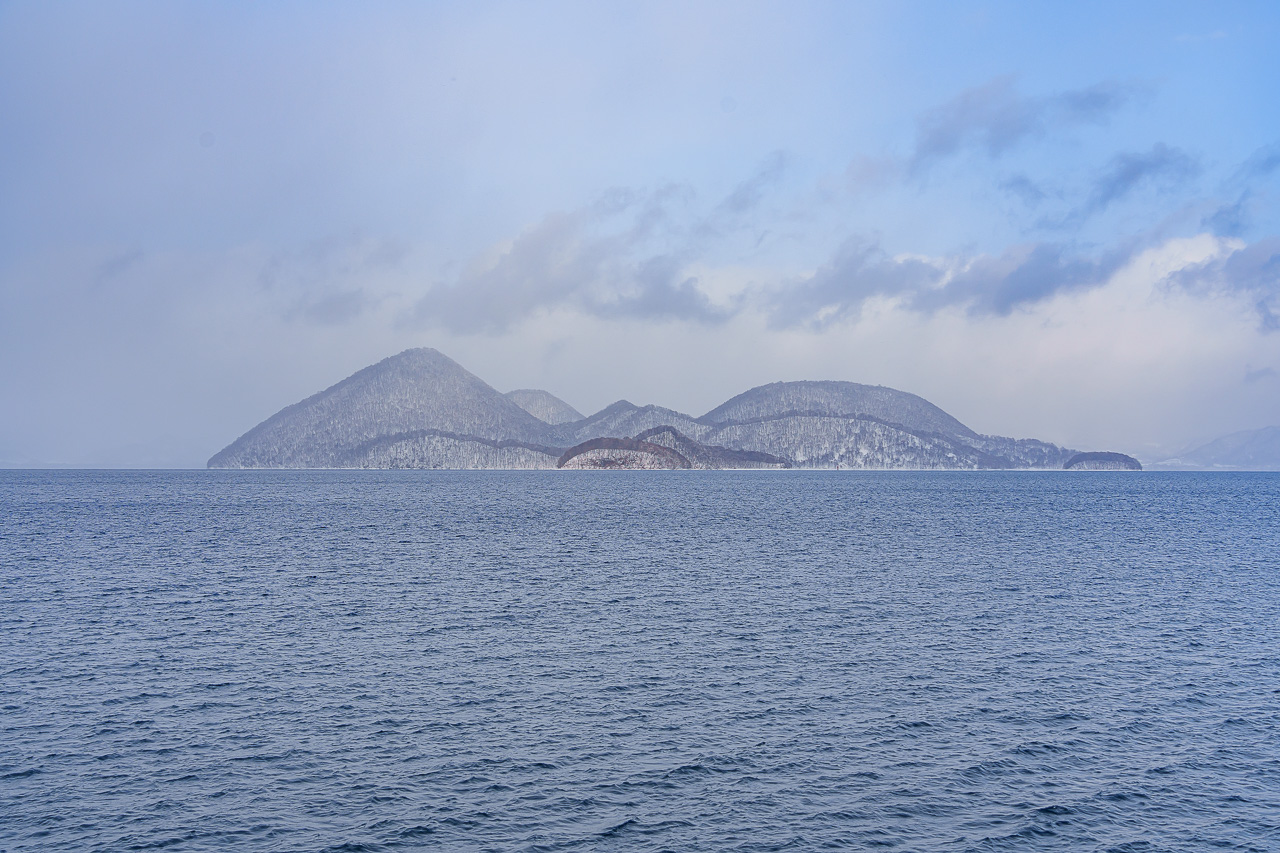
The large island group in the middle is collectively called Nakajima and consists of four islands. The source describes lava domes formed by eruptions about 50,000 years ago, with 11 volcanic bodies identified including those below the water. It says repeated eruptions on the southern shore from around 20,000 years ago created Mount Usu.
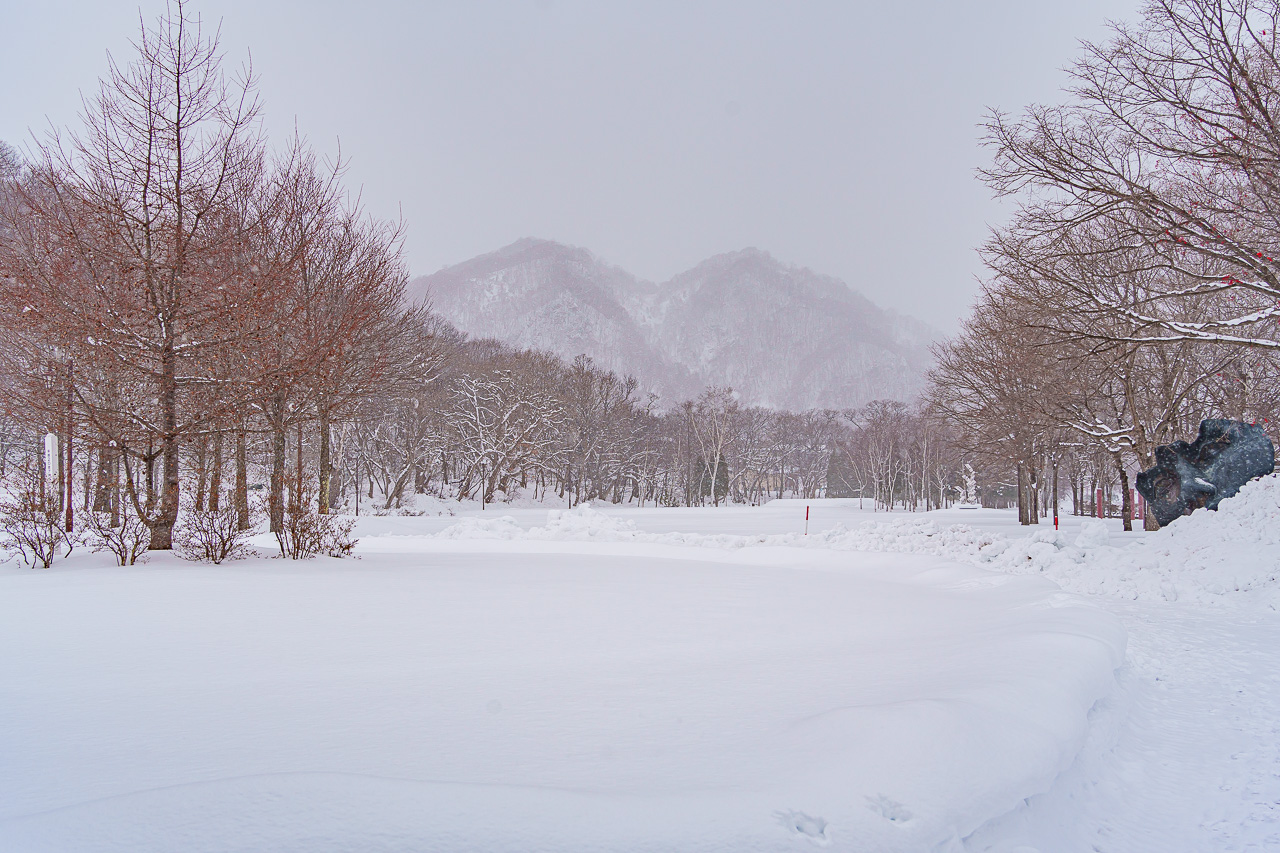
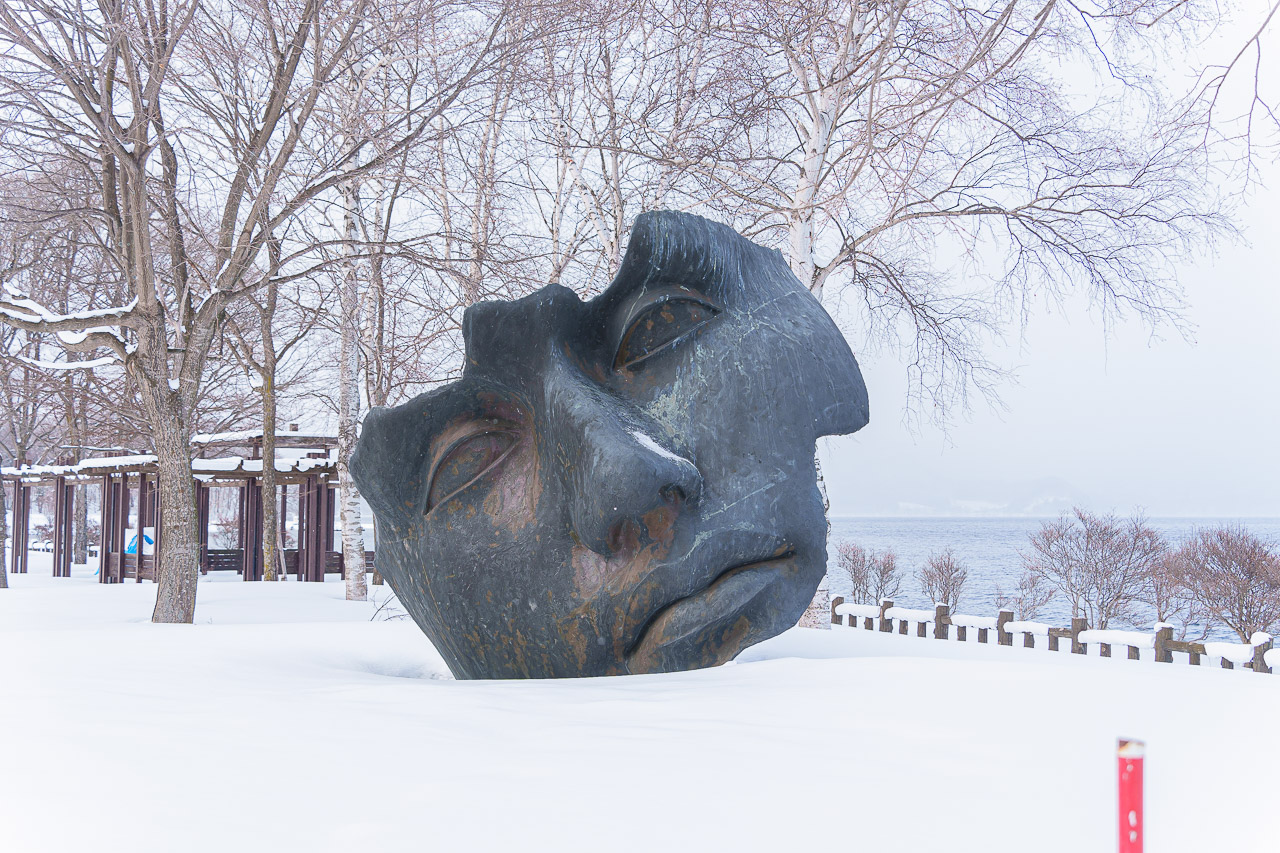
Beside the lake, Mount Usu Eruption Memorial Park had more than 1 km of paths and artworks by several artists, making it pleasant for a walk.
In winter, however, snow concealed the paths and it was easy to step into a deep patch.
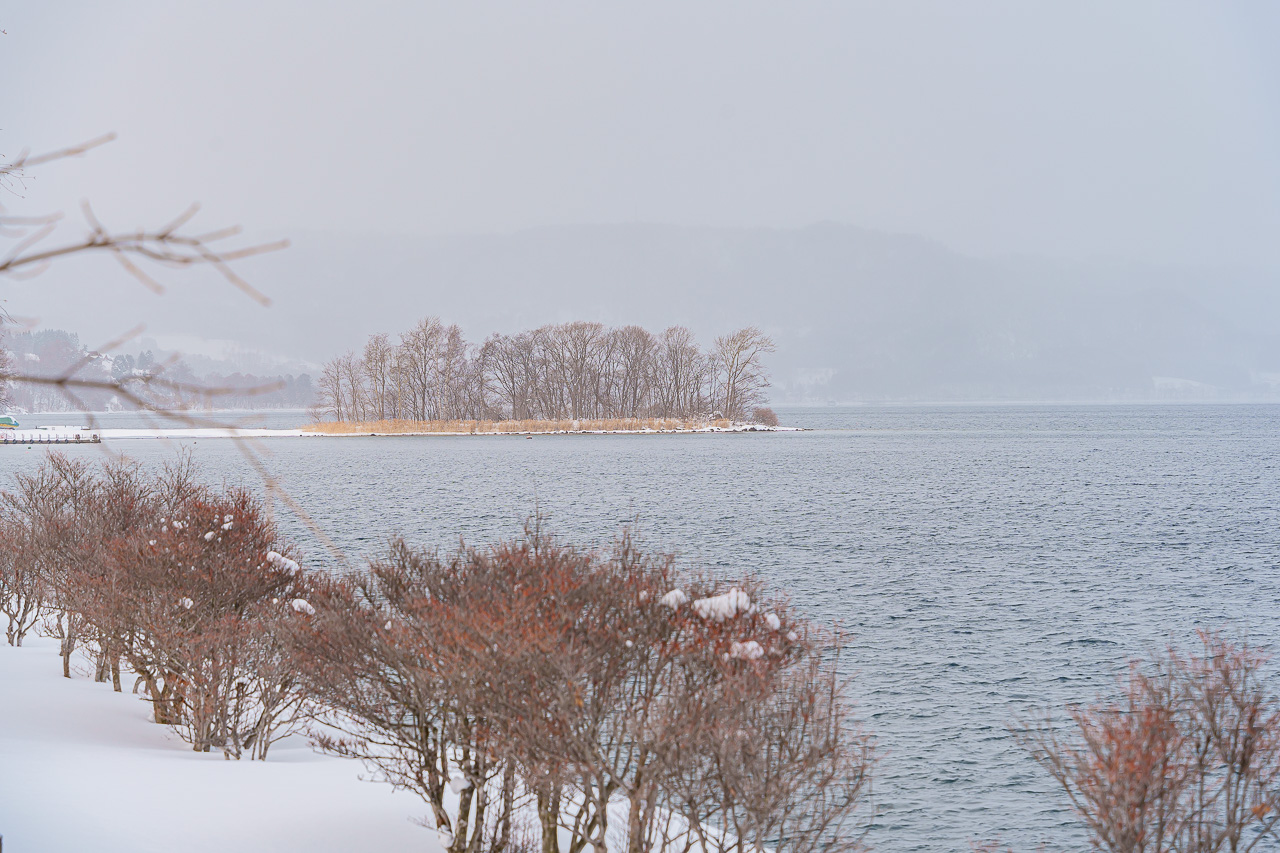
At the park’s end was Chinkojima, an island described as accessible on foot.
Its name resembles Japanese slang for male genitalia, making it an occasional curiosity on television.
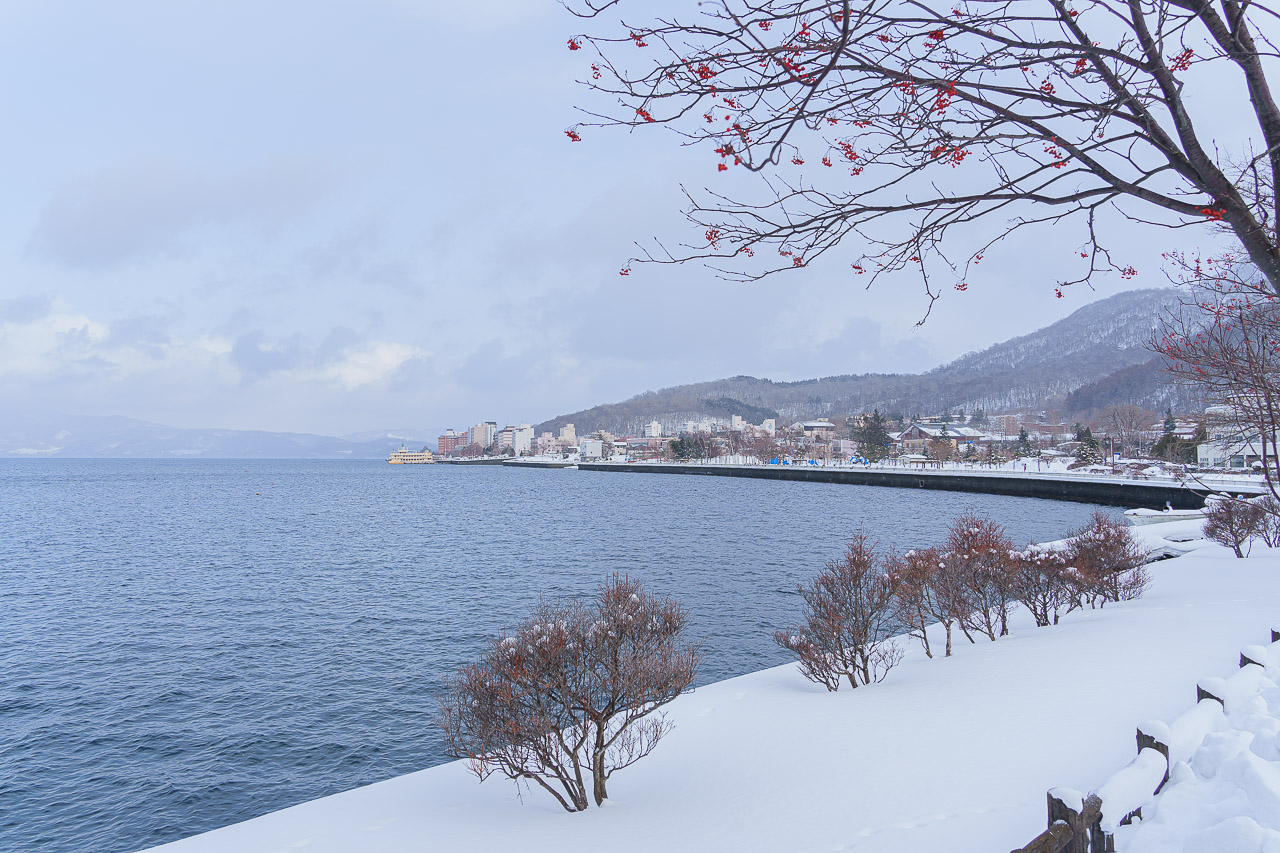
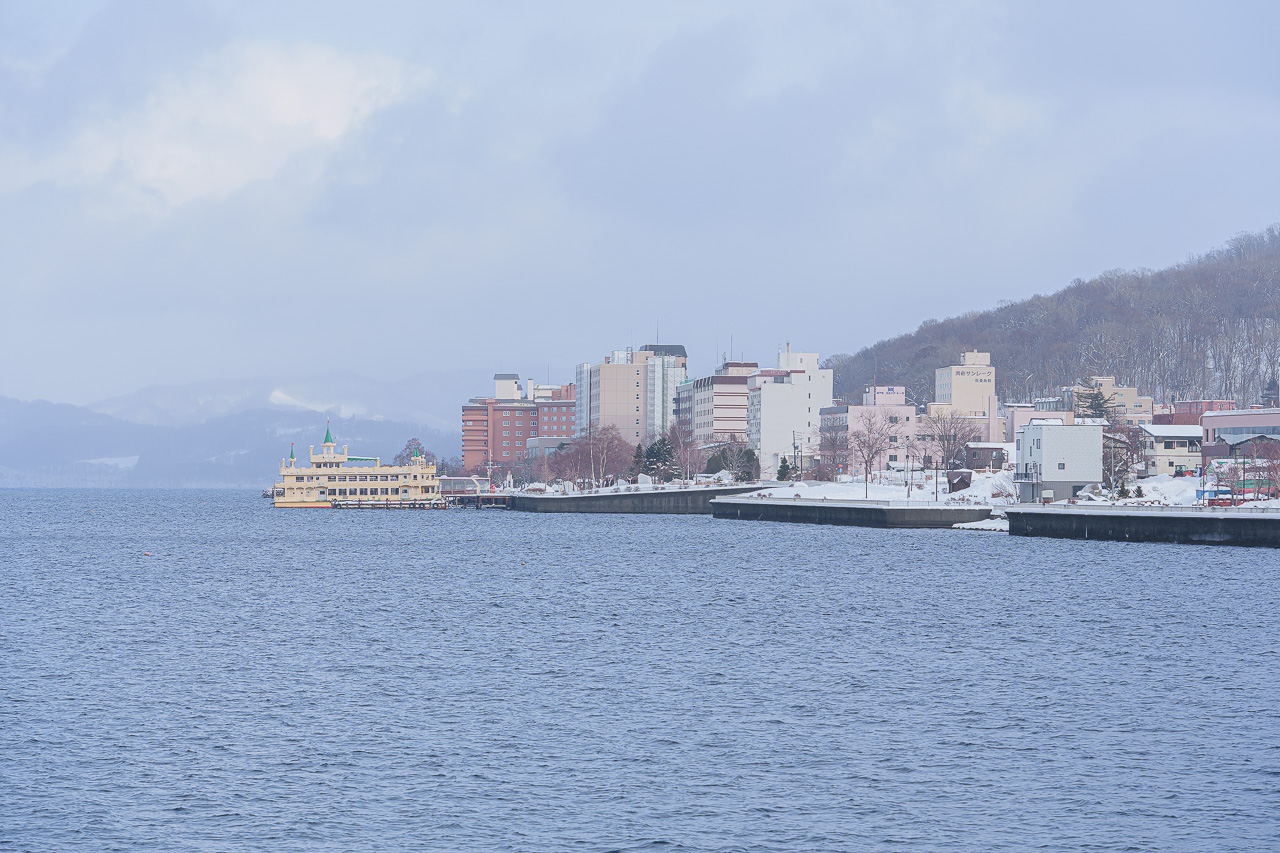
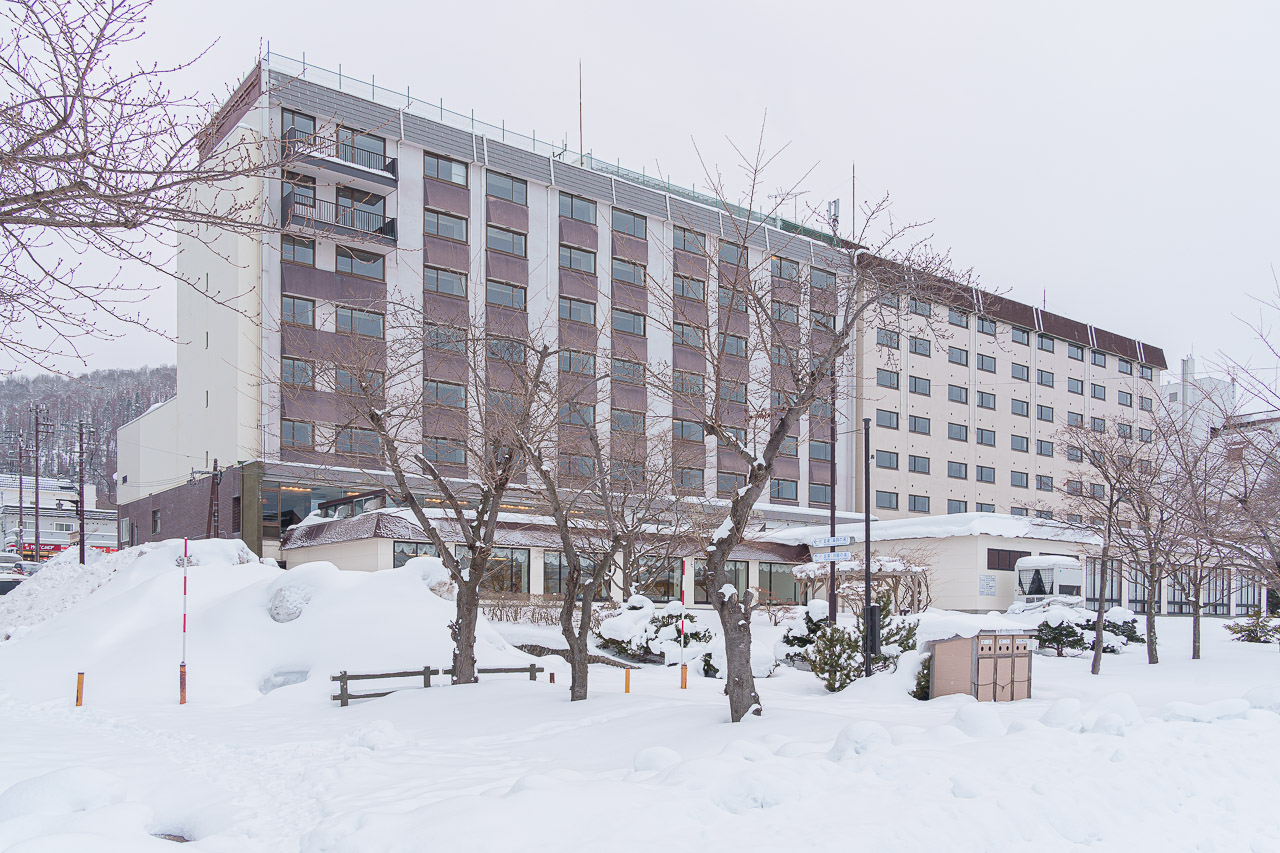
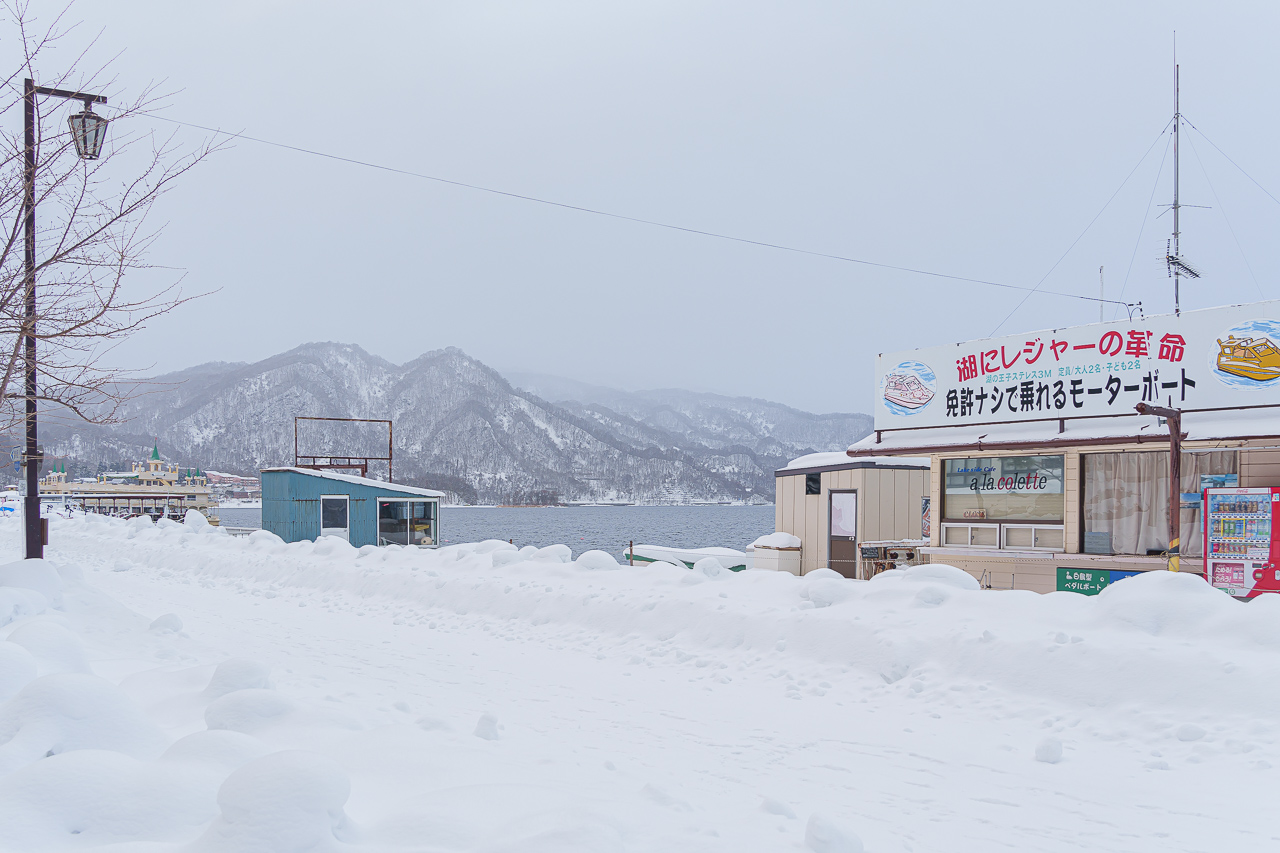
Hot-spring hotels and ryokan lined the lake, reinforcing its appeal as a resort.
The castle-shaped sightseeing boat Espoir could cruise to Nakajima in the middle of the lake.
The source says people once lived on Nakajima, but that it was uninhabited at the time of writing. A visit by boat sounded mysterious, with forest trekking on landing among the lake’s activities.
Unfortunately, heavy snow had suspended the service on our visit.
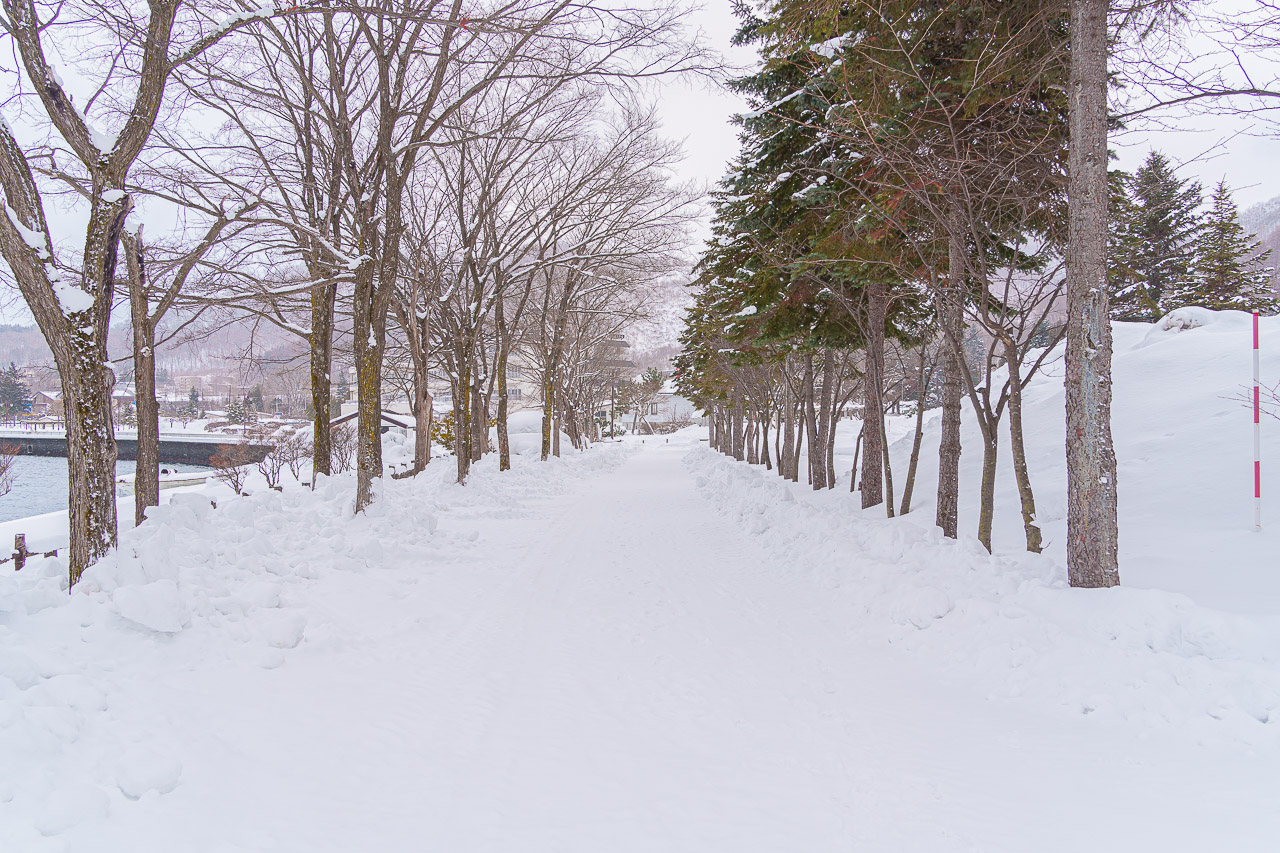
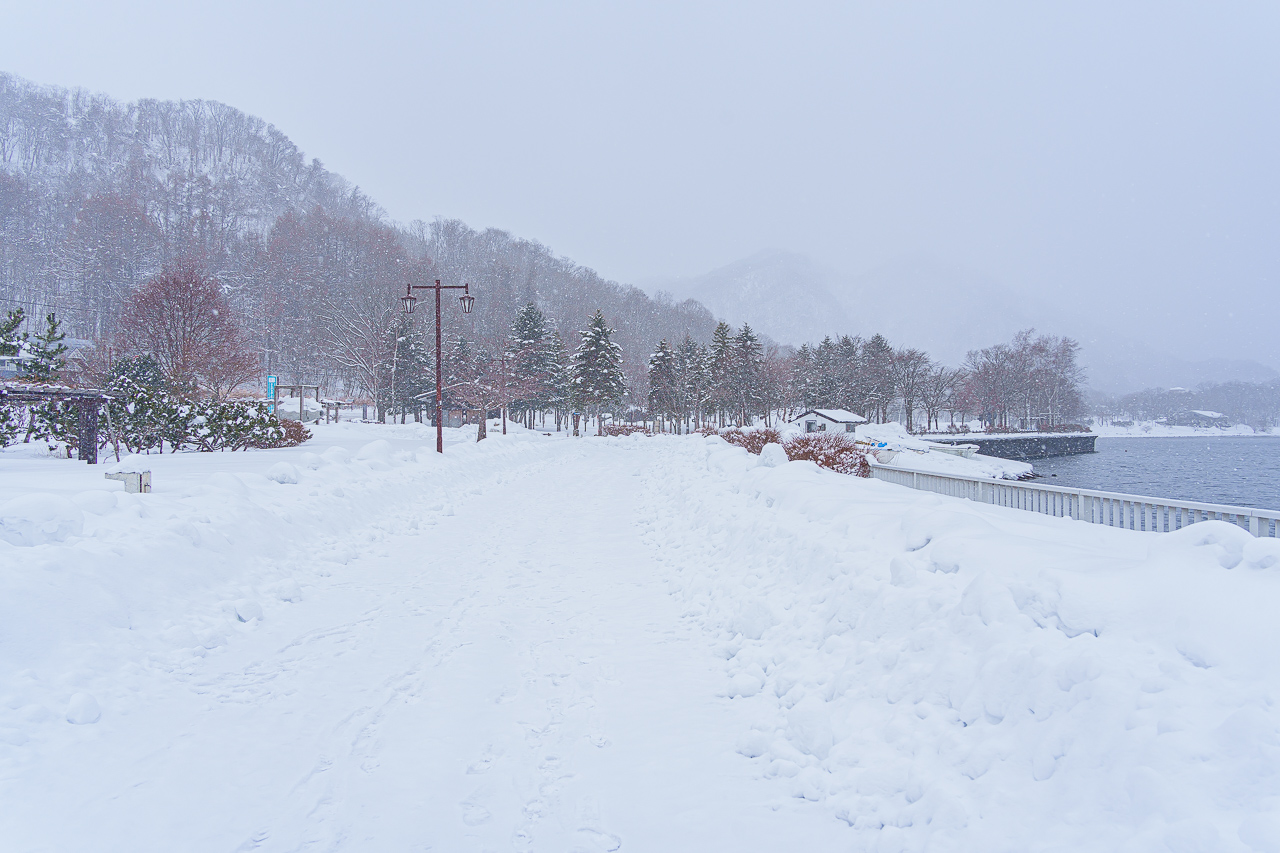
Walking routes seemed to continue endlessly around the shore.
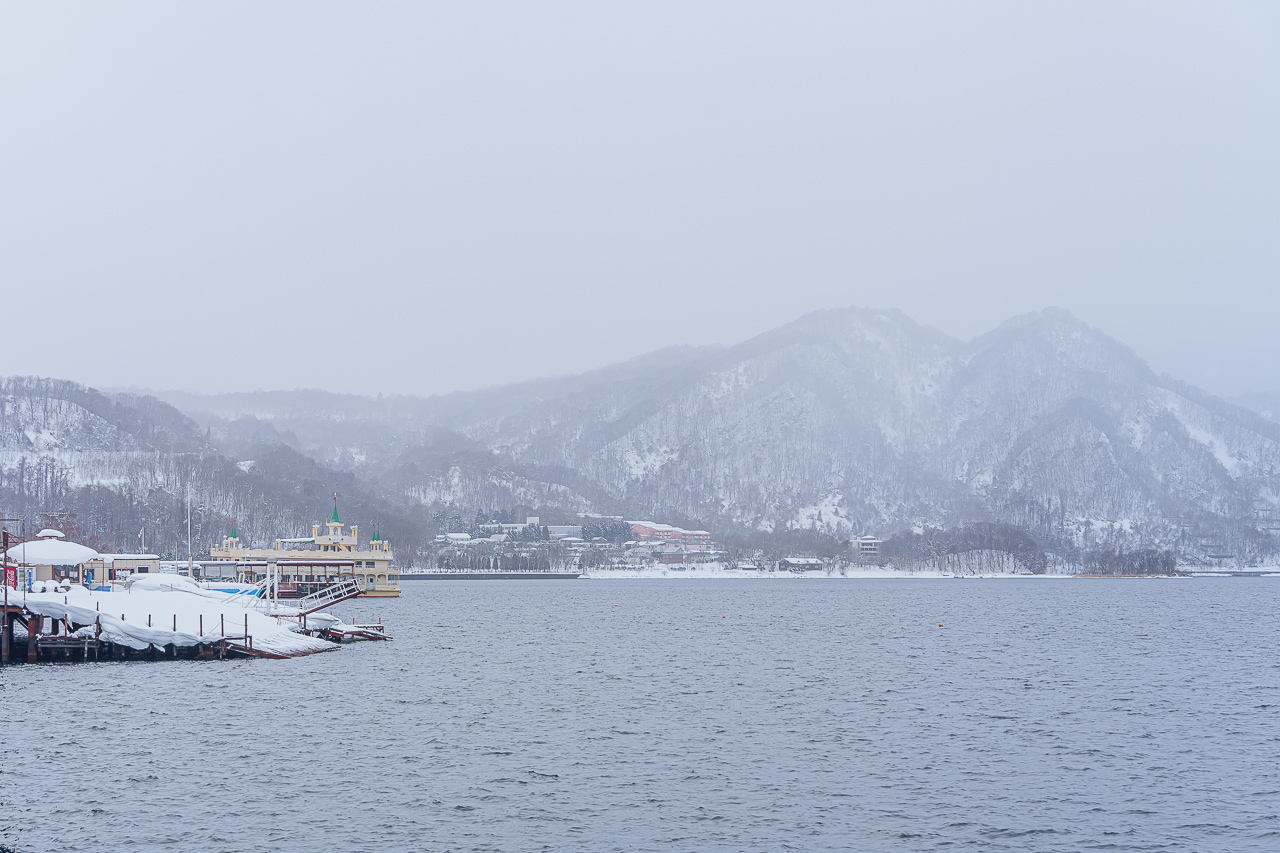
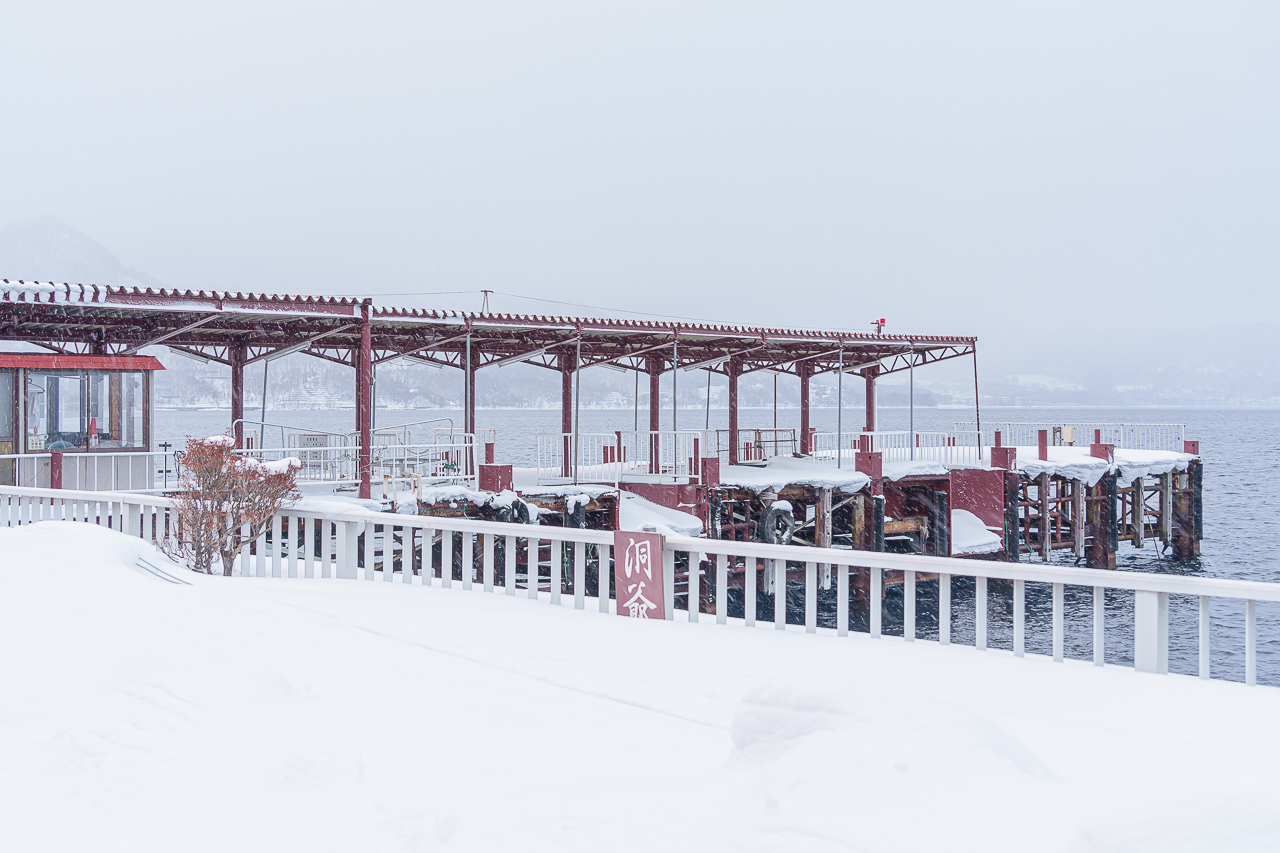
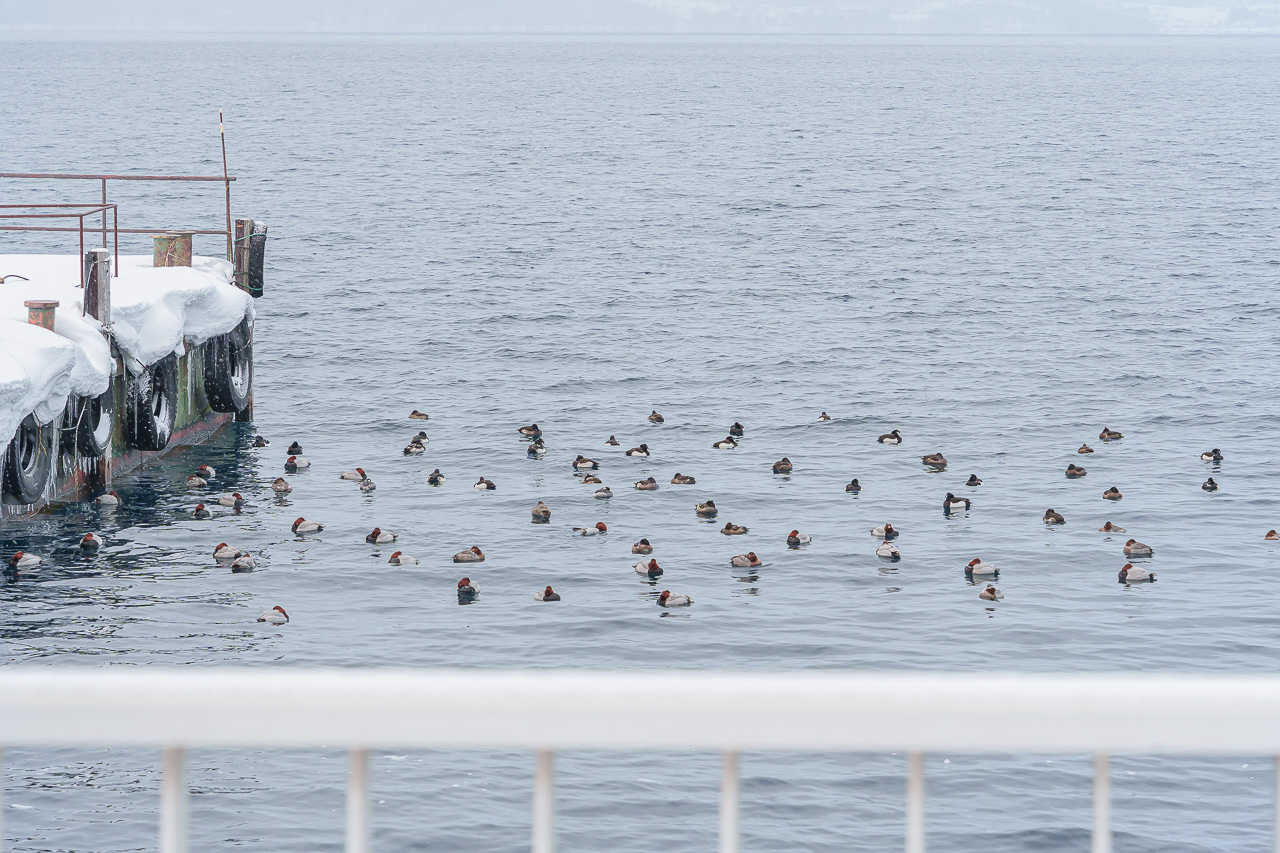
Mallards gathered at the landing, sheltering through winter.
I wondered why they congregated here when it was hardly warm.
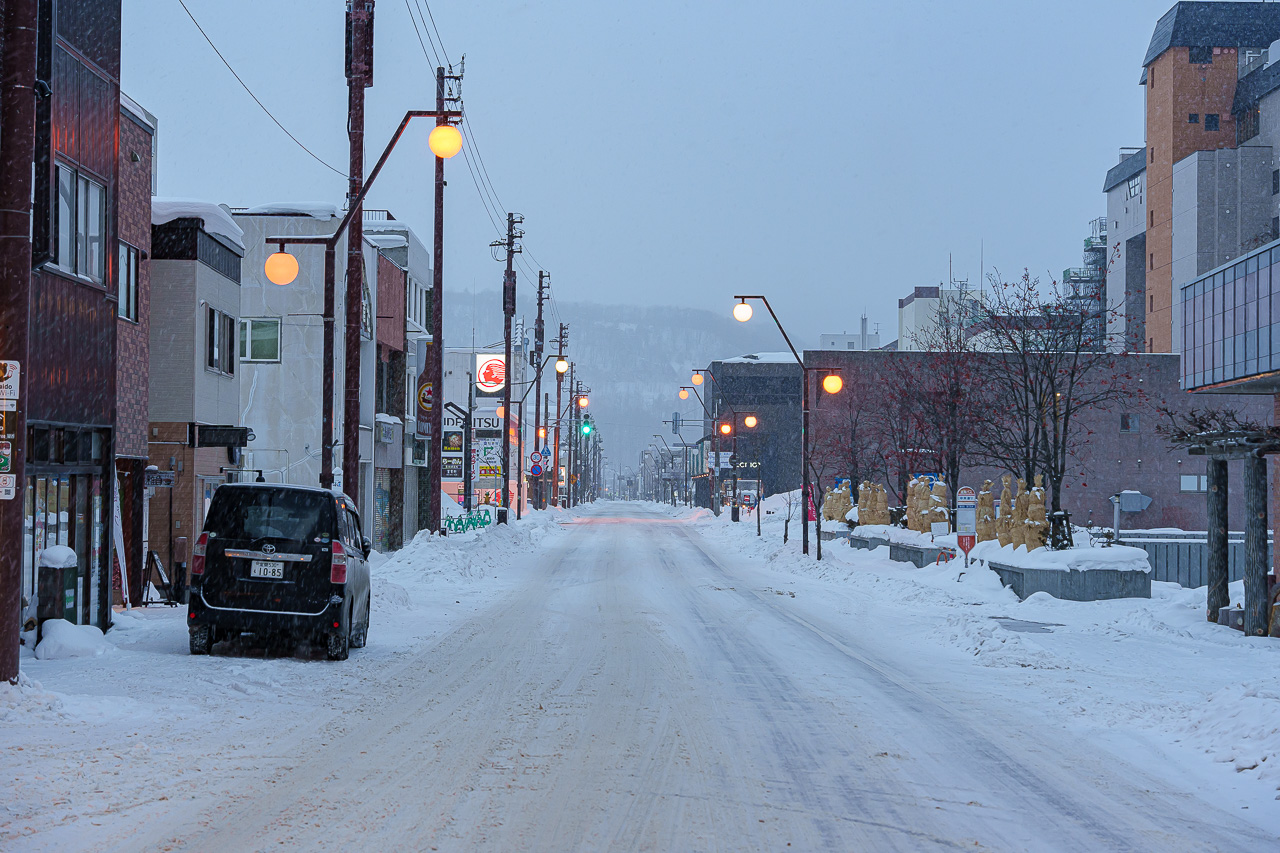
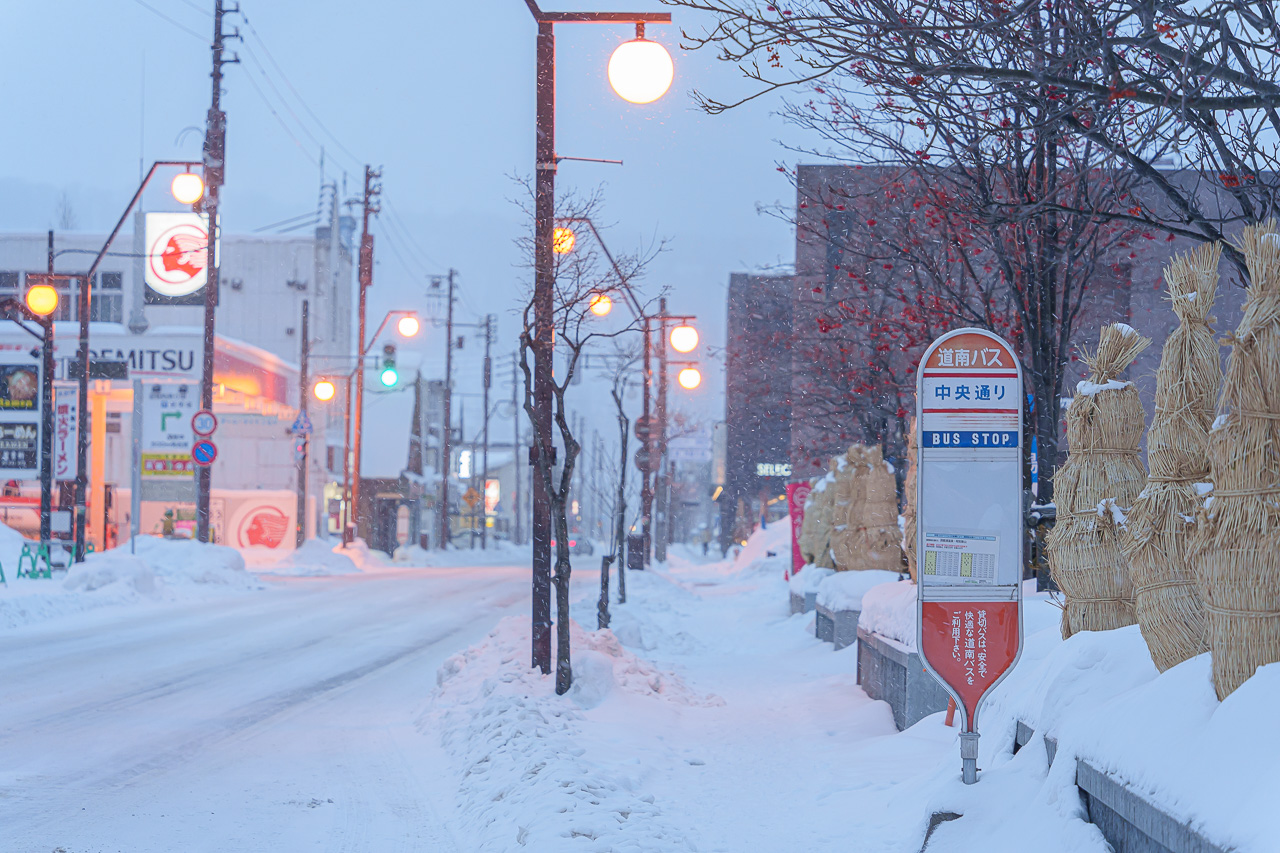
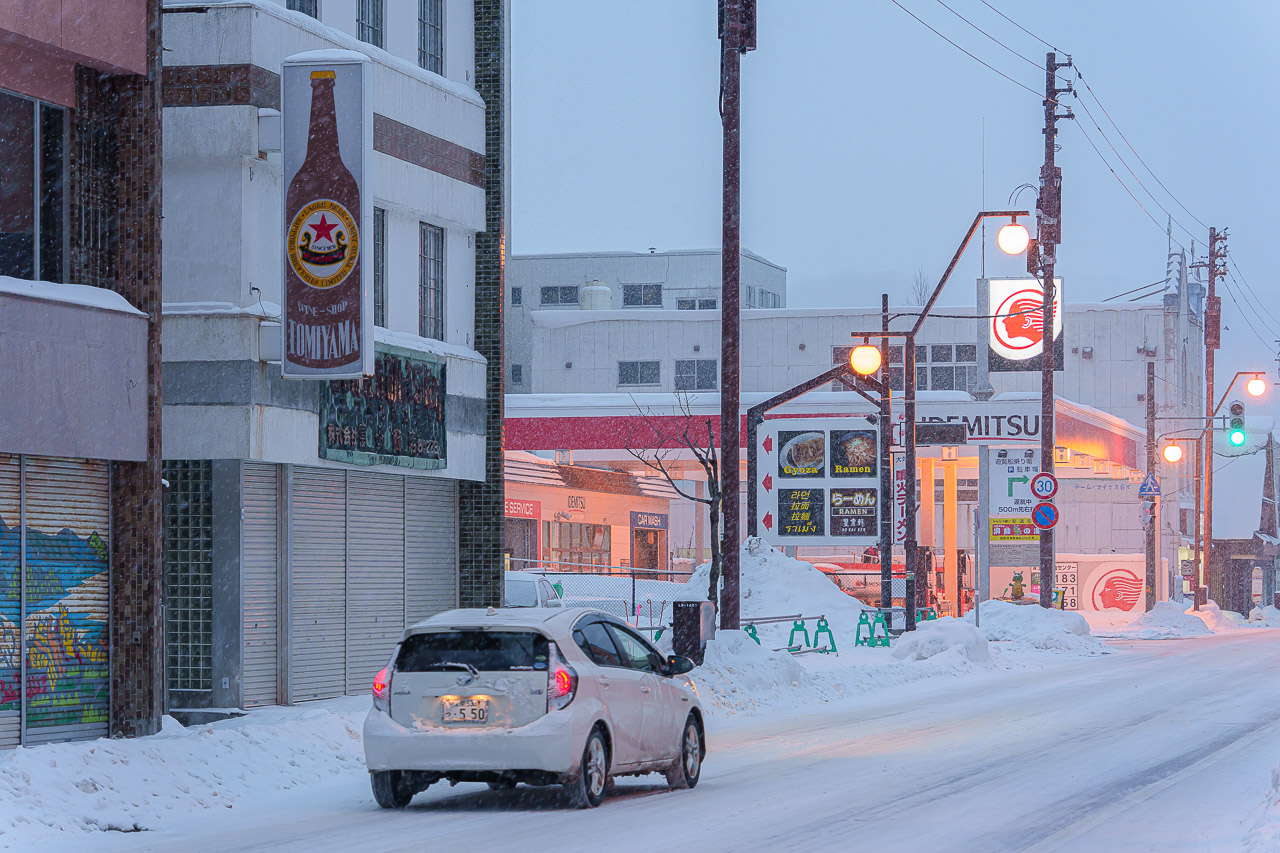
As the town darkened, lights began coming on one by one.
It was still the pandemic period, and the lack of the usual bustle felt sad.
When would normal life return?
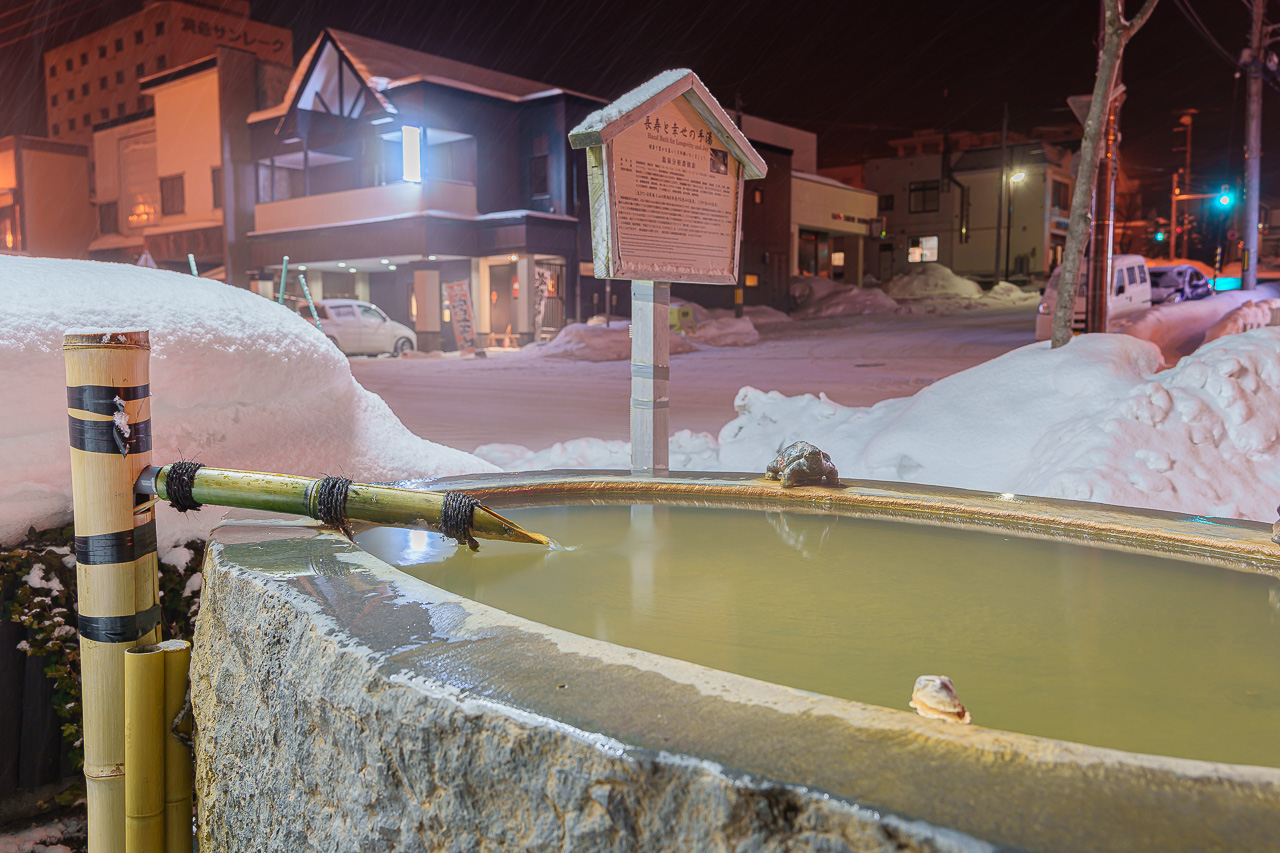
A short walk was enough for it to grow dark.
Hot-spring water flowed in various places around Lake Toya.
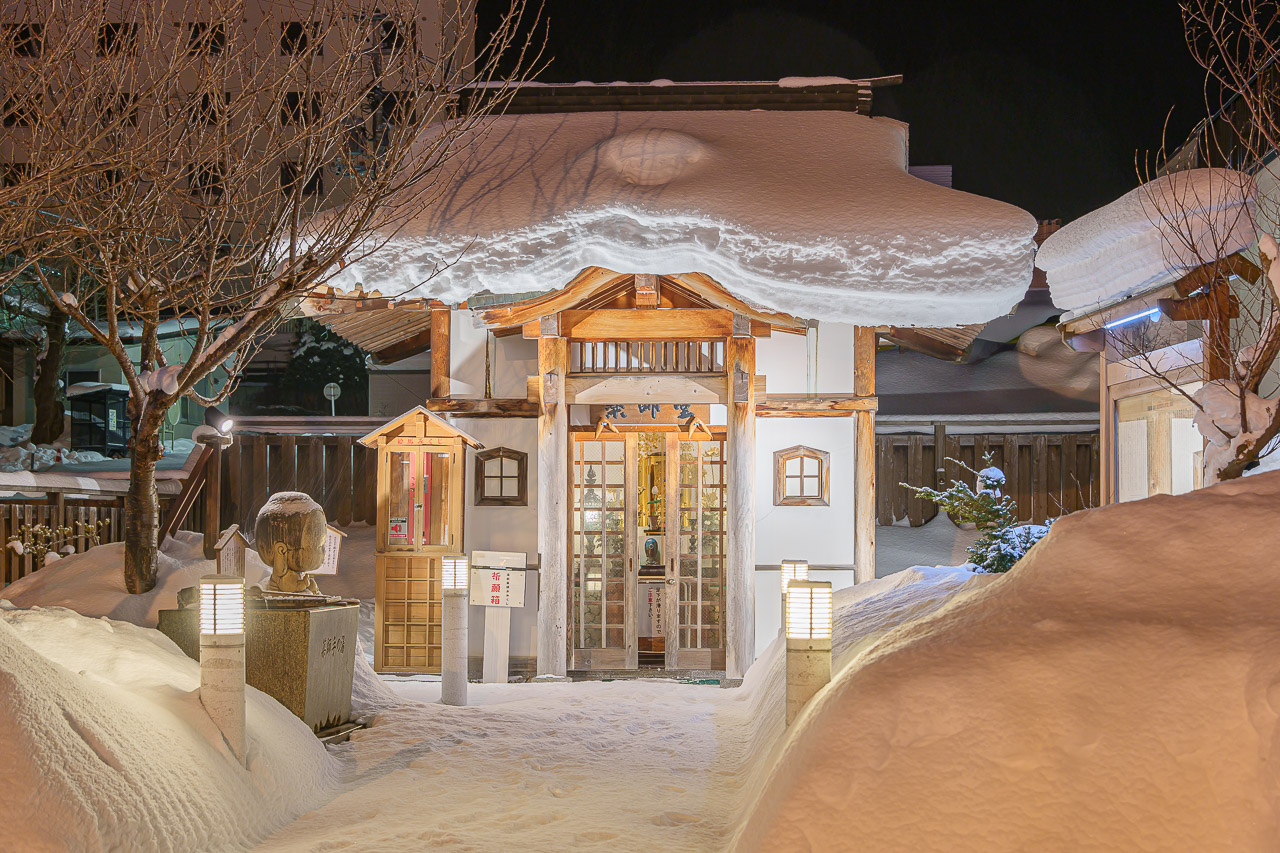
Snow covered a shrine’s roof so thoroughly that its usual appearance was hidden.
It looked so pretty under the snow that this could almost have been its normal form.
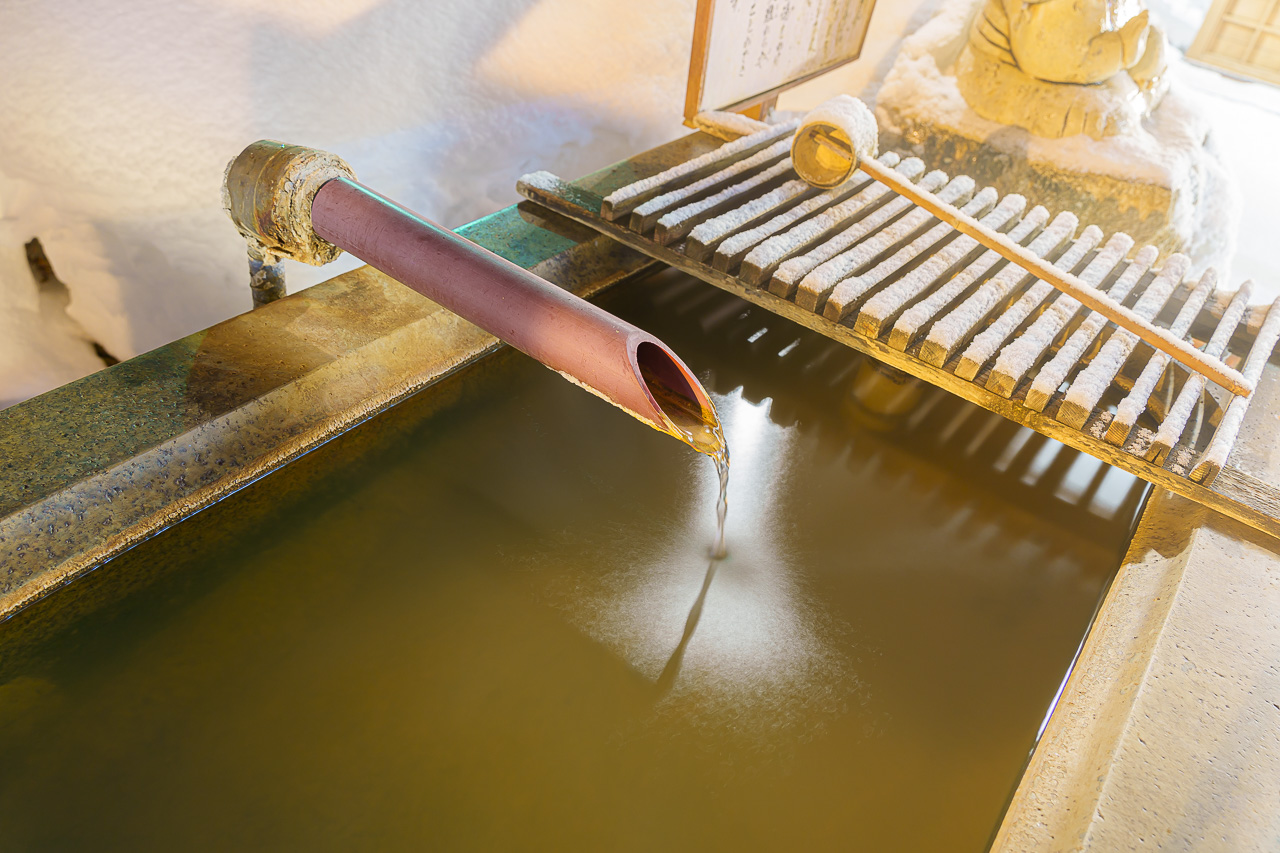
Hot-spring water trickled here as well.
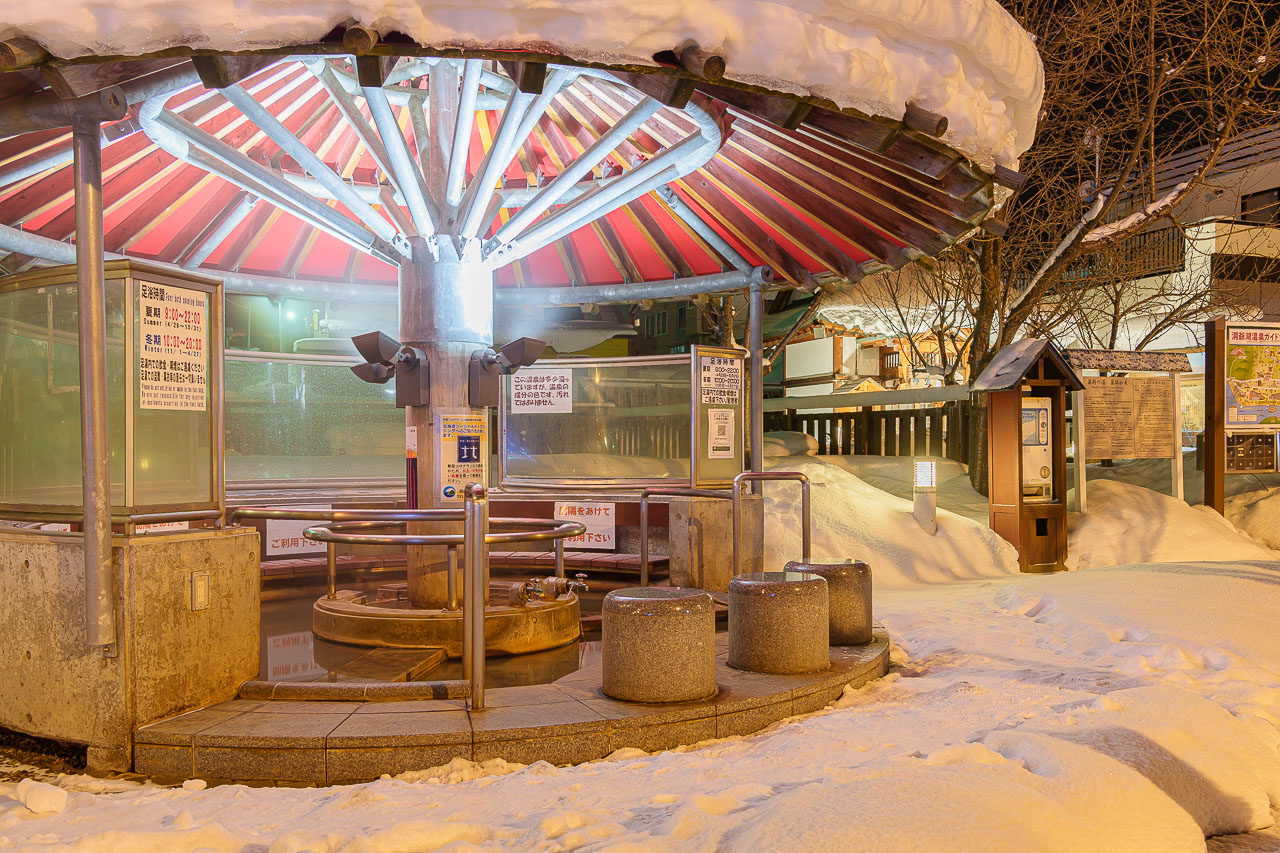
There was also a footbath beside the shrine.
Hours were limited; the lights seemed to go off at 10 p.m.

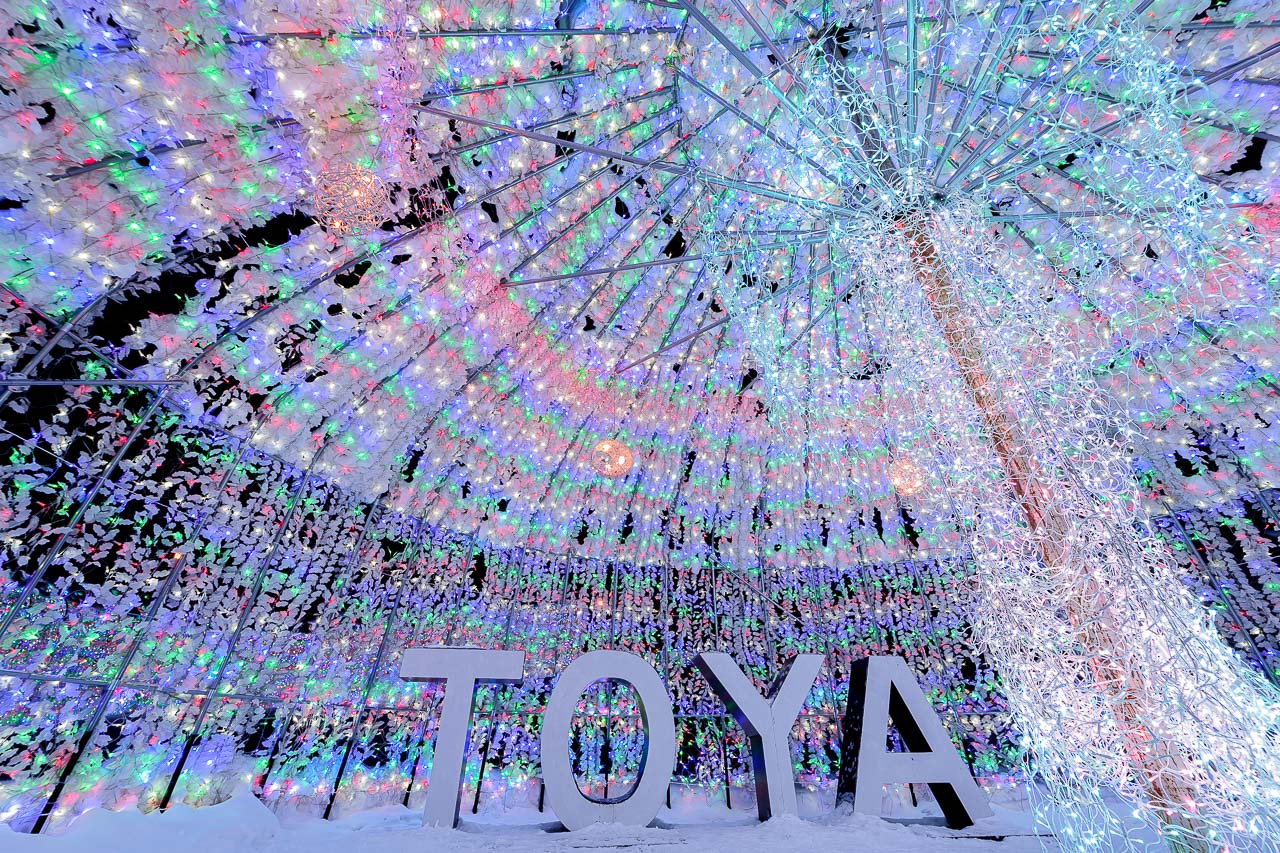
Nearby were the Lake Toya Onsen illuminations.
The display was modest in scale and seemed a pleasant place for couples.
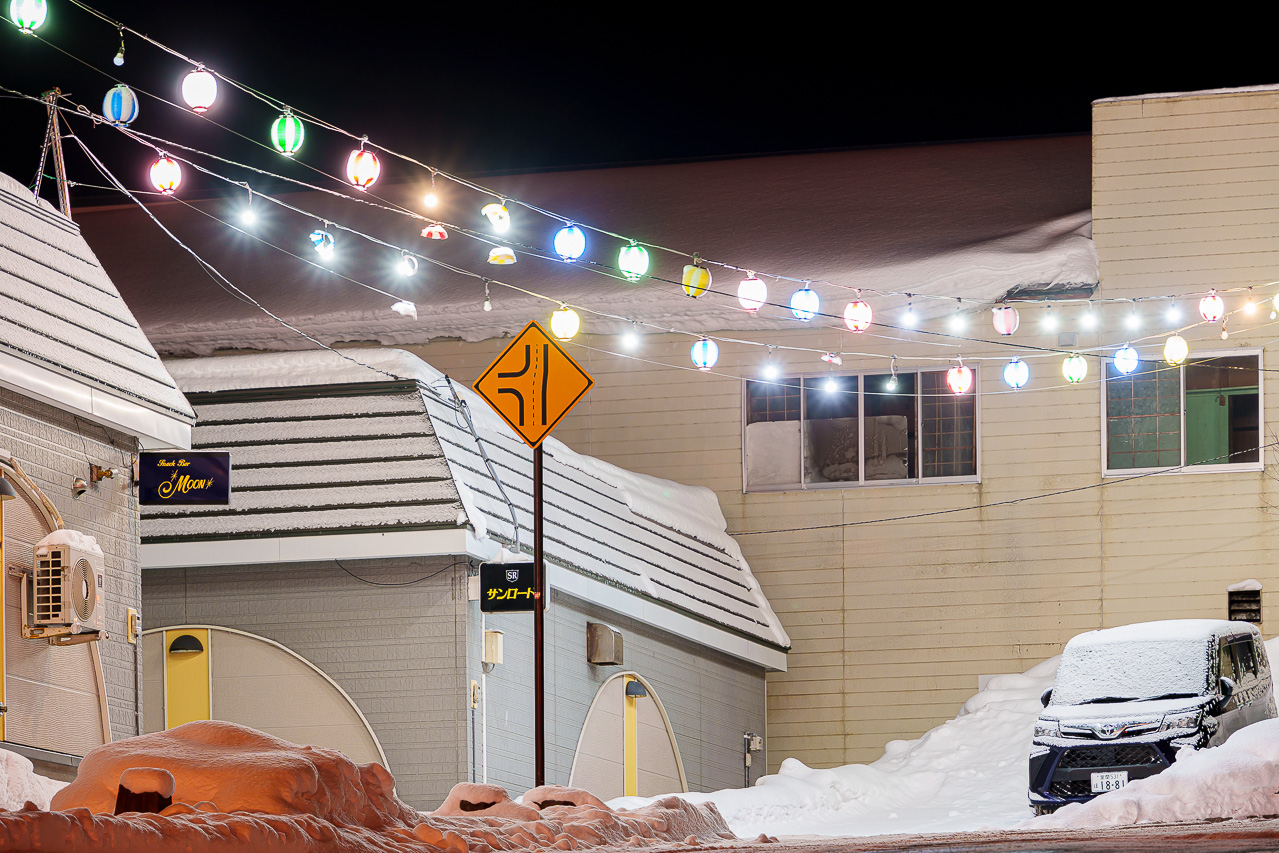
I photographed a beautiful light hanging outside a nearby shop.
Unfortunately, we missed the Lake Toya Long-Run Fireworks by just one day.
The source links the event’s beginning to an eruption-related tourism decline in 1982 and says its popularity led from an original three-month plan to an annual six-month run from late April to late October. That chronology is retained as an unverified source account rather than a newly checked history.
It describes about 20 minutes of fireworks, visible from lakeside hotels and also from sightseeing boats out on the lake.
The vast lake, hot springs, and fireworks all appealed. Next time, I hoped to see the fireworks.
Lake Toya (洞爺湖)
Address recorded: 142 Toyako Onsen, Toyako-cho, Abuta-gun, Hokkaido (北海道虻田郡洞爺湖町洞爺湖温泉142)
Phone: 0142-75-2446