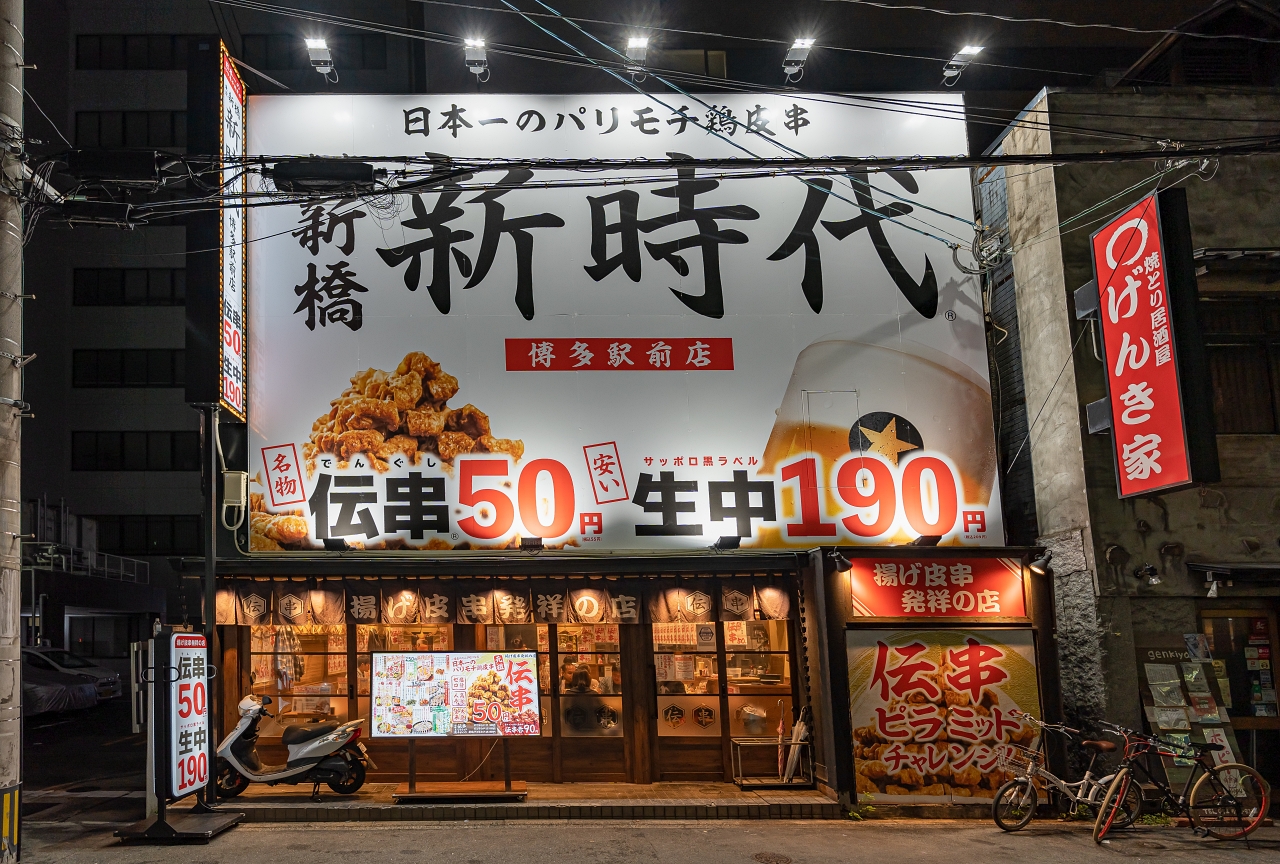
Shinjidai (新時代) is an izakaya chain I had begun seeing around Japan. Signs advertising Den-kushi (伝串) for JPY 50 each and beer for JPY 190 always caught my eye, but the prices seemed almost too low and I kept walking past. On this Fukuoka trip, I finally tried it.
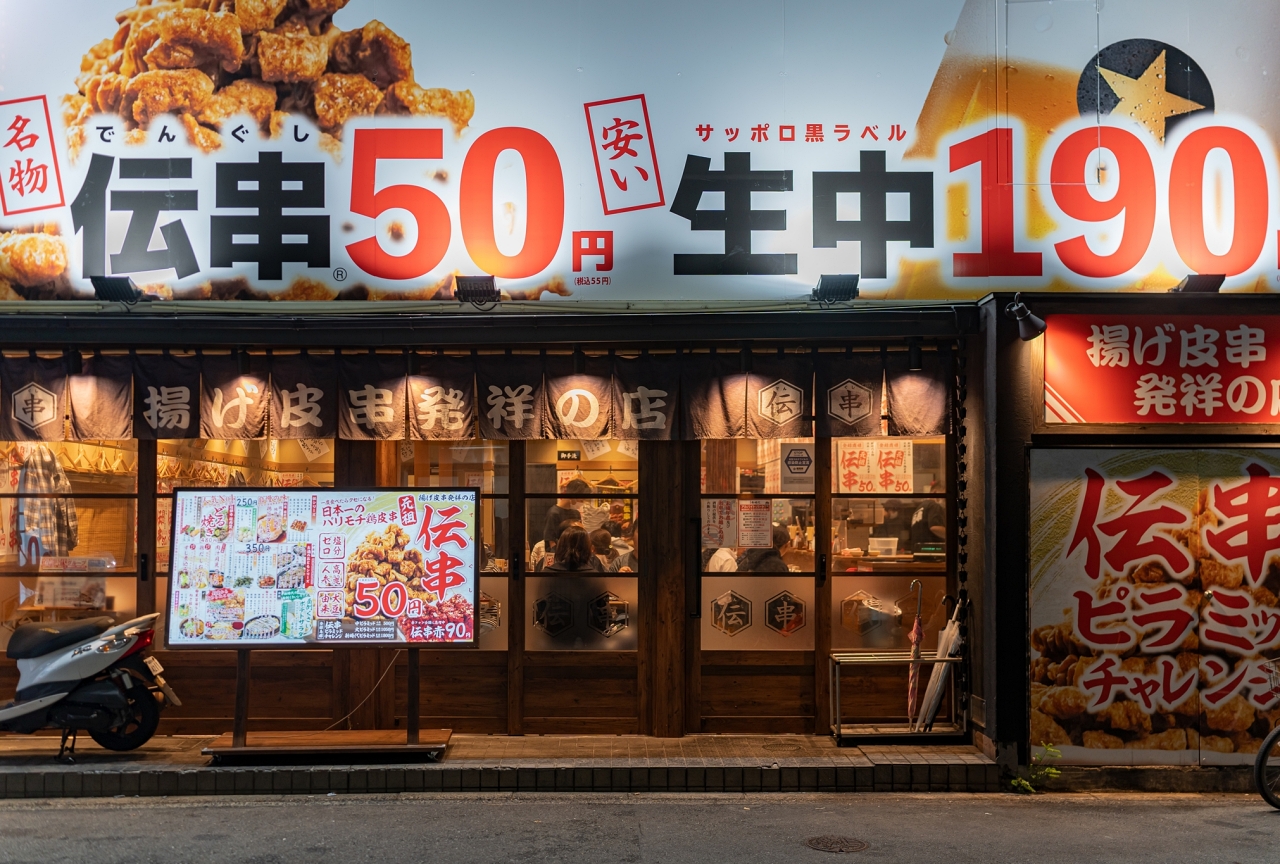
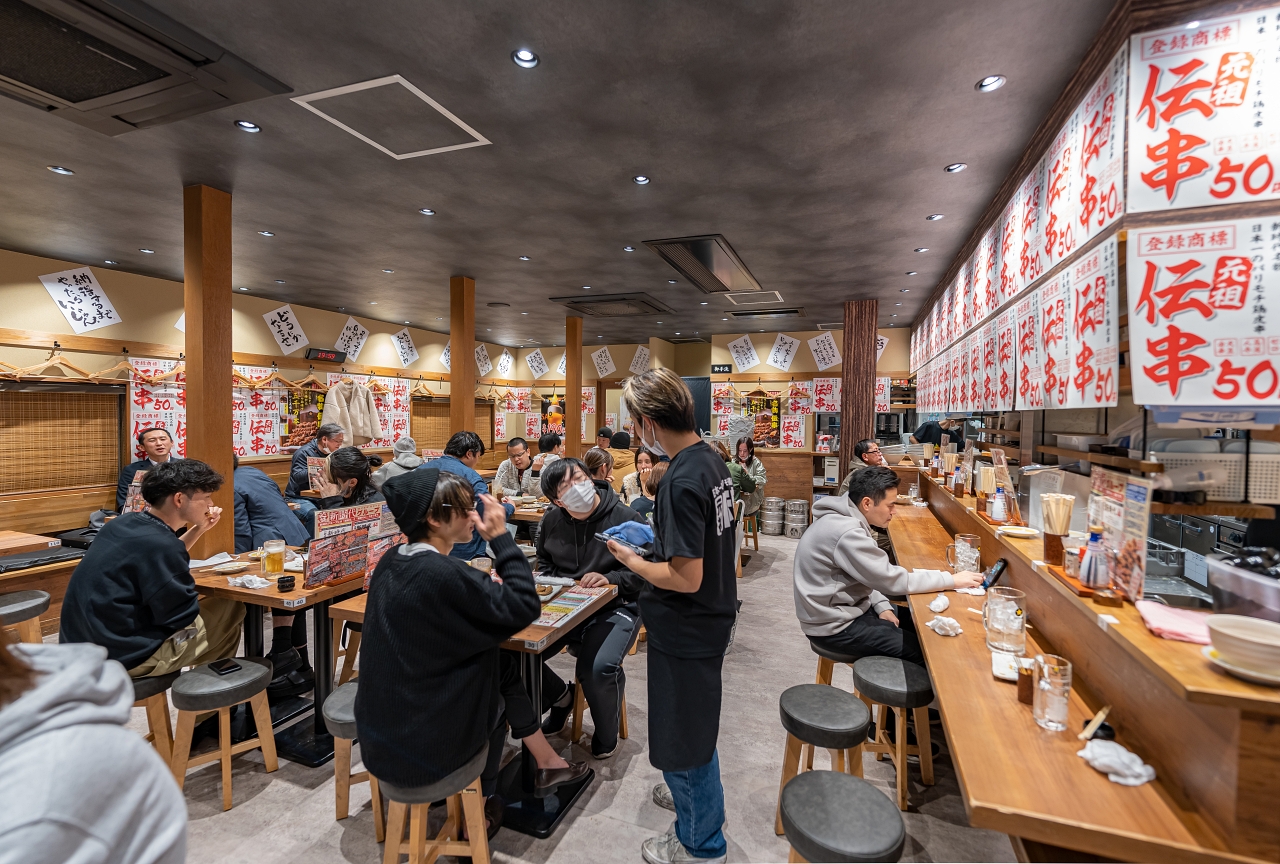
The business was founded by former professional soccer player Naoshi Sano (佐野直史), opening its first shop in Aichi in 2009. The source says it expanded to Tokyo, Osaka and elsewhere and reached 100 shops in 2020. Fukuoka branches included one near Hakata Station and one on Tenjin Nishidori, popular with local diners and often drawing queues.
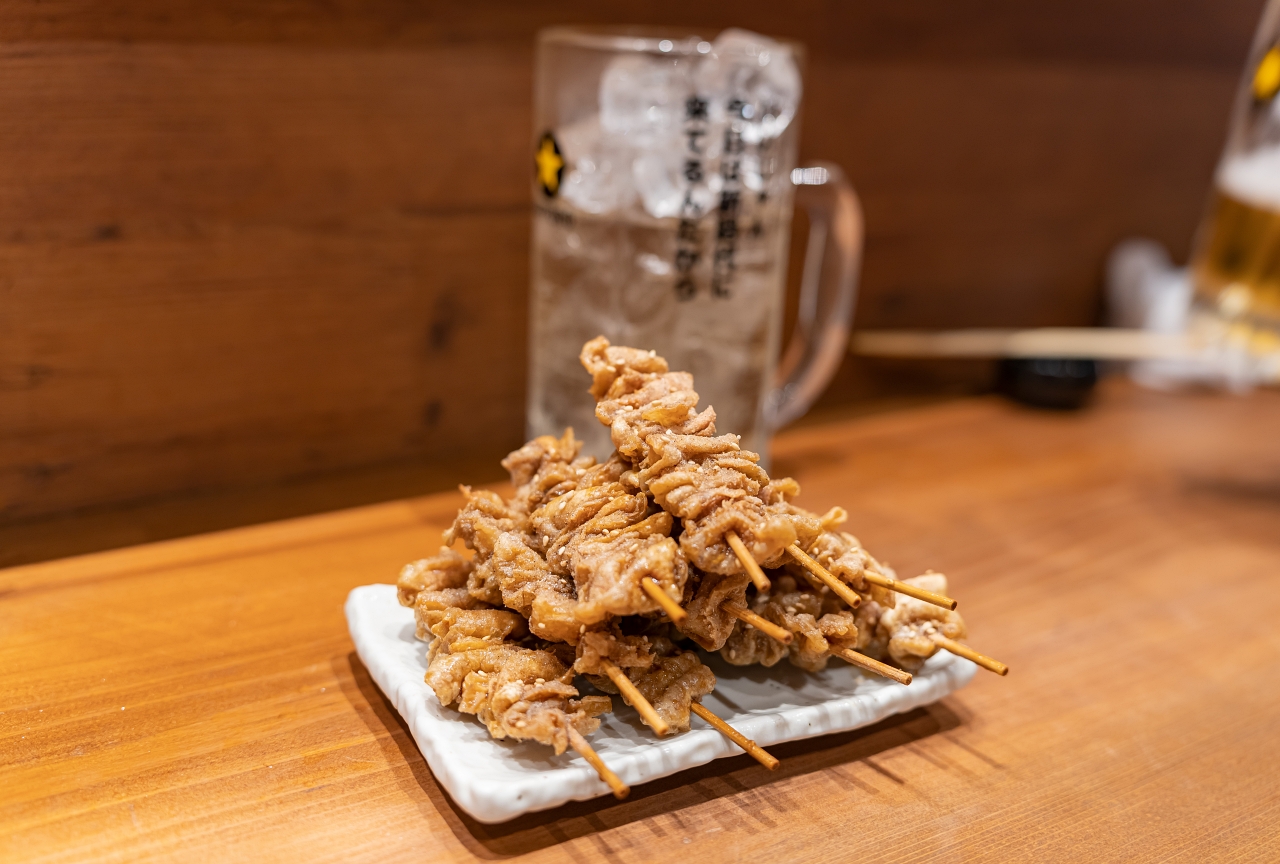
Den-kushi is seasoned using soybeans and Korean ginseng, according to the source, and is popular with drinks. Takeaway was available at low prices. The account reports cumulative sales of 90 million skewers and repeats the shop’s claim to Japan’s crispiest chicken-skin skewer.
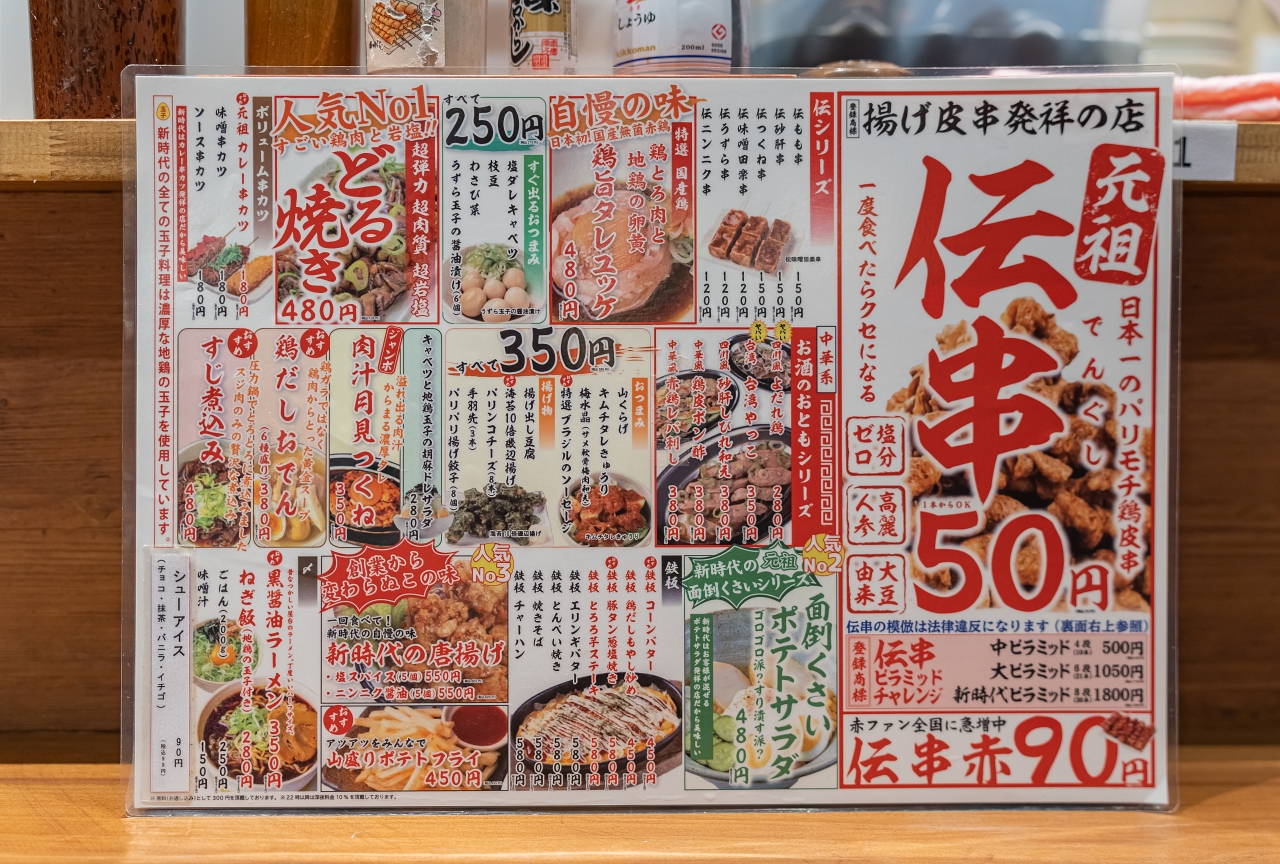
I could not find ‘Den-kushi’ in an ordinary dictionary. It turns out to be the shop’s coined term, with a trademark application noted in the source. Short for ‘legendary skewer’ (伝説の串), it suggests considerable pride in the dish.
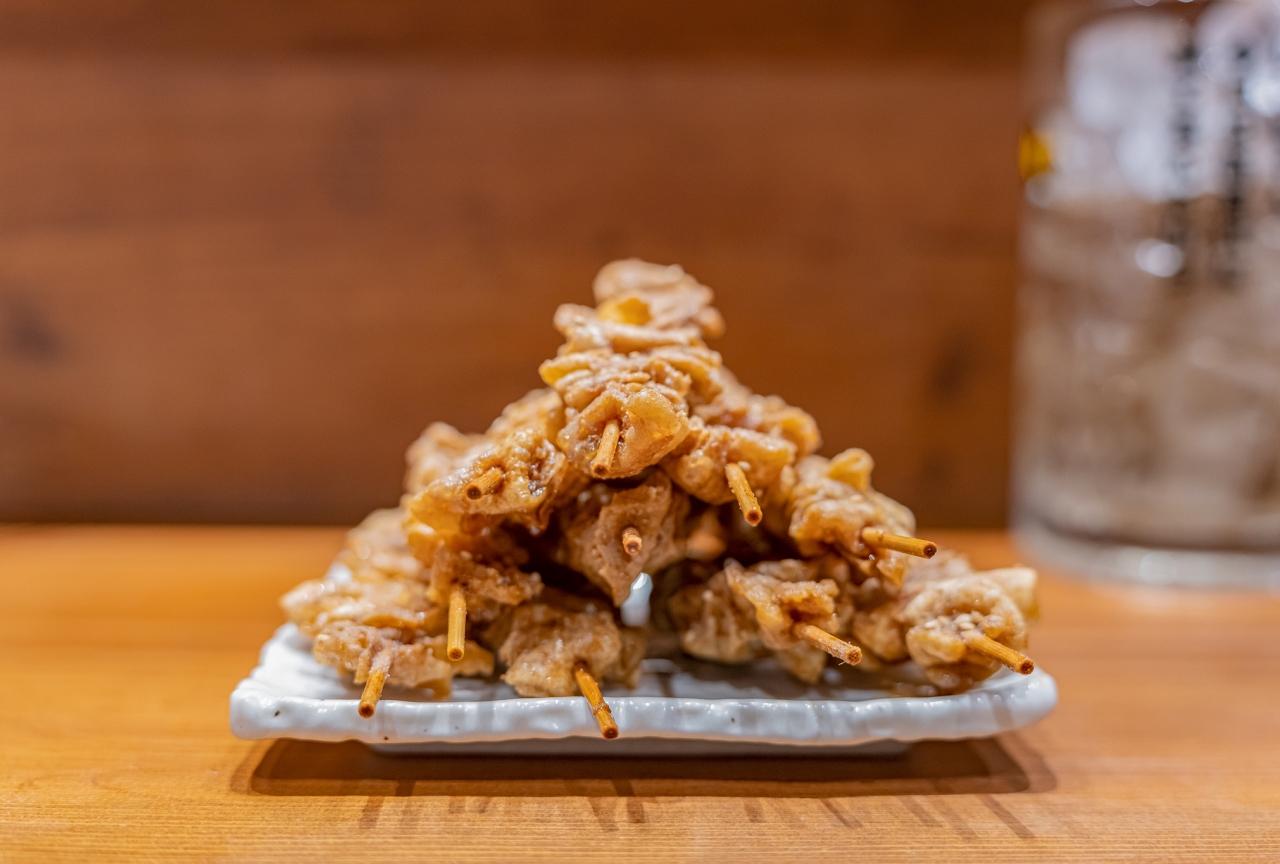
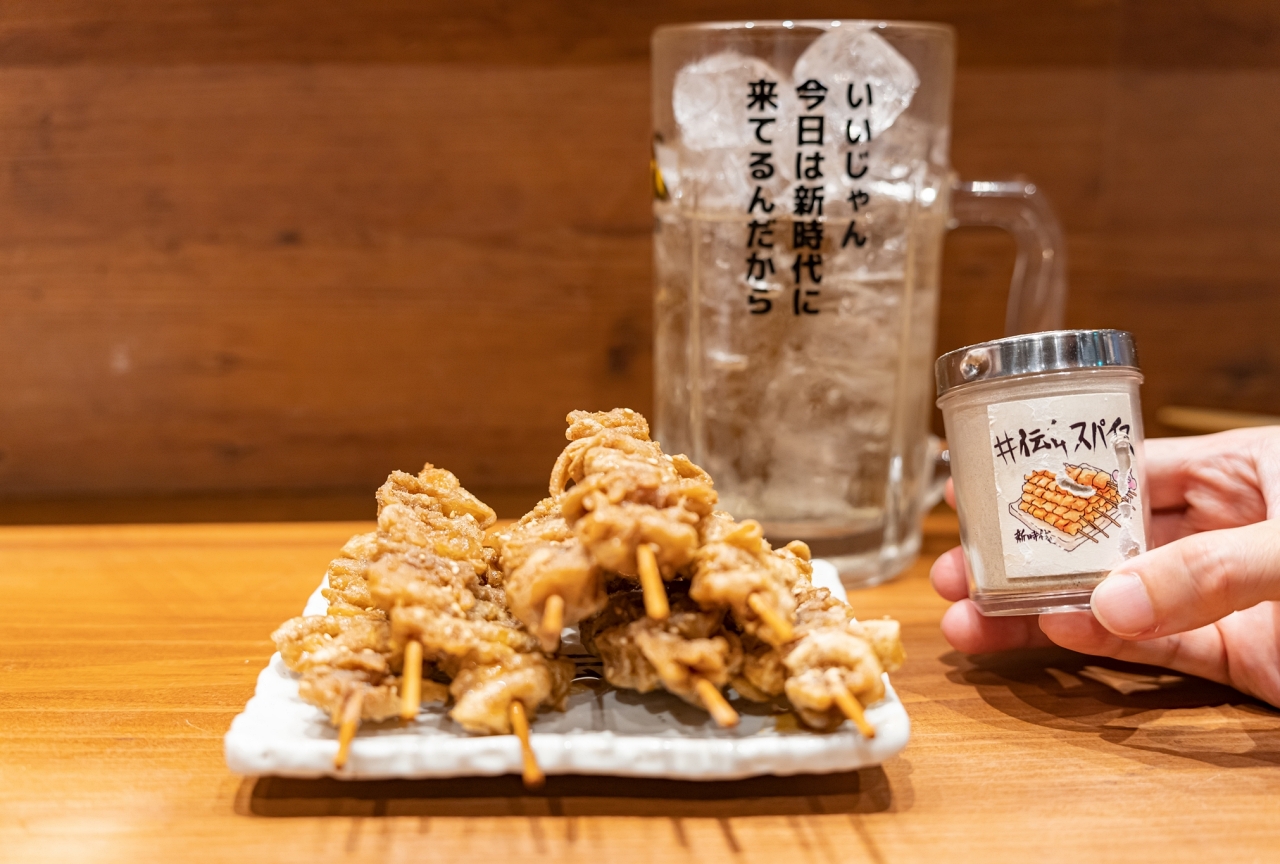
Chicken skin is arranged in a wavy shape, deep-fried and drained. The promotional explanation says excess fat is removed ‘leaving only collagen’; that is not a verified composition claim. The result tastes very crisp outside and moist within, ideal alongside a drink. The account says the seasoning contains Korean ginseng, the spice mixture is mainly soybean-based and it has zero salt, a claim the author themselves found puzzling. It also states that the preparation method is patented and imitation prohibited; no patent or legal scope is established here. The skewers arrive stacked in a photogenic pyramid.
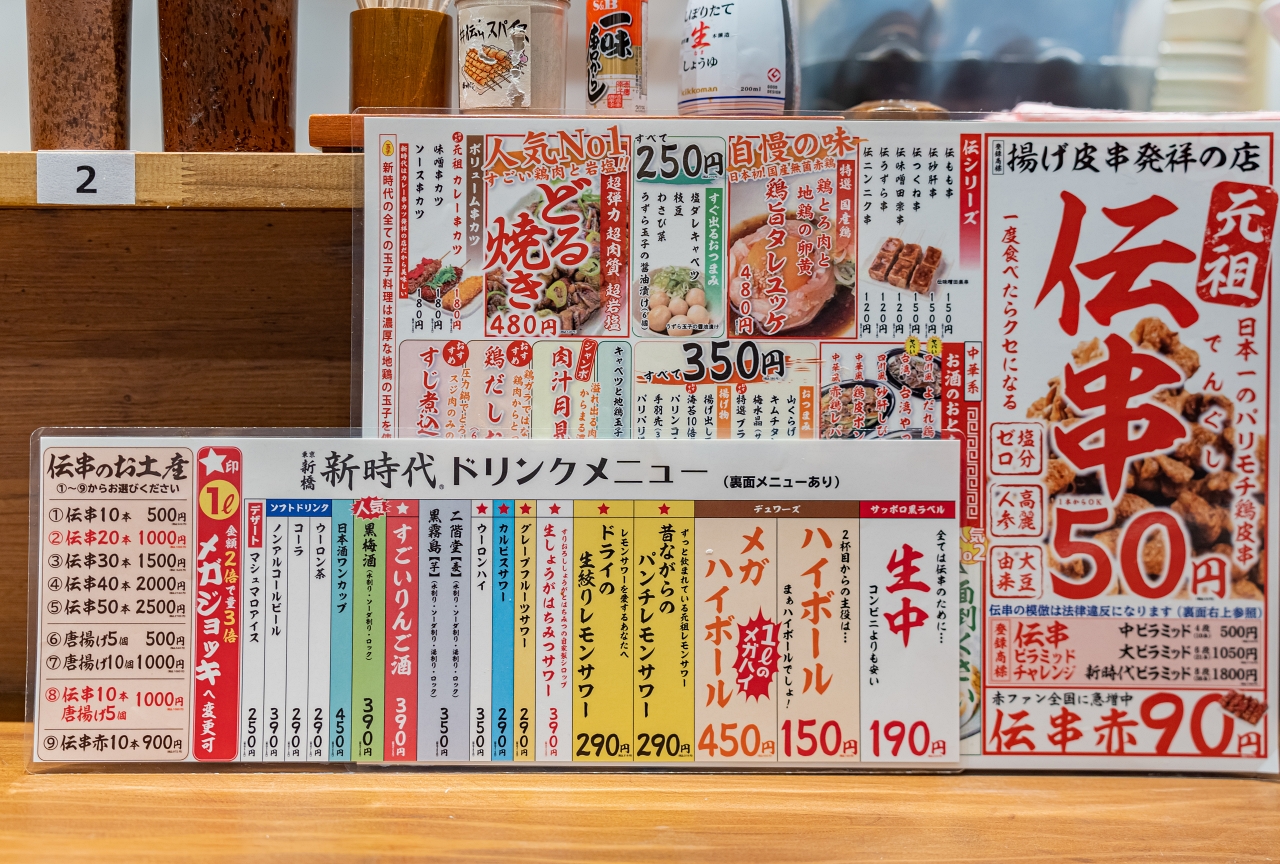
Other eye-catching dishes included breast, gizzard and tsukune skewers around JPY 150, chicken yukhoe at JPY 480 and kushikatsu around JPY 180. Drinks were inexpensive too: draft beer JPY 190 and a highball JPY 150, little different from convenience-store prices in the author’s comparison. I half wondered whether they were diluted, but the beer tasted like the Japanese draft beer I knew. It was Sapporo Black Label. The highball seemed to use the less expensive Torys whisky rather than Suntory Kakubin, though I did not confirm that impression.
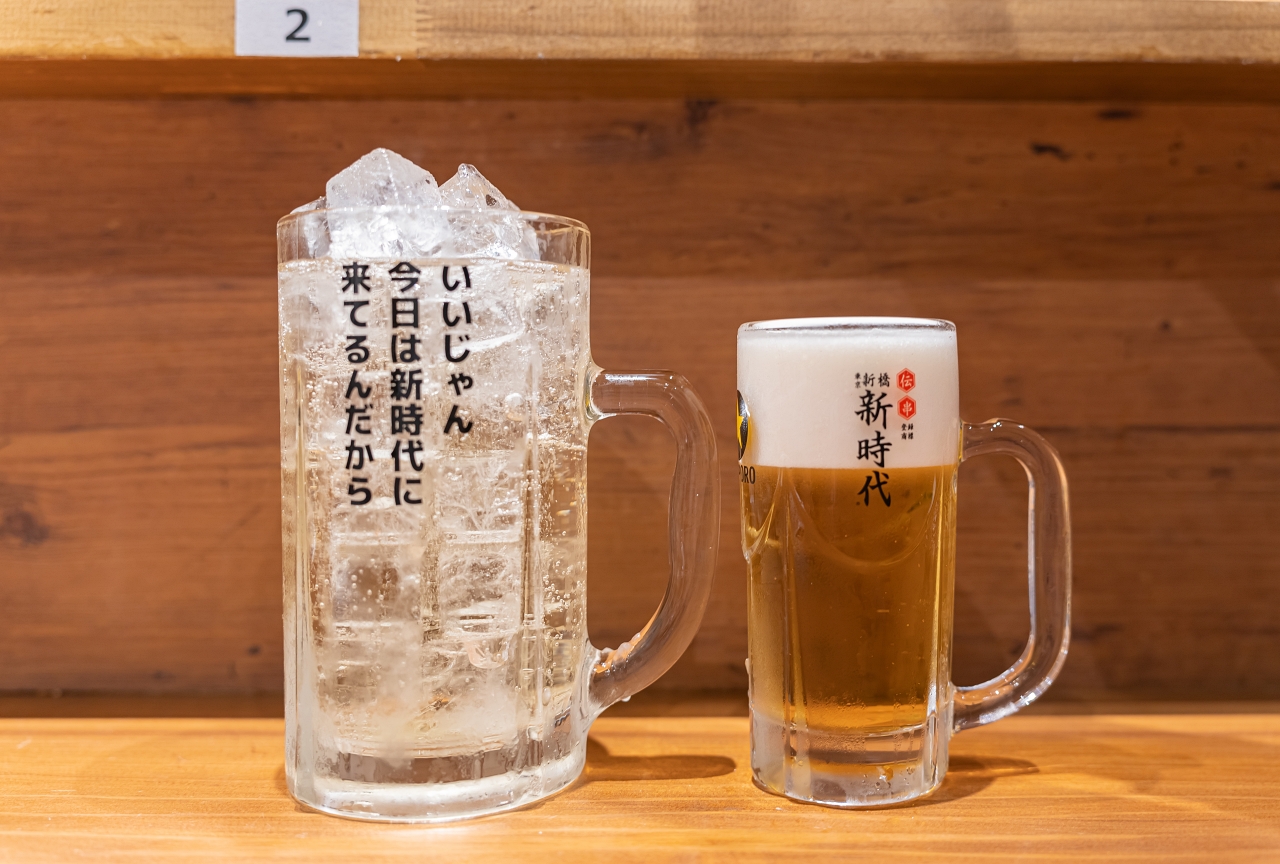
We ordered beer and a highball. A one-liter ‘mega’ highball was only JPY 450, so I tried it immediately. In my glass, ice appeared to occupy about 70% and drink less than 30%; the size felt more impressive than the amount of liquid. I would rather have ordered three regular highballs.
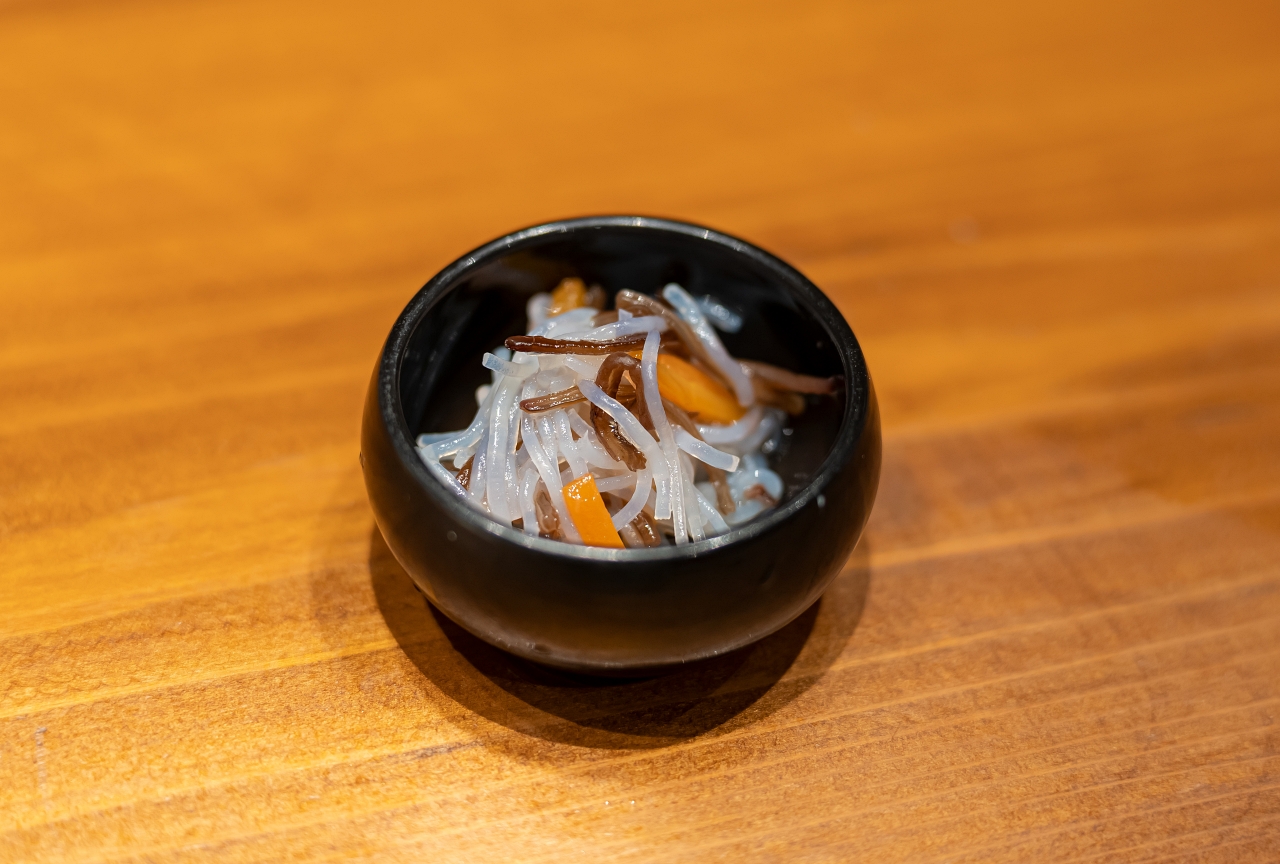
An otoshi arrives after we sit down, costing JPY 300: neither especially high nor low for an izakaya. Otoshi is a small dish brought without a separate order, commonly when you order alcohol. It gives you something to eat while waiting for the main dishes, and functions as a cover charge added to the bill. The source gives a typical range of JPY 300–500, varying by shop.
The account describes otoshi as a longstanding izakaya custom expressing hospitality and setting the mood. It is often a small plate of simmered or pickled food; some shops offer a choice. There is even a saying that a shop with good otoshi will have good cooking overall.
For overseas visitors, being charged for an unordered dish can be confusing and may feel like an overcharge. The source explains it as an accepted part of izakaya atmosphere for many Japanese diners, while noting a growing number of places without otoshi. Practices differ by venue, so check the charge when ordering.
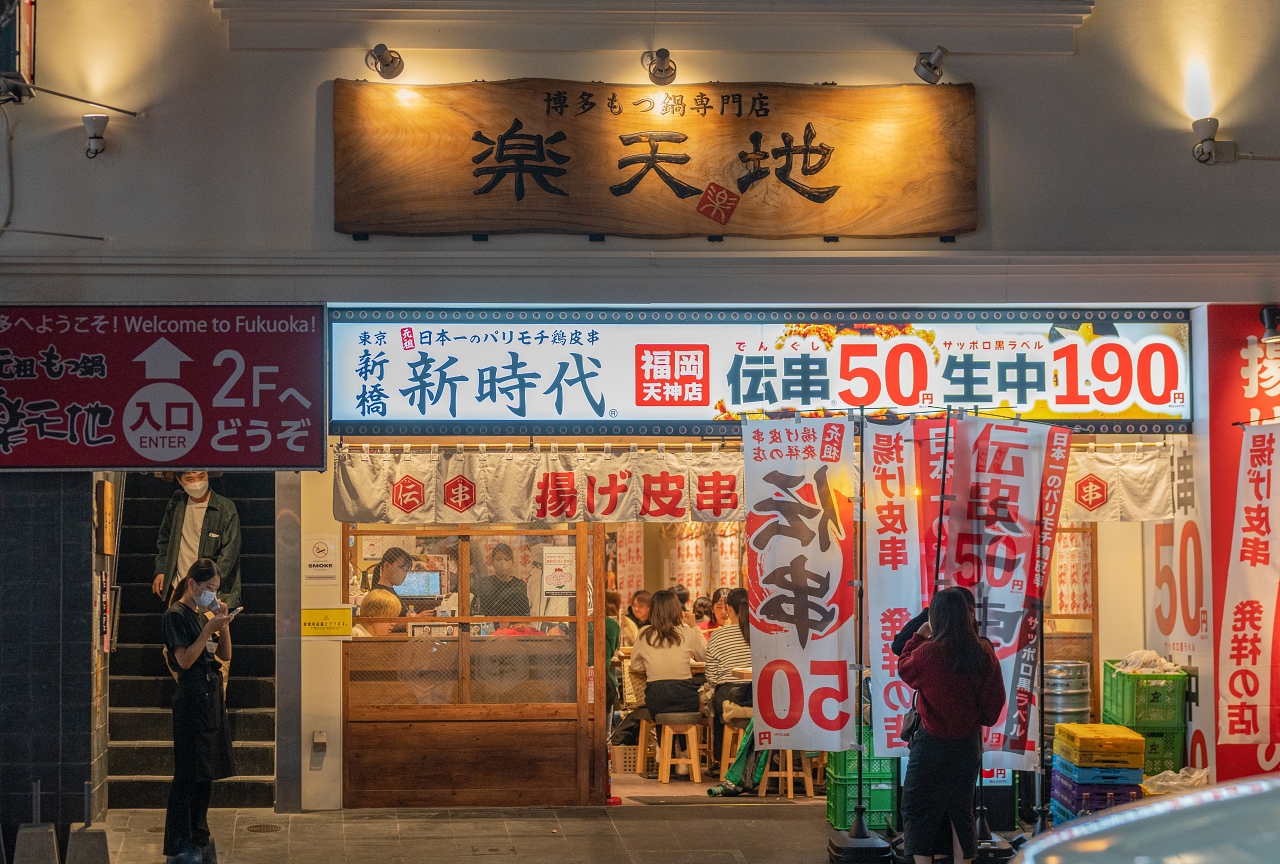
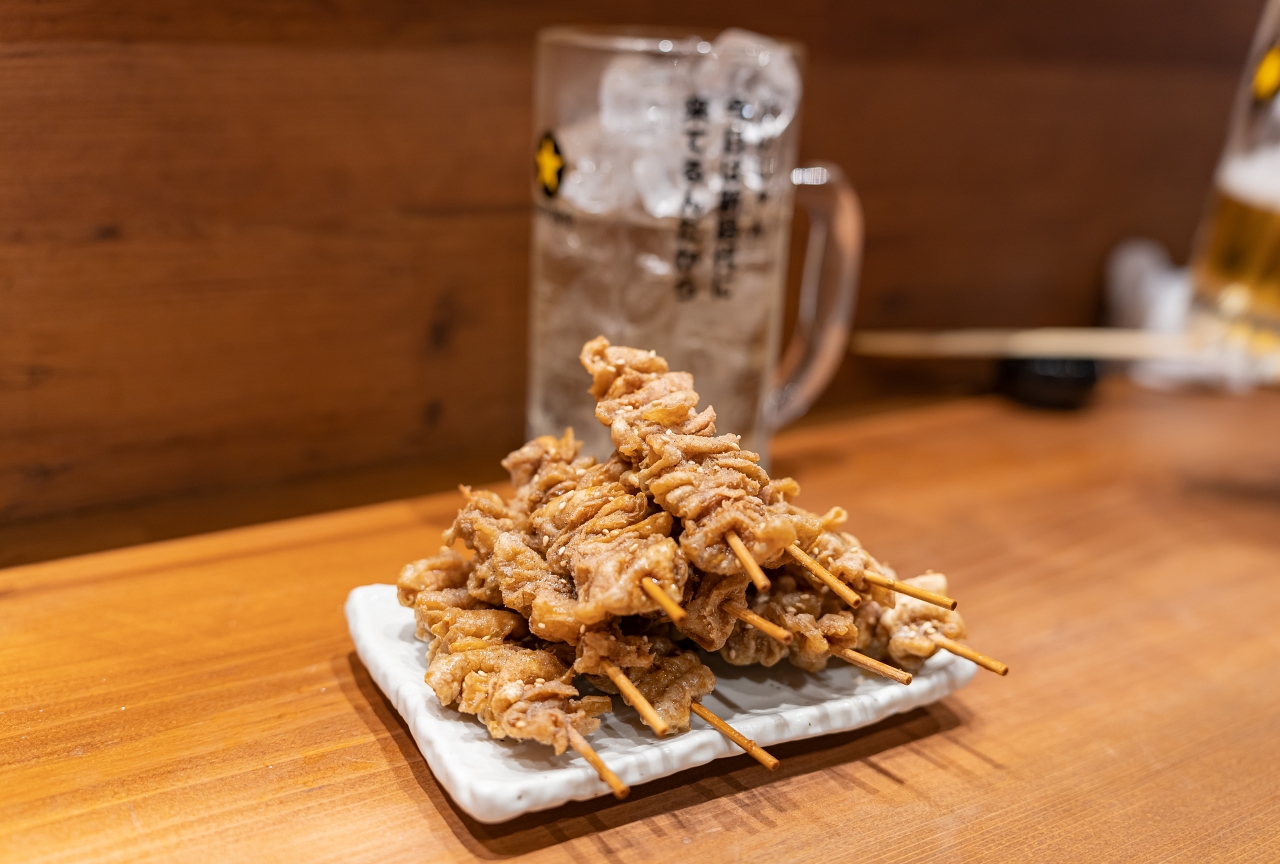
With beer, highballs and Den-kushi, we end our Fukuoka evening. I had doubted the low prices, but after trying it I understood the queues. The skin was crisp outside and soft inside; I wanted to know how they achieved it. The sweet-and-salty flavor suited drinks, despite the promotional claim of no salt, which is not independently confirmed. Service was relatively quick as well. Charcoal-grilled torikawa can take time to prepare one by one, whereas these arrived promptly. The source describes many branches as 24-hour shops, making them an inexpensive last stop for a drink under the source-period arrangements.
Den-kushi Shinjidai — Hakata Station East
伝串 新時代 博多駅東店 · 2-6-15 Hakataekihigashi, Hakata Ward, Fukuoka 812-0013, Japan
★★★★☆ · Izakaya (archived map-card rating)
www.google.com